
Montbretia (Crocosmia, )
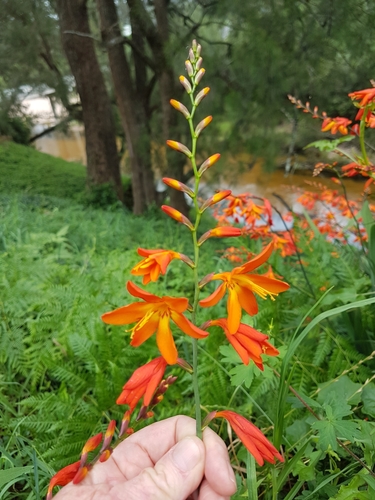
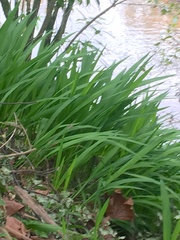
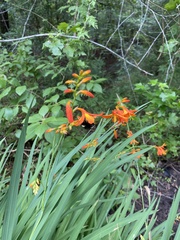
Crocosmia (Crocosmia Planch.) is a genus of corm-forming plants in the Iridaceae, native to southern Africa. Strap-shaped leaves and arching summer flower spikes give these perennials their distinctive movement in borders. The group includes old montbretia hybrids and cultivars such as bright red Lucifer, as well as orange and yellow forms.
Read moreMontbretia



© photo
Vale Jenny Conolly · cc0
Jenny Christianson · cc-by
Daniel Patterson · cc-by
Taken Jul 25, 2021 by Michaël LAMBERT (cc-by-sa)
Taken Jul 9, 2022 by Dave Flack (cc-by-sa)
Taken Jul 12, 2022 by Gerrit Dorgelo (cc-by-sa)
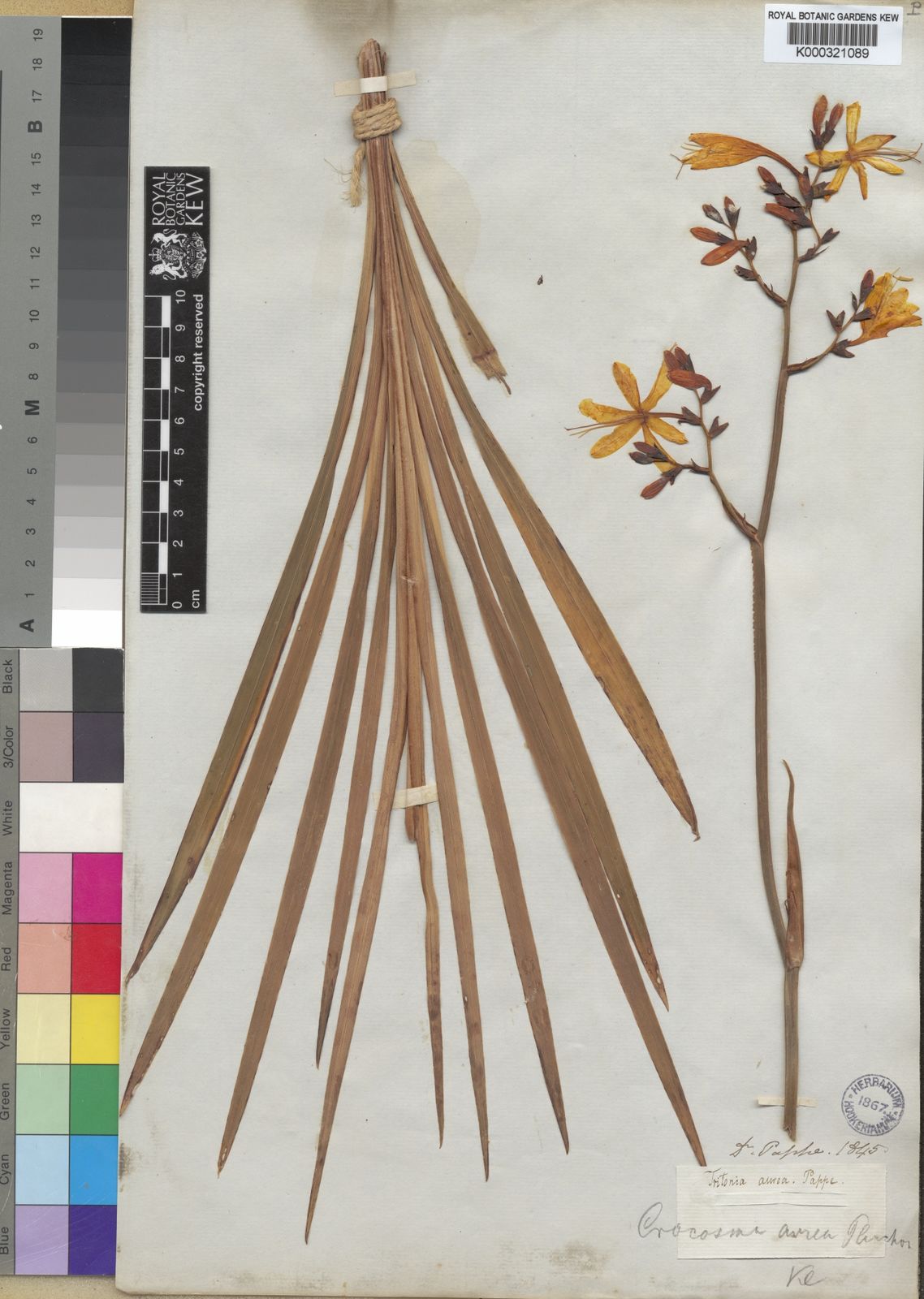
© copyright of the Board of Trustees of the Royal Botanic Gardens, Kew.


Identity
Crocosmia (Crocosmia Planch.) is a genus of corm-forming plants in the Iridaceae, native to southern Africa. Plants of the World Online, World Flora Online and IPNI recognize it at genus rank. The notation Crocosmia spp. therefore refers to the wider genus rather than to one particular red-flowered cultivar. 1 2 3
Montbretia remains a familiar common name in horticulture, especially for older hybrids. Bright red 'Lucifer' is a prominent garden example, but Crocosmia also includes orange and yellow forms, hybrids and wild species. One red cultivar cannot represent the full range of flower colors or garden behavior. 8 5
Understanding that diversity helps distinguish a red crocosmia from the group as a whole. These are border plants whose underground corms build clumps and whose flexible stems bring movement to summer planting. Lucifer is one selection within that broader range, rather than a single botanical name for every crocosmia. 4 6
Recognition
Fans of upright, strap-shaped leaves give crocosmia a resemblance to irises or gladioli. Below ground, the plant produces corms, often arranged in chains. These storage organs help explain its ability to build increasingly dense clumps rather than remain as an isolated stem from year to year. 4 6
Summer brings flowering, sometimes continuing into early autumn. The often arching stems carry tubular or star-shaped flowers in red, orange or yellow. Their structure gives a sense of movement, especially noticeable when the flower spikes rise through a border of plants with denser, rounder flower heads. 8 5
Although Lucifer has striking red flowers, color alone is insufficient for identification. Strap-shaped leaves, flexible stems, flowers arranged along a spike and underground corms together offer a more reliable set of characters than a red or orange shade on its own. 6 4
Useful taxonomy
Family relationships place crocosmia alongside irises, gladioli and crocuses in the Iridaceae. The name Crocosmia identifies a distinct genus, even though nurseries still use montbretia for several hybrids. A label reading Crocosmia spp. has genus-wide scope rather than identifying an individual species. 1 3
Garden hybrids include Crocosmia × crocosmiiflora and numerous cultivars such as Lucifer. These horticultural names distinguish garden lineages selected for color, height and vigor. They should not be read as names for interchangeable wild species: the cultivar or hybrid name carries useful information about the plant being grown. 5 4
Differences among forms matter when managing a planting. Some remain well behaved, while others spread quickly by corms in mild conditions. Before planting a large group, consider the cultivar and the local climate rather than choosing from a photograph of a red flower spike alone. 6 7
The genus Crocosmia is therefore the useful botanical reference, with horticultural examples placed beneath it. Its relationship to gladioli and irises does not erase the differences between them. Crocosmia brings flexible movement to planting, whereas gladioli tend to have a stiffer outline and are often grown in rows. 1 8
Cultivation
Full sun and well-drained soil suit crocosmia, but it is not a plant for completely dry conditions. Soil that retains some moisture in summer supports flowering better than hot, parched ground. This balance of drainage and summer moisture encourages long, flexible flowering stems. 6 5
Plant the corms in loosened soil, deep enough to protect against drying and shallow frost. In cold climates, a light mulch can help, provided it does not hold water around the crown during winter. Cold, waterlogged soil remains the main danger rather than winter protection being useful under every condition. 5 7
Overcrowded clumps flower less freely in the center. Dividing the corms every three to five years restores vigor and allows the strongest divisions to be replanted. It also prevents a dense mass of leaves from replacing the flowering display that made the clump worth planting. 8 6
After flowering, the leaves continue replenishing the corms. Avoid cutting them back too soon. Spent flower stalks can be removed for appearance, but leave the foliage to yellow naturally before clearing it away, as with many other plants that rely on underground reserves. 5 4
Garden uses
Naturalistic planting suits crocosmia particularly well. Grasses, coneflowers, rudbeckias, heleniums and dahlias complement its movement. The arching spikes lighten red and orange planting schemes, which can otherwise look heavy when too many of the flowers have large, rounded heads and little variation in outline. 8 5
In bouquets, crocosmia serves as a colored line more often than the main focal flower. Stems cut at the right stage last reasonably well and add a lively silhouette. In borders, irregular groups work better than strict rows because the effect depends on the sweep of the stems rather than symmetry. 6 4
Late-summer borders in warm colors can also gain structure from crocosmia. Avoid placing a spreading cultivar in a space too narrow to contain it. Regular division then serves both the appearance of the border and the practical need to keep an expanding clump within its available space. 7 8
Precautions and limitations
The sources used here do not report major toxicity comparable to lily-of-the-valley, autumn crocus or delphinium. Nevertheless, crocosmia is an ornamental plant: do not eat its corms, discourage pets from chewing it and keep divisions of the crown away from food preparation or growing areas. 6 4
Ecological behavior is the main limitation. Some crocosmias can persist and spread strongly in mild climates. The French context does not establish a general invasive status for the genus. Watch vigorous clumps in especially favorable gardens and on banks where displaced corms could help them spread. 5 7
Lucifer is best understood as an example of a red cultivar within Crocosmia. Keeping that relationship clear preserves the accepted taxonomy while allowing named species and cultivars to be distinguished when their particular characteristics matter. The genus encompasses more than the appearance or behavior of this familiar selection. 8 1
A gardener may encounter an orange or yellow crocosmia as readily as a red one. Genus-level identification therefore needs to cover those forms as well. Flower color helps describe an individual plant, while the wider combination of leaves, corms and flowering stems identifies the group to which it belongs. 5 2
Main sources
If you are unsure about a plant’s toxicity, ask a botanist or veterinarian for advice.