
Fishbone prayer plant (Ctenanthe burle-marxii, )
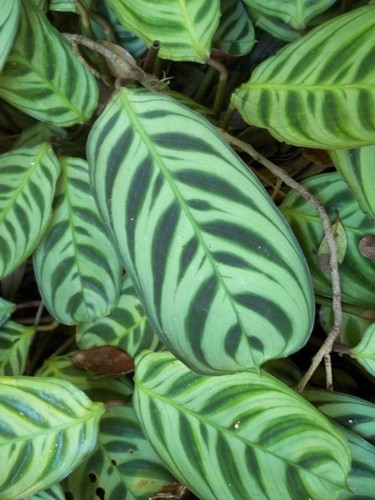

Fishbone prayer plant (Ctenanthe burle-marxii) has dark green fishbone bands on pale green leaves with purple undersides. This Brazilian perennial in the Marantaceae is grown in bright indoor spaces, in a moist but well-drained substrate.
Read moreFishbone prayer plant, Ctenanthe and Prayer plant
Give plenty of ambient light without direct sun on the leaves.
Bright indirect light, protected from direct sun.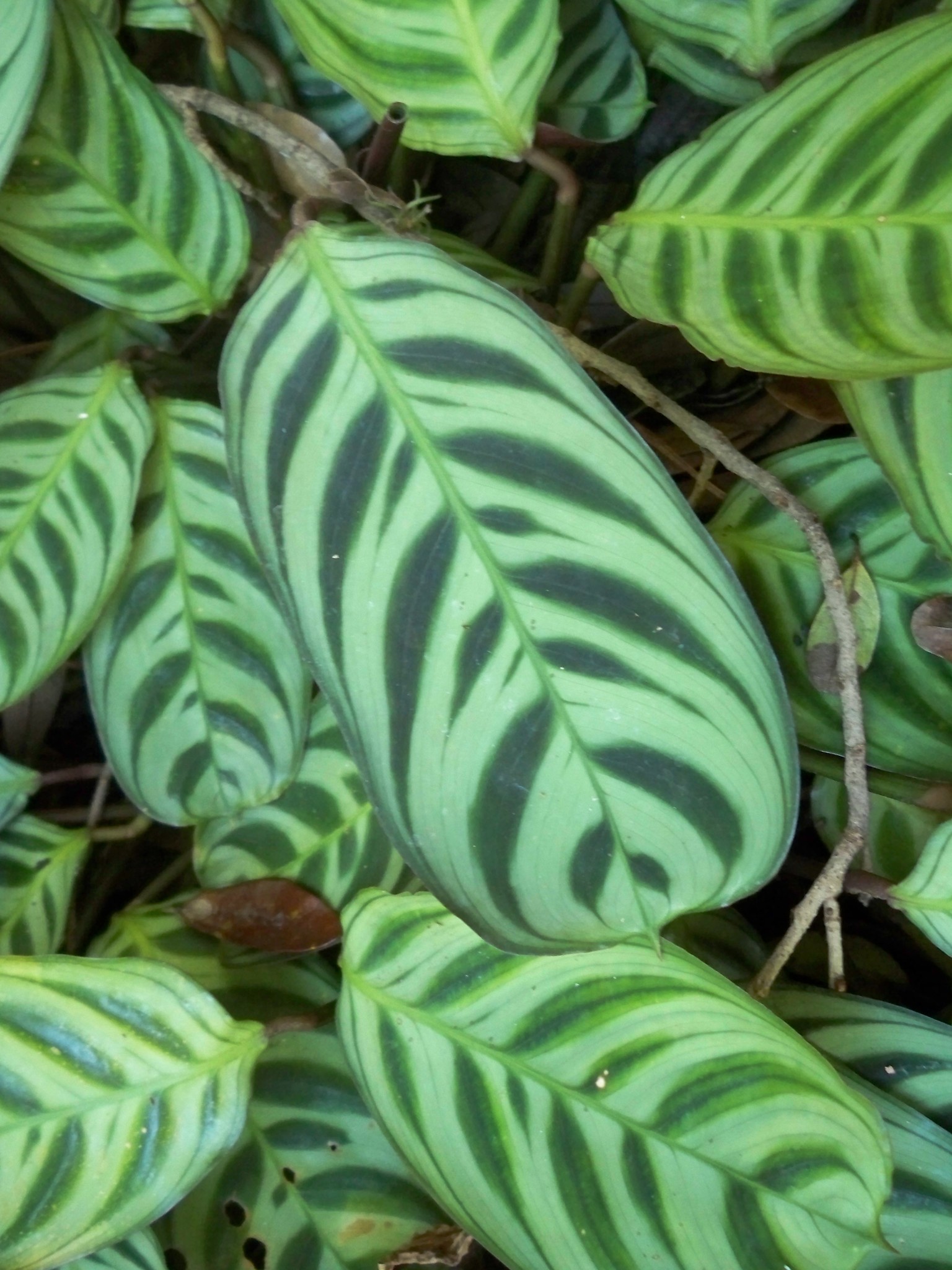


© photo
(c) Javier Alejandro, some rights reserved (CC BY-NC-ND), uploaded by Javier Alejandro · cc-by-nc-nd
Wikimedia Commons · CC BY-SA or Public Domain
Wikipedia · CC BY-SA
Taken Nov 5, 2020 by Aza Kelly (cc-by-sa)
© copyright of the Board of Trustees of the Royal Botanic Gardens, Kew.




Global distribution
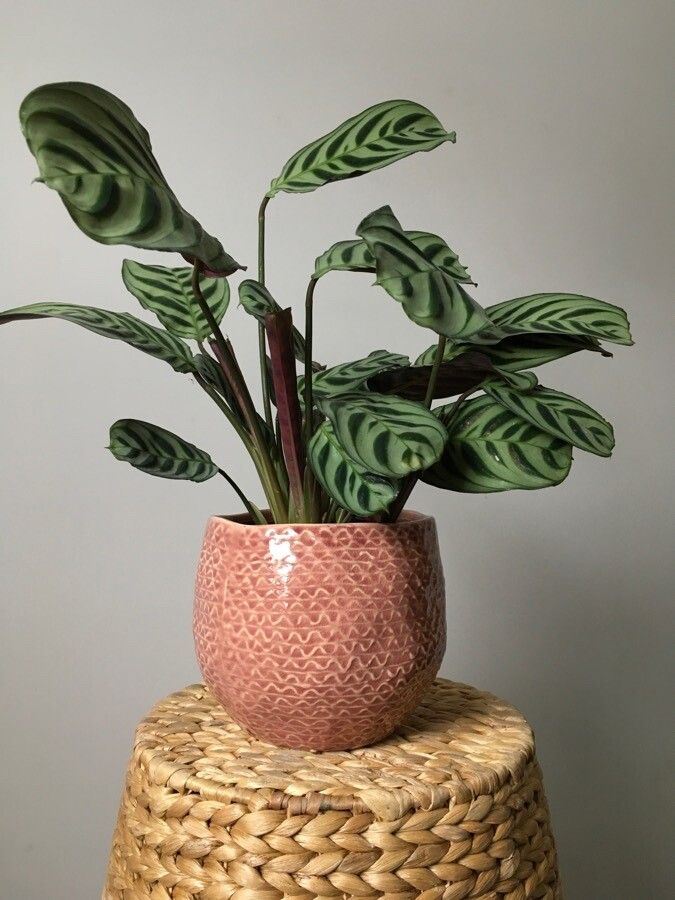
Native and endemic to Brazil, confirmed in Espírito Santo; introduced to the Azores.
- Native1
- Introduced1
- Brazil, Espírito Santo
- Azores
Hexagons: regions where the plant occurs. Green dots: native range.9
Identity
Fishbone prayer plant (Ctenanthe burle-marxii H.Kenn., 1982) has pale green leaves marked with dark fishbone bands and purple undersides. This evergreen perennial belongs to the Marantaceae, in the order Zingiberales. The Brazilian flora accepts the scientific name; the Canadian Journal of Botany published it in 1982. 1 8 2
The French names “cténanthe” and “plante prieuse” are used for this species. Common names can be shared with other plants, so the binomial helps establish identity when buying or comparing specimens. In France, fishbone prayer plant is grown in pots, in bright indoor spaces or a heated greenhouse. 4
Recognition
The fishbone bands cover the upper surface of the oblong to oval leaves of fishbone prayer plant. The undersides are purple; the green stems are tinged with purple and softly hairy. The combination of the pattern above and the colored underside gives a more precise identifying feature than green leaf color alone. 1
Indoors, the clump reaches 40–60 cm (16–24 in) in both height and spread. The British horticultural description also gives a height of about 60 cm (24 in). These dimensions describe cultivated plants; they are not a maximum measured across all wild populations. The underground stem is a rhizome, while the aboveground axis forms a rosette. 4 1 3
Useful taxonomy
The accepted name remains Ctenanthe burle-marxii H.Kenn. The Brazilian flora also recognizes the botanical variety Ctenanthe burle-marxii var. obscura H.Kenn., whereas the global botanical reference places it in synonymy with the species. The classification of obscura differs between these references; the name concerns a botanical rank, rather than a cultivar selected in horticulture. 8 9
The description of the species was based on a cultivated plant originally collected in Espírito Santo. The individuals recorded from Rio de Janeiro in the flora are also cultivated. A record from a garden in Rio therefore does not, on its own, establish the presence of a native population in that state. 3
Habitat and range
Fishbone prayer plant is endemic to Brazil, with a confirmed presence in Espírito Santo. Its habitat is rainforest within the Atlantic Forest. As a terrestrial herb, the plant grows on the ground, unlike a plant that grows on the branches of a tree. 3 8
In the Azores, fishbone prayer plant is classified as introduced. Introduced status in that archipelago records a presence outside the native range; it does not establish an invasion or determine regulatory status in France or elsewhere. The wild range must be distinguished from places where the plant is grown in cultivation. 5
Life cycle and reproduction
Flowering is rare indoors. Small clusters of white flowers may appear intermittently at the tips of long stems, without a fixed flowering season. Fishbone prayer plant can be propagated from seed or by division in spring. 4 1
The calendar represents indoor cultivation in mainland France, in the Northern Hemisphere. Its monthly indices express relative trends in growth and watering rather than measured water volumes or growth rates. In early fall, the growth index declines while remaining in the active category; feeding depends on actual growth. In spring and summer, keep the substrate evenly moist; in fall and winter, let the surface dry before watering again, without allowing the whole substrate to dry out. 7 4
The repotting window in late spring and early summer is an editorial translation of seasonal advice into the French calendar. Repot when the clump fills its pot; other seasons are not absolutely excluded. Frequency recommendations differ: annual repotting in the species entry, compared with intervals of several years in the group growing guide. 1 7
Indoor cultivation and risks
Fishbone prayer plant needs bright indirect light, a well-drained substrate and humid air. Direct sun scorches the foliage. For indoor spaces or a heated greenhouse, 18–22 °C (64–72 °F) is a French cultivation guideline; avoid cold drafts and standing water. 1 4
Species-specific advice recommends a general-purpose liquid fertilizer monthly from spring through summer. The group guide that includes ctenanthes extends feeding through early fall in its Northern Hemisphere setting, with a pause during the colder, darker part of the year. Slow-release fertilizer already incorporated during repotting may remove the need for regular liquid feeding during the first year. 1 7
A university publication describes the genus Ctenanthe as non-toxic to pets. That general statement does not establish the specific safety of Ctenanthe burle-marxii. Its status remains unknown for cats, dogs, horses, children, adults and other animals; no specific toxic substance has been established. 11
Cultivars and look-alikes
The cultivar “Amagris” is a horticultural clone. Its pale gray-green leaves have fine dark green lines, whereas the markings of the typical species are thicker and lance-shaped. The underside remains purple. This difference in pattern helps distinguish Amagris from the form with broad bands. 6
The name Amagris nevertheless has unresolved status in the British horticultural directory. Describing it as a clone establishes neither official registration nor commercial rarity. The botanical variety obscura belongs to a different classification system: calling something a “variety” is insufficient to equate a botanical taxon with a cultivar. 10 6 8
Main sources
The Brazilian flora documents habitat and botanical ranks; horticultural references distinguish species care from group advice and the description of the Amagris clone.
- Royal Horticultural Society, Ctenanthe burle-marxii
- International Plant Names Index, Ctenanthe burle-marxii H.Kenn.
- Flora do Brasil 2020, Marantaceae, Ctenanthe burle-marxii
- Delphine Branger, Le Parisien Jardin, Cténanthe burle-marxii
- Azorean Biodiversity Portal, Ctenanthe burle-marxii
- National Parks Board Singapore, Ctenanthe burle-marxii Amagris
- Royal Horticultural Society, How to grow calatheas
- Jardim Botânico do Rio de Janeiro, identity and varieties of Ctenanthe burle-marxii
- Plants of the World Online, Ctenanthe burle-marxii and synonymy
- Royal Horticultural Society, status of the name Amagris
- University of California Agriculture and Natural Resources, Golden Mosaic Prayer Plant
Frequently asked questions
How do I identify fishbone prayer plant?
The pale green leaves have dark green fishbone bands and purple undersides. Amagris has finer markings.
Does fishbone prayer plant flower indoors?
Flowering is rare indoors. Small clusters of white flowers may appear intermittently, with no guaranteed flowering season.
Should fishbone prayer plant dry out in winter?
Let the surface dry before watering again, but avoid letting the substrate dry out completely.
How do I propagate fishbone prayer plant?
Divide the plant in spring; propagation from seed is also mentioned for the species.
Is fishbone prayer plant safe for cats?
The safety of Ctenanthe burle-marxii has not been established specifically for cats. A general statement about the genus is insufficient to establish safety for this species.
If you are unsure about a plant’s toxicity, ask a botanist or veterinarian for advice.