
Spring sowbread (Cyclamen repandum, )
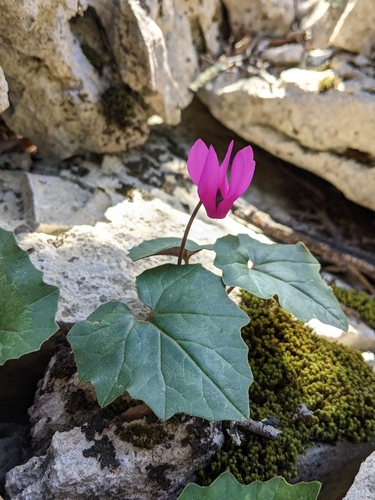

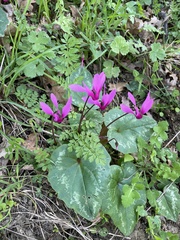
Spring sowbread is a small tuberous perennial of Mediterranean woodland. Fragrant pink flowers appear in spring above thin, often marbled leaves.
Read moreSpring sowbread
Cyclamen europaeum subsp. repandum and Cyclaminus repanda
Place in indirect light or in a shaded room.
Sheltered partial shade; thin leaves suffer in strong sun.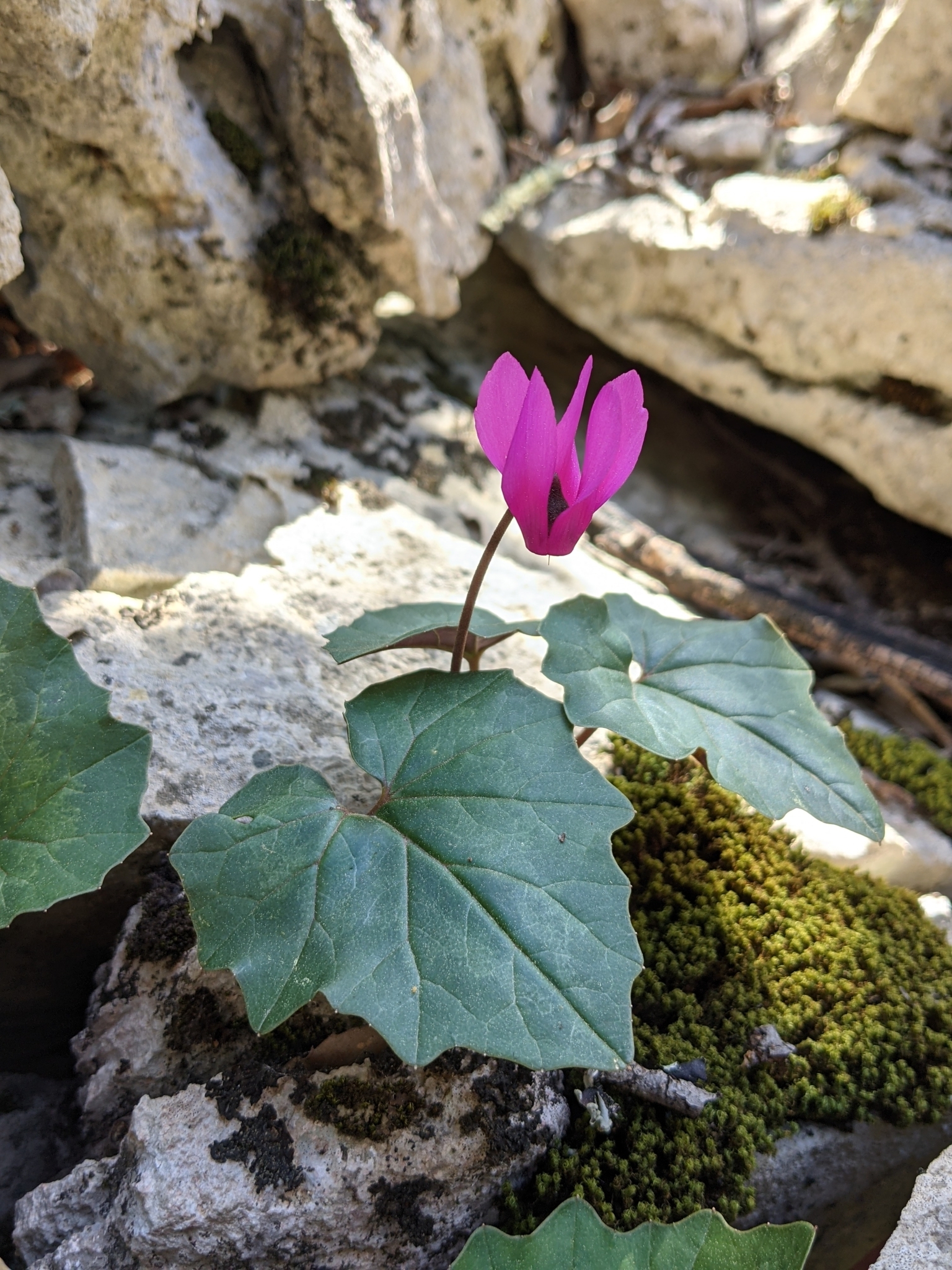


© photo
Denis Bastianelli · cc-by
Derek Winterburn · cc-by
Henry Miller · cc-by
Taken Apr 21, 2021 by Cacciola caterina (cc-by-sa)
Taken Jun 5, 2022 by Coutinho Gisele (cc-by-sa)
Taken Apr 5, 2021 by Denis Bastianelli (cc-by-sa)
Taken Sep 28, 2020 by Roger Biggins (cc-by-sa)
Taken Feb 8, 2021 by Dieter Wagner (cc-by-sa)
© copyright of the Board of Trustees of the Royal Botanic Gardens, Kew.




Global distribution
Native from southeastern France and southern Switzerland to the central Mediterranean; a variety occurs in Algeria.
- Native2
- Introduced1
- Corsica
- Italy
- Great Britain
Hexagons: regions where the plant occurs. Green dots: native range.1
Identity
Spring sowbread (Cyclamen repandum Sm., 1806) flowers in spring in Mediterranean woodland. Long, narrow pink petals turn upward above a nodding flower. It belongs to Primulaceae. Spring flowering is more useful for identification than marbled leaves alone, a character shared by several cyclamens. Its French names include cyclamen étalé and cyclamen du printemps. 1 5 3 8
An underground tuber sustains this perennial. Leaves accompany flowering, then disappear during dormancy. A plant with no visible aboveground parts can therefore remain alive. Cultivated plants rarely exceed 10 cm (4 in); wild plants reach 10–25 cm (4–10 in). 3 5 7
Recognition
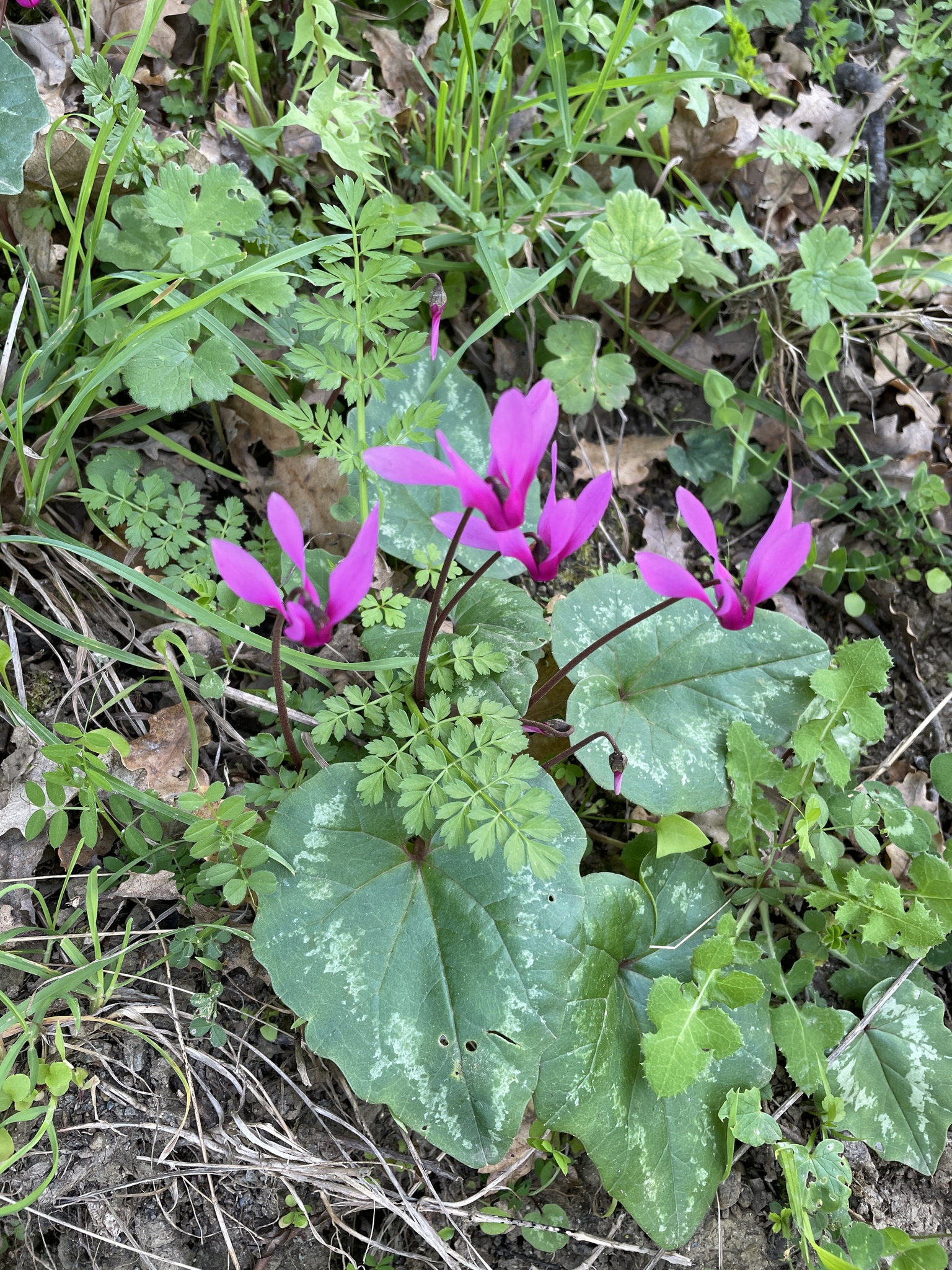
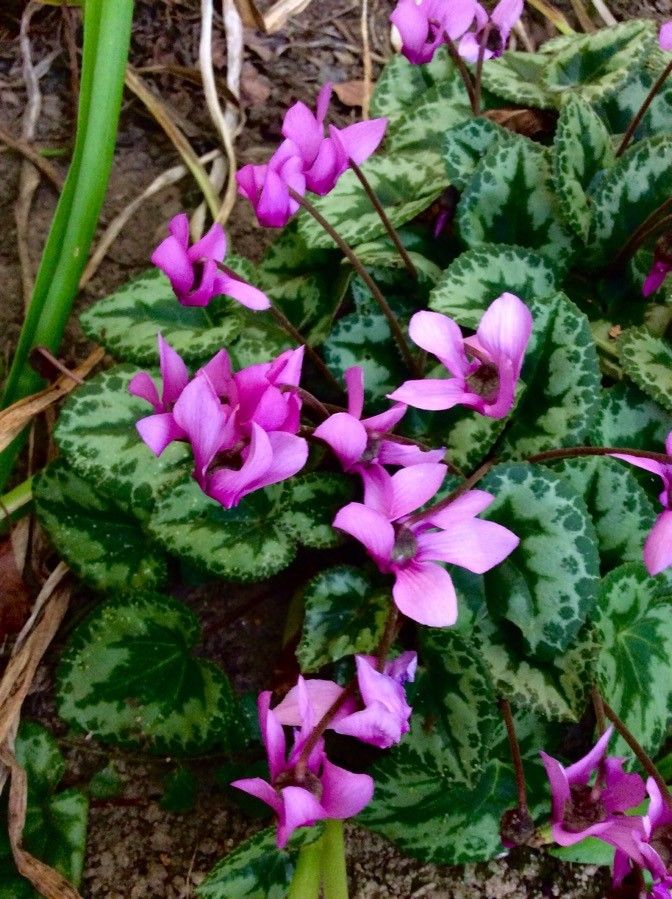
Thin, heart-shaped to triangular leaves have variably lobed or scalloped margins. A dark green background often surrounds an irregular pale area with a darker triangular center. Patterns vary between individuals and do not by themselves establish another species. Leaves become fully developed during spring flowering. 5
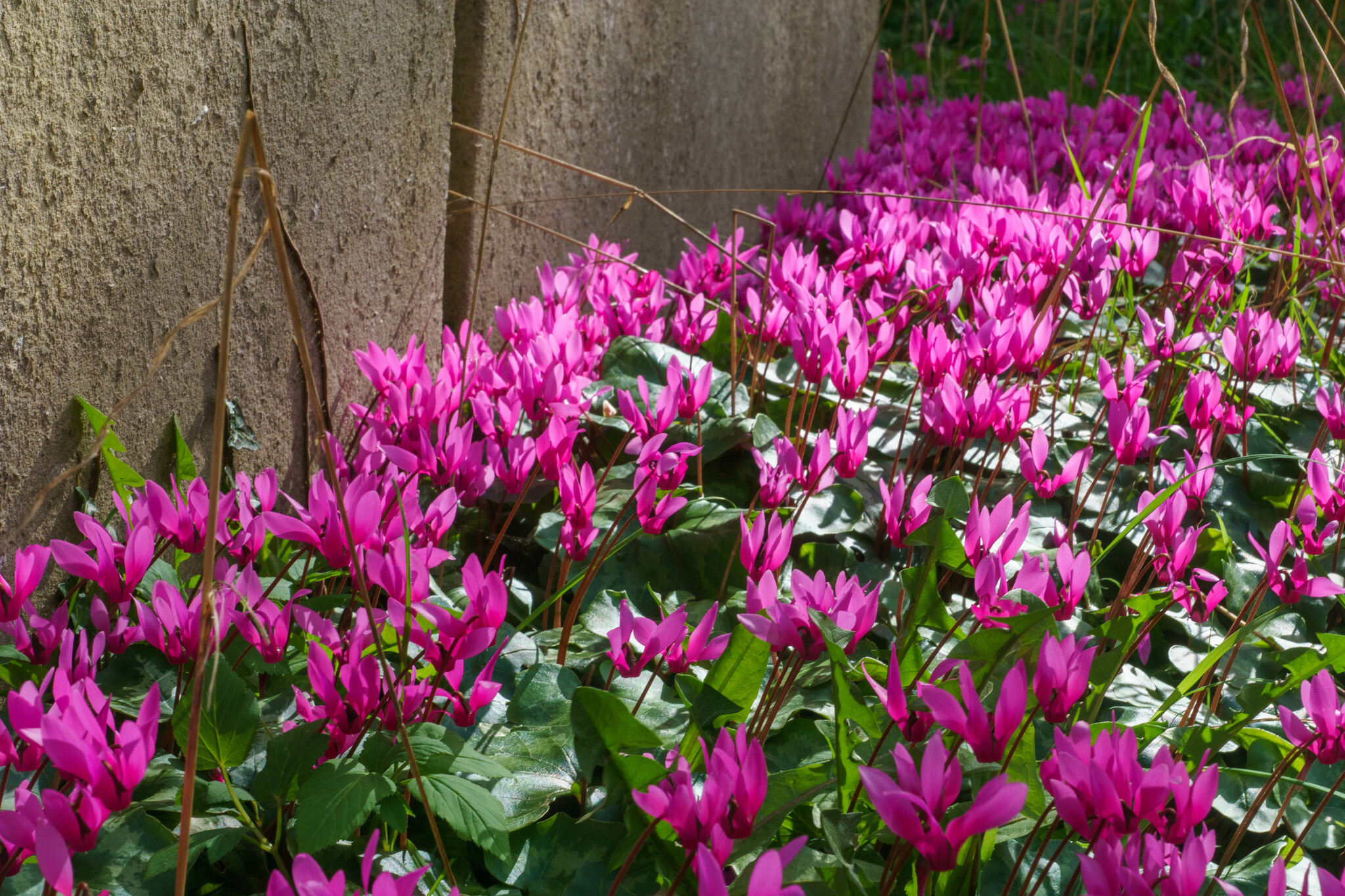
Fragrant flowers are usually reddish pink with a darker mouth. The corolla lobes measure 15–25 mm (0.6–1 in), turn backward and are often twisted. They lack the small basal auricles found in some other cyclamens. White flowers can belong to this species: form album occurs notably in Corsica. Flower shape complements color in identification. 5 4
Useful taxonomy
James Edward Smith published Cyclamen repandum in 1806, in volume one of Florae Graecae Prodromus, page 128. “Sm.” abbreviates his botanical name. The species remains accepted under this binomial. A later illustration date need not be the publication date of the name. 2 1
Cyclamen europaeum subsp. repandum (Sm.) Bonnier & Layens and Cyclaminus repanda (Sm.) Asch. are synonyms. Plants formerly treated as subspecies, including rhodense and creticum, now belong to distinct related species. A complete name and authority are therefore more useful than “repandum” alone on an old label. 1
Habitat and distribution
Shaded, moist, sheltered sites suit spring sowbread: deciduous or evergreen woodland, scrub and shaded rocks. Its natural regions receive substantial winter rain. Mediterranean origin does not imply a liking for scorching full sun or prolonged soil dryness. Thin leaves readily suffer from strong wind and nighttime frost. 5
Its native range extends from southeastern France and southern Switzerland to the central Mediterranean, including Corsica, Sardinia and Italy. Variety baborense occurs in northeastern Algeria. Great Britain is an introduction. These records distinguish natural origin from places where it naturalized after cultivation. 1 5
In mainland France it is localized in Mediterranean woodland and scrub, notably Var, the Maures massif and Pyrénées-Orientales, and occurs throughout Corsica. It is protected in Provence-Alpes-Côte d’Azur, where picking, uprooting and selling wild specimens are prohibited. Its French national Red List category is Least Concern. 7 5 8
Cycle and reproduction
Ordinary wild populations flower from March to May. Leaves emerge in early spring and accompany the flowers; the Algerian variety can flower later, including June. This variation should not become one universal calendar. Monthly references concern sheltered outdoor cultivation in sufficiently mild French conditions. 5
Horticultural propagation is by seed, sowing ripe seeds in darkness. Fine roots emerge from the center of the tuber’s underside, making orientation important when planting. Reappearance over successive springs chiefly reflects persistence of this reserve organ, rather than proof of new self-sown plants. 3 5
Uses and risks
For gardens, choose open woodland or a shaded planting. Humus-rich, drained soil stays moist without saturation. Avoid excess summer moisture and mulch as leaves fade. Planting depth depends on context: about 5 cm (2 in) in drained garden soil, or 10–15 cm (4–6 in) to encourage naturalization in a sheltered, moist site. Ornamental tubers must not come from wild populations. 3 5 8
Cyclamens are toxic to cats, dogs and horses. This evidence concerns the genus Cyclamen, rather than a study specific to spring sowbread. Terpenoid saponins can cause drooling, vomiting and diarrhea; large quantities of tubers can cause cardiac arrhythmias, seizures or death. People must not eat tubers either, and gloves are advised for handling. Keep tubers inaccessible to animals digging in soil. 6 3
Varieties, lookalikes, and related plants
White form album must not be presented as one unique cultivar. White individuals occur in populations, more often in Corsica than elsewhere. Botanical variety baborense differs notably in larger leaves and flowers. A geographic variety and a color form are distinct categories even when listed together in catalogs. 5 1
Lobed leaves can resemble ivy-leaved cyclamen. Combine spring flowering, thin leaves and elongated corolla lobes lacking basal auricles. Foliage photographs alone omit part of the evidence. Flowers present alongside leaves give a more useful comparison with related species. 5
Main sources
Spring sowbread retains the name Cyclamen repandum Sm., published in 1806; spring flowers and thin leaves distinguish it from autumn-flowering cyclamens. 2 5
Frequently asked questions
When does spring sowbread bloom?
Wild populations bloom in spring, generally March to May in their native setting, varying with climate and variety.
Why does spring sowbread disappear in summer?
Its leaves are deciduous and the tuber persists underground. Seasonal leaf loss alone does not indicate death.
Is spring sowbread toxic to animals?
The genus Cyclamen is classified as toxic to cats, dogs and horses. Tubers pose a particular risk when eaten in quantity.
If you are unsure about a plant’s toxicity, ask a botanist or veterinarian for advice.