
Gold-dust dracaena (Dracaena surculosa, )


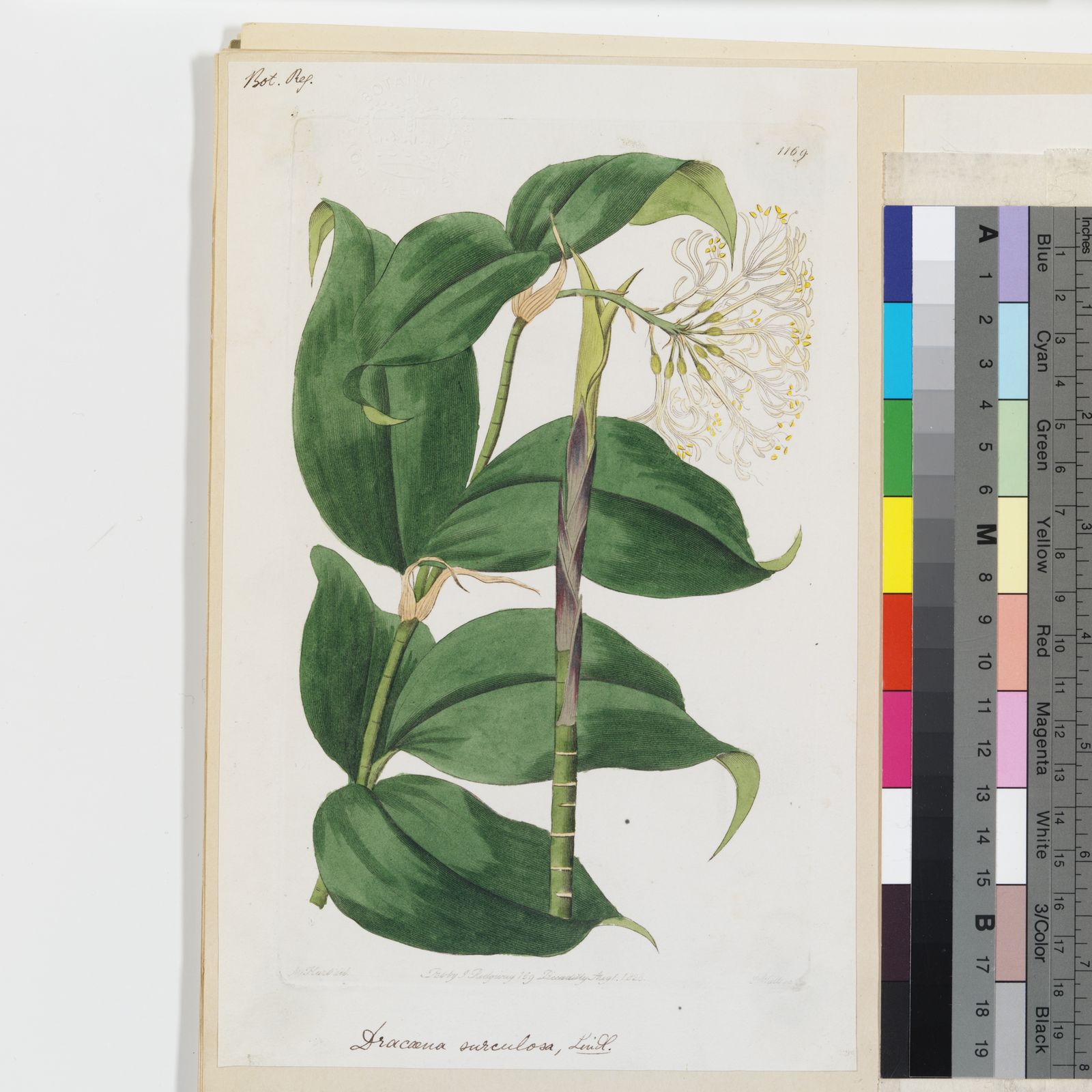
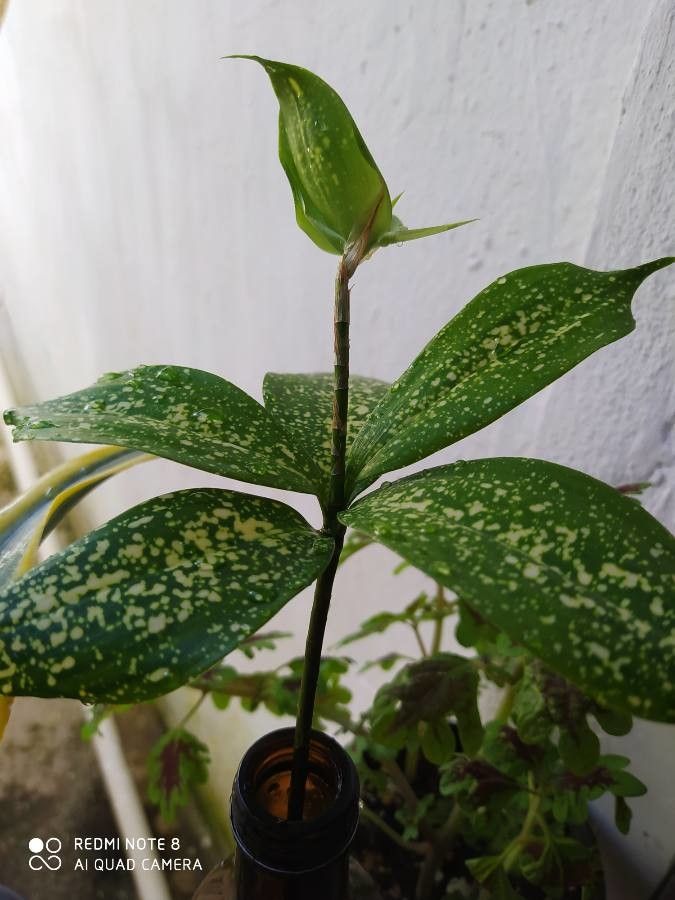
Gold-dust dracaena bears oval, speckled leaves on slender stems. This slow-growing African shrub grows indoors in bright light, with well-drained potting mix and reduced watering in winter.
Read moreGold-dust dracaena
Draco surculosa, Pleomele surculosa and Dracaena godseffiana
Give plenty of ambient light without direct sun on the leaves.
Bright indirect light, protected from scorching sun.



© photo
Wikimedia Commons · CC BY-SA or Public Domain
Wikipedia · CC BY-SA
Taken Dec 3, 2022 by abdul rashid (cc-by-sa)
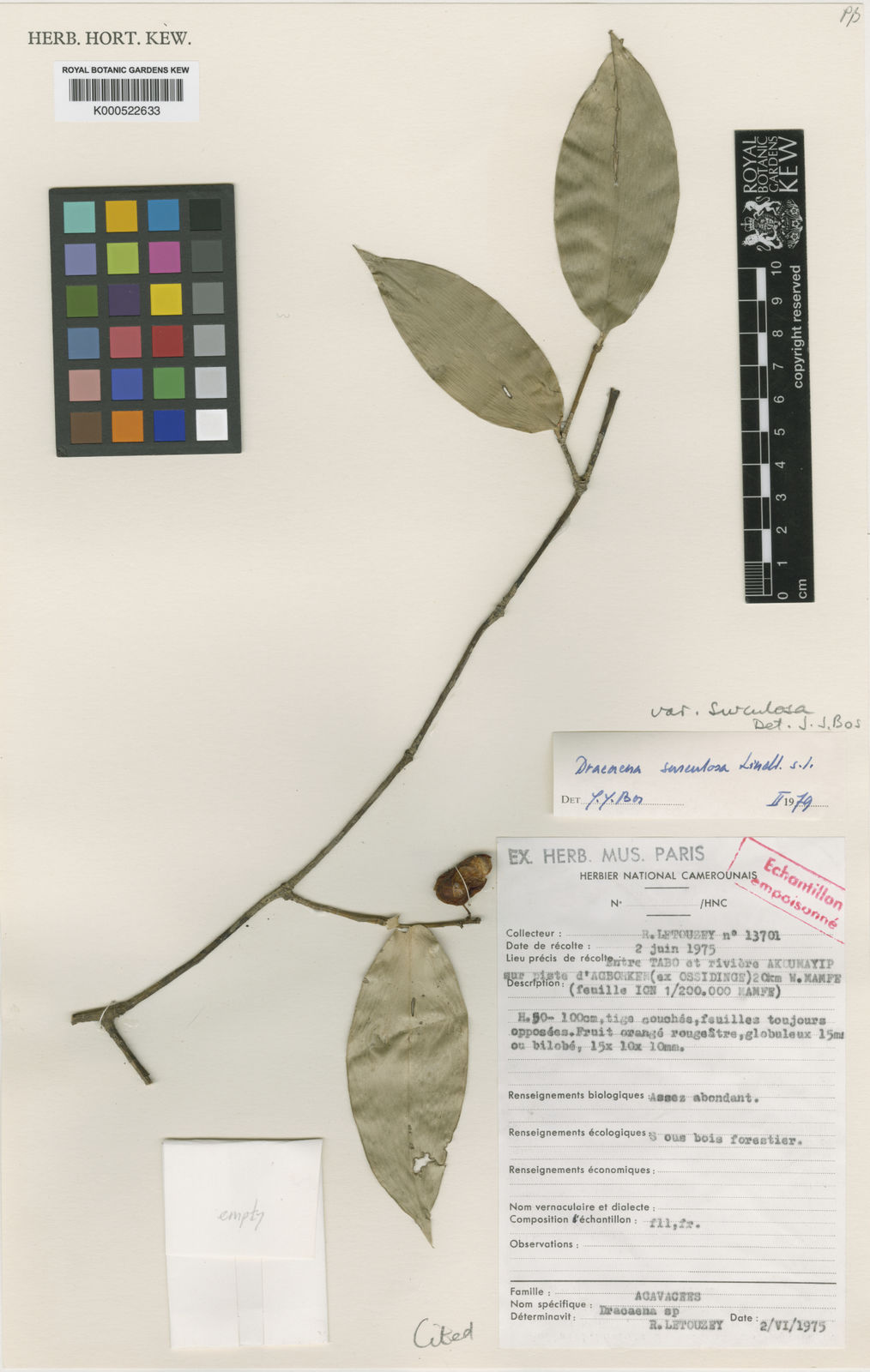
© copyright of the Board of Trustees of the Royal Botanic Gardens, Kew.




Global distribution
Native to western tropical Africa, from Guinea to Congo; grown as a houseplant or as an ornamental in warm climates.
Identity
Gold-dust dracaena (Dracaena surculosa Lindl., 1828) bears oval, speckled leaves on slender, branching stems. The French name “dracaena à taches jaunes” describes the yellow spots on its foliage, although the markings can also be cream. Gold-dust dracaena belongs to the Asparagaceae family, within the order Asparagales. 1 3 6
Gold-dust dracaena is a slow-growing evergreen perennial, cultivated for its foliage. Gold-dust dracaena rarely flowers indoors. The Latin epithet surculosa refers to the branching habit of the species, a feature visible in the plant's thin stems as well as in its overall outline. 6
Identification
Gold-dust dracaena leaves measure about 7–12 cm (2.8–4.7 in) long in the description of plants cultivated in Singapore. The smooth, leathery blade is elliptical or oval, with a small pointed tip. Young leaves carry golden markings that fade to cream or white as the leaves mature. 4
Leaf arrangement can be misleading. Leaves form a spiral at the growing shoot tip, but the lengthening internodes later give the impression of opposite pairs or groups around the stem. Examine a whole shoot, rather than an isolated pair of leaves. The broad leaves distinguish gold-dust dracaena from many dracaenas with strap-shaped foliage. 4
Size depends on growing conditions. A British description records stems reaching 3 m (10 ft), while container cultivation in Singapore describes a plant about 1 m (3.3 ft) tall. The heights concern different settings and do not promise a particular size for a plant in a living room. 5 4
Taxonomy, cultivars, and identification
Dracaena surculosa is an accepted name for a species in the Asparagaceae family. The binomial was published in the Botanical Register in 1828. The current family placement is Asparagaceae. The botanical identity helps when checking a horticultural label that uses an older name or a cultivar name. 2 3
The older names Draco surculosa and Pleomele surculosa refer to the same plant in horticultural descriptions. Dracaena godseffiana Masters is also associated with the taxon. An old name on a label does not, on its own, establish that the plant belongs to a different species. 6 1
‘Florida Beauty’ has cream to white patches on broadly elliptical leaves. ‘Milky Way’ has a long white central band on green leaves. The patterns describe particular cultivars; spotted foliage in the species is not enough to identify a plant as ‘Florida Beauty’. Keep the cultivar name attached to its own description. 7 6
Habitat and distribution
Gold-dust dracaena is native to western tropical Africa, from Guinea to Congo. Its native range includes Ghana and Cameroon, along with neighboring countries. Its African origins help prevent the English horticultural name “Japanese Bamboo” from being mistaken for a statement of geographic origin. 1 6 4
Gold-dust dracaena grows as an ornamental shrub in warm regions and as a houseplant elsewhere. Container cultivation is documented in Singapore. Horticultural recommendations favor a sheltered position with light that protects the foliage from scorching sun. A description of outdoor growing in the tropics needs that context when choosing an indoor position. 1 4 5
Growth cycle and propagation
Gold-dust dracaena produces small, greenish-white tubular flowers that are fragrant at night. Flowers and the orange to red berries that follow remain rare on a houseplant. A lack of flowers indoors is therefore not, by itself, a sign of poor health; foliage is the principal ornamental feature in that setting. 6
Stem cuttings and division are documented propagation methods for gold-dust dracaena. Take semi-ripe cuttings in late spring or early summer. Bottom heat can be needed for rooting. The seasonal recommendation concerns taking cuttings, while the need for additional warmth concerns their rooting conditions. 6 5
Gold-dust dracaena can also be propagated from seed in spring, at 18–20 °C (64–68 °F). The temperature concerns seed germination. For Dracaena surculosa, a germination temperature defines neither a minimum survival temperature nor a general range to impose on the adult plant. Seed-starting conditions and the needs of an established plant are separate questions. 5
Growing conditions and calendar
Gold-dust dracaena needs bright indirect light and well-drained potting mix. Too little light weakens foliage color, while excessive sun can scorch the leaves. Good drainage reduces the risk of root rot associated with standing water. Light and drainage both matter when choosing where to grow the plant. 6 4
Wait until the surface of the mix is dry before watering gold-dust dracaena. Brown, falling leaves can signal too much water, in which case immediately watering again makes the problem worse. Browning should therefore not automatically be interpreted as a shortage of water; check the condition of the mix first. 4
During growth, water moderately and apply a balanced liquid fertilizer once a month. Reduce watering in winter, and repot or replace the top layer of mix in spring. The monthly schedule applies these seasons to indoor cultivation in metropolitan France: water and growth remain relative indices, to be adjusted to the pot's actual drying pattern. 5
Uses and risks
Gold-dust dracaena is toxic to cats and dogs if eaten. Reported signs include vomiting, lethargy, loss of appetite, and drooling. Dilated pupils are a reported sign of poisoning in cats after ingestion of Dracaena surculosa. Contact a veterinarian promptly after suspected ingestion. 8 9
Saponins are reported as the toxic principle for this taxon, while another profile leaves that principle undetermined. Both profiles classify Dracaena surculosa as toxic to cats and dogs despite differing on the substance responsible. Uncertainty about the toxic substance does not remove their warning about ingestion. 6 9 8
Human toxicity from ingestion is also reported, with severity described as low. The information does not define a risk specific to children or a status for horses; those gaps do not establish safety. Rabbits and rodents are also covered by a warning about ingestion. Keeping gold-dust dracaena out of reach prevents access to its foliage. 6 5
Main sources
The nomenclatural reference for Dracaena surculosa is an 1828 publication in the Botanical Register. 3
- EPPO Global Database, Dracaena surculosa
- GBIF Backbone Taxonomy, Dracaena surculosa
- International Plant Names Index, Dracaena surculosa
- NParks Flora & Fauna Web, Dracaena surculosa
- Royal Horticultural Society, Dracaena surculosa
- NC State Extension, Dracaena surculosa
- NParks Flora & Fauna Web, Dracaena surculosa ‘Florida Beauty’
- ASPCA, Gold Dust Dracaena
- ASPCA, Florida Beauty, entry under the scientific name Dracaena surculosa
Frequently asked questions
How can I identify gold-dust dracaena?
Its slender stems carry glossy oval leaves, green with yellow or cream spots. The broad leaves differ from the strap-shaped leaves of many other dracaenas.
Is Dracaena surculosa toxic to cats?
Yes. Ingestion can cause vomiting, lethargy, and drooling; dilated pupils are reported in cats. Contact a veterinarian promptly after suspected ingestion.
Why do the leaves turn brown after watering?
Too much water can cause leaves to turn brown and fall. Check drainage and let the surface dry before watering again.
When should I repot Dracaena surculosa?
Spring is the recommended time to repot or replace the top layer of potting mix. Water moderately during growth and reduce watering in winter.
If you are unsure about a plant’s toxicity, ask a botanist or veterinarian for advice.