
African Hosta (Drimiopsis maculata, )
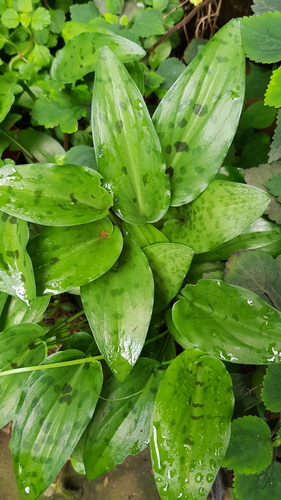
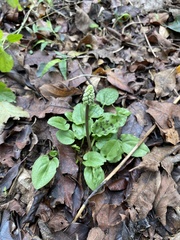
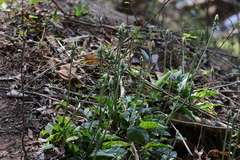
African Hosta (Drimiopsis maculata) forms clumps of green leaves marked with dark spots, accompanied by small white to greenish flowers. This African bulbous plant needs free-draining soil and care adapted to its seasonal growth.
Read moreAfrican Hosta and African false hosta
Ledebouria petiolata, Drimia petiolata and Drimiopsis minor
Place in indirect light or in a shaded room.
Light shade to partial sun; tolerates low light in a collection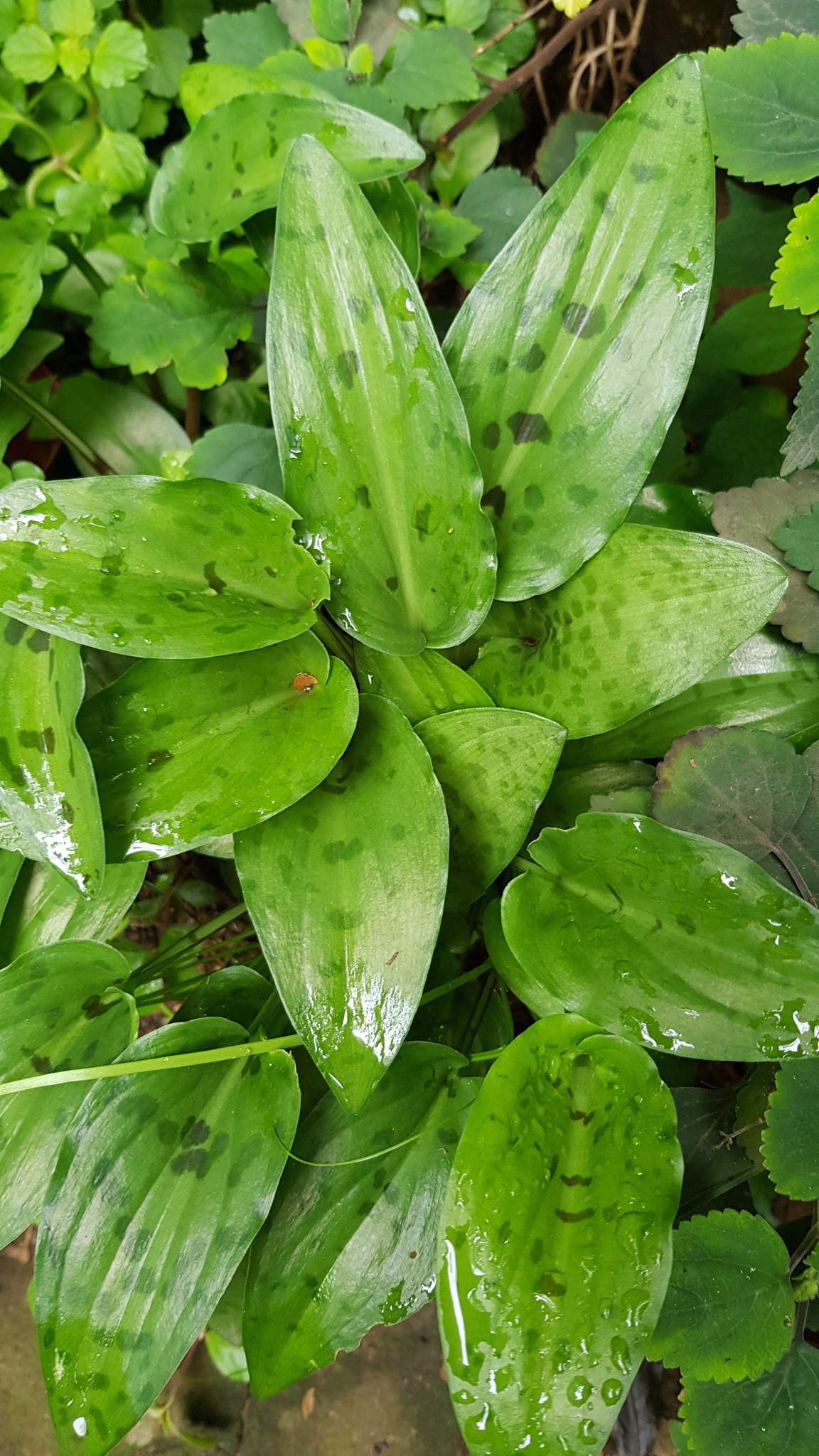

© photo
(c) Margaret Burger, some rights reserved (CC BY-SA), uploaded by Margaret Burger · cc-by-sa
Sunčana Bradley · cc-by
Mahomed Desai · cc-by
Taken Mar 16, 2022 by William Coville (cc-by-sa)
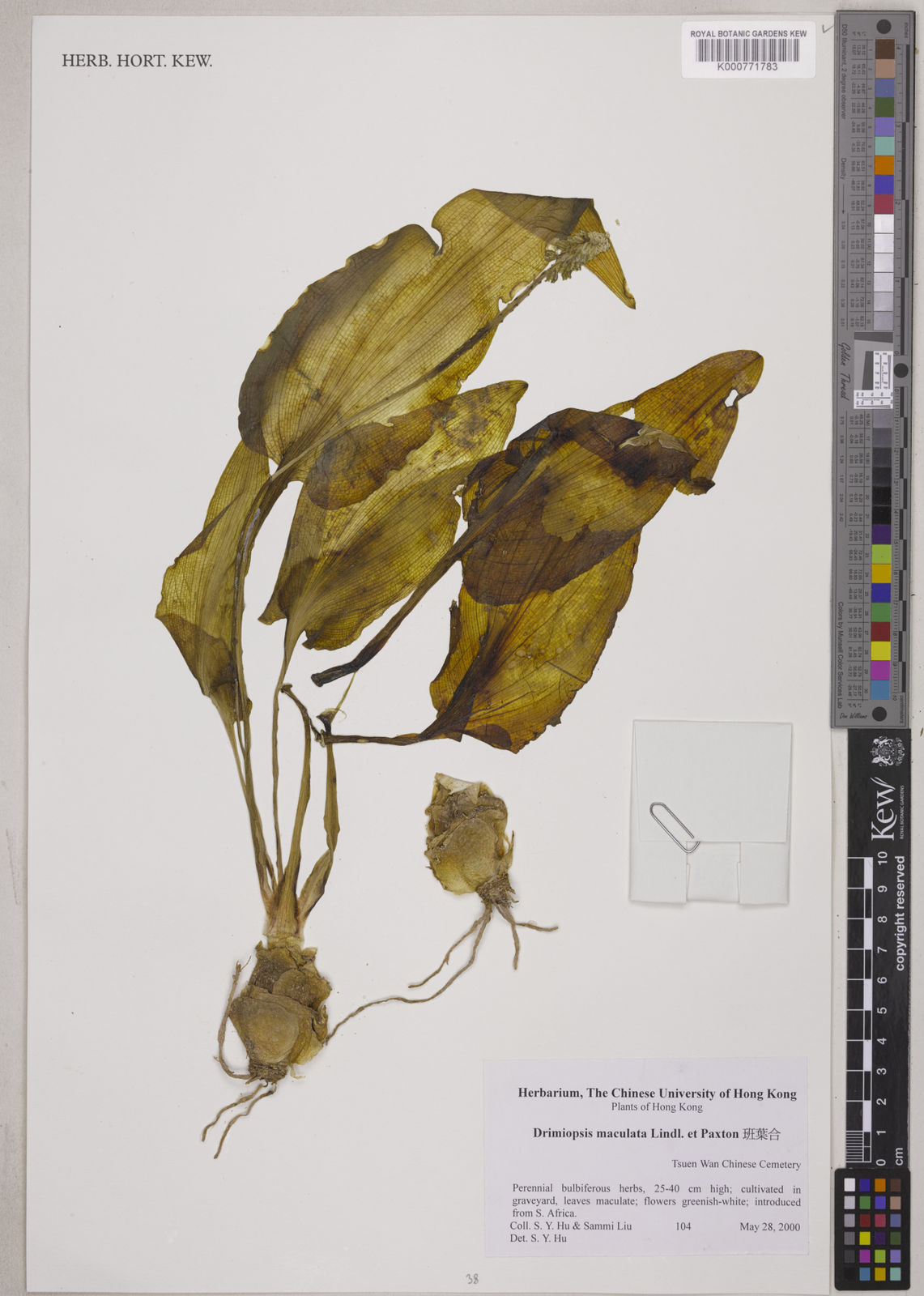
© copyright of the Board of Trustees of the Royal Botanic Gardens, Kew.




Global distribution
Native range from Tanzania to South Africa, including Mozambique and Eswatini; introduction reported in the Canary Islands.
- Native4
- Introduced1
- Tanzania
- Mozambique
- Eswatini
- South Africa
- Canary Islands
Hexagons: regions where the plant occurs. Green dots: native range.1
Identity
African Hosta (Drimiopsis maculata Lindl. & Paxton, 1851) bears green leaves marked with dark spots above a rounded bulb. This small African perennial belongs to the Asparagaceae, in the order Asparagales. Its French name “drimiopsis pointé” is used, among others, by Château Pérouse Botanical Garden. 1 2 6
The original publication appears in the second volume of Paxton’s Flower Garden. The name was published in 1851; the bibliographic collation indicates a volume covering 1851–1852. The English name “African Hosta,” used in Florida horticulture, does not make it a species of the genus Hosta. The botanical name avoids this confusion. 1 8 4
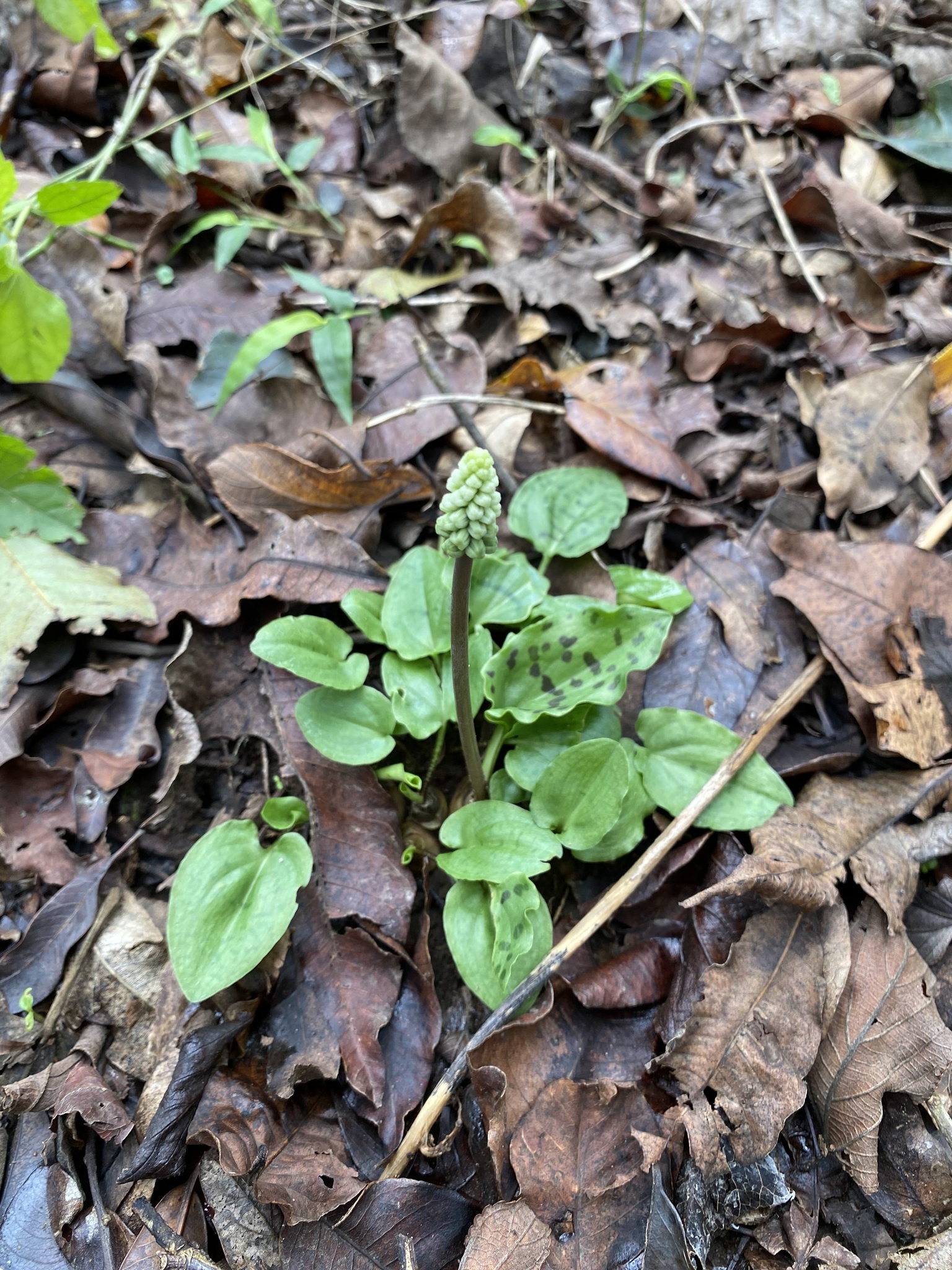
Recognition
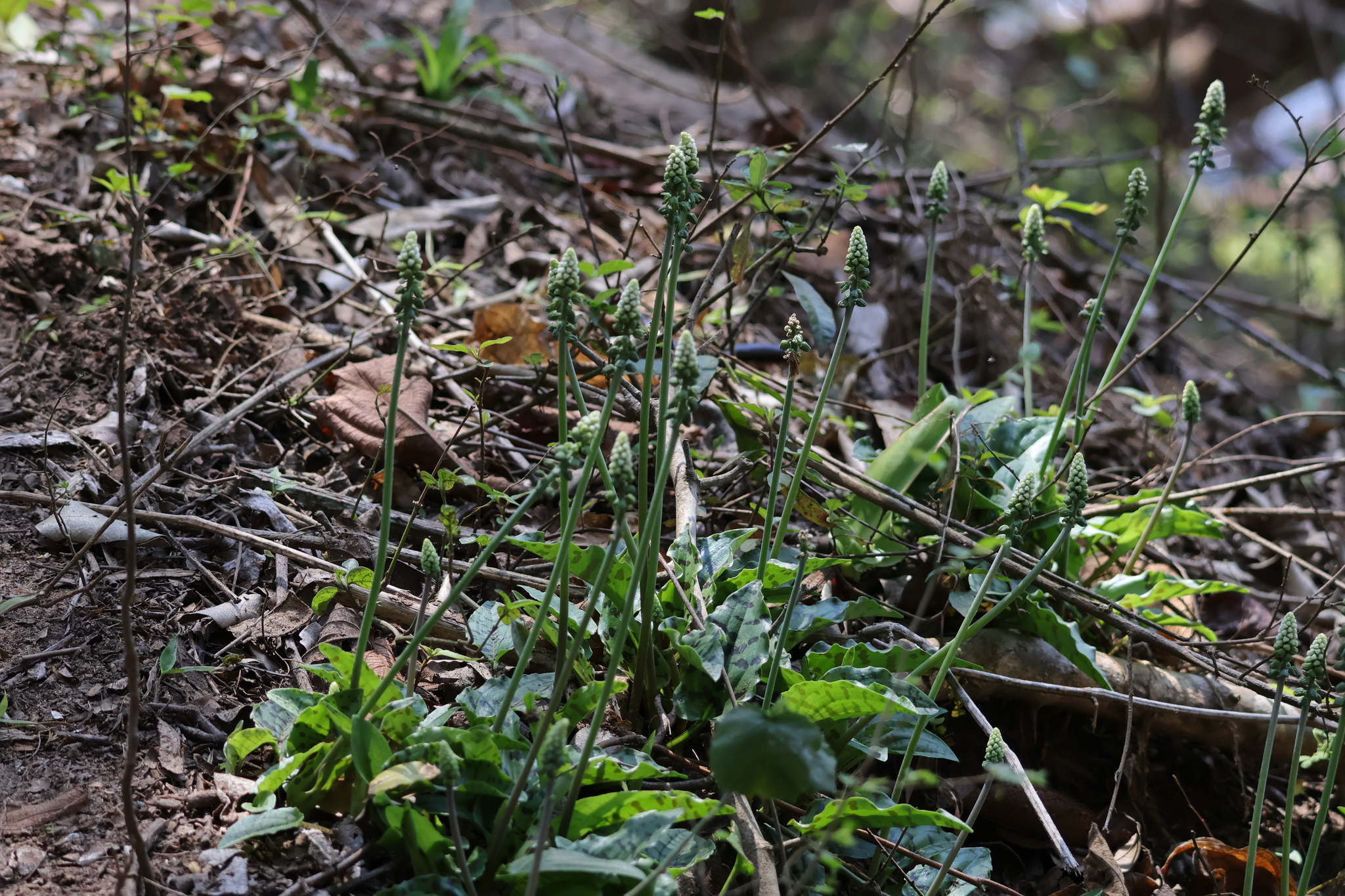
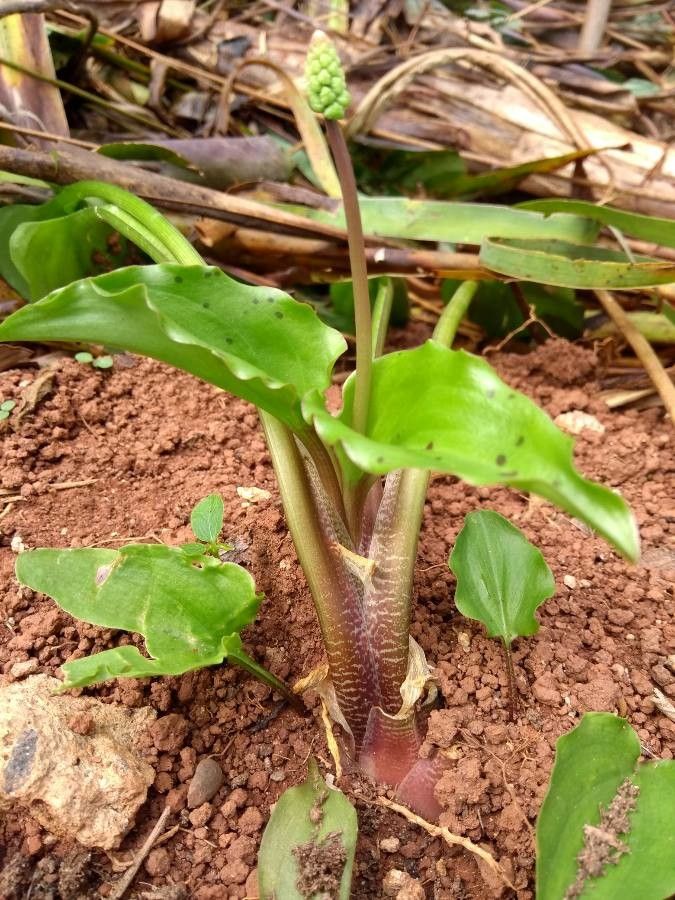
African Hosta reaches about 30 to 35 cm (11.8 to 13.8 in) in regional floristic descriptions. Its leaves have a distinctly differentiated narrow base, comparable to a stalk, followed by a broadened, often heart-shaped blade. The upper surface is glossy, with dark green or purplish markings; the underside is paler. The edge can be wavy. The Zambesian description specifies that the upper half of the globose bulb emerges, bearing small scales. It describes 2 to 4 leaves, hairless, upright or spreading. These features concern the botanical species, without denoting a particular horticultural selection. 2
The inflorescence rises above the foliage and bears small white to greenish flowers about 3 to 5 mm (0.12 to 0.20 in) long in the description reproduced by the University of Connecticut. The flower segments curve inward at their tips. Flowers cluster above the leaves on short stalks: their arrangement complements the leaf blade's features. An isolated leaf spot is therefore insufficient for identification: the leaf bases and flower arrangement complete the examination. 5
Taxonomy and similar plants
Drimiopsis maculata and Ledebouria petiolata refer to the same taxon, but reference systems use different genera. Placement in Drimiopsis leads to acceptance of Drimiopsis maculata, with Ledebouria petiolata as a synonym. Placement in Ledebouria leads to acceptance of Ledebouria petiolata and listing Drimiopsis maculata as a synonym. This divergence explains why both names appear in collections and botanical literature. 1 3
Drimia petiolata K.Koch & C.D.Bouché and Drimiopsis minor Baker also appear among the synonyms. The latter name should not be confused with that used by Van der Merwe: the relationship of that material to African Hosta from Mozambique still needs study. Natural leaf spots do not prove the existence of a variegated cultivar. 1 2
Habitat and distribution
The native range of African Hosta extends from Tanzania to South Africa, with records in Mozambique and Eswatini. The Canary Islands, where the species is introduced, remain distinct from its original range. Presence in a garden should not be equated with a wild site. 1
The floras describe grasslands and open spaces: coastal sites in Mozambique and valley grassland on sandy clay in East Africa. These observations concern different regions. The possible vulnerability noted within the Zambesian flora is a regional assessment; the “not threatened” risk prediction presented for the species is a model result, distinct from a global IUCN assessment. 2
Life cycle and propagation
African Hosta bulbs multiply and form clumps. Florida's extension service recommends dividing them after a few years and places flowering in spring. Separating clumps provides a propagation method directly documented for this species. 4
Château Pérouse garden also describes spring seed sowing and shallow bulb planting in spring. These guidelines provide a seasonal window for establishing divisions in pots. They come from a Mediterranean horticultural protocol whose details are not a universal recipe. A floristic description's absence of observed fruits does not mean that the plant is sterile. 6 2
Care through the seasons
For African Hosta, Florida's advice combines light shade to partial sun, average water needs and drainage in pots. The Connecticut collection uses moist, well-drained organic soil under low light. The common requirement is a growing medium that drains excess water during growth. A fixed watering frequency would poorly suit these different conditions. Leaf spots are described as darker in shade in Florida horticulture: the strength of the pattern can therefore vary with exposure. 4 5
Connecticut describes winter leaf loss, while Château Pérouse records evergreen foliage in its Mediterranean setting. Leaf loss therefore depends on management and climate. Seasonal guidance for cultivation in France reflects this possibility of winter rest: reduce watering when growth slows, then adjust it as growth resumes. These guidelines do not correspond to measured water volumes. 5 6
Uses and risks
African Hosta is cultivated for its spotted foliage, notably as a small ground cover in a suitable climate. Traditional bulb preparations for digestive disorders in children are reported by Koorbanally and colleagues. This ethnobotanical mention demonstrates neither effectiveness nor safety and is not a recommendation for medicinal use. 4 7
The paper reports negative toxicity trials in sheep, conducted with fresh material in flower and fruit. These limited results do not determine the risk for cats, dogs or horses. Safety also remains unestablished for children and adults. Chemical analyses of the bulb identify several compounds, without providing a clinical assessment for these audiences. The study concerns two species of Drimiopsis; only results attributed to D. maculata directly concern African Hosta. 7
Main sources
- Kew, Plants of the World Online: Drimiopsis maculata
- Kew: descriptions from Flora Zambesiaca and Flora of Tropical East Africa
- USDA ARS, GRIN Taxonomy: Drimiopsis maculata
- University of Florida IFAS Extension: Fact sheet, African Hosta
- University of Connecticut: Drimiopsis maculata, living collection
- Château Pérouse Botanical Garden: Drimiopsis maculata
- Koorbanally, Mulholland and Crouch (2006): Norlignans and homoisoflavanones from two South African Drimiopsis species
- International Plant Names Index: Drimiopsis maculata
Frequently asked questions
Are Drimiopsis maculata and Ledebouria petiolata different species?
These names refer to the same taxon. Depending on the genus used in the botanical classification, the accepted name is Drimiopsis maculata or Ledebouria petiolata; the other name is then listed as a synonym.
Does African Hosta lose its leaves in winter?
A university collection describes it as winter-deciduous, while Château Pérouse records evergreen foliage in a Mediterranean setting. Leaf persistence therefore depends on growing conditions.
How can I propagate African Hosta?
The bulbs multiply into clumps that can be divided. Seed sowing is also documented in a spring horticultural protocol.
Is African Hosta safe for cats?
Safety for cats has not been established. Negative trials in sheep, reported in a botanical study, do not establish a conclusion for cats or other domestic animals.
If you are unsure about a plant’s toxicity, ask a botanist or veterinarian for advice.