
Echeveria secunda
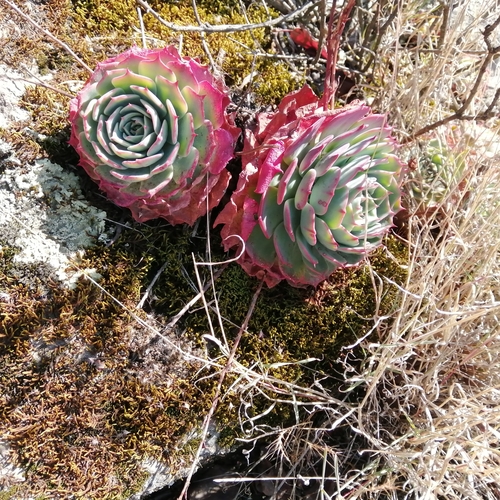

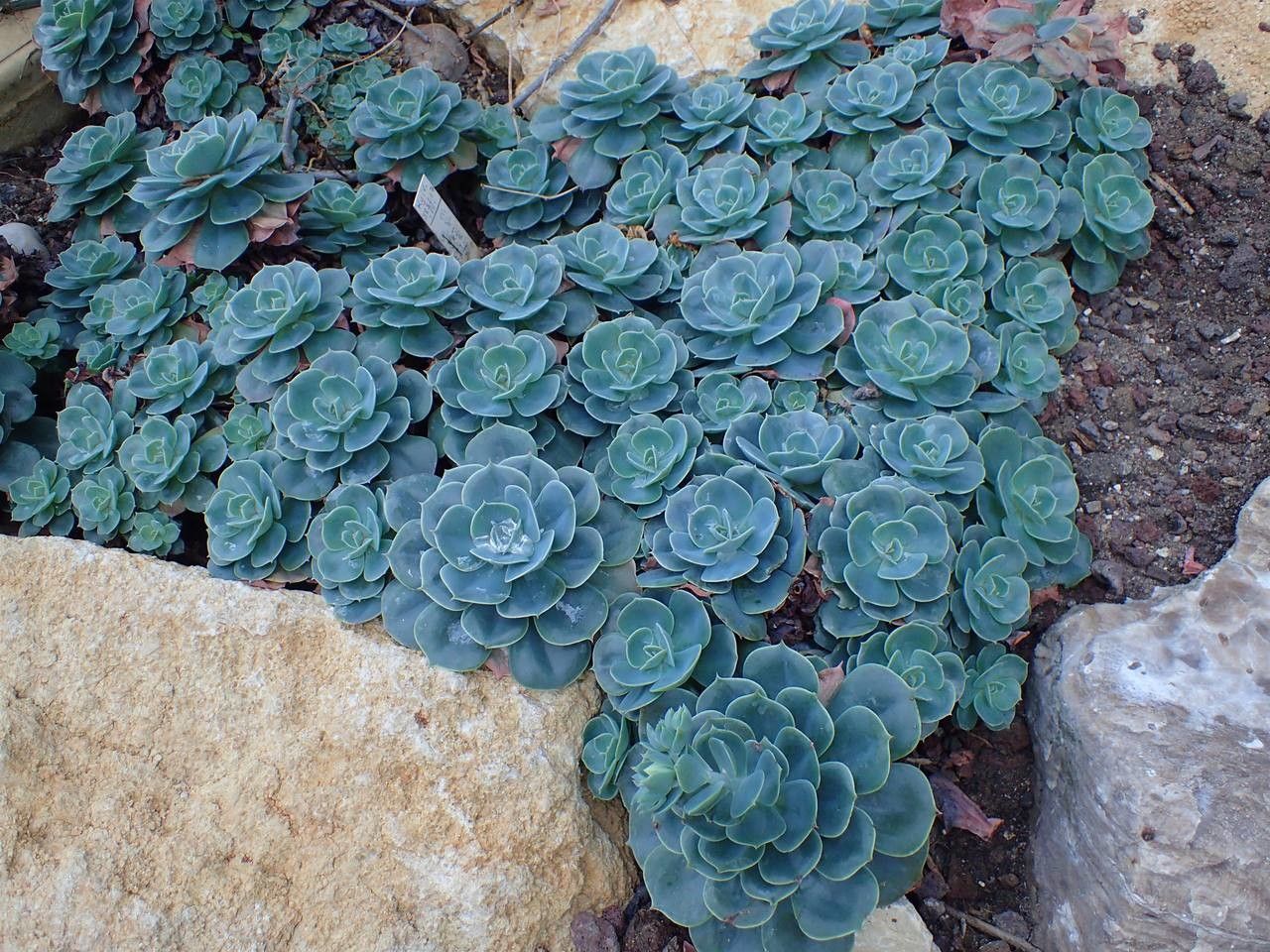
Echeveria secunda is a Mexican succulent with blue-green leaves, often pink at the tips. Its rosettes produce numerous offsets and yellow flowers on pinkish stalks in summer.
Read moreCotyledon secunda, Echeveria glauca and Echeveria pumila
Allow a few hours of direct sun per day, preferably morning or evening.
Bright light; sun or bright partial shade.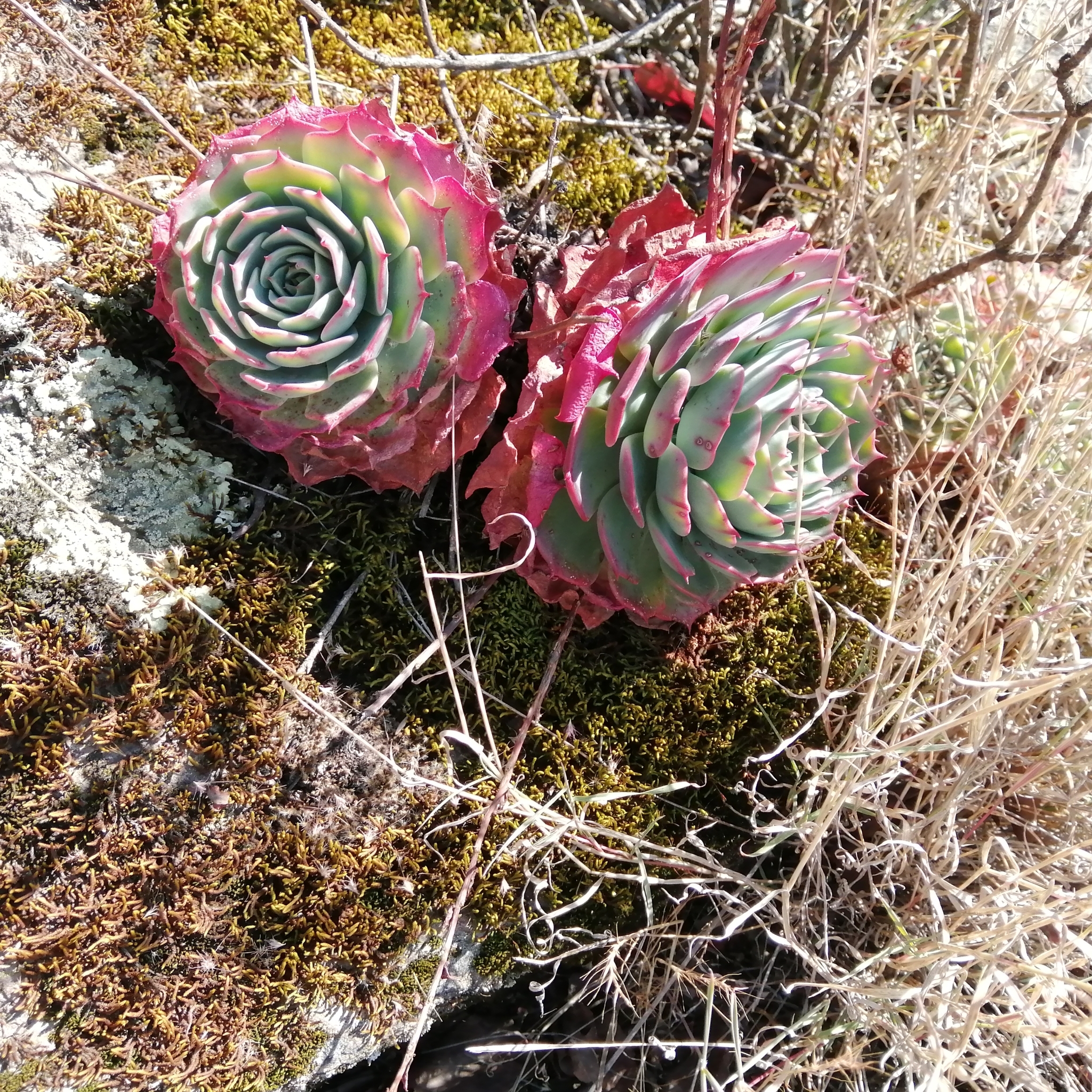


© photo
Ulises Emmanuel Martínez Burgos · cc-by
Wikimedia Commons · CC BY-SA or Public Domain
Wikipedia · CC BY-SA
Taken Jun 25, 2022 by Dave Flack (cc-by-sa)
Taken Nov 26, 2020 by Prado Caroline (cc-by-sa)
Taken Apr 23, 2021 by Gaona Jesús (cc-by-sa)
Taken Jun 20, 2022 by ImmI Kennedy (cc-by-sa)
Taken May 15, 2022 by andres felipe alvarez martinez (cc-by-sa)
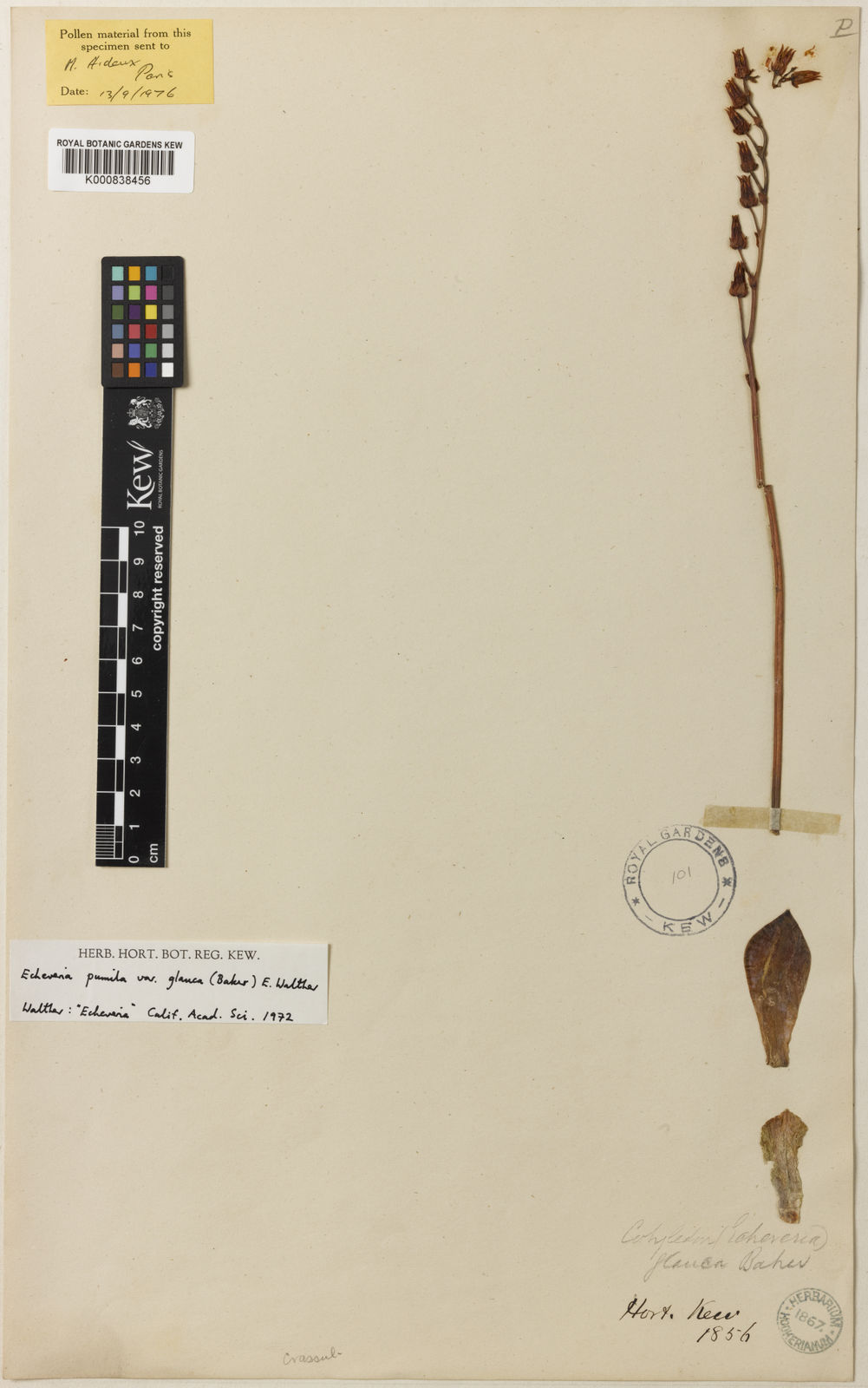
© copyright of the Board of Trustees of the Royal Botanic Gardens, Kew.




Global distribution
Native to Mexico; introduced to the Dominican Republic, New Zealand and Vietnam.
- Native1
- Introduced3
- Mexico
- Dominican Republic
- New Zealand
- Vietnam
Hexagons: regions where the plant occurs. Green dots: native range.7
Identity
The Mexican succulent Echeveria secunda (Booth ex Lindl., 1838) forms rosettes and belongs to the Crassulaceae family. Its accepted botanical name was published in 1838.7 The scientific name is used here for display rather than an unverified common name.
Echeveria secunda is an evergreen perennial that forms clumps by producing offsets. Blue-green foliage with pink tips and small yellow flowers held above the rosettes provide the first clues to its identity. It is grown as a houseplant and can be used in rock gardens where the climate is mild enough.14
Recognition
The spoon-shaped leaves broaden toward the end and finish in a short point. Their upper surface is concave, while the underside has a keel. Leaves can reach 5 cm (2 in) long and 2.5 cm (1 in) wide, with reddish edges and tips against a glaucous green background.9
An individual rosette can measure about 15 cm (6 in) across. The horticultural dimensions of 10 to 50 cm (4 to 20 in) in height and spread describe a developed plant, rather than the diameter of a single rosette.41 The flower stalk reaches 30 cm (12 in) and bears small leaves. The corolla is about 12 mm (0.47 in) long, yellowish red with a yellow tip. Examining the flowers as well as the foliage helps identify a plant sold without a label.9
Useful taxonomy
Echeveria glauca is a botanical synonym, rather than a separate blue cultivar. The older names Echeveria glauca (Baker) É.Morren, Echeveria pumila Van Houtte and Cotyledon secunda (Booth ex Lindl.) Baker all refer to the accepted species.7
Knowing these synonyms allows descriptions published under different names to be compared without confusing the species with a horticultural selection. A name in quotation marks, such as ‘Compton Carousel’, identifies a cultivar described separately. Historical species names and cultivar names are therefore not interchangeable on a label.8
Habitat and range
Echeveria secunda is native to Mexico. Populations are reported in the mountains around Pachuca in Hidalgo, and in the states of México, Puebla and Querétaro. The species belongs to dryland floras, but its habitats also include mountain sites.97
Echeveria secunda is listed as introduced in the Dominican Republic, both main islands of New Zealand, and Vietnam. These records describe its presence outside the native range; they do not by themselves establish that it is invasive.7 Mexican observations report frost on the leaves at high elevations. Those records concern plants in their natural habitat and do not guarantee the hardiness of a plant grown in a pot of wet mix.9
Life cycle and reproduction
Echeveria secunda flowers in summer, on stalks that rise above the foliage. After flowering, small dry capsules can contain very fine seeds. This perennial also produces numerous offsets around the original rosette, so propagation is not limited to sowing seed.4
Offsets can be separated and replanted in a freely draining mix. Leaf cuttings are another option: a new rosette develops and the original leaf eventually dries up. Stem cuttings are also used to propagate plants in this genus.5 Allowing the cut surface to dry before planting a cutting reduces the risk of rot. Keep the mix barely moist during rooting, without heavy watering.3
Uses, cultivation and risks
A pot with drainage holes and a very freely draining mix suit this ornamental succulent. Guidance for echeverias recommends bright light and spaced waterings, after the mix has almost dried out. Excess water encourages rot, especially in winter. Warmth combined with overwatering in that season can also produce elongated, weak growth.2
For plants grown under cover, guidance for the genus recommends a bright, drier winter above 10 °C (50 °F). Plants can spend summer outdoors, then return inside before frost.2 Repot in spring if the container has become too small. General succulent guidance recommends a liquid cactus fertilizer once a month from April to September, during active growth. This Northern Hemisphere schedule provides the seasonal basis for the calendar; adjust care to the plant’s actual growth.3
Under the synonym Echeveria glauca, the species is explicitly classified as non-toxic to cats, dogs and horses. That assessment does not cover humans. Human safety remains unknown, and a lack of data is not evidence that ingestion is harmless.6
Varieties, look-alikes and related plants
‘Compton Carousel’ has broad cream margins around its blue-green leaves. This variegated cultivar produces red and yellow flowers in summer. The variegation distinguishes the selection; it does not describe every plant of the species.8
The description of ‘Compton Carousel’ gives a height and spread of about 15 cm (6 in). Its upright flower stalks bear urn-shaped flowers. ‘Compton Carousel’ is recommended for patios and containers, with cultivation under cover. The cream-edged leaves distinguish it from uniformly blue-green forms even when it is not flowering.8
Echeveria elegans also has spoon-shaped leaves, but their color is more silvery green and its flowers are pink. Echeveria secunda has pale blue-green foliage, often colored along the margins or at the tips.5 ‘Imbricata’ is a hybrid between Echeveria secunda and Echeveria gibbiflora ‘Metallica’. A similar rosette shape alone is therefore not enough to identify a plant as pure Echeveria secunda.5
Main sources
The references distinguish the botanical species from its variegated cultivar and from growing advice given for the genus or succulents as a group.
- RHS, Echeveria secunda
- RHS, Echeveria
- RHS, Growing houseplant cacti and succulents
- NC State Extension, Echeveria secunda
- NC State Extension, Echeveria
- ASPCA, Blue Echeveria
- Kew, Plants of the World Online, Echeveria secunda
- RHS, Echeveria secunda f. secunda ‘Compton Carousel’
- UNAM, Jardín Botánico Iztacala, Echeveria secunda
Frequently asked questions
How can I identify Echeveria secunda?
Its rosettes have fleshy, spoon-shaped, blue-green leaves, often red or pink at the tips. Offsets form around the plant, and the summer flowers combine yellow and red.
Can I grow Echeveria secunda from a leaf?
Yes. Leaf cuttings are documented, as is separating offsets. Let the cut surface dry before placing the cutting in a freely draining mix.
Is Echeveria secunda toxic to cats?
It is classified as non-toxic to cats, dogs and horses under its synonym Echeveria glauca. This animal assessment does not establish whether it is safe for humans to ingest.
Should I water Echeveria secunda less in winter?
Guidance for echeverias calls for drier conditions in winter. Water lightly to prevent wilting, and keep the plant in a bright, frost-free place.
If you are unsure about a plant’s toxicity, ask a botanist or veterinarian for advice.