
Pink Easter lily cactus (Echinopsis oxygona, )
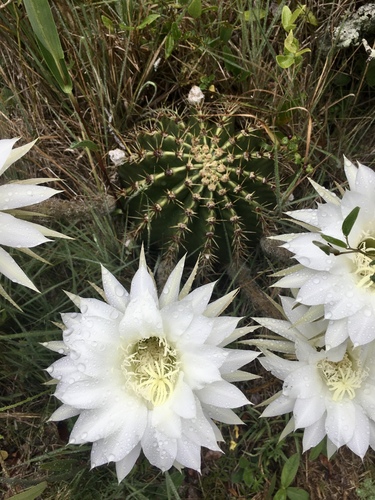

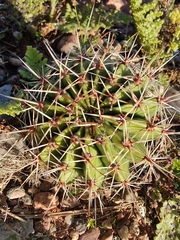
Pink Easter lily cactus (Echinopsis oxygona) opens large white or pink trumpet-shaped flowers above ribbed stems. This South American perennial in the Cactaceae family produces offsets and needs very little water during its winter rest.
Read morePink Easter lily cactus
Echinocactus oxygonus, Echinopsis eyriesii, Echinopsis multiplex and Echinopsis tubiflora
Allow a few hours of direct sun per day, preferably morning or evening.
Sun, with protection from scorching afternoon light.



© photo
(c) Santiago Mailhos, some rights reserved (CC BY-NC), uploaded by Santiago Mailhos · cc-by-nc
Gabriel Laufer · cc0
Bruno R. Giozza · cc0
Taken Dec 4, 2022 by KP Laer (cc-by-sa)
Taken Aug 20, 2015 by Llandrich anna (cc-by-sa)
Taken May 1, 2022 by Paris (cc-by-sa)
Taken Apr 25, 2022 by Álvaro Del Risco (cc-by-sa)
Taken Jul 2, 2022 by Cristian Palacios (cc-by-sa)
© copyright of the Board of Trustees of the Royal Botanic Gardens, Kew.




Global distribution
Native to southern Brazil, northeastern Argentina, Paraguay, and Uruguay.
- Native4
- Introduced4
- Southern Brazil
- Northeastern Argentina
- Paraguay
- Uruguay
- Galápagos
- KwaZulu-Natal
- Spain
- Tunisia
Hexagons: regions where the plant occurs. Green dots: native range.1
Identity
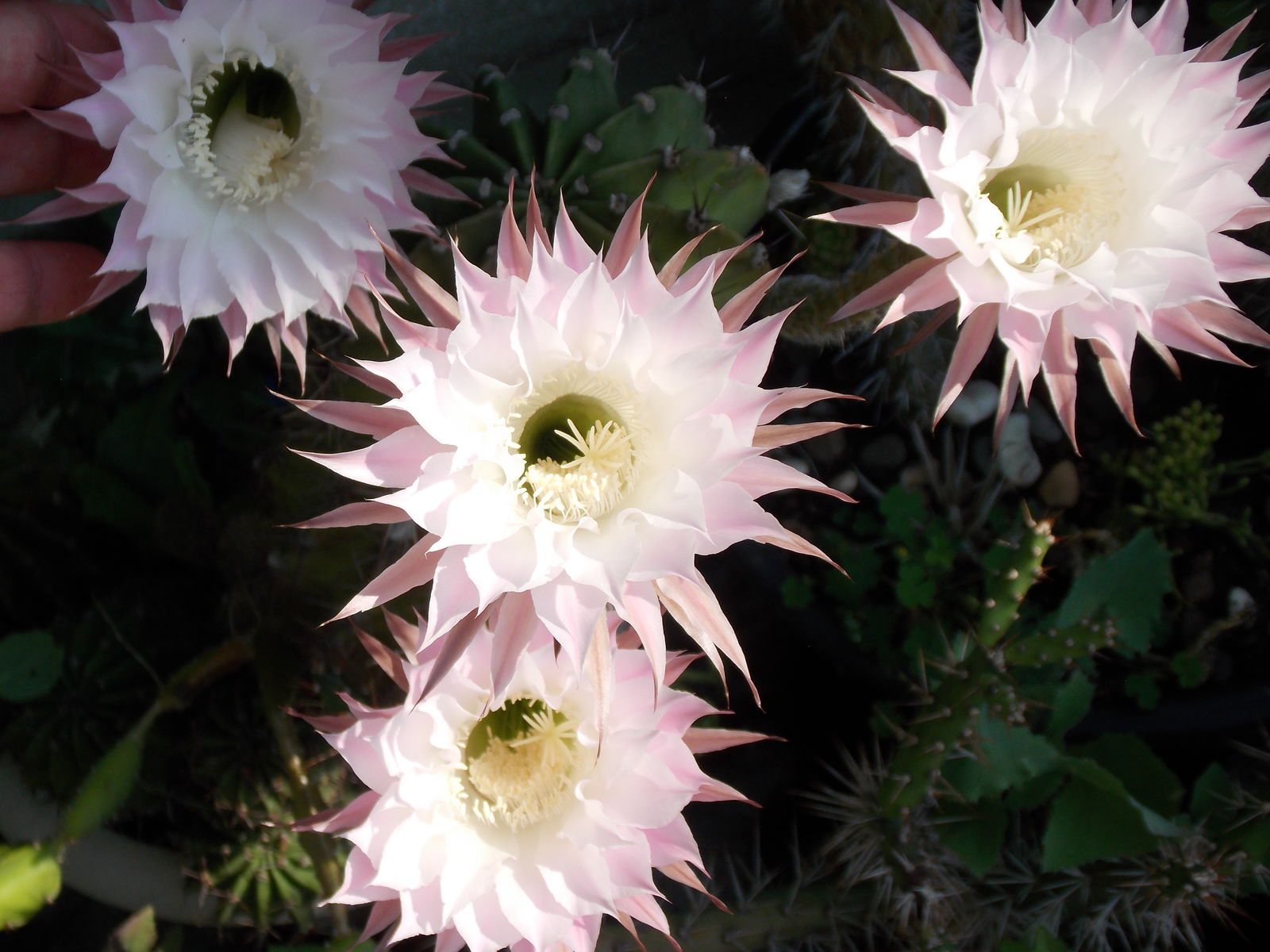
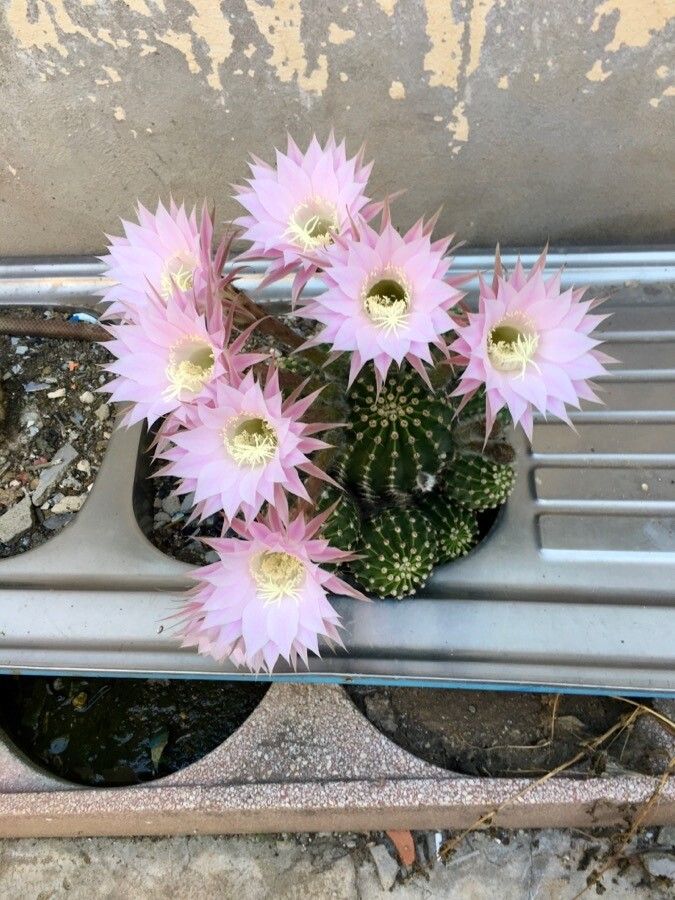
Large trumpet-shaped flowers rise above the rounded, later cylindrical stems of pink Easter lily cactus (Echinopsis oxygona (Link) Zucc. ex Pfeiff. & Otto, 1838). French references also use the name "cactus oursin." The white or pink flowers open in the evening. In hot weather, an individual flower may have faded by the following day. 1 4 2
This perennial cactus belongs to the Cactaceae family. Basal and lateral offsets produce a clump, so a plant overflowing its pot can appear to have several independent stems. Clumping is a normal growth habit of the species. 4
Recognition
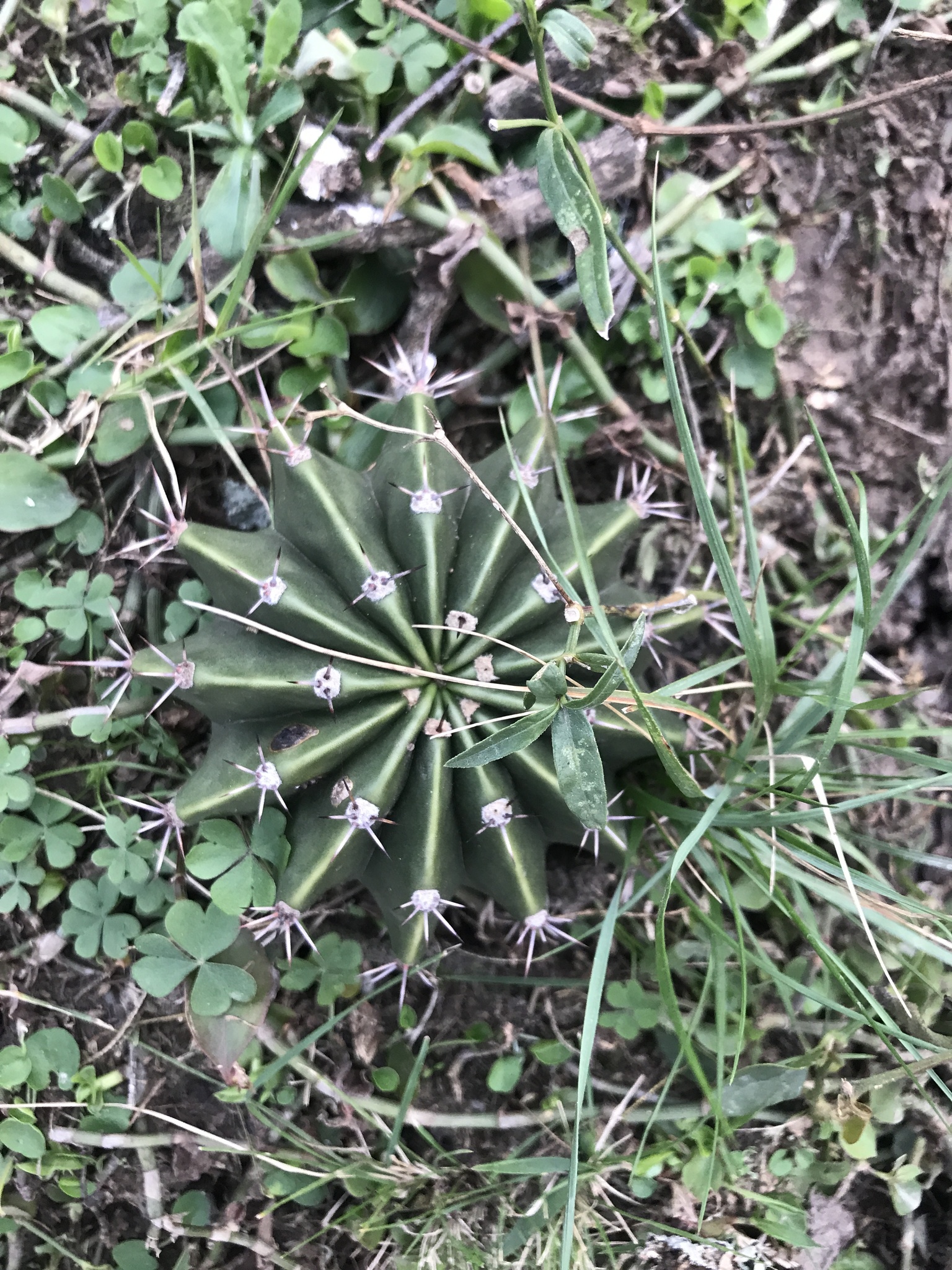
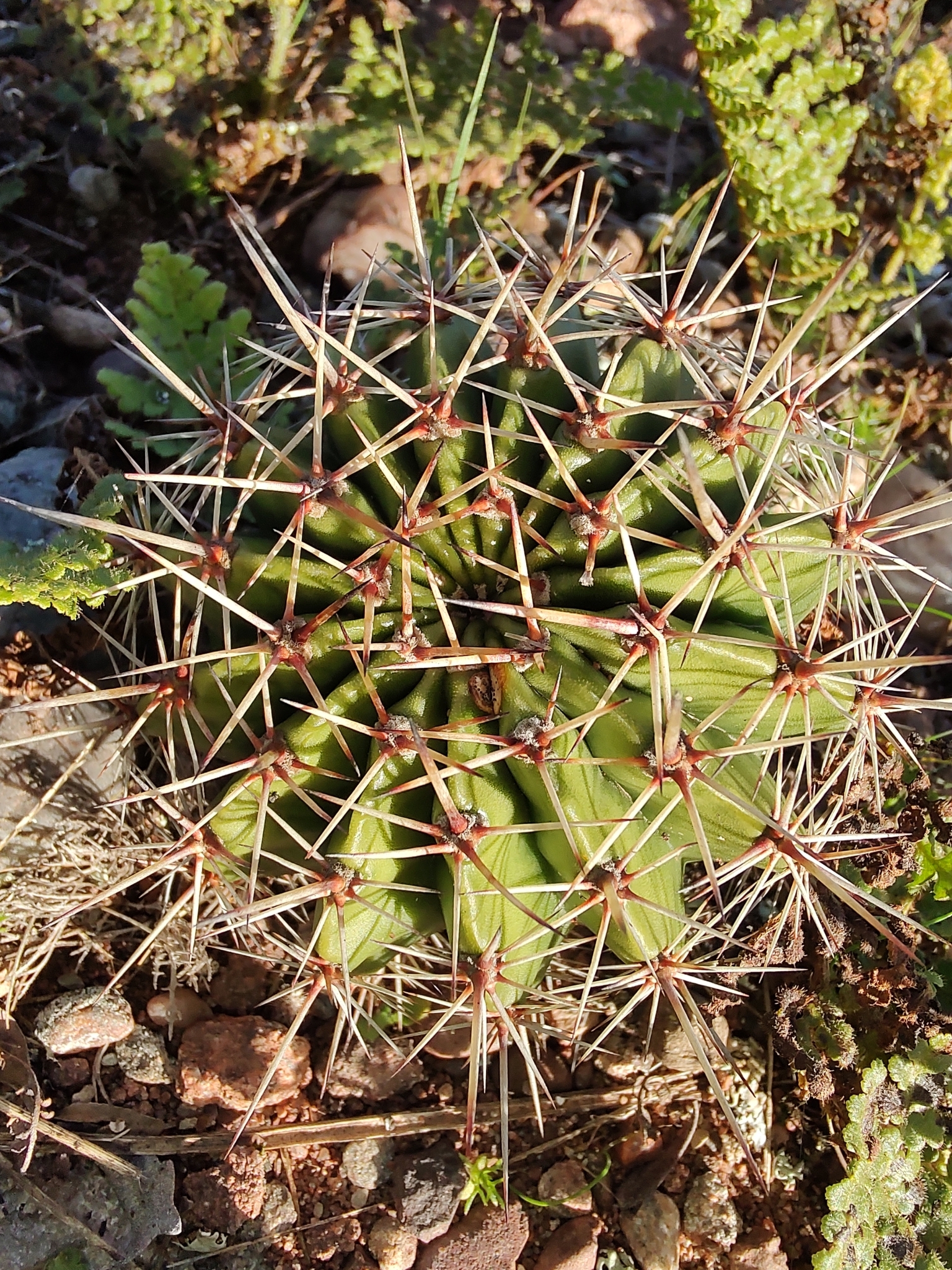
Green to gray-green stems have vertical ribs and areoles bearing short black or yellowish-brown spines. One horticultural description counts 11–18 ribs, with distinct central and radial spines. Examine the ribs on several stems: their number alone is insufficient to establish the identity of the plant. 2
The French description gives trumpet-shaped flowers 10–20 cm (4–8 in) long. The tube holds the flower well away from the body of the cactus. Its length should not be confused with the diameter of the corolla, which is the spread of the petals around the flower's center. Those petals are white or pinkish. 4
Useful taxonomy
The accepted name is Echinopsis oxygona, published in this combination in 1838. Its basionym, or original botanical name, is Echinocactus oxygonus Link. Echinopsis eyriesii (Turpin) Pfeiff. & Otto, Echinopsis multiplex (Pfeiff.) Zucc. ex Pfeiff. & Otto, and Echinopsis tubiflora (Pfeiff.) Zucc. ex A.Dietr. are now treated under the same species. 1
A label reading "eyriesii" or "multiplex" can therefore refer to pink Easter lily cactus. These older botanical names do not become cultivar names simply because they appear on a nursery label. Keeping a specimen's original name is still useful for tracing its horticultural history, alongside the currently accepted identification. 1
Habitat and range
The native range includes southern Brazil, northeastern Argentina, Paraguay, and Uruguay. Pink Easter lily cactus occurs mainly in the subtropical biome. The Galápagos, KwaZulu-Natal, Spain, and Tunisia are listed as places of introduction. They are separate from the native range. 1
In its natural habitat, the species occupies walls and rocky outcrops in grasslands and forests. Occurrence in a grassy landscape does not mean that its roots tolerate waterlogged soil. In cultivation, a well-drained cactus mix meets that need for drainage; excess water exposes the roots to rot. 2
Life cycle and reproduction
Flowering occurs in spring and summer. The scented flowers open in the evening and fade more quickly in hot weather. A flower that has finished by the next day does not necessarily indicate a cultivation problem. 2
For a container plant in mainland France, the calendar translates the seasons into relative guides. Watering increases during growth and becomes infrequent during the cool rest period. Repotting in spring, when the plant needs more room, follows general advice for indoor cacti. The scores represent neither water volumes nor a compulsory watering interval. 3 6
The species-specific recommendation is a balanced liquid fertilizer two or three times during growth. The calendar places possible feeding opportunities in the warmer season. It does not prescribe fertilizer in every month marked for feeding. 3
Separate offsets from April to June in the French growing reference. Plant them in a well-drained mix and wait for signs of renewed growth before watering. Growing from seed is the other propagation method. The stated months describe the spring-to-early-summer conditions of that reference, rather than a universal schedule across hemispheres. 4
Uses and risks
Pink Easter lily cactus is grown in a bright container, under glass, or in a rock garden where the climate permits. Sun is suitable, with protection from scorching afternoon rays in hot conditions. In temperate climates, frost-free shelter is the cautious choice for overwintering. Statements about tolerating a light frost concern a plant kept dry and should retain that condition. 3 2
The species is listed as non-toxic to cats, dogs, and horses. Safety after ingestion remains unestablished for adults, children, and other animals. The classification for those named animal species does not automatically extend to every audience. 2
The spines require handling precautions independently of chemical toxicity. A thick band of folded newspaper helps protect the hands when lifting a cactus during repotting. Position the container away from children's hands and from places where animals are likely to brush against it. 6
Varieties, look-alikes and related plants
Echinopsis hybrids can have flowers with combinations of colors. Their appearance does not automatically describe the botanical species: the traits of a named hybrid need to stay associated with that hybrid. No separate cultivar is required to explain the older names eyriesii and multiplex, which are already accounted for in the species' synonymy. 5 1
Among related cacti, Echinopsis aurea has yellow flowers, whereas Echinopsis oxygona is described with white or pink flowers. Flower color can help guide identification, but horticultural crosses limit its usefulness. For a plant bought without a precise origin, combine examination of the stems and flowers with the grower's label rather than relying on color alone. 5
Main sources
- Royal Botanic Gardens, Kew, Plants of the World Online, Echinopsis oxygona
- NC State Extension, Echinopsis oxygona
- Royal Horticultural Society, Echinopsis oxygona
- Au Jardin, Echinopsis oxygona, French plant profile
- NC State Extension, Echinopsis, species and hybrids
- Royal Horticultural Society, How to grow houseplant cacti and succulents
Frequently asked questions
Why do pink Easter lily cactus flowers fade so quickly?
The flowers open in the evening and can fade by the following day in hot weather. This short life is normal; cooler conditions help the flowers last longer.
Should I water pink Easter lily cactus in winter?
Reduce watering sharply during the cool rest period. A small amount may be needed if the stems become excessively wrinkled.
How do I propagate pink Easter lily cactus?
Separate sufficiently developed offsets in spring and plant them in a well-drained mix. Propagation from seed is also possible.
Is Echinopsis eyriesii a different species?
This name is treated as a synonym of Echinopsis oxygona within the taxonomic circumscription adopted here.
If you are unsure about a plant’s toxicity, ask a botanist or veterinarian for advice.