
Fukien tea tree (Ehretia microphylla, )
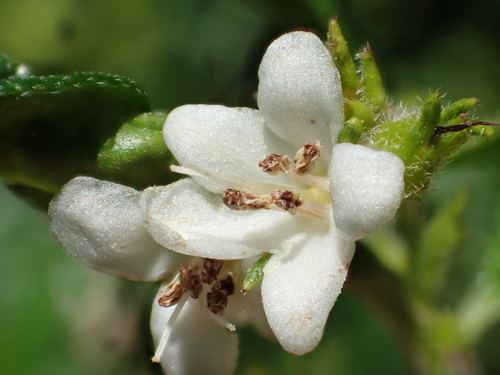

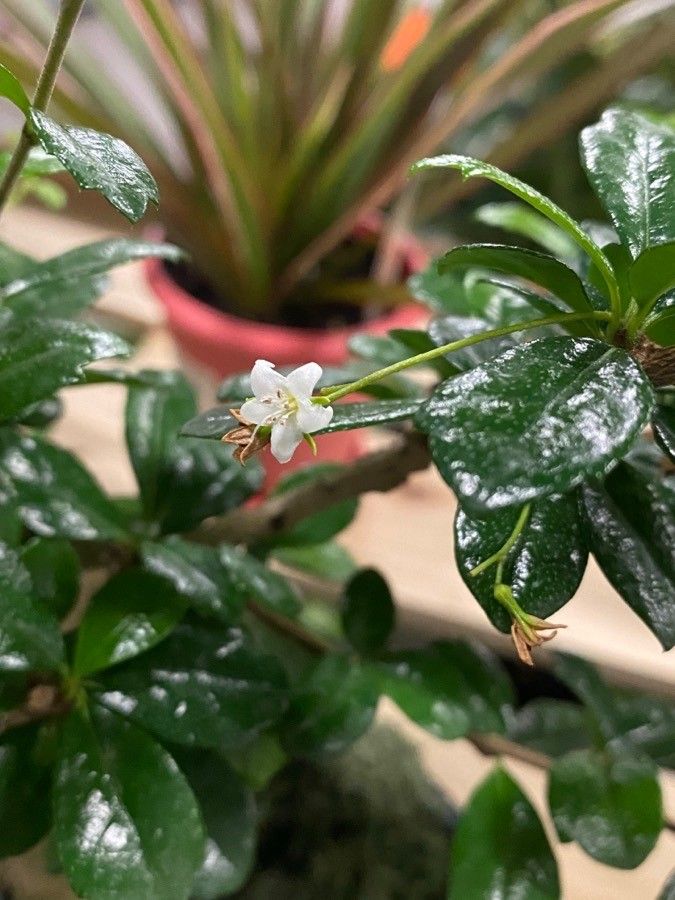
Fukien tea tree (Ehretia microphylla) is a tropical shrub often trained as bonsai. Its small leaves have stiff hairs and teeth near the tip; white flowers precede rounded red or orange fruits.
Read moreFukien tea tree and False tea ehretia
Carmona microphylla, Carmona retusa, Cordia retusa and Ehretia buxifolia
Place in full sun, with intense direct light all day long.
Very bright light; protect bonsai from all-day summer sun.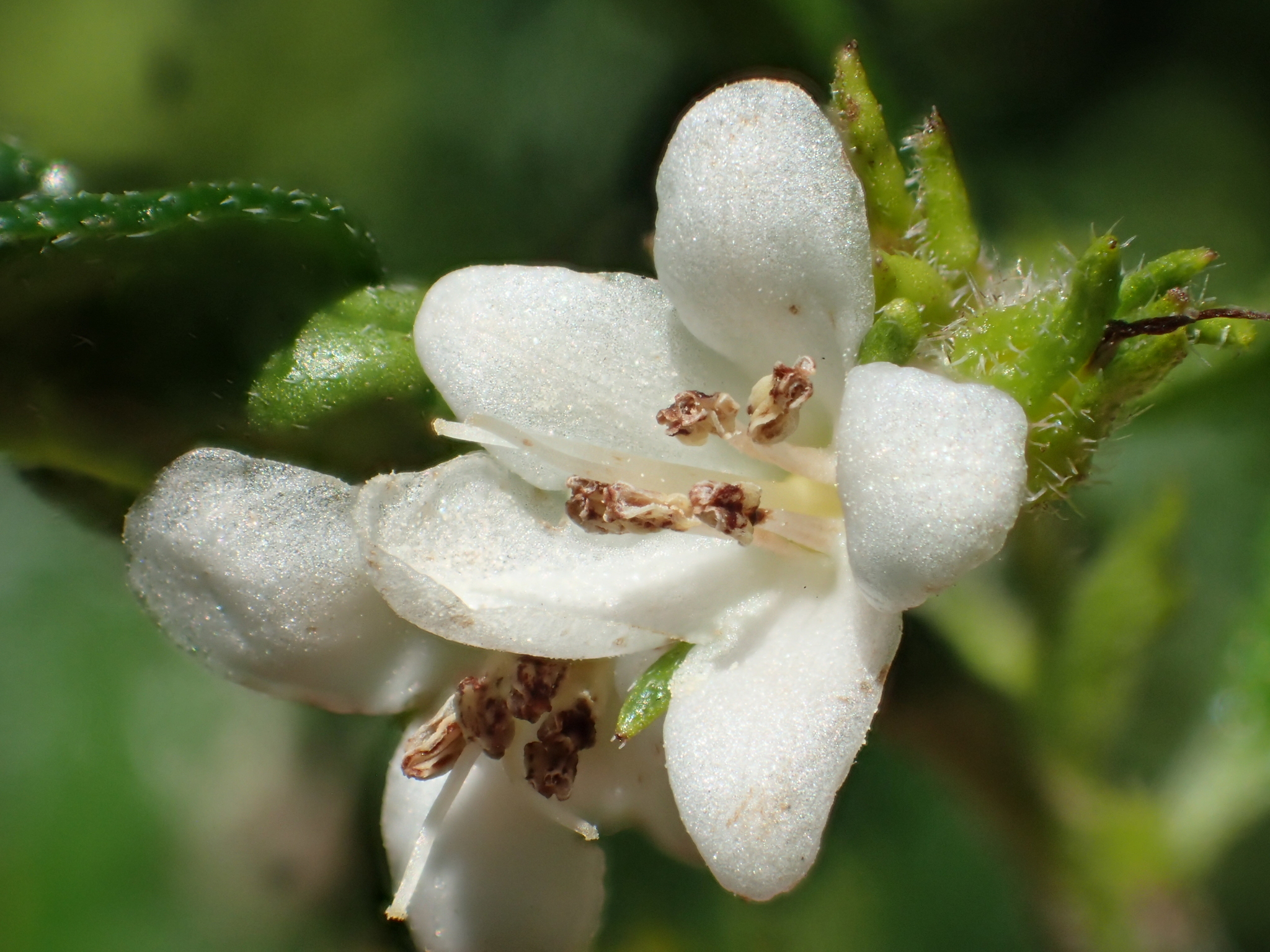



© photo
no rights reserved, uploaded by 葉子 · cc0
Wikimedia Commons · CC BY-SA or Public Domain
Wikipedia · CC BY-SA
© copyright of the Board of Trustees of the Royal Botanic Gardens, Kew.




Global distribution
Native from India to the Nansei Islands and Solomon Islands, with several tropical introductions.
- Native4
- Introduced2
- India
- Taiwan
- Philippines
- Solomon Islands
- Hawaii
- Singapore
Hexagons: regions where the plant occurs. Green dots: native range.1
Identity
Fukien tea tree (Ehretia microphylla Lam., published in 1792) bears small, rough leaves with teeth concentrated near the tip. This tropical shrub, known in French as “carmona” or “arbre à thé,” is often trained as bonsai. Stiff hairs on the leaf blade provide a more precise identification clue than the miniature outline created by pruning. 3 5
The accepted name of Fukien tea tree belongs to the genus Ehretia. Older labels such as Carmona retusa (Vahl) Masam. or Carmona microphylla (Lam.) G.Don refer to the same species. The names do not identify two kinds of bonsai with separate geographic origins. 1
Identification
Fukien tea tree commonly flowers and fruits as a 1–3 m (3.28–9.84 ft) shrub in Australian descriptions. The flora of Taiwan also describes plants reaching 10 m (32.81 ft). An unpruned tree can therefore grow much larger than a maintained bonsai. The regional descriptions do not determine the size of a specimen kept in a shallow container. 3 4
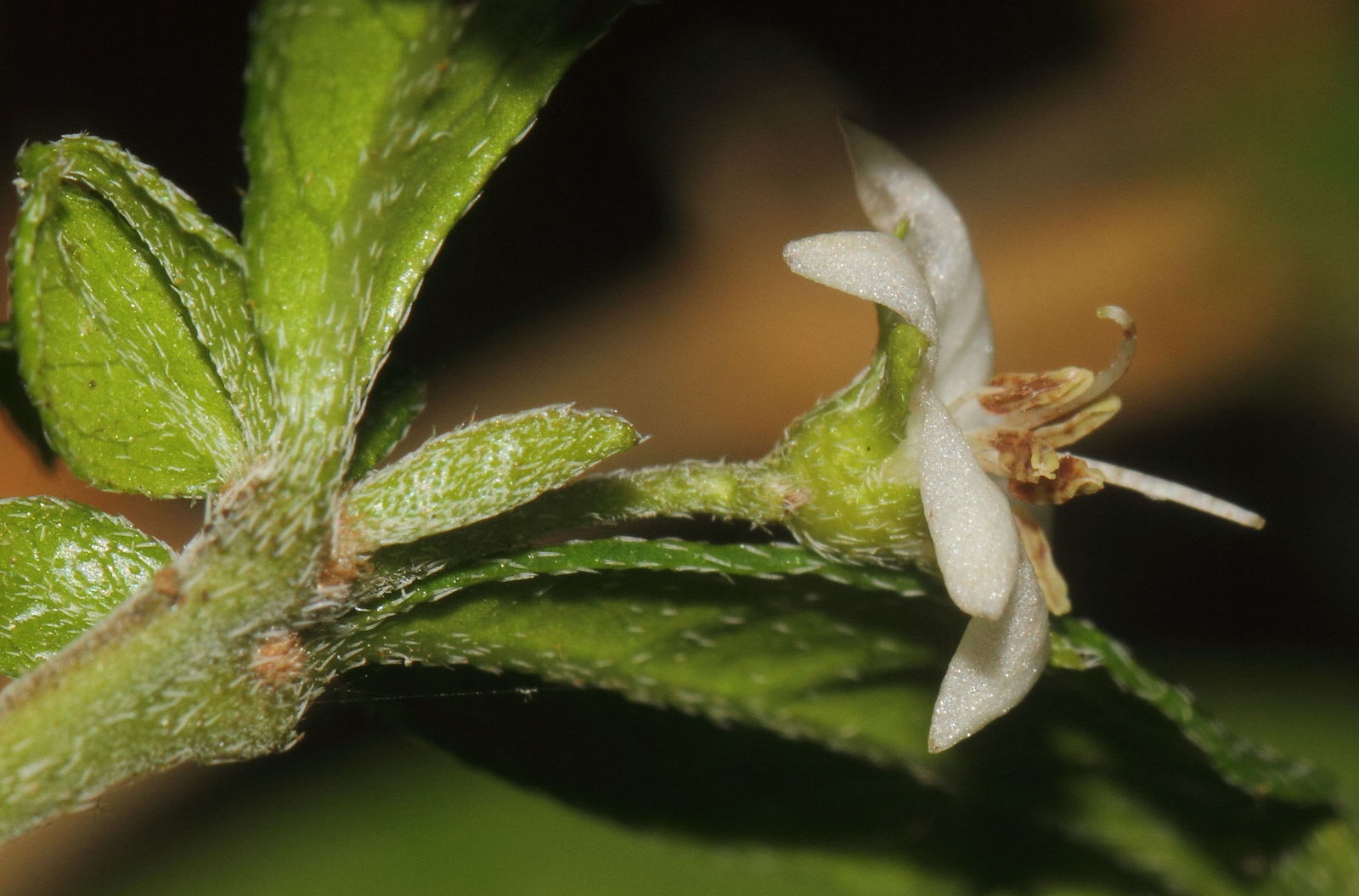
Fukien tea tree leaves are obovate to spoon-shaped, broader above the middle and narrowing toward the base. In Taiwan, their recorded length is 10–25 mm (0.39–0.98 in). Short, stiff hairs cover the upper surface and margin, while teeth or rounded notches occur near the tip. A close look at the blade helps identify the species even without flowers. 4
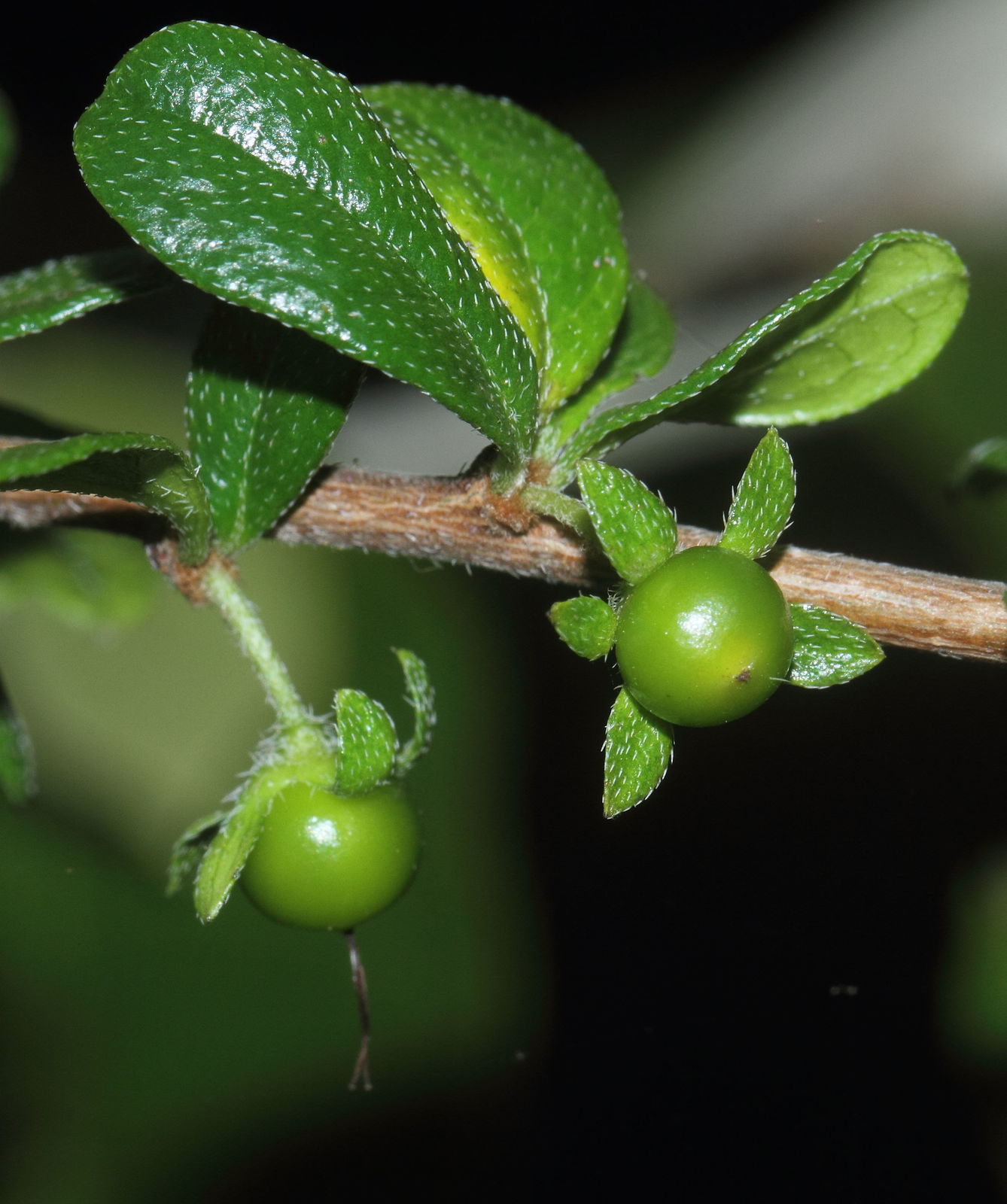
The small flowers are white. The Singapore horticultural description gives a flower diameter of 8–10 mm (0.31–0.39 in). Rounded fruits measure 4–5 mm (0.16–0.20 in) and ripen red to brownish orange. A hairy calyx remains at the base of the fruit, providing another feature to examine on a fruiting plant. 2 3
Useful taxonomy
Fukien tea tree belongs to the Boraginaceae family in the classification accompanying its accepted name. Ehretiaceae also appears in other classifications of the same taxon, without a change of binomial or botanical author. Different family names on two labels do not, by themselves, establish that the plants are different species. 1 8
Synonyms useful for finding descriptions include Carmona microphylla (Lam.) G.Don, Carmona retusa (Vahl) Masam., and Ehretia buxifolia Roxb.. “Carmona” remains in horticultural and French usage, while the accepted scientific name is Ehretia microphylla. An older horticultural name can still lead to information about the same plant. 1 5
Habitat and distribution
The native range of Fukien tea tree extends from India to the Nansei Islands and Solomon Islands. Sri Lanka, southeastern China, and the Philippines lie within that range. Hawaii and Samoa are among its introduced territories; appearing in a list of countries where the plant grows does not make a territory part of its native range. 1
In Taiwan, Fukien tea tree grows in sunny lowland thickets, including the south and parts of the eastern coast. In tropical Australia, descriptions place it in monsoon forests and vine thickets. The species has natural habitats that include exposed shrubby vegetation, beyond the indoor settings in which bonsai are often displayed. 7 3
Growth cycle and propagation
Fukien tea tree is a perennial. Foliage described as evergreen in cultivation can become partly deciduous during drought, so year-round leaf retention also depends on conditions. Its flowers are bisexual and produce drupes, fleshy fruits containing a stone. The fruit type helps distinguish the plant's botanical features from its trained outline. 2 5
Seeds and cuttings provide means of propagation. For the horticultural group Carmona, growing advice recommends taking cuttings in summer. Seeds are removed from ripe fruits, cleaned, and then sown in pots. The seed and cutting methods use different parts of the parent plant. 6 7
For bonsai grown in metropolitan France, seasonal guidance favors spring and early summer for repotting. Light feeding accompanies active growth. The calendar expresses these tendencies through relative indices; it prescribes neither a volume of water nor a fixed watering interval. The plant's condition remains relevant when applying seasonal advice. 5
Uses and risks
Fukien tea tree is used for bonsai and hedges in suitable regions. Tolerance of pruning and dense foliage explain these uses: repeated cuts shape the plant and maintain compact branching. Upright and cascade forms result from horticultural training, rather than identifying separate botanical species. 7
Indoors, advice for the Carmona group recommends a bright, sheltered position and slightly acidic, well-drained growing medium. Spider mites and scale insects are among possible pests. Drainage matters alongside watering: keeping roots waterlogged is different from providing a moist growing medium. 6
Safety after ingestion of Fukien tea tree remains undetermined for adults and children. The status is also unknown for cats, dogs, horses, and other animals. A common name containing “tea” does not establish that the plant is suitable for food or drink, and should not be read as a non-toxic classification.
Varieties and similar plants
Retusa and microphylla are botanical names, not cultivars. Treating the names as distinct horticultural selections confuses synonymy with cultivated variation. Differences in leaf size alone are also insufficient grounds for assigning a cultivar name to a Fukien tea tree. 1
To identify a bonsai sold without a precise name, look for the combination of leaves broadening toward the tip, stiff upper-surface hairs, and teeth in the upper half. A rounded crown or a curved trunk describes the training, while the leaf characters describe the plant itself. Small drupes with a persistent calyx add identification clues when fruit is present. 4 3
Main sources
Botanical descriptions of Fukien tea tree document leaf and fruit characters; horticultural references distinguish container care from growth in its natural habitat.
- Plants of the World Online, Ehretia microphylla Lam.
- NParks Flora & Fauna Web, Ehretia microphylla
- Australian Tropical Rainforest Plants, Ehretia microphylla
- National Taiwan University, Plants of Taiwan, Ehretia microphylla
- Société de bonsaï et de penjing de Montréal, Carmona technical profile
- Royal Horticultural Society, Carmona, advice for the horticultural genus
- National Museum of Natural Science, Taiwan, Ehretia microphylla
- GBIF Backbone Taxonomy, Ehretia microphylla Lam.
Frequently asked questions
Are Carmona retusa and Ehretia microphylla the same plant?
Yes. Carmona retusa and Carmona microphylla are synonyms of the accepted name Ehretia microphylla.
How can I identify Fukien tea tree?
Look for small leaves that broaden toward the tip, with stiff hairs and teeth concentrated in the upper part. The flowers are white and the fruits are rounded.
When should I repot a Fukien tea tree bonsai?
Spring or early summer is recommended, with moderate root pruning. Adjust the work to the condition of the plant.
Is Fukien tea tree safe for cats?
Safety for cats has not been established. The status also remains undetermined for dogs, horses, and other animals.
If you are unsure about a plant’s toxicity, ask a botanist or veterinarian for advice.