
Ethiopian banana (Ensete ventricosum, )
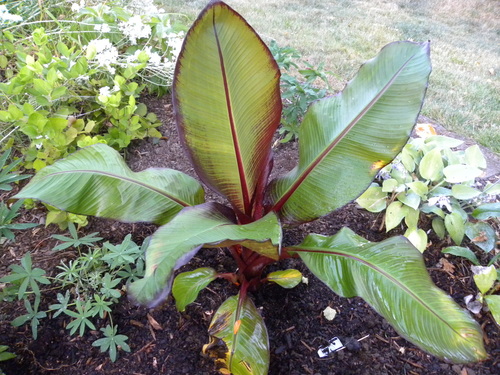


Ethiopian banana (Ensete ventricosum) carries large leaves on a swollen pseudostem. This African herbaceous perennial in the Musaceae dies after fruiting and needs frost-free overwintering in temperate climates.
Read moreEthiopian banana and Abyssinian banana
Musa ventricosa, Musa ensete and Ensete edule
Allow a few hours of direct sun per day, preferably morning or evening.
Sun or partial shade; protect from scorching sun under glass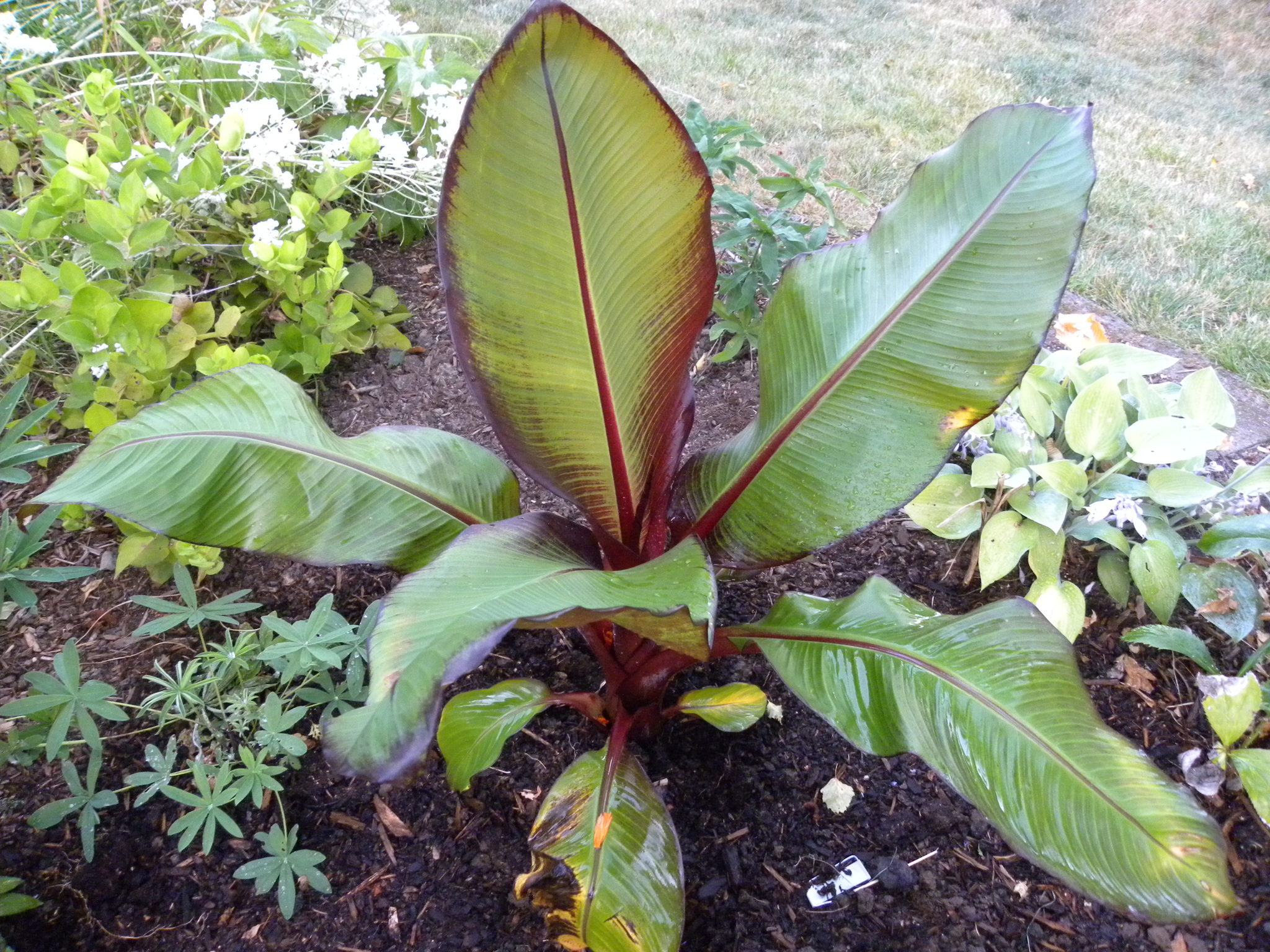

© photo
(c) gnomicscience, some rights reserved (CC BY-NC) · cc-by-nc
Vítor Jorge · cc-by
Wikimedia Commons · CC BY-SA or Public Domain
© copyright of the Board of Trustees of the Royal Botanic Gardens, Kew.




Global distribution
Species native to tropical Africa through to northern South Africa; food cultivation is centered on the Ethiopian highlands.
- Native4
- Introduced2
- Ethiopia
- Democratic Republic of the Congo
- Mozambique
- Northern South Africa
- Java
- Juan Fernández Islands
Hexagons: regions where the plant occurs. Green dots: native range.1
Identity
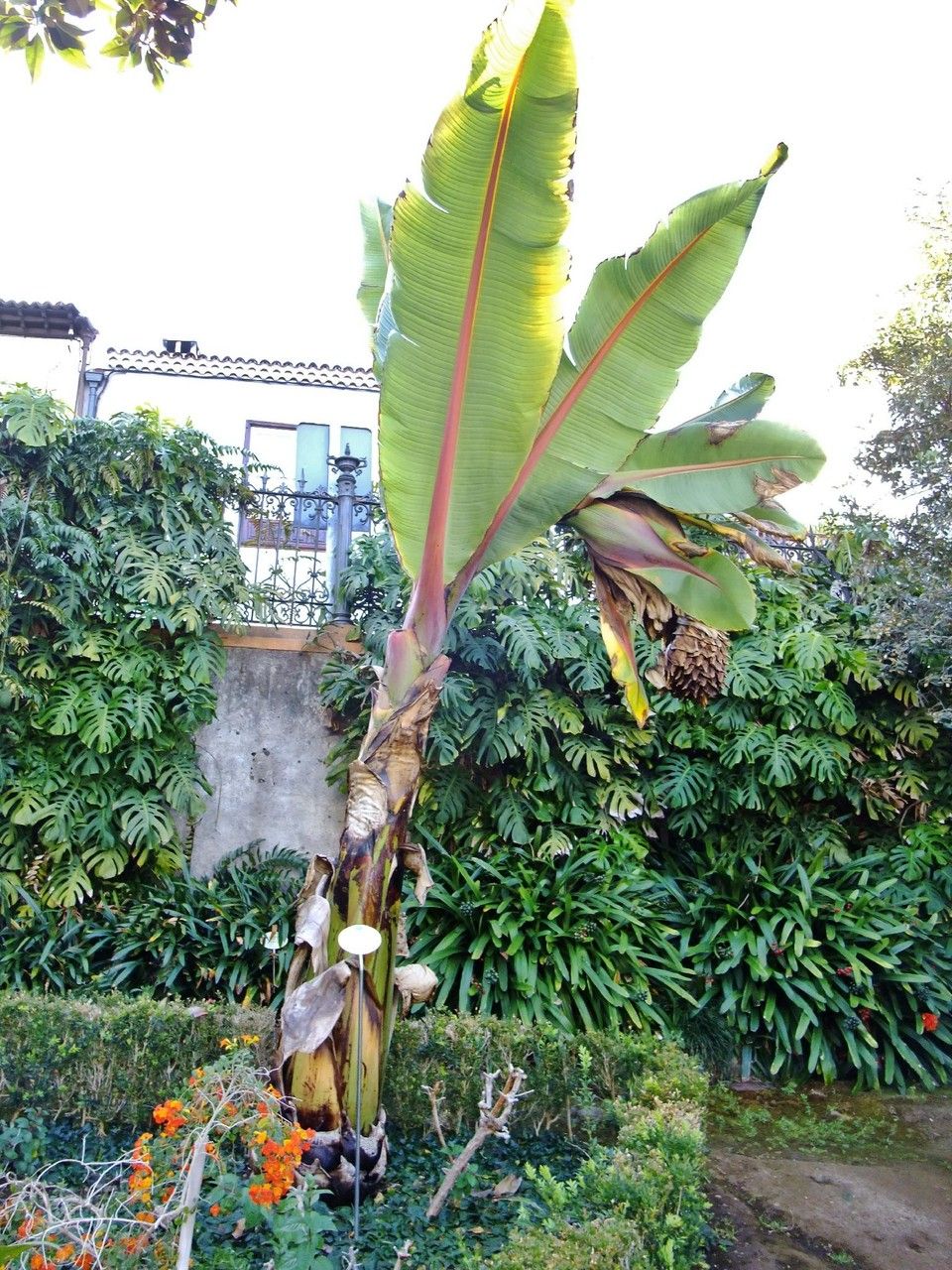
Ethiopian banana (Ensete ventricosum (Welw.) Cheesman) has a pseudostem swollen at the base, formed by overlapping leaf sheaths. Underground, a corm forms the axis of this large herbaceous perennial. Enset belongs to the Musaceae, in the order Zingiberales. 5 1
The names ensète and bananier d’Abyssinie are attested in French; the spelling “ensête” also occurs. Its habit resembles a banana plant, but the accepted botanical genus is Ensete, distinct from Musa. 5 6
Identification
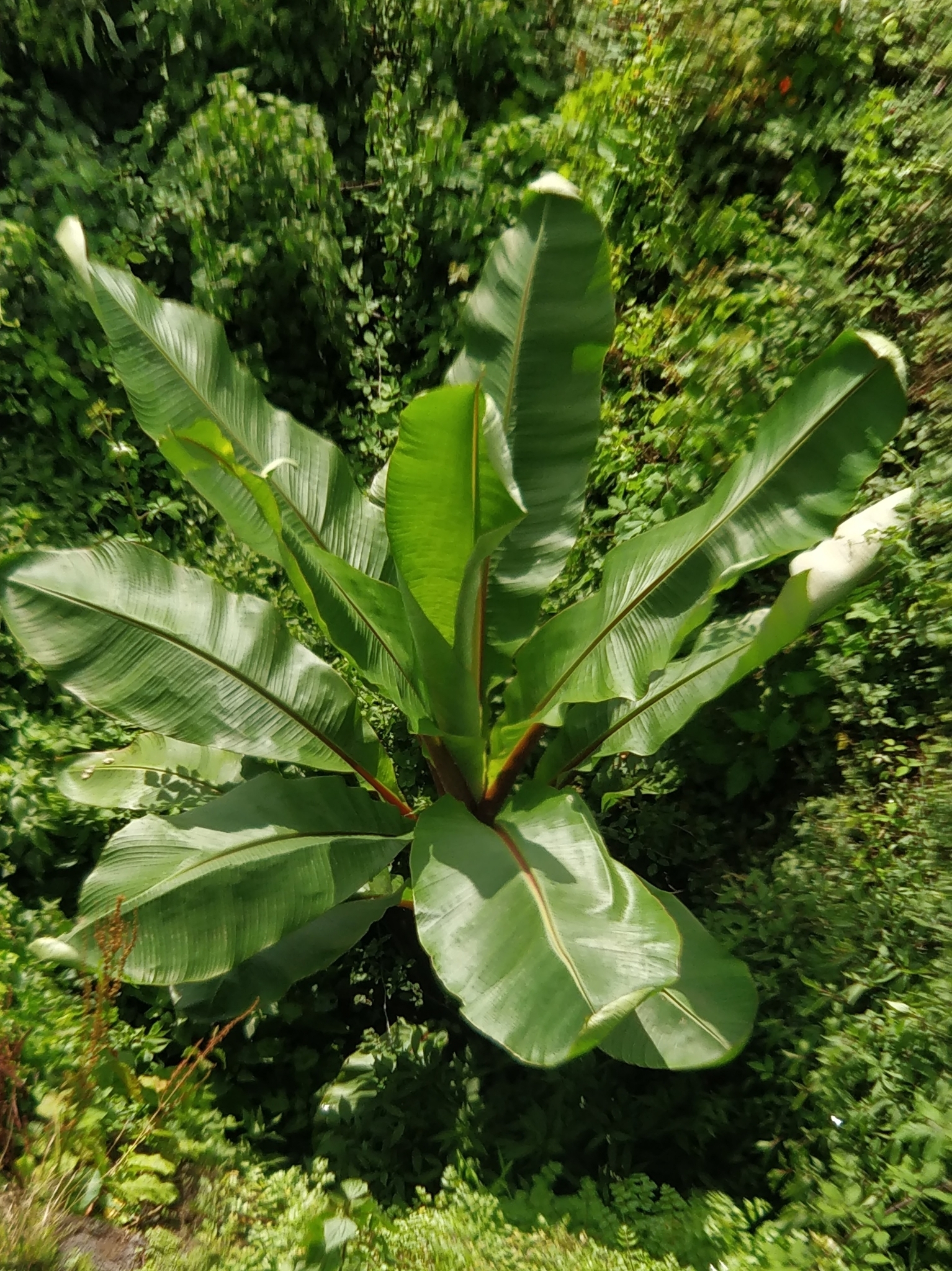
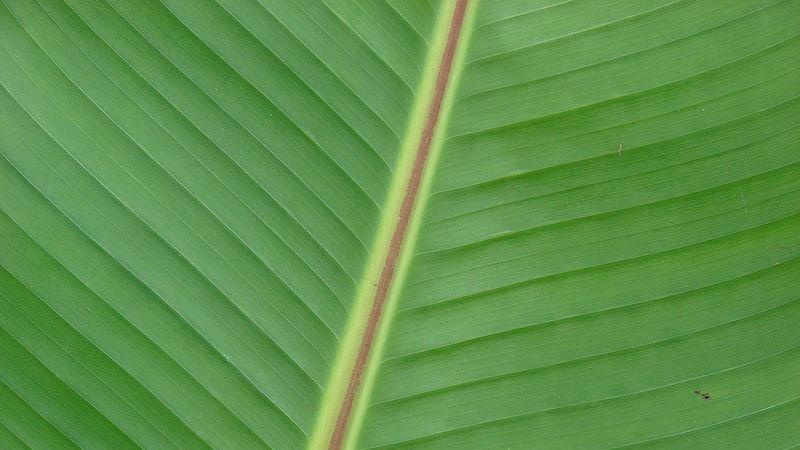
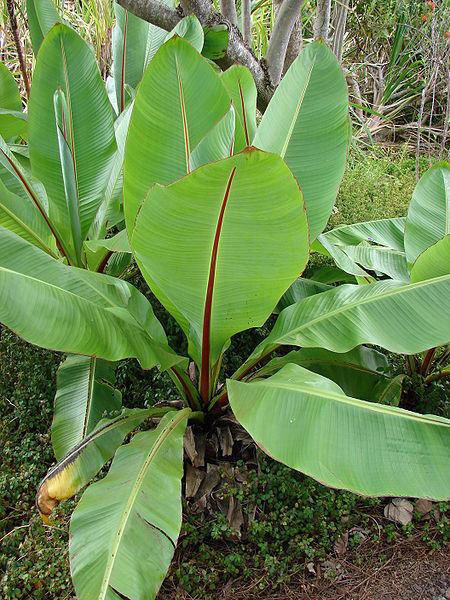
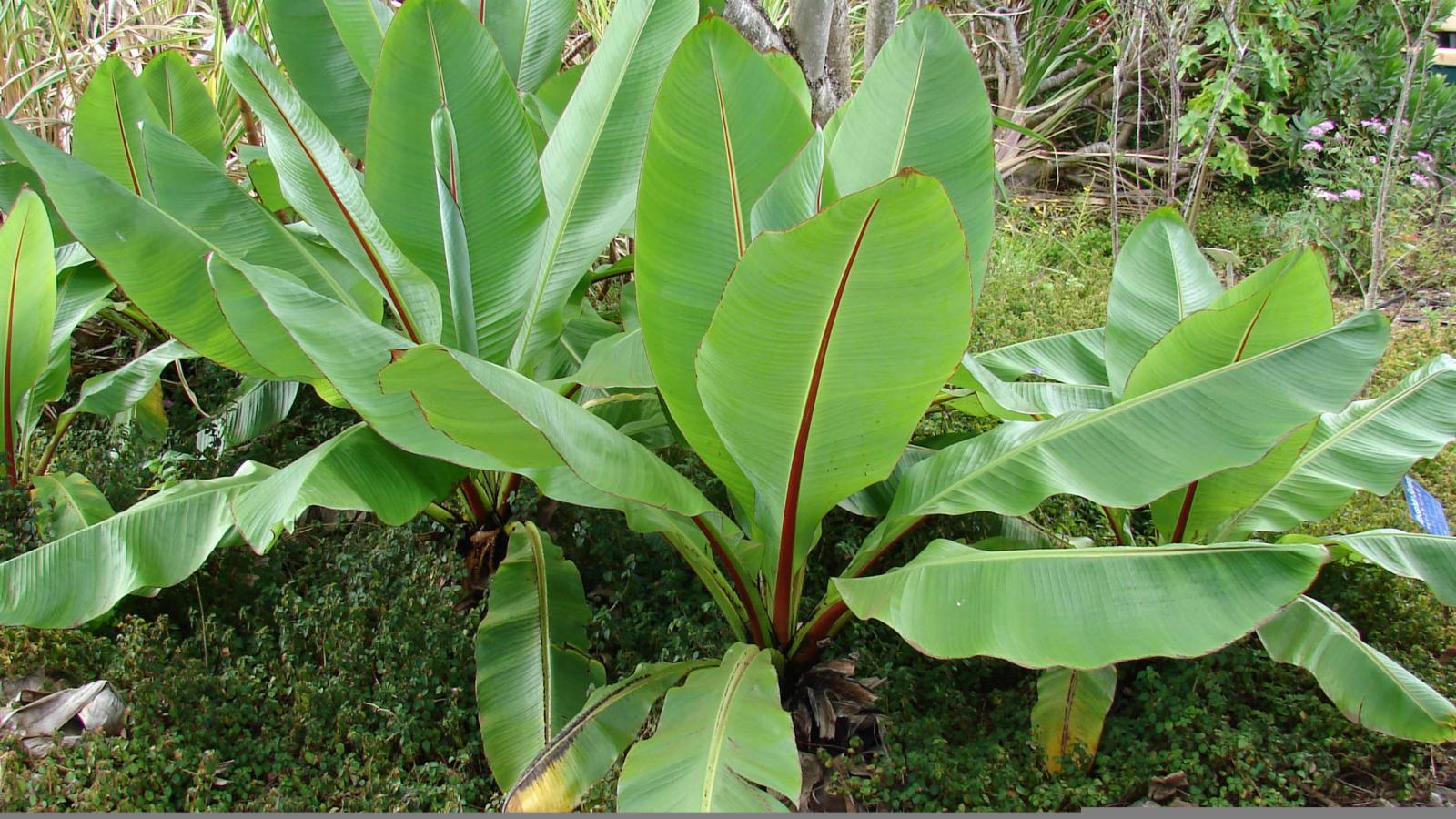
Enset leaves are entire, elongated and arranged spirally. The botanical description gives blades reaching 5 m (16.4 ft) by 1.5 m (4.9 ft); the midrib and petioles can have red or purple coloring. The pseudostem is particularly swollen at its base. 5
Dimensions depend on context: the botanical description gives 4 to 8 m (13.1 to 26.2 ft) in height, exceptionally 11 m (36.1 ft), while the British horticultural description gives 2.5 to 4 m (8.2 to 13.1 ft) in height and spread. These measurements describe different growing regimes. White flowers appear among dark red bracts; flowering is rare in ornamental cultivation. 5 3
The cultivar ‘Maurelii’ develops reddish-brown young leaves and red leaf axils. This extensive coloration characterizes the cultivar; a red midrib alone is insufficient to identify ‘Maurelii’, since that feature also occurs in the species description. 7 3
Taxonomy and names
The combination Ensete ventricosum was published in the Kew Bulletin in 1948, in a volume dated 1947. The difference between the volume's year and the actual publication date explains the two years found in botanical records. 2
The earlier name on which the current combination is based is Musa ventricosa Welw.. The names Musa ensete J.F.Gmel. and Ensete edule Bruce ex Horan. also appear in the synonymy. These older names refer to the accepted species, without each denoting a different horticultural cultivar. 1
Habitat and distribution
Enset is native to tropical Africa, from Ethiopia to northern South Africa, extending westward to the Democratic Republic of the Congo and Angola. Java, the Gulf of Guinea islands and the Juan Fernández Islands are territories of introduction. 1
Wild populations occupy montane or riverine forests, particularly clearings and ravines near watercourses. Food cultivation is concentrated in the southwestern Ethiopian highlands. An agricultural enset and an ornamental container plant therefore do not necessarily face the same soil or climatic constraints. 5
Life cycle and propagation
Enset is monocarpic: the plant dies after fruiting. Time to flowering depends on the cultivated material and growing conditions; the agronomic description gives 2 to 10 years. The fruits turn orange when ripe and contain large black seeds in dry, fibrous flesh. 5
Seed sowing is suitable for horticultural propagation, but germination is erratic. Ensets do not spontaneously produce the offsets typical of many banana plants in the genus Musa. 3 4
Agricultural propagation by suckers relies on a different intervention: the corm is cut and its apical bud removed to trigger new buds. Inducing these shoots explains the vegetative propagation described in Ethiopia; ordinary clump division does not reproduce this technique. 5
Care through the seasons
In temperate Northern Hemisphere climates, move enset outdoors after all risk of frost has passed, from late spring to early summer, with gradual acclimatization. Choose fertile, well-drained soil, in sun or partial shade, sheltered from wind that tears the leaves. Seasonal guidance shared by the genera Musa and Ensete underlies these recommendations. 4 3
In spring and summer, water according to drying of the growing medium, particularly in containers and hot weather. Apply an all-purpose liquid fertilizer according to the package instructions. Repotting takes place in spring, every year or every other spring depending on the plant's development. 4
Before frosts arrive, bring enset into a bright conservatory or heated greenhouse. In winter, reduce watering and let the growing medium dry before watering again. Frost tolerance is reported for established agricultural ensets in Ethiopia; this observation does not guarantee survival of an ornamental pot plant, which is classed as frost-tender in temperate gardening. 4 5 3
Uses and risks
Ethiopian food preparation mainly uses starch from the pseudostem and corm. Kocho comes from fermented pulp, then eaten after preparation; bulla is obtained from the pressed starchy liquid. The corm can also be cooked as a food called “amicho”. Food use concerns specific organs and preparations. 5
Ingestion toxicity remains insufficiently documented for humans, children, cats, dogs, horses and other animals. Processed food uses and traditional use as fodder do not demonstrate general safety of the raw plant or ornamental specimens. Fibers from the leaf sheaths are also used to make rope and woven objects. 5
Main sources
- Kew, Plants of the World Online, Ensete ventricosum
- International Plant Names Index, Ensete ventricosum
- Royal Horticultural Society, Ensete ventricosum
- Royal Horticultural Society, How to grow banana plants
- PROTA, Ensete ventricosum, French account on Pl@ntUse
- USDA ARS, GRIN-Global, Ensete ventricosum accession PI 55101
- NC State Extension, Ensete ventricosum ‘Maurelii’
Frequently asked questions
Does Ethiopian banana die after flowering?
Enset is monocarpic: the plant dies after fruiting. Flowering remains rare in temperate ornamental cultivation.
Can I overwinter Ethiopian banana outdoors?
In temperate climates, provide frost-free shelter. Observations of cold tolerance in Ethiopian agricultural plants do not guarantee survival of an ornamental specimen in a pot.
Is Maurelii a different species?
Maurelii is a cultivar of Ensete ventricosum, recognizable by its reddish-brown young leaves. This coloration does not describe every plant of the species.
If you are unsure about a plant’s toxicity, ask a botanist or veterinarian for advice.