
Cider gum (Eucalyptus gunnii, )
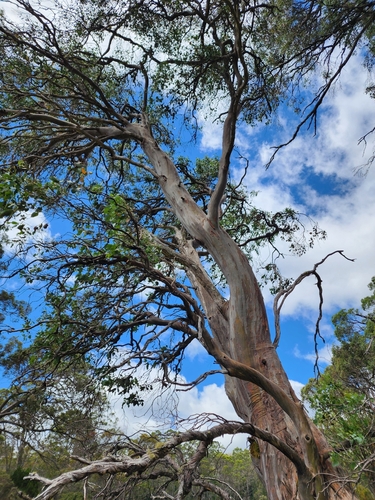

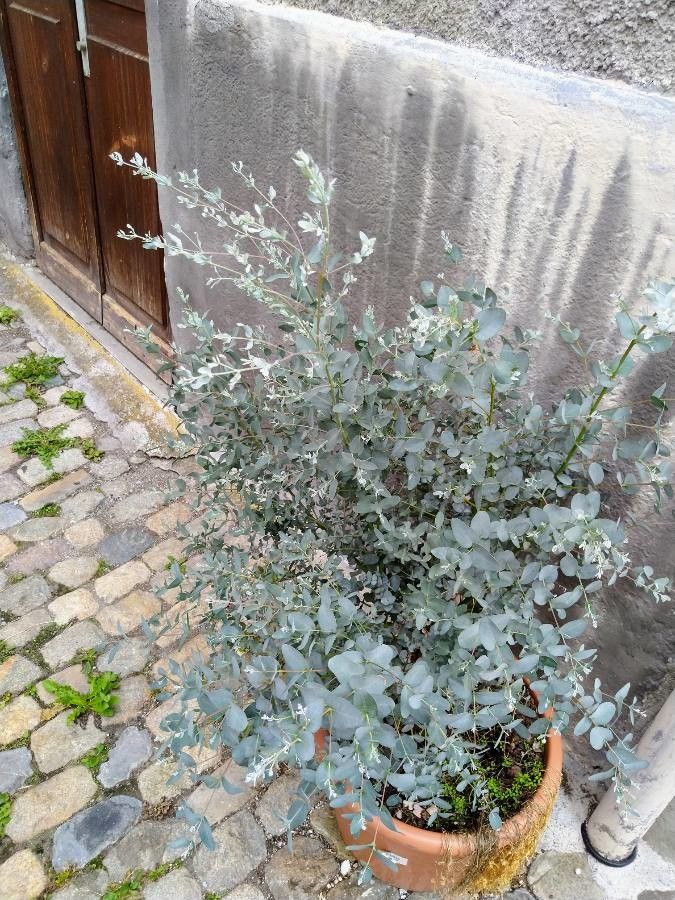
Cider gum (Eucalyptus gunnii) changes leaf shape with age: rounded, bluish juvenile leaves give way to elongated adult foliage. This evergreen Tasmanian tree needs space or regular coppicing.
Read moreCider gum
Eucalyptus whittingehamei
Place in full sun, with intense direct light all day long.
Full sun, sheltered from strong, drying winds.


© photo
(c) Steve Taylor, some rights reserved (CC BY-NC), uploaded by Steve Taylor · cc-by-nc
Wikimedia Commons · CC BY-SA or Public Domain
Wikipedia · CC BY-SA
Taken Dec 16, 2020 by Daniel PIACERE (cc-by-sa)
Taken Jul 7, 2019 by Jan Clausen (cc-by-sa)
Taken Nov 15, 2011 by Photoflora - Yann QUELEN (©)
Taken Aug 3, 2019 by Eduardo González Hernández (cc-by-sa)
Taken Nov 20, 2020 by Roger Biggins (cc-by-sa)
© copyright of the Board of Trustees of the Royal Botanic Gardens, Kew.




Global distribution
Endemic to Tasmania; grown in France as an ornamental tree.
Identity
Cider gum (Eucalyptus gunnii Hook.f., 1844) has rounded juvenile leaves that give way to elongated adult foliage. The two appearances belong to the development of the same species. An evergreen tree in the Myrtaceae family, cider gum comes from Tasmania. Its French names include “eucalyptus à feuilles rondes” and “gommier cidre.” 1 5
Cider gum takes its name from its sweet sap, which European settlers tried to turn into an alcoholic drink. The epithet gunnii honors Ronald Campbell Gunn, a botanist who explored Tasmania's flora. The botanical epithet commemorates a person, while the French name referring to round leaves describes only one stage of foliage development. 1 2
Identification
Opposite, stalkless juvenile leaves are nearly round to heart-shaped, gray-green or covered in a bluish bloom. Adult leaves become alternate and stalked, with lance-shaped to elliptical blades. Bark peels away in patches, exposing pale surfaces mixed with brown. Examine several shoots on a pruned tree, because one leaf does not show every stage of its foliage. 2 5
Cider gum reaches 25 m (82.02 ft) in the botanical description; the Tasmanian forestry reference describes trees 12–15 m (39.37–49.21 ft) tall. In gardens, the spread exceeds 8 m (26.25 ft) and can reach 10 m (32.81 ft) in horticultural accounts. A young potted plant gives little indication of the space an unpruned tree will occupy. White flowers form small axillary clusters, and the fruits are capsules rather than fleshy berries. 2 8 5 1
Useful taxonomy
The accepted name Eucalyptus gunnii belongs to the genus Eucalyptus, within the order Myrtales. The name was published in 1844, in the London Journal of Botany. The author abbreviation Hook.f. identifies the author of the botanical name, separately from people who later described forms or revised the species. 4 3
Eucalyptus whittingehamei Landsb. appears in the synonymy presented by EUCLID. Eucalyptus gunnii subsp. divaricata refers to a debated infraspecific taxon: the botanical account describes proposed distinguishing features while acknowledging intermediate forms that are difficult to separate. A subspecies name should therefore not be treated as simply a commercial label. 2
Habitat and distribution
Cider gum is endemic to Tasmania, where it occupies cold uplands and naturally poorly drained sites. Around Great Lake, stands occur in open woodland and frost-prone hollows. Water in its natural habitat helps explain why portraying cider gum as a tree suited exclusively to dry ground would be misleading. 2 8
Garden guidance recommends full sun and shelter from strong winds. Moist, well-drained soil combines water availability with air around the roots. Cultivation in France is ornamental and distinct from the Tasmanian native range. The French horticultural account reports cold resistance down to −18 °C (−0.4 °F) in dry cold; the dry conditions matter alongside the temperature. 1
Growth cycle and propagation
In the French climates described, cider gum flowers from August through September, with fruit from September through October. Leaves remain throughout the year. British horticultural guidance recommends sowing in spring or summer at 13–18 °C (55.4–64.4 °F). The temperature range concerns seed propagation, while the flowering months refer to the French setting. 1 5
Collected capsules can be kept in paper bags until their valves open, then the seeds separated by sieving. For the seed lots concerned, cold treatment is among the propagation methods documented in Tasmania. Monitor moisture after sowing: too much water exposes seedlings to rot and damping off. The cold-treatment recommendation concerns particular propagation material, rather than every stage of adult growth. 8 1
Growing, uses, and risks
In Northern Hemisphere containers, eucalypts need moist growing medium during active growth and reduced watering in winter. Apply liquid fertilizer monthly from April through September; established trees in the ground usually need no feeding. Repot into a slightly larger container. The seasonal instructions underlie the growing schedule and should be adjusted to how the pot actually dries. 6
Fragrant branches are used in dried arrangements. Scent does not establish food safety: genus-level evidence classifies eucalypts as toxic to cats, dogs, and horses, with digestive upset, lethargy, and weakness. In people, swallowing eucalyptus oil can cause severe poisoning, including coma; handling leaves or bark can irritate skin. The general evidence is not a study specific to Eucalyptus gunnii. Keep leaves and oil out of children's reach. The risk to other animals remains undetermined. 1 9 10
Similar plants and managing foliage
Coppicing renews shoots with juvenile leaves, explaining why a regularly cut-back tree retains a bushy outline and round foliage. Prune before active growth, in late winter or early spring. Plan coppicing while the tree is young: a large old or damaged tree will not necessarily regrow after severe cutting. The age and condition of the tree matter when deciding how to prune. 7
The related Eucalyptus archeri has buds and fruits without a waxy bloom, as well as greener adult leaves. In Eucalyptus coccifera, very glossy leaves with hooked tips and warty buds provide other distinguishing features. Blue foliage alone cannot identify Eucalyptus gunnii. Examining buds and capsules helps distinguish these Tasmanian trees when leaf color leaves the identity uncertain. 2
Main sources
Botanical descriptions of Eucalyptus gunnii distinguish juvenile from adult foliage; horticultural recommendations add guidance on growing and pruning the tree. 2 7
- Société nationale d'horticulture de France, Gommier cidre
- EUCLID, Eucalyptus gunnii
- International Plant Names Index, Eucalyptus gunnii Hook.f.
- GBIF, Eucalyptus gunnii
- Royal Horticultural Society, Eucalyptus gunnii
- Royal Horticultural Society, How to grow eucalyptus
- Royal Horticultural Society, Eucalyptus pruning
- Private Forests Tasmania, Cider Gum
- ASPCA, Eucalyptus toxicity in domestic animals
- NC State Extension, Eucalyptus and human toxicity
Frequently asked questions
Why are my cider gum's leaves becoming elongated?
Adult Eucalyptus gunnii foliage becomes elongated, while juvenile leaves are rounded. The change in shape is part of the tree's normal development.
How can I keep the round leaves on cider gum?
Coppicing renews shoots with juvenile foliage. Prune before growth resumes, in late winter or early spring, and plan this training while the tree is still young.
Is cider gum suitable for a small garden?
An unpruned tree becomes large: the botanical description reaches 25 m (82.02 ft). A small garden therefore requires suitable training from an early age or the choice of a different plant.
Is cider gum safe for animals?
Eucalypts are classified as toxic to cats, dogs, and horses; the evidence concerns the genus rather than a study specific to Eucalyptus gunnii. Other animals cannot be declared safe.
If you are unsure about a plant’s toxicity, ask a botanist or veterinarian for advice.