
Spindle (Euonymus europaeus, )
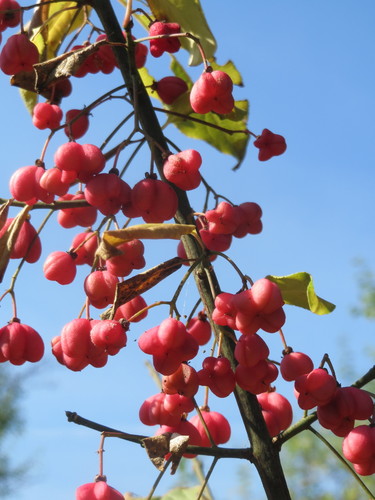

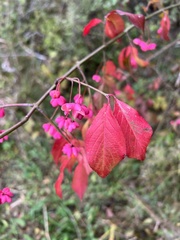
Spindle (Euonymus europaeus) is a deciduous Celastraceae shrub of hedges and woodland edges. Often angular green shoots carry opposite leaves; autumn pink capsules open to expose orange-coated seeds.
Read moreSpindle, European spindle, Common spindle and Spindleberry
Euonymus angustifolius
Allow a few hours of direct sun per day, preferably morning or evening.
Sun to partial shade.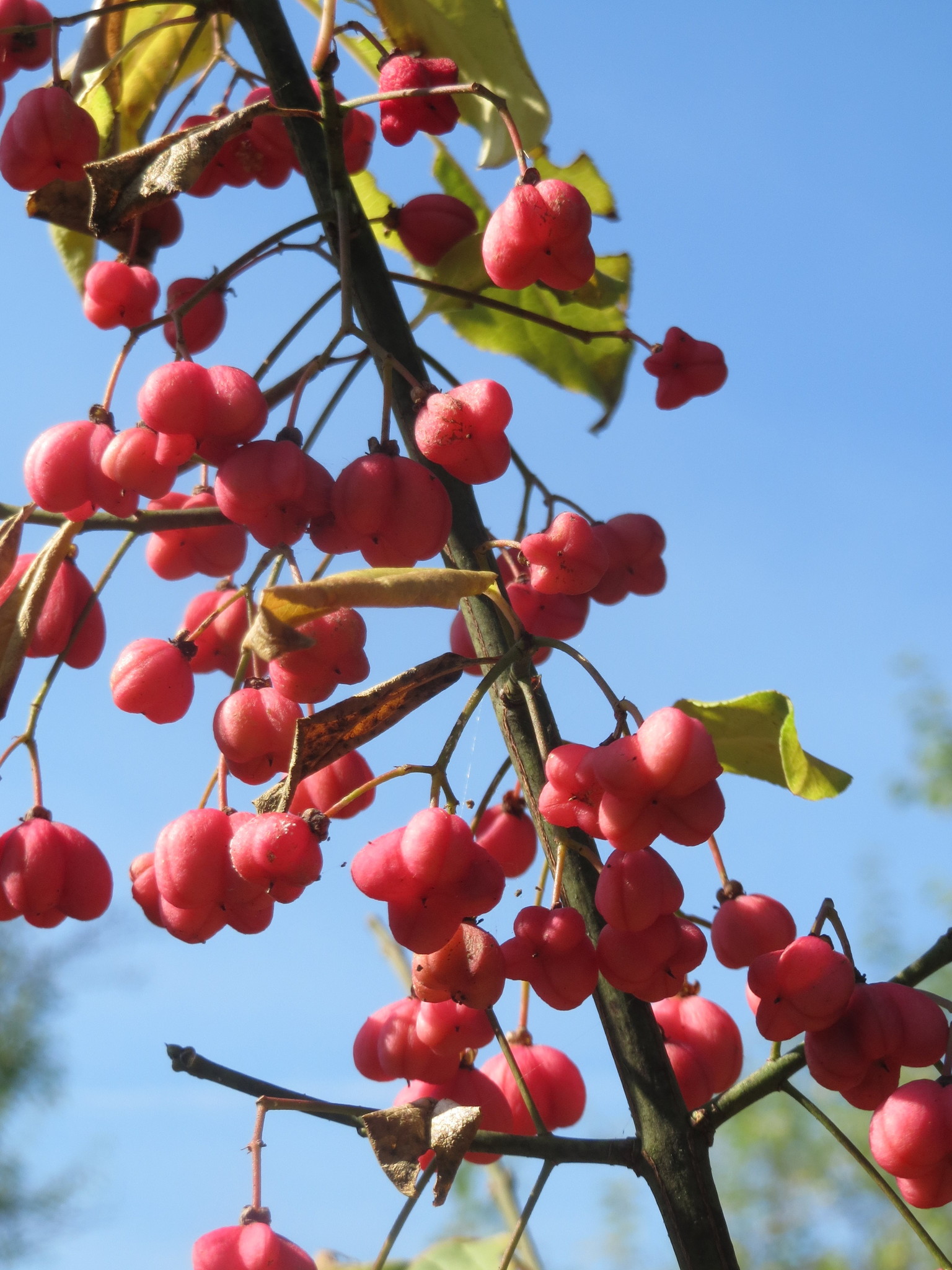



© photo
Andreas Rockstein · cc0
(c) Ricarda Bergen, some rights reserved (CC BY-NC), uploaded by Ricarda Bergen · cc-by-nc
Mirko Ubović · cc0
Taken Sep 23, 2022 by Georgia C (cc-by-sa)
Taken Oct 31, 2020 by Dieter Wagner (cc-by-sa)
Taken Oct 3, 2021 by High Treeson (cc-by-sa)
Taken Dec 8, 2021 by Dieter Wagner (cc-by-sa)
Taken Dec 9, 2021 by Bel Plant Collector (cc-by-sa)
© copyright of the Board of Trustees of the Royal Botanic Gardens, Kew.


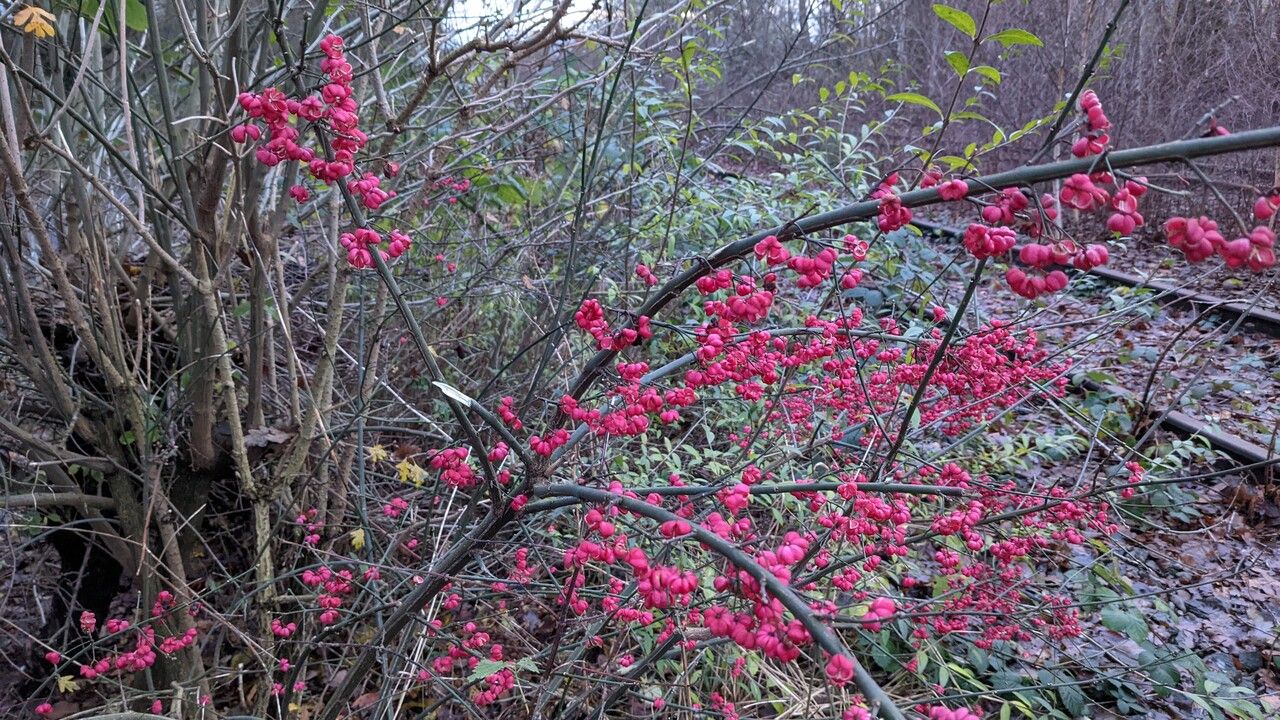


Global distribution
Native from Europe to the Caucasus; introduced in other regions.
Identity
Spindle (Euonymus europaeus L., 1753) bears pink capsules exposing orange-coated seeds in autumn. This deciduous Celastraceae shrub generally reaches 1–5 m (3.3–16 ft) in hedges and woodland edges. Colorful fruits remain conspicuous against changing foliage. 3
Other English names are European spindle, Common spindle and Spindleberry. The French name bois-carré refers to four-angled young shoots. Other French names compare its fruit with a priest's or bishop's hat. None implies that the fruit can be eaten. 49
Recognition
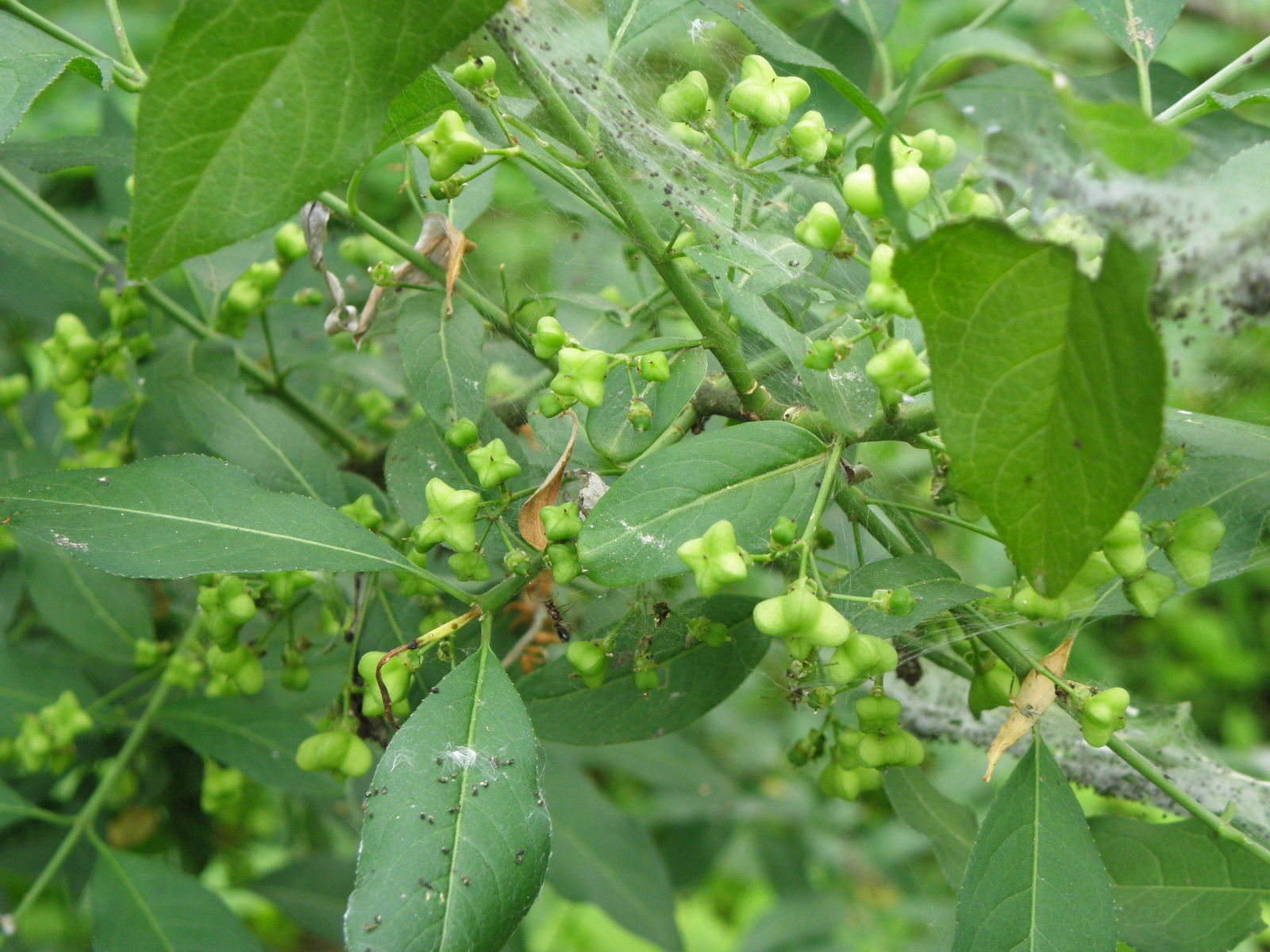
Leaves are opposite, with oval to lance-shaped, finely toothed blades. Young shoots remain green and often have four corky ribs. Check leaf attachment and turn a shoot to combine two characters even when fruit is absent. 35
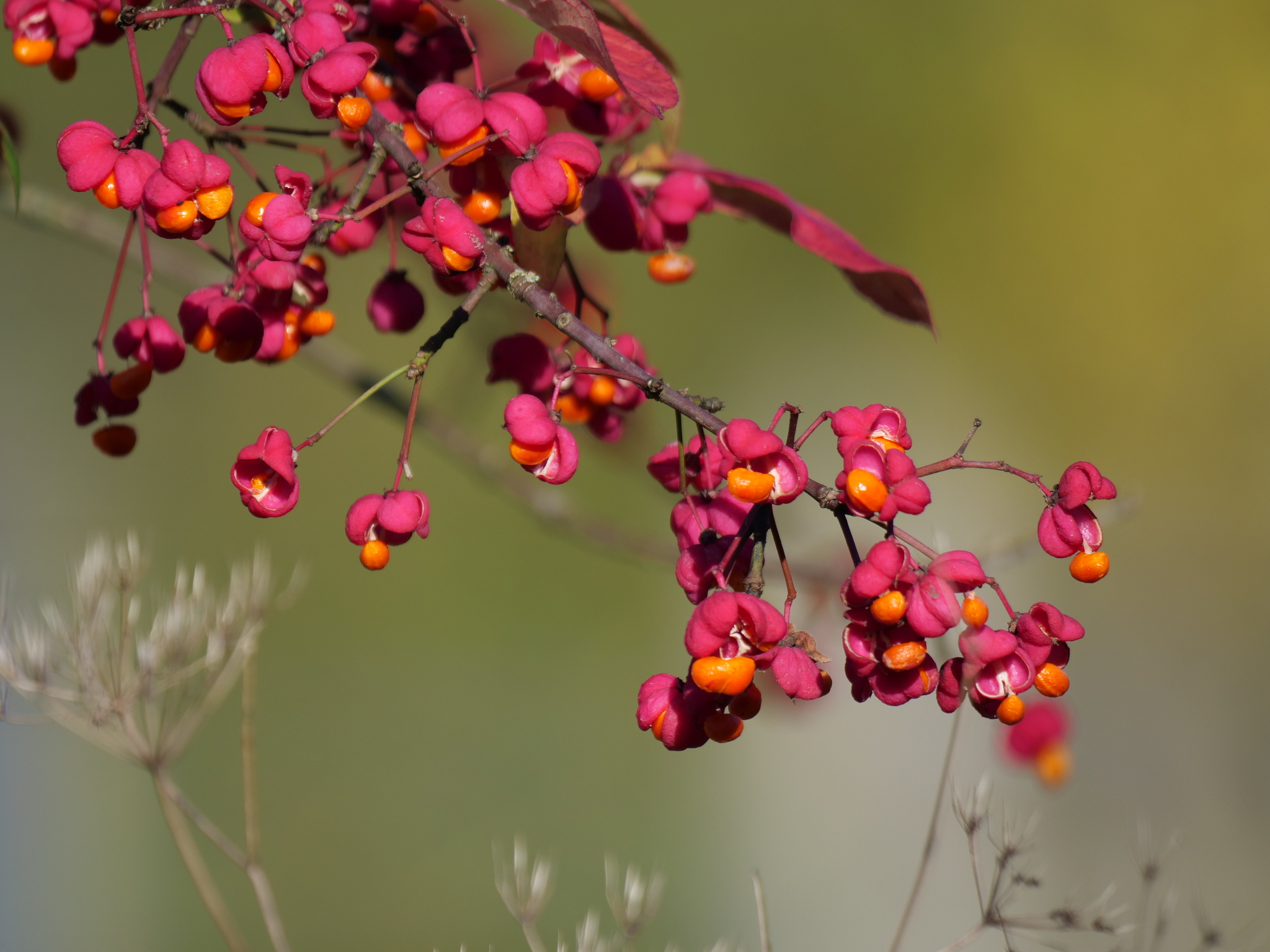
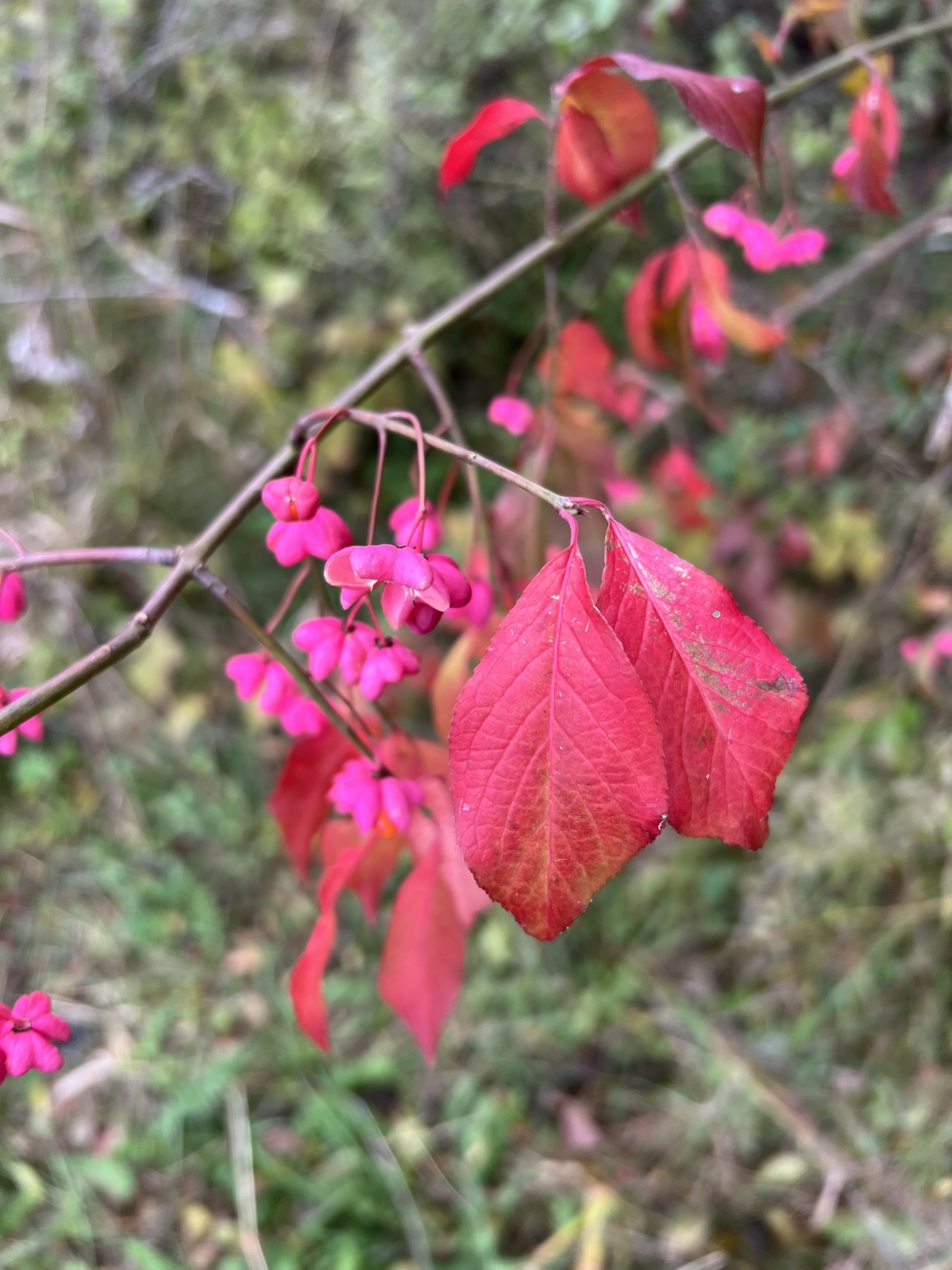
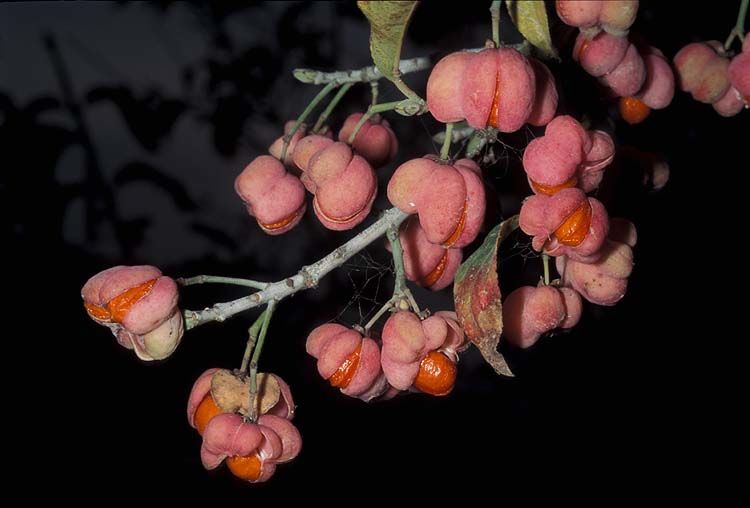
Small flowers have four greenish-white petals, measuring 8–10 mm (0.3–0.4 in) across, in small axillary cymes. In autumn a pink four-chambered capsule opens to expose the orange seed coverings. The pink-orange contrast is the easiest character to spot from a distance. 35
The orange part is an aril, a fleshy seed covering. Calling it an orange berry obscures fruit structure: spindle has an opening capsule rather than an entire soft berry. This also distinguishes the pink container from the exposed seed when describing a photograph. 5
Useful taxonomy
Linnaeus published Euonymus europaeus in 1753, in volume one of Species Plantarum, page 197. L. identifies the author, not a variety. The name remains accepted. 21
Euonymus angustifolius Gilib. is a synonym. Older floras also use the spelling Evonymus and the name Evonymus vulgaris. Comparing the binomial, author and synonyms avoids treating a label variation as another species. 14
Red Cascade belongs to this species. Its quoted name identifies a horticultural selection without replacing the genus or species epithet. 6
Habitat and range
Hedges, scrub and open woods are natural habitat. Limestone soils and edges where light reaches the understory are frequent settings. An old hedge may therefore support naturally occurring spindle rather than a decorative planting. In France it grows across almost the whole country, including Corsica, and is Least Concern on national and European Red Lists. 4359
Its native range extends from Europe to the Caucasus, wider than the European common name might suggest. Conversely, a garden occurrence outside that range does not prove local origin: planting, naturalization and native populations are different situations. 1
Warnings about invasive behavior in North America need this geographical context. A species can be native in France and problematic when introduced elsewhere. North American behavior does not by itself determine its French status. 51
Life cycle and reproduction
Flowering precedes autumn capsules by several months. Insects visit the small spring flowers. Fruits later become more conspicuous; some birds eat the arils and disperse seeds. Their feeding does not establish human safety. 45
Leaves fall during winter rest. Autumn color varies with conditions: an individual may turn yellow or red without showing identical intensity every year. Distinguish this variation from selected characters of a named cultivar. 56
Semi-ripe cuttings preserve Red Cascade, whereas seed does not guarantee identical offspring. In temperate climates, spring regrowth follows winter rest. Adjust establishment watering to rainfall and soil moisture without keeping the ground waterlogged. 6
Uses and risks
Spindle fruits are poisonous and must not be eaten. Bark, flowers, fruit and leaves are toxic. Substantial ingestion can cause vomiting, diarrhea, weakness, chills, convulsions or coma. Keep brightly colored capsules away from children. 56
Compounds include cardenolide-type glycosides and the alkaloid evonine. In animals, severe local irritation can be followed by circulatory disturbances and convulsions after absorption. Horses have died days after browsing shoot tips; sheep and goats have been poisoned by shoots, leaves and fruit. Active substances persist in hay, so drying does not make contaminated forage safe. 7
It is also poisonous to cats and dogs. Chewing a few leaves or seeds most often causes digestive symptoms; heavy ingestion can cause abnormal heart rhythms and collapse. 86
Wood carbonized in a closed vessel produces charcoal valued by artists. Historically, acrid, purgative and emetic fruits were used against vermin. Those uses do not justify home remedies made from fruit or bark. 45
Varieties, look-alikes and related plants
Red Cascade is selected for red autumn leaves and bright-pink fruits. This vigorous form reaches about 3 m (10 ft); capsules can measure 2 cm (0.8 in). Exposed seeds remain orange-coated and poisonous. Selection changes the ornamental effect, not the required caution. 6
Plant in sun or partial shade in drained soil. Allow up to 2.5 m (8 ft) of width rather than repeatedly cutting a shrub planted too close to a path. Evergreen edging species in the same genus are not dwarf forms of this deciduous species. Retaining the complete label helps select the right plant. 6
Main sources
The accepted name is Euonymus europaeus L., published in 1753; Euonymus angustifolius and Evonymus vulgaris refer to this species. 214
- Plants of the World Online: Euonymus europaeus
- International Plant Names Index: Euonymus europaeus
- Info Flora: Euonymus europaeus
- Tela Botanica, Coste description: Euonymus europaeus
- NC State Extension: Euonymus europaeus
- Royal Horticultural Society: Red Cascade
- University of Zurich, CliniTox: Euonymus
- Pet Poison Helpline: Euonymus
- INPN, TAXREF: Euonymus europaeus
Frequently asked questions
Are spindle fruits edible?
No. Pink capsules and their orange-coated seeds are decorative but poisonous if eaten.
How can spindle be recognized?
Opposite leaves, young green shoots often with four ribs, and pink four-chambered capsules form a characteristic combination.
Does spindle retain its leaves in winter?
No. It is deciduous; evergreen spindle shrubs sold for edging belong to other species.
If you are unsure about a plant’s toxicity, ask a botanist or veterinarian for advice.