
Mediterranean spurge (Euphorbia characias, )
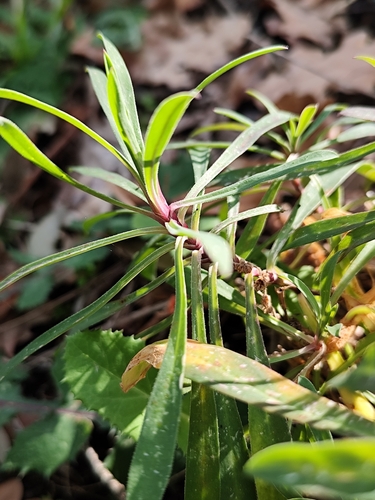
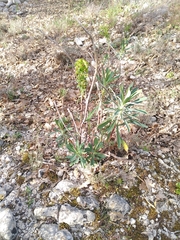
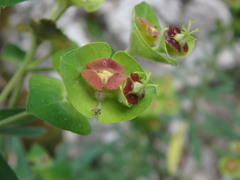
Mediterranean spurge (Euphorbia characias) is an evergreen Mediterranean subshrub in the Euphorbiaceae. Upright stems carry green-yellow inflorescences. Its white latex is irritating and the plant is harmful if eaten.
Read moreMediterranean spurge, Albanian spurge and Large Mediterranean spurge
Esula characias and Tithymalus characias
Allow a few hours of direct sun per day, preferably morning or evening.
Full sun in a sheltered position.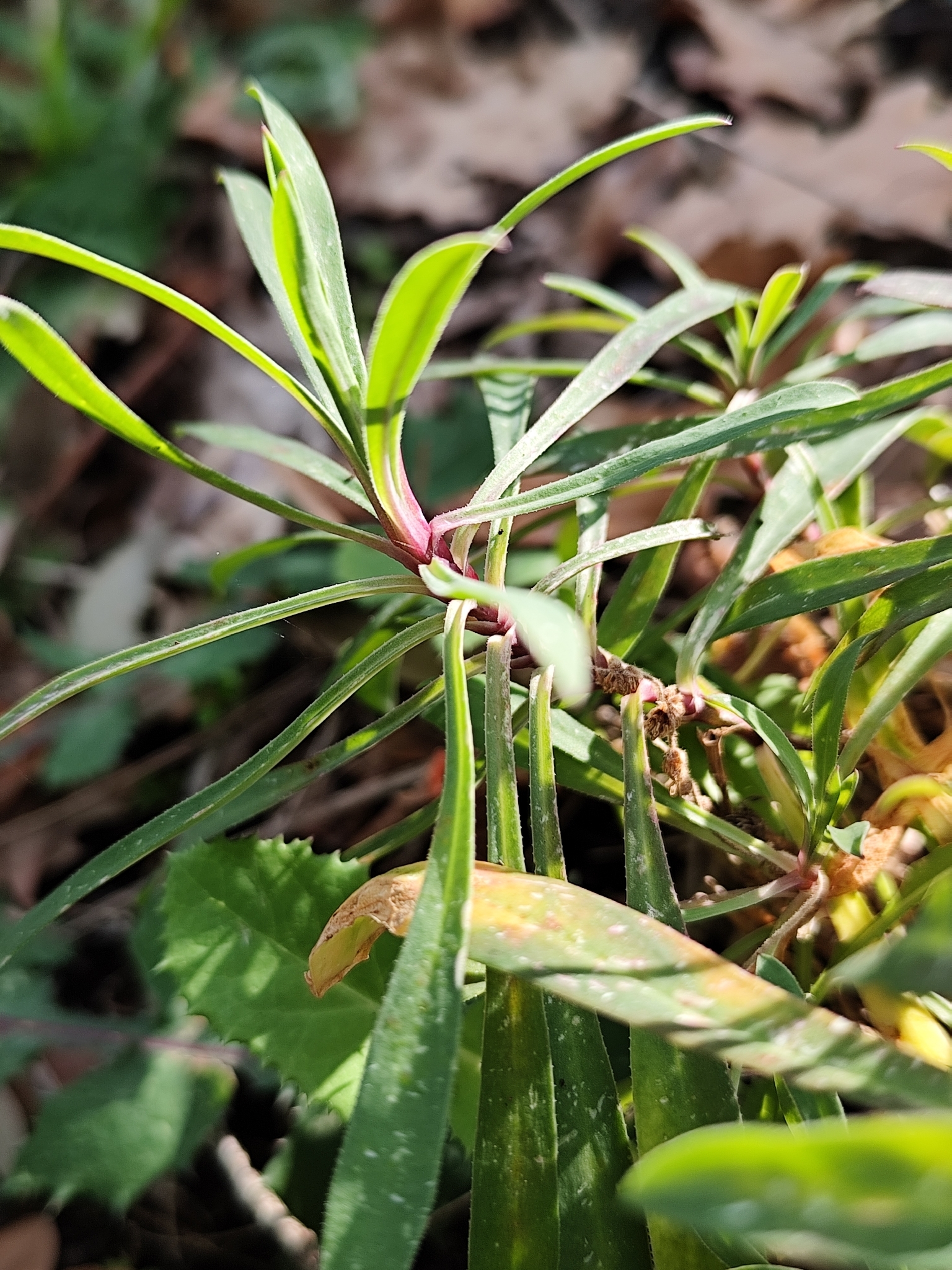
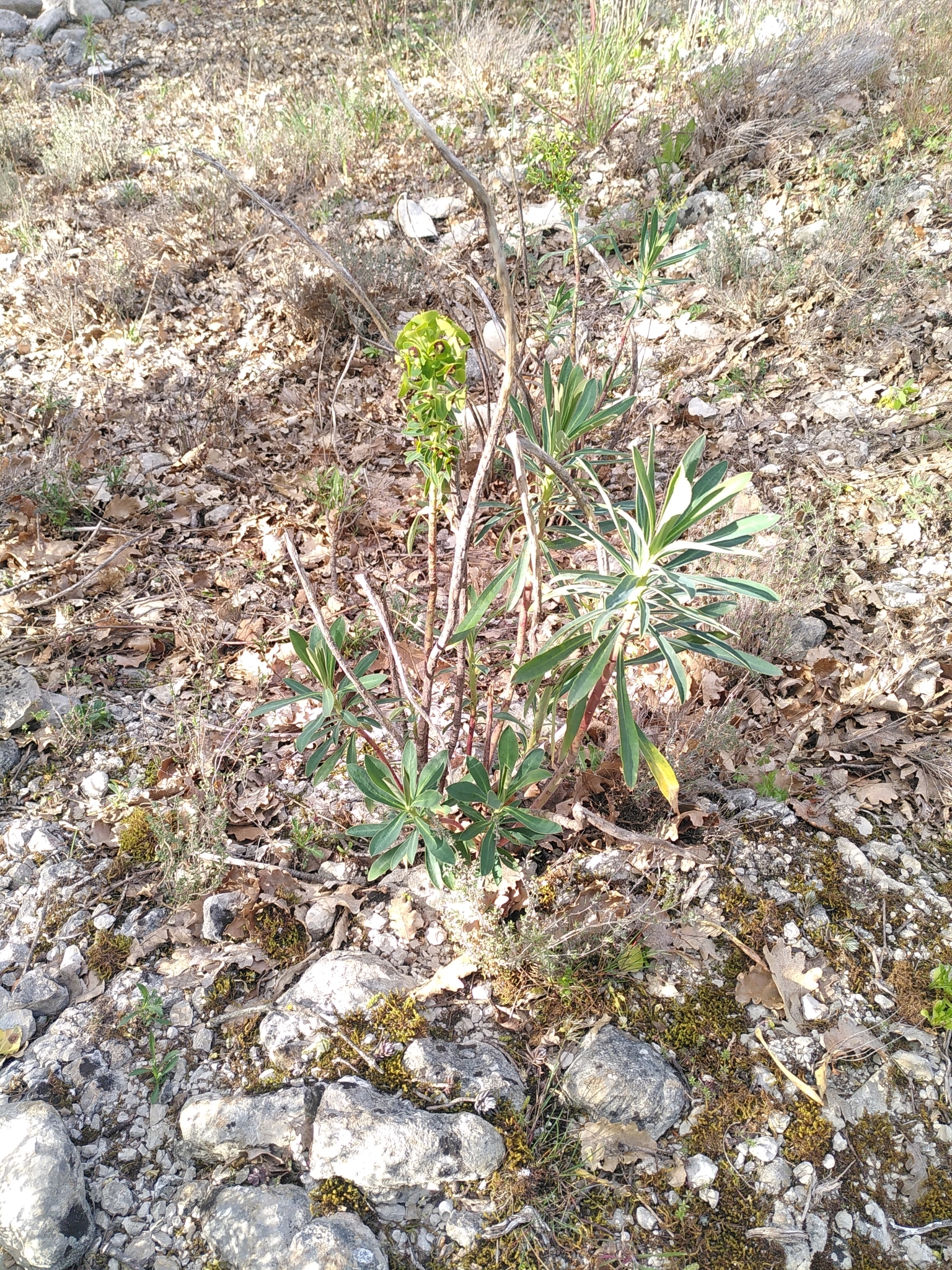
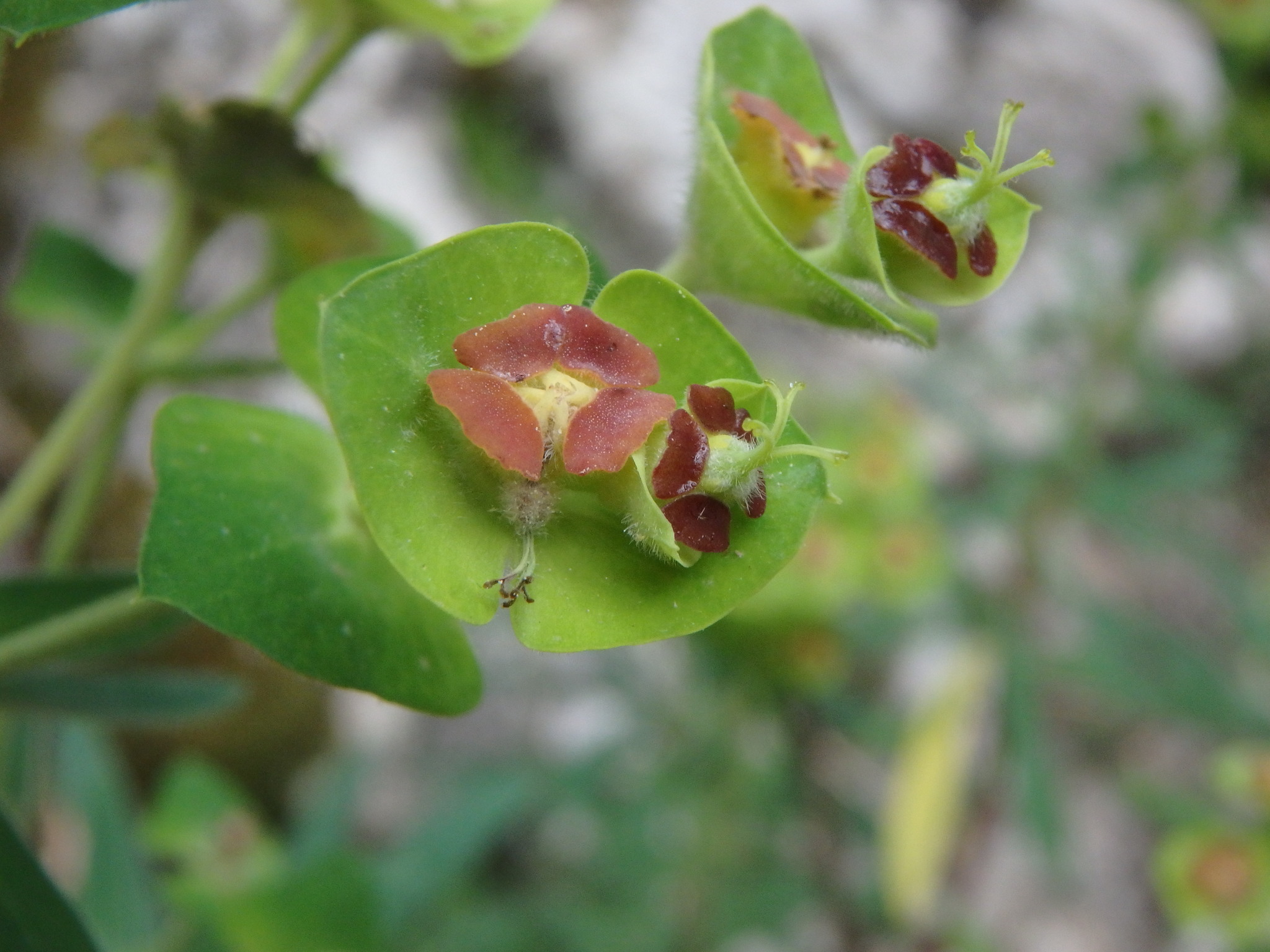


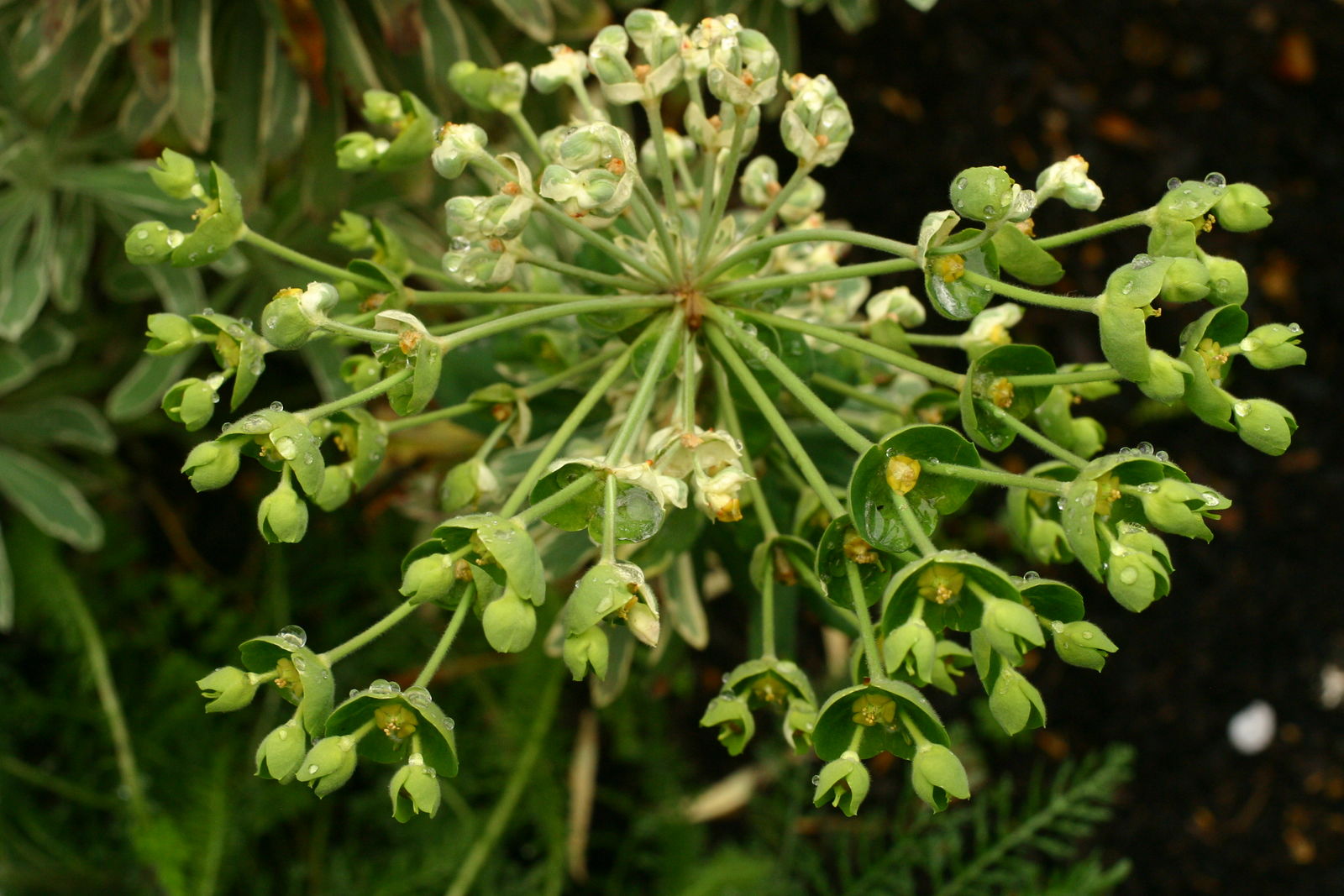
© photo
Francesco Santoro · cc-by
Yves Bas · cc-by
Daniel Cahen · cc-by
Taken Jan 30, 2021 by christophe gertner (cc-by-sa)
Taken Feb 8, 2021 by Patricia MARIN (cc-by-sa)
Taken Feb 1, 2022 by Jim Knopf (cc-by-sa)
Taken Jan 22, 2021 by Houmgaor (cc-by-sa)
Taken Mar 25, 2022 by alain antone (cc-by-sa)
© copyright of the Board of Trustees of the Royal Botanic Gardens, Kew.




Global distribution
Subshrub native to the Mediterranean region.
- Native4
- France
- Corsica
- Turkey
- Morocco
Hexagons: regions where the plant occurs. Green dots: native range.1
Identity
Mediterranean spurge (Euphorbia characias L., 1753) is an evergreen Mediterranean subshrub, also known as Albanian spurge and Large Mediterranean spurge. The green-yellow masses atop its stems are chiefly bracts, surrounding tiny flowers without petals. This architecture creates an impression of abundant large flowers although each true flower is reduced. 437
Its irritating white latex is the first risk to recognize. Cut or broken stems release it, exposing skin and eyes; ingestion is also harmful. Leaves and inflorescences suffice for identification. Breaking a shoot to check for latex creates unnecessary exposure. 3
Recognition
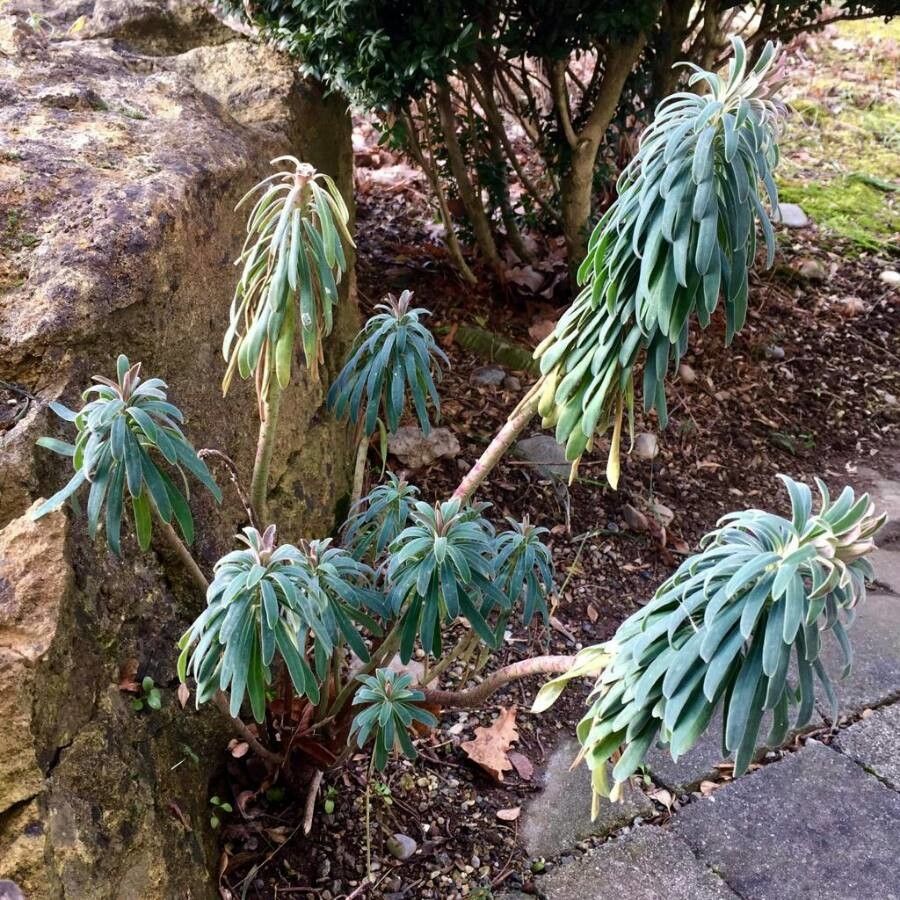
Upright, sometimes arching stems become woody and bare at the base with age. Narrow, bluish-green, lightly downy leaves can reach 15 cm (6 in). Vegetation gradually concentrates toward shoot tips, so a bare base alone does not establish disease or underwatering. Wild plants are often shorter, 30–80 cm (12–31 in). 47
Large, dense terminal inflorescences are generally cylindrical or elongated. Small cup-like units contain dark reddish-brown to black nectar glands, with color varying by subspecies. Garden plants often reach 1–1.5 m (3.3–5 ft) high and wide. Allowing that volume avoids repeated cutting where shoots overhang a path. Fruit is a hairy capsule 3–6 mm (0.12–0.24 in) long, not a fleshy berry. 437
Useful taxonomy
Linnaeus published Euphorbia characias in 1753, in volume one of Species Plantarum, page 463. L. identifies that author. The work and page locate the original publication even if a later description gives a different reference. 2
Synonyms include Esula characias (L.) Haw. and Tithymalus characias (L.) Hill. Two subspecies are recognized: characias, centered on the western and central Mediterranean, and wulfenii, ranging from southern France to western and southwestern Turkey. These botanical subdivisions differ from variegated or compact garden cultivars. They describe taxonomic ranks within the species, rather than selections made for ornamental characters in cultivation. 1
Habitat and range
The species is native to the Mediterranean region, including France, Corsica, Italy, parts of the Balkans and Turkey, and parts of North Africa. In France it inhabits dry southern sites as far as Drôme, Aveyron and Tarn-et-Garonne, as well as Corsica, and is Least Concern on the national Red List. Its association with garrigue describes only part of its habitat and subspecific distribution. 178
In gardens choose sun and good drainage. Drought tolerance concerns established plants; newly planted rootballs still need to extend roots into surrounding soil. Constant winter moisture can be problematic. Site selection matters more than frequent watering: a dry-ground plant cannot repair poor drainage. 3
Life cycle and reproduction
The plant is perennial, but its stems are usually biennial. A stem first develops leaves, then flowers the following year. Loss of a flowering stem therefore does not necessarily mean death of the whole plant. Distinguish renewal shoots from old stems before cutting. 4
The visible display runs from spring to early summer according to form and climate. Tasmanian Tiger carries pale inflorescences during this period. Plants can be short-lived but often self-seed. Cuttings and division are also used; these operations need the same latex protection as pruning. 543
Uses and risks
Evergreen foliage and inflorescences give structure to sunny borders. Full sun and light, well-drained soil suit both the species and Jimmy Platt, a subsp. wulfenii cultivar. Established plants need little maintenance under these conditions; remove spent flowering stems at ground level in late summer or autumn. 64
Gloves and eye protection reduce sap-contact risk when cutting. Latex can cause dermatitis and sometimes lasting corneal damage. All parts are poisonous if eaten, with possible lip and mouth blisters; keep prunings away from children, dogs and cats. Horse data are unavailable. Do not apply latex to a wart or lesion: reported traditional use does not make this safe. 3
Varieties, look-alikes and related plants
Tasmanian Tiger has green leaves edged in cream, along with cream bracts and yellow centers. Height and width are generally 0.5–1 m (1.6–3.3 ft). Choosing variegation does not remove the need to check space and exposure or take precautions against latex. 5
Jimmy Platt belongs to subsp. wulfenii and carries yellow-green inflorescences. Differences in glands and habit explain varied-looking plants under one species label. Compare the complete name, leaves and whole inflorescence with other garden spurges; white sap alone cannot identify the species. 631
Main sources
The accepted name is Euphorbia characias L., published in Species Plantarum in 1753; Esula characias and Tithymalus characias are synonyms. 12
Frequently asked questions
Are the large yellow parts petals?
No. Colored bracts surround very small flowers without petals.
Can Mediterranean spurge be pruned with bare hands?
No. Latex irritates skin and eyes; wear gloves and eye protection.
Is the whole plant biennial?
No. It is perennial, although individual stems usually flower in their second year.
If you are unsure about a plant’s toxicity, ask a botanist or veterinarian for advice.