
Cypress spurge (Euphorbia cyparissias, )
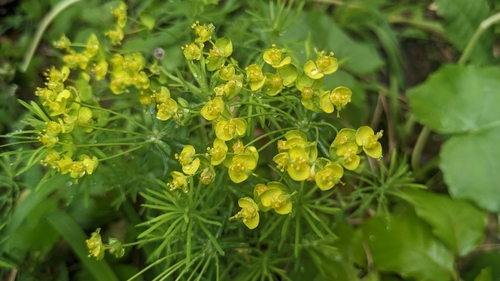
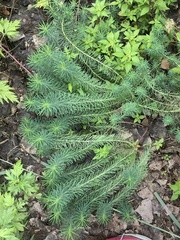
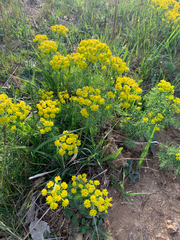
Cypress spurge (Euphorbia cyparissias) is a European Euphorbiaceae perennial with fine leaves and yellow-green bracts. A creeping rootstock forms colonies; its latex requires precautions whenever handled.
Read moreCypress spurge
Esula cupressina and Tithymalus cyparissias


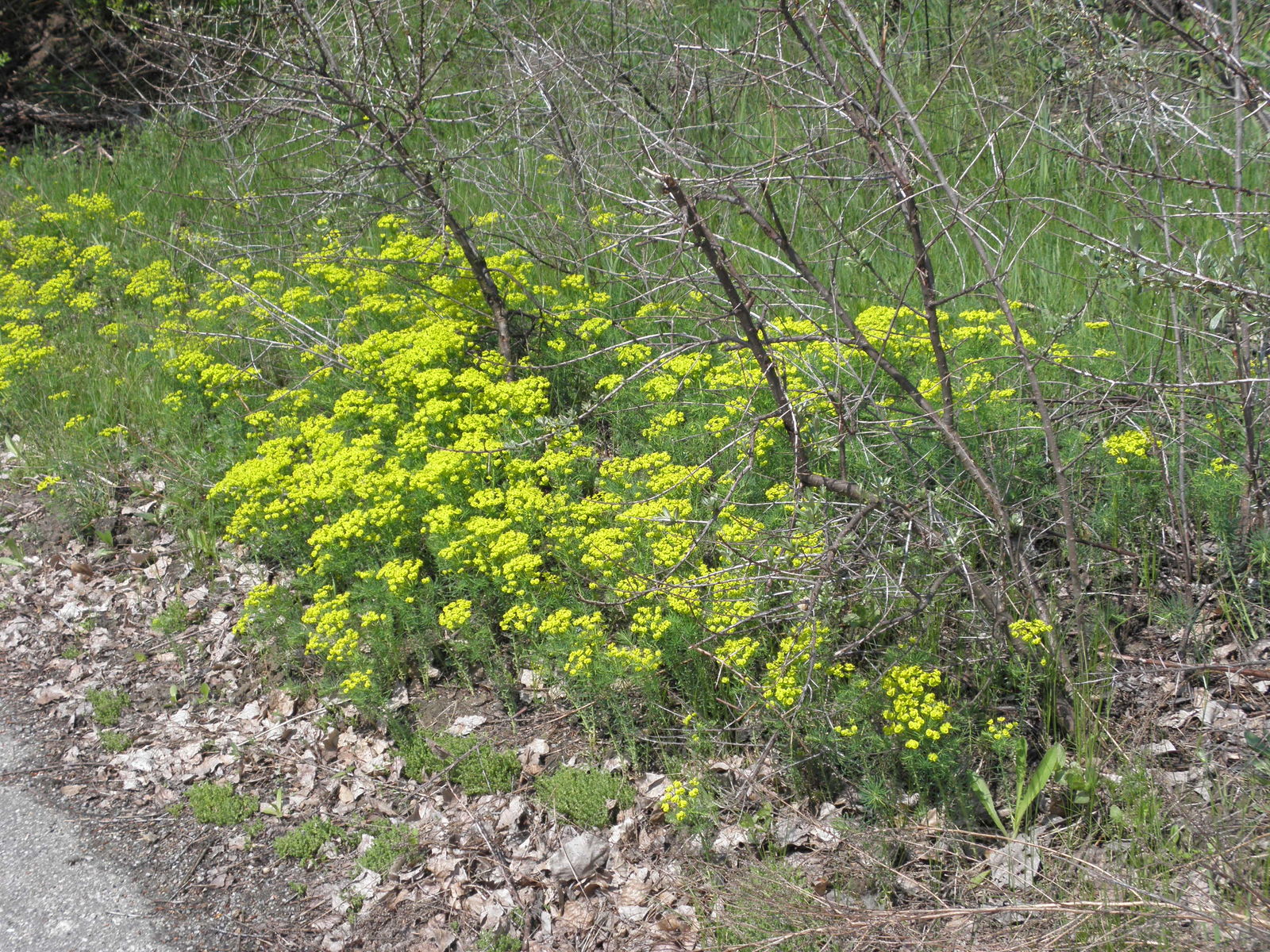
© photo
(c) Norbert Lanzanasto, some rights reserved (CC BY-NC), uploaded by Norbert Lanzanasto · cc-by-nc
iNaturalist User · cc-by
Matthew Kvocera · cc-by
Taken Feb 24, 2017 by Tela Botanica − Marcel ETIENNE (cc-by-sa)
Taken Apr 10, 2022 by Petr Harant (cc-by-sa)
Taken Jun 29, 2021 by Jacques Zuber (cc-by-sa)
Taken Aug 10, 2017 by Laurent Ledante (cc-by-sa)
Taken May 3, 2018 by Pep Secem (cc-by-sa)
© copyright of the Board of Trustees of the Royal Botanic Gardens, Kew.




Global distribution
Native from Europe to northwestern Turkey. Introduced in North America, Japan, New Zealand and Corsica, among other places.
- Native1
- Introduced1
- Mainland France
- Japan
Hexagons: regions where the plant occurs. Green dots: native range.1
Identity
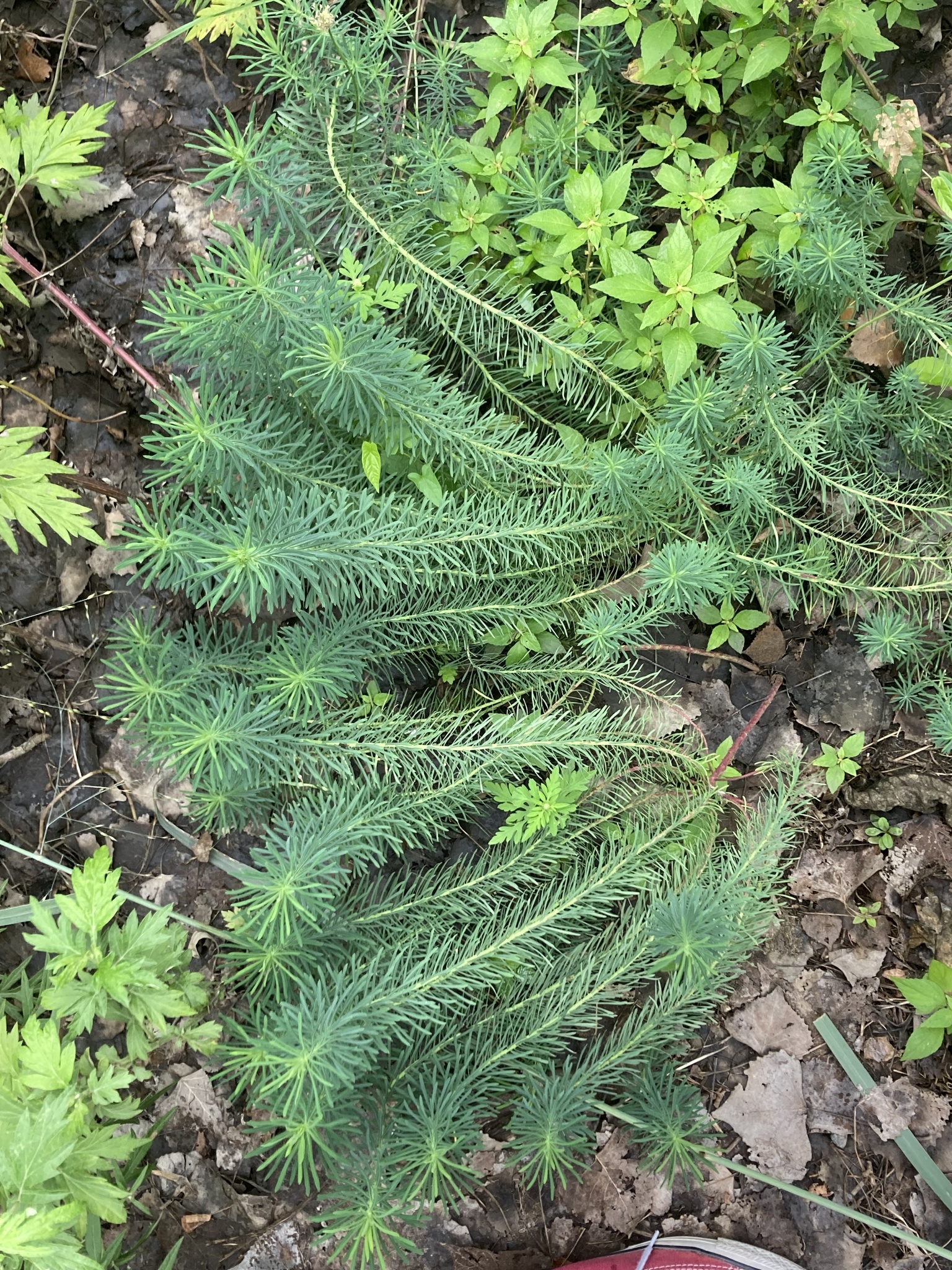
Cypress spurge (Euphorbia cyparissias L., 1753) is an herbaceous Euphorbiaceae perennial. Fine leaves give sterile shoots the appearance of a small conifer, but the resemblance ends there. It flowers, produces capsules and has seasonal foliage. Numerous stems emerge from a creeping rootstock rather than a permanent trunk. 34
Plants reach about 15–50 cm (6–20 in) tall, but a colony can occupy much more space than that modest height suggests. Garden considerations therefore concern available area and neighboring, less vigorous perennials as much as height. The underground network of rhizomes and horizontal roots explains its ability to spread into the space around the original plant. 46
Recognition
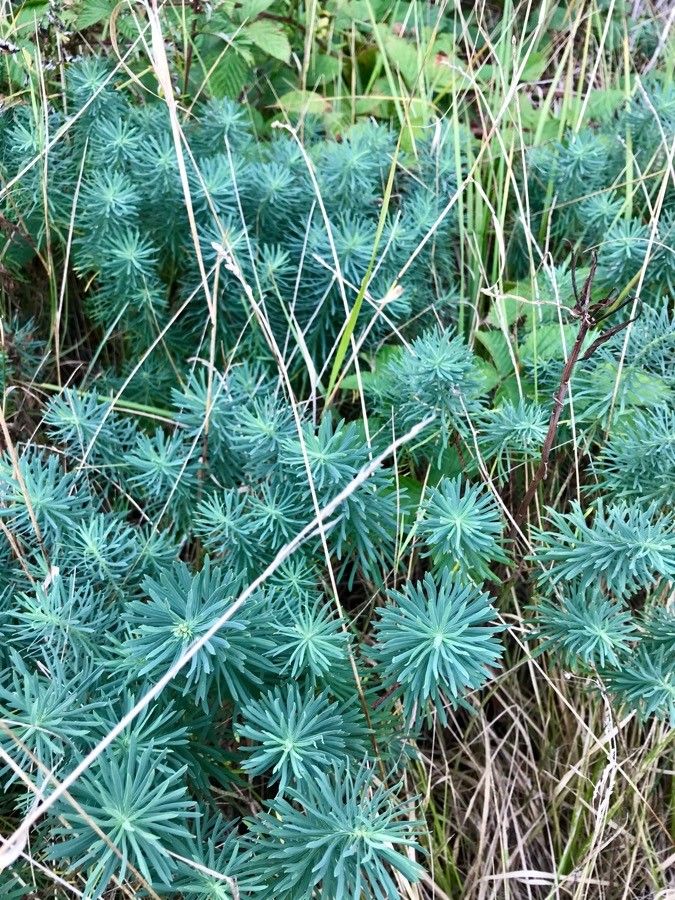
Leaves are very narrow and linear. Main-stem leaves measure about 1.5–3 cm (0.6–1.2 in) long by 2–3 mm (0.08–0.12 in) wide. Densely leafy sterile branches occur below the inflorescence. Observing both shoot types together helps identify the species even after bracts lose their bright color. 3
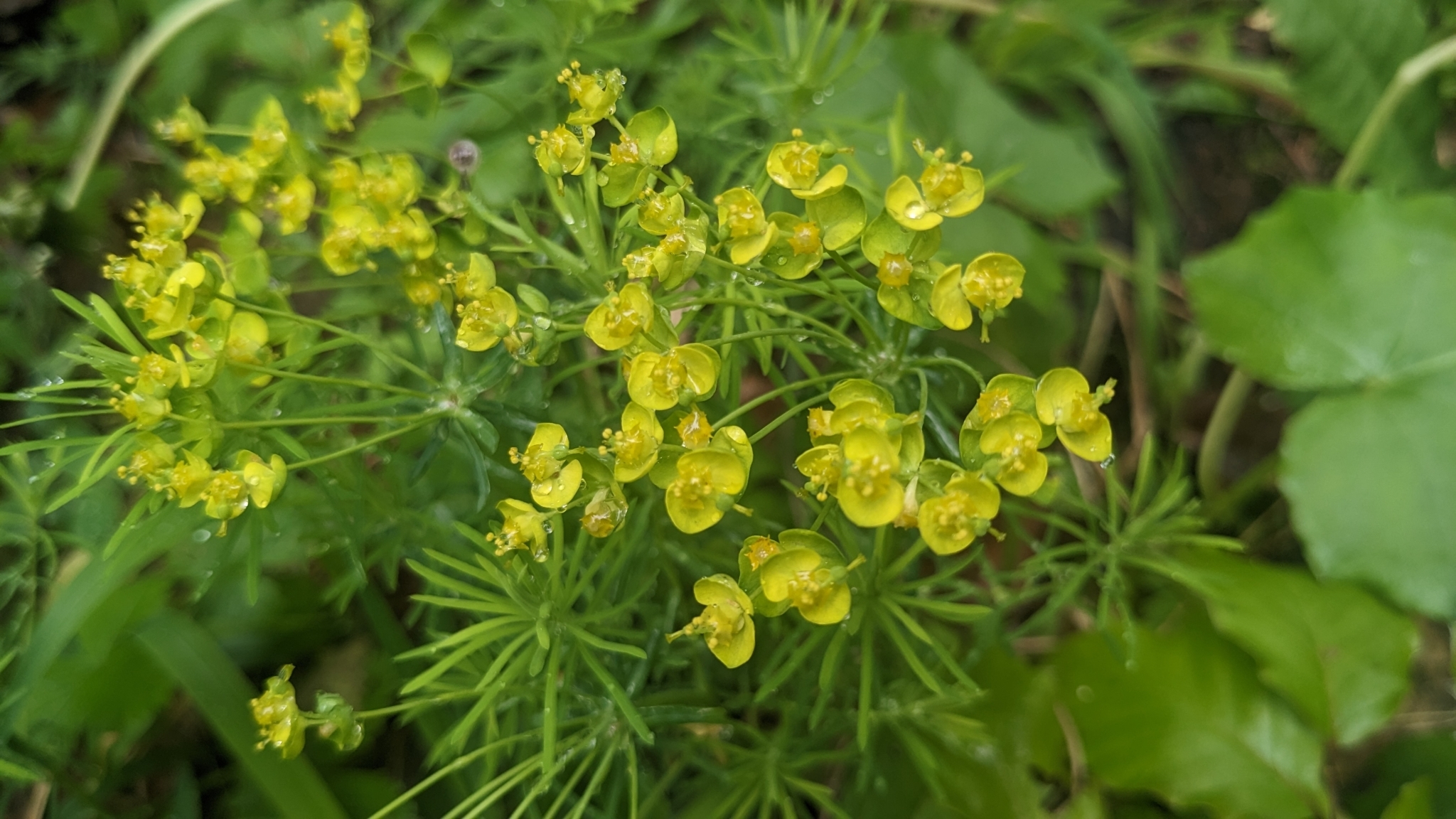
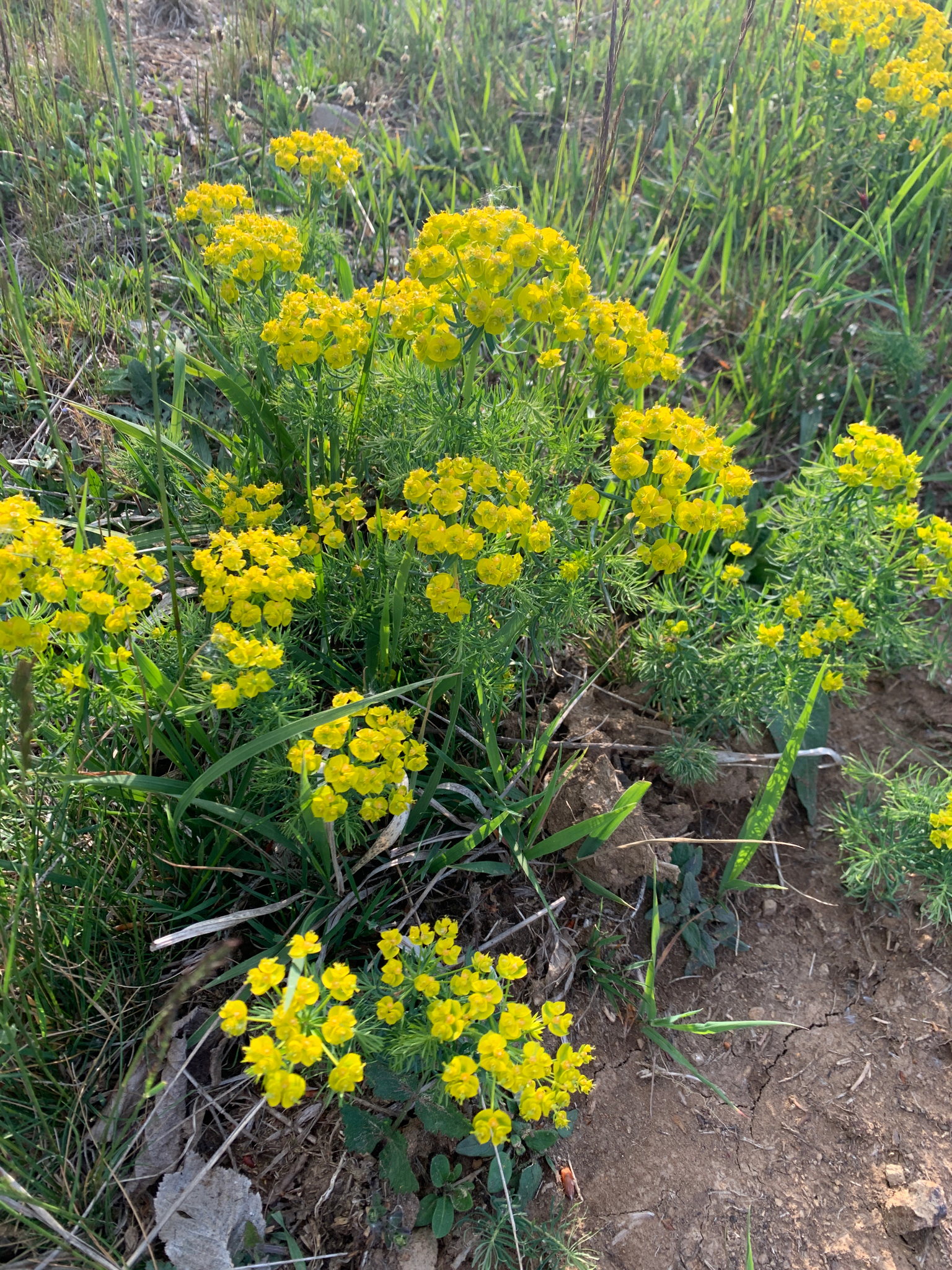
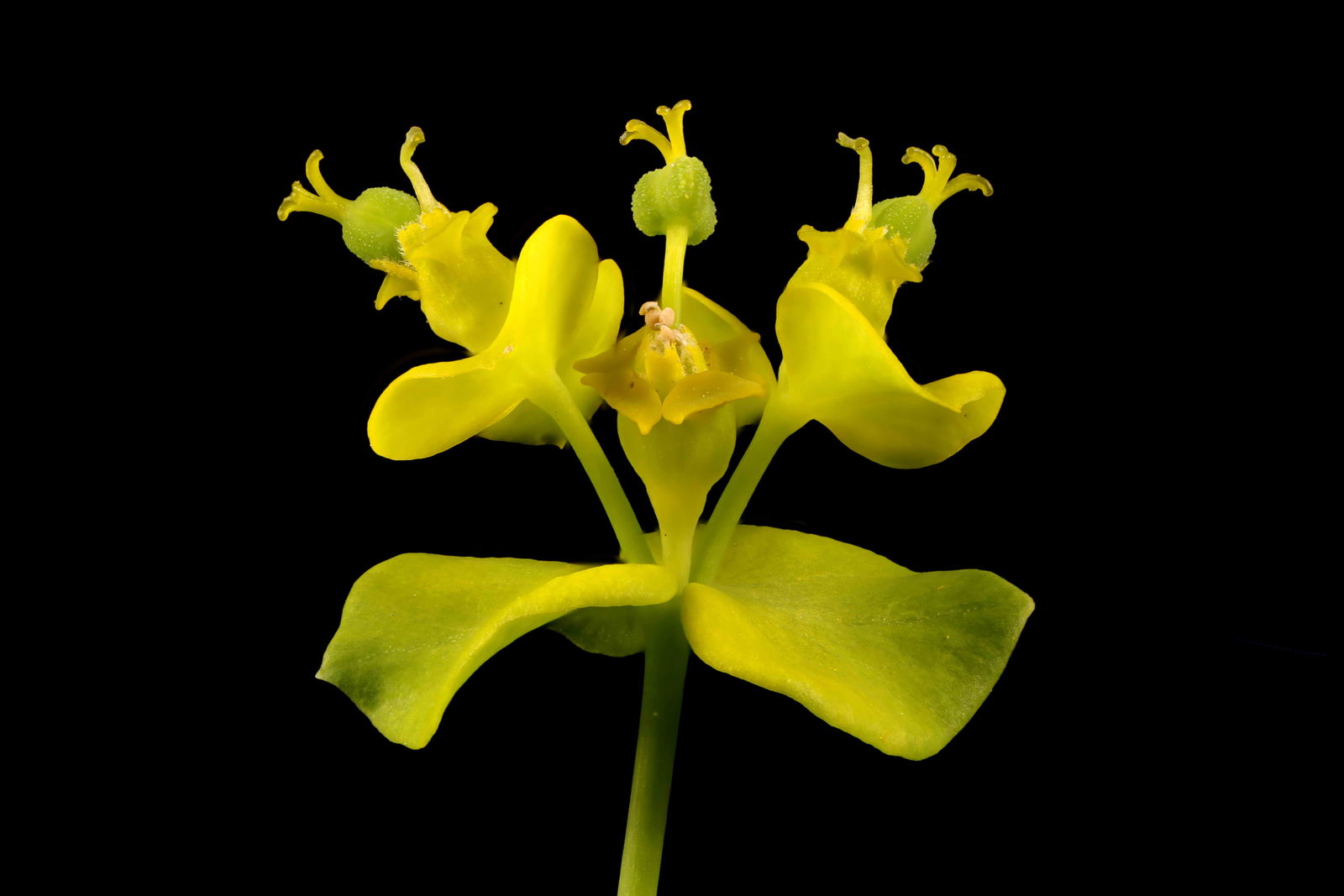
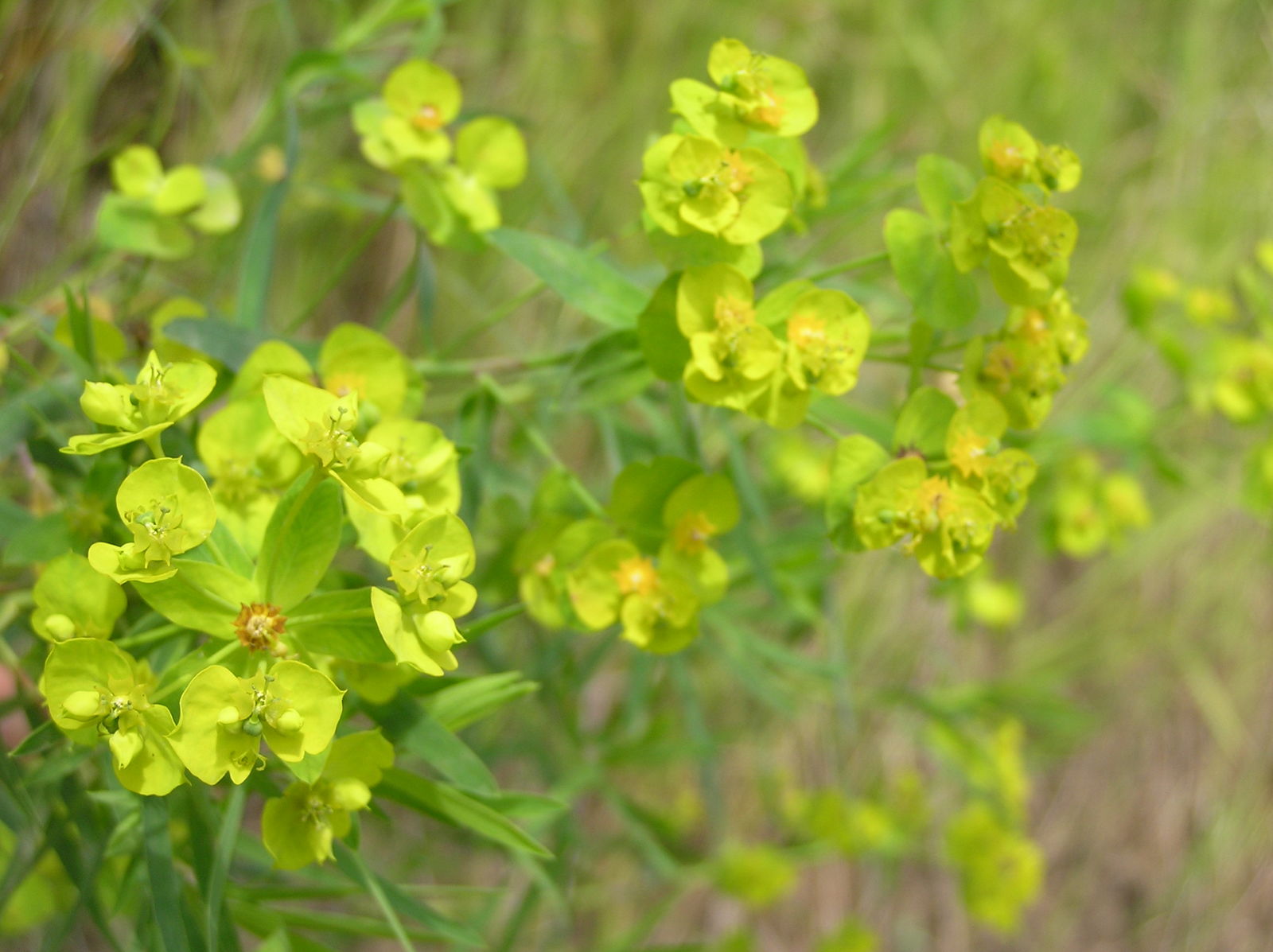
The inflorescence resembles a much-branched umbel. Pale-yellow bracts become reddish; they are not petals. Nectar glands are crescent-shaped. Capsules later develop small rounded bumps. Fine leaves, sterile branches and capsule surface together provide stronger evidence than yellow color alone. 34
Useful taxonomy
The accepted name is Euphorbia cyparissias L., published by Linnaeus on page 461 of Species Plantarum in 1753. L. identifies the author, not a variety or horticultural category. This remains the accepted species name. 21
Tithymalus cyparissias (L.) Hill and Esula cupressina Gray occur in older literature. A different genus in an old flora need not indicate another plant. The epithet cyparissias refers to cypress-like foliage. Keep the full binomial in documentary searches: spurge alone covers many very different growth forms. 15
Habitat and range
Dry grassland and open habitats, woodland edges and some open woods support the plant. Nutrient-poor meadows, banks and tracks are favorable, and stony ground does not prevent establishment. Sites are chiefly dry to moderately dry and often nutrient-poor. 43
In France it occurs widely in cultivated and uncultivated places, especially on limestone. It is Least Concern on the metropolitan French flora Red List and the regional lists in which it appears. 78
The native range extends from Europe to northwestern Turkey. Mainland France is native territory, while Corsica is introduced. Introduced territories also include much of North America, Japan and New Zealand. Native status in mainland France does not determine ecological status in another country. 1
Life cycle and reproduction
It spreads underground even without seed. Rhizomes and horizontal roots produce new shoots; fragments moved with soil can regrow. Dense colonies persist for long periods. Removing inflorescences does not stop this propagation, and plowing or earthmoving can scatter root and rhizome fragments. 6
Flowering is chiefly in spring, April–June, but can extend to September in France according to site and year. Small flowers cluster in cyathia surrounded by conspicuous bracts. Ripe capsules subsequently release seeds. There is no large yellow corolla: most visible color comes from bracts. 3475
Uses and risks
Latex irritates skin and eyes, and ingestion is poisonous. A broken stem may release white sap; do not break one to confirm identification. Gloves and eye protection reduce accidental contact during work. Children and animals should not chew the plant. It causes illness in horses and cattle, while sheep are reported to graze it without harm. That contrast does not establish safety for other animals. 56
It has been planted ornamentally, particularly in North America, and tolerates dry, poor soils. Colonies can nevertheless crowd neighboring plants. Control requires monitoring underground regrowth and avoiding movement of root-containing soil into uncolonized areas. Both fertile and sterile forms occur. Sterile plants lack seed but still spread underground, so no seeds does not mean little expansion. 56
Varieties, look-alikes and related plants
Narrow-leaved spurges need several identification characters. Outline alone can resemble other dry-ground species. Examine leaf width, numerous sterile branches below the inflorescence and capsule surface rather than relying on yellow bracts. Crescent-shaped glands add a hand-lens character without handling latex. 4
Hybrids with leafy spurge are known as Euphorbia × pseudoesula Schur. An intermediate individual may not be identifiable from a general photograph. A hybrid is not automatically a cultivar, and variation in leaf color alone does not establish a horticultural selection. 6
Main sources
Linear leaves, yellow bracts turning red and small-warted capsules characterize cypress spurge, native in mainland France. Latex irritates skin and eyes, and underground organs sustain spread even without seeds. 3156
- Kew, Plants of the World Online: Euphorbia cyparissias
- International Plant Names Index: Euphorbia cyparissias
- Info Flora: cypress spurge
- German Federal Agency for Nature Conservation, FloraWeb: Euphorbia cyparissias
- NC State Extension: Euphorbia cyparissias
- USDA Forest Service, FEIS: Euphorbia cyparissias (archive dated 31 August 2025)
- Tela Botanica, cypress spurge, Coste description
- INPN, TAXREF: Euphorbia cyparissias
Frequently asked questions
Why does cypress spurge resemble a conifer?
Sterile shoots carry many narrow, closely spaced leaves. The outline recalls a small cypress, but it is a flowering herbaceous perennial.
Is the latex dangerous?
Yes. Latex can irritate skin and eyes, and the plant is poisonous if eaten. Wear gloves and protect the eyes when handling it.
Is removing the flowers enough to contain it?
No. Rhizomes and horizontal roots also propagate the plant. Underground fragments can produce new shoots.
If you are unsure about a plant’s toxicity, ask a botanist or veterinarian for advice.