
Common gardenia (Gardenia jasminoides, )
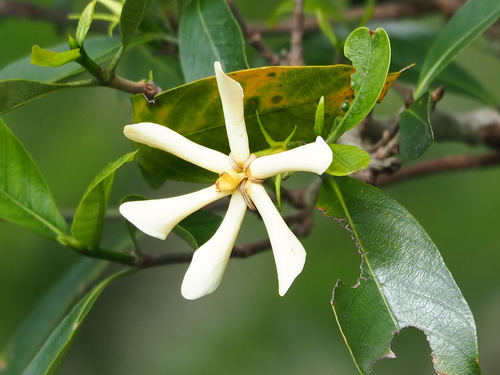

Common gardenia (Gardenia jasminoides) is an evergreen shrub in the Rubiaceae, native to humid subtropical Asian woodland. Waxy white flowers, a strong fragrance and glossy leaves distinguish this acid-loving plant, grown outdoors in mild climates or in sheltered containers.
Read moreCommon gardenia, Cape jasmine and Gardenia



© photo
no rights reserved, uploaded by 葉子 · cc0
Wikimedia Commons · CC BY-SA or Public Domain
Wikipedia · CC BY-SA
Taken Dec 13, 2018 by yves meyer (cc-by-sa)
Taken Apr 12, 2021 by pbl1972 (cc-by-sa)
Taken Dec 16, 2021 by Herrero Laporte Sebastián (cc-by-sa)
Taken Mar 20, 2022 by huy HO (cc-by-sa)
Taken Jan 23, 2022 by LKV Pawar (cc-by-sa)
© copyright of the Board of Trustees of the Royal Botanic Gardens, Kew.




Identity
Common gardenia (Gardenia jasminoides J.Ellis) is an evergreen shrub in the Rubiaceae, the coffee family. Its accepted botanical name distinguishes the fragrant gardenia from true jasmines and from other species of Gardenia sold for ornamental planting. 1 2 3
White, waxy flowers and a powerful fragrance make this shrub a distinctive choice among white-flowered plants. Its appearance is only half the story: successful cultivation depends on an acidic growing medium and careful management of water, especially where the supply contains substantial lime. 9 5
The epithet jasminoides means jasmine-like, referring to the resemblance in scent or appearance. Common gardenia does not belong to the Oleaceae, the family of true jasmines; its botanical relatives are instead within the Rubiaceae, which also includes coffee. 4 8
Grow Common gardenia as an acid-loving evergreen shrub rather than as a climbing jasmine or an undemanding foliage plant. Stable moisture, suitable air conditions and adequate light are essential if its flower buds are to develop and open. 7 9
Recognition
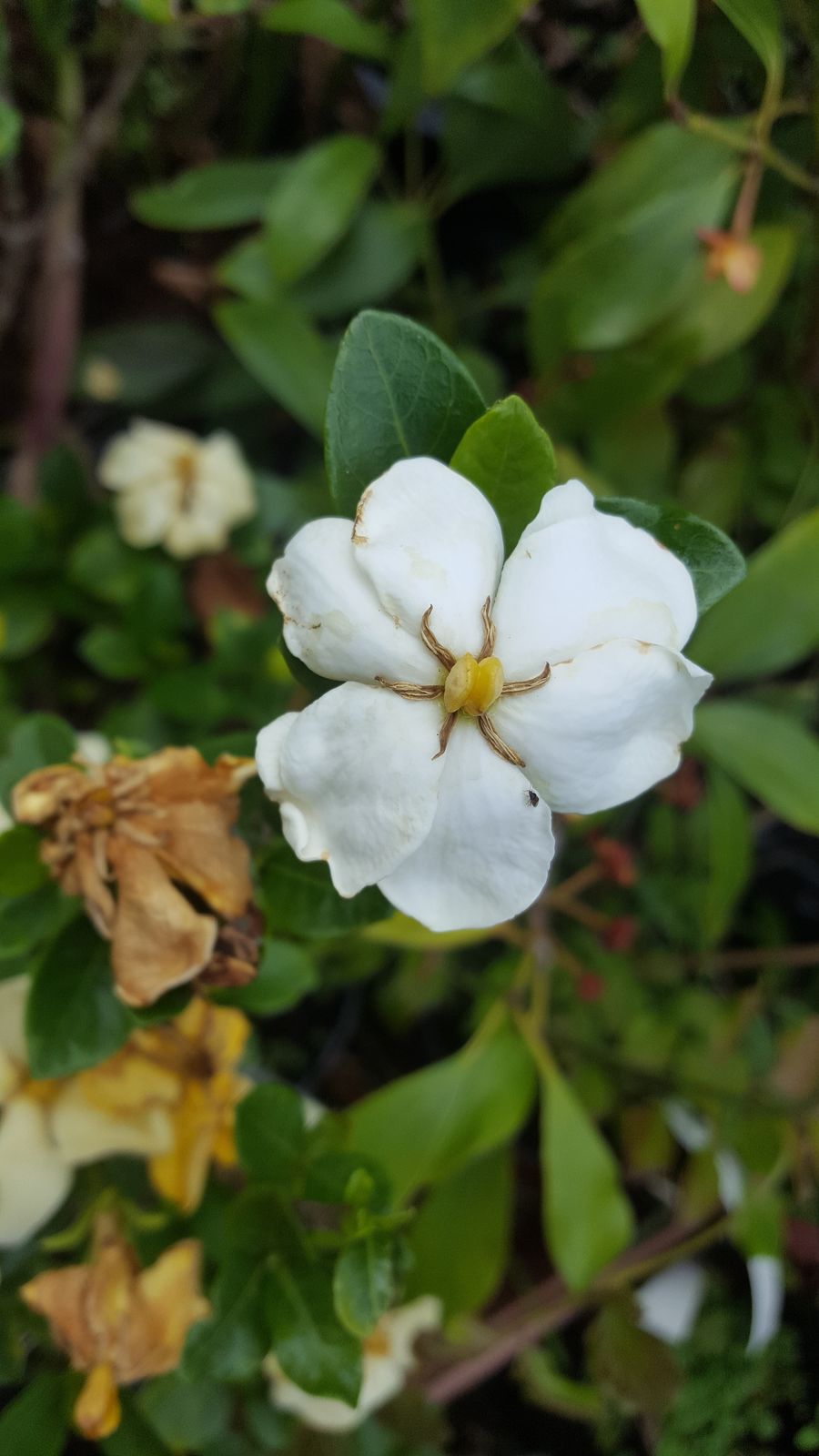
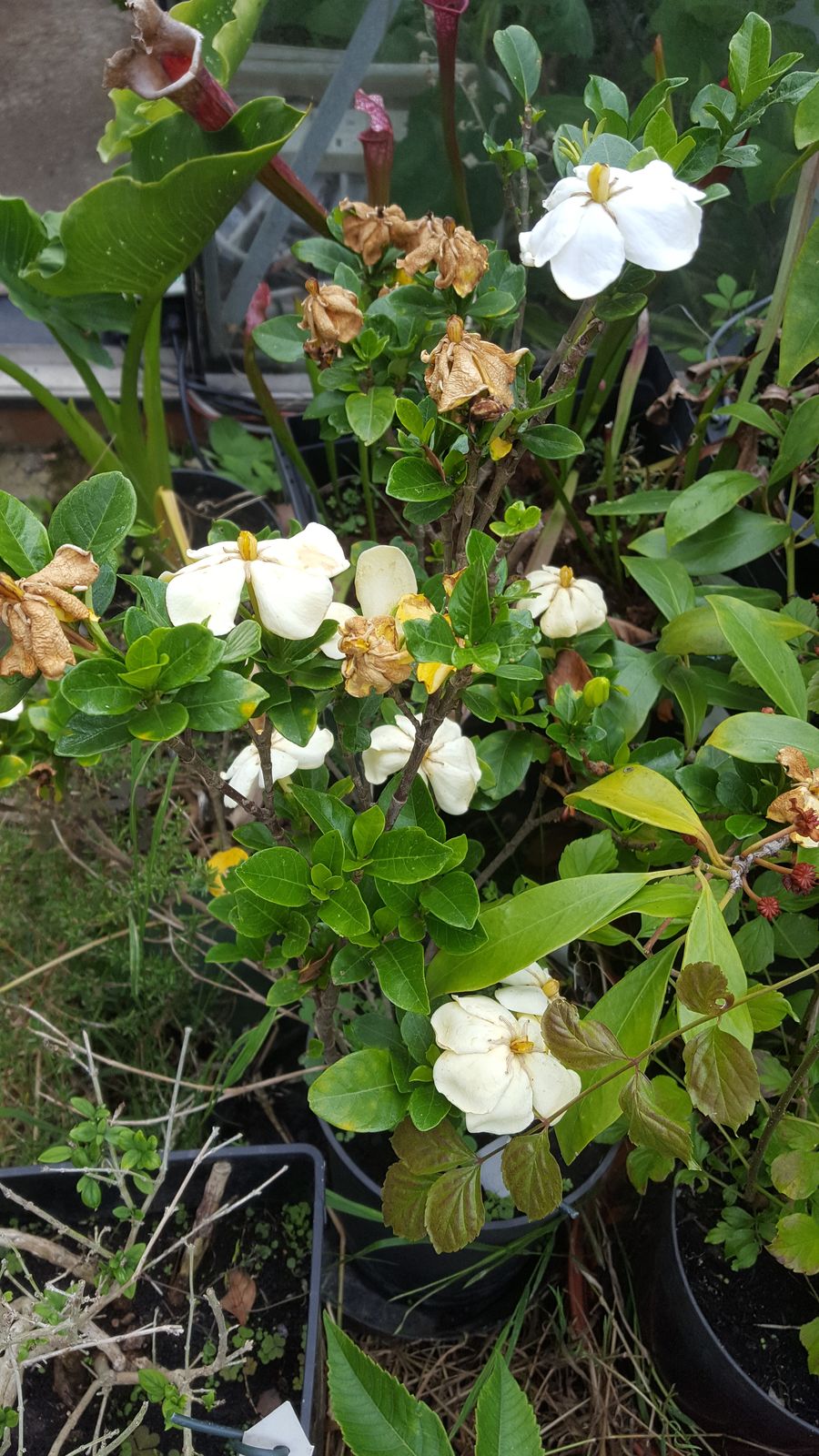
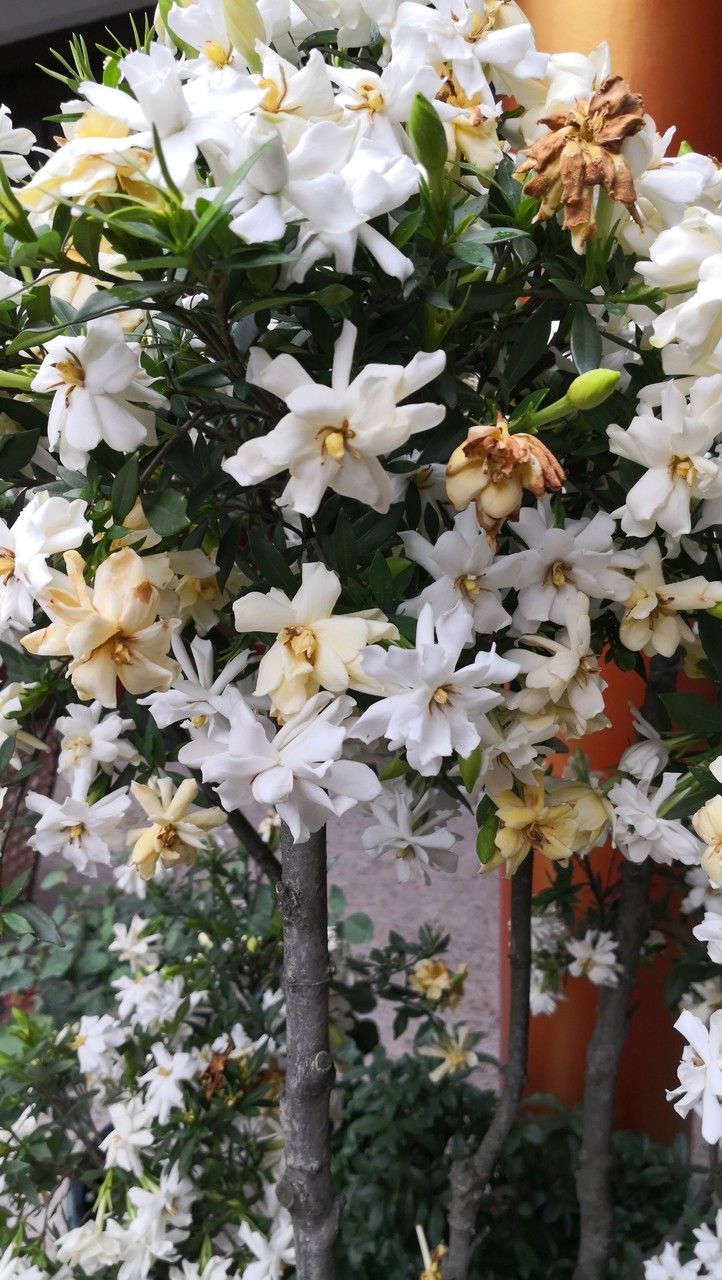
Glossy, dark green, evergreen leaves grow in opposite pairs or whorls. The white, waxy flowers may be single or double and turn yellowish with age. Their strong scent is particularly noticeable in mild, humid air, where the foliage and flowers retain their fresh appearance. 5 7
Buds are sensitive to sudden changes in watering, humidity, temperature and light. They may fall before opening after a move or a change in conditions. This sensitivity helps explain why a flowering plant can struggle in a dry home even when its leaves initially look healthy. 7 9
Yellow leaves with greener veins often indicate chlorosis associated with lime in the water or growing medium. The pattern does not automatically mean that the plant needs more fertilizer: nutrients can be present yet unavailable to roots in unsuitable conditions. 9 5
When green buds drop, first check for missed watering, water standing in the saucer, a recent move or excessively dry air. These are signs of cultivation stress as well as possible causes of failure; correct the conditions before assuming that a disease requires treatment. 7 5
Useful taxonomy
Within the genus Gardenia, which contains many tropical and subtropical species, Gardenia jasminoides is the familiar fragrant species commonly sold by nurseries in temperate regions. The species name is therefore useful when comparing plants with different growth habits or requirements. 2 8
The alternative name Cape jasmine describes an association with jasmine, particularly its perfume, rather than a botanical relationship. The binomial Gardenia jasminoides separates this Rubiaceae shrub from plants in the genus Jasminum and avoids relying on fragrance alone for identification. 4 9
Cultivars differ in size, flower form and cold tolerance. Kleim’s Hardy, for example, can suit mild outdoor climates, but greater hardiness does not make a gardenia tolerant of dry conditions or a lime-rich growing medium. Choose the cultivar and the site together. 7 5
Accurate species identification also matters for animal safety and soil requirements. The toxicity guidance and cultivation needs associated with Gardenia jasminoides should remain attached to that species, rather than being extended indiscriminately to every plant carrying a gardenia name. 6 2
Cultivation
An acidic, humus-rich, moist but well-drained medium is central to cultivation. Hard irrigation water can restrict iron availability and promote chlorosis. Rainwater or another low-mineral supply is generally more useful than adding fertilizer at random when yellowing begins. 9 7
Provide bright, filtered light in a conservatory, on a sheltered terrace or in a bright room. Avoid scorching sun through glass. Very dry air can contribute to bud drop, while scale insects and whiteflies are among the pests to watch for in protected growing conditions. 5 7
A container must drain freely, but its root ball should remain consistently moist rather than waterlogged. Avoid repeatedly moving a plant once buds are forming. If shaping is necessary, prune lightly after flowering, when the display has finished rather than while buds are developing. 7 9
Fertilizer cannot replace a diagnosis of the growing conditions. Nitrogen may briefly improve the color of a plant rooted in a lime-rich medium without resolving the underlying problem. Check irrigation water, substrate and pH before trying to force new growth. 9 7
A cool, bright room is often more suitable than a dark, strongly heated room with dry air. In climates with cold winters, a movable pot can spend the warm, humid season outside and return to protection before pronounced cold. A conservatory can provide this sheltered setting. 7 5
Uses
Conservatories, sheltered terraces, cool greenhouses and large, carefully maintained containers are useful settings for Common gardenia. Permanent planting in the ground is suitable only where winters are mild, the soil is acidic or appropriately amended, and cold winds can be avoided. 9 7
Among white-flowered arrangements, its waxy, fragrant blooms have a different character from airy anemones or simple cosmos flowers. A well-grown specimen supplies both visual weight and scent; placing it thoughtfully is more effective than treating it as an interchangeable mass of white flowers. 9 5
The flowers can be striking when cut, but keeping them fresh requires clean water and gentle handling. Their appeal depends on the condition of the bloom, so take care with the petals rather than assuming they will behave like tougher cut flowers. 9 7
A scented pot near a doorway, a white-flowered conservatory display, a shaded acidic terrace or a collection of ericaceous plants can all provide a suitable role. Choose a cool, compatible position that supports the shrub’s needs as well as showing off its flowers. 9 5
Toxicity
The ASPCA lists Gardenia jasminoides as toxic to cats, dogs and horses. The compounds identified are geniposide and gardenoside; reported signs are generally mild vomiting or diarrhea, with hives also possible in animals. 6
Keep the container and discarded plant material out of reach of pets that chew leaves or flowers. Prunings and fallen or faded blooms deserve the same attention as the living plant, since they can remain accessible after routine tidying. 6 5
Fragrance is not a reason to improvise an edible-flower use. Treat this plant as an ornamental, particularly when a potted specimen has been treated or fertilized for display rather than supplied for food use. 7 9
Main sources
- Wikidata, Gardenia jasminoides
- Plants of the World Online / Kew, Gardenia jasminoides
- World Flora Online, Gardenia jasminoides
- International Plant Names Index, Gardenia jasminoides
- NC State Extension, Gardenia jasminoides
- ASPCA, Gardenia toxicity entry
- Royal Horticultural Society, gardenia growing guide
- Wikipedia EN, Gardenia jasminoides
- Floralens, white-flower selection
If you are unsure about a plant’s toxicity, ask a botanist or veterinarian for advice.