
Plaid cactus (Gymnocalycium mihanovichii, )
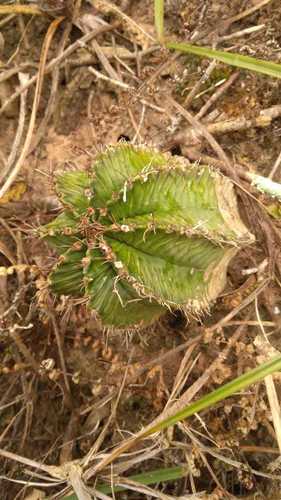
Plaid cactus (Gymnocalycium mihanovichii) is a small cactus in the Cactaceae family from Paraguay and northeastern Argentina. The brightly colored balls sold as grafted plants are horticultural selections deficient in chlorophyll, unlike the species’ gray-green appearance.
Read morePlaid cactus
Echinocactus mihanovichii and Gymnocalycium mihanovichii var. filadelfiense
Give plenty of ambient light without direct sun on the leaves.
Bright, filtered light; protect colored forms from scorching sun.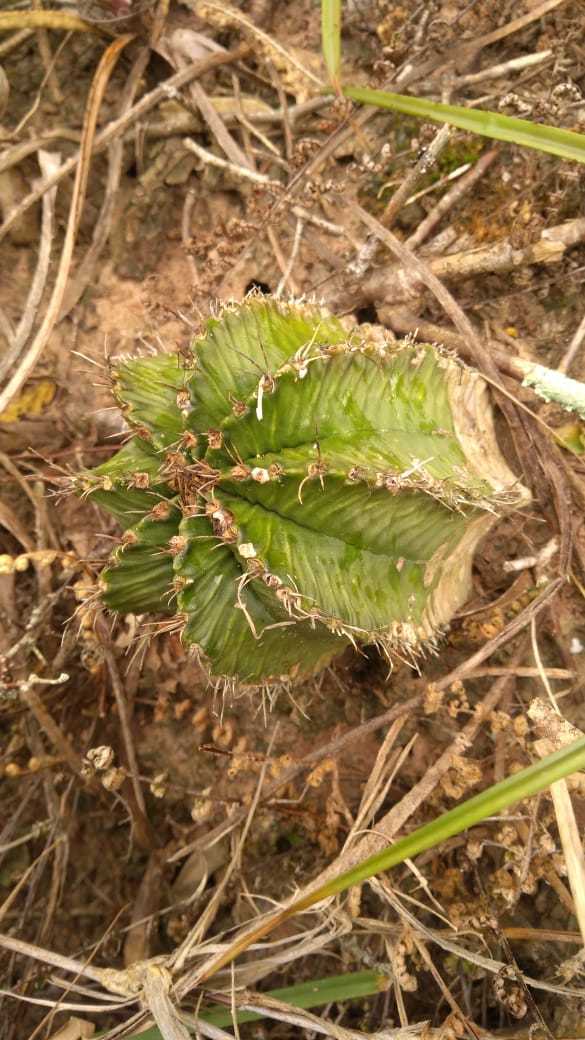


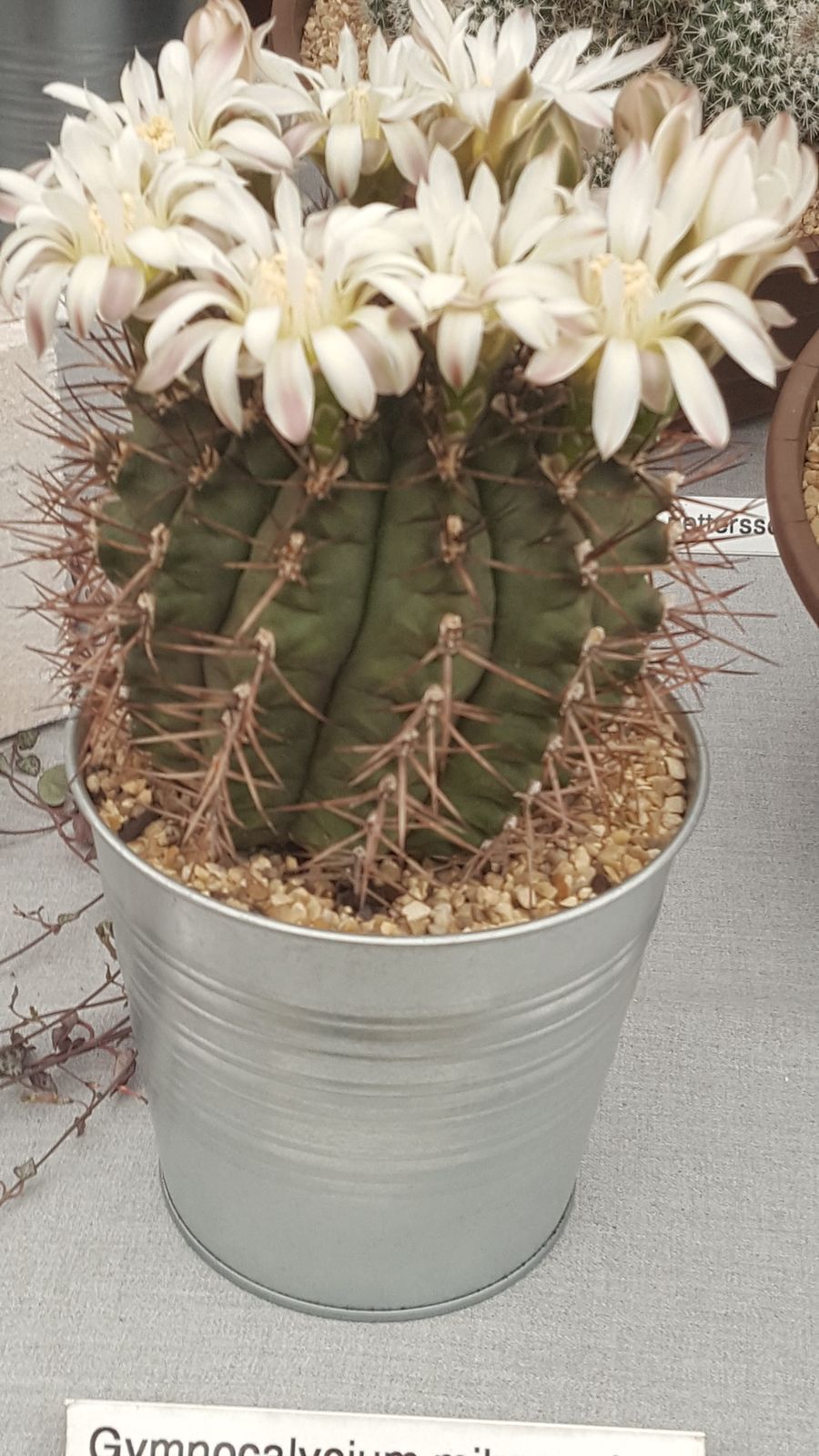

© photo
(c) alemsqdt, some rights reserved (CC BY-NC-ND), uploaded by alemsqdt · cc-by-nc-nd
Romi Galeota Lencina · http://creativecommons.org/licenses/by/4.0/
Taken Jun 3, 2020 by salazar alexandra (cc-by-sa)
Taken Apr 21, 2021 by Esteban Maudet (cc-by-sa)
Taken Jan 9, 2021 by Rodríguez Becky (cc-by-sa)
Taken Dec 22, 2021 by Alves (cc-by-sa)
Taken Feb 12, 2020 by Hayden Hayden Hughes (cc-by-sa)
© copyright of the Board of Trustees of the Royal Botanic Gardens, Kew.




Global distribution
Native to Paraguay and northeastern Argentina, notably Chaco and Formosa.
Identity
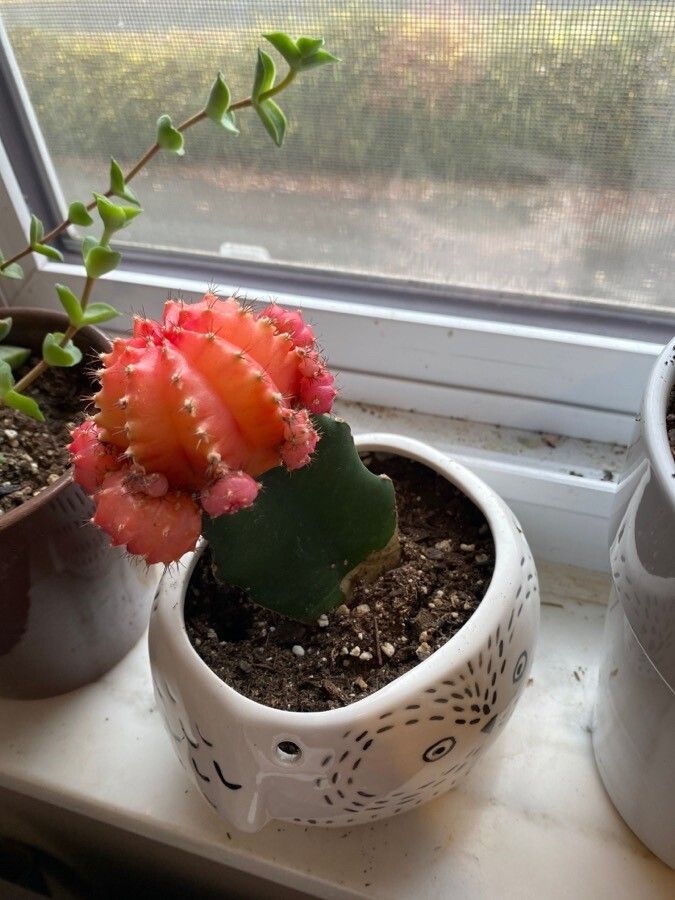
Plaid cactus (Gymnocalycium mihanovichii (Frič & Gürke) Britton & Rose, 1922) naturally has a gray-green, sometimes reddish body. A red or yellow ball sitting on a green stem is a grafted horticultural form: its chlorophyll-free top depends on the cactus supporting it. This explains why a green plant can live on its own roots while a scion entirely lacking chlorophyll cannot. 1 2
The species belongs to the Cactaceae and remains small. The English name “moon cactus” commonly refers to grafted combinations; it is a horticultural label rather than a botanical identification. NParks explicitly treats these plants in a cultivar profile, whose range of colors does not describe the wild species as a whole. 3
Recognition
The globular body has about 8 narrow, notched ribs. Each areole bears 5 to 6 spines, curved and yellowish gray. A plant may remain solitary or produce offsets, so small balls growing at its sides do not, on their own, indicate a different species. Examine the ribs and spines as well as the overall outline. 2
To distinguish a cactus from a similarly shaped succulent, look for areoles, the small cushions from which spines and flowers emerge. The New York Botanical Garden describes this feature as unique to cacti. On grafted forms of G. mihanovichii, examine the ribs of the rootstock and the top separately: their different outlines belong to different plants. 6 2
Useful taxonomy
The accepted name is Gymnocalycium mihanovichii. Its basionym, Echinocactus mihanovichii Frič & Gürke, dates from 1905; the combination in Gymnocalycium was published in 1922. Kew also places Gymnocalycium mihanovichii var. filadelfiense Backeb. in the species’ synonymy, rather than recognizing it here as a separate accepted taxon. 1
The genus name means “naked calyx,” referring to flower buds without hairs or spines. The epithet honors Nicolás Mihanovich, who supported Frič’s travels in Paraguay. The horticultural names ‘Hibotan’ and ‘Hibotan Nishiki’ describe cultivated material; their appearance on a label does not replace a botanical identification of the plant. 2
Habitat and range
Kew’s native range covers Paraguay and northeastern Argentina, including Chaco and Formosa. The principal biome is subtropical. This range concerns the botanical species; it does not give the brightly colored selections sold in garden centers a wild origin. 1
In 2016, Schädlich and Bercht rediscovered populations near Puerto Casado, now Puerto La Victoria. Their study describes humus-containing, loamy clay soil beneath dense vegetation and a canopy of trees and shrubs. Even mature plants had few, shallow roots. This cactus therefore cannot be understood simply as a ball growing exposed on bare sand. 4
Life cycle and reproduction
The species’ flowers appear at the top of the plant, from late spring to early summer in NC State’s horticultural description. Paraguayan field observations show yellow-green to brown-green flowers whose parts usually remain close together, like those of a tulip. A flower that opens only slightly is therefore not necessarily abnormal. 2 4
Propagation from seed is documented, as is grafting. For cacti in general, the RHS recommends spring sowing in bright light without direct sun, with the cover ventilated daily. Grafting maintains chlorophyll-free forms that depend on a green support. Understanding this method requires distinguishing the scion, or upper plant, from the rootstock beneath it. 5 2
Cultivation and seasonal rhythm
Bright, filtered light and a well-drained mix suit the plants described by NC State. NParks recommends particular protection from sun for cultivars deficient in chlorophyll. The general idea that every cactus should receive direct sun therefore needs adjustment for these colored forms. 3 2
The calendar concerns sheltered cultivation in mainland France. Its water and growth scores are relative guides, to be adjusted according to how quickly the pot dries. Let the mix dry between waterings and reduce watering further in winter. For potted cacti, the RHS places repotting in spring, and only when the container has become too small. 2 5
Apply fertilizer only during growth. The general RHS guide recommends monthly feeding from April to September with a liquid cactus fertilizer or one high in potassium. A pot that is still moist does not need another watering: persistent moisture and poor drainage expose the roots to rot. 5 6
Cultivars, look-alikes and risks
‘Hibotan’ has a brightly colored body and pink flowers, described separately from those of the species. ‘Hibotan Nishiki’ retains some chlorophyll; ‘Variegata’ also contains it. According to NC State, these last two forms can grow independently. Bright color alone is therefore not enough to conclude that a cactus must be grafted. 2
Toxicity if ingested remains unknown for cats, dogs, horses, children and adults, as well as other animals. No explicit classification specific to this species establishes their safety here. Spines present a separate risk of physical injury; the RHS recommends folded newspaper or a protective glove when handling a cactus. 2 5
Main sources
Kew establishes the identity and native range; the Schütziana observations describe a natural population. The horticultural profiles distinguish cultivars from general advice applicable to cacti.
- Kew, Plants of the World Online, Gymnocalycium mihanovichii
- NC State Extension, Gymnocalycium mihanovichii
- NParks, cultivar profile for Gymnocalycium mihanovichii
- Schädlich and Bercht, search for the type locality of Gymnocalycium mihanovichii, Schütziana 9(1), 2018
- RHS, How to grow cacti and succulents
- New York Botanical Garden, Cacti Indoors, Desert Cacti
Frequently asked questions
Why is the colored cactus grafted?
A scion completely lacking chlorophyll depends on a green rootstock for nourishment, as described by NC State Extension.
Does it need as much water in winter?
NC State Extension recommends reducing watering further during winter dormancy and allowing the potting mix to dry between waterings.
Do all colored forms depend on grafting?
No. NC State Extension specifically distinguishes Hibotan Nishiki and Variegata, which retain chlorophyll and can grow independently.
If you are unsure about a plant’s toxicity, ask a botanist or veterinarian for advice.