
Little zebra plant (Haworthiopsis fasciata, )
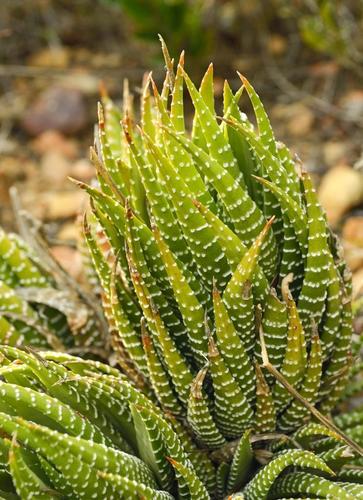

Little zebra plant forms a small rosette of thick leaves with white bands on the outer surface. The smooth upper surface helps distinguish it from Haworthiopsis attenuata, often sold under its name.
Read moreLittle zebra plant
Haworthia fasciata, Apicra fasciata, Aloe fasciata and Haworthia pumila subsp. fasciata
Give plenty of ambient light without direct sun on the leaves.
Bright indirect light, protected from scorching sun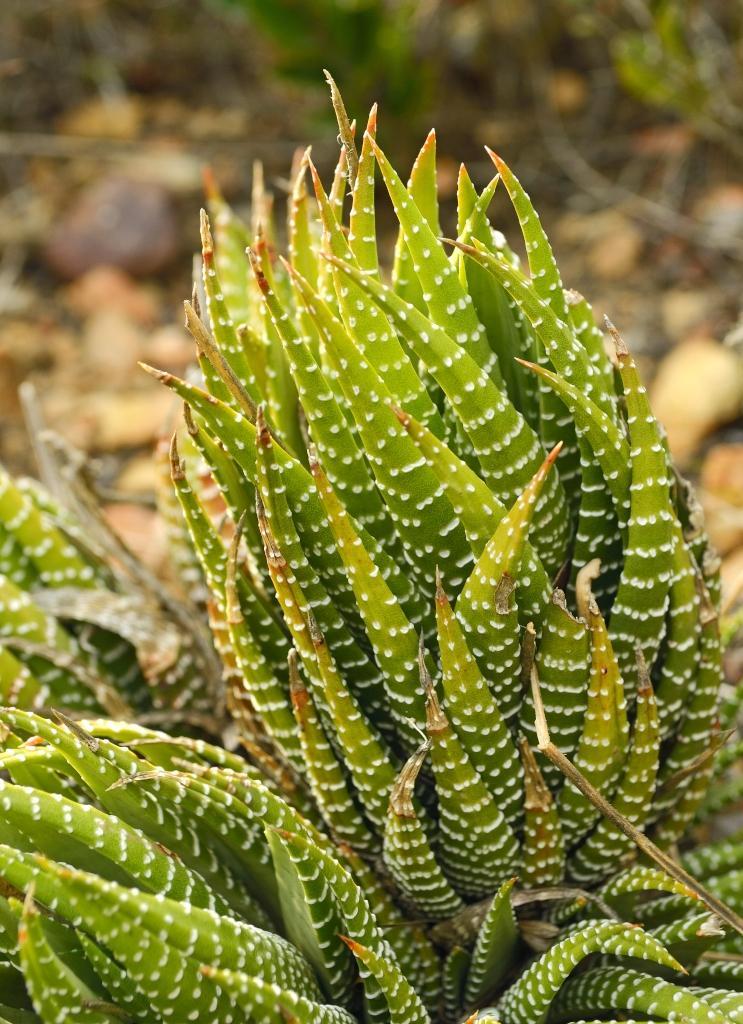


© photo
(c) Adriaan Grobler, some rights reserved (CC BY-NC), uploaded by Adriaan Grobler · cc-by-nc
Wikimedia Commons · CC BY-SA or Public Domain
Wikipedia · CC BY-SA
© copyright of the Board of Trustees of the Royal Botanic Gardens, Kew.


Global distribution
Native to the Eastern Cape, South Africa, from the Kareedouw area to Port Elizabeth and north of Uitenhage.
- Native1
- Eastern Cape, South Africa
Hexagons: regions where the plant occurs. Green dots: native range.↗
Identity
Little zebra plant (Haworthiopsis fasciata (Willd.) G.D.Rowley) has a useful distinguishing feature: the upper leaf surface is smooth, while bands of white tubercles occupy the outer surface. The succulent belongs to the Asphodelaceae family. Examine both faces of a leaf; the distribution of the raised white markings matters more than a general impression of stripes. 1 5
The English name "zebra cactus" refers to the stripes, but little zebra plant is not a cactus. Its small size and slow growth suit a collection of potted plants. When buying a specimen, inspecting the upper leaf surface is more useful than relying on a label based solely on the zebra pattern. 1
Recognition
Little zebra plant has thick, rigid, narrowly triangular leaves. The dark green contrasts with the raised white bands. Leaves form a tight rosette: a side view reveals the outer tubercles, while a view from above shows the smooth inner surface. 1
British horticultural descriptions give a rosette about 12 cm (4.7 in) tall. In summer, a slender flower stalk can reach 40 cm (16 in) and bear small white tubular flowers. The stalk rises well above the leaves, so its length should not be presented as the usual height of the rosette itself. 2
Useful taxonomy
The current name places the species in Haworthiopsis, in a combination published in 2013. Older names such as Haworthia fasciata (Willd.) Haw. and Apicra fasciata Willd. explain the variety of names found on labels and in indexes. The historical names concern the same taxonomic group, rather than several different cultivated plants. 3
Older family names in some references also reflect the history of classification. The veterinary entry still uses Liliaceae, while current botanical and horticultural descriptions place the species in the Asphodelaceae. When connecting an older reference to the plant, the species name and its synonyms are more useful than the former family label alone. 4 1
Habitat and range
Little zebra plant is native to the Eastern Cape, South Africa. The botanical treatment places its range between Kareedouw in the west and Port Elizabeth in the east, extending north of Uitenhage. The documented range should not be expanded to all of southern Africa simply because related genera also occur there. 3
Horticultural descriptions report a plant adapted to dry conditions, sometimes partly buried in sand. A rosette's behavior in an open habitat cannot be transferred directly to constantly wet indoor compost. In a pot, its roots need a free-draining mix that dries between waterings. The dry-habitat description supports attention to drainage, rather than keeping the roots continuously wet. 1
Life cycle and reproduction
Little zebra plant is an evergreen perennial that produces offsets. Separating offsets is a propagation method recommended for spring or summer. Leaf cuttings are also suggested, and spring sowing remains possible when seeds are available. A rosette surrounded by young shoots can gradually form a small clump. 2
For division, general guidance for haworthias recommends allowing wounds to callus before replanting. Freshly cut tissue immediately enclosed in a damp growing mix is more exposed to rot-causing organisms. Match the container to the volume of roots, rather than surrounding a small offset with a large mass of compost from the outset. 6
Natural growth rhythms vary among haworthias: some grow mainly with winter rainfall, others with summer rainfall. For indoor cultivation in the Northern Hemisphere, the species-specific advice is moderate watering during growth and almost dry conditions in winter. The calendar remains subordinate to the activity of the rosette. Readers in other conditions should retain that growing context rather than assume that a month alone determines the plant's water needs. 6 2
Uses and risks
Little zebra plant needs bright light without scorching sun. A sudden increase in exposure can redden or damage the leaves. Guidance for haworthias recommends gradual acclimatization when moving plants outdoors. A rosette grown behind a window does not receive the same light as a plant exposed outside. 1 6
Repot succulents preferably in spring, when the container becomes too small. For little zebra plant, a low-nitrogen fertilizer at half strength, once or twice during growth, is recommended. The limited frequency does not justify feeding at every watering. Drainage and the absence of standing water remain priorities; fertilizer does not replace a suitable growing mix or resolve excessively wet roots. 7 2
Little zebra plant is classified as non-toxic to cats, dogs and horses under its older name Haworthia fasciata. The veterinary classification is not a feeding recommendation and does not describe every human or animal audience. The Zurich veterinary reference specifies that the plant is unsuitable as fodder. 4 5
Varieties, look-alikes and related plants
Haworthiopsis attenuata is often confused with little zebra plant and is even labeled with its name. The decisive character is the smooth upper surface in fasciata. A plant with raised white markings on both faces needs a different identification, even if the outer bands resemble zebra stripes. Inspecting only the outer surface misses the distinction emphasized in the botanical description. 1
The synoptic treatment distinguishes a typical variety and a variety named browniana. The botanical ranks are not cultivar names. Sales names found on other haworthias cannot be transferred to this species without checking the identity of the plant and the scope of the name. A familiar horticultural label does not, by itself, demonstrate that the named selection belongs to little zebra plant. 3
Main sources
Frequently asked questions
How can fasciata and attenuata be distinguished?
Haworthiopsis fasciata has smooth upper leaf surfaces and raised white bands on the outer surface.
Is little zebra plant a cactus?
No. The succulent belongs to Asphodelaceae; the English name zebra cactus refers only to its appearance.
Is little zebra plant toxic to cats?
The ASPCA classifies it as non-toxic to cats, dogs and horses under the name Haworthia fasciata. The classification does not make the plant a food.
If you are unsure about a plant’s toxicity, ask a botanist or veterinarian for advice.