
Cherry-pie (Heliotropium arborescens, )
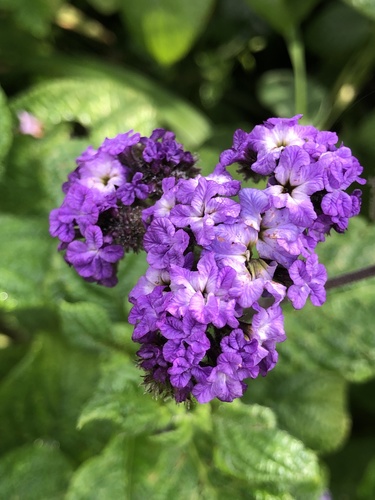


Cherry-pie (Heliotropium arborescens L.) is a tender, fragrant ornamental in the Boraginaceae. Its dark violet flower clusters suit containers and close viewing near a terrace or doorway. It grows as a perennial in warm climates and a seasonal annual where winters freeze. All parts require precautions against ingestion, particularly around animals and fodder.
Read moreCherry-pie, Common heliotrope and Peruvian heliotrope


© photo
(c) cchid, some rights reserved (CC BY-NC) · cc-by-nc
Wikimedia Commons · CC BY-SA or Public Domain
Taken Oct 24, 2022 by simone Palermo (cc-by-sa)
Taken Oct 9, 2021 by Tim W (cc-by-sa)
Taken Jun 18, 2021 by Wathier Lindgren (cc-by-sa)
Taken Jul 17, 2019 by Teresa Matellano Lara (cc-by-sa)
Taken Jun 10, 2015 by Tela Botanica − Kellie Ridd (cc-by-sa)
© copyright of the Board of Trustees of the Royal Botanic Gardens, Kew.




Identity
Cherry-pie, Heliotropium arborescens, is a fragrant member of the Boraginaceae with dark violet flower clusters. The species is recorded under this binomial by Wikidata, POWO, and WFO. Its combination of scent and deep flower color makes it a familiar ornamental for close viewing. 1 2 3
Also known as common heliotrope or cherry pie, it is particularly effective near a terrace, doorway, or container display. Its appeal is intimate rather than monumental: visitors notice the fragrance and rich flower color when they pass close to the plant. Positioning it beside a frequently used path makes the most of both qualities. 8 5
A tender perennial in mild climates, the species may develop into a small shrub where winters remain warm. In colder regions, gardeners usually grow it as a warm-season annual, a summer container plant, or a specimen brought into frost-free shelter for winter. Follow local frost conditions rather than a fixed calendar. 5 6
Its role therefore differs from that of a large, long-lived border perennial. A heliotrope creates a seasonal fragrant focal point, deliberately placed where people spend time or pass often. It can lend depth to a small display without needing the space required by a tall structural plant. 8 5
Recognition
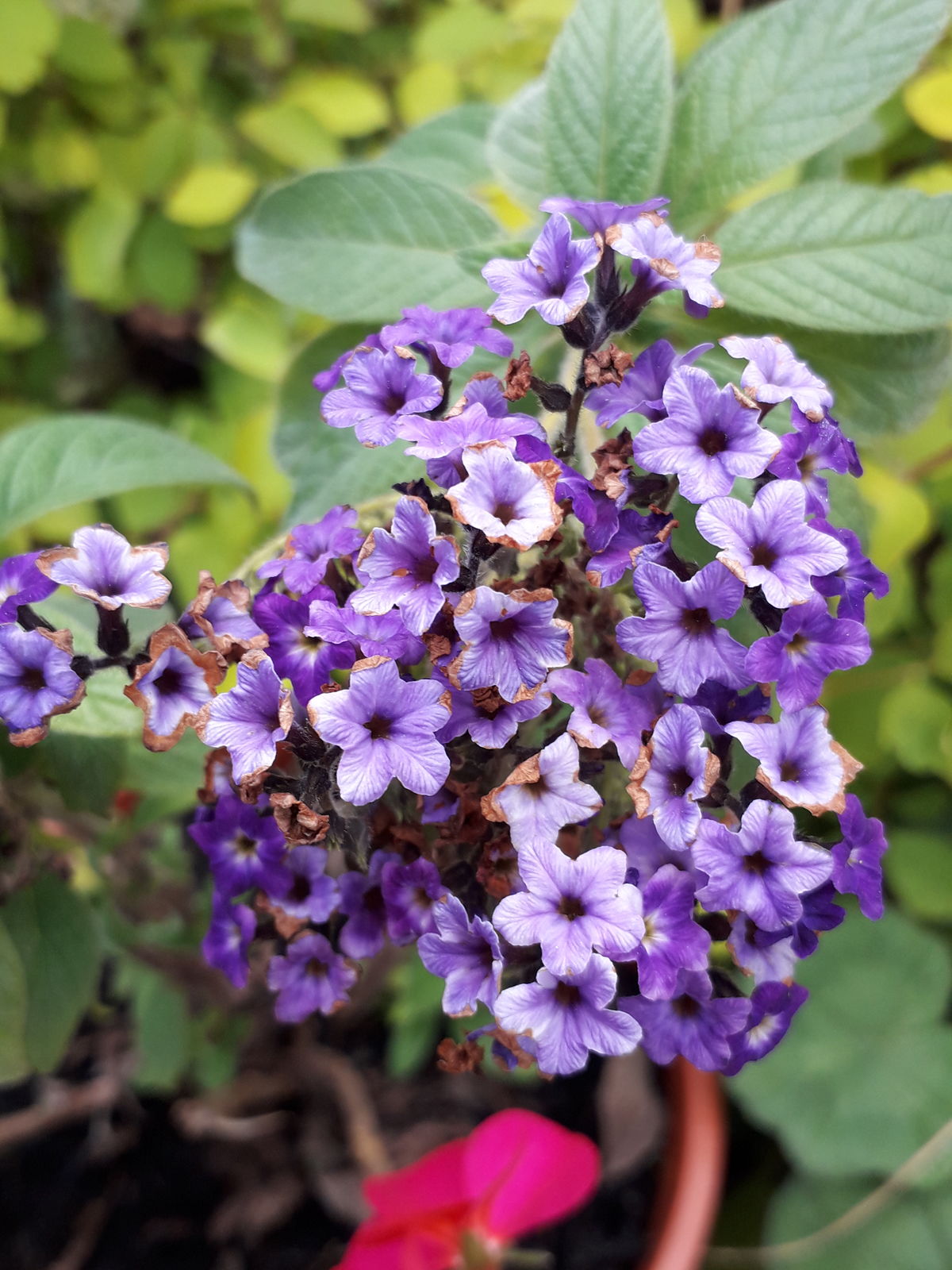
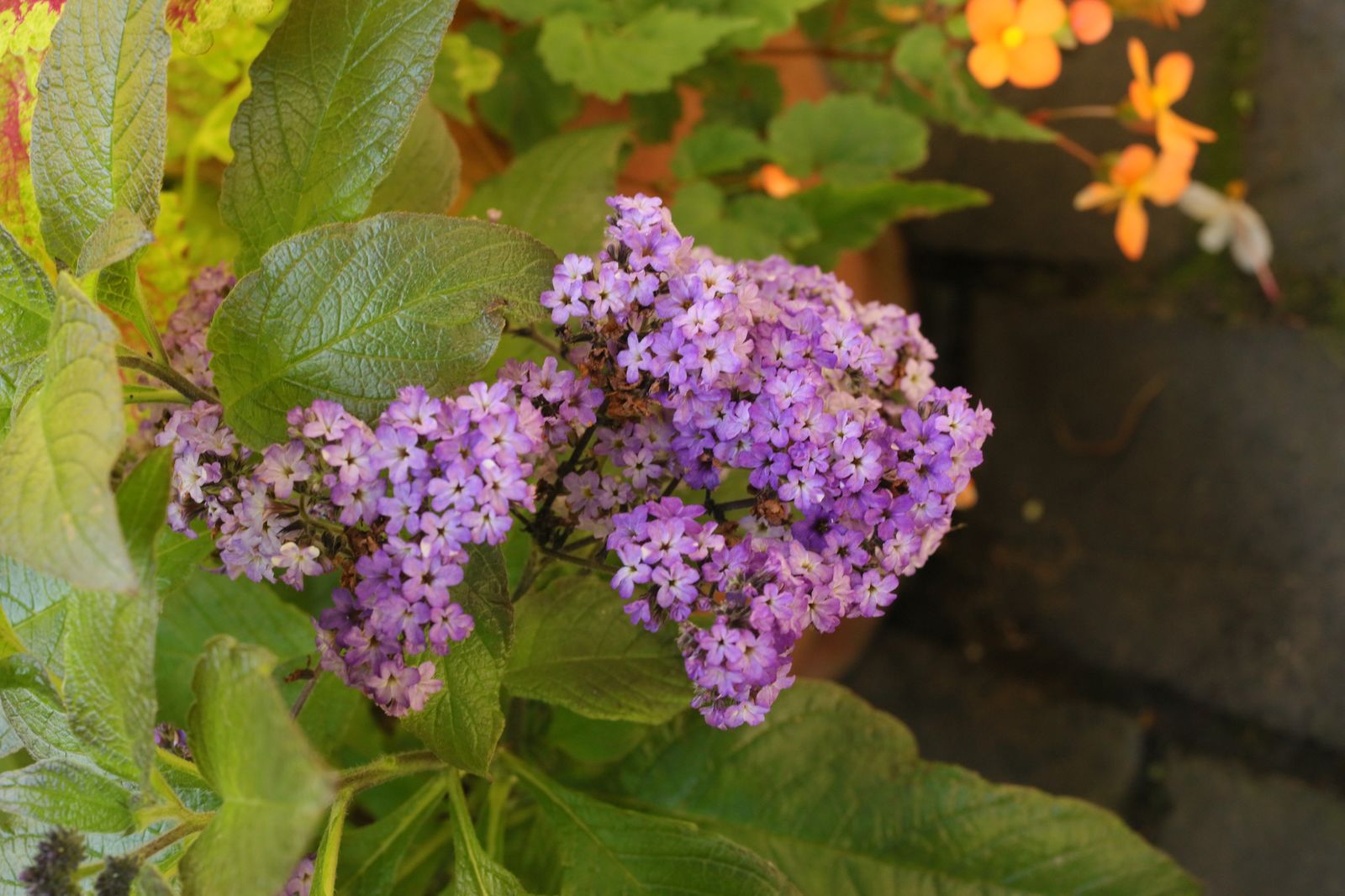
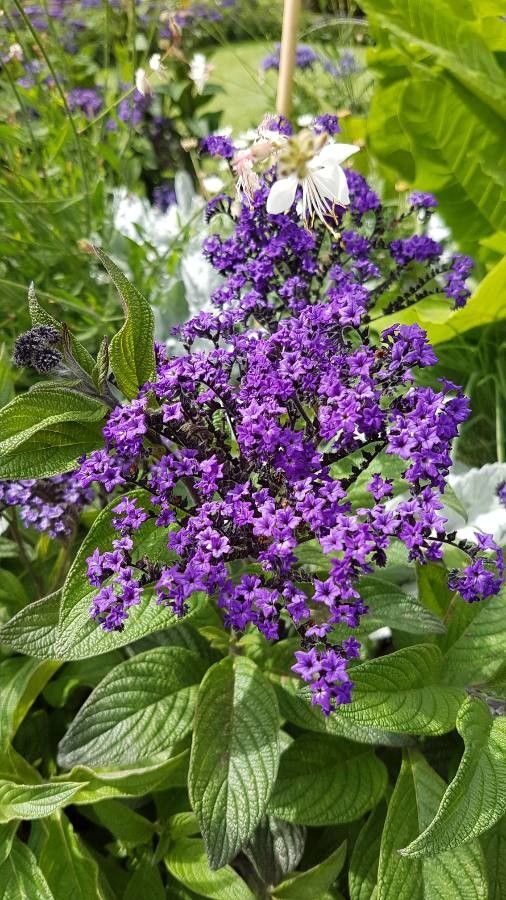
Oval leaves have a puckered or slightly rough surface, beneath clusters of small, tightly packed flowers. Depending on the cultivar, flowers range from deep violet to blue-violet or white. The fragrance is variously compared with vanilla, almonds, or cherries, with strength and character varying between plants. 5 6
Dark-flowered compact cultivars can look almost velvety. Their dense flower clusters contrast with the green foliage, giving a small container a strong visual presence. This contrast is especially effective at the front of a display, where the individual clusters remain easy to see. 8
A healthy container plant remains leafy, reasonably compact, and regularly in flower. Limp foliage, weak flowering, or a bare lower stem can accompany inadequate light, an overly dry root ball, or a container that dries too quickly in summer heat. Assess moisture and growing conditions together before changing the watering routine. 5
Scent varies with cultivar, temperature, and time of day. It is often more noticeable at close range than across a garden, favoring terrace pots, path edges, or the front of a bed over distant background planting. Leave enough space around the plant to approach it without brushing past or damaging the stems. 8 6
Useful taxonomy
The ornamental species is Heliotropium arborescens, not the entire genus Heliotropium. Several members of the genus contain toxic alkaloids, and some are hazardous weeds in grazing land or fodder. Keeping the full species name helps distinguish the cultivated ornamental from other heliotropes with different habits and agricultural significance. 2 7
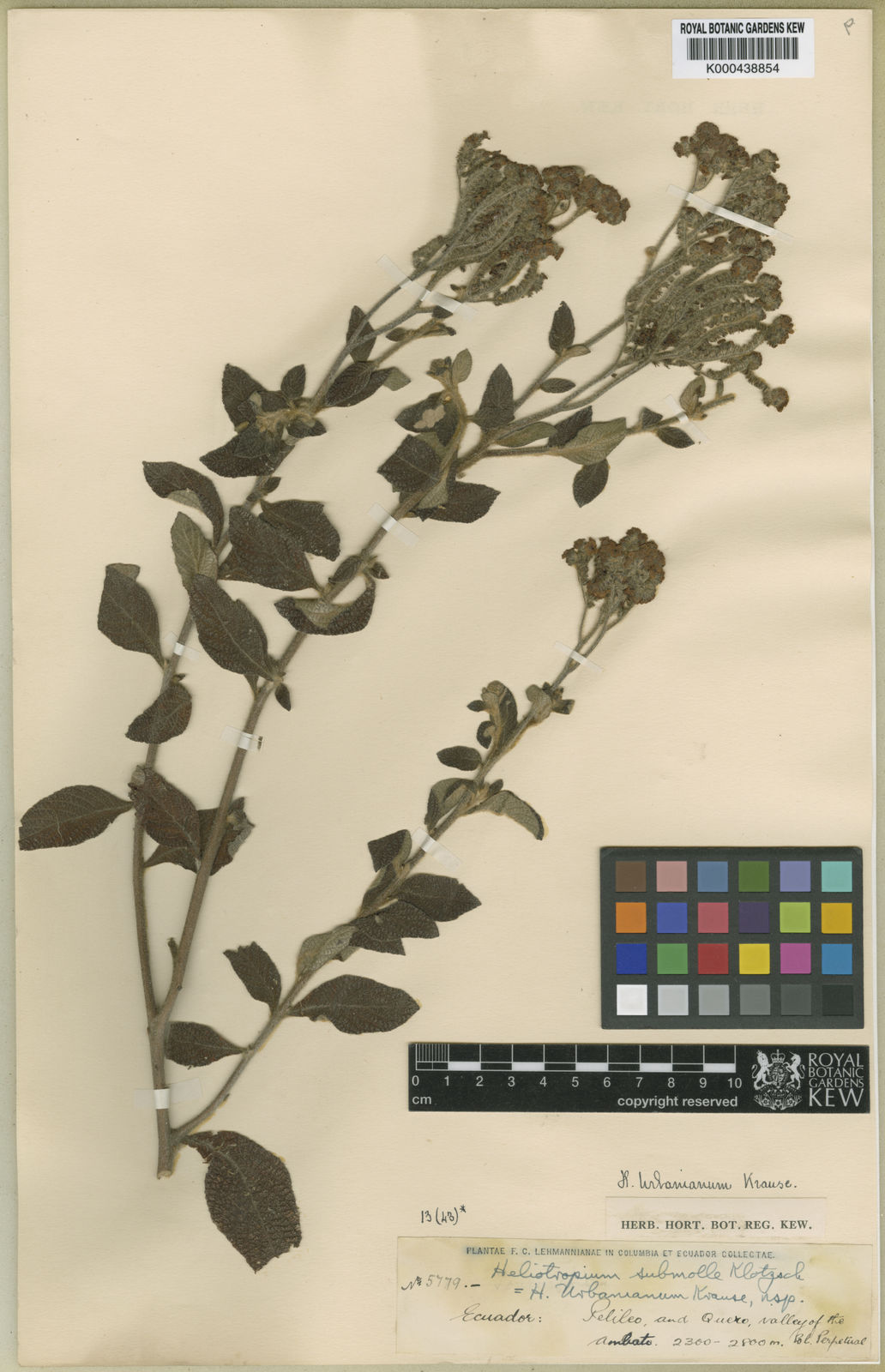
The older name Heliotropium peruvianum still occurs in horticultural books and catalogs. It is useful when tracing the plant's cultivation history, while H. arborescens remains the accepted name used for this species. A historical label should be interpreted alongside the modern botanical name rather than as an unrelated ornamental. 5 4
Cultivars such as 'Marine', 'Mini Marine', 'Chatsworth', and 'Princess Marina' differ chiefly in compactness, flower color, and fragrance. They retain the same basic requirements for warmth, suitable light, and a well-drained growing medium. A cultivar name does not remove the need to prevent ingestion. 6 5
Cultivation
Provide gentle sun or full sun that is not excessively hot, with rich, well-drained soil that stays evenly moist. Afternoon shade can help in hot climates. A small dark pot on sun-heated paving dries rapidly, whereas a larger, more stable container helps maintain the moisture needed for regular flowering. 8 5
Pinching young shoots encourages a bushier plant. Removing spent flowers keeps a nearby container display tidy. Light, regular feeding during active growth is preferable to applying a strong dose to a dry root ball; water management and a suitable growing medium remain as important as fertilizer. 5
Overwintering is optional outside very mild climates. Keep the plant in a bright, frost-free place, reduce watering as growth slows, and trim it back when active growth resumes in spring. Alternatively, renew it as an annual for the next warm season. Both approaches suit its use as a fragrant terrace plant. 8 6
Warmth does not mean that a container can be left to dry out repeatedly. Rooting volume matters as much as exposure: a pot that is too small heats and dries quickly, while accumulated fertilizer salts add stress. Choose a container that gives the roots a more stable environment through hot weather. 5 8
Use the foliage as a practical guide to watering. Leaves should remain firm rather than limp, and flowering should not stop after every hot day. Consistent moisture is more useful than alternating prolonged dryness with heavy watering, provided excess water can drain freely from the container. 5
Uses
A fragrant container is one of the most effective uses for Cherry-pie. Near a table, door, or bench, it offers something flower color alone cannot convey: a scent appreciated at close quarters. The same placement makes it easy to monitor moisture and remove fading flowers. 8 5
In beds, combine it with petunias, mealycup sage, begonias suited to gentle sun, or silver foliage. Avoid burying it among plants that are too tall. Its tightly packed flowers and fragrance are best appreciated where the heliotrope has a clear place near the front of the planting. 8
Do not improvise food or medicinal uses. A sweet fragrance does not indicate edibility, and the chemistry associated with heliotropes warrants caution. This is an ornamental plant, not a flower for candying or an herb for homemade tea. Keep that distinction clear when choosing plants for edible containers. 7 5
Toxicity
NC State assigns the plant medium-severity poison characteristics, identifies all parts as poisonous, and notes that ingestion can cause liver failure in horses. Prevent the plant and its cuttings from entering hay, fodder, or grazing areas. The ornamental setting does not remove the risk of accidental ingestion. 5
Pyrrolizidine alkaloids underlie the concern associated with Heliotropium. These compounds can damage the liver. Reports concerning exposed animals describe digestive signs, lethargy, or neurological effects, with outcomes depending on the exposure and circumstances. 7 6
In a garden, prevent cats and dogs from chewing the plant, keep prunings out of pasture, and never equate a pleasant scent with edibility. Container cultivation can make placement and access easier to manage, but a pot does not itself make the plant safe to eat. Enjoy the flowers and fragrance without ingesting any part. 5 8
These precautions are compatible with using heliotrope as a decorative plant. Place it where animals that chew vegetation cannot reach it and dispose of plant waste carefully. Its value as a seasonal, fragrant ornamental remains, provided that cultivation and handling respect its poisonous characteristics. 5 7
Main sources
- Wikidata, Heliotropium arborescens
- Plants of the World Online / Kew, Heliotropium arborescens
- World Flora Online, Heliotropium arborescens
- International Plant Names Index, Heliotropium arborescens
- NC State Extension, Heliotropium arborescens
- Wikipedia EN, Heliotropium arborescens
- Wikipedia EN, Heliotropium
- Floralens, selection of purple flowers
If you are unsure about a plant’s toxicity, ask a botanist or veterinarian for advice.