
Giant hogweed (Heracleum mantegazzianum, )
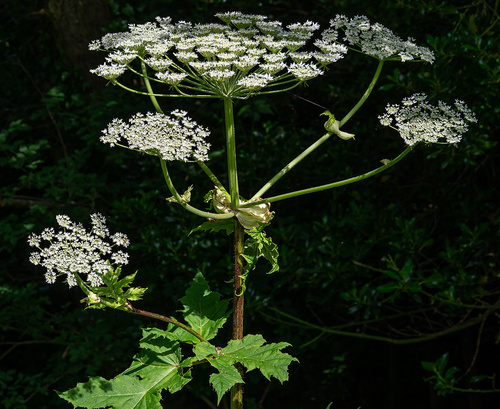
Giant hogweed (Heracleum mantegazzianum) is a large plant in the Apiaceae, native to the Caucasus. Its photosensitizing sap can cause severe skin injury after exposure to light. Observe without touching.
Read moreGiant hogweed
Pastinaca mantegazziana and Heracleum grossheimii


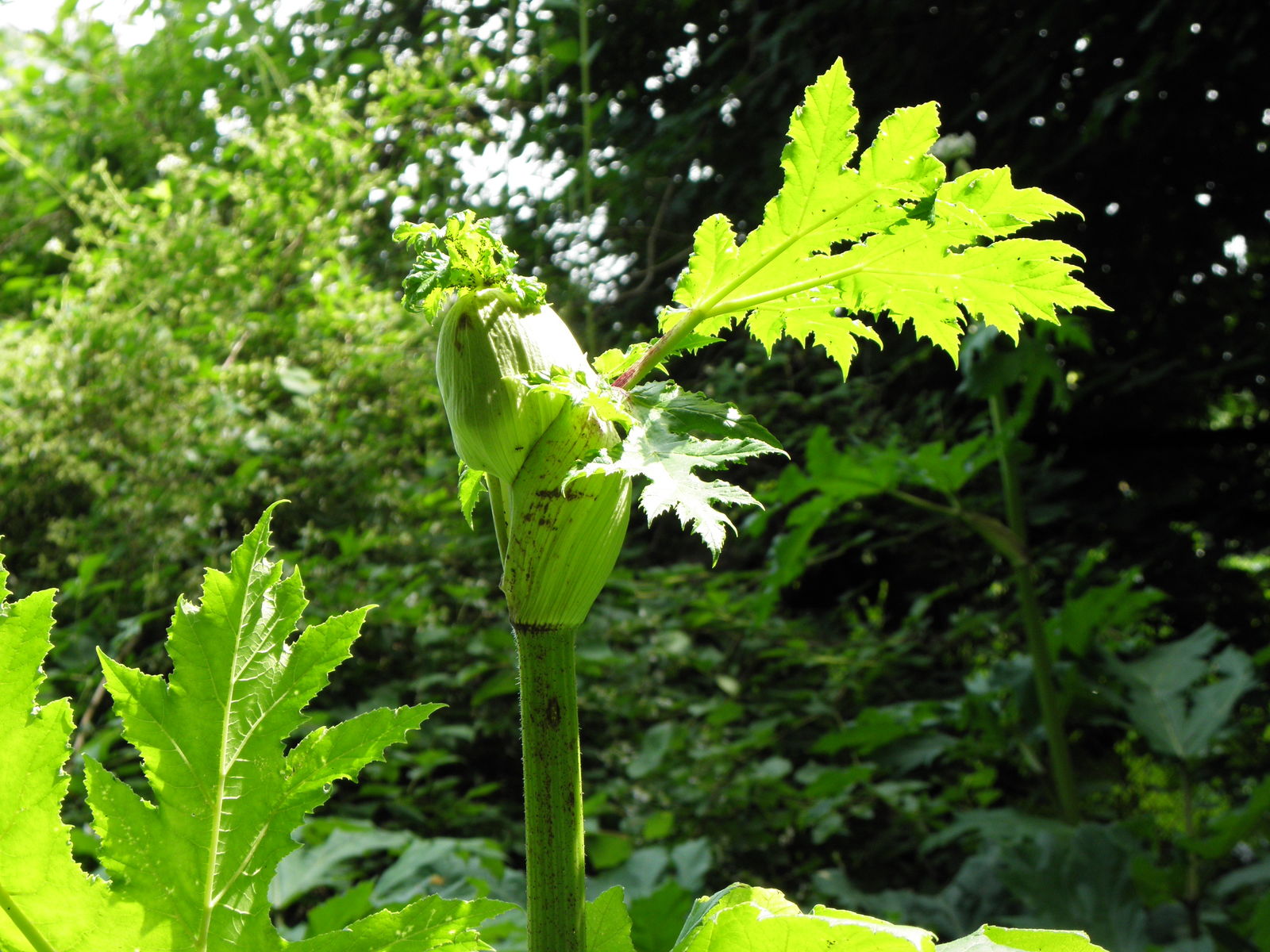
© photo
(c) iangregory, some rights reserved (CC BY-NC), uploaded by iangregory · cc-by-nc
Skye Pelliccia · cc0
Alison Westwood · cc0
Taken Jul 15, 2018 by Photoflora - Jean-Luc TASSET (©)
Taken Jul 11, 2017 by jensm (cc-by-sa)
Taken Jun 8, 2022 by Waldemar Zeja (cc-by-sa)
Taken Jun 20, 2021 by christine trolet (cc-by-sa)
Taken May 25, 2022 by Kai Best (cc-by-sa)
© copyright of the Board of Trustees of the Royal Botanic Gardens, Kew.


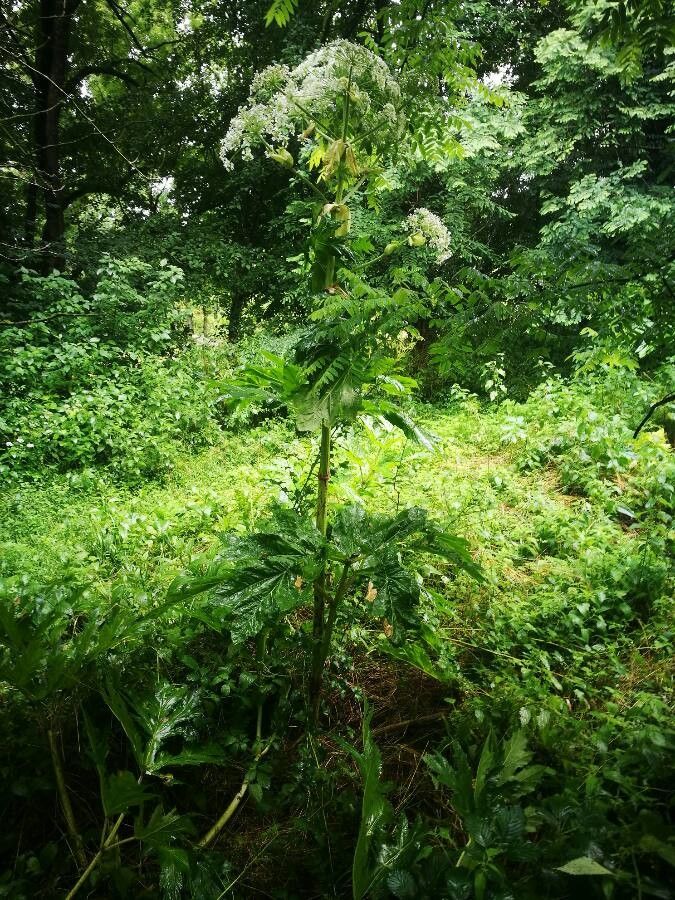


Global distribution
Native to the Caucasus; introduced in Europe and North America.
- Native1
- Introduced1
- Invasive1
- Caucasus
- North America
- France
Hexagons: regions where the plant occurs. Green dots: native range.1
Identity
Giant hogweed (Heracleum mantegazzianum Sommier & Levier, 1895) is a large Apiaceae. Its geographic name recalls its Caucasian origin. Introduced for ornament, it established beyond that range and can form invasive stands. Mantegazzi's hogweed refers to the same species rather than a separate garden selection. 28
Its sap is phototoxic. Contaminated skin can suffer severe injury when subsequently exposed to light. This must guide observation: identify from a distance, without crushing a leaf or breaking a stem to check a detail. Lack of immediate pain does not exclude danger, and a plant need not already be flowering to warrant avoiding contact. 57
Recognition
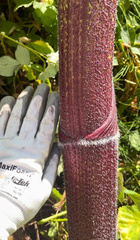
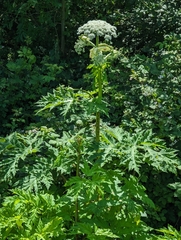
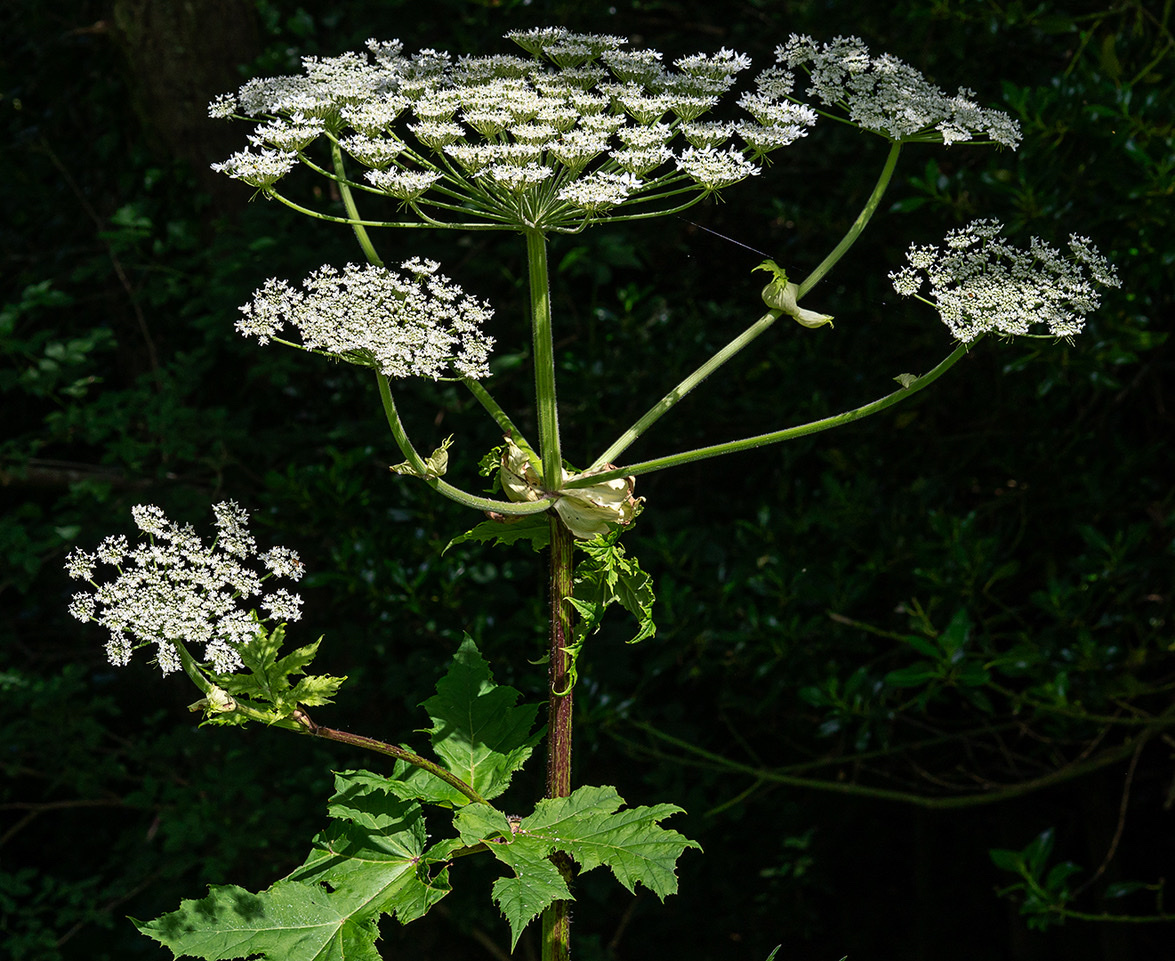
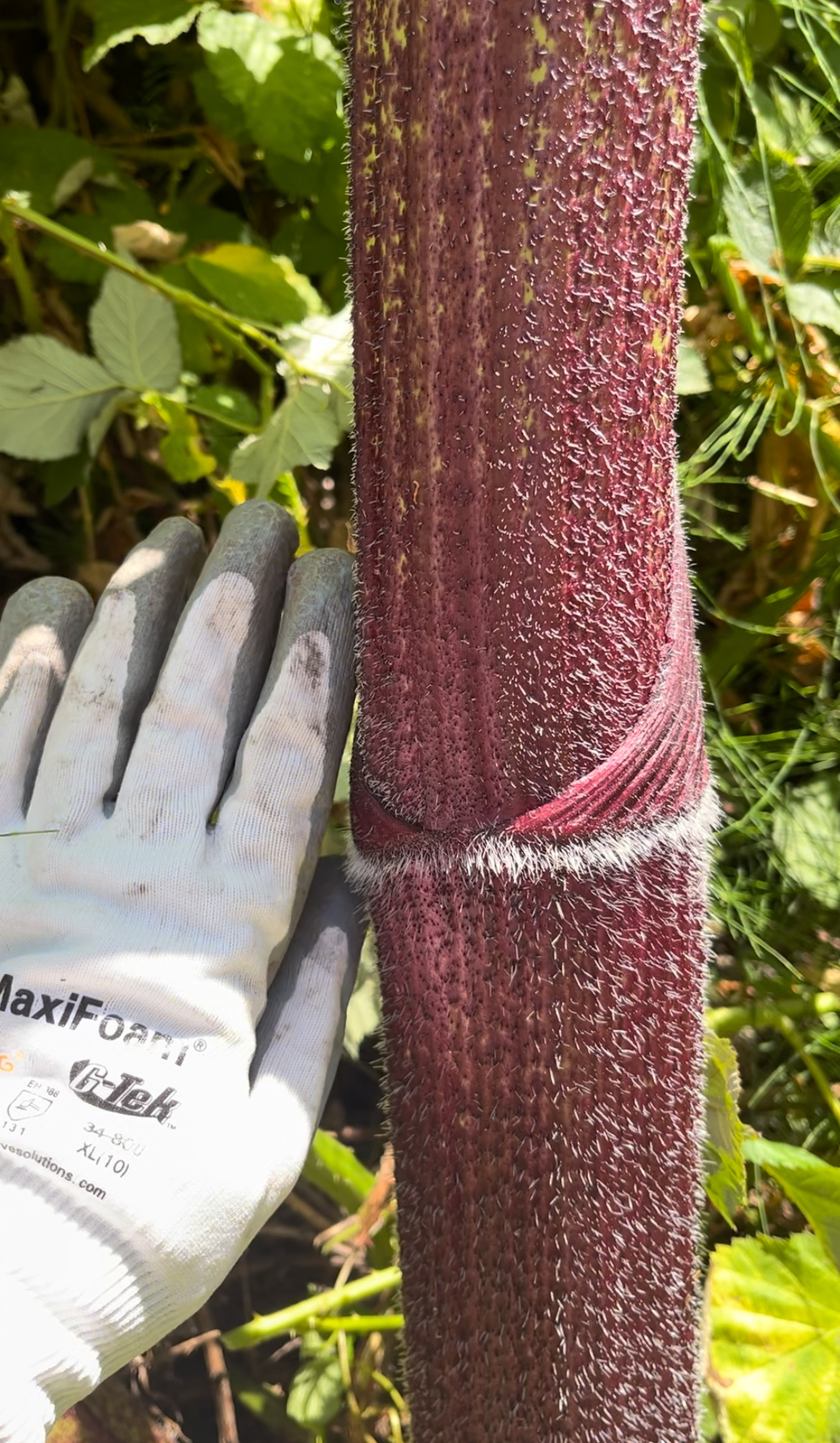
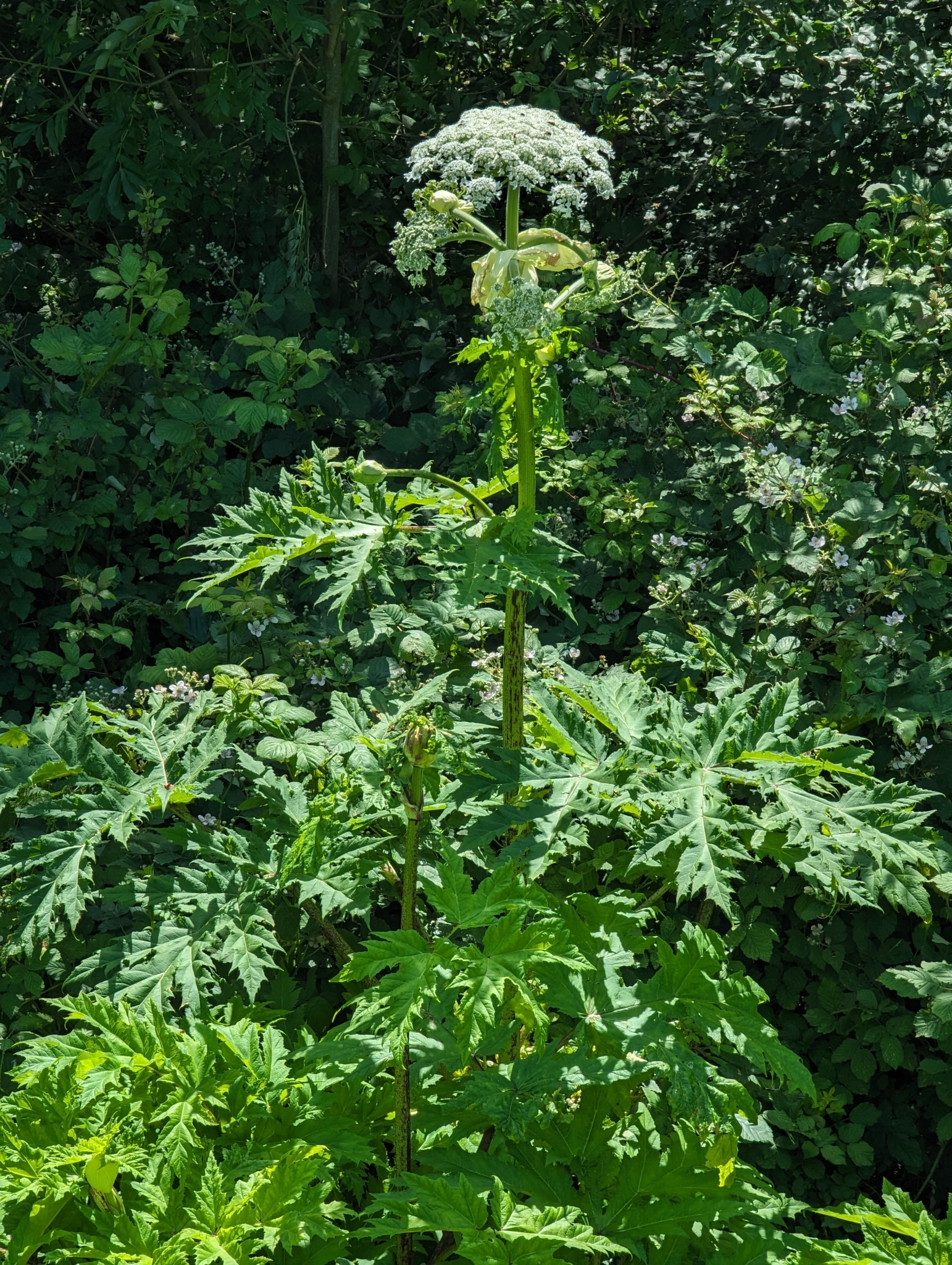
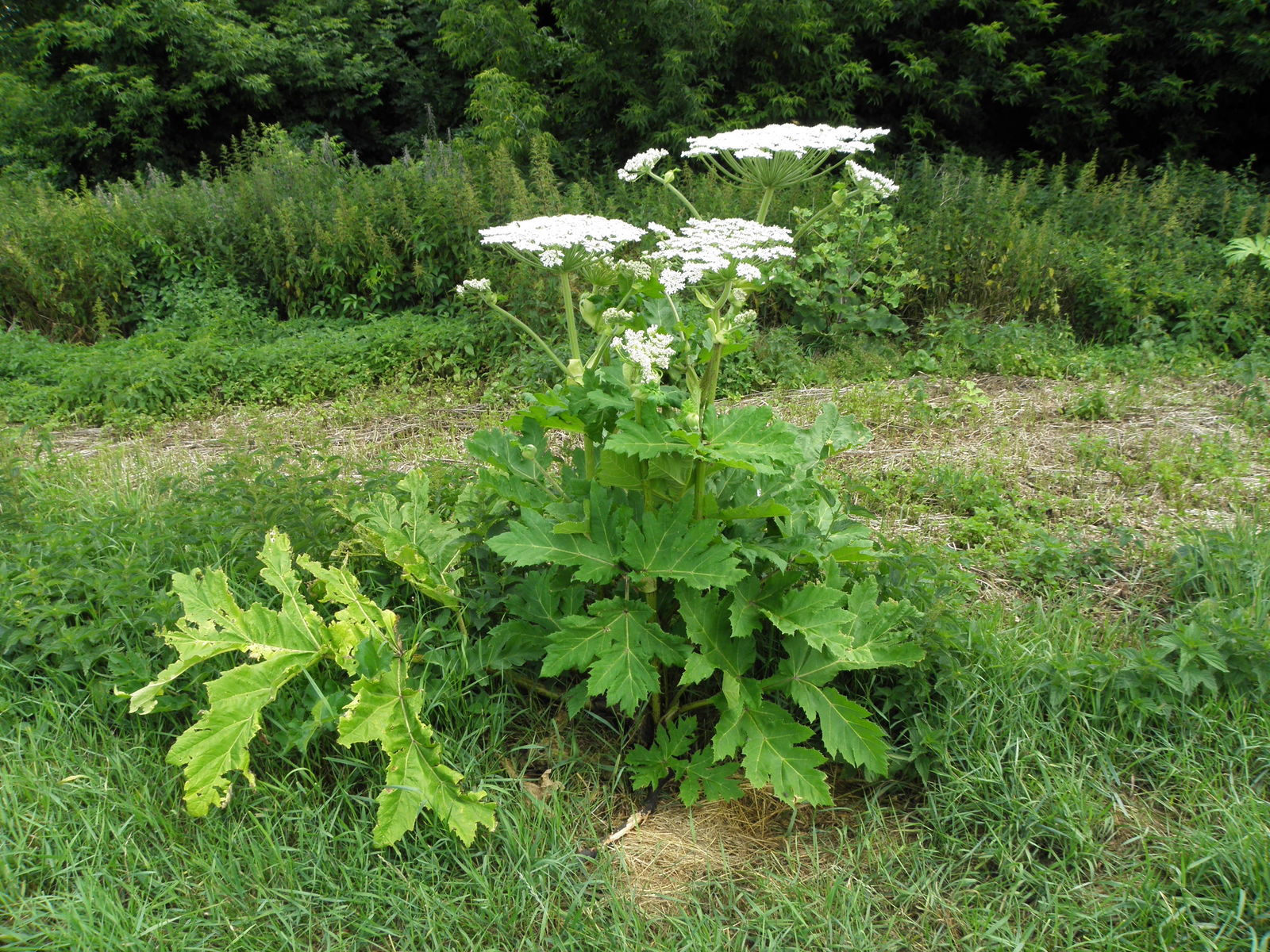
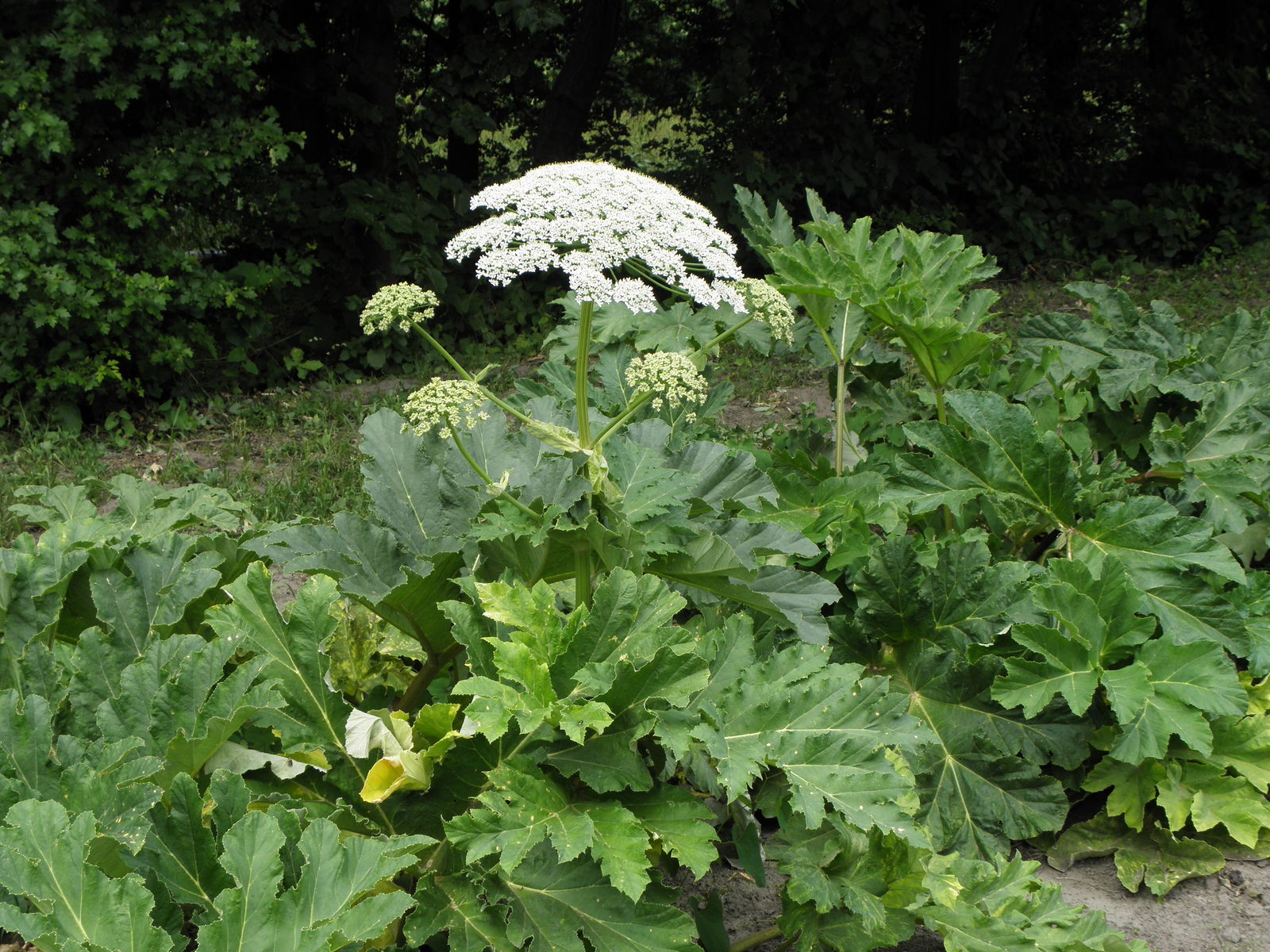
A thick, purple-blotched stem and deeply divided leaves suggest giant hogweed. Flowering plants often reach 2–4 m (6.5–13 ft). Large white umbels have numerous rays, often more than fifty in the main heads. Size attracts attention, but young plants are much shorter: waiting for giant stature overlooks the vegetative stage. 7
Hollow, ridged stems bear coarse hairs, especially conspicuous near leaf-stalk attachments. Adult leaves can exceed 1 m (3.3 ft) in width. Photograph the whole suspected plant, leaves and stem from a safe distance. Standing beneath an umbel or moving foliage is unnecessary for identification and increases proximity to sap-bearing tissue. 4
Useful taxonomy
Heracleum mantegazzianum is accepted. Sommier and Levier published it in 1895. Membership of Apiaceae explains the umbels, a structure shared with plants differing in stature, foliage and risks. A white umbel can never identify giant hogweed by itself; several organs and the overall plant must be considered together. 1
Pastinaca mantegazziana (Sommier & Levier) Koso-Pol. is an older synonym, not a garden parsnip for harvesting. Common names can likewise overlap among large umbellifers. A report accompanied by photographs and a provisional scientific name preserves uncertainty without claiming a definitive identification. 1
Habitat and range
The Caucasus is its native home, rather than the French riverbanks where it now occurs. Introduced populations occupy roadsides, meadows and woodland edges. Moist ground and watercourses can promote establishment and seed dispersal. Presence in a natural setting therefore does not establish native status. 1 4 7
Dense colonies occupy space and intercept light from lower-growing plants. Along rivers, waterborne seed connects distant sites. An isolated upstream plant and a downstream stand should be understood within the catchment, rather than assuming all seeds remain beside their parent. Site management must account for this movement between locations. 7
France classifies giant hogweed as invasive. It appears on the European Union list of invasive alien species of Union concern, and a 2018 French order prohibits introduction into mainland France. These regulatory statements concern the named jurisdictions. 8
Life cycle and reproduction
Several years may pass before flowering. Large leaves develop first, building reserves before a tall flowering stem appears. The plant is generally monocarpic: reproduction marks the end of the individual's life. Perennial status therefore does not mean one plant flowers each summer for decades. 37
One plant can produce thousands of seeds. Some fall nearby, while water and movement of soil or equipment carry others farther. The soil seed bank prolongs monitoring after tall stems disappear. Removing only visible plants in one year cannot demonstrate elimination of the site, because seedlings may continue to emerge later. 4
Uses and risks
Sap furocoumarins react with ultraviolet light, causing phytophotodermatitis. Burn-like redness and blisters can be delayed. After contact, wash promptly with soap and water and protect the area from light. An exposed child, eye exposure or extensive injury warrants medical advice. These precautions apply even when discomfort is not immediate. 45
Horses can also develop photodermatosis, particularly on pale or sparsely haired skin such as the nose. A pigmented coat does not protect every body area. 6 Pets are exposed too, and sap retained on a dog's coat can contaminate people touching it. 105
Management must avoid sap spray. A brush cutter or improvised cutting can expose skin and eyes. Do not plant, propagate or deliberately move this species. Confirm identification and arrange intervention suited to the site. A seed bank can sustain new emergence after large stems have been removed. 74
Varieties, look-alikes and related plants
Common hogweed (Heracleum sphondylium) is a related native species, not another name for giant hogweed. Common hogweed generally has a green stem and far fewer umbel rays. 6 Giant hogweed combines great stature, deeply cut leaves and purple blotches with coarse stem hairs. Compare several organs: a white-flower photograph omits too many characters. 74
Other large Apiaceae, including angelicas, can resemble the outline. Purple on a stem alone is insufficient; blotch distribution and hairiness matter. Uncertain identification must not prompt touching the plant. Photograph visible characters and seek confirmation while maintaining distance from the sap. 4
Main sources
Sap on skin can cause injury after light exposure. Plant identification and injury assessment are complementary: recognizing an umbel does not measure a lesion's severity, and a suspected burn alone cannot establish the species. Retain photographs and the circumstances of contact when reporting. 5
- Plants of the World Online, Heracleum mantegazzianum
- EPPO Global Database, HERMZ
- InfoFlora, giant hogweed
- NYS Department of Environmental Conservation, Giant Hogweed
- Government of Québec, burns caused by giant hogweed
- IFCE, giant hogweed, a phototoxic plant
- Public Service of Wallonia, giant hogweed
- INPN, TAXREF : Heracleum mantegazzianum
- Tela Botanica, eFlore : Heracleum mantegazzianum
- Royal Horticultural Society, Giant hogweed
Frequently asked questions
Why should giant hogweed not be touched?
Its sap contains furocoumarins that trigger skin reactions after light exposure, with a risk of burns and blisters.
What should I do after sap contact?
Wash promptly with soap and water, protect the area from light and seek medical advice if a child or the eyes are involved, or if injury is extensive.
Can it be cut with a brush cutter?
Improvised cutting can spray sap. Have the plant identified and arrange appropriate management before intervention.
If you are unsure about a plant’s toxicity, ask a botanist or veterinarian for advice.