
Hogweed (Heracleum sphondylium, )
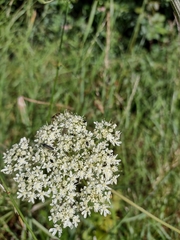
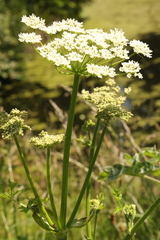
Hogweed (Heracleum sphondylium) is a large Apiaceae native to moist European meadows and woodland edges. Hairy leaves and white umbels are conspicuous, but its sap requires precautions in sunlight.
Read moreHogweed and Common hogweed
Pastinaca sphondylium and Sphondylium vulgare
Allow a few hours of direct sun per day, preferably morning or evening.
Sun or partial shade.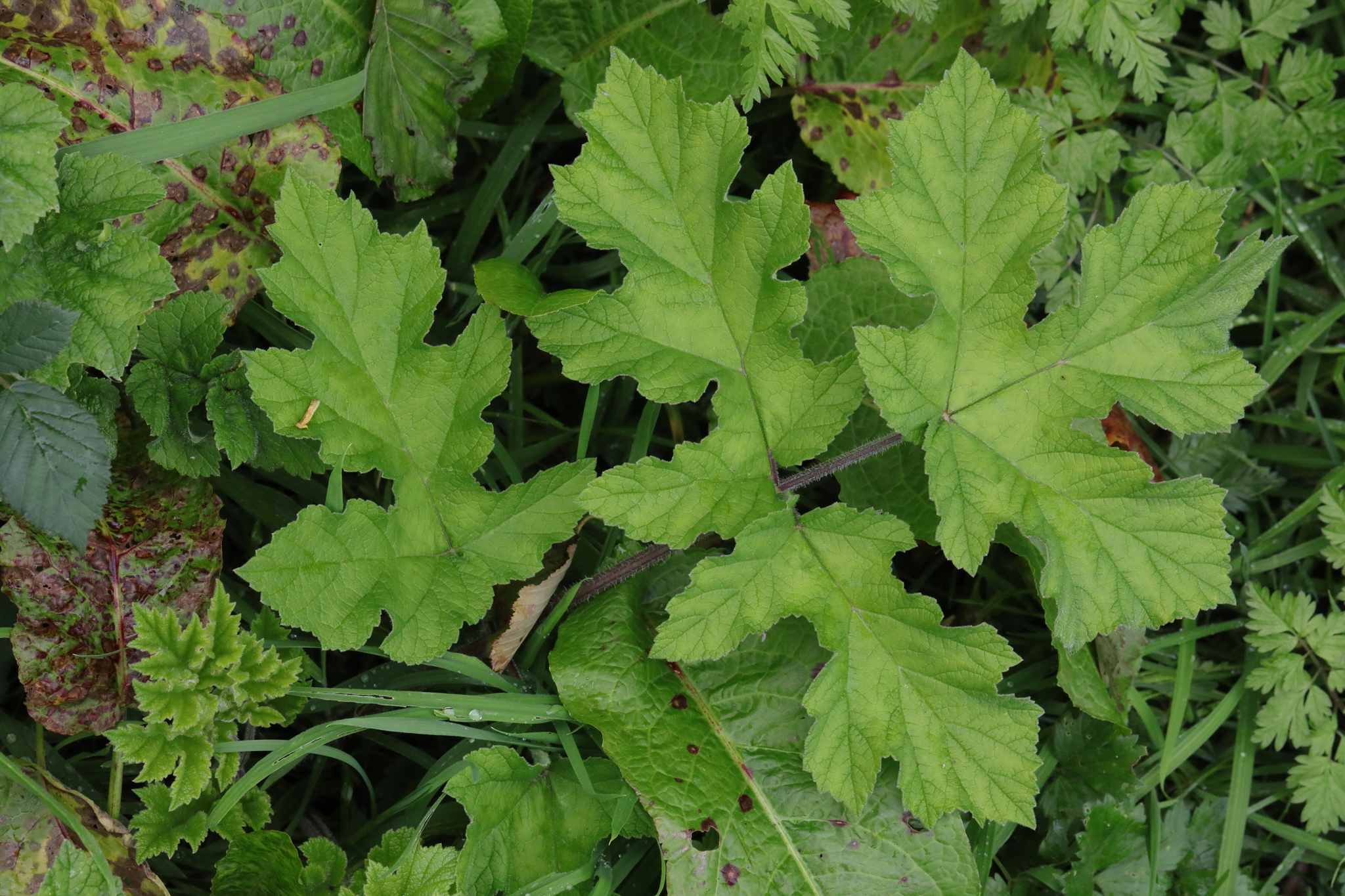
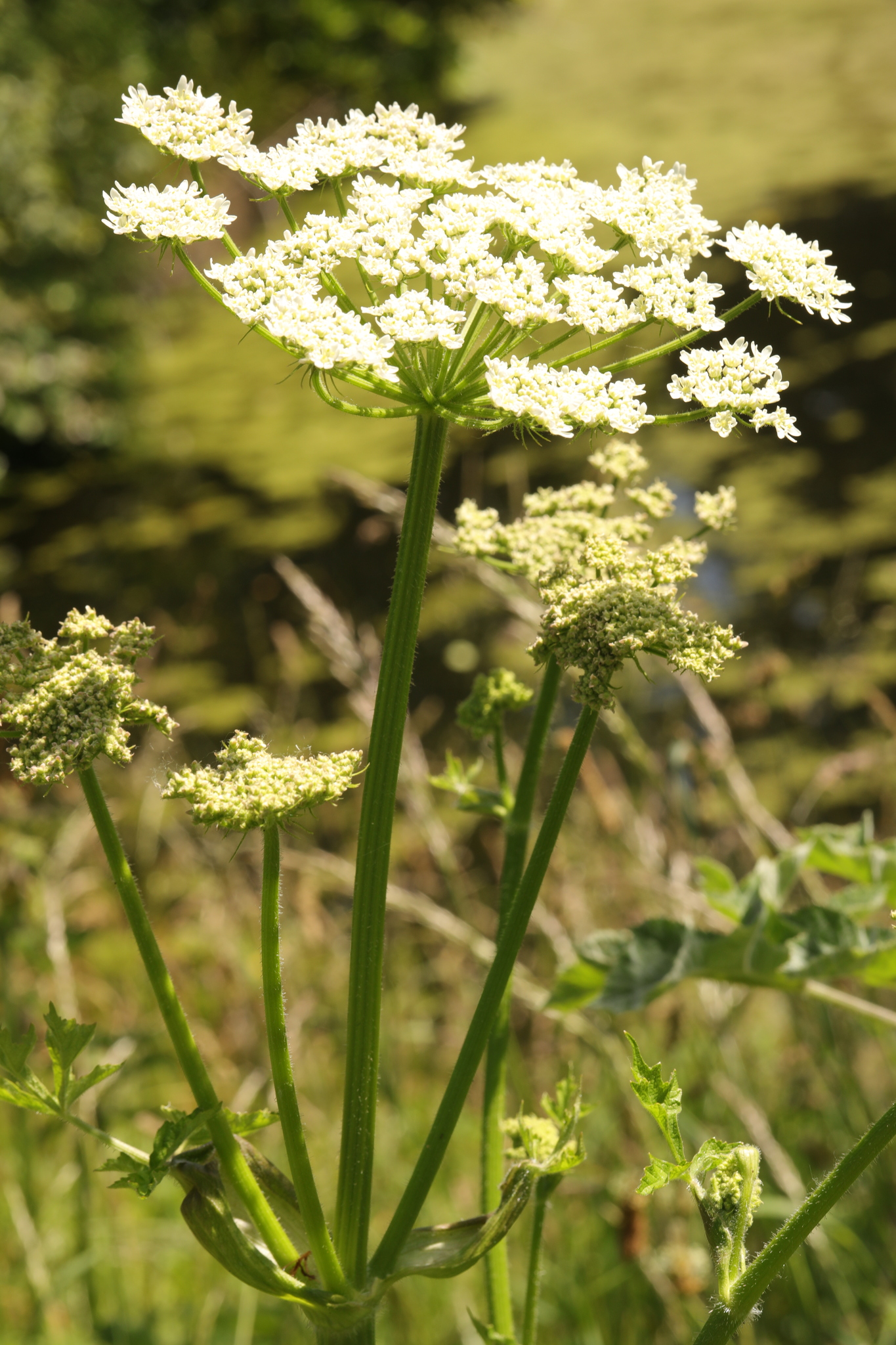
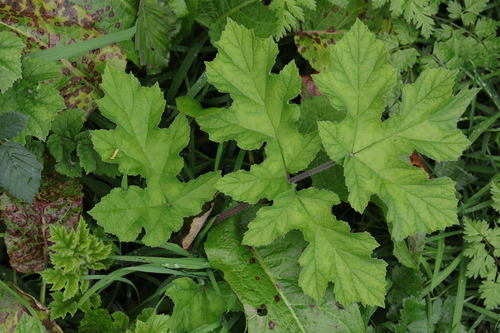
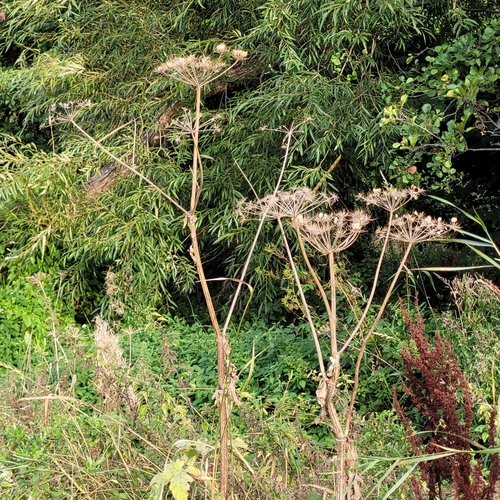
© photo
Stephen James McWilliam · cc0
Homo sapiens sapiens · cc0
no rights reserved · cc0
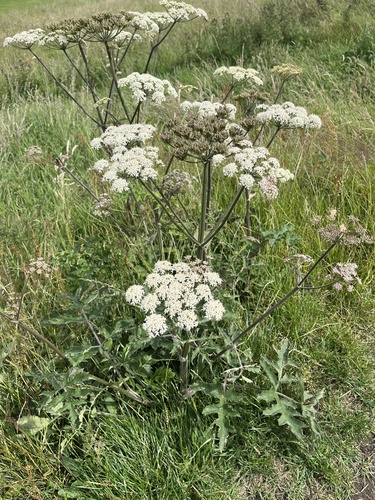
(c) Katie Scholan, some rights reserved (CC BY) · cc-by
Global distribution
Native from Europe to Türkiye and in North Africa; introduced in some North American regions.
- Native2
- Introduced1
- France
- Morocco
- Québec
Hexagons: regions where the plant occurs. Green dots: native range.1
Identity
Hogweed (Heracleum sphondylium L., 1753), also called common hogweed, belongs to Apiaceae. This large herb is native in France: a plant in a meadow does not therefore signal the arrival of giant hogweed. Linnaeus published its still-accepted scientific name in Species Plantarum, page 249. 1
The standardized French name is berce sphondyle, with berce des prés, grande berce and patte d'ours also used. These refer to the same species rather than several cultivars. English cow-parsnip names are less precise and require checking the binomial, particularly when comparing observations from different countries. 7 3 6
Recognition
The hollow, strongly ridged stem bears bristly hairs. Plants commonly measure 50–150 cm (20–59 in) tall and can reach 2 m (6.5 ft). Broad, highly variable leaves divide into segments that are themselves toothed or lobed. The leaf stalk widens into a conspicuous sheath at the base. An isolated leaf therefore does not always permit a secure conclusion. 4 2
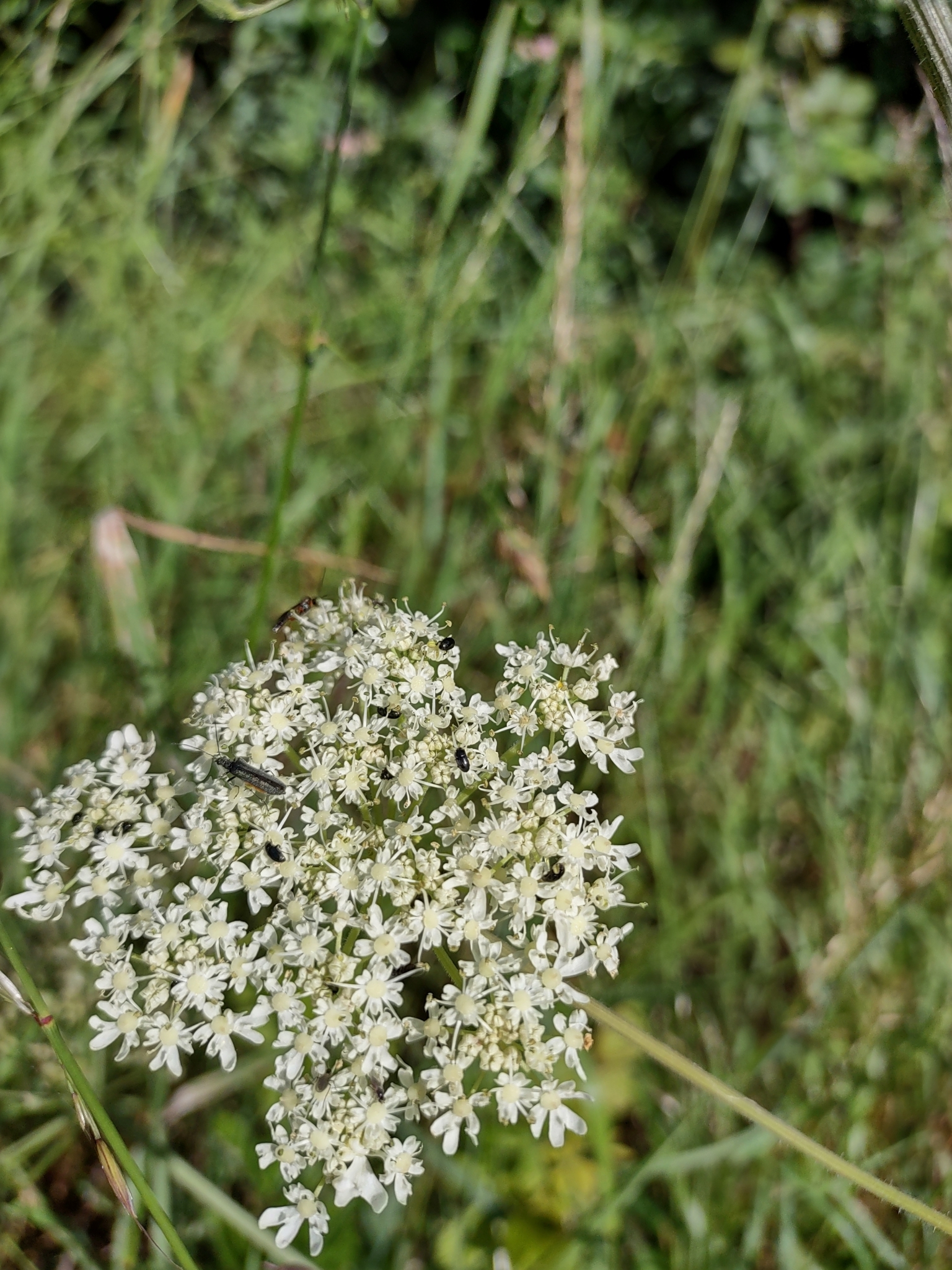
White flowers, sometimes pinkish or greenish, gather in compound umbels. Outward-facing petals are larger than central ones, making each small umbel appear radiating. The umbel has 15–30 rays in the cited description. This contrast between outer and inner flowers can be examined without breaking stems or touching sap. Inspect the arrangement from a distance that leaves the plant undisturbed. 3 4 5
Useful taxonomy
The species includes botanical subspecies, not cultivars, with accepted names including alpinum, elegans, pyrenaicum and trifoliolatum. The species' scope explains part of the variation in leaves and distribution recorded by floras. Identification to subspecies needs more than a general photograph; the relevant key must be followed through its diagnostic characters. 1
Pastinaca sphondylium (L.) Calest. and Sphondylium vulgare Gray are older synonyms. The first does not make a plant in an old reference a cultivated parsnip. Classification places the species in Apiales, family Apiaceae, subfamily Apioideae and tribe Tordylieae. 1 6
Habitat and range
Moist, nutrient-rich grassy habitats are characteristic. Meadows, ditches, hedges and woodland edges suit it better than parched ground. French records describe moist meadows and woods across almost the whole country, excluding the Mediterranean region. A large white umbel beside a path therefore fits its ecology without being sufficient to identify it. 3 2
The documented native range covers much of Europe, reaches Türkiye and includes Morocco and Algeria. Introductions are recorded in Québec, Ontario and New Zealand. Occurrence outside Europe does not establish local native status. Canadian records must retain provincial scope: introduction in Québec cannot describe the plant's status throughout North America. 1 6
Life cycle and reproduction
Accounts describe hogweed as perennial or biennial, depending on populations and conditions. Summer flowering can extend into early fall. Flattened, elliptical to almost rounded fruits have a broad winged margin and measure 6–10 mm (0.24–0.39 in). Their size and wings assist identification after petals have fallen, when the flowering display is no longer available. 1 2 4
Reproduction is by seed. In a wilder garden area, removing faded flowers limits self-sowing. In mainland French open ground, requirements follow spring regrowth and summer flowering; soil should remain moist without saturation. An established hogweed in moist ground does not need the watering calendar of a container plant. Elsewhere, follow the equivalent local growing season. 2
Uses and risks
Common hogweed sap can make skin sensitive to sunlight. Photosensitizing furanocoumarins explain the phototoxicity: redness and blisters may follow sap contact and subsequent sun exposure. 8 Xanthotoxin is an assay marker in the French pharmacopoeial monograph. Inclusion of a raw material in a pharmacopoeia does not establish therapeutic efficacy. Historical food uses likewise do not justify a foraging recommendation. 5
Protective equipment is necessary when handling the plant because of sunlight-related skin risk. Phototoxicity also concerns dogs and poultry. No data establish safety for cats or horses. Missing data do not mean safety: observing flowers does not require breaking a stem or spreading its sap on skin. The plant's native status does not remove these contact precautions. 2
Varieties, look-alikes and related plants
Giant hogweed is a separate, generally much larger species. Adult size helps comparison but is unreliable for a young specimen. For common hogweed, assess stiff hairs, stem ridges, leaf sheaths and enlarged outer petals together. This provides a firmer basis than height alone, especially before a plant has reached full stature. 2 4
The French name patte d'ours alone is not a botanical identification. Hogweed carries that vernacular name while including several subspecies. A verifiable observation should show the whole plant, a leaf with its stalk and the umbel. Diagnostic characters concern several organs rather than silhouette alone. 4 5
Main sources
The accepted name is Heracleum sphondylium L., published in 1753. Taxonomic references connect historical names with this species. 1
Frequently asked questions
Is hogweed the same as giant hogweed?
No. Heracleum sphondylium is a distinct native species, generally much smaller. Height alone cannot identify a young plant.
Can common hogweed burn skin?
Yes. Its sap can trigger a skin reaction in sunlight. Protective equipment is needed when handling it.
Where does hogweed grow?
It occupies moist meadows and grassy margins, hedges and woodland edges, and is native in France.
If you are unsure about a plant’s toxicity, ask a botanist or veterinarian for advice.