
Giant orchid (Himantoglossum robertianum, )
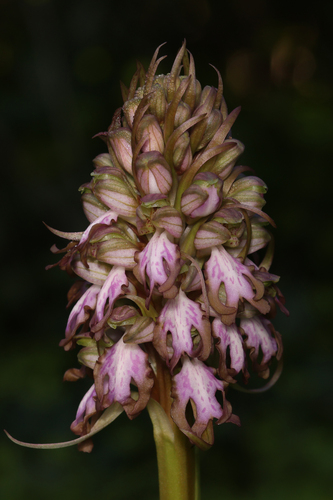
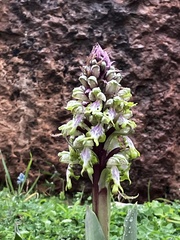
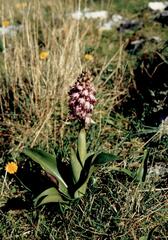
Giant orchid is a robust terrestrial orchid of the Mediterranean basin. Broad, glossy leaves and a large flower spike appear from late winter in grassland and on banks.
Read moreGiant orchid
Barlia robertiana, Orchis robertiana and Himantoglossum longibracteatum
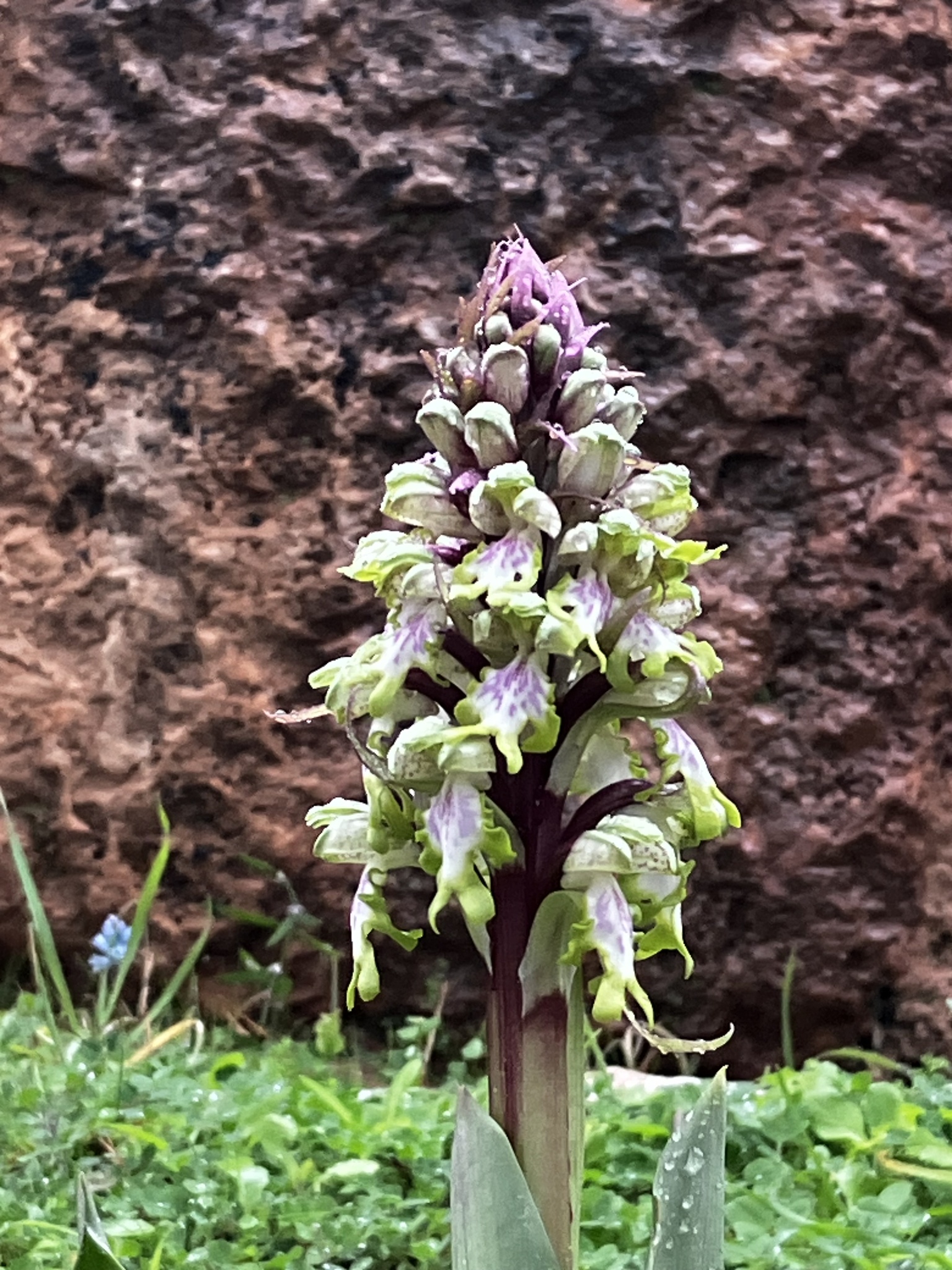
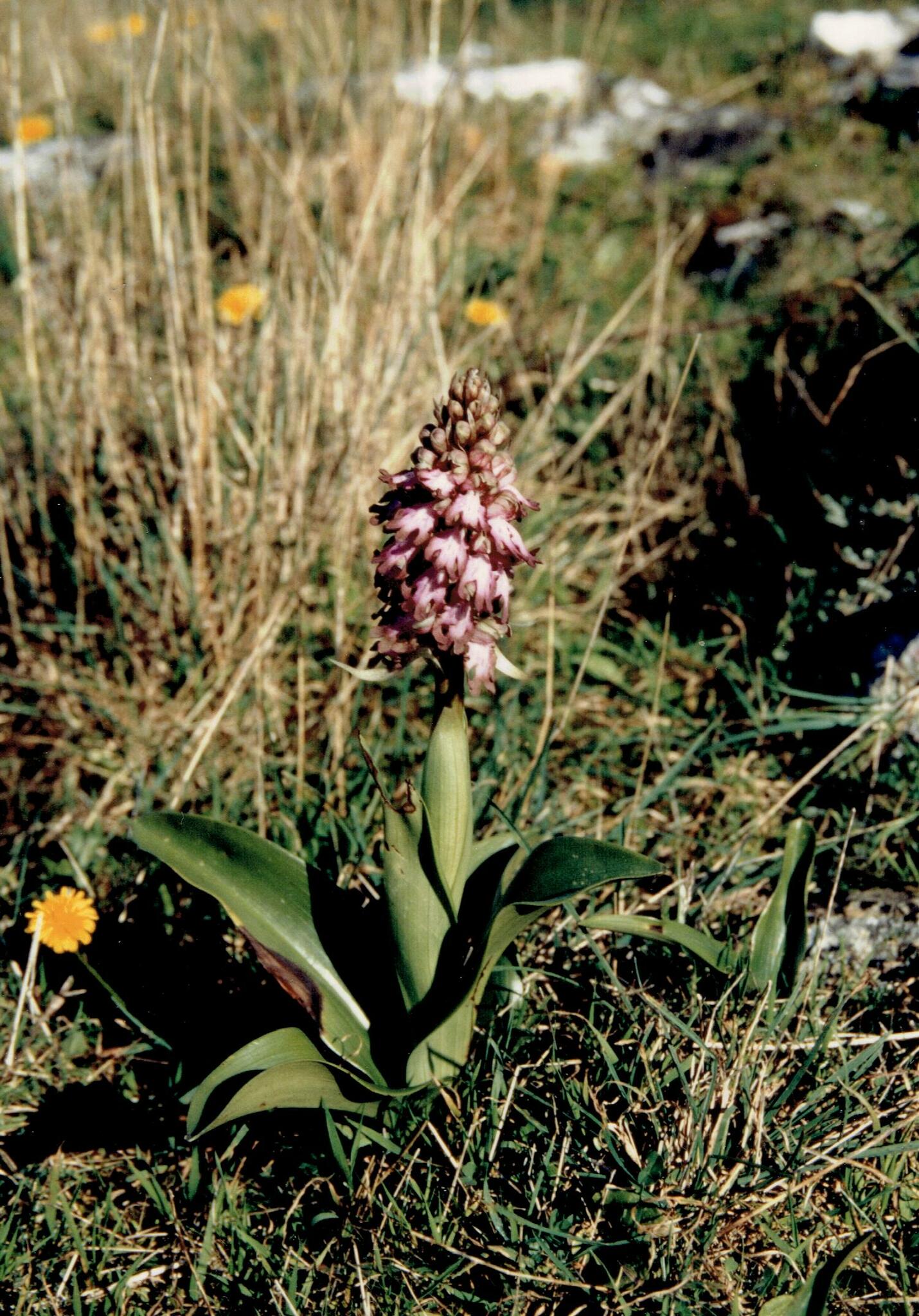


© photo
(c) Nicholas Wei, some rights reserved (CC BY-SA), uploaded by Nicholas Wei · cc-by-sa
Shawn Severance · cc0
zebedeugalinha · cc-by
Taken Feb 15, 2013 by Photoflora - Benoit BOCK (©)
Taken Feb 23, 2021 by anais chabe (cc-by-sa)
Taken Apr 11, 2022 by Nath Nn (cc-by-sa)
Taken Apr 20, 2018 by huy HO (cc-by-sa)
Taken Mar 9, 2022 by Harry Huettmann (cc-by-sa)
© copyright of the Board of Trustees of the Royal Botanic Gardens, Kew.




Global distribution
Mediterranean species expanding northward.
- Native2
- Introduced1
- France
- Spain
- Switzerland
Hexagons: regions where the plant occurs. Green dots: native range.1
Identity
Giant orchid (Himantoglossum robertianum (Loisel.) P.Delforge, 1999) is a robust terrestrial orchid often flowering before many other Mediterranean orchids. Its thick stem and large shiny leaves make it conspicuous on banks from late winter. French names referring to Robert and long bracts designate this same species. 5 4 8
“Giant” is relative: many plants measure 25–80 cm (10–31 in), depending on their habitat. Fleshy leaves and a large dense spike also create the impression of strength. A small plant therefore cannot be excluded simply because it falls short of specimens photographed in field guides. 3 5
Recognition
Large, glossy basal leaves provide the first clue. Oval to elliptical blades have parallel veins, and upper leaves clasp the stem. Many flowers crowd the inflorescence; lower bracts project clearly beyond the flowers they accompany. A whole-plant view shows this combination better than an isolated flower portrait. 5 3
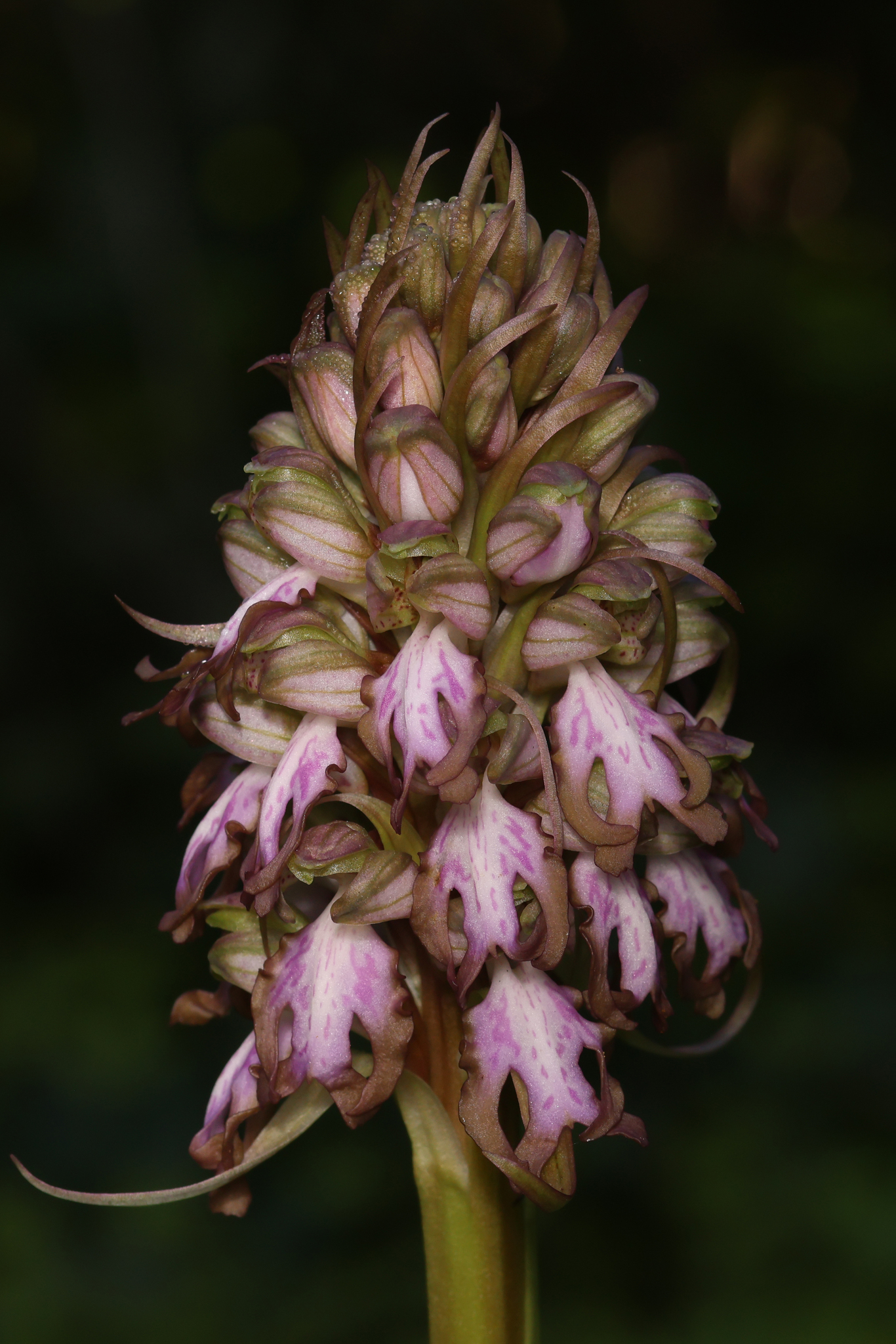
The three-lobed lip resembles a figure with arms and legs. Sickle-shaped side lobes frame a longer central lobe that is itself split in two. Other flower parts form a hood above it. Color combines pink, violet and green with variable purple spots; a short conical spur lies behind. Lip shape is more reliable than pink intensity. 6 3
Useful taxonomy
It was first described as Orchis robertiana Loisel. in 1807. The current combination in Himantoglossum dates to 1999. These dates answer different questions: the first concerns the original description, the second its placement under the accepted name. 2
Barlia robertiana (Loisel.) Greuter, published in 1967, remains frequent in older floras and reports. It is a synonym of the same taxon. The epithet honors botanist Gaspard Nicolas Robert. Retaining old names in documentary searches recovers observations without artificially multiplying species. 1 6
Habitat and distribution
Open grassy habitats and open woodland suit giant orchid, often over limestone. Garrigue, disturbed land, banks and roadsides can support it. Full light or light shade is acceptable. Even an ordinary-looking site can harbor an orchid; natural grassland is not its only habitat. 5
Its native range covers the Mediterranean basin from Iberia and the Maghreb to Greece, Turkey and Cyprus. Populations farther north in Belgium, Germany, Great Britain, the Netherlands and Switzerland are classified as introduced. Yet in Switzerland it is considered a recent arrival without human help; these categories do not prove how each individual arrived. 1 3
In mainland France it is native and nationally Least Concern; the Corsican Red List classifies it as Near Threatened. Added to the first French national protected-plant list in 1982, it was removed in 1995 because it was not threatened. Like all wild orchids, it remains subject to international wildlife-trade rules. 8 5 7
Cycle and reproduction
Flowering can begin in January in southern France and continue into spring. Farther north, March and April are more usual. Date alone does not determine identity: mild conditions and shelter change timing. Large rosettes help locate plants before flowers open. 5 3
A tuberous geophyte, it spends part of its cycle underground. Absence of leaves after the growing period does not necessarily mean disappearance. Capsules release very small wind-dispersed seeds, potentially far from the parent; finding a capsule does not guarantee nearby establishment. 1 6 5
Uses and risks
Observation in place is its main use. Photographing rosette, spike and flower provides three complementary scales of information. Avoid trampling neighboring plants to frame a close-up: low rosettes blend into vegetation. On managed land, locating plants before work allows their position to be considered. 5
Terrestrial orchids are not cultivated like ordinary bulbs. Their seeds need a fungal association to germinate and develop. Transplanting disturbs soil relationships as well as moving a plant. Preserving an existing site is more consistent with those needs than moving tubers to an enriched border. Wild populations need no fertilizer. 5
Species-specific toxicological status remains insufficiently documented for people and domestic animals. Underground organs must not be presented as safe food. Historical orchid uses do not establish safety for a particular species or justify harvesting it.
Varieties, lookalikes, and related plants
Pink, greenish or pale flowers do not alone define garden varieties. Pigmentation varies among individuals; compare lip structure and long bracts. A very pale plant can belong to the ordinary species. No cultivar is needed to explain this natural variation. 5
Lizard orchid (Himantoglossum hircinum) shares the genus but has a long central strap on its lip, creating a different outline. Giant orchid has a shorter lip with clearly distinct limb-like lobes. A frontal flower photograph retaining scale is more useful than comparing spike colors alone. 5 6
Main sources
Barlia robertiana is a synonym of Himantoglossum robertianum, the accepted name of giant orchid. Flowering varies with location: regional calendars must retain their geographic scope. 1
- Plants of the World Online, Himantoglossum robertianum
- International Plant Names Index, Himantoglossum robertianum
- InfoFlora, giant orchid
- EPPO Global Database, BJLRO
- Bouches-du-Rhône Department, wild orchids
- Asturnatura, Himantoglossum robertianum
- Tela Botanica, Himantoglossum robertianum
- INPN, TAXREF, Himantoglossum robertianum
Frequently asked questions
When does giant orchid bloom?
Flowering is early, often January to April in southern France, varying with latitude and site conditions.
How can giant orchid be identified?
Combine large glossy leaves, a thick stem, long bracts and a pink to violet lip with sickle-shaped side lobes and a divided central lobe.
Is Barlia robertiana another orchid?
No. It is a synonym of Himantoglossum robertianum, giant orchid.
If you are unsure about a plant’s toxicity, ask a botanist or veterinarian for advice.