
Yorkshire fog (Holcus lanatus, )
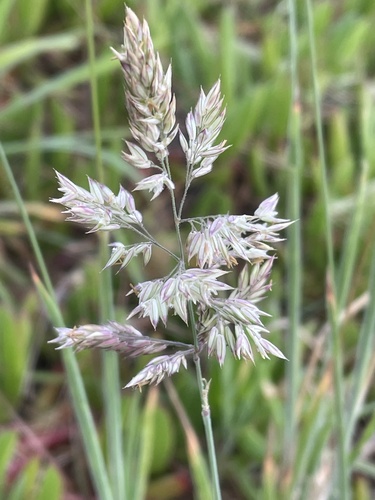
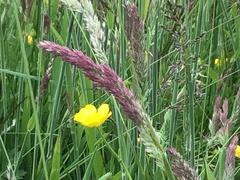
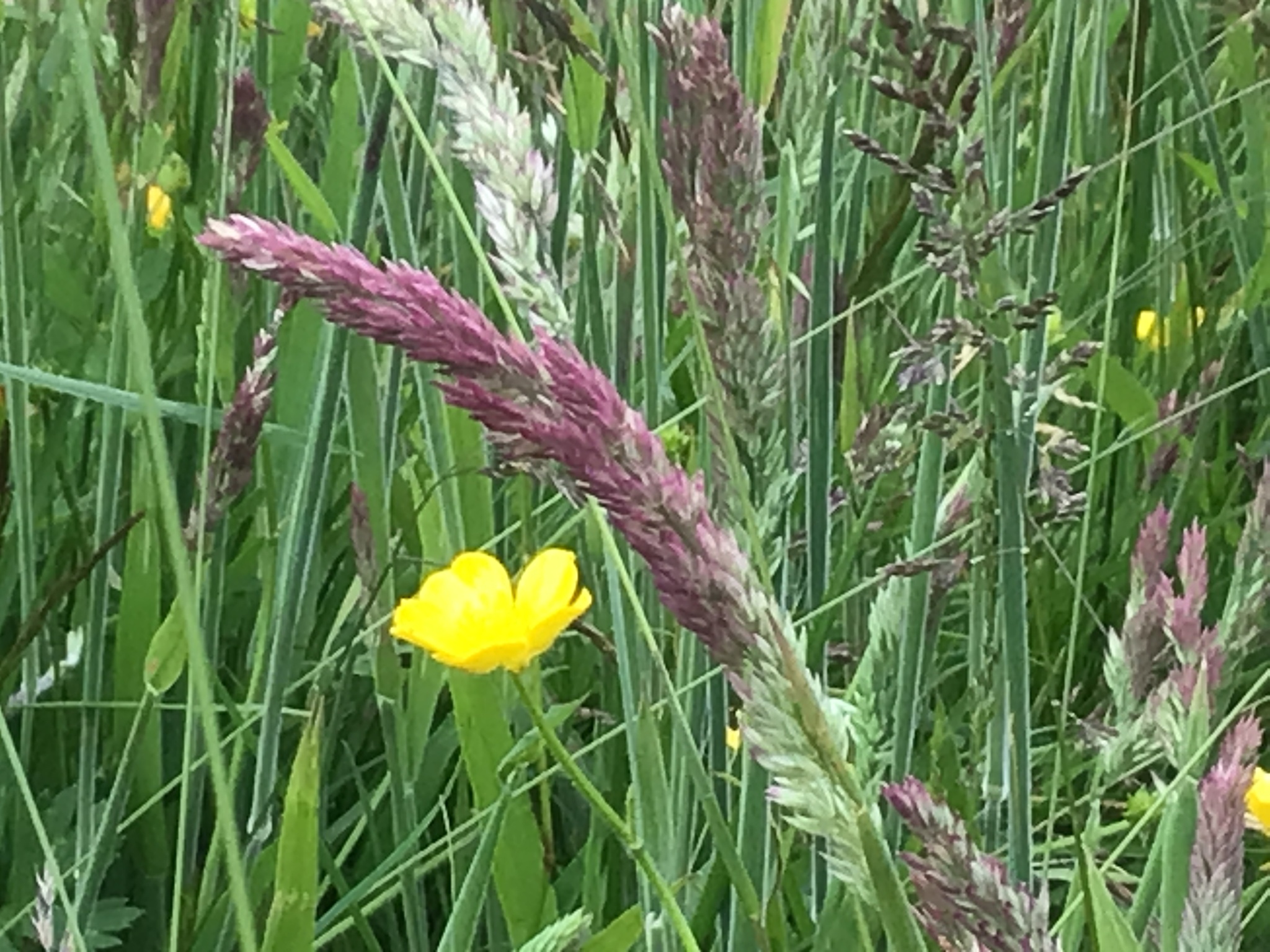
Yorkshire fog is a perennial meadow grass. Soft hairs on leaves and sheaths give its clumps a gray-green appearance, often topped by pinkish panicles.
Read moreYorkshire fog and Velvet grass
Avena lanata, Ginannia lanata and Holcus argenteus
Allow a few hours of direct sun per day, preferably morning or evening.
Sun or partial shade.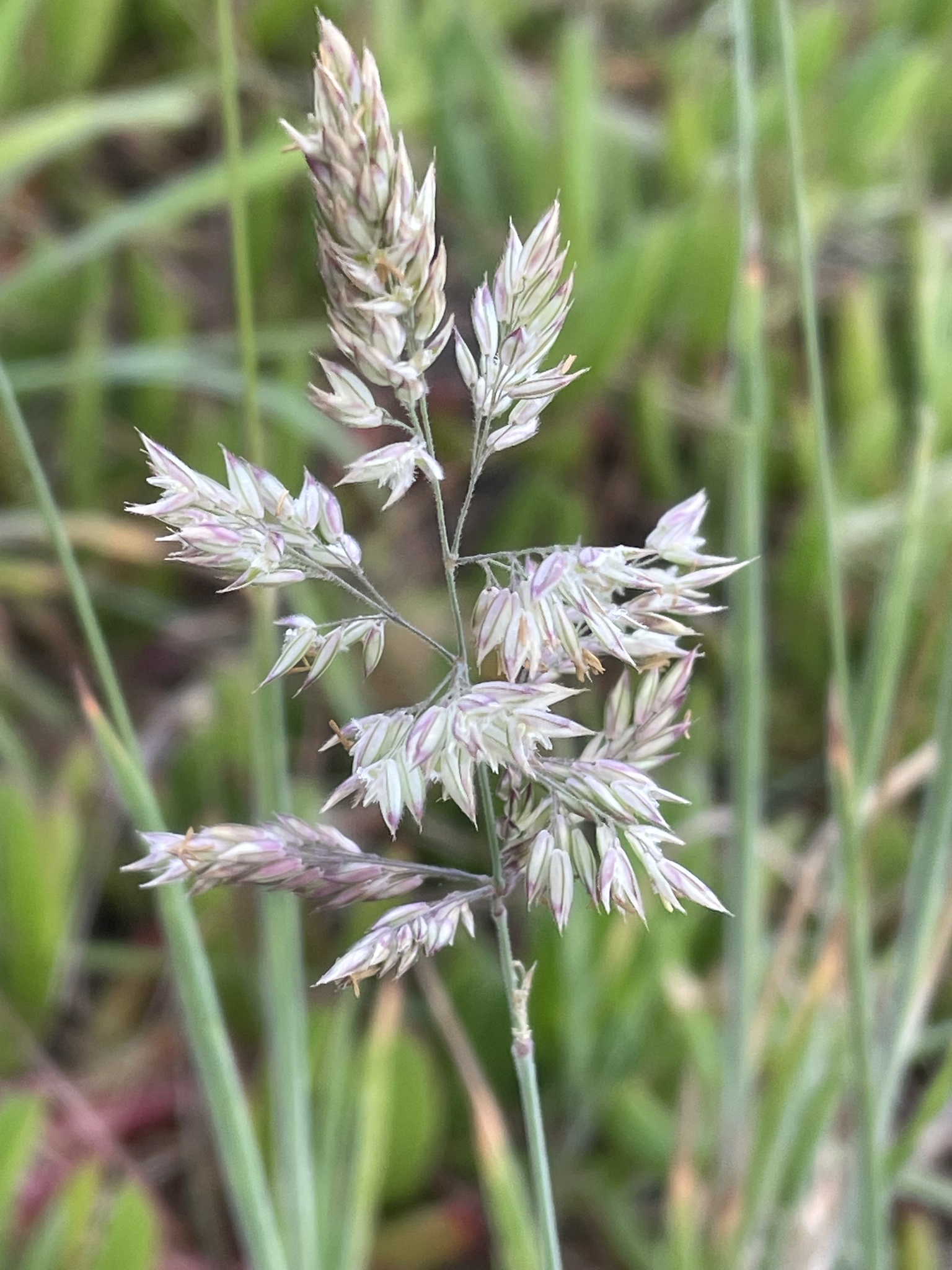

© photo
(c) ahoythere, some rights reserved (CC BY-NC) · cc-by-nc
Grimes Dyke Primary School, Leeds · cc0
Douglas Goldman · cc-by-nc
(c) Douglas Goldman, some rights reserved (CC BY-SA) · cc-by-sa
(c) Andrés Ramírez-Barrera, some rights reserved (CC BY) · cc-by
Global distribution
Native from Macaronesia and the Mediterranean region through Europe to the Caucasus; widely introduced on other continents.
- Native1
- Introduced2
- France
- North America
- New Zealand
Hexagons: regions where the plant occurs. Green dots: native range.1
Identity
Yorkshire fog (Holcus lanatus L., 1753) is a perennial grass whose soft hairs give almost the entire plant a velvety appearance. It belongs to Poaceae, the grass family. French names include houlque laineuse, the alternate spelling houque laineuse, and blanchard. Gray-green foliage and often pinkish inflorescences make it noticeable in a meadow before individual spikelets are examined. 8 7 3 5
It forms tufts rather than a network of long stolons comparable to creeping soft-grass. Height varies with site, most often 30–80 cm (12–31 in) and up to about 1 m (3.3 ft). Short grass after mowing can therefore belong to this species without matching a flowering plant’s height. 3 4 6 5
Recognition
Soft hairs cover the leaves and sheaths. Flat blades are generally 5–8 mm (0.2–0.3 in) wide and do not feel rough. At the blade-sheath junction is a small truncate, hairy, fringed ligule about 2 mm (0.08 in) long. Sheaths are slightly swollen, and young shoot bases may show pink or red bands. 3 7 6
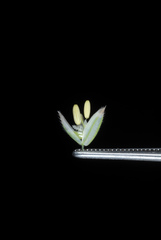
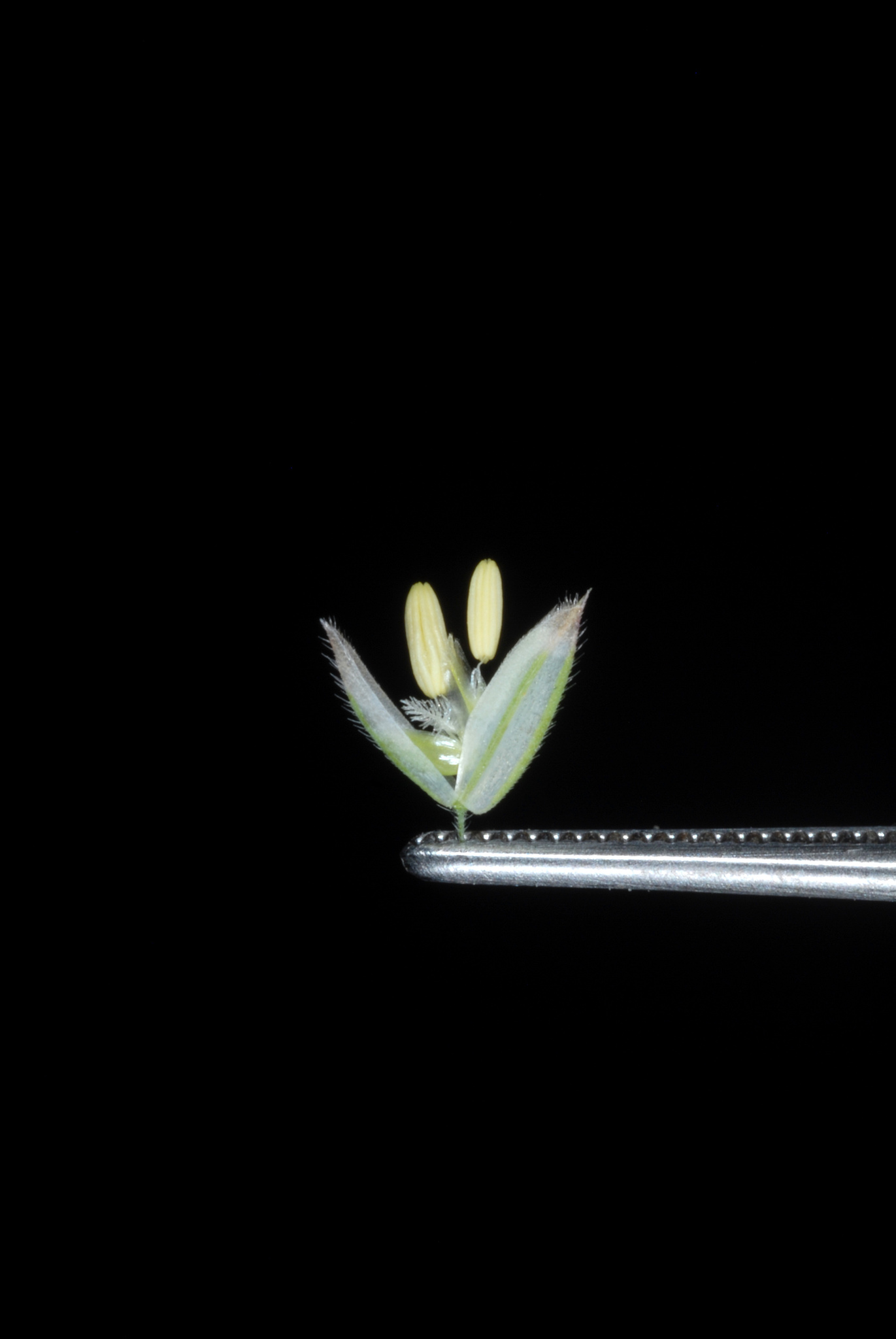
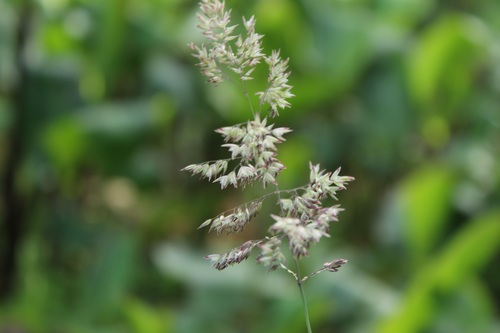
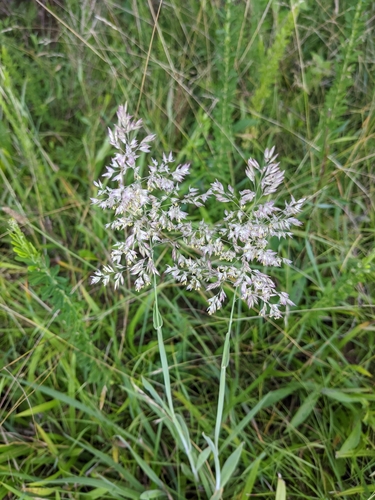
The panicle measures 3–20 cm (1.2–8 in) and changes as it develops. Initially contracted like a small brush, it opens into a more conical arrangement. Hairy, often purplish-pink glumes surround two florets, the upper one male. Its short, hooked awn projects little or not at all beyond the spikelet; a hand lens reveals this detail. 3 6 4
Useful taxonomy
Linnaeus published Holcus lanatus in 1753, in volume two of Species Plantarum, page 1048. The name remains accepted. “L.” is its botanical author, not a variety. Lanatus refers to woolliness, accurately reflecting the plant’s general appearance. 2 1
Avena lanata (L.) Koeler, Ginannia lanata (L.) F.T.Hubb. and Holcus argenteus C.Agardh ex Roem. & Schult. are synonyms. Their presence in an old work does not establish several different species. Numerous former form and subspecies names are now assigned to the same accepted taxon. 1
Habitat and distribution
Meadows, pasture and fens, plus field and path margins, are characteristic habitats, especially on moist to damp ground. It can dominate a ditch, reducing space for other plants. One clump does not, however, precisely describe the fertility or acidity of an entire field. 3 6
The native range extends from Macaronesia and the Mediterranean basin through Europe to the Caucasus. France is included, with presence throughout the country and Corsica and a national Least Concern category. It is introduced in many temperate regions elsewhere and invasive on Réunion. Native and invasive are not worldwide labels: dense French meadow growth and invasion outside the native range raise different questions. 1 7 8
Cycle and reproduction
Flowering runs from May to August in the French source setting. Leaves can remain green in winter while established plants grow much more slowly. New shoots develop in spring. Green winter foliage does not indicate growth comparable to that in May. 3 7 6
Reproduction is chiefly by seed. Small seeds can travel on wind, but abundant production does not guarantee seedling establishment in dense vegetation. Clumps can also be divided in cultivation. Removing inflorescences before dispersal limits self-sowing where the grass occupies too much garden space. 6 5
Uses and risks
Yorkshire fog contributes to natural and hay meadows. Its presence does not automatically justify sowing it in every mixture: forage quality, harvesting stage and grazing management are separate questions. In gardens it suits grassy areas or meadows better than borders requiring strictly contained clumps. 3 1 5
Moist but drained soil, in sun or partial shade and poor to moderately fertile, suits cultivated plants. A routine fertilizer application is therefore not necessary simply to retain an established clump in a suitable position. 5
Forage use does not recommend human consumption. No toxicological data establish safety for people or animals; any plant material can cause digestive upset in dogs and cats. Softness to the touch and occurrence in a meadow cannot determine a grass’s food status. 9
Varieties, lookalikes, and related plants
The main lookalike is creeping soft-grass, a stoloniferous plant with hairless or sparsely hairy sheaths and glumes but conspicuously hairy stem nodes. Its bent awn projects clearly beyond the spikelet. Yorkshire fog instead has widespread soft hairs, a short hooked awn and shorter glumes: 3–4 mm (0.12–0.16 in) rather than 5–6 mm (0.2–0.24 in). 4
Pink panicle color cannot separate them. Photograph the tuft base, nodes, a sheath and a spikelet rather than only a general meadow view. Identification keys compare these organs precisely. Old form epithets should not automatically be converted into names of commercially available cultivars. 4 1
Main sources
Yorkshire fog retains the name Holcus lanatus L., published in 1753; botanical synonyms refer to that same identity. 2 1
Frequently asked questions
How can Yorkshire fog be identified?
Leaves, sheaths and glumes have soft hairs. The clump looks velvety, with panicles often tinged purplish pink.
How does it differ from creeping soft-grass?
Yorkshire fog is broadly hairy and tufted; creeping soft-grass spreads by stolons, is less hairy between nodes, and has an awn projecting clearly beyond the spikelet.
Is Yorkshire fog native in France?
Yes. France lies within its native range; introduced or invasive status concerns other territories.
If you are unsure about a plant’s toxicity, ask a botanist or veterinarian for advice.