
New South Wales wax flower (Hoya australis, )
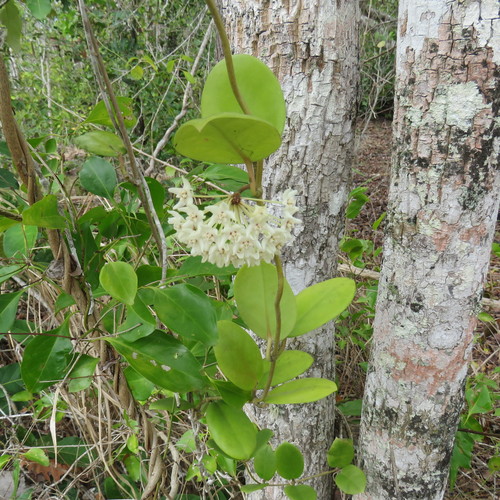

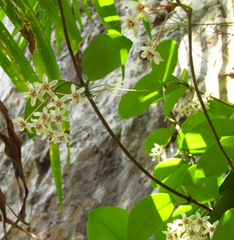
New South Wales wax flower (Hoya australis) bears thick leaves and clusters of fragrant, waxy flowers. This tropical epiphytic vine in the Apocynaceae grows in filtered light and a freely draining mix. Toxicity depends on the species exposed and the type of exposure.
Read moreNew South Wales wax flower and Common Hoya
Give plenty of ambient light without direct sun on the leaves.
Bright filtered light; avoid scorching summer sun.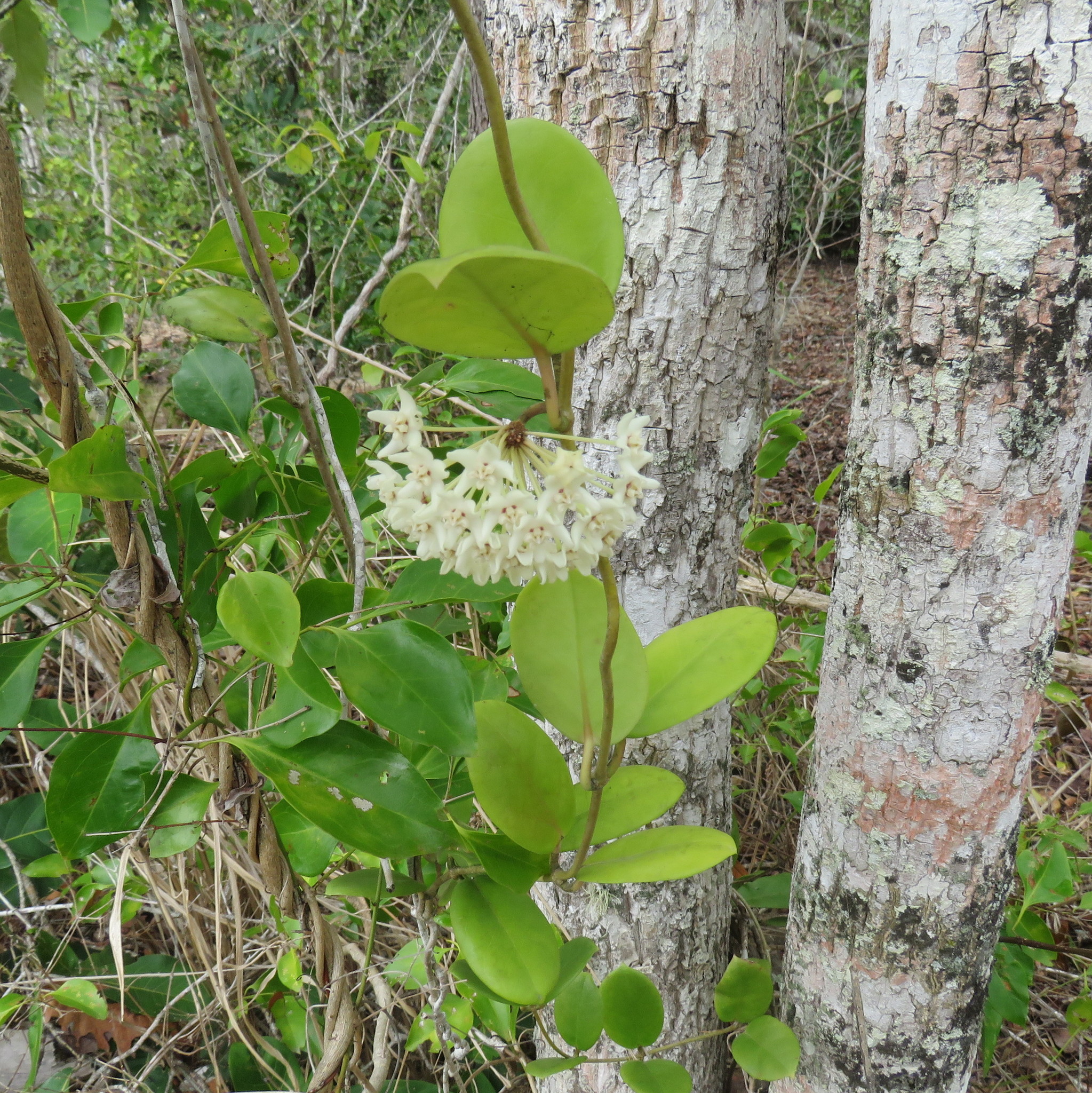
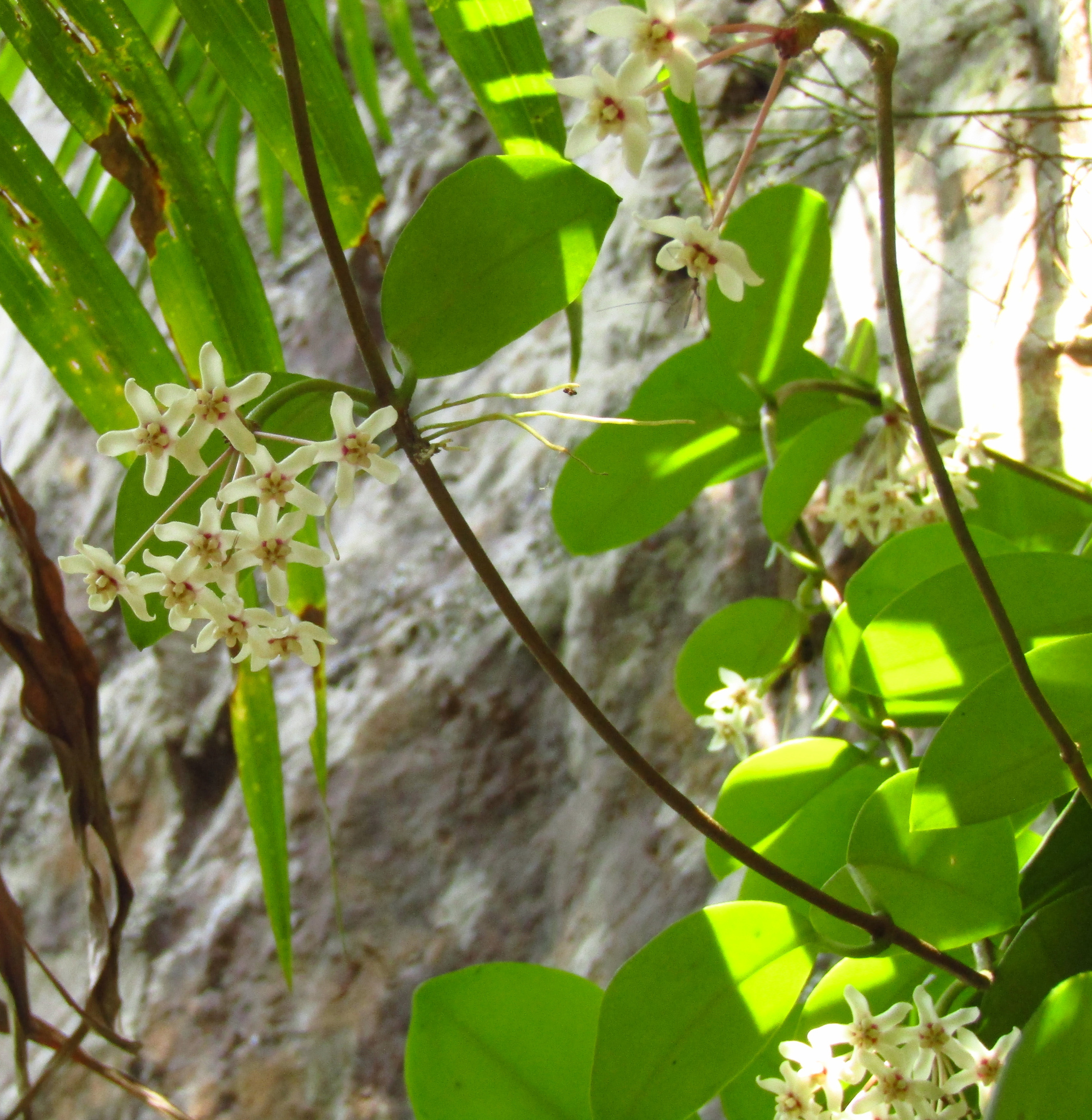

© photo
(c) Ian Cowan, some rights reserved (CC BY-NC), uploaded by Ian Cowan · cc-by-nc
Greg Tasney · cc-by-sa
Samuel Frankel · cc-by
© copyright of the Board of Trustees of the Royal Botanic Gardens, Kew.



Global distribution
Native range from northern Borneo and Sulawesi to New Guinea, Australia and the southwestern Pacific. Separate introductions in the Caribbean and Society Islands.
- Native6
- Introduced2
- Borneo
- Sulawesi
- New Guinea
- Australia
- Fiji
- Vanuatu
- Cuba
- Puerto Rico
Hexagons: regions where the plant occurs. Green dots: native range.1
Identity
New South Wales wax flower (Hoya australis R.Br. ex J.Traill, 1830) forms clusters of waxy white flowers with red centers on a fleshy-leaved vine. Its foliage persists year-round. This epiphyte uses trees as supports without taking nutrients from them. 1 3
The French name “fleur de porcelaine” is attested in Hommes et plantes de Maré, but also denotes Hoya pottsii. The binomial therefore clarifies the identity behind the common name. The epithet australis means “southern”. 8 3
Identification
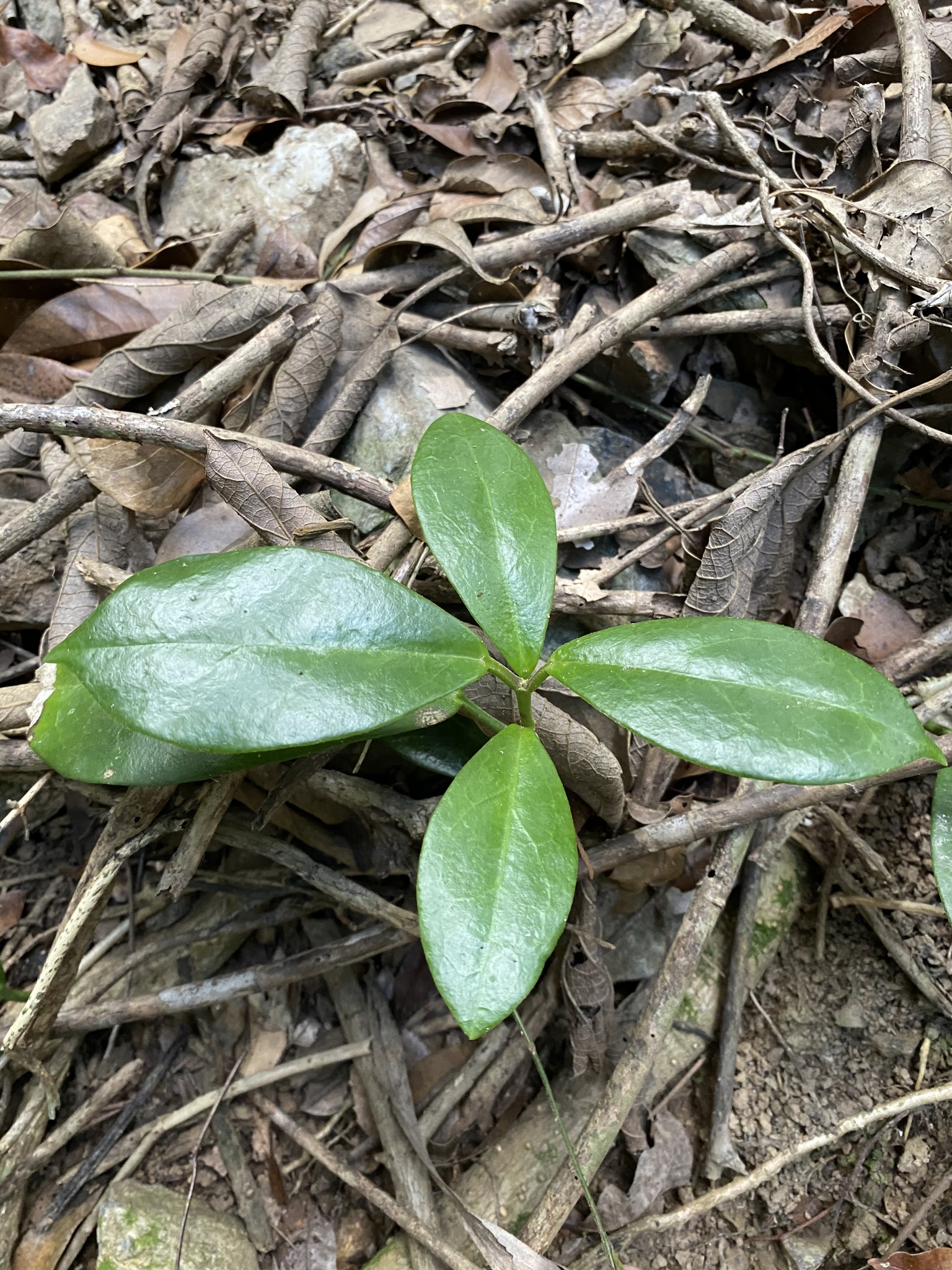
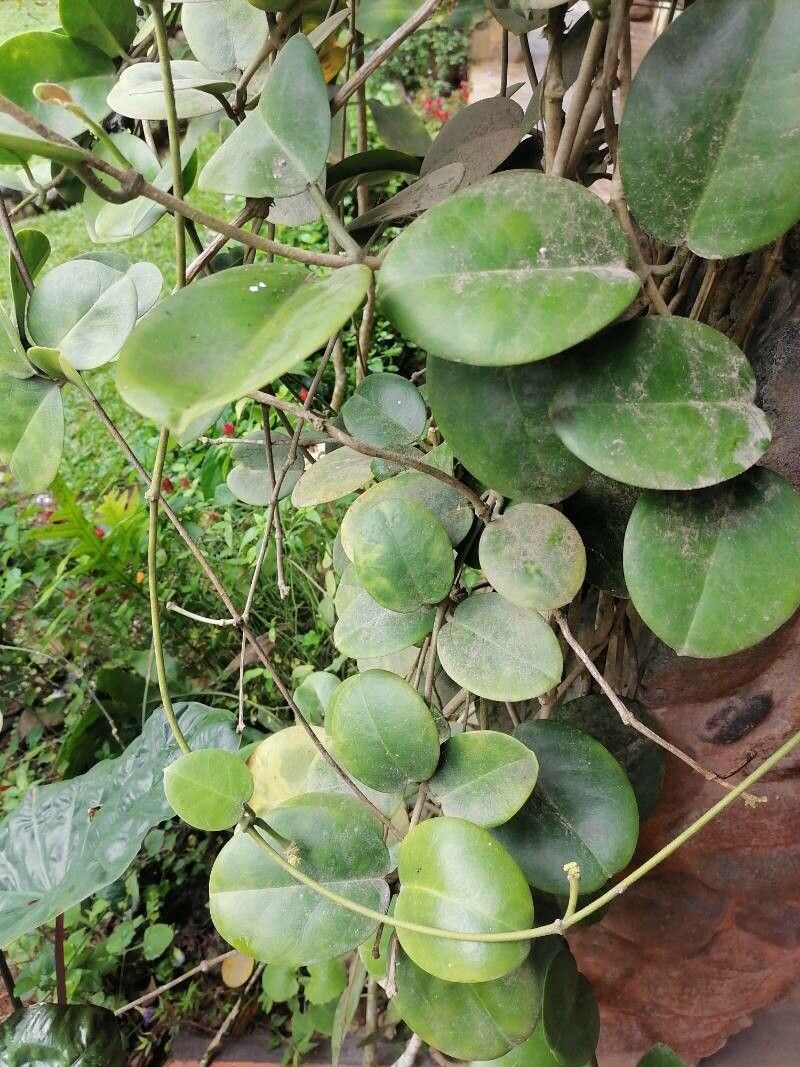
Opposite, entire, thick leaves, oval to rounded, grow along climbing stems. In the New South Wales flora, their blades measure 3 to 6 cm (1.2 to 2.4 in) long by 2 to 5 cm (0.8 to 2.0 in) wide, with densely hairy undersides. The umbels mostly contain 12 to 30 flowers, each 15 to 25 mm (0.6 to 1.0 in) in diameter. The red center contrasts with the fragrant white corolla. These dimensions describe populations covered by that regional flora. 4 3
The same flora describes stems reaching 6 m (19.7 ft), sometimes spreading across rocks. The RHS gives 1 to 1.5 m (3.3 to 4.9 ft) in height and spread in its horticultural context. A wild stem length and a cultivated plant's dimensions do not constitute a single size range. 4 5
Taxonomy and names
New South Wales wax flower belongs to the Apocynaceae, in the order Gentianales. POWO accepts Hoya australis and distinguishes seven subspecies, including australis, rupicola and tenuipes. Leaf and flower diversity accompanies this taxonomic variability; a local description does not necessarily cover every subspecies. 1
POWO and GBIF date publication of the name to 1830. The CSIRO account of subspecies australis gives 1828: this bibliographic discrepancy remains, and the publication date adopted follows POWO. 1 2 7
Habitat and distribution
The native range extends far beyond Australia: it connects northern Borneo and Sulawesi with New Guinea and the southwestern Pacific. It includes Fiji, Samoa, Tonga and Vanuatu. POWO places the species mainly in the seasonally dry tropics and distinguishes introductions to Cuba, Puerto Rico, the Caribbean Leeward Islands and the Society Islands. 1
In Australia, subspecies australis grows in open forests and vine thickets, among granite boulders or on old dunes. The CSIRO account describes climbing mainly by adventitious roots. An epiphytic habit therefore does not imply cultivation in constantly waterlogged soil. 7 5
Life cycle, propagation and cultivation
Flowering depends on context: the RHS gives late summer and fall in British horticulture; PlantNET mentions fall and winter in New South Wales, in the Southern Hemisphere. These two regions' flowering seasons do not establish universal months. Keep the flower stalks after flowering, since new flowers form on them in subsequent years. 5 4 3
Indoors, provide bright filtered light and a freely draining mix containing bark. A saturated growing medium encourages root rot. For the genus, the RHS recommends regular watering from spring to fall, then less in winter, without allowing the root ball to dry out completely. 5 6
The RHS hoya guide recommends spring repotting when roots fill the pot. Fertilizer applications remain light: every two weeks in spring and summer, then monthly in fall and winter, with a five-to-six-week pause after repotting. The calendar translates these seasons into relative guidance for an indoor plant in France; its indices measure neither water volumes nor growth rate. 6
Horticultural propagation uses cuttings or layering, in spring or early summer according to the genus guide. The elongated fruits, or follicles, reach 10 to 15 cm (3.9 to 5.9 in) in PlantNET; they split open and release seeds bearing a tuft of hairs. 6 4 3
Uses and risks
Toxicity to cattle and sheep is documented. Veterinary descriptions report tremors, loss of coordination, collapse and convulsions; older experiments caused deaths. The Australian chapter attributes the livestock risk to subspecies australis. The neurotoxin remains unidentified. 9 10
NC State displays “non-toxic” tags for cats, dogs and horses. These classifications do not extend to ruminants and provide no clinical detail. For humans and children, RHS precautions concern the genus' sap, described as irritating: wear gloves when pruning and taking cuttings. These references provide no human ingestion study specific to this species. 3 6
Varieties, lookalikes and related plants
‘Lisa’ is a cultivar, with pinkish young leaves followed by mature foliage mottled with pale green and cream. These colors do not describe every plant of the species. The botanical subspecies recognized by POWO occupy a different classification level from this horticultural name. 3 1
NC State notes confusion with Hoya carnosa. Fragrant waxy flowers and fleshy leaves are shared within the genus: these features alone cannot separate the two species. The French name “fleur de porcelaine”, also applied to Hoya pottsii, adds a vernacular ambiguity. 3 6 8
Main sources
Floras describe wild plants; RHS advice concerns cultivation, while veterinary references specify the animals exposed.
- Kew, Plants of the World Online: Hoya australis
- GBIF Backbone Taxonomy: Hoya australis
- NC State Extension: Hoya australis
- PlantNET, New South Wales flora: Hoya australis
- Royal Horticultural Society: Hoya australis
- Royal Horticultural Society: How to grow hoya
- CSIRO, Australian Tropical Rainforest Plants: Hoya australis subsp. australis
- Lormée, Cabalion and Hnawia, Hommes et plantes de Maré, IRD, p. 69
- Animal Health Australia, veterinary toxicology document, Hoya australis p. 291
- Merck Veterinary Manual: Important Poisonous Plants of Australia, Hoya australis entry
Frequently asked questions
Should I cut off the flower stalks after flowering?
Keep the flower stalks: NC State states that Hoya australis can flower on them again in subsequent years.
Is the cultivar Lisa a different species?
Lisa is a cultivar of Hoya australis. Its young leaves are pinkish, then become mottled with pale green and cream, according to NC State.
Is New South Wales wax flower toxic to all animals?
Veterinary references document severe poisoning in cattle and sheep. NC State displays non-toxic tags for cats, dogs and horses; these indications cannot be generalized to livestock.
When should I repot New South Wales wax flower?
The RHS guide to the genus recommends spring, only when roots fill the pot. An oversized container holds more moisture and encourages rot.
If you are unsure about a plant’s toxicity, ask a botanist or veterinarian for advice.