
Sweetheart hoya (Hoya kerrii, )
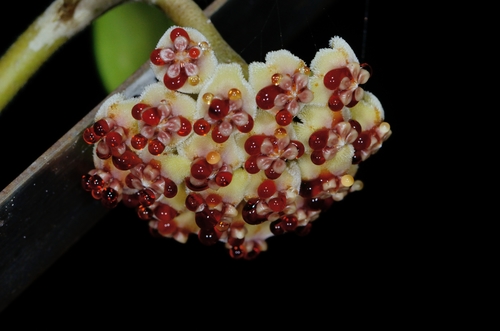


Sweetheart hoya (Hoya kerrii) bears thick, heart-shaped leaves on climbing stems. This tropical perennial in the Apocynaceae family produces clusters of waxy flowers scented at night. A single leaf sold in a small pot will not necessarily become a vine: stem tissue matters for new growth.
Read moreSweetheart hoya
Give plenty of ambient light without direct sun on the leaves.
Bright indirect light, protected from scorching sun.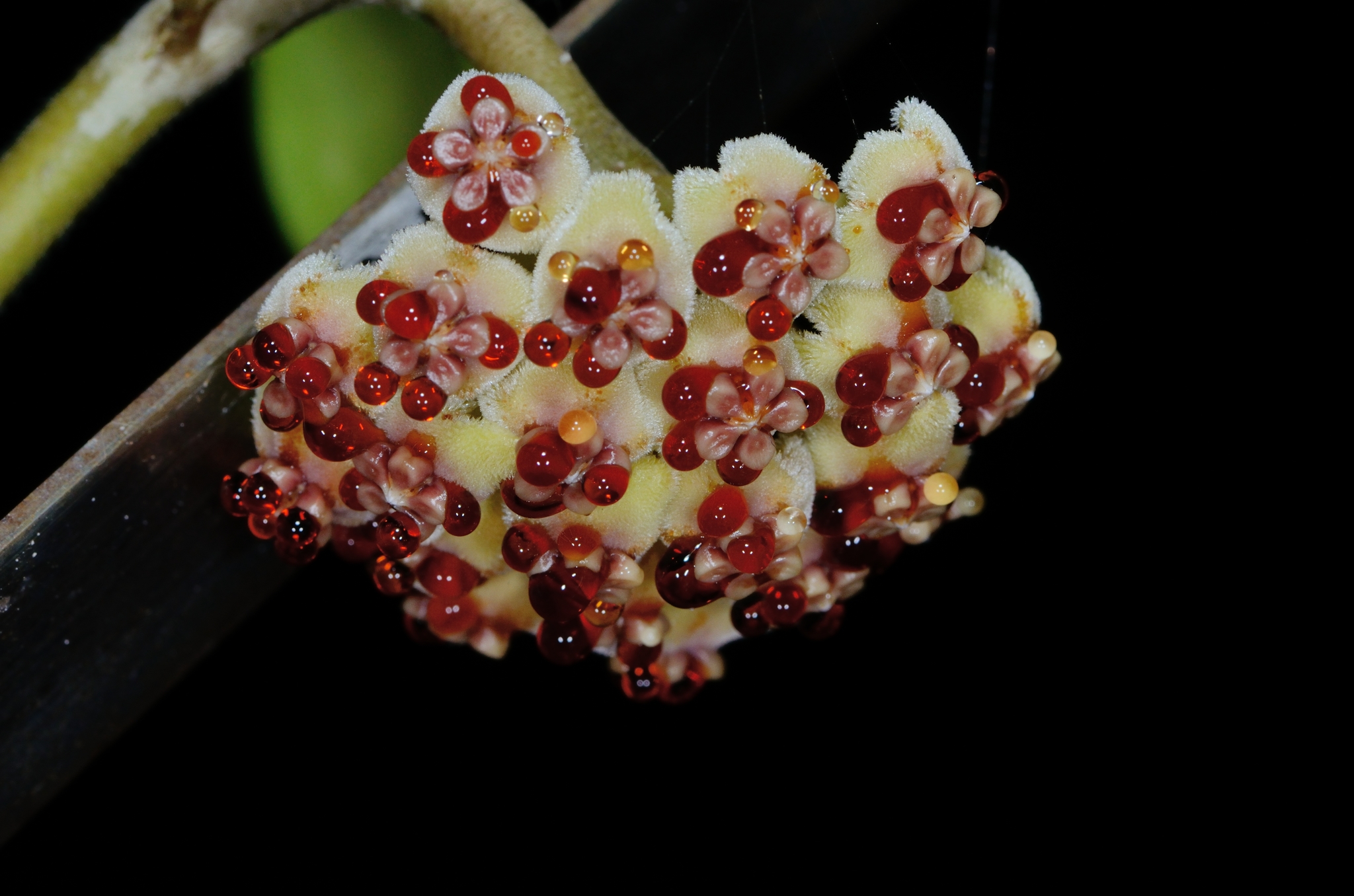

© photo
(c) 澎湖小雲雀, some rights reserved (CC BY-NC-SA) · cc-by-nc-sa
iNaturalist User · cc-by
Wikimedia Commons · CC BY-SA or Public Domain
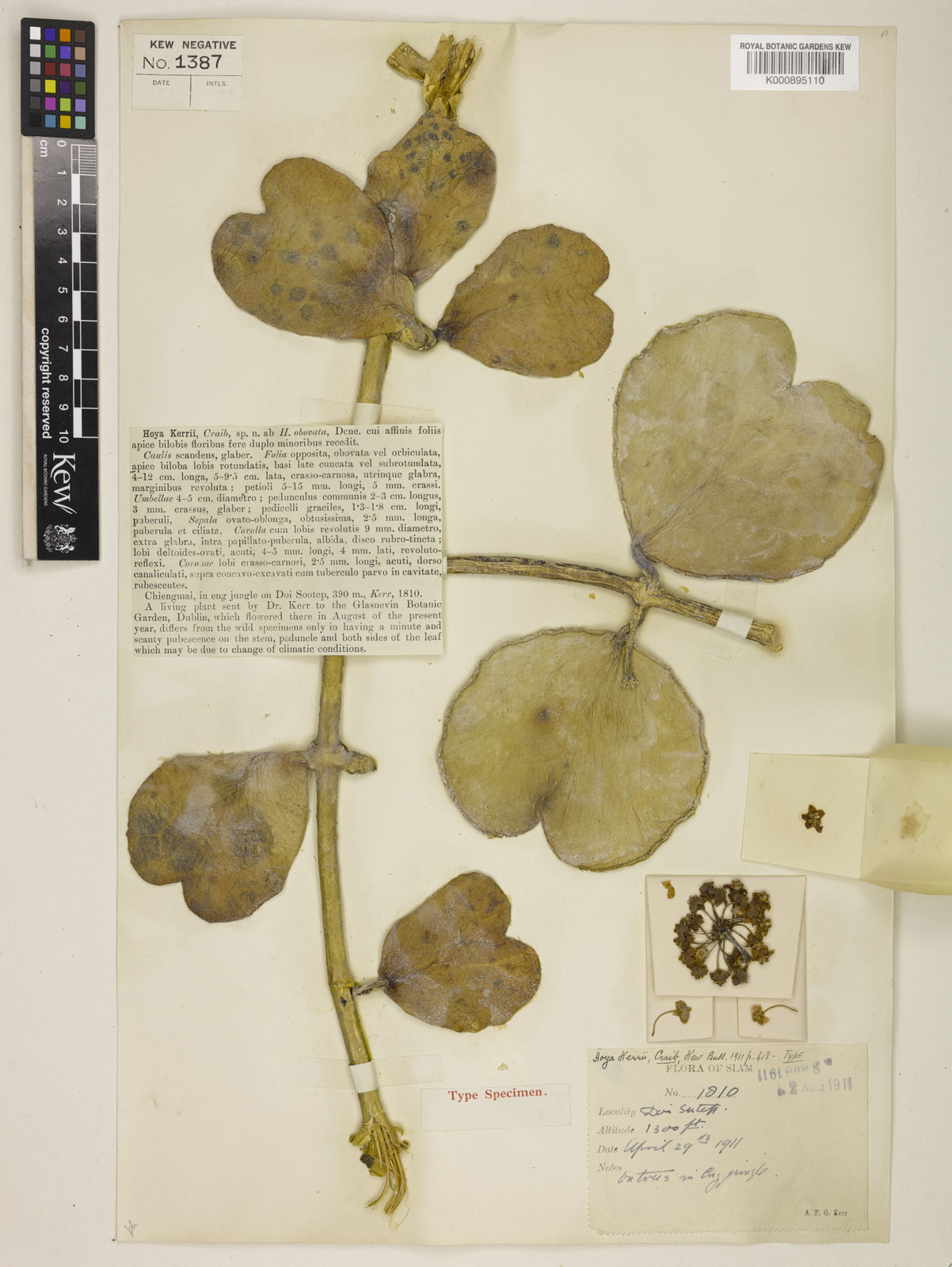
© copyright of the Board of Trustees of the Royal Botanic Gardens, Kew.


Global distribution
Native from Indochina to western Malesia according to Kew; NParks lists Laos, Malaysia, Thailand and Vietnam.
- Native4
- Laos
- Malaysia
- Thailand
- Vietnam
Hexagons: regions where the plant occurs. Green dots: native range.1
Identity
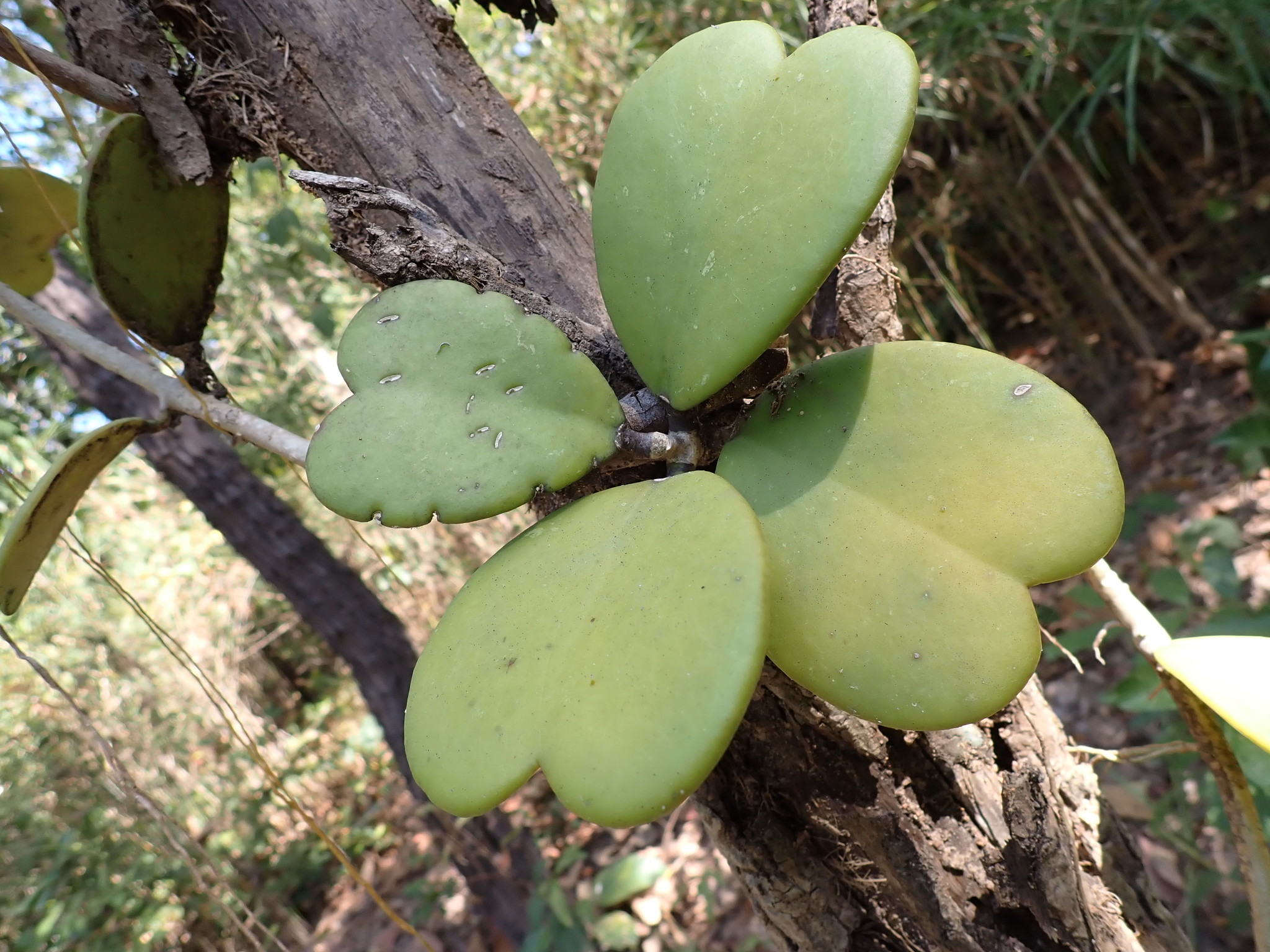
Sweetheart hoya (Hoya kerrii Craib, 1911) bears fleshy, heart-shaped leaves on stems capable of climbing. A single leaf planted in a small pot, often sold for Valentine's Day, shows only part of this tropical vine. A rooted leaf does not guarantee a new vine: new growth is unlikely without some stem tissue kept with the leaf. 1 3
The species is an evergreen epiphytic perennial in the Apocynaceae family. Its epithet honors Arthur Francis George Kerr, an Irish botanical explorer who collected plants in Thailand and Southeast Asia. The genus name commemorates Thomas Hoy, an English gardener. 3 2
Recognition
The green leaves are opposite on the stem. Their distinctive feature is an inverted heart shape: the leaf stalk joins the pointed end, while the notch is at the other end. NParks gives a leaf length of 5 to 15 cm (2 to 6 in). The stem becomes woody and attaches to its support with aerial roots. 2
The waxy flowers form umbels 4 to 5 cm (1.6 to 2 in) across. An umbel of Hoya kerrii contains several flowers on pedicels that meet at the base. The mainly white corolla has a smaller pinkish-brown to purplish-brown corona in the center. These two structures form overlapping stars. The fragrance is released at night. 2
Taxonomy and cultivated forms
Hoya kerrii is an accepted species, published in 1911, on page 418 of the Bulletin of Miscellaneous Information, Kew. Kew's current classification places it in the Apocynaceae. The former family Asclepiadaceae still appears in the ASPCA entry; this classification difference does not change the identity of the plant assessed. 1 6
The horticultural name ‘Variegata’ denotes a form with green leaf centers and creamy white edges. Variegation belongs to this cultivated form; the green foliage described for the species does not necessarily have that border. Nor does a single leaf sold in a pot constitute a separate botanical variety. 3
Habitat and distribution
Sweetheart hoya is native to Indochina and western Malesia. NParks lists Laos, Malaysia, Thailand and Vietnam. The plant lives in humid tropical forests. Kew describes an epiphytic or lithophytic climber: both trees and rocks can support its roots. 1 2
Height depends on the growing conditions. The RHS gives 0.5 to 1 m (1.6 to 3.3 ft) and a spread of 0.1 to 0.5 m (4 to 20 in), while NParks gives a maximum height of 2.4 to 3 m (8 to 10 ft) in its tropical account. These figures do not make up one size range. Indoors, a trellis or hanging basket accommodates the climbing or trailing habit. 4 2
Life cycle and propagation
Sweetheart hoya grows slowly. The RHS places flowering in summer and gives a time to maturity of 5 to 10 years; young plants may take time to flower. Leave old flower stalks in place, as new buds can form on them. Long, still-bare stems also precede the appearance of leaves or flowers. 4 2 3
To propagate the plant, choose a stem cutting rather than an isolated leaf. The RHS also lists layering in spring or summer, followed by semi-ripe cuttings with bottom heat in late summer. NParks mentions seed propagation and recommends using seed soon after harvest because it stores poorly. 3 4 2
Growing indoors
Place sweetheart hoya in bright indirect light, away from scorching sun. The general hoya guide suggests 16 to 24 °C (61 to 75 °F) in spring and summer. An airy, free-draining mix prevents roots from sitting in water. NParks suggests one-third orchid mix and two-thirds potting mix, with a pH of 6 to 7.5. 4 5 2
Water when the top 3 cm (1.2 in) of growing medium is dry, then let the pot drain. Reduce watering in winter without drying the root ball completely. For the species, the RHS advises a balanced liquid fertilizer monthly during growth. Repot in spring only when roots fill the container; an oversized pot stays damp longer. The calendar expresses these recommendations as relative seasonal scores for the Northern Hemisphere. 2 4 5
Uses and risks
Heart-shaped leaves and fragrant flowers explain the ornamental use of sweetheart hoya. Reddish-brown nectar can drip and stain furniture or fabrics. Avoid moving the plant once buds have formed: a change in light may cause them to drop. 3 5
The ASPCA classifies Hoya kerrii as non-toxic to cats, dogs and horses. NParks nevertheless reports toxicity if ingested and irritating sap, without detailing the exposed groups or effects. The RHS guide advises wearing gloves when handling hoya sap. The veterinary classification therefore does not demonstrate human safety; children are not assessed separately, and the status for other animals remains unknown. 6 2 5
Main sources
Frequently asked questions
Can a Hoya kerrii leaf become a vine?
According to NC State Extension, a rooted leaf is unlikely to develop well if no stem tissue has been kept with it.
Should I cut off the long leafless stems?
Long, still-bare twining stems may carry the next leaves or flowers. NC State advises against removing them during routine care.
Why should I keep the old flower stalks?
New buds can form on the old flower stalks. Removing them may therefore take away the supports for future flowers.
Is Hoya kerrii non-toxic?
The ASPCA lists it as non-toxic to cats, dogs and horses. NParks nevertheless reports an ingestion risk and irritating sap; the veterinary classification does not establish suitability for human consumption.
If you are unsure about a plant’s toxicity, ask a botanist or veterinarian for advice.