
Sweet potato (Ipomoea batatas, )
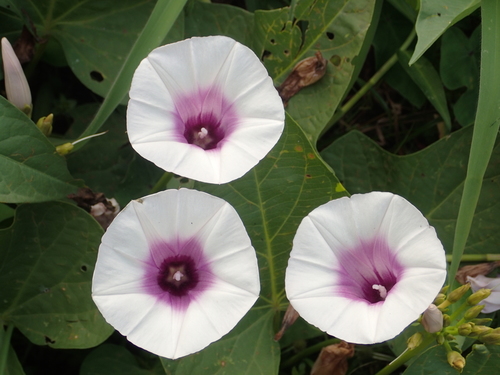
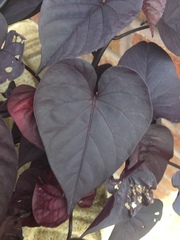
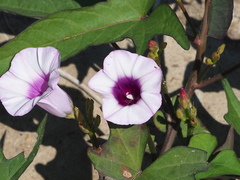
Sweet potato (Ipomoea batatas) is a tropical herbaceous vine with thickened roots that store reserves. Food cultivars are selected for their harvest, while ornamental forms are chosen for their foliage.
Read moreSweet potato
Convolvulus batatas, Batatas edulis and Ipomoea fastigiata
Allow a few hours of direct sun per day, preferably morning or evening.
Full sun for crop production; partial shade tolerated for ornamental use



© photo
no rights reserved, uploaded by 葉子 · cc0
iNaturalist User · cc0
葉子 · cc0
Taken Mar 10, 2021 by Pithan Geleski João Arthur (cc-by-sa)
Taken Sep 30, 2019 by Tina Tina Scott (cc-by-sa)
Taken Jul 31, 2021 by childeofentropy (cc-by-sa)
Taken Mar 29, 2021 by Dieter Albrecht (cc-by-sa)
© copyright of the Board of Trustees of the Royal Botanic Gardens, Kew.




Global distribution
Native from Mexico to Venezuela and Ecuador; widely introduced in warm regions.
- Native4
- Introduced2
- Mexico
- Colombia
- Venezuela
- Ecuador
- China
- New Guinea
Hexagons: regions where the plant occurs. Green dots: native range.1
Identity
Sweet potato (Ipomoea batatas (L.) Lam.) is an herbaceous vine whose harvested organ is a thickened storage root. This root distinguishes sweet potato from potato, which forms stem tubers. The vernacular names recorded in French refer to this same botanical species. 5 7
Sweet potato belongs to the Convolvulaceae, the morning glory family. It combines flexible, trailing or climbing stems with leaves of variable shapes. It is grown for two different purposes: edible roots or ornamental foliage. A plant sold for a hanging pot therefore does not promise the harvest of a food cultivar. 2
Recognition
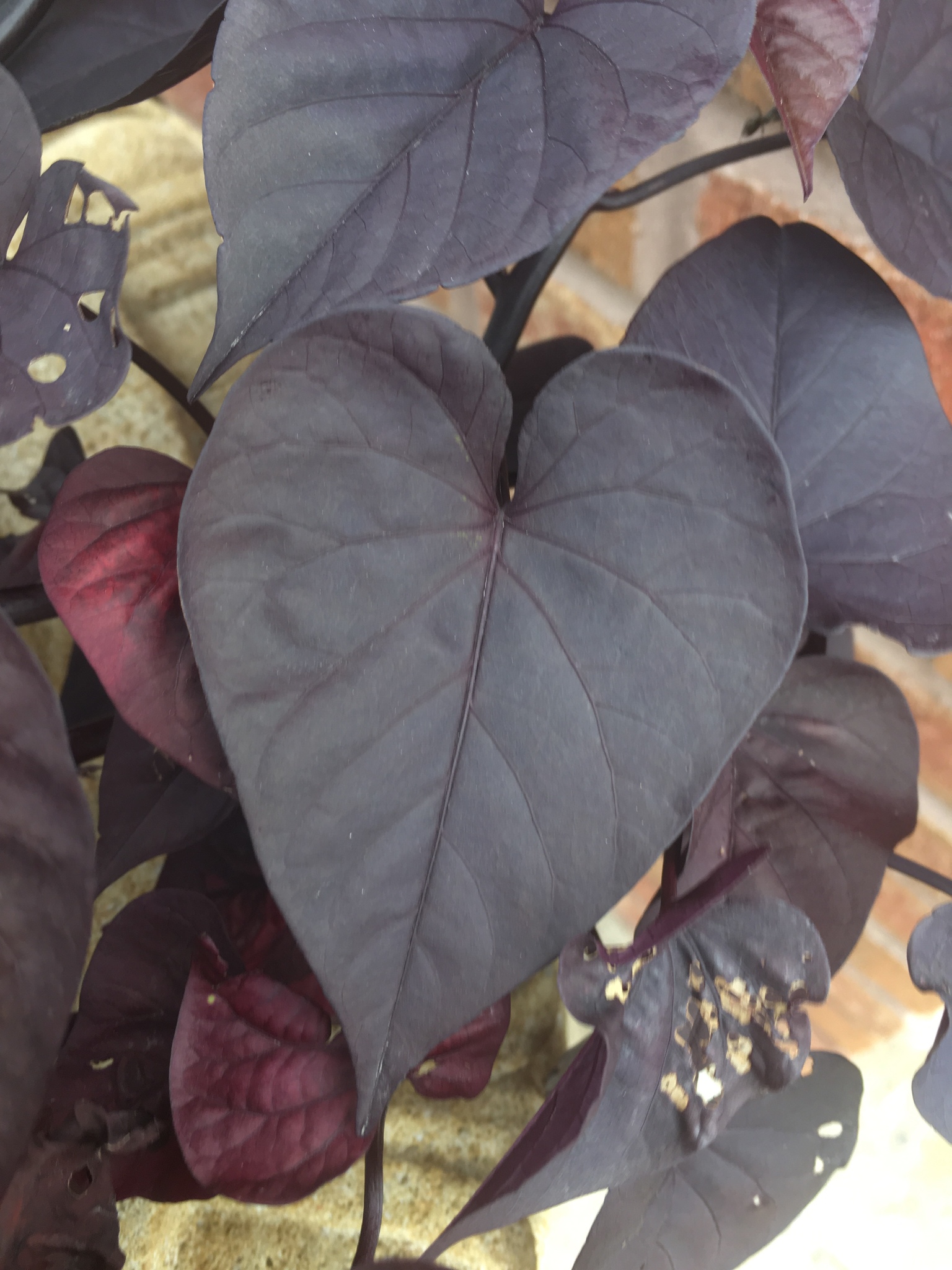
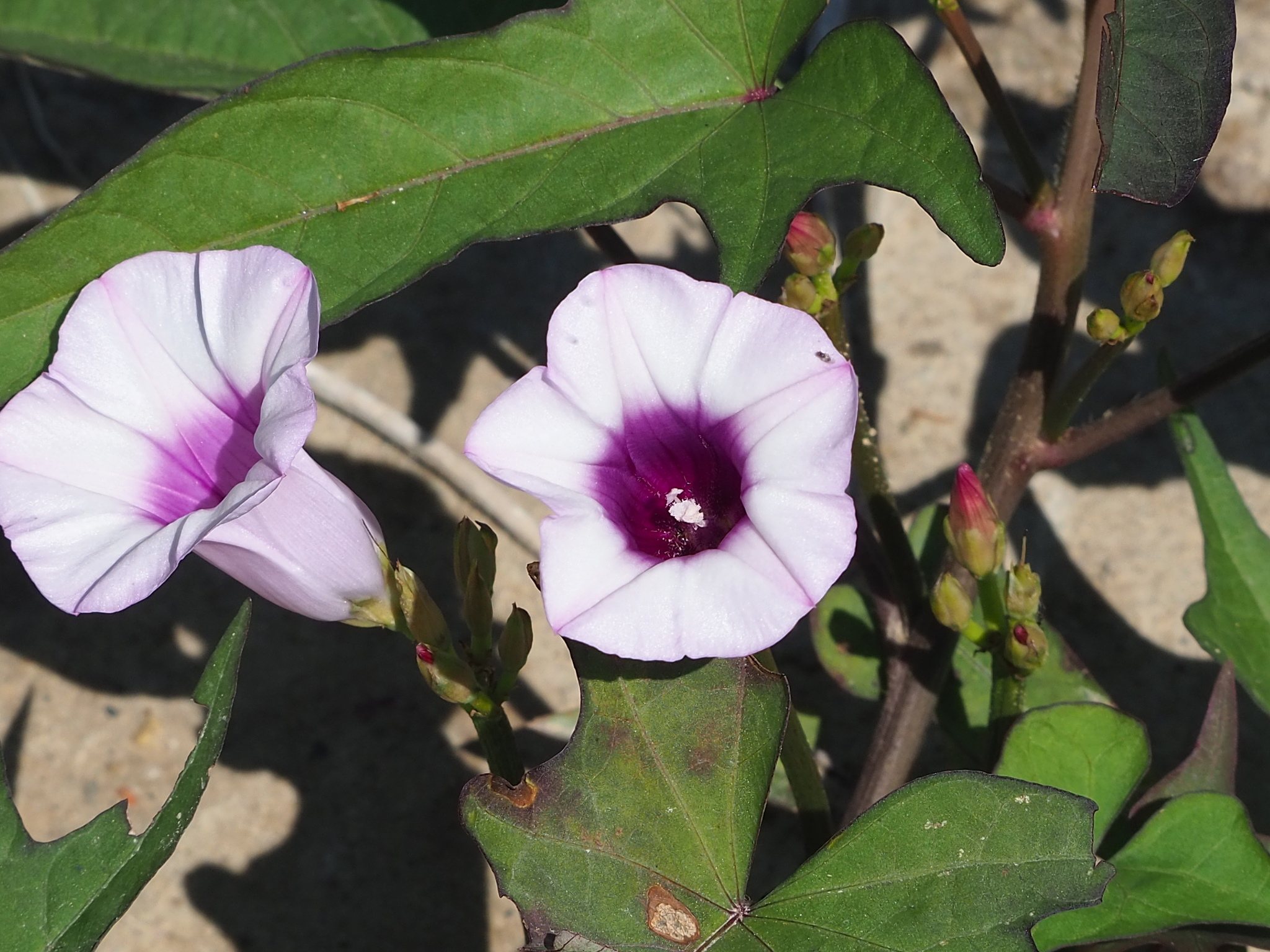
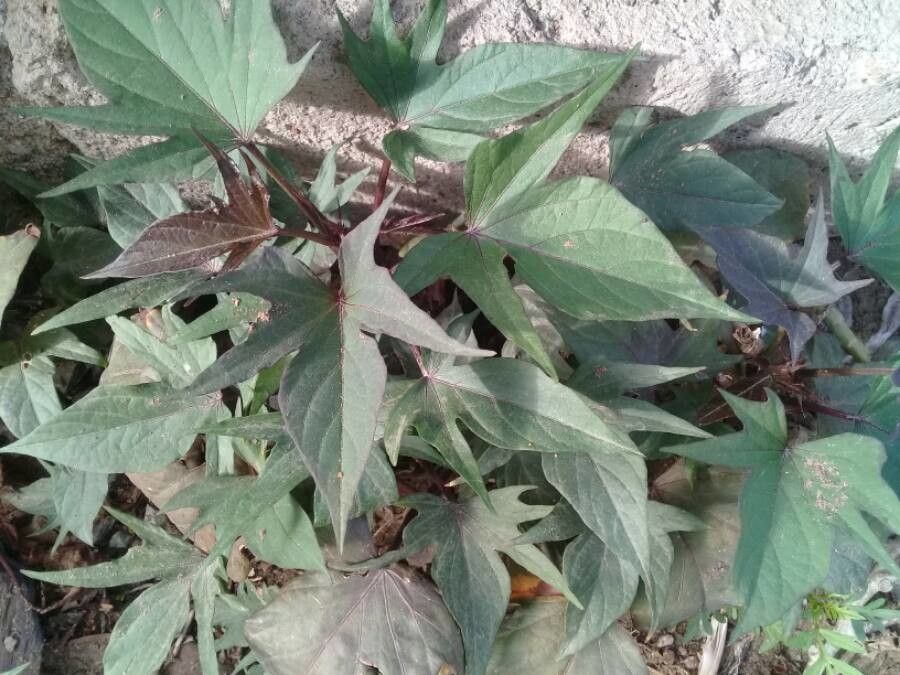
Sweet potato leaves are oval to heart-shaped and sometimes lobed. Some selections have purple coloration, so foliage color is not uniform across the species. The funnel-shaped flowers are purple, sometimes white. Flowering can occur in summer, but it remains rare in many ornamental cultivars. A lack of flowers alone does not rule out sweet potato. 3
In horticultural cultivation, sweet potato can reach 2.5 to 4 m (8 to 13 ft) in height and 0.5 to 1 m (1.6 to 3.3 ft) in width when grown as a climber. These dimensions describe a plant trained on a support. Stems left on the ground occupy space differently; in a container or hanging pot, they can trail down. How the plant is trained therefore matters as much as shoot length when planning its space. 3 2
Useful taxonomy
The accepted name is Ipomoea batatas (L.) Lam., published in 1793. The species belongs to the order Solanales and the genus Ipomoea. Its current synonymy includes Convolvulus batatas L., Batatas edulis (Thunb.) Choisy and Ipomoea fastigiata Sweet. These older names refer here to the same accepted species. 1
A botanical synonym and a cultivar name provide different information. The synonym records the history of classification; the cultivar name identifies a horticultural selection. ‘Blackie’, for example, is a sweet potato cultivar with dark foliage. Its deeply cut leaves are not a characteristic shared by all sweet potatoes. 1 2
Habitat and range
The native range of sweet potato extends from Mexico to Venezuela and Ecuador, through Central America and Colombia. Its main habitat is the seasonally dry tropics. The species has been introduced to many territories, including China and New Guinea. This extensive distribution should be distinguished from its native range. 1
Sweet potato is now a food crop of warm regions. The International Potato Center places its agricultural history in Latin America. Skin and flesh colors vary among cultivars, including white, yellow, orange and purple. This cultivated diversity does not allow a root’s geographic origin to be inferred from its color alone. 5
Life cycle and reproduction
Sweet potato is a tropical perennial, frequently grown as an annual where frost ends the growing season. It propagates easily from stem cuttings. Seeds are used in breeding programs, while vegetative propagation reproduces selected plant material. Young shoots taken from stored roots also provide a starting point for cultivation. 2 5 4
In spring, keep young plants warm and pot them on as they grow. Plant them in their final position after the risk of frost has passed. Crop production favors 21 to 26 °C (70 to 79 °F) and consistently moist soil; a water shortage limits enlargement of the roots. In containers, apply a potassium-rich fertilizer every 14 days in summer. Ground enriched with organic matter normally needs no such feeding. Harvest after four to five months, in early fall, before frost. The calendar expresses these recommendations as relative scores for an annual crop started under cover in mainland France. 4
Uses and risks
The edible roots provide a starchy food. Young leaves and stems are also used cooked as leafy vegetables. These food uses concern identified plant parts. Food cultivars are selected for root quality, while ornamental cultivars are chosen for their foliage. 5 4 2
Sweet potato is classified as non-toxic to cats, dogs and horses. That classification concerns these three groups. The animal assessment is not a complete toxicological classification for humans, children or every other animal. Overall safety for those groups remains uncharacterized; food use of certain parts does not establish that the whole plant is harmless. 6
Varieties, look-alikes and related plants
‘Beauregard’ produces salmon-orange flesh; ‘Tahiti’ combines purple skin with white flesh. These food cultivars differ from ornamental selections. ‘Blackie’ has deeply cut, almost black-purple leaves, while ‘Margarita’ has chartreuse green foliage. These traits belong to the named cultivars and neither define the entire species nor establish hybrid status. 4 2
Potato (Solanum tuberosum) belongs to the Solanaceae; sweet potato belongs to the Convolvulaceae. Their resemblance as underground foods conceals a difference in both the harvested organ and botanical relationships. Yams are different plants again. When comparing these crops, distinguish the botanical identity, edible organ and cultivar rather than relying on a shared common name. 2 5
Main sources
The nomenclatural reference describes the species; foliage and harvest traits are specified by cultivar. The calendar adapts seasonal horticultural advice to a crop started under cover.
Frequently asked questions
Is a sweet potato the same as a potato?
Sweet potato belongs to the Convolvulaceae family. The harvested part is a storage root, whereas a potato tuber is a modified stem.
Will an ornamental sweet potato produce a good crop?
Ornamental cultivars are selected for their foliage and rarely produce roots of culinary quality comparable to food cultivars.
Can sweet potato stay outdoors in winter?
This tropical perennial is frost-tender. In temperate climates, it is usually grown as a single-season crop and harvested before the first frosts.
Can you eat sweet potato leaves?
Young sweet potato leaves and stems are used cooked as leafy vegetables. This food use concerns identified parts of the plant.
Is sweet potato toxic to cats and dogs?
Ipomoea batatas is classified as non-toxic to cats, dogs and horses. That classification does not cover every other animal.
If you are unsure about a plant’s toxicity, ask a botanist or veterinarian for advice.