
Tall fescue (Lolium arundinaceum, )
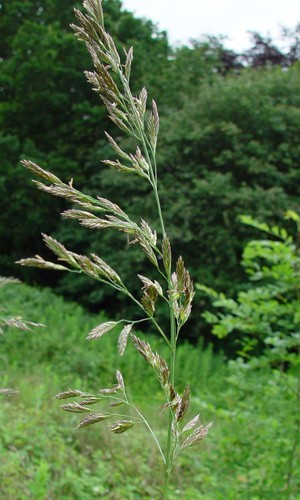
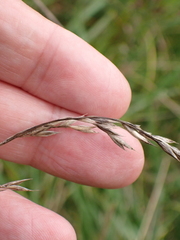
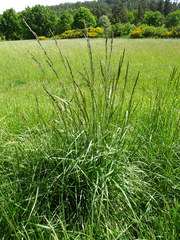
Tall fescue (Lolium arundinaceum) is a robust perennial Poaceae grass grown for pasture and lawns. Broad, stiff leaves have hairy auricles; forage value also depends on its fungal endophyte status.
Read moreTall fescue and Reed fescue
Festuca arundinacea and Schedonorus arundinaceus
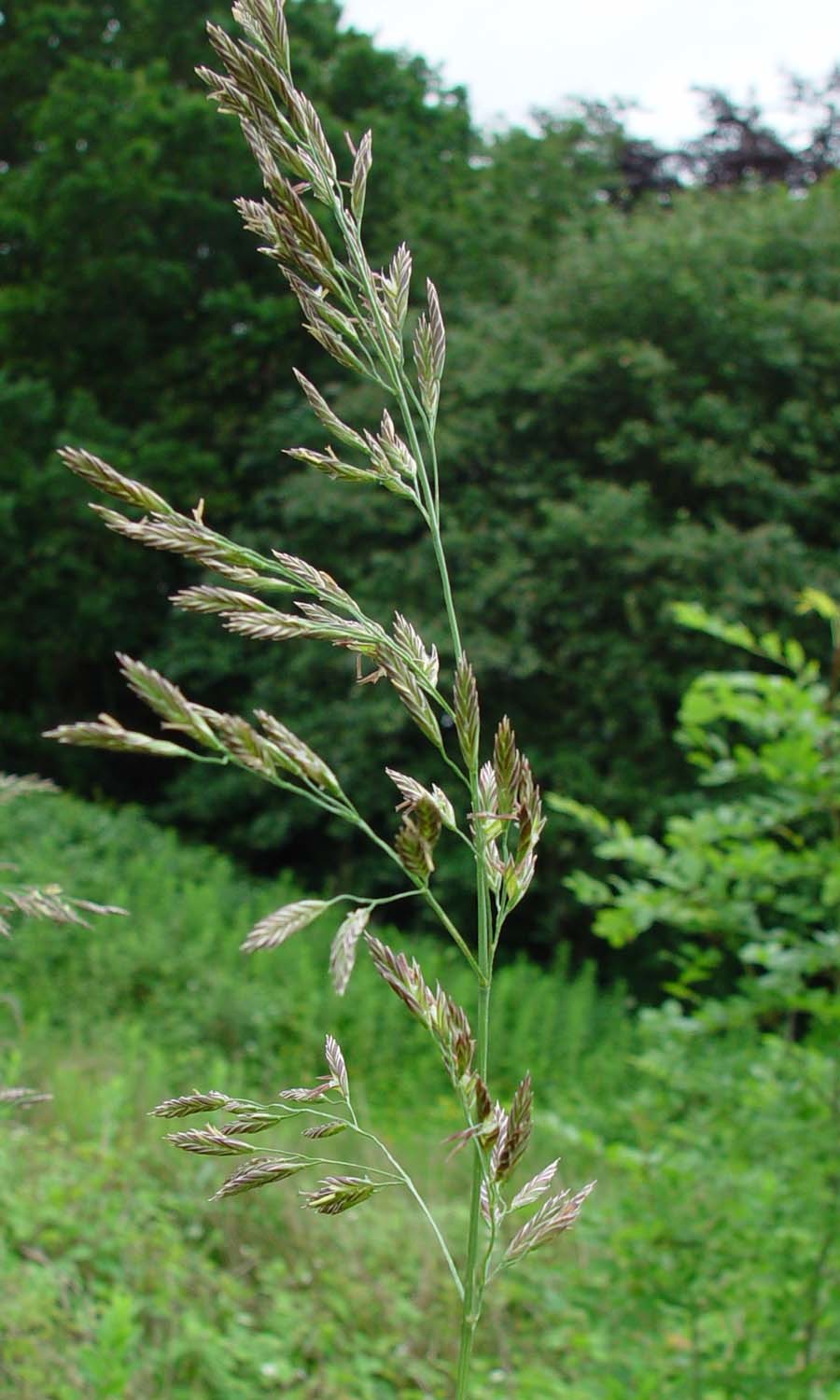
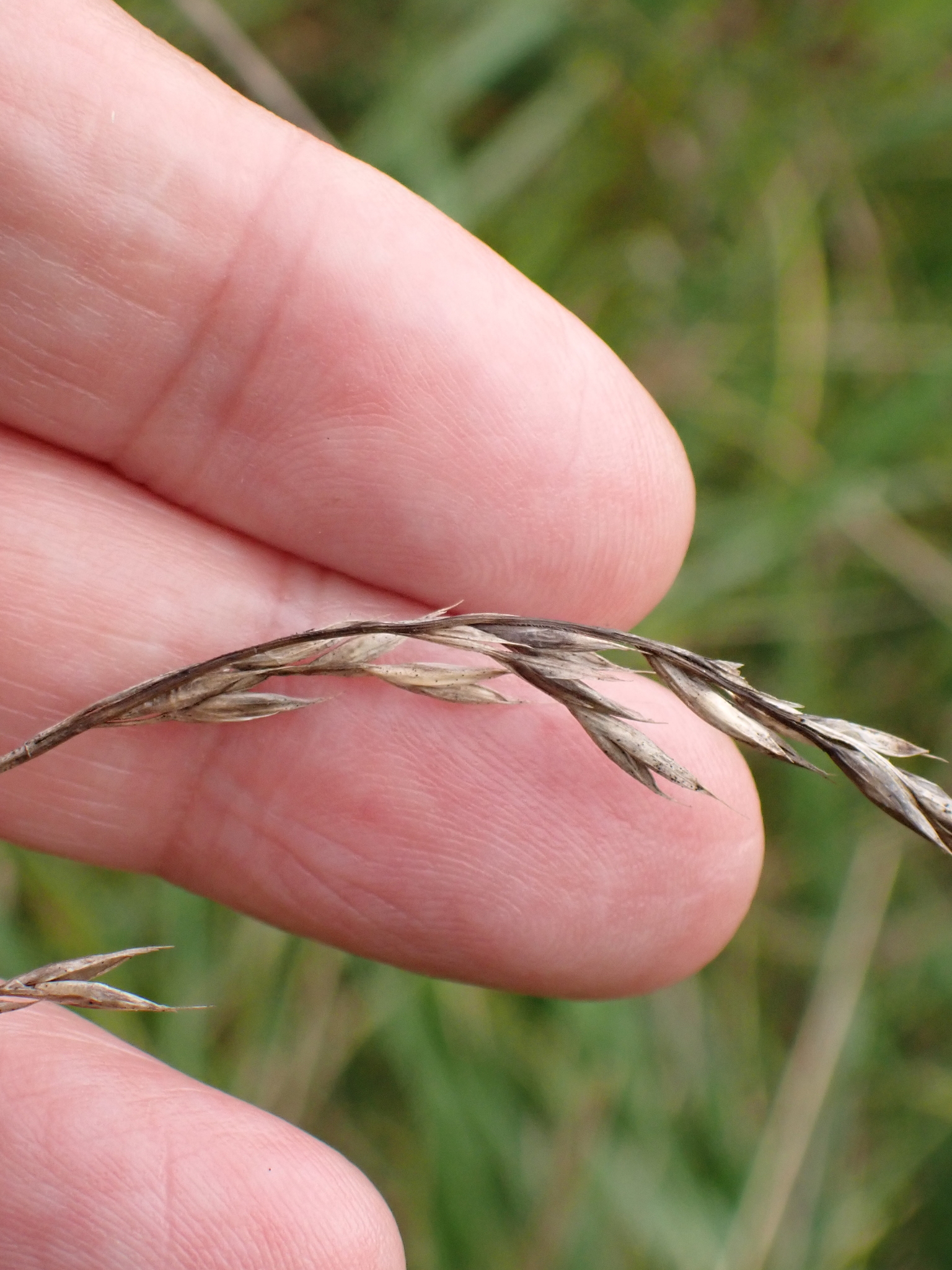
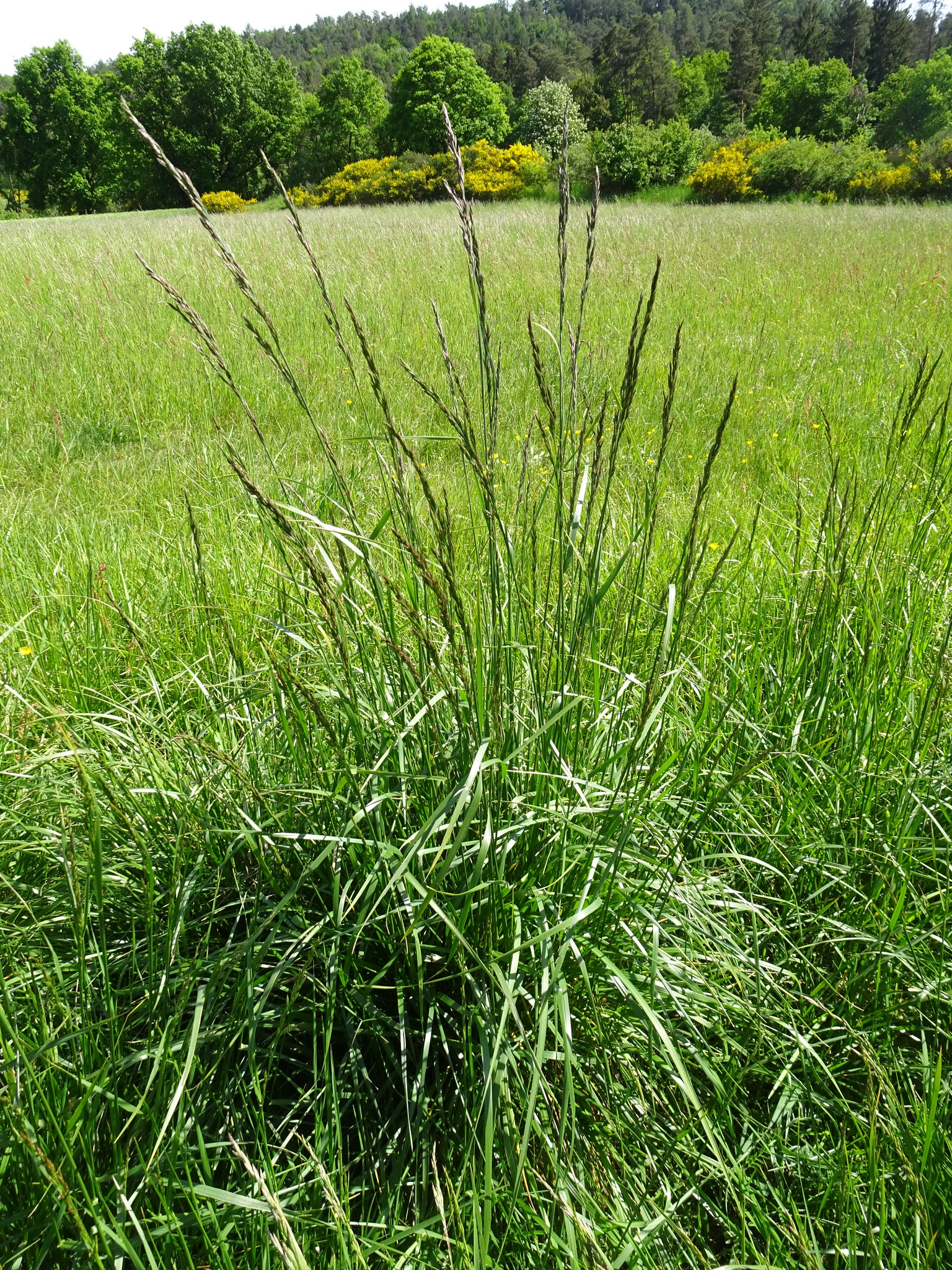


© photo
(c) David Earl, some rights reserved (CC BY-NC), uploaded by David Earl · cc-by-nc
Robert H. Wardell · cc0
© copyright of the Board of Trustees of the Royal Botanic Gardens, Kew.
Global distribution
Native from Europe to Xinjiang and the Himalayas, and to Macaronesia and North Africa.
Identity
Tall fescue (Lolium arundinaceum (Schreb.) Darbysh., 1993) is a perennial Poaceae grass forming robust tufts with large stiff leaves and a branched inflorescence. Plants allowed to flower usually reach 60–180 cm (24–71 in). A mown lawn reveals only a fraction of that stature. 1 3
Reed fescue is another English name. French names comparing it with a reed describe its vigorous appearance without placing it in a reed genus. Its use in lawns and cultivated meadows means many people know the foliage without ever seeing a panicle. 8 9
Recognition
Auricles carry stiff marginal hairs. These small structures occur at the leaf base near the blade-sheath junction. Leaves are about 5–10 mm (0.2–0.4 in) wide and stiff. Examining this small area with a hand lens gives more identification information than the green color of a tuft alone. 3
The loose, often slightly drooping panicle can reach 40 cm (16 in). Lower branches occur in twos or threes and carry several spikelets. Thus it has a branched inflorescence even though its accepted name places it in Lolium, a genus commonly associated with ryegrass spikes. 31
Meadow fescue is a look-alike requiring care. Combine leaf-base and panicle characters rather than relying on a broad-leaved impression. A plant mown before flowering may require more patient observation. 3
Useful taxonomy
Festuca arundinacea and Lolium arundinaceum name tall fescue. Festuca arundinacea Schreb., published in 1771, is the original name and remains used by many floras. Schedonorus arundinaceus (Schreb.) Dumort., dating to 1824, also appears in agronomic literature and is retained by French national nomenclature. 1 6 9
Darbyshire published the combination in Lolium in 1993, in Novon. Schreber's name in parentheses records the original name; it does not mean the plant was discovered in 1993. Retaining synonyms links older floras and recent pasture documentation. 2
Choosing an accepted name does not invalidate agricultural trials published under Festuca. Check that the author means tall fescue rather than another fescue or a commercial seed mixture. 1
Habitat and range
The native range extends beyond Europe to Xinjiang and the Himalayas, including Macaronesia and North Africa. Damp meadows and watercourse margins are natural habitats; the species is now introduced in many temperate regions. 1 3
In France it grows in wet meadows and beside water across almost the entire country, including Corsica. It is Least Concern on the French national Red List. 8 9
Robustness, enhanced in endophyte-bearing plants, partly explains its value for grassy surfaces. Established-cover resilience must not be confused with germinating-seed requirements: sowings need enough moisture for even emergence. A dense lawn begins with this vulnerable stage. 6 4
One species can serve turf or forage purposes, but seed choice differs with the aim. A lawn selection's wear resistance does not make it suitable horse feed. 5
Life cycle and reproduction
Tall fescue is a cool-season grass, with particularly useful growth in spring and autumn. Summer heat can slow a lawn even while tufts remain alive. Maintenance should follow that rhythm rather than pursuing constant growth all year. 6 4 7
Panicles appear from late spring into summer: flowering is May–July in France and June–July in Switzerland. Florets produce caryopses, the dry fruits used as seed. Regular mowing often prevents observation of this stage without changing its botanical nature. 8 3
Removing no more than one-third of lawn height per mowing avoids severe cuts. Adapt maintenance dates to local climate and water availability. Observe leaf regrowth and soil moisture rather than trying to maintain constant growth through fertilizer. 4
Uses and risks
Forage risk depends partly on a fungus living inside the plant. Some associations with Epichloë coenophiala produce alkaloids, including ergovaline, harmful to livestock. This is not surface mold that can be identified and removed by eye. 6
Basal tissues and inflorescences can concentrate these compounds. Animal health and performance are affected, with particular concern for pregnant mares. Lawn fescue must not automatically be sown in horse pasture. 65
The risk does not mean every plant is identically toxic. Seed-lot identity and endophyte status matter alongside the species name. A tested forage label provides information that a leaf photograph cannot supply. 7
Varieties, look-alikes and related plants
Kentucky 31 is an older cultivar often associated with a toxic endophyte. Durability encouraged its use, but that plant resilience can accompany problems for grazing animals. The cultivar name alone cannot replace seed-lot checks. 7
Endophyte-free cultivars and associations with selected endophytes offer alternatives. The aim is to retain some plant resilience while reducing compounds harmful to livestock. These health categories are neither new species nor botanical synonyms of tall fescue. 7
Main sources
Botanical references establish names and leaf characters. Agricultural references distinguish lawn and pasture uses and endophyte-dependent risks.
- Plants of the World Online: Lolium arundinaceum
- International Plant Names Index: Lolium arundinaceum
- Info Flora: Festuca arundinacea
- NC State Extension: tall fescue lawn calendar
- University of Minnesota Extension: managing horse pasture
- University of Kentucky: Fescue Toxicosis in Cattle, ID-221
- University of Kentucky: alternatives to Kentucky 31
- Tela Botanica, eFlore and Coste description: Lolium arundinaceum
- INPN, TAXREF: Schedonorus arundinaceus
Frequently asked questions
Are Festuca arundinacea and Lolium arundinaceum the same plant?
Yes. Festuca arundinacea is the original name of tall fescue, now accepted as Lolium arundinaceum; Schedonorus arundinaceus also names it.
Is tall fescue dangerous to horses?
Some plants harbor an endophyte producing toxic alkaloids. Tested forage seed is essential, particularly around pregnant mares.
Is lawn fescue suitable for pasture?
Not automatically. Turf and forage selections have different aims and may have different endophyte status.
If you are unsure about a plant’s toxicity, ask a botanist or veterinarian for advice.