
Mango (Mangifera indica, )
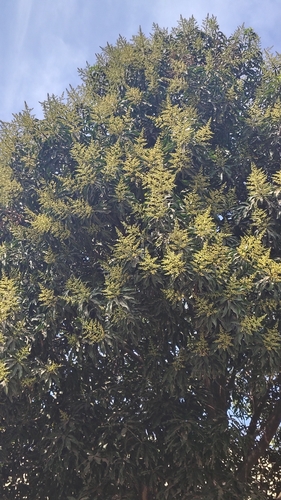
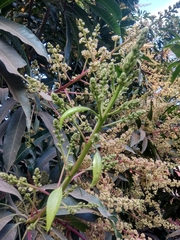

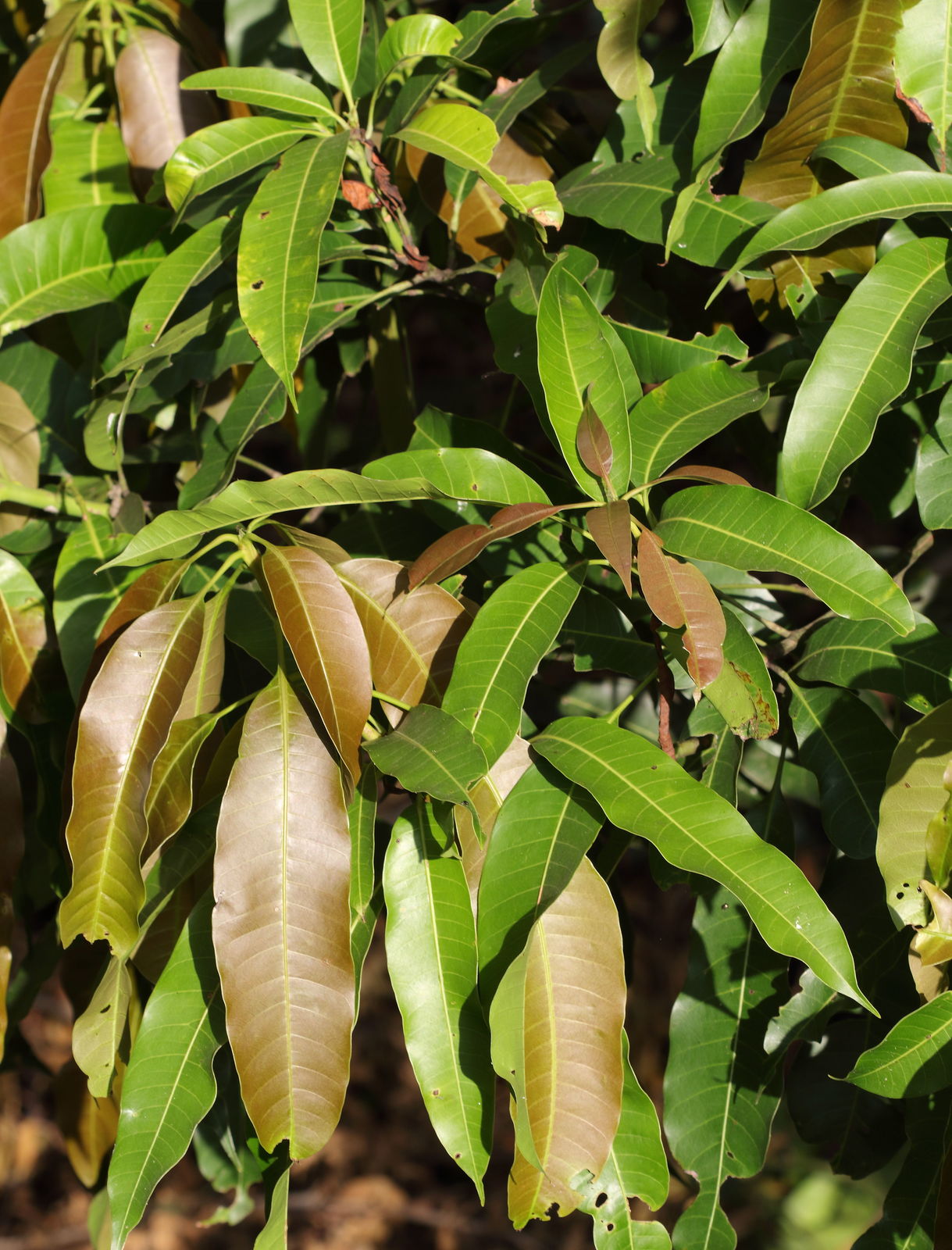
Mango (Mangifera indica) develops coppery young leaves that turn dark green as they mature. This tropical fruit tree needs sun and well-drained soil; a seedling does not always reproduce the fruit it came from.
Read moreMango


© photo
Aadi Kulkarni · CC BY-NC
Jagdish Supekar · cc-by-nc
Wikimedia Commons · CC BY-SA or Public Domain
Taken Feb 22, 2013 by R. Tournebize (cc-by-sa)
Taken May 12, 2021 by jerome Nurenberg (cc-by-sa)
© copyright of the Board of Trustees of the Royal Botanic Gardens, Kew.




Global distribution
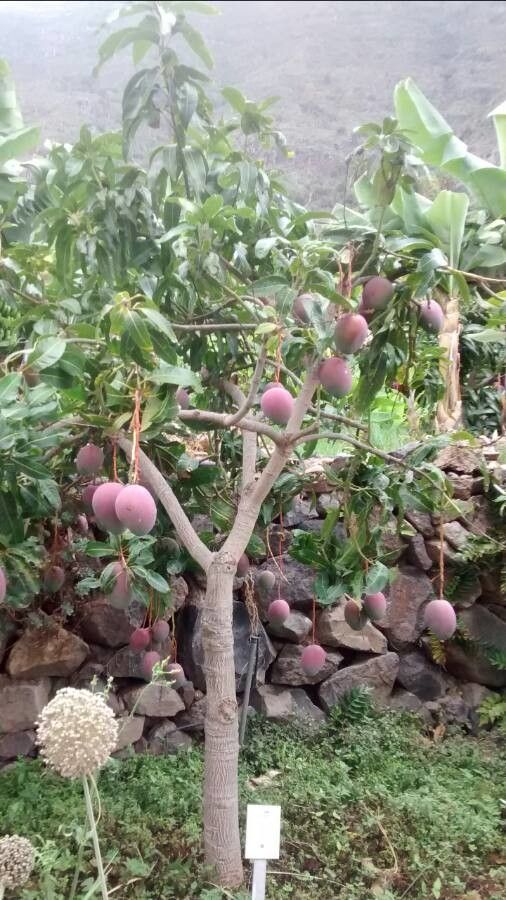
Indo-Burmese origin; widely cultivated in tropical and subtropical regions.
Identity
Mango (Mangifera indica L., 1753) develops coppery to bronze young leaves before its foliage turns green and remains on the tree. The mango fruit has fleshy pulp around a stone. Coppery new growth is part of the tree's normal development, so the color does not identify a particular fruit variety. 1 3
Mango belongs to the Anacardiaceae family, in the order Sapindales, and originates in the Indo-Burmese region. Long cultivation and selection for fruit account for the diversity of mangos. The species name applies across that diversity, while a cultivar name such as ‘Kent’ identifies a selection within it. 1 2 5
Identification
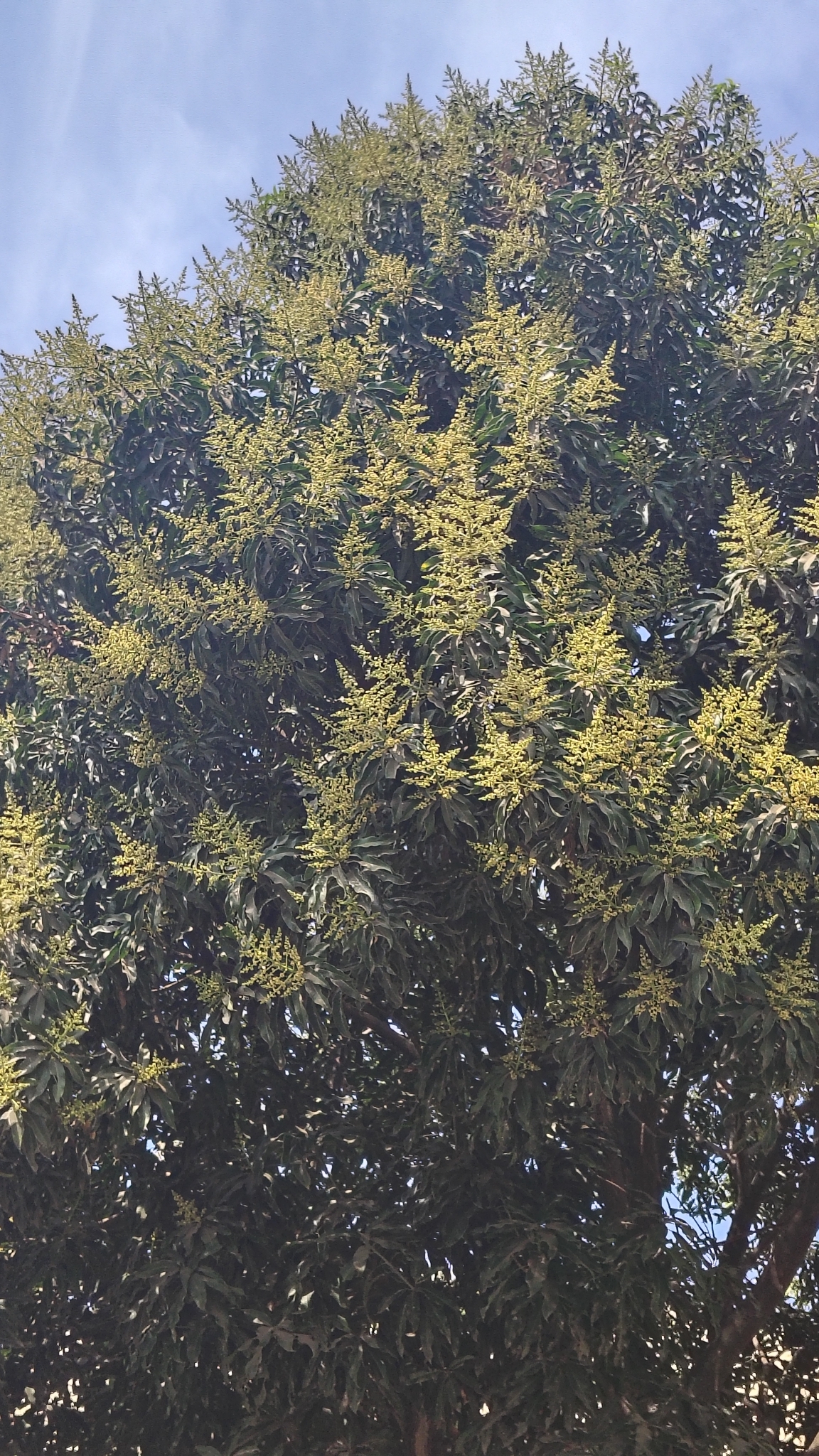
In a suitable climate, mango grows into a large tree 10–30 m (33–98 ft) tall with a dense crown. Simple leaves are arranged spirally along the branches. Look for an elongated, elliptic to lance-shaped blade, an entire, slightly wavy margin, and a visible midrib. Adult leaves can reach 30 cm (12 in) in length; examining these features together is more useful than relying on leaf color alone. 2 3
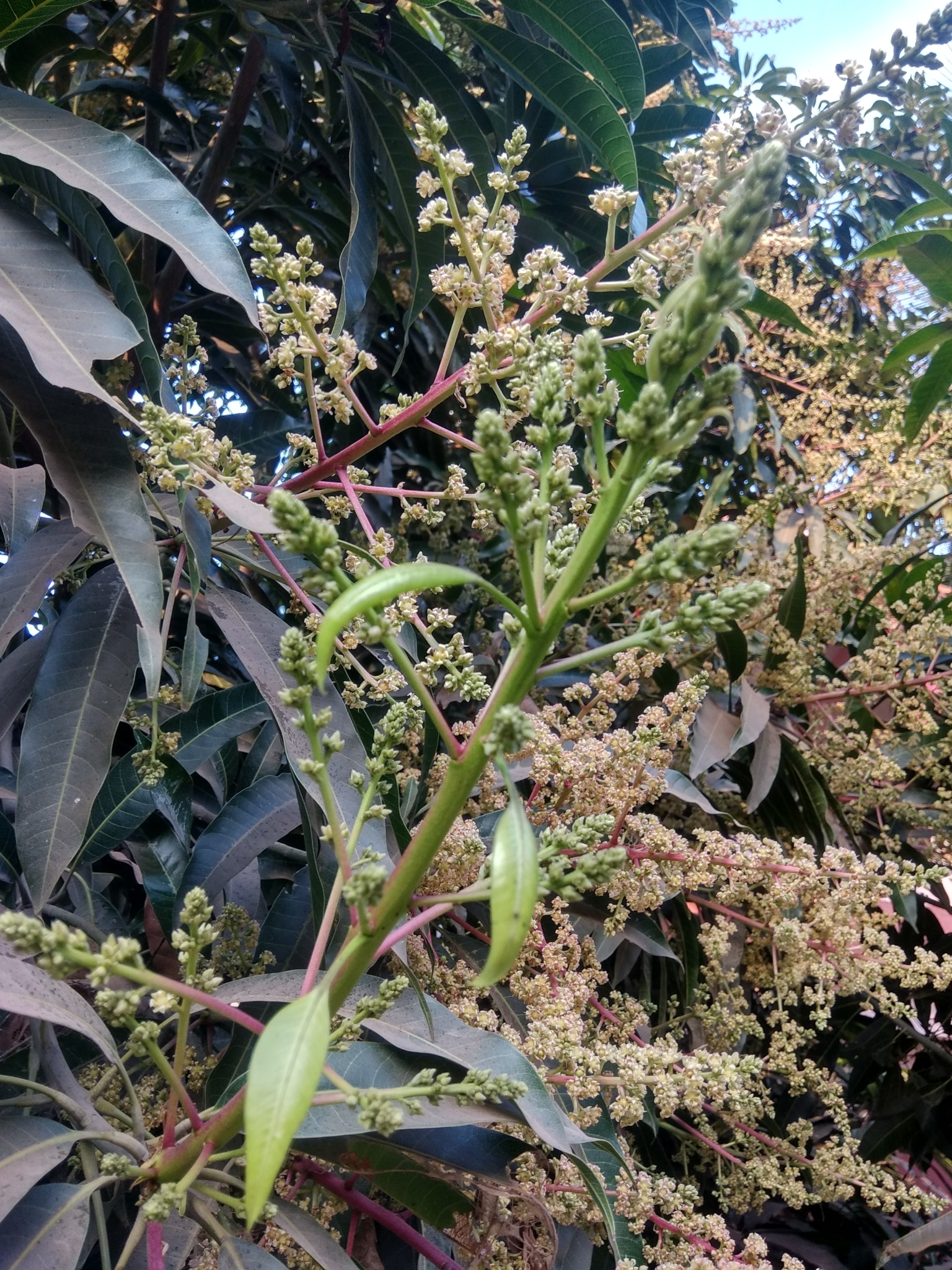
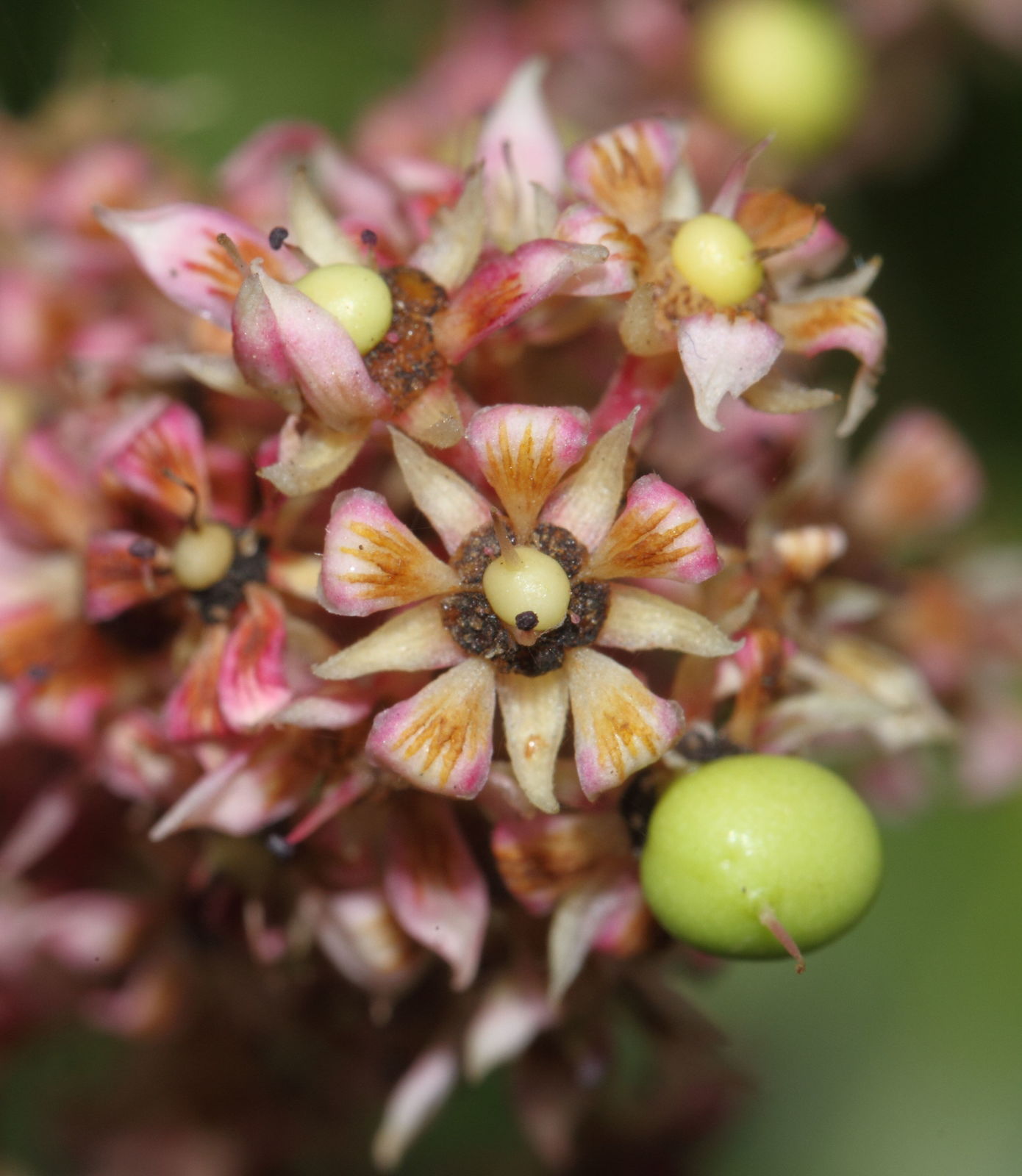
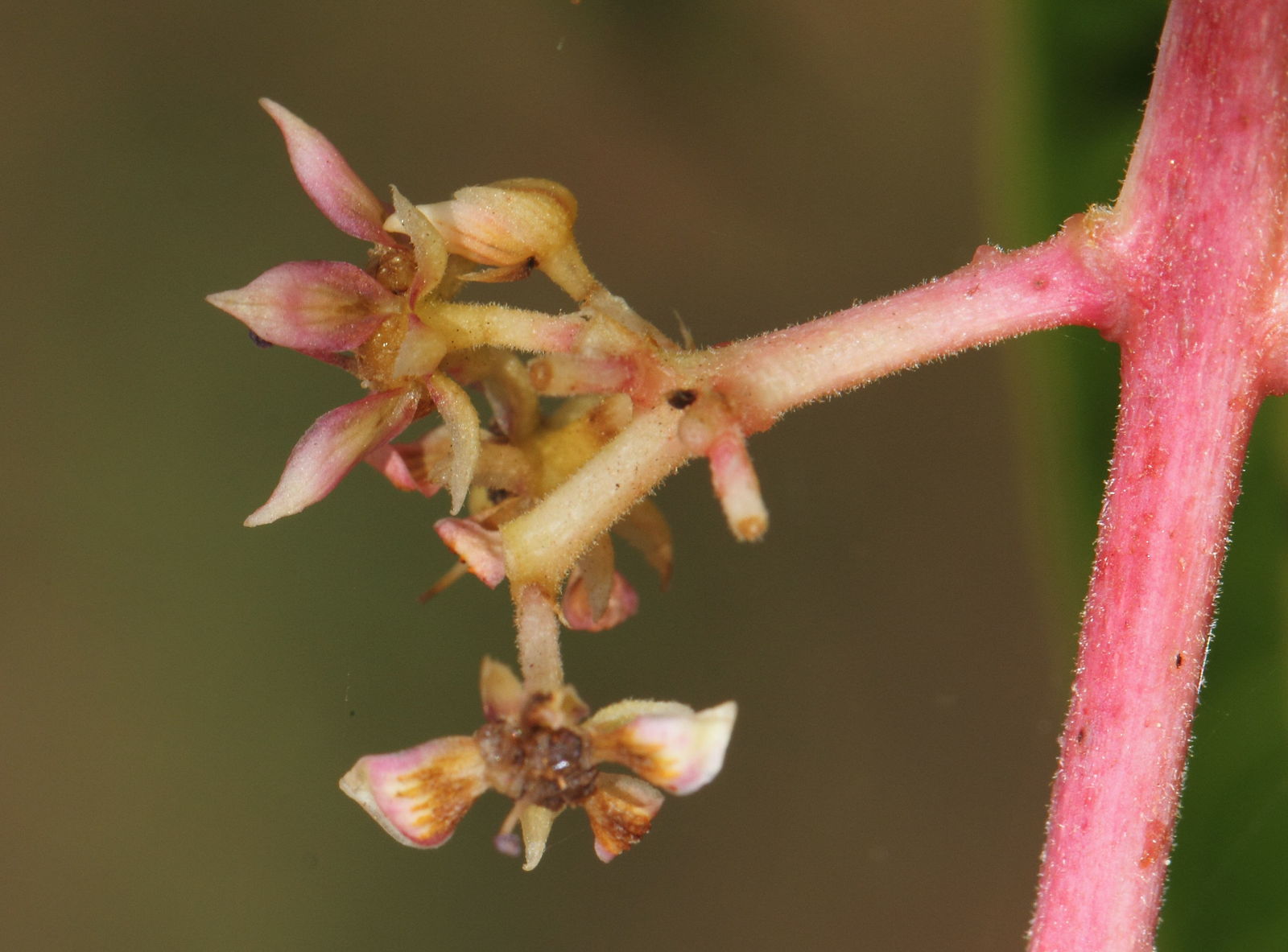
Small yellow to pinkish white flowers form terminal panicles at the ends of branches. A mango hangs from a long stalk, and its ripe flesh surrounds a flattened, fibrous stone. Skin color varies with the cultivar and cannot establish a precise identity by itself. For a tree without flowers or fruit, foliage and the plant's horticultural origin provide the available clues. 3 2
Useful taxonomy
The accepted name Mangifera indica L. was published in 1753. “L.” is the botanical author abbreviation, separate from the name of any fruit cultivar. Mangifera is the genus and indica the specific epithet. Keeping these elements distinct helps separate the botanical identity of a tree from a commercial designation on its label. 1
The horticultural categories “Indian type” and “Indochinese type” group mangos with different behavior when grown from seed. Certain cultivars do not fit neatly into either category. For propagation, knowing whether the seed contains one embryo or several is more useful than assuming how it will behave from a commercial claim about its origin. 5
Habitat and distribution
Mango grows and fruits in tropical and subtropical regions. A pronounced dry season slows vegetative growth and helps trigger flowering. Temperature and rainfall therefore affect the tree's rhythm: vigorous foliage alone does not predict abundant flowers. A tree can put energy into leafy growth without producing a comparable display of flowering panicles. 2
For cultivation, choose full sun and deep, well-drained soil. Taproots explore deeper ground while shallower roots occupy the upper soil layers. Warm conditions do not remove the need for drainage. Excessively wet ground increases problems with plant health and poor fruiting, so a warm site and a suitable root environment need to be considered together. 4 5
Cold limits mango cultivation, especially for young trees. In metropolitan France, protection is needed where frost threatens; the same condition matters wherever the tree is grown. The behavior of an established tropical tree should not be used to predict the survival of a young specimen exposed in a cold garden. 5
Life cycle and propagation
Mango inflorescences contain male flowers and bisexual flowers. Insects provide pollination, but only a small proportion of the flowers develop into fruit. Counting flowering panicles therefore does not give the number of mangos to expect at harvest. Flower production and the successful development of fruit are different stages. 2
A monoembryonic seedling does not reproduce the cultivar faithfully. Polyembryonic types can produce plants that are true to type. Grafting provides a practical way to preserve a selected fruit cultivar, and a grafted tree can also start bearing sooner than a seedling. The choice of propagation method affects both the identity of the future fruit and the wait for production. 5 4
For a young, non-fruiting mango grown under protection in metropolitan France, the seasonal schedule reflects greater activity during warm weather. Adjust watering to soil and weather, with higher needs in summer. Begin feeding after new growth starts and continue monthly through September in this Northern Hemisphere setting. A mature orchard tree requires a different growing regime. 5
Uses and risks
Ripe mango flesh is eaten fresh or processed. An edible fruit does not guarantee tolerance of the skin or latex: their phenolic compounds can cause dermatitis with redness and itching in sensitized people. Previous reactions to poison ivy or related poisonous plants increase the risk of a cross-reaction. 5 6
For children and adults, the stated precaution concerns allergenic contact; a particular sensitivity in children is not established here. The livestock risk is different: mango leaves are toxic to cattle and other grazing animals, and ingestion can be fatal. Do not feed mango production waste to livestock. Effects in cats, dogs, and horses remain unknown, which does not establish safety. 6 7
Cultivars and choosing a tree
‘Kent’ and ‘Keitt’ are mango fruit cultivars, rather than separate species. ‘Kent’ fruits combine green, red, and yellow; ‘Keitt’ fruits combine green and pink. Their colors do not describe every mango. Coppery young leaves identify neither cultivar, because the juvenile color occurs in the species itself. 5 3
When choosing a tree for fruit, check both the cultivar and the propagation method. Choosing between a grafted plant and a seedling answers a practical question: whether to preserve the qualities of a selection or accept the variability of new offspring. A seed taken from a named fruit does not, by itself, provide that assurance. 4
Main sources
Botanical descriptions and growing guidance distinguish the large tropical mango tree from a young specimen grown under protection.
- GBIF, Mangifera indica L., taxonomy and publication
- INRAE Ephytia, Manguier, contribution from CIRAD
- NParks Flora & Fauna Web, Mangifera indica
- Yves Bertin, technical note on growing mango in the Marquesas Islands
- Texas A&M AgriLife Extension, Mango
- Yoo and Carius, Mango Dermatitis After Urushiol Sensitization
- UC Davis WIFSS, Mangos, production overview and foliage risks
Frequently asked questions
Why are my mango tree's new leaves red?
Young mango shoots normally have coppery to bronze leaves before the foliage turns green. The color alone does not identify a cultivar.
Will a mango seed produce the same variety as the fruit?
A monoembryonic seedling does not reproduce the cultivar faithfully. Polyembryonic types can produce plants that are true to type; grafting preserves a selected cultivar.
Can a mango tree survive frost?
Mango is sensitive to cold, especially when young. Where frost threatens, including much of metropolitan France, protected cultivation is needed.
Does an edible mango mean the whole tree is safe?
No. The skin and latex can cause dermatitis in sensitized people. Leaves are toxic to cattle and other grazing livestock; the status of cats, dogs, and horses remains unknown.
If you are unsure about a plant’s toxicity, ask a botanist or veterinarian for advice.