
Rose grape (Medinilla magnifica, )
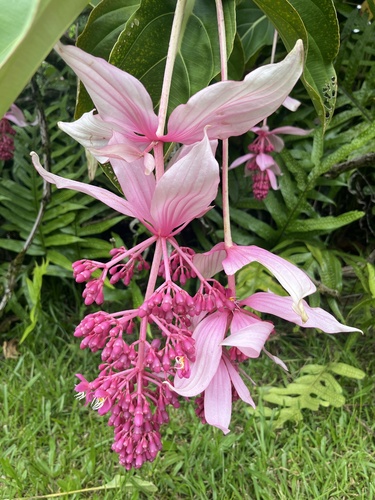
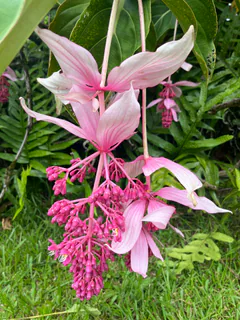
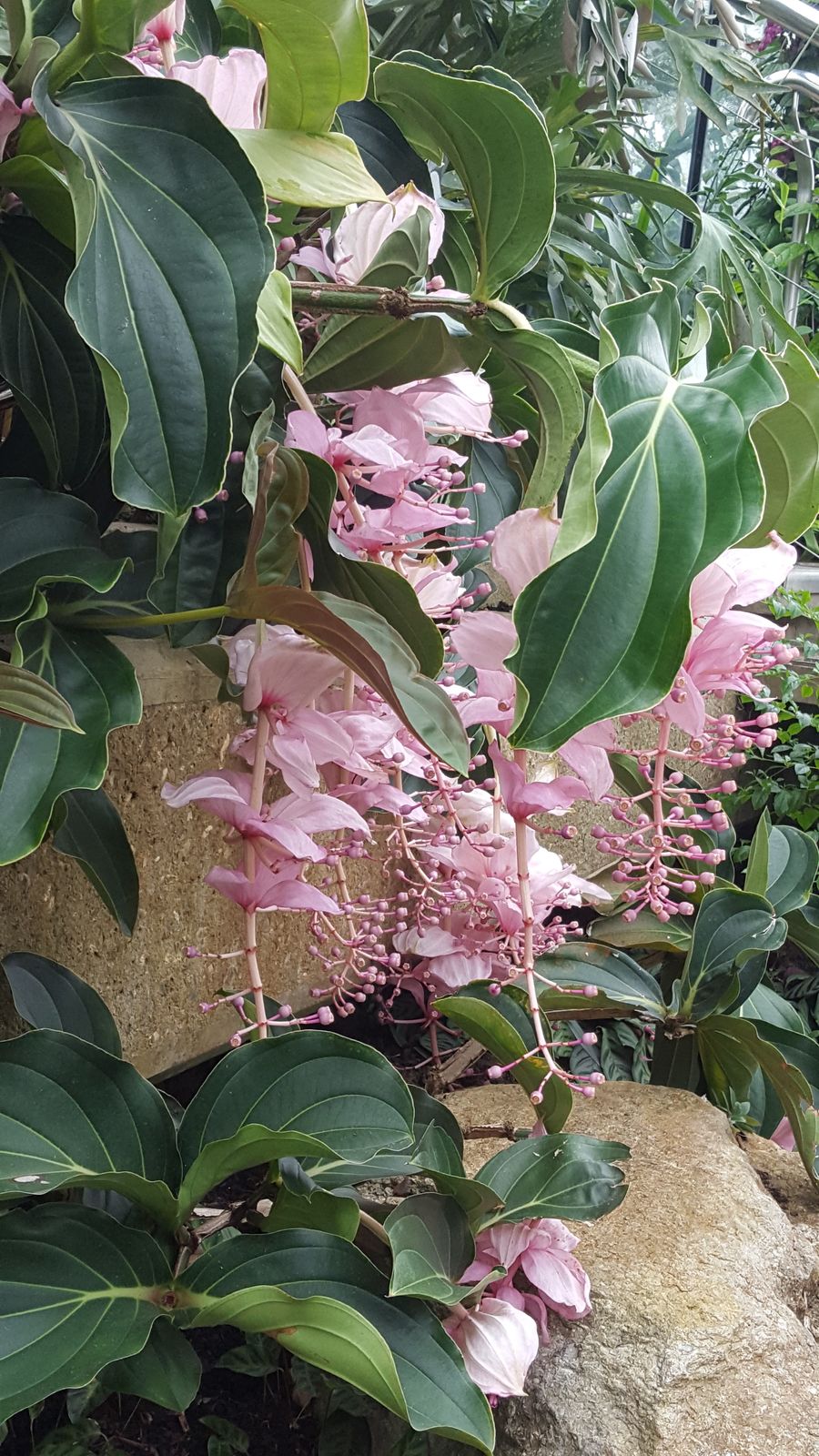
Rose grape (Medinilla magnifica) bears small pink flowers in hanging clusters accompanied by large pink bracts. This tropical shrub in the Melastomataceae family is native to the Philippines, retains its large leathery leaves and needs filtered light and a humid atmosphere.
Read moreRose grape, Pink medinilla and Malaysian orchid tree
Dactyliota bracteata, Medinilla bracteata and Medinilla superba
Give plenty of ambient light without direct sun on the leaves.
Bright, filtered light, sheltered from scorching sun.


© photo
(c) lanananan, some rights reserved (CC BY-NC) · cc-by-nc
Taken Nov 6, 2021 by Daniel Barthelemy (cc-by-sa)
Taken Dec 17, 2020 by Florelle Bluker (cc-by-sa)
Taken Nov 16, 2020 by gragnani (cc-by-sa)
Taken Jun 18, 2022 by Elaine F (cc-by-sa)
Taken May 31, 2020 by mohammad fazel dehkordi (cc-by-sa)
© copyright of the Board of Trustees of the Royal Botanic Gardens, Kew.




Global distribution
Kew places the native range in the Philippines, specifying Luzon, and records an introduction to Samoa. NParks also includes Java in the native range, so the references disagree about Java.
- Native1
- Introduced1
- Philippines
- Samoa
Hexagons: regions where the plant occurs. Green dots: native range.1
Identity
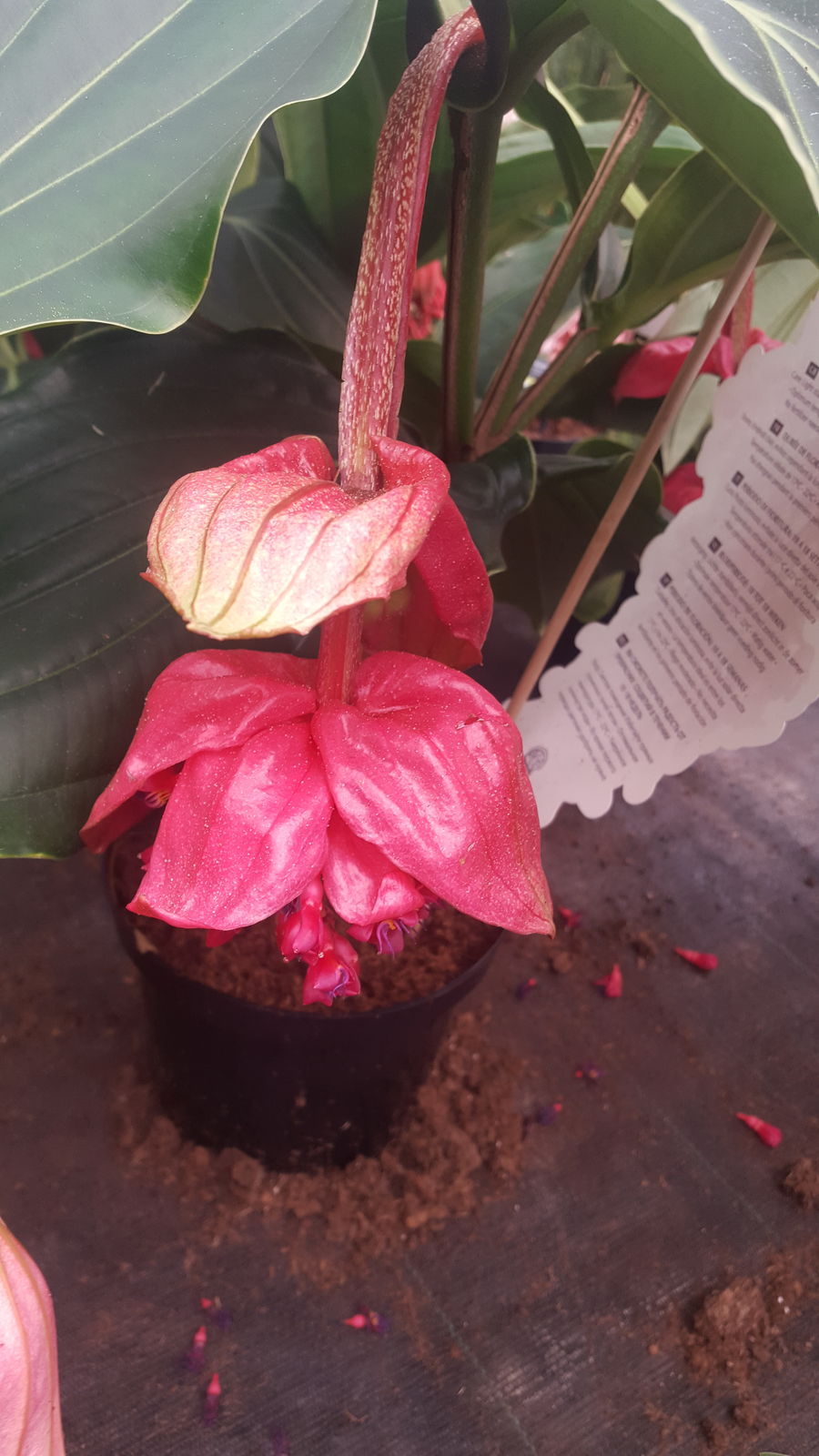
Rose grape (Medinilla magnifica Lindl., 1850) bears hanging clusters of small pink flowers framed by large bracts of the same color. The large pink structures are bracts, modified leaves, rather than the petals of a giant flower. The plant belongs to the Melastomataceae family, in the order Myrtales. 1 3 6
The University of Zurich also records a French common name for this species. The genus Medinilla honors José de Medinilla y Pineda, governor of the Mariana Islands. That dedication concerns the genus name and does not place the species’ origin in the Marianas. The full binomial remains the reference for identifying a plant when buying it. 5 4
Recognition
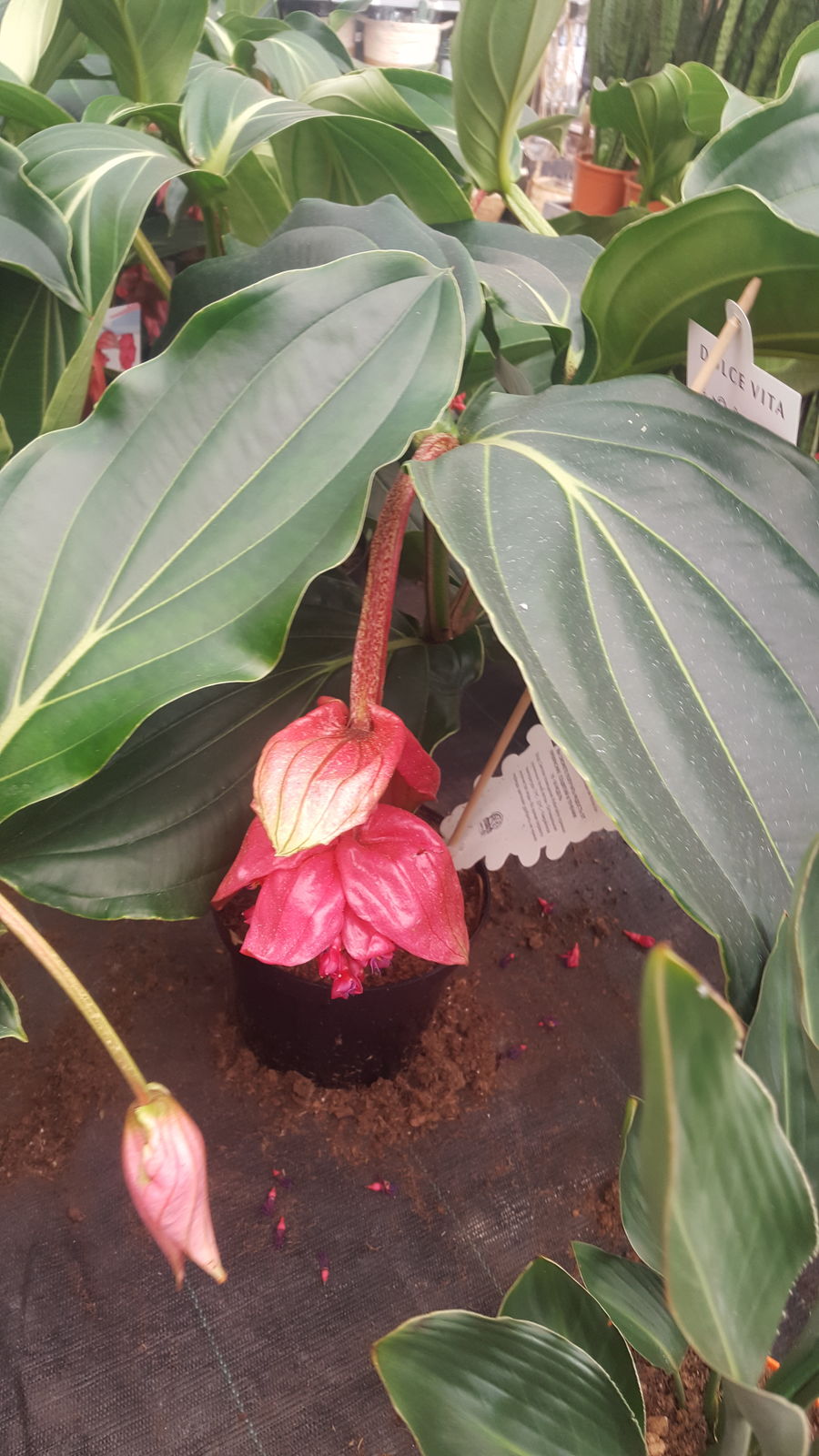
Rose grape retains dark green, leathery, strongly veined foliage. The opposite leaves reach 20 to 30 cm (8 to 12 in) long, with pale veins standing out on their surface. The fleshy stems are square in cross-section. Their upright habit contrasts with the inflorescences, which bend under their own weight. 5 3
Small pink to coral-red flowers are grouped in hanging panicles. Purple anthers visible at the flower centers provide another detail to examine closely. The RHS gives a flower diameter of 2.5 cm (1 in), while the Zurich reference describes panicles reaching 50 cm (20 in) long. A panicle is the branched structure carrying the flowers; its length is different from the diameter of an individual flower. 3 6 2 5
Useful taxonomy
Medinilla magnifica is an accepted species name, published in Paxton’s Flower Garden in 1850. Kew lists Dactyliota bracteata Blume, Medinilla superba Teijsm. & Binn. ex Triana and Medinilla bracteata Veitch as synonyms. The last name is listed as illegitimate because it is a later homonym. Botanical synonyms belong to the history of nomenclature; they are not cultivars. 1
The English name “Malaysian orchid,” used in some horticultural descriptions, does not make rose grape an orchid. Chicago Botanic Garden specifies its membership in the Melastomataceae family. The genus name alone is not enough either: NC State describes several Medinilla species whose leaves and inflorescences can differ. 6 4
Habitat and range
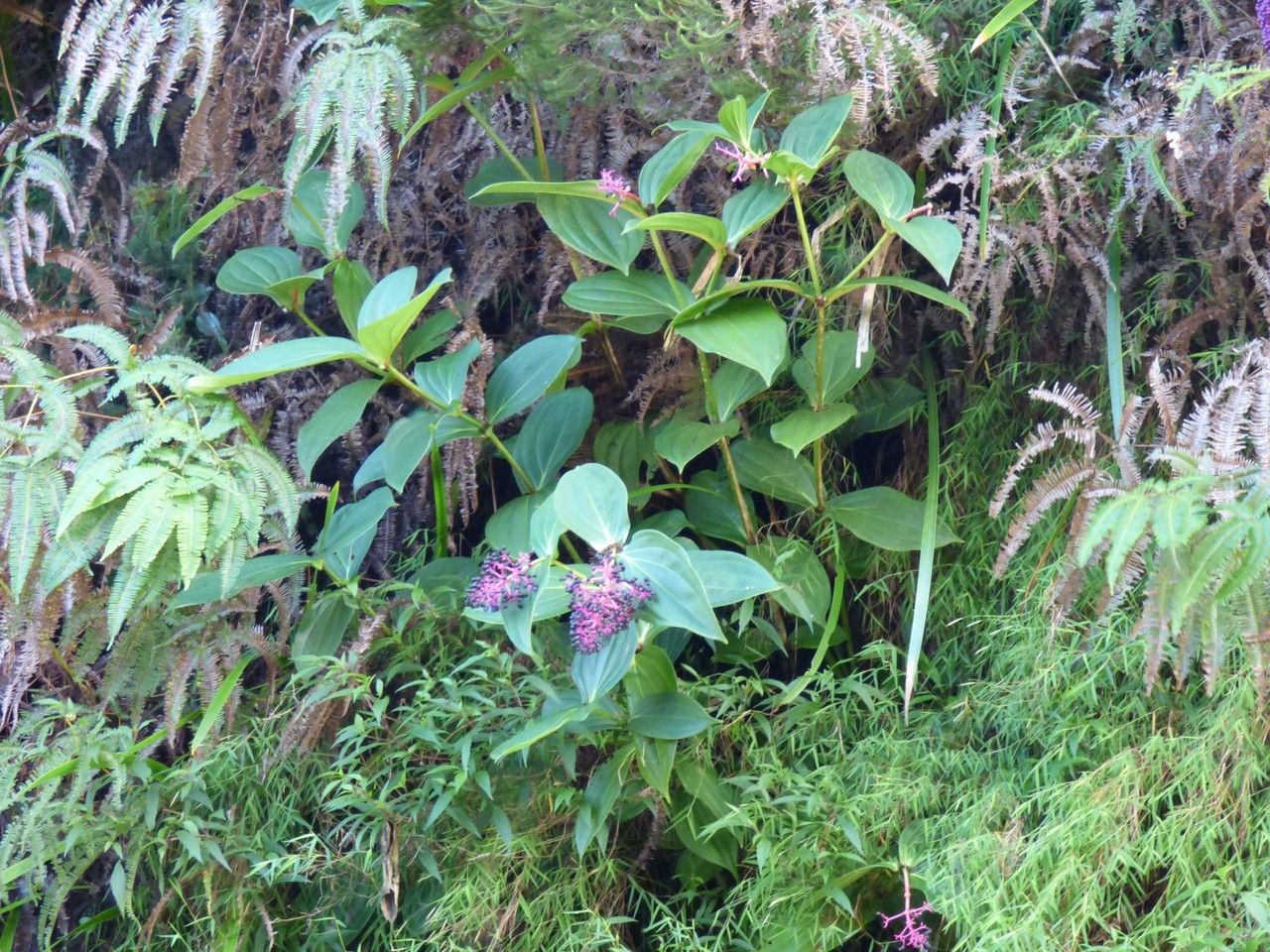
Kew places the native range of rose grape in the Philippines, on Luzon. It describes a hemiepiphytic shrub or small tree of the wet tropical biome and also records an introduction to Samoa. NParks gives the Philippines and Java as the native range. The two references therefore disagree about Java. 1 3
In tropical forest, rose grape grows on trees or on the ground in partial shade. Chicago Botanic Garden also places the species in the Philippine mountains. This forest habitat helps explain recommendations for filtered light, high atmospheric humidity and a draining mix. A humid atmosphere does not justify keeping the roots in water. 3 6 2
Life cycle and reproduction
Rose grape is an evergreen perennial. The RHS describes summer flowering, while the University of Zurich gives June to August. The fruits are fleshy purple berries about 1 cm (0.4 in) across. Their presence is a botanical characteristic and does not establish that they are suitable for eating. 3 2 5
In horticulture, rose grape can be propagated from seed. For cuttings, the RHS distinguishes softwood cuttings in spring from semi-ripe cuttings in summer, when shoots have begun to harden. NParks confirms stem cuttings as a propagation method for the species. The choice of plant material therefore follows the condition of the shoots through the season. 2 3
Indoor cultivation
Rose grape needs bright, filtered light and protection from scorching sun. The RHS recommends a peat-free, loam-based potting mix. Water moderately during growth, then sparingly in winter, and apply a balanced liquid fertilizer monthly during growth. The calendar expresses these recommendations for indoor cultivation in the Northern Hemisphere. 2
For the genus Medinilla, NC State recommends a humid atmosphere and good air circulation. Overwatering or poor drainage exposes the roots to rot; low humidity can brown the leaf tips. These general recommendations complement the species-specific advice. Chicago Botanic Garden recommends letting the mix partly dry between waterings. 4 6
Uses and risks
Rose grape is grown for its inflorescences and foliage. NParks presents it as an indoor ornamental; the RHS also recommends greenhouse or conservatory cultivation and notes possible susceptibility to scale insects. Inspecting stems and leaves remains useful when growing the plant under cover. 3 2
Safety of rose grape has not been established for every group. The Zurich toxicological reference considers it probably non-toxic because it found no toxicity reports in the literature, but specifies that the plant is unsuitable as fodder. This cautious assessment does not demonstrate an absence of risk for cats, dogs or horses, or for children and adults. The status for each group therefore remains unknown. 5
Main sources
Frequently asked questions
Are the large pink parts of rose grape petals?
The large pink structures are bracts, modified leaves that accompany the clusters. The small pink to coral-red flowers are grouped within the inflorescence.
Is rose grape an orchid?
Rose grape belongs to the Melastomataceae family. The English name Malaysian orchid does not describe its botanical family.
Should I water rose grape less in winter?
The RHS recommends moderate watering during growth and sparse watering in winter, with a freely draining mix and filtered light.
Is rose grape safe for animals?
The Zurich reference considers it probably non-toxic because no toxicity reports were found in the literature, but specifies that it is unsuitable as fodder. This qualification does not establish safety for every animal species.
If you are unsure about a plant’s toxicity, ask a botanist or veterinarian for advice.