
Purple moor grass (Molinia caerulea, )
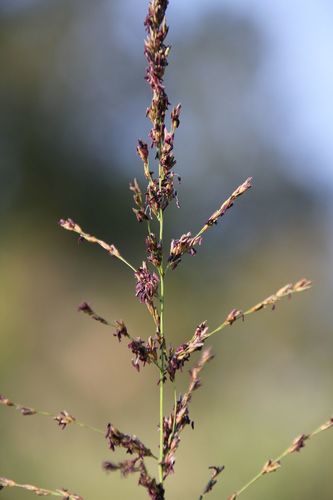
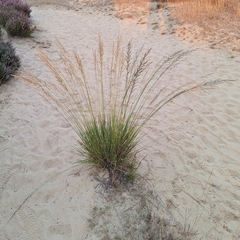
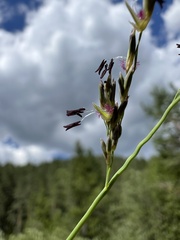
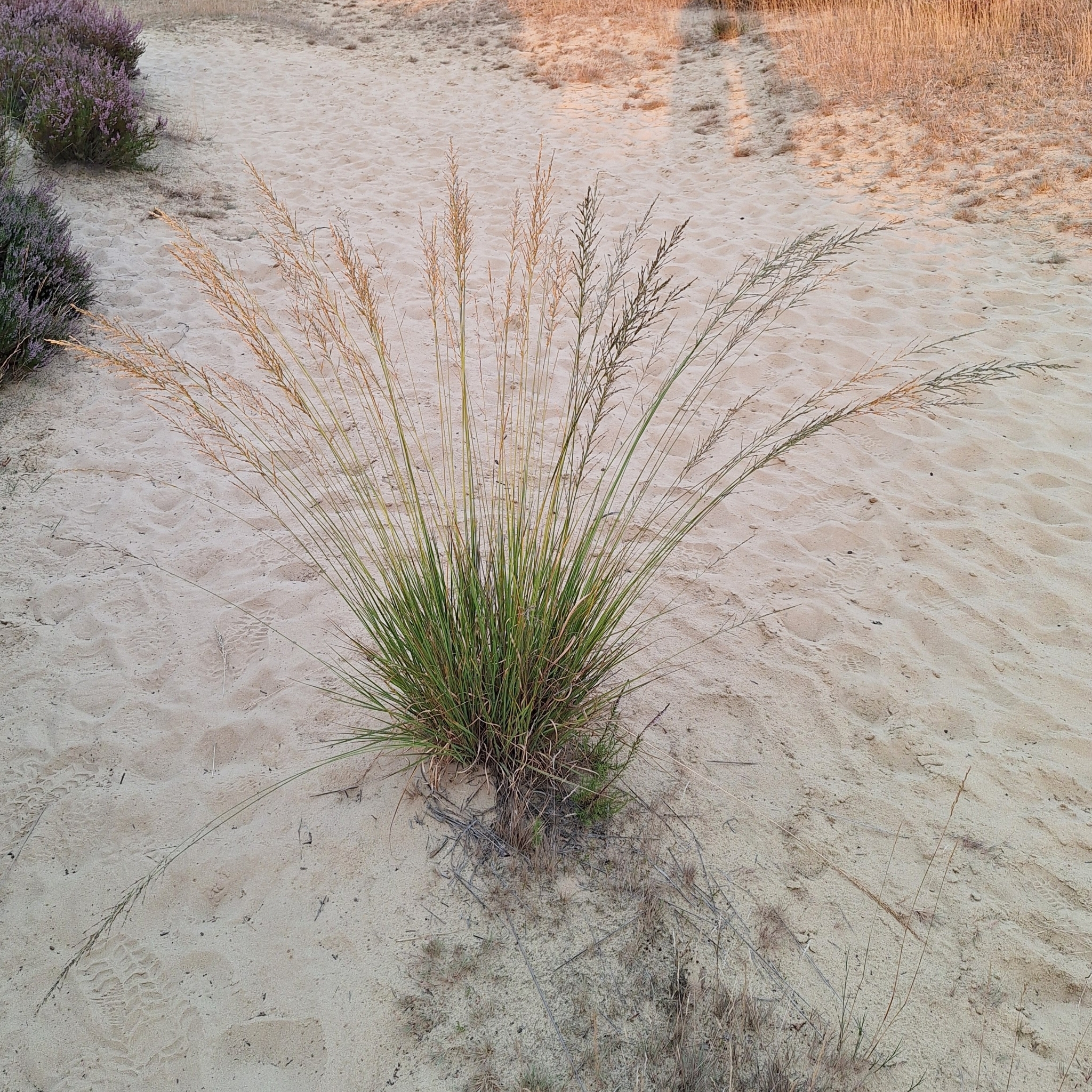
Purple moor grass (Molinia caerulea) is a tufted perennial Poaceae grass. Airy flowering stems rise above the basal leaves in summer; the foliage turns yellow, orange or brown before winter.
Read morePurple moor grass and Purple moor-grass
Aira caerulea, Melica caerulea and Festuca caerulea
Allow a few hours of direct sun per day, preferably morning or evening.
Sun or partial shade.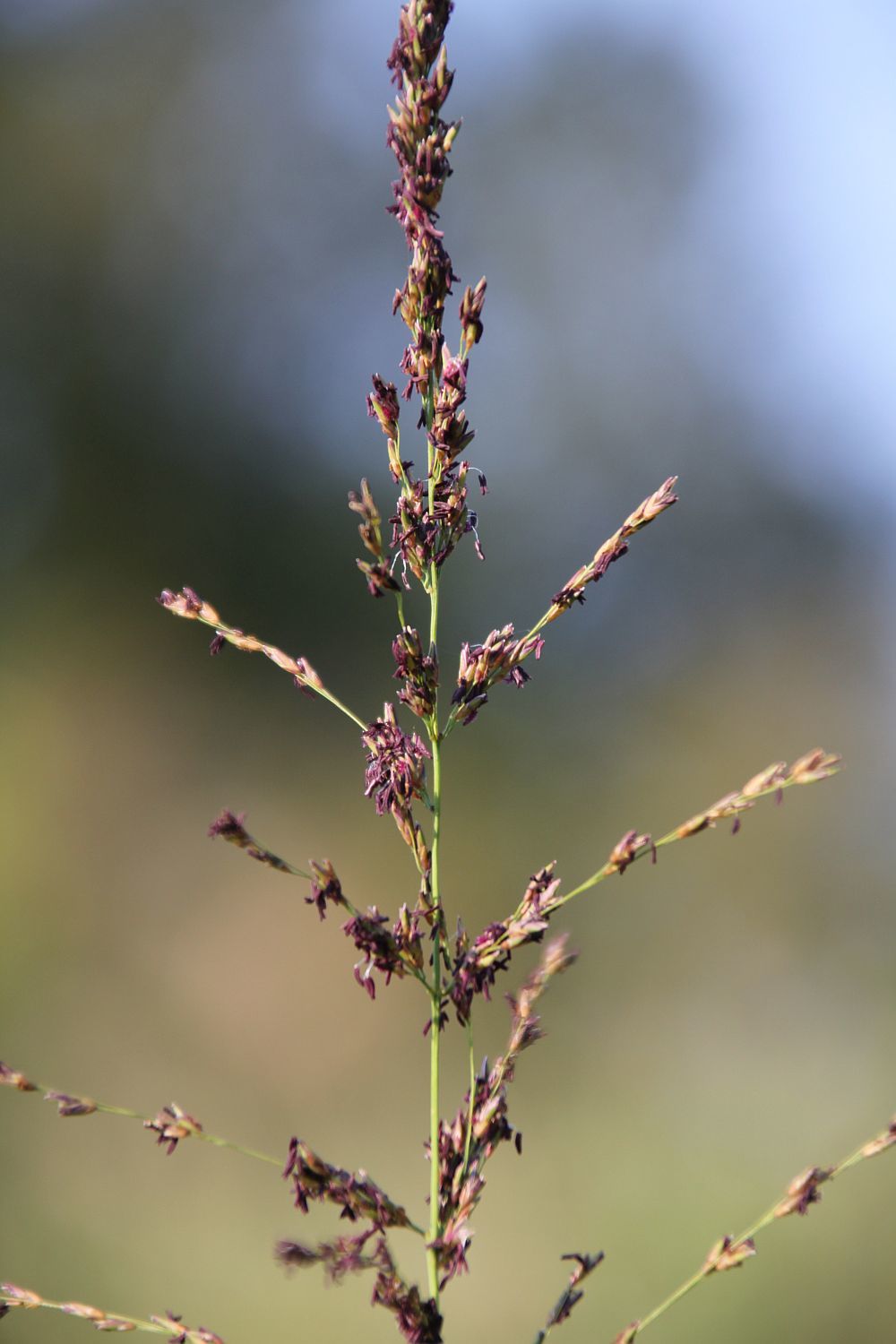
© photo
(c) Norbert Sauberer, some rights reserved (CC BY-NC), uploaded by Norbert Sauberer · cc-by-nc
Nicolás Tamargo · cc0
Mirko Ubović · cc0
(c) Ljaž, some rights reserved (CC BY) · cc-by
no rights reserved · cc0

Global distribution
Native from Europe to western Siberia and Kazakhstan, the Mediterranean and Ethiopia; introduced in North America and Japan.
Identity
Purple moor grass (Molinia caerulea (L.) Moench, 1794) is a tufted perennial Poaceae grass. Blue in its French name refers chiefly to often violet or bluish-violet spikelets, rather than permanently blue foliage. Several common names describe this same species. 2 4 9
Leaves arise mainly at the base. Flowering stems emerge above them in summer, carrying an airy inflorescence. Autumn foliage becomes yellow, orange or brown and no longer forms a green winter mass. The plant is deciduous, even if dry parts persist. 5 6
Recognition
A ring of hairs replacing the ligule is a useful character. Gently move the blade away from the surrounding sheath to inspect it with a hand lens. The swollen lower culm has a node very close to the ground, making the long upper portion appear nodeless. 3
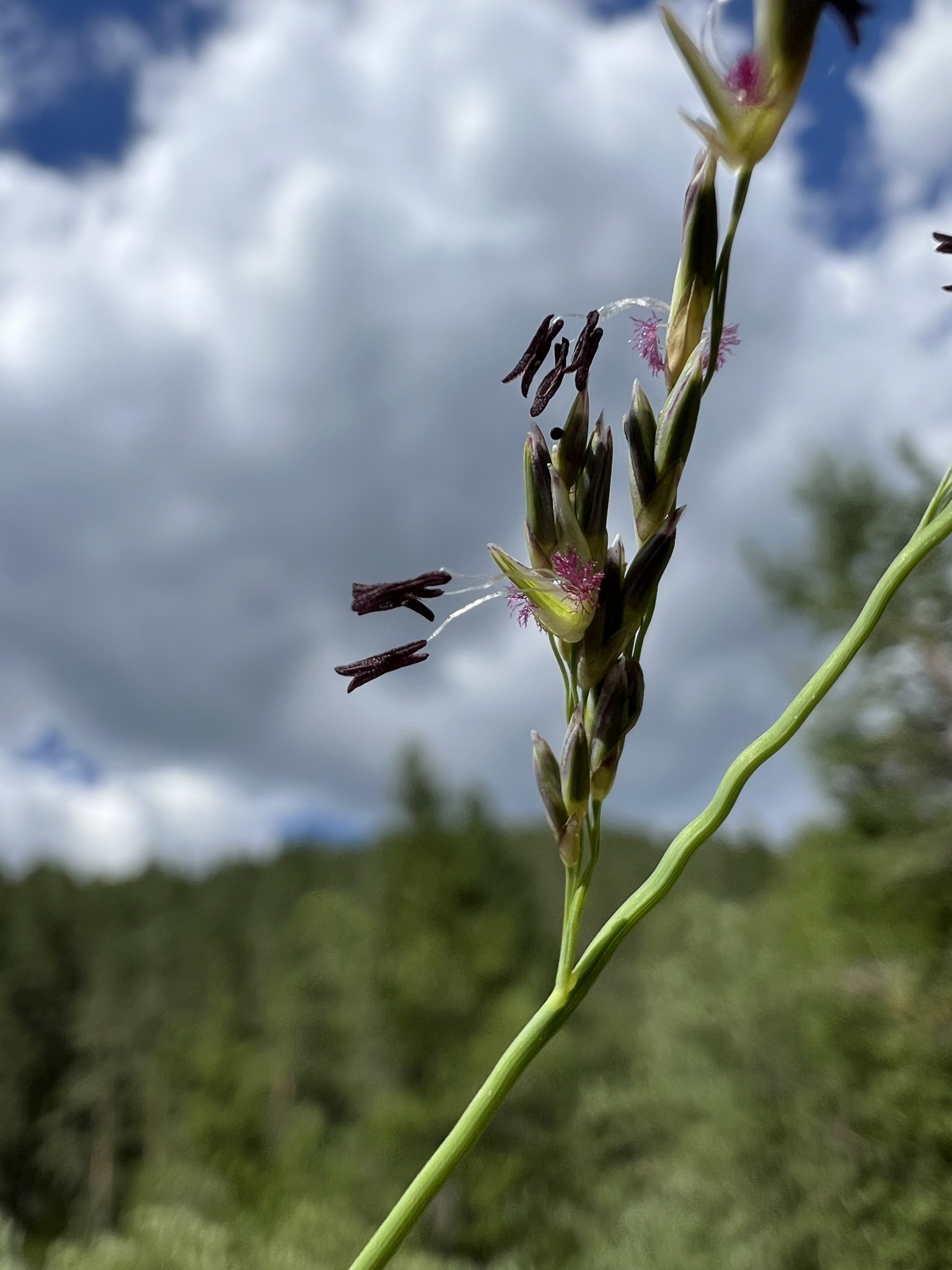
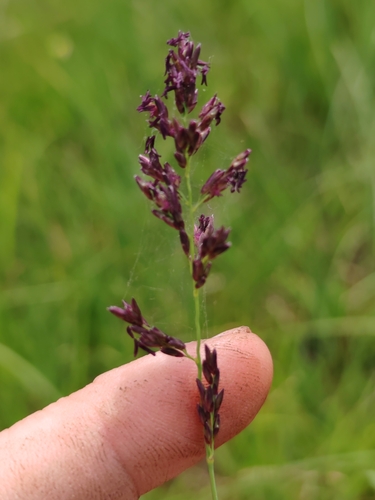
Leaves are narrow, generally a few millimeters wide, with a slightly rough margin. Green to dark-purple spikelets contain several small florets. Wild plants usually measure 30–120 cm (12–47 in), while some cultivated plants are substantially taller. Measuring foliage alone differs from measuring flowering stems; record which part is being compared. 4 3 5
Useful taxonomy
The original name was Aira caerulea L., published in 1753. Moench's present combination dates to 1794 in Methodus. Parentheses around L. indicate a previously described species transferred to another genus. Synonyms include Melica caerulea (L.) L. and Festuca caerulea (L.) DC.. 1
Boundaries among molinias need attention. Floras and catalogs do not always place tall plants at the same rank. A horticultural label mentioning arundinacea does not describe all purple moor grass. Preserve the full name and taxonomic reference when comparing records, rather than mixing species, subspecies and cultivar. 4 8 7
Habitat and range
Wet meadows, heaths and bogs are characteristic, alongside some open forests. These sites do not all have constant moisture: the plant tolerates very wet but strongly fluctuating, nutrient-poor soils. Its presence alone does not prove permanent submergence. 3 8
Native range extends from Europe to western Siberia and Kazakhstan, with Mediterranean and Ethiopian populations. Japan and parts of Canada and the United States are introduced territories. In France it is native throughout the country and Least Concern on the national Red List. The same species name can describe an introduced population elsewhere; geographical status must accompany the locality. 1 8 9
Life cycle and reproduction
Flowering occurs chiefly in July–September in the European accounts. Small florets cluster in spikelets on a panicle. Fruit is a caryopsis, with the fruit wall adhering to the seed. A late-season brown panicle is therefore not one faded flower but a structure potentially bearing many small fruits. 4 3
The rootstock produces new growth in spring. Sow or divide at that time to raise garden plants. Division is particularly appropriate for preserving cultivar characters. Remove old leaves and flowering stems in spring before new growth makes cleanup difficult. Last year’s dry parts and the emerging leaves represent different stages of the same perennial, rather than evidence that every brown stem belongs to a dead plant. 6 7
Uses and risks
It suits borders with moisture-retentive soil, in sun or partial shade. Small selections and tall plants create different effects; choosing by flowering height avoids obscuring a low border. Moderately fertile soil is sufficient, without feeding intended for nutrient-demanding plants. 5 6
Old stems dry in winter, a seasonal change distinct from death of the rootstock. Moorhexe, for example, is described as developing brown and orange leaves. Winter brown color alone does not establish disease. 6
No toxic effects are reported in people, pets or livestock. Absence of reports does not establish safety, nor does it turn an ornamental grass into food. Do not recommend consumption or forage use from the botanical name alone. 10
Varieties, look-alikes and related plants
Moorhexe forms a compact tuft with upright leaves and late-summer purple inflorescences. Poul Petersen is another named selection of subsp. caerulea. A cultivar identifies a garden selection rather than replacing the species name. Retain the complete label to compare nursery dimensions accurately. 6 7
Molinia arundinacea is a frequent confusion. Height helps but is insufficient; compare lemmas and hairs along sheath margins. In purple moor grass the lemma does not exceed 4 mm (0.16 in), compared with 6–7 mm (0.24–0.28 in) in M. arundinacea, and the long marginal sheath hairs are absent. These details require mature material and should be examined together. Height varies with the plant and with the part measured, so a tall clump alone cannot settle the identification. 4 9
Main sources
Ligule and spikelets identify a molinia; cultivar dimensions come from its own account. A hair ring replaces the ligule in purple moor grass, whose spikelets range from green to dark purple. The accepted combination Molinia caerulea dates to 1794. 3 1
- Kew, Plants of the World Online, Molinia caerulea
- EPPO Global Database, MOICO
- InfoFlora, purple moor grass
- University of Udine, Molinia caerulea subsp. caerulea
- RHS, Molinia caerulea
- RHS, Molinia caerulea Moorhexe
- RHS, Molinia caerulea Poul Petersen
- Tela Botanica, purple moor grass
- INPN, TAXREF: Molinia caerulea
- Gardeners' World, Molinia caerulea
Frequently asked questions
Does purple moor grass stay green in winter?
No. This deciduous grass turns yellow or brown; old stems may remain visible until spring cleanup.
How can purple moor grass be recognized?
Examine the tuft, basal leaves and ring of hairs replacing the ligule; the stem has a node very close to the ground.
When should it be divided?
Divide in spring as growth resumes.
If you are unsure about a plant’s toxicity, ask a botanist or veterinarian for advice.