
Wood forget-me-not (Myosotis sylvatica, )
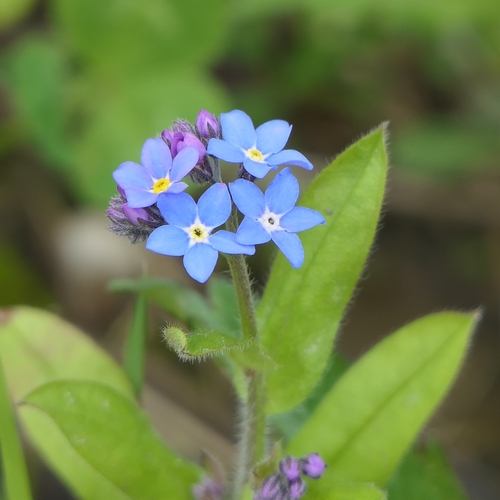

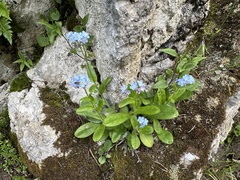
Wood forget-me-not (Myosotis sylvatica) is a low-growing member of the Boraginaceae family, often grown as an annual or biennial. Its small blue flowers have pale centers and soften spring bulb plantings; it can self-seed generously.
Read moreWood forget-me-not, Forget-me-not and Woodland forget-me-not




© photo
(c) Inge Biller, some rights reserved (CC BY-NC), uploaded by Inge Biller · cc-by-nc
iNaturalist User · cc0
Katrin Simon · cc-by
Taken May 20, 2019 by troglo (cc-by-sa)
Taken Jul 24, 2019 by mélanie peduzzi (cc-by-sa)
Taken May 22, 2022 by Paolo Lelio Palmeri (cc-by-sa)
Taken Apr 27, 2020 by Marlies (cc-by-sa)
Taken Apr 21, 2014 by Tela Botanica − Jean-Paul HUGBART (cc-by-sa)
© copyright of the Board of Trustees of the Royal Botanic Gardens, Kew.




Identity
Wood forget-me-not (Myosotis sylvatica Ehrh. ex Hoffm.) belongs to Boraginaceae and softens spring borders and containers. The common name forget-me-not covers several plants; this profile concerns the woodland species specifically. 1 8
NC State describes it as a spring-flowering, short-lived herbaceous perennial, often grown as an annual or biennial. Small blue flowers with yellow or white eyes appear densely in cool weather. 5
Taxonomic references confirm the genus Myosotis and family Boraginaceae. POWO, WFO, IPNI and Wikidata provide the identifiers needed to distinguish this species from a cultivar name or another forget-me-not. 2 3 4
Beneath spring bulbs, it creates a soft blue veil with a precise visual role. Tulips and daffodils appear connected to the ground rather than standing alone above bare soil. 8 7
Recognition
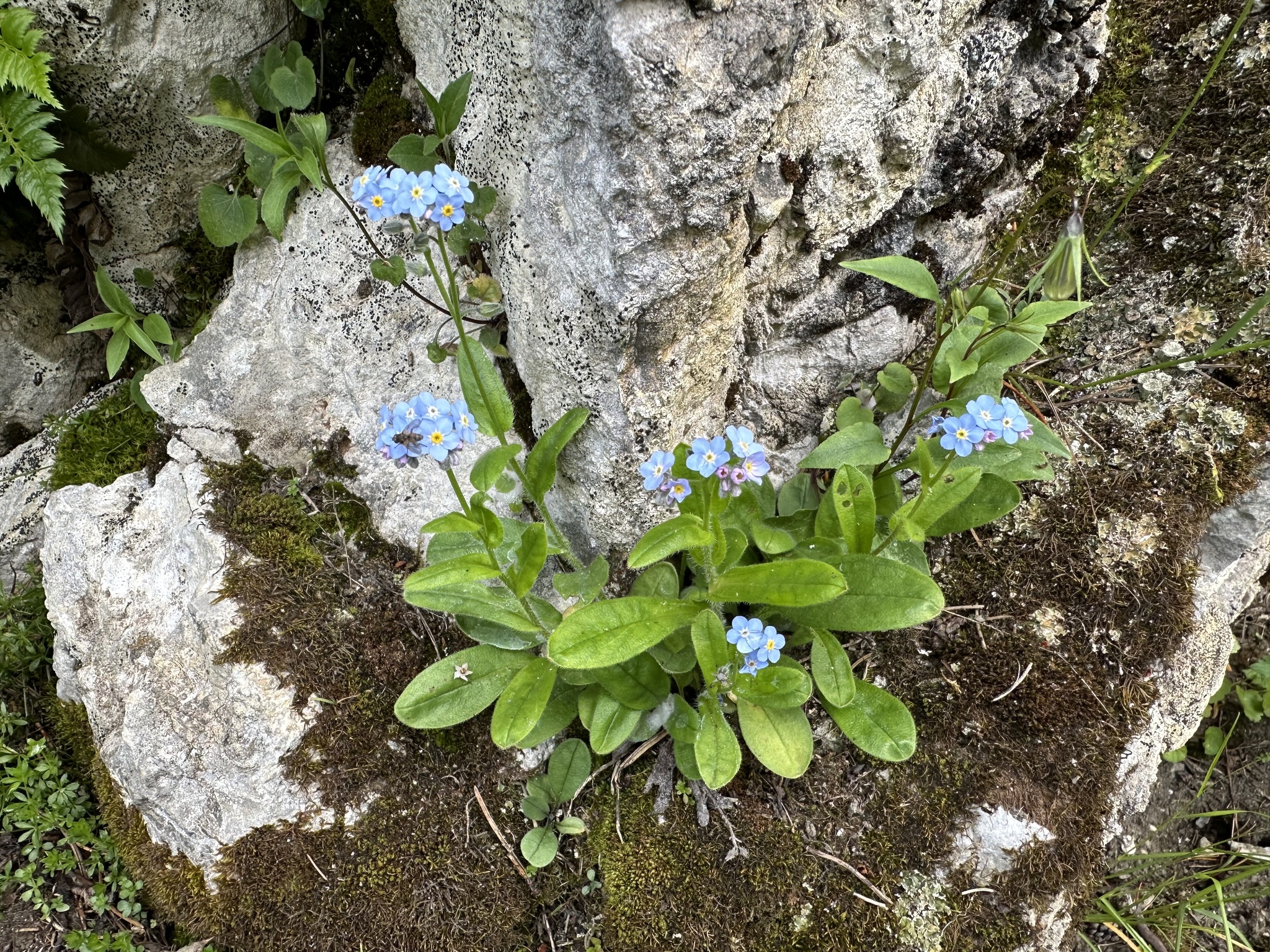
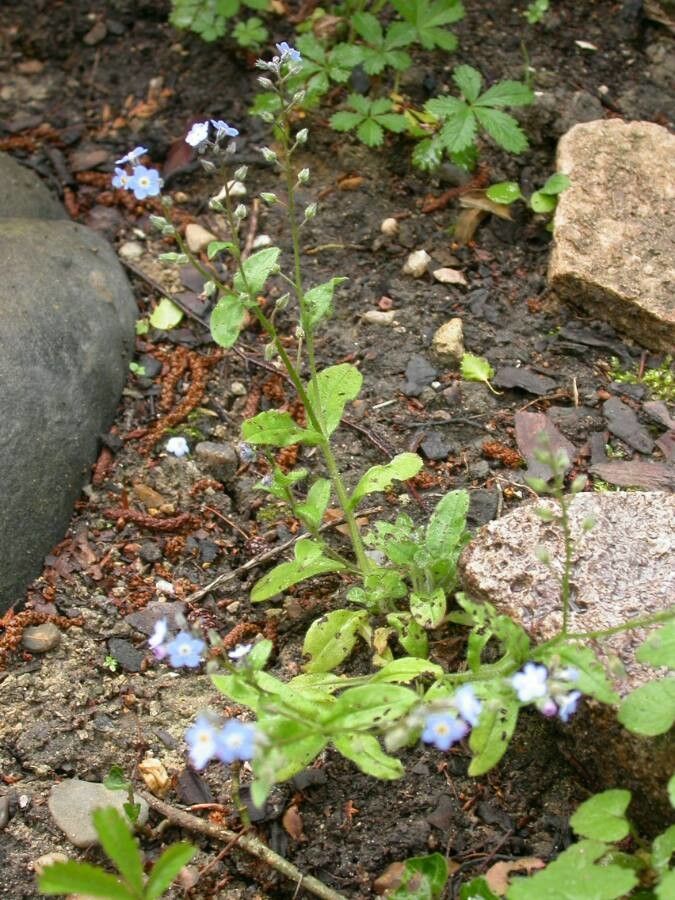
Wood forget-me-not makes a small hairy clump, usually 15–30 cm (6–12 in) tall, with simple oblong to lance-shaped leaves. The rough texture helps identify it before flowers appear. 5
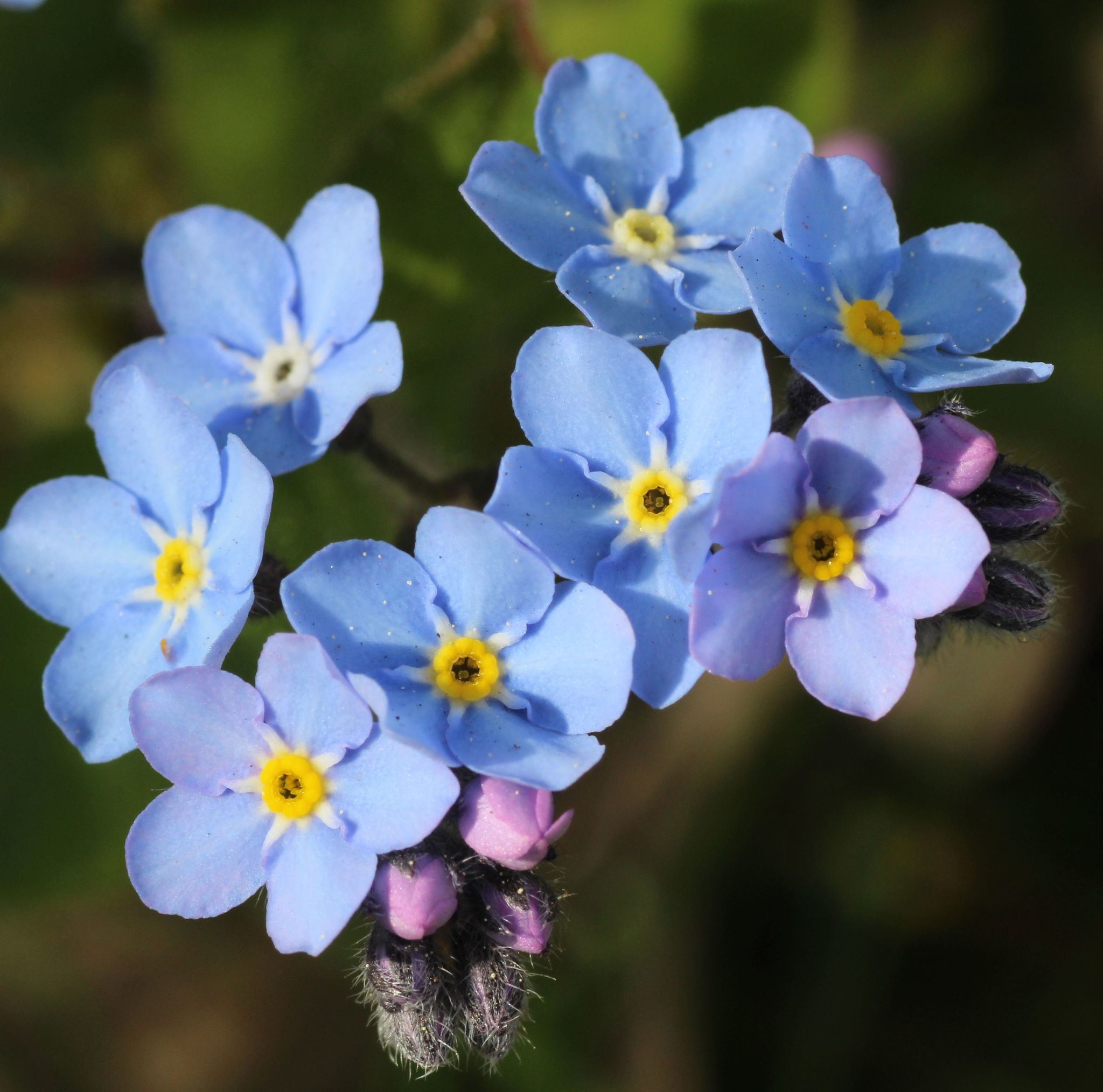
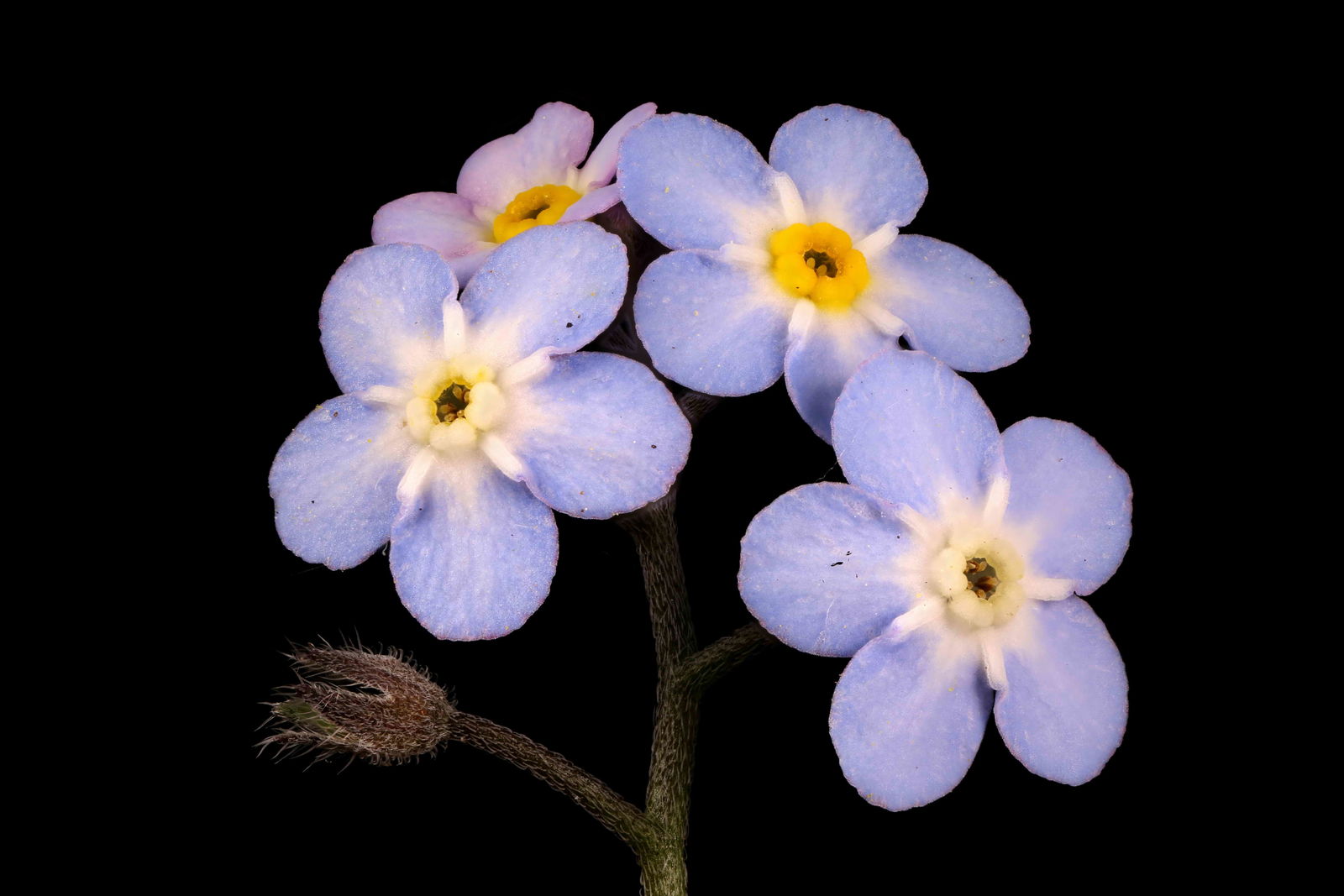
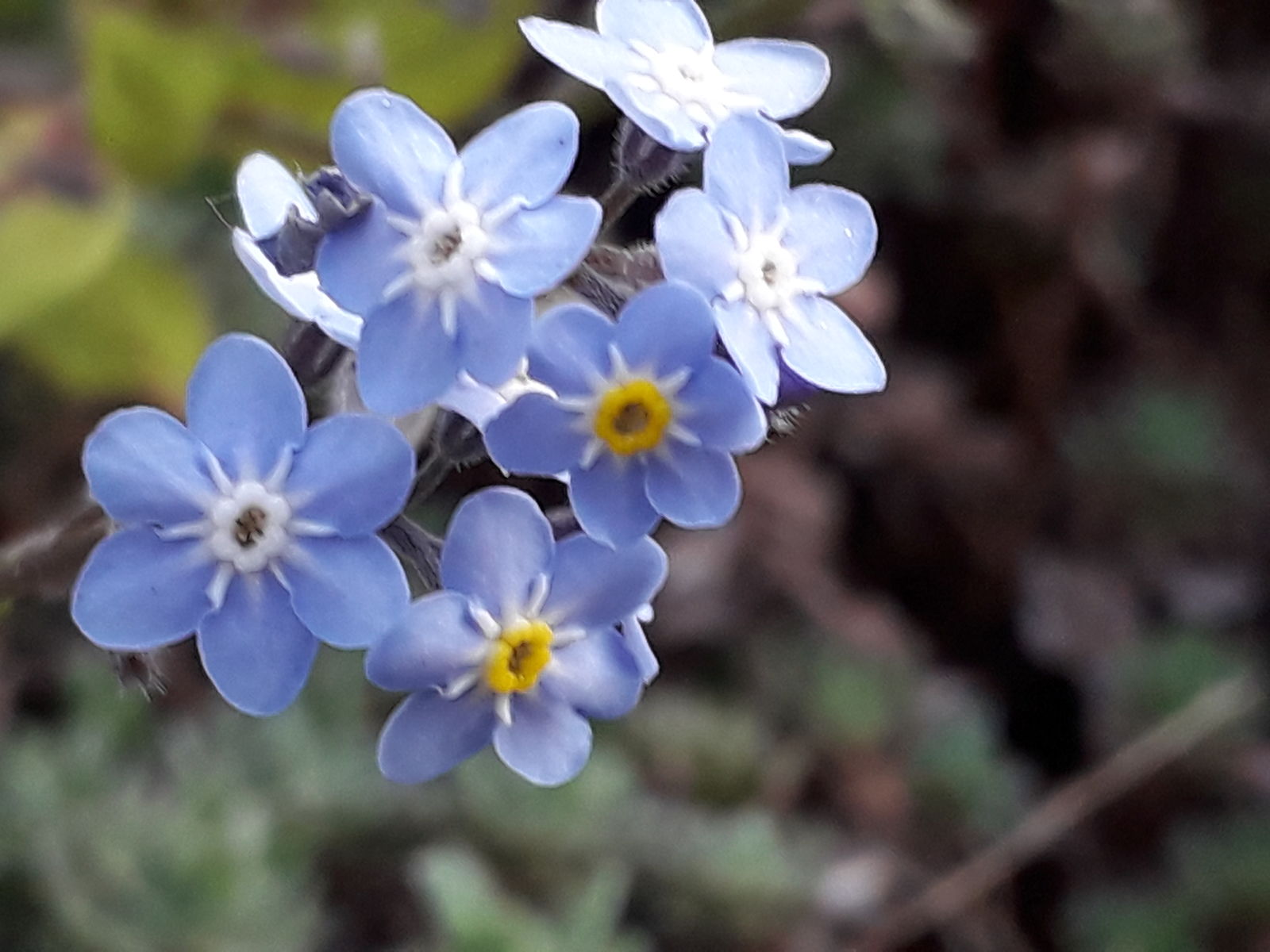
Small five-lobed flowers grow in cymes, usually blue with a pale eye. Some cultivars are pink or white, though soft spring blue remains the most familiar garden effect. 5 6
The display depends on dozens of tiny repeated flowers rather than one large bloom. Their mist-like effect distinguishes wood forget-me-not from bellflowers, pansies and large blue-flowered perennials. 8 7
Its low, supple growth can spill slightly over a container edge. In the garden, a small colony may develop where the soil stays moist and seeds are allowed to ripen. 5 8
Useful taxonomy
Botanically, the accepted name is Myosotis sylvatica Ehrh. ex Hoffm. The epithet sylvatica refers to woods or forests, consistent with its use at moist woodland edges and under light cover. 4 5
Horticultural names such as Blue Basket, Ultramarine, Victoria Blue and Snowball identify selections for flower color or habit. They supplement the binomial rather than replacing it as the botanical reference. 5 6
Boraginaceae includes very different plants, from borage to nemophila. Family membership provides context but does not establish a plant's uses or toxicity: those questions require attention to the species itself. 2 3
Keeping the species name avoids treating all forget-me-nots as interchangeable or reducing Myosotis sylvatica to an unspecified seed-mixture label. Its identity is more precise than the genus or a general trade description. 8 1
Cultivation
Provide moist, organically rich, well-drained soil. NC State reports success in sun or partial shade, with light shade preferable in hot climates. 5
A common biennial routine is to sow in summer, establish young plants in fall and enjoy flowers the following spring. Indoor sowing before the last frost can also produce an earlier display. 5 6
Regular watering changes the result. A moist border prolongs flowering, while a hot, dry pot shortens it. Ready germination makes wood forget-me-not seem easy, but it dislikes soil drying to dust. 8 5
After flowering, either allow seeds to ripen for natural renewal or remove the flower stalks for a more controlled border. The choice depends on how much self-seeding is welcome. 5
In mild climates, avoid treating it as a summer annual. Cool, bright, moist conditions with moderate nights suit it best. Once heat arrives, foliage becomes less tidy and flowers lose their soft veiling effect. 5 8
Uses
Its strongest role is as a blue spring backdrop beneath tulips, daffodils, grape hyacinths, primroses, pansies or still-bare shrubs. It softens the transition between soil and taller flowers. 8 7
In window boxes, it acts as living filler. A few plants loosen a rigid arrangement, especially around white, yellow or pink bulbs. 8 5
For insect visitors, NC State notes the value of the small flowers to certain insects, butterflies and pollinators. It is no major nectar crop, but it adds an early-season resource. 5
Where soil conditions suit it, wood forget-me-not can become too abundant. That vigor suits romantic or naturalistic gardens, while a sharply defined border may need more control. 5 8
Judge planting density when the bulbs flower. Too few plants leave bare ground, while too many seedlings hide tulip leaves and complicate maintenance after flowering in small, moist gardens. 8 6
Cautions
This species has a non-toxic profile, with dogs and cats classified as safe and horses undocumented. NC State does not highlight a specific toxicity warning for the plant. 5 2
Apply ordinary precautions: do not encourage children or animals to eat ornamental leaves or flowers. The absence of a reported toxicity warning does not make a bedding plant a food plant. 8
The main growing problems are powdery mildew, rust, dry heat and excessive self-seeding. Improving airflow, keeping soil moist and cutting back when needed are usually sufficient. 5
As a linking plant, Myosotis sylvatica excels through its soft blue mass rather than a spectacular individual flower. The effect works best alongside spring bulbs where soil stays moist long enough. 8 6
Main sources
- Wikidata, Myosotis sylvatica
- Plants of the World Online / Kew, Myosotis sylvatica
- World Flora Online, Myosotis sylvatica
- International Plant Names Index, Myosotis sylvatica
- NC State Extension, Myosotis sylvatica
- Royal Horticultural Society, Myosotis sylvatica
- Wikipedia EN, Myosotis sylvatica
- Floralens, selection of blue flowers
If you are unsure about a plant’s toxicity, ask a botanist or veterinarian for advice.