
Baby blue eyes (Nemophila menziesii, )
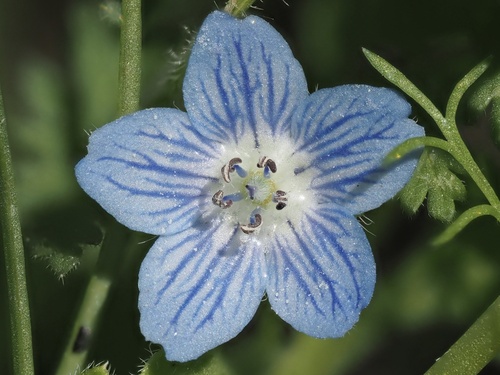
Baby blue eyes (Nemophila menziesii Hook. & Arn.) is a cool-season annual in the Boraginaceae, native to western North America. Its sky-blue flowers have pale centers, and it performs better in a cool spring than in a hot, humid summer.
Read moreBaby blue eyes, Baby’s-blue-eyes, Nemophila and Baby-blue-eyes

© photo
(c) nathantay, some rights reserved (CC BY-NC) · cc-by-nc
Kate Manning · cc0
John Kees · cc0
© copyright of the Board of Trustees of the Royal Botanic Gardens, Kew.


Identity
Baby blue eyes (Nemophila menziesii Hook. & Arn.) is a low annual for the cool season. Its character is closer to a meadow sown from seed than to a long-lived perennial, with soft blue flowers providing a short seasonal display. 1 8
Taxonomic sources place the species in the Boraginaceae, alongside forget-me-nots, though Nemophila has its own horticultural identity. POWO, WFO, IPNI and Wikidata confirm the species. 2 3 4
NC State describes an upright to spreading annual with pale blue, cup-shaped flowers, a lighter center and sometimes dark spots. It favors climates with cool summers and declines when heat and humidity arrive. 5
Among blue flowers, it provides a sky-blue tone, lighter than grape hyacinths and less romantic than forget-me-nots. Visual freshness, rather than longevity, is its strength. 8 7
Recognition
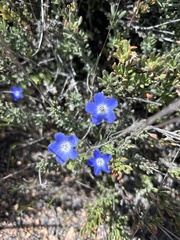
Plants stay low, often 8–30 cm (3–12 in) tall, with a spreading habit and lobed green to gray-green leaves. The tender stems help explain their sensitivity to hot conditions. 5
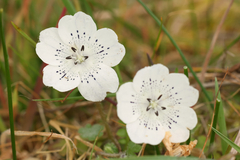
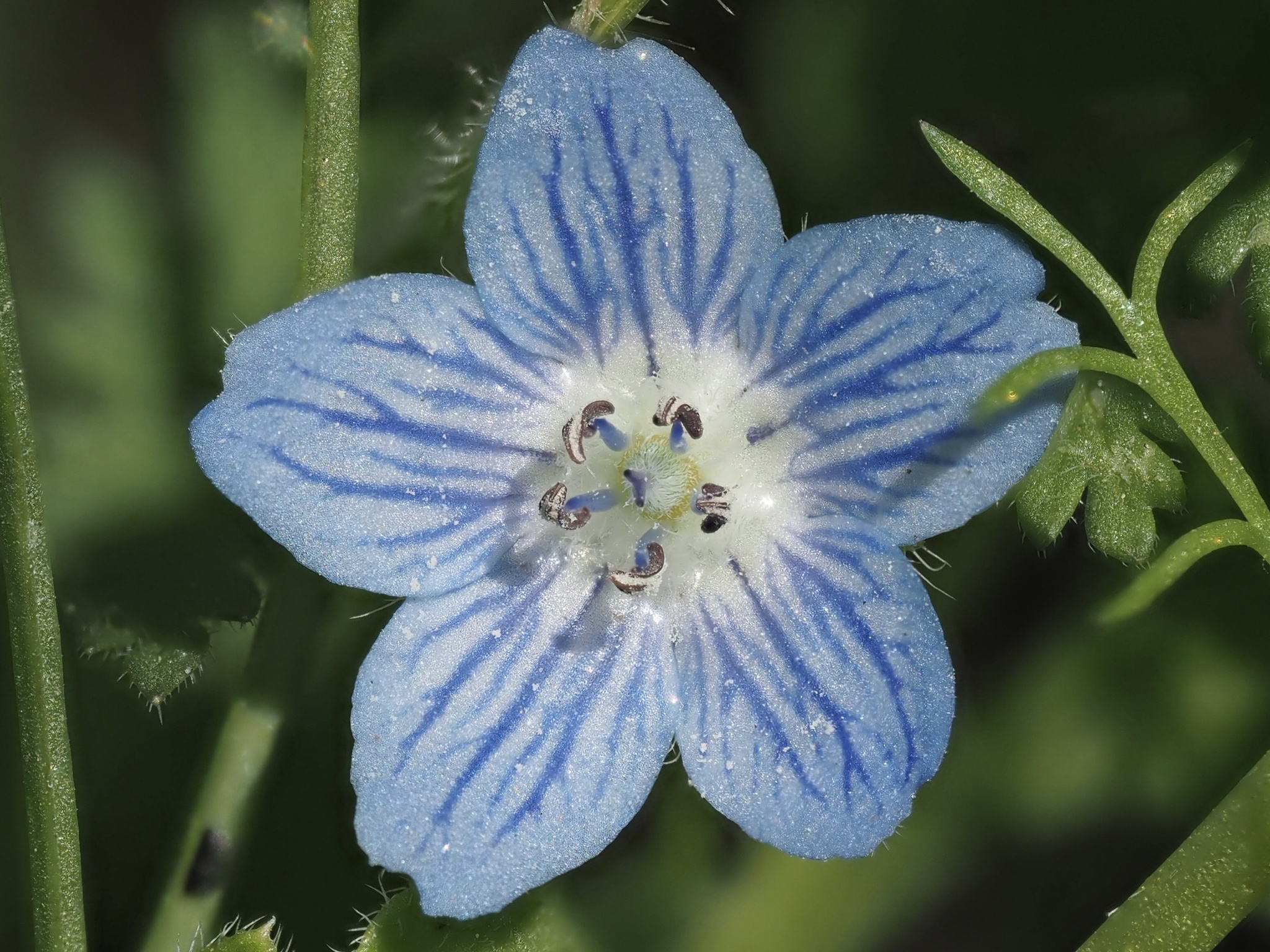
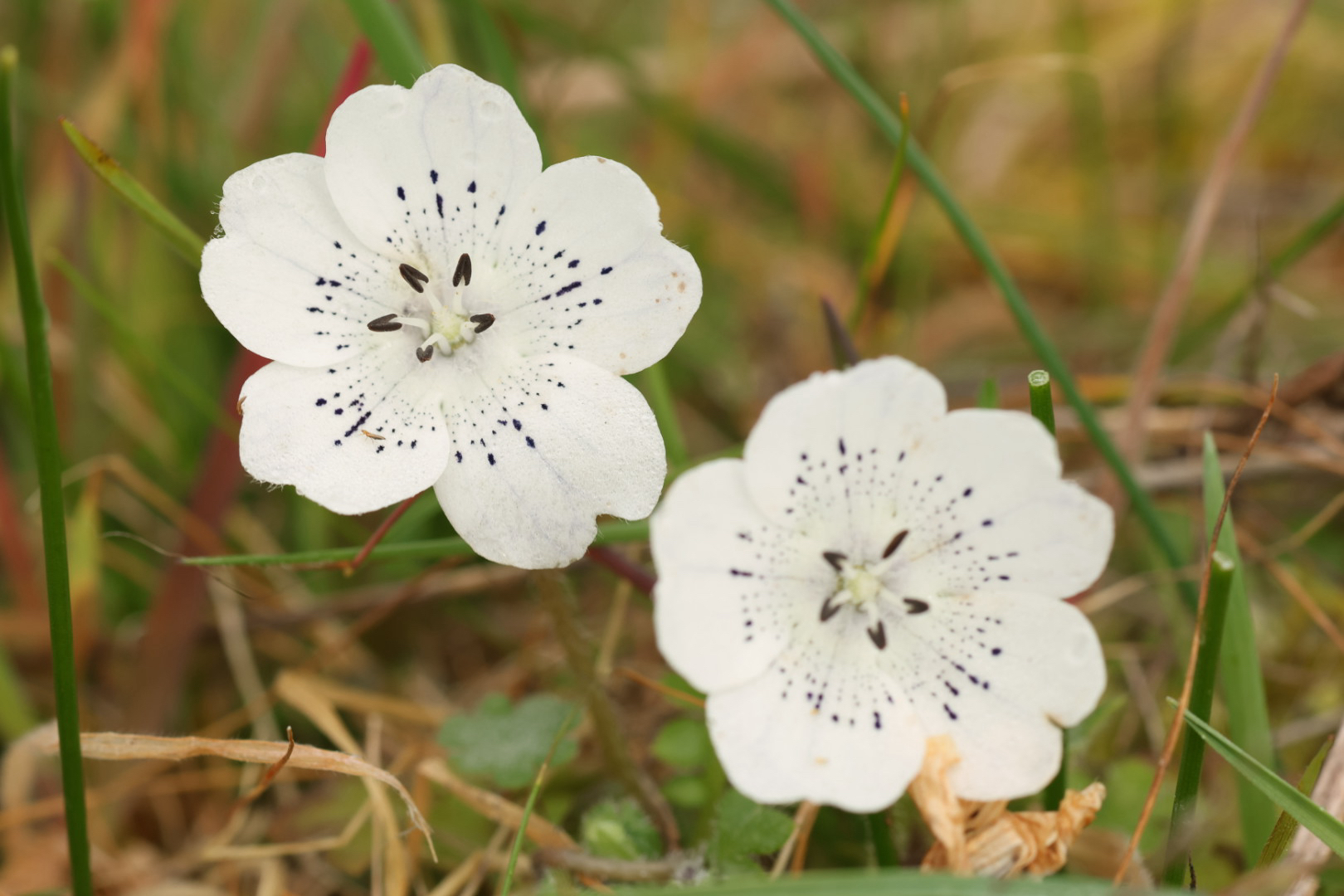
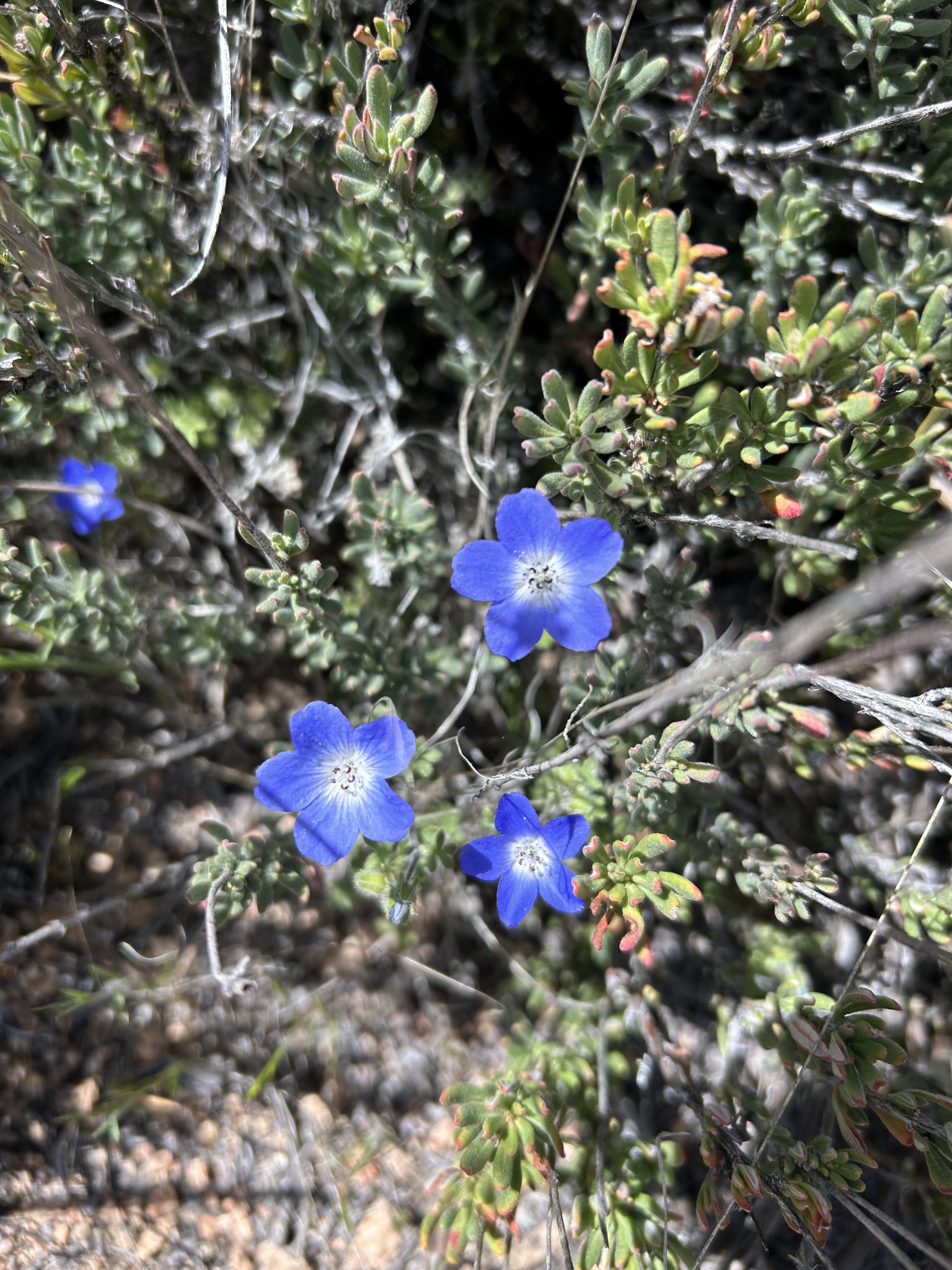
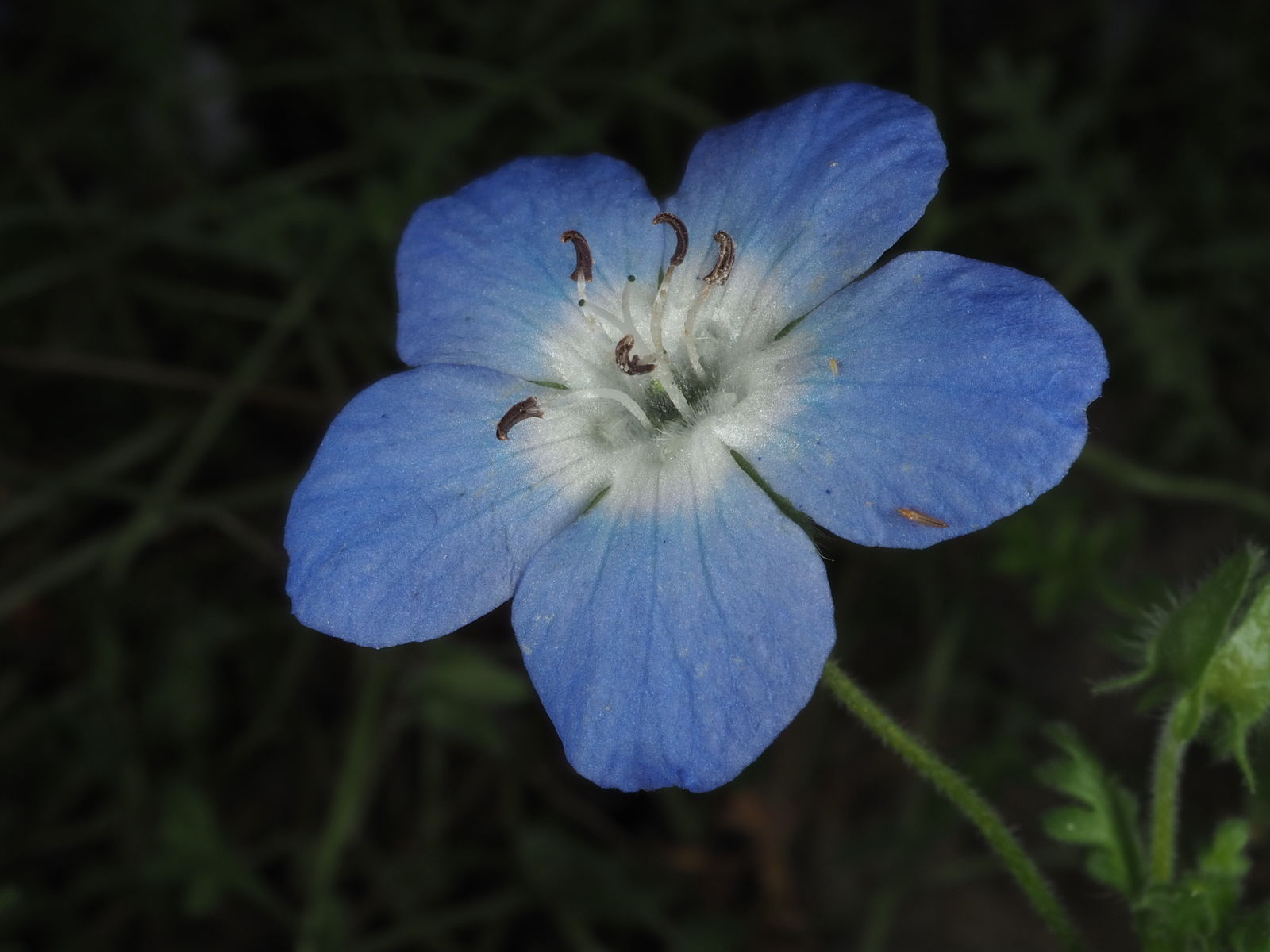
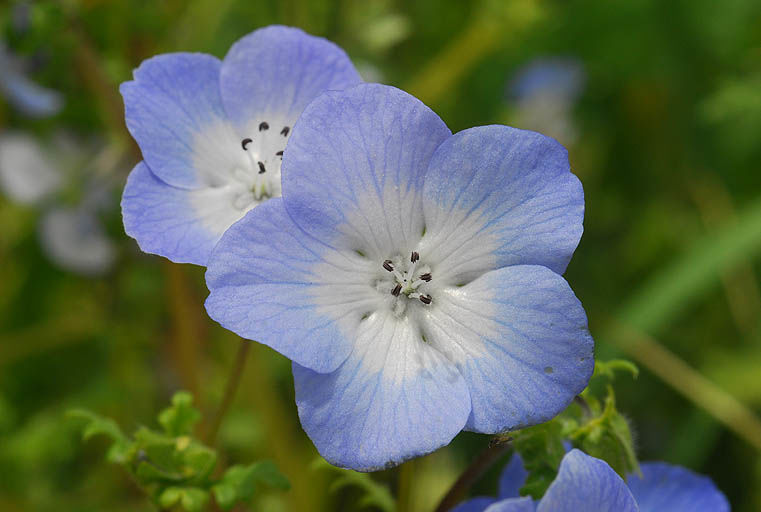
Five-lobed flowers open into shallow cups, pale blue with a white or light center. Some botanical forms or cultivars show white flowers, blue veins or dark spots near the center. 6 7
This is a foreground plant rather than a tall bedding annual. It works best at the front of a border, in a wide pot, in a cool rock garden or in a small patch viewed close up. 8 5
The gentle blue can suggest forget-me-nots. Those produce a haze of tiny flowers, while baby blue eyes has broader, almost circular corollas with a pale central eye. 8 7
Useful taxonomy
The accepted name is Nemophila menziesii Hook. & Arn. It honors Archibald Menzies; according to the etymology given by NC State, the genus name refers to clearings or open woodland habitats. 4 5
North American floras recognize natural varieties, including white-flowered forms with spots and others with stronger blue coloring. For a sky-blue garden display, the familiar horticultural baby blue eyes form remains the useful reference. 6 7
Family membership alone does not predict cultivation. Nemophila menziesii behaves as a cool-season annual, whereas Myosotis sylvatica can act as a biennial and reseed differently. 2 5
Those differences make the exact binomial useful. Baby blue eyes, forget-me-nots and other blue flowers should retain their separate species identities and growing habits. 8 1
Cultivation
Begin cultivation with seed. In mild climates, sow in late summer or fall for cool-season flowers; in cold climates, sow before spring, either in small pots or directly in the ground. 5
Keep the soil well drained yet moist. NC State specifies full sun or partial shade, with a preference for cool conditions and regular watering if weather turns dry during flowering. 5
Hot, humid summers cause the plant to decline. It cannot fill the role of a heat-wave annual: it looks its best during a cool growing window, then gives way. 5 8
In containers, avoid a pot so small that it dries rapidly. In beds, avoid competition from taller plants. Baby blue eyes needs light near ground level and some air movement. 8 5
Plan seed sowing for a brief display. Prepare the soil, water regularly and allow the plant to complete its life cycle as nights become too warm. Working with that seasonal limit gives better results than trying to prolong growth. 5
Uses
Its strongest role is sky blue at the border's edge: the front of a bed, a broad container, a cool rock garden, a naturalistic sowing or a spring annual mix. It catches the eye close up rather than from across the garden. 8 7
Violas, forget-me-nots, love-in-a-mist, phacelias, small grasses and low bulbs make good companions. Keep the planting airy, with neighbors that do not overwhelm the cup-shaped flowers. 8
NC State also notes its value to pollinators and bees that specialize on the genus. It produces little bulk but supplies a useful small flowering presence in a cool border. 5
Within a blue planting, its color has an almost childlike softness. Alone, that effect can seem overly sweet; a short carpet beside gray foliage or white flowers gives it a clearer outline. 8 6
Annual mixes also suit it when neighboring plants stay in proportion. Cosmos, zinnias and tall love-in-a-mist can outgrow it too quickly; violas, sweet alyssum and small grasses maintain a more suitable scale. 8 5
Low growth also brings the flowers within easy viewing range in a container, especially on a bright ledge or a table on a cool patio. 8 5
Precautions
The safety profile classifies this plant as non-toxic, with dogs and cats listed as safe and horses undocumented. NC State does not identify a specific toxicity concern for the species. 5 2
That does not make it a garden food crop. Keep children and animals from tasting seedlings, especially in mixes that may contain other species. 8
Practical problems are mainly horticultural: possible aphids, decline in humid heat, sowing too late and pots drying out. Successful baby blue eyes is largely a matter of timing. 5
Nemophila menziesii makes a very good blue annual when its short life cycle is accepted. Its cool-season sky blue serves a different purpose from forget-me-nots or grape hyacinths. 8 1
Main sources
- Wikidata, Nemophila menziesii
- Plants of the World Online / Kew, Nemophila menziesii
- World Flora Online, Nemophila menziesii
- International Plant Names Index, Nemophila menziesii
- NC State Extension, Nemophila menziesii
- Jepson eFlora, Nemophila menziesii
- Wikipedia EN, Nemophila menziesii
- Floralens, blue flower selection
If you are unsure about a plant’s toxicity, ask a botanist or veterinarian for advice.