
Hemlock water-dropwort (Oenanthe crocata, )
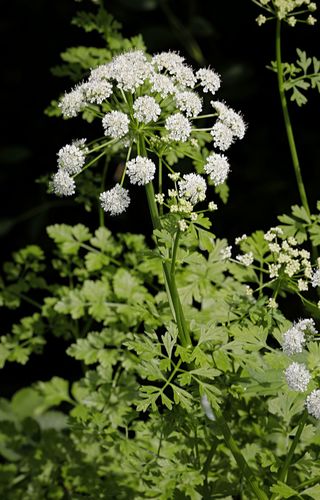
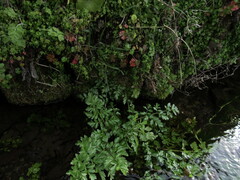
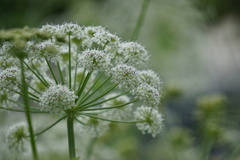
Hemlock water-dropwort (Oenanthe crocata) is a tall Apiaceae perennial of wet ground. Hollow, grooved stems carry divided leaves and white umbels; ingestion can cause fatal poisoning, especially from the tubers.
Read moreHemlock water-dropwort
Oenanthe apiifolia and Oenanthe macrosciadia

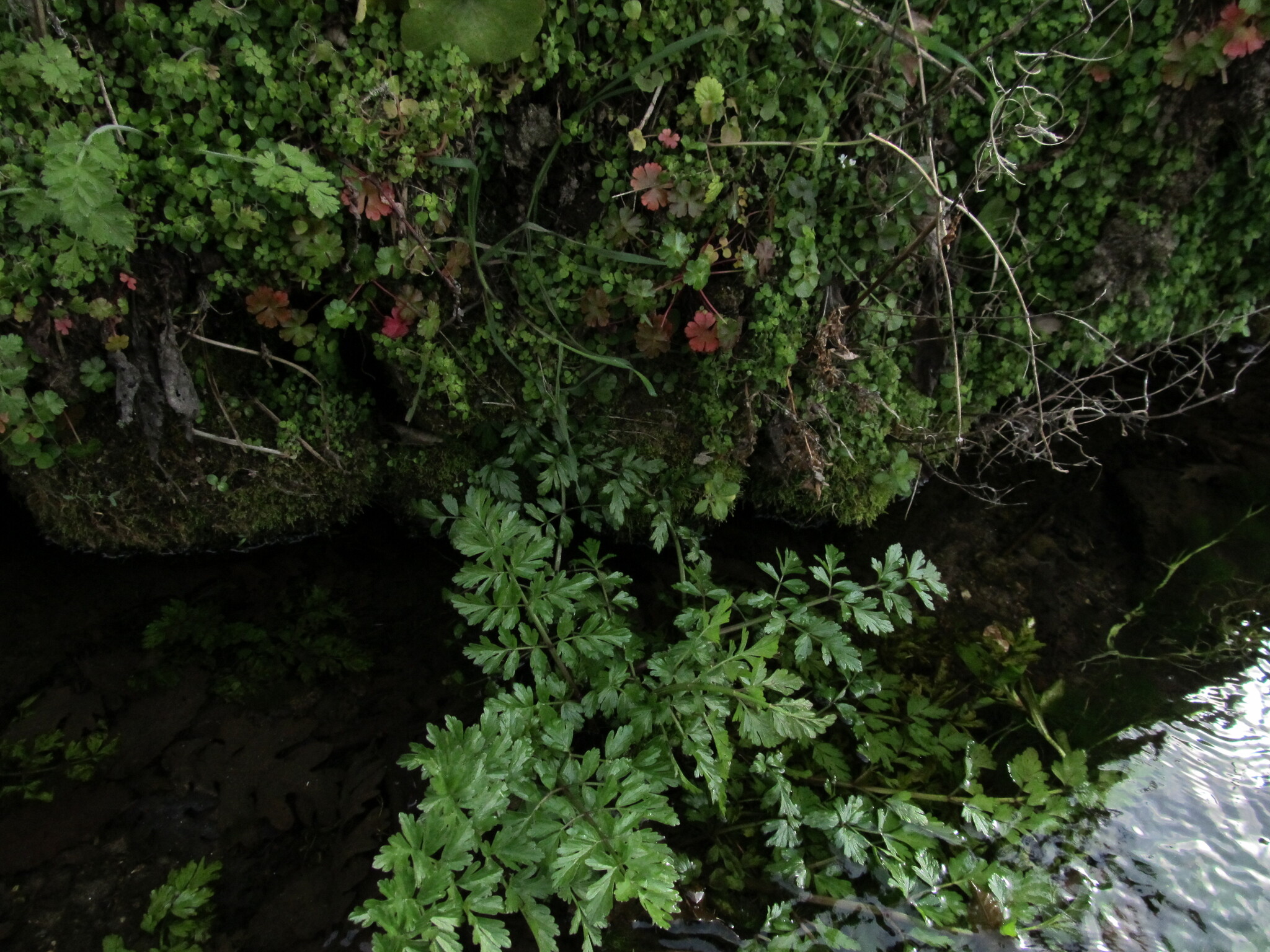
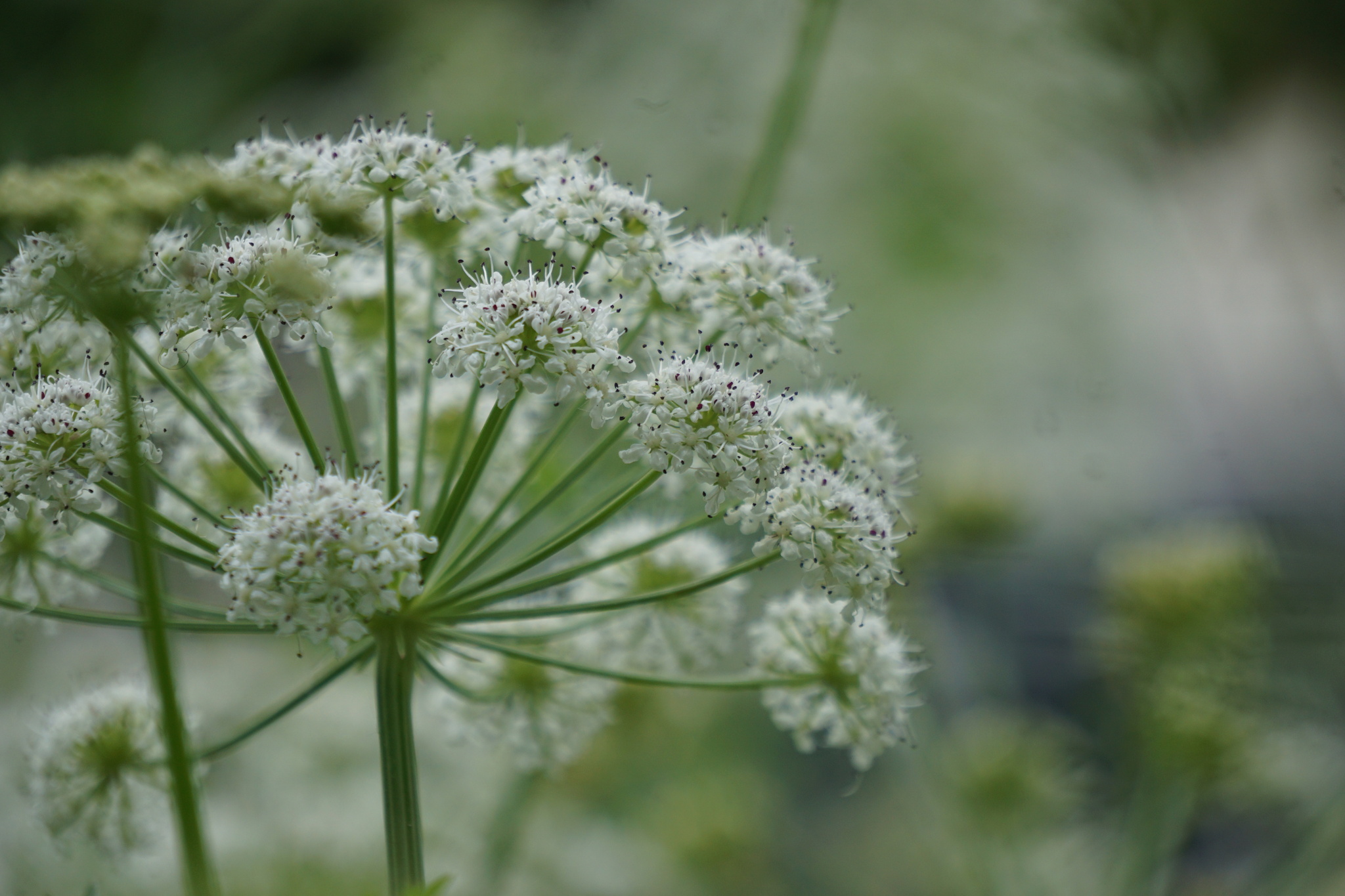


© photo
no rights reserved, uploaded by Stephen James McWilliam · cc0
zebedeugalinha · cc-by
Alex Press · cc-by
Taken Sep 25, 2021 by Trap Hers (cc-by-sa)
Taken Apr 24, 2021 by Silvia Domínguez (cc-by-sa)
Taken Jan 1, 1800 by Tela Botanica − Laurent CHAUVEL (cc-by-sa)
Taken May 4, 2012 by Tela Botanica − Emmanuel STRATMAINS (cc-by-sa)
© copyright of the Board of Trustees of the Royal Botanic Gardens, Kew.




Global distribution
Native to Madeira, western Europe and the western to central Mediterranean.
- Native3
- France
- Great Britain
- Madeira
Hexagons: regions where the plant occurs. Green dots: native range.1
Identity
Hemlock water-dropwort (Oenanthe crocata L., 1753) is a tall wetland plant in the Apiaceae family whose ingestion can be fatal. Parsley- or celery-like leaves provide no assurance of edibility. This perennial has hollow, grooved stems and tuberous underground reserves. The French names œnanthe safranée and œnanthe jaune safran, referring to saffron-yellow sap, designate this same botanical species rather than separate horticultural selections. 518
Divided leaves and white umbels place it in the same family as wild carrot, but family membership says nothing about edibility. Older floras already described it as highly poisonous. A naturalist's aim should be to recognize it in place and document its habitat without collecting organs. 52
Recognition
Plants reach 60–180 cm (24–71 in). Stout stems are upright, furrowed and branched. Repeatedly divided basal leaves have oval to almost rounded segments; higher leaves have different divisions. Examine both levels rather than one detached leaf. 3
Large umbels contain 15–30 rays. Small flowers are white, sometimes pinkish. Elongated spindle-shaped tubers cluster near the rootstock and contain yellow sap. This underground feature belongs in botanical descriptions, but does not justify digging up or cutting a suspect plant to confirm identification. 25
Useful taxonomy
The accepted name remains that published by Linnaeus in 1753, in Species Plantarum, page 254; L. identifies him as author. This perennial in the Apiaceae family is also a helophyte, rooted in wet ground with aboveground parts emerging above it. 1
Oenanthe apiifolia Brot. appears in older references and also means hemlock water-dropwort. Oenanthe macrosciadia Willk. is another synonym. Neither name identifies an edible variety. Follow the accepted name to avoid artificially separating toxicity information published under different names. 1
Habitat and range
Native distribution covers Madeira, western Europe and the western to central Mediterranean. This wider perspective avoids restricting the species to Brittany. French occurrences belong to its native range; local abundance alone does not establish an exotic introduction. 1
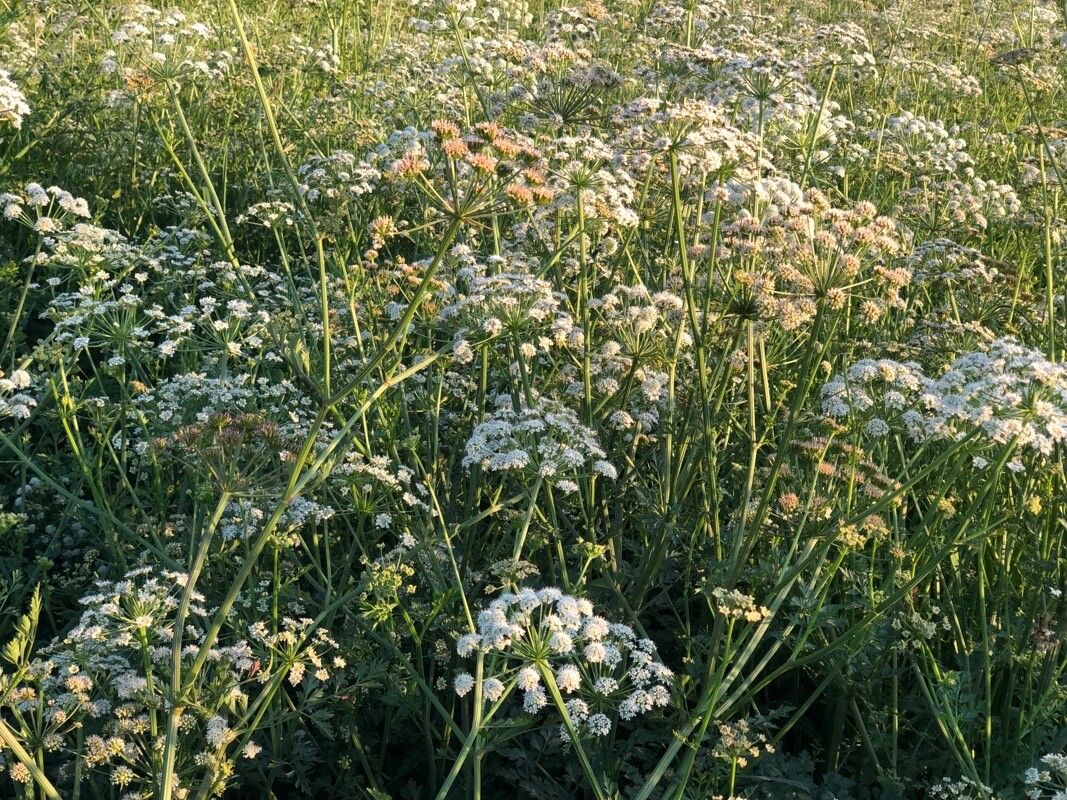
Western French meadows and watercourses are characteristic places to observe it, with Corsican occurrence also recorded. Tall-herb wetlands, ditches and stream banks provide suitable habitats. Substrate appears relatively unimportant: site moisture offers a better clue than searching only one rock type. 23
It is Least Concern on the metropolitan French flora Red List, but Critically Endangered on the Île-de-France list. Regional protection applies in Nord-Pas-de-Calais, where destroying, uprooting and picking wild plants is prohibited. National abundance and local rarity should not be conflated. 8
Life cycle and reproduction
It is a deciduous perennial. Tubers are part of the persistent plant, while aboveground organs follow a seasonal cycle. Flowering is June–July, sometimes extending into August, in France, and July–August in Great Britain. These differences reflect regional contexts rather than a universal calendar for every site. 254
Cylindrical fruits are paired achenes, 4–6 mm (0.16–0.24 in) long, with styles shorter than the rest of the fruit. Mature fruit complements leaf characters when identifying water-dropworts. The species reproduces by seed. Photographs taken on several dates distinguish vegetative growth, flowering and fruiting without collecting material. 34
Toxicity and response
Oenanthotoxin, the principal tuber toxin, was identified in human poisonings including two fatal cases. Vomiting, diarrhea and excessive salivation can precede severe neurological signs. Convulsions and cardiorespiratory depression are major emergency-medicine risks. Heavy poisoning can progress rapidly to coma and death. 76
Ingestion requires hospital treatment: call emergency services or a poison center immediately. 6
Herbivore poisonings chiefly affect cattle, but horses are also affected. Ditch clearance or drainage can expose tubers at pasture surfaces. A few tens of grams (around an ounce or more) of tubers can often kill a horse within hours. Exposed tubers must be removed from animal access. Dogs are also susceptible; missing cat-specific data do not establish feline safety. 54
Look-alikes and site management
Wild angelica (Angelica sylvestris) can cause confusion in wetlands. Its oval leaflets are simply saw-toothed, while hemlock water-dropwort has deeper divisions and a more complex outline. An isolated white umbel cannot distinguish them; examine leaves and fruits together. 3
A pleasant parsley- or celery-like smell is no safety test and can misleadingly encourage consumption. Identify colonies before works on horse pasture and prevent access to residues to reduce exposure to poisonous tubers. Wet soils, ditches and pond margins suit the plant. Protective measures are needed during handling; observation from a distance is appropriate for simple recognition. 564
Before uprooting, check regional protection. In Nord-Pas-de-Calais destruction of wild plants is prohibited except in ordinary management of habitually cultivated plots. These are French regional provisions, rather than advice to remove every wild population. 8
Main sources
Oenanthe crocata L., 1753 is a perennial in the Apiaceae family native in France and highly poisonous to people and herbivores. Tubers exposed by ditch clearance or drainage create an often fatal poisoning risk for horses. 15
- Kew, Plants of the World Online
- Tela Botanica, eFlore and Coste description
- Brest National Botanical Conservatory, wetland factsheet
- Royal Horticultural Society, Oenanthe crocata
- IFCE, poisonous hemlock water-dropwort (archive dated 23 December 2025)
- French Society for Emergency Medicine, hemlock water-dropwort
- King et al., identification of oenanthotoxin, 1985
- INPN, TAXREF, Oenanthe crocata
Frequently asked questions
Is hemlock water-dropwort edible?
No. Ingestion can cause severe or fatal poisoning; its tubers are particularly dangerous.
Where does hemlock water-dropwort grow?
In ditches, wet meadows and beside streams, especially in western France.
Is it dangerous to horses?
Yes. Tubers exposed during ditch clearance or pasture drainage can poison horses.
If you are unsure about a plant’s toxicity, ask a botanist or veterinarian for advice.