
Spreading prickly pear (Opuntia monacantha, )
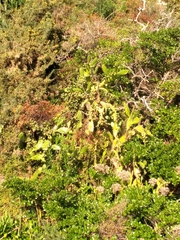
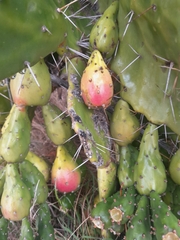
Spreading prickly pear is a tree-like South American cactus with glossy pads. Its upper segments often droop. Spines and glochids injure on contact, and broken fragments can take root.
Read moreSpreading prickly pear
Place in full sun, with intense direct light all day long.
Very bright light and sun for container-grown cacti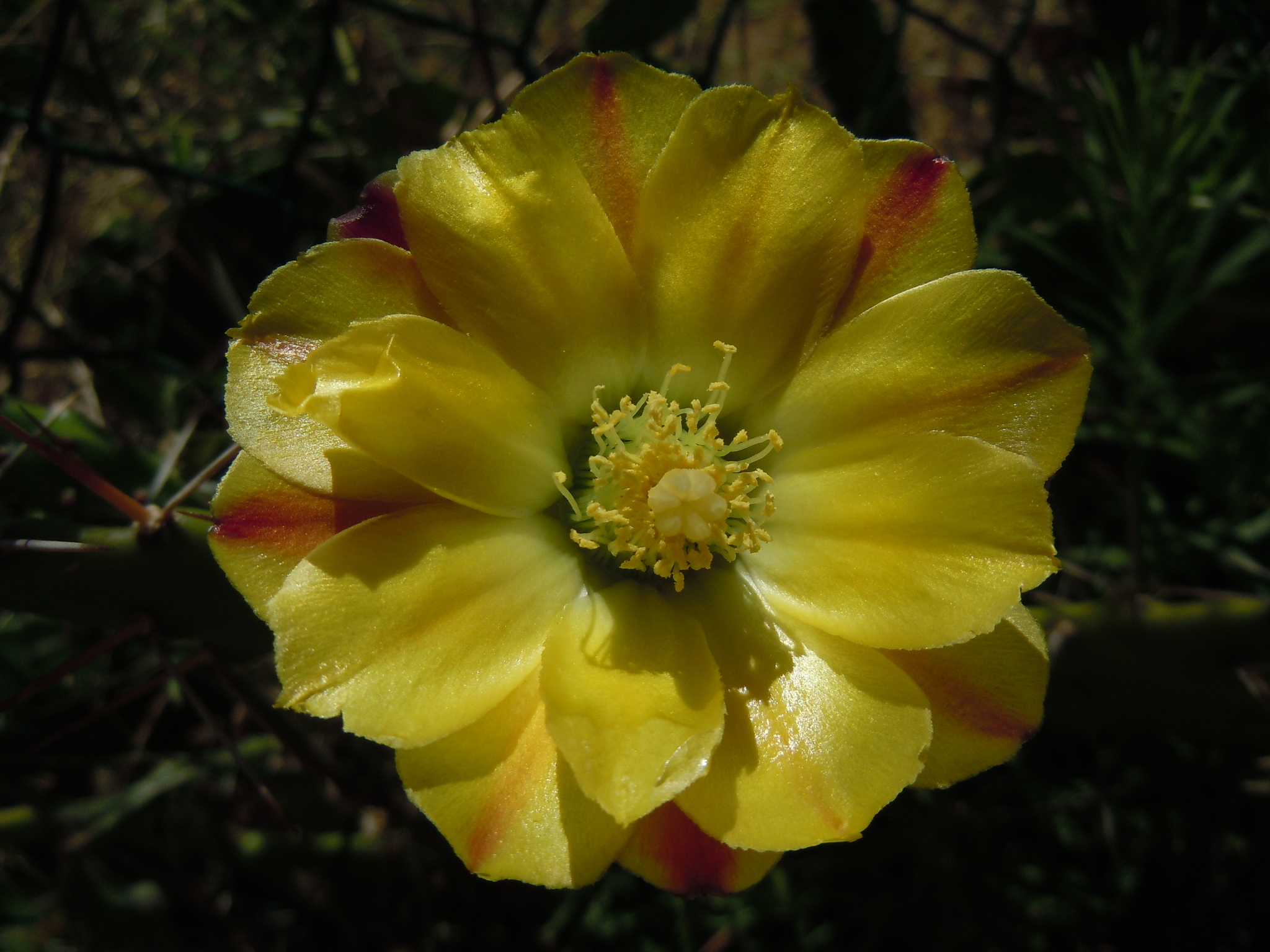
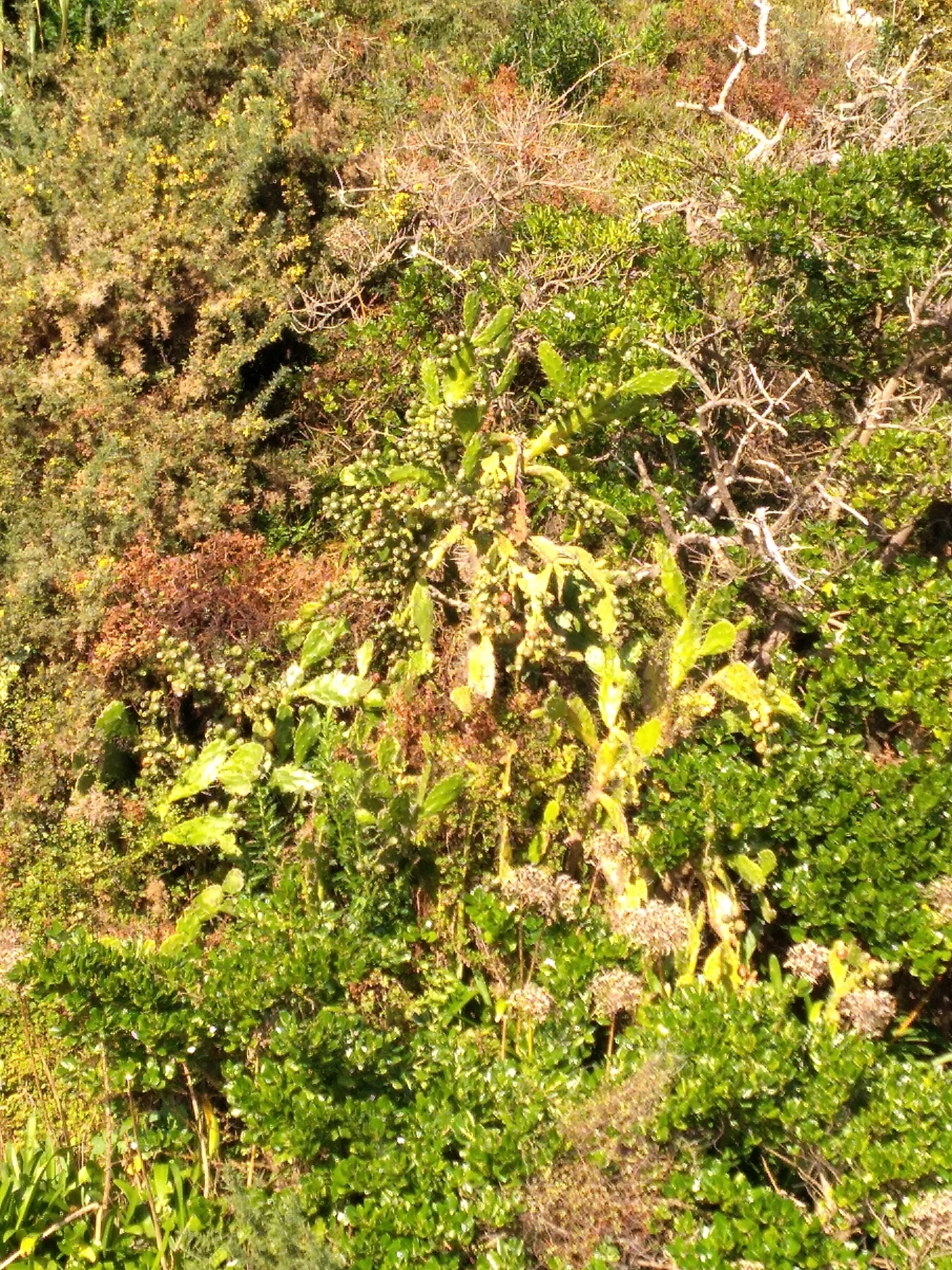
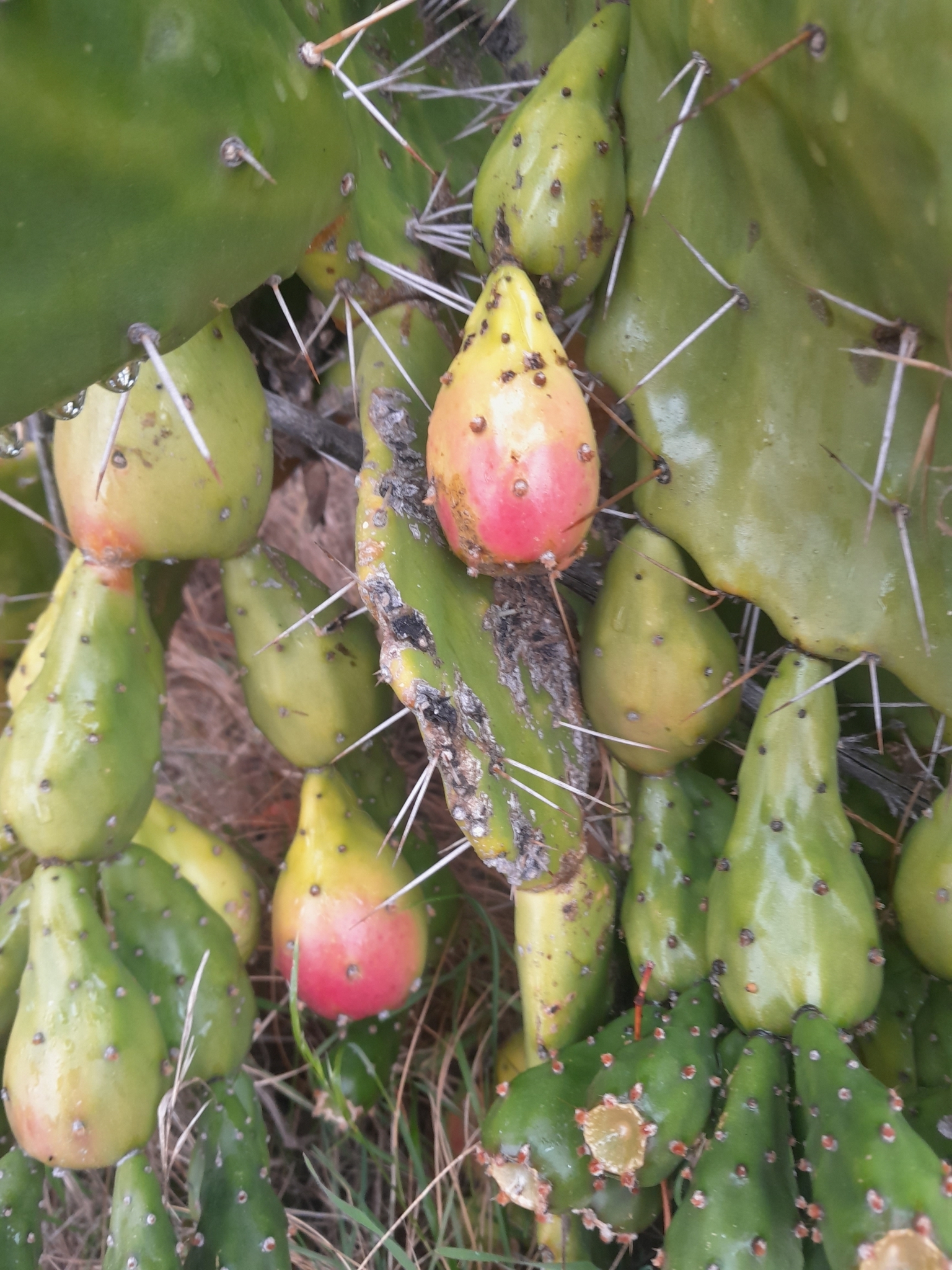


© photo
(c) GMarques, some rights reserved (CC BY-NC), uploaded by GMarques · cc-by-nc
Leon Perrie · cc-by
Joe Potter Butler · cc-by
Taken Jan 24, 2021 by juan Hernández (cc-by-sa)
Taken Jul 2, 2021 by Shayna (cc-by-sa)
Taken May 5, 2020 by Mendez Perla (cc-by-sa)




Global distribution
Native to eastern South America; introduced in Mediterranean regions and naturalised in Australia. Invasive on Réunion according to the cited local assessment.
- Native1
- Introduced2
- Invasive1
- Eastern South America
- France
- Australia
- Réunion
Hexagons: regions where the plant occurs. Green dots: native range.↗
Identity
Spreading prickly pear (Opuntia monacantha Haw., 1819) has smooth, glossy, light green pads, with upper segments that tend to droop. This member of the cactus family, Cactaceae, can develop a tree-like habit. The French name oponce monacanthe is recorded in Tela Botanica's nomenclature. 2 1 4
Another recorded French name is raquette à aiguillon solitaire, referring to a solitary spine. It does not mean that the whole plant bears a single spine: an areole can carry several. Identification therefore depends on examining the pads and their surfaces, rather than counting a spine in a single photograph. 5 7
Recognition
The pads of spreading prickly pear are flattened stem segments, not large leaves. Its true leaves are tiny and fall off. The areoles bear spines and glochids, small barbed bristles that can lodge in skin. Even a segment that looks sparsely spined should not be grasped with bare hands. 7
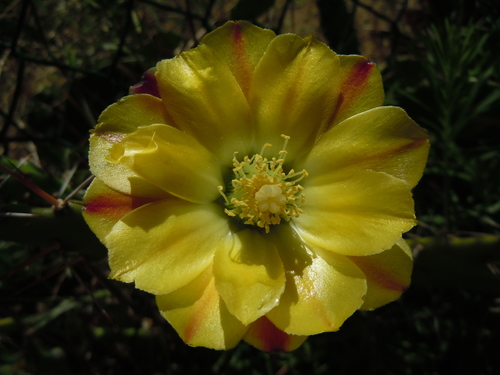
The Australian flora describes yellow flowers 3 to 6 cm (1.2 to 2.4 in) across, with outer parts often streaked red. The fruits are broader towards the tip, turn purplish red and measure 5 to 7 cm (2.0 to 2.8 in) long. Their colour describes the fruiting stage; it does not establish that they are safe to eat. 4
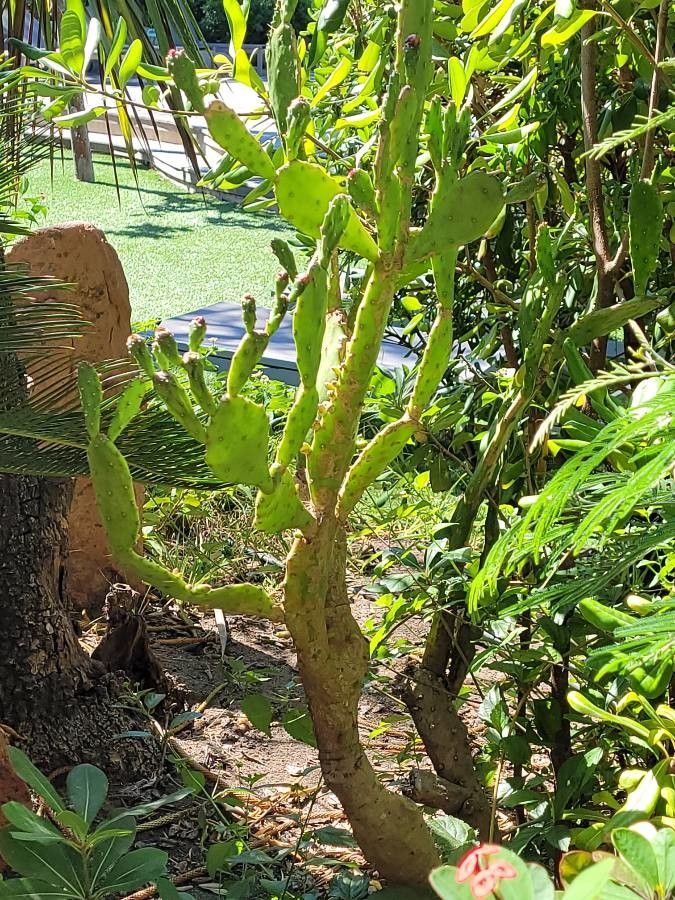
Outdoor plants in Australian populations usually reach 2 to 3 m (6.6 to 9.8 ft), with some reaching 6 m (19.7 ft). These dimensions describe an established cactus in a favourable climate. A young potted specimen gives little indication of the space an adult plant can occupy in a garden. 7
Useful taxonomy
The accepted name Opuntia monacantha belongs to the genus Opuntia, in the order Caryophyllales. GBIF gives the authority as Haw.; French references also use an expanded form with Willdenow in parentheses. This difference in author notation should be distinguished from a change of species. 1 2
The name Opuntia vulgaris has been applied to this plant in some horticultural literature. The British reference identifies it as a misapplied name. An old label bearing that name alone is therefore insufficient for identification, especially where successive authors have used different botanical concepts. 3
Habitat and distribution
Spreading prickly pear comes from eastern South America. Ornamental cultivation and introductions account for its presence in other warm regions, including the Mediterranean. Lists of introduced occurrences do not describe a continuous native range: each region needs to be read with its own status. 3 5
In parts of Australia where it has spread, the cactus occupies coastal habitats, grasslands and open woodland, as well as roadsides and watercourses. Sandy soils, including coastal dunes, are frequently occupied. This range of habitats gives transported fragments several opportunities to establish new plants. 7
On Réunion, the cited inventory classifies the species as naturalised and invasive. That assessment applies to that territory. A French record of non-native occurrence should not be taken to mean that invasion is equally severe throughout mainland France. 6 2
Life cycle and reproduction
Spreading prickly pear spreads through seeds and fragments. Fruit-eating animals carry its seeds, while broken segments travel with vehicles, animals or water. Immature fruits can also produce new plants. Living pruning waste is therefore potential propagation material. 7
For container-grown cacti, general horticultural guidance recommends a very free-draining mix and spring repotting when the plant becomes crowded. Watering and feeding support growth from spring through summer, then decrease during the cold season. These Northern Hemisphere growing guidelines do not transpose Australian flowering months. 8
Uses and risks
Spreading prickly pear appears in collections and horticulture in several forms. Its eventual size requires space. The spines and glochids can injure people, dogs and other animals; some animals become trapped among spiny branches. These mechanical injuries are distinct from chemical toxicity, which these observations do not establish. 7
Dense stands restrict movement and compete with native vegetation. Preventing spread requires control of fragments: do not discard them on the ground or in natural habitats. An established population also needs monitoring for regrowth, since removing the visible growth alone does not guarantee that every piece capable of propagation has been eliminated. 7
Varieties, similar plants and identification pitfalls
Horticultural forms called ‘Variegata’ have pale mottling; those called ‘Monstrosa’ have distorted segments. ‘Joseph’s Coat’ combines a distorted form with colour variation. These plants differ from the species' usual appearance, and variegation does not remove the risk of spread. 7
Opuntia stricta has thicker, matt, grey-green pads. Spreading prickly pear instead has glossy surfaces and upper segments that often droop. Opuntia ficus-indica, also known as Barbary fig, generally has larger segments, often without large spines. Shared common names cannot replace these distinguishing characters. 7
Main sources
Frequently asked questions
Are the pads leaves?
No. They are flattened stem segments. The true leaves are tiny and fall off.
Is spreading prickly pear invasive?
It is naturalised in several regions and classified as invasive on Réunion in the cited inventory. Fragments can form new plants.
Is a pad without large spines safe to touch?
No. The areoles also carry tiny barbed bristles called glochids, which can injure skin.
If you are unsure about a plant’s toxicity, ask a botanist or veterinarian for advice.