
creeping oxalis (Oxalis corniculata, )
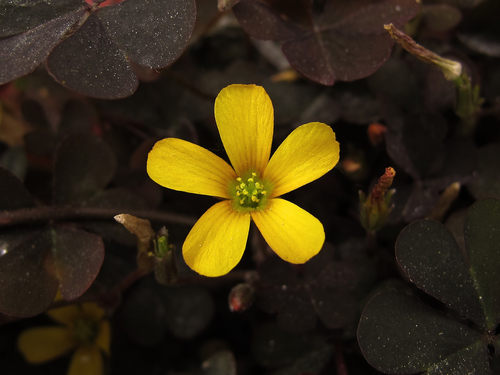
creeping oxalis (Oxalis corniculata) is a small creeping plant with leaves composed of three heart-shaped leaflets. This Oxalidaceae is native from the Indian subcontinent to Japan and the Philippines. Its yellow flowers produce capsules that eject seeds and help it establish in gardens.
Read morecreeping oxalis
Acetosella corniculata, Oxys corniculata and Xanthoxalis corniculata
Allow a few hours of direct sun per day, preferably morning or evening.
Sun to shade; partial shade is also suitable.
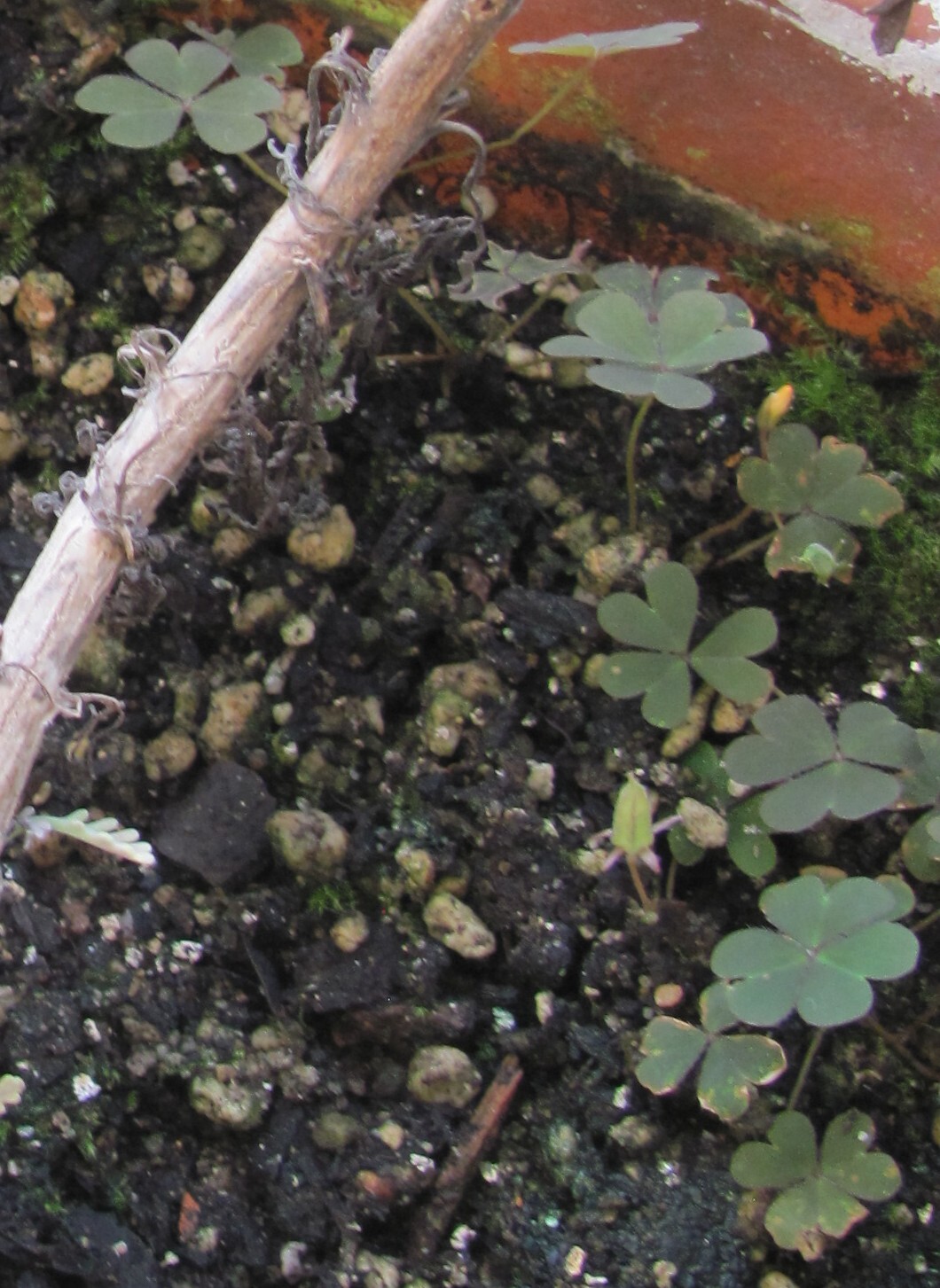



© photo
(c) jacinta lluch valero, some rights reserved (CC BY-SA) · cc-by-sa
zebedeugalinha · cc-by
WATANABE Hitoshi 渡辺仁 · cc-by
Taken Apr 17, 2011 by Tela Botanica − Bertrand BUI (cc-by-sa)
Taken May 1, 2022 by Petr Harant (cc-by-sa)
Taken Jun 17, 2018 by Richard Frenák (cc-by-sa)
Taken Feb 20, 2017 by Yoan MARTIN (cc-by-sa)
Taken Jun 2, 2021 by Jean Marc Morard (cc-by-sa)
© copyright of the Board of Trustees of the Royal Botanic Gardens, Kew.




Global distribution
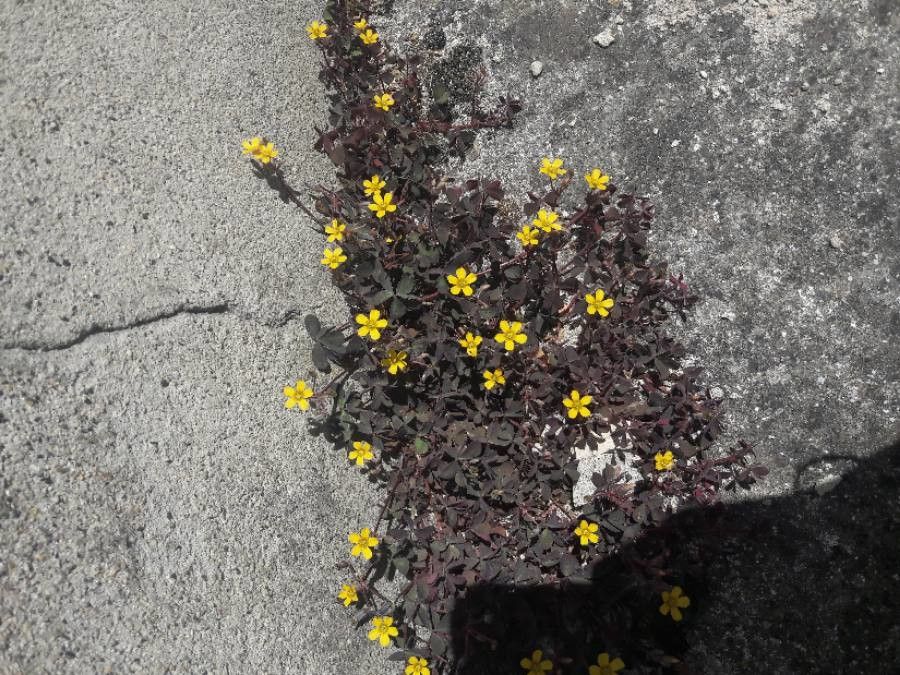
Native range adopted from the Indian subcontinent to Japan and the Philippines; French status differs between reference systems.
Identity
creeping oxalis (Oxalis corniculata L., 1753) combines creeping stems, leaves with three heart-shaped leaflets and small yellow flowers. Upright capsules eject seeds as they ripen. This combination identifies a frequent garden weed that also grows in pots. 5192
The plant belongs to the Oxalidaceae. Its life cycle can be annual or perennial, so prolonged presence alone cannot determine each individual's longevity. The French name “oxalide corniculée” is attested, as are “oxalis corniculée” and “pied-de-pigeon”. 75
Identification
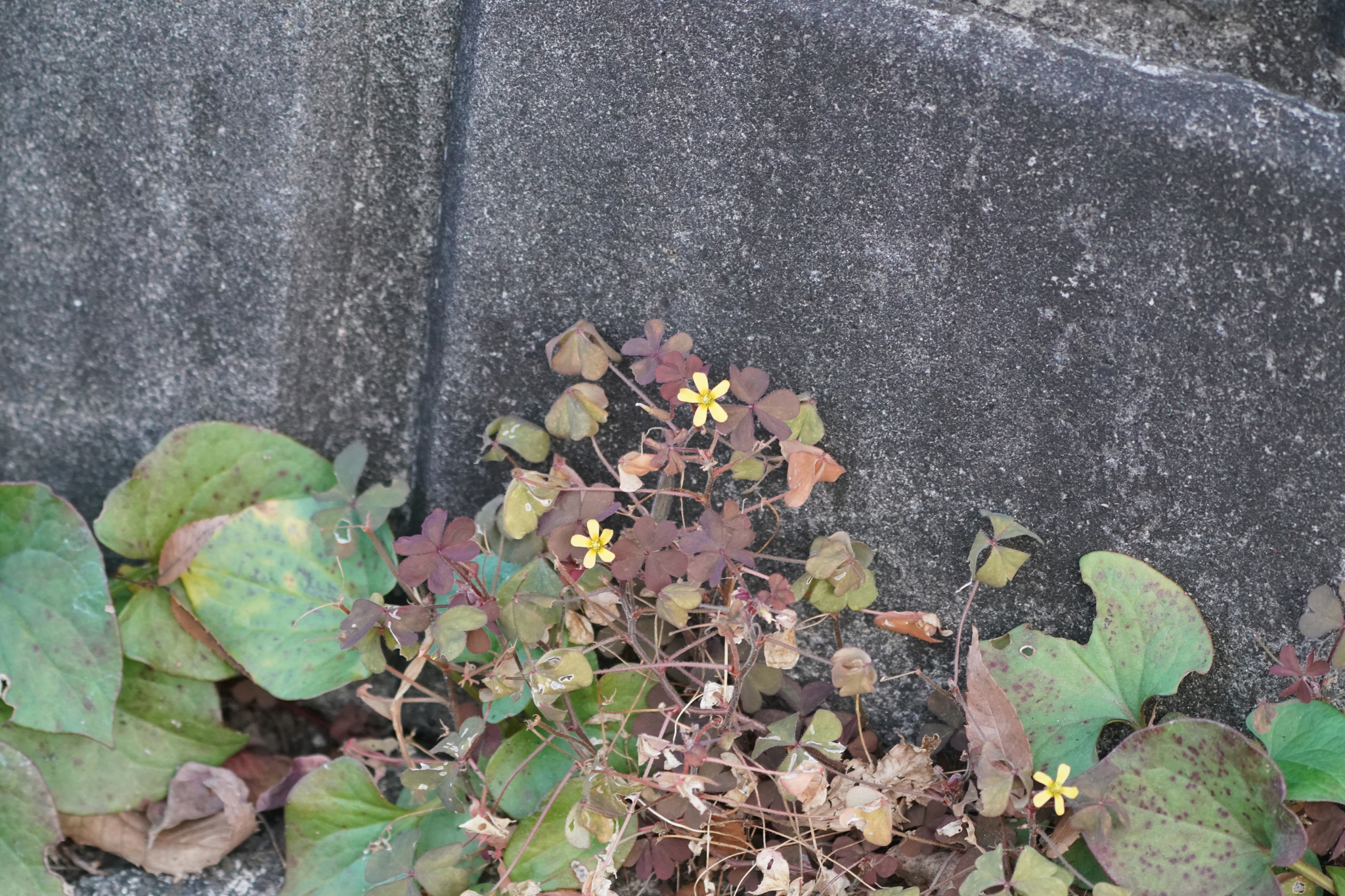
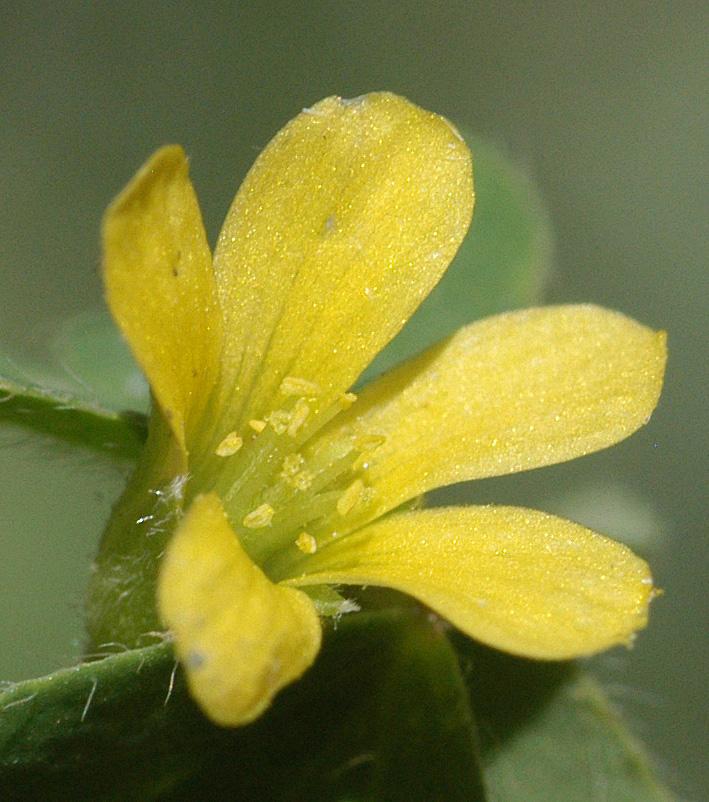
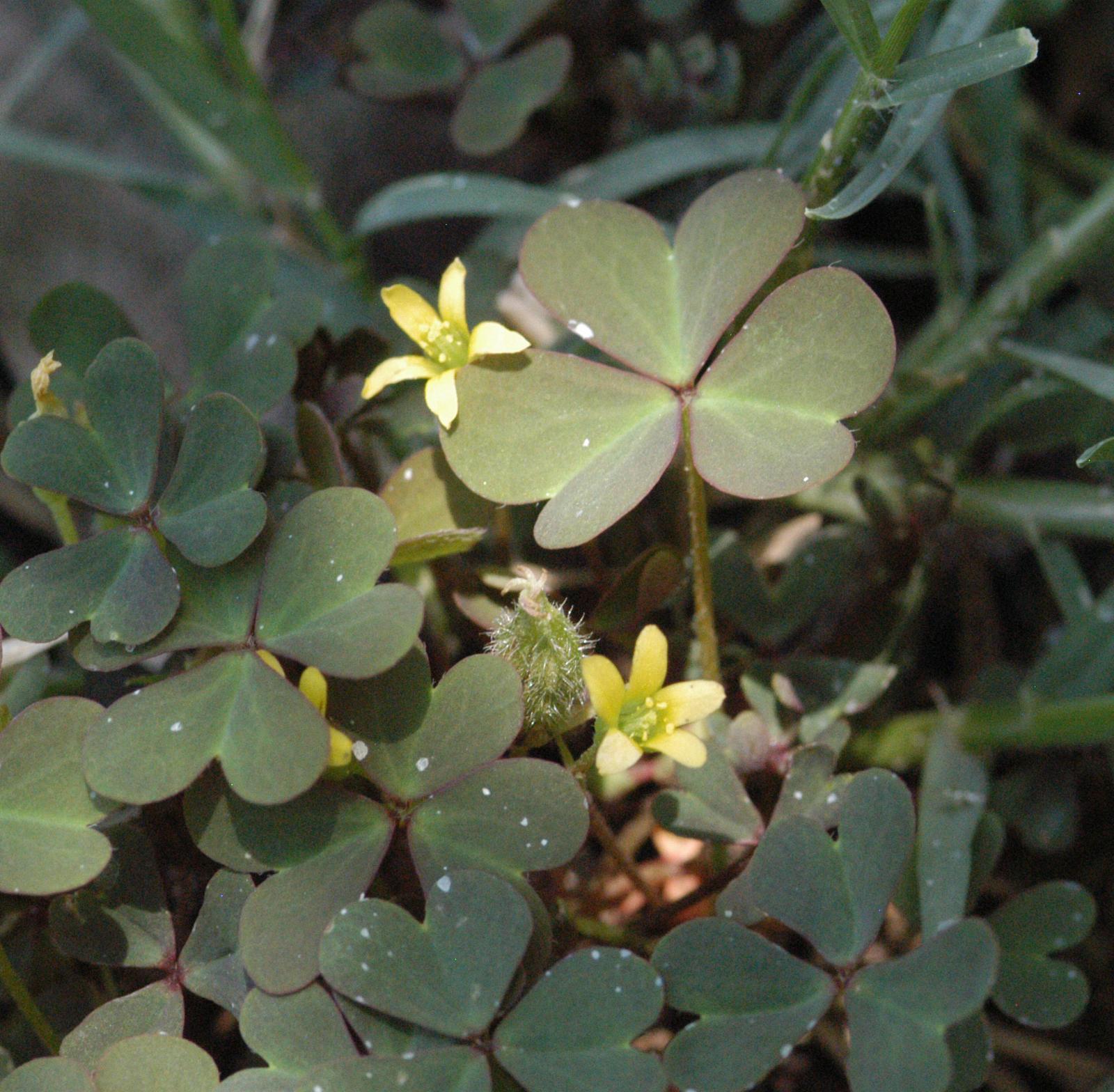
Alternate leaves bear three heart-shaped leaflets; their color ranges from green to purple. The yellow flowers have five petals. Upright, elongated fruits have five ribs, a useful feature once flowers have disappeared. 13
The floristic description gives a height of 3 to 15 cm (1.2 to 5.9 in). In horticulture, the stated size instead reaches 10 cm (3.9 in) tall, with a 0.1 to 0.5 m (0.3 to 1.6 ft) spread. These measurements describe different observations, without turning the mat's width into stem height. 53
Descriptions differ over the word “stolon”: the historical flora describes prostrate stems rooted at the base, but no stolons; a horticultural account uses the term. In the field, check for stems rooting at nodes, explicitly described for the species. 513
Taxonomy and names
The accepted name, Oxalis corniculata L., was published in Species Plantarum (1753). The names Acetosella corniculata (L.) Kuntze and Xanthoxalis corniculata (L.) Small are homotypic synonyms: they represent different generic placements of the same botanical name. 27
The species' limits have varied between treatments. The historical study of its origin excludes Oxalis radicosa and Oxalis procumbens, sometimes combined with creeping oxalis elsewhere. An old locality list may therefore cover a different taxonomic scope. 8
Habitat and distribution
The native range adopted by the international botanical reference extends from the Indian subcontinent to Japan and the Philippines. The species is now widely dispersed. Paths, walls and cultivated ground are among the places where it establishes. 73
French status is disputed between references: the French floristic reference treats it as native, whereas the international reference lists France and Corsica as introductions. An analysis of archives and archaeobotanical remains supports an Asian origin, without fixing a single arrival date in Europe. Its current presence in a garden does not resolve this historical question. 578
Life cycle and reproduction
The French flora gives flowering from April to October. British horticultural advice places flowers from spring to early fall, followed by ripe-seed ejection in late summer and fall. This phenology varies with climate. 54
Creeping oxalis spreads mainly by seeds, but rooted stems also extend the mat locally. Seed ejection establishes new seedlings away from the original plant; removing one stem therefore does not remove seeds already dispersed. Seeds can germinate rapidly, without dormancy. 41
In warm climates, spring and fall particularly favor growth. The calendar translates these seasons for the Northern Hemisphere, using moist but freely draining soil as a guide. Fertilizer advice intended to strengthen a lawn concerns the competing grass and does not constitute a feeding program for this oxalis. 14
Uses and risks
Creeping oxalis can become troublesome in beds and containers. Acting before seed formation limits dispersal: remove the main root and small segments that have already rooted. With only a few plants, removing spent flowers also prevents further seed production. 4
All parts have toxic potential linked to soluble calcium oxalates. In humans, serious effects are mainly associated with ingestion of large quantities; no child-specific threshold is established here. Caution applies to adults and children alike. 1
The veterinary warning covers the genus Oxalis and lists cats, dogs and horses as at risk of toxicity. Colic is reported in horses; kidney failure is possible after substantial ingestion. The systemic risk warrants taking such ingestion seriously, without assigning equal sensitivity to every animal. The status of other animals remains unknown. 6
Varieties, lookalikes and related plants
A purple form, described under the variety name atropurpurea, is of horticultural origin. This botanical rank does not demonstrate a stable cultivar bearing the same name. Purple coloring does not characterize the whole species, which also includes green plants. 89
Comparison with Oxalis stricta requires combining features: its leaves are green, whereas creeping oxalis leaves range from green to purple. A green plant therefore remains ambiguous on color alone. Also examine creeping oxalis' prostrate habit and rooting at nodes; historical confusion with related oxalis species makes retaining the full scientific name necessary. 938
Main sources
The references distinguish species description, distribution history and the veterinary warning concerning the genus.
- NC State Extension, Oxalis corniculata
- IPNI, Oxalis corniculata L.
- Royal Horticultural Society, Oxalis corniculata
- Royal Horticultural Society, Oxalis: identification and control
- Tela Botanica eFlore, BDTFX: Oxalis corniculata L.
- ASPCA, Good Luck Plant: Oxalis spp.
- Kew, Plants of the World Online: Oxalis corniculata L.
- Groom, Van der Straeten and Hoste, 2019, The origin of Oxalis corniculata L., PeerJ
- Clemson Extension, Oxalis Control
Frequently asked questions
How can I identify creeping oxalis?
Its stems creep and can root at nodes. Leaves bear three heart-shaped leaflets; yellow flowers produce upright capsules.
Why does creeping oxalis keep returning in pots?
The plant produces numerous seeds ejected by ripe capsules. Rooted stems also allow local spread. Removing plants before seed production limits dispersal.
Does creeping oxalis pose a risk to animals?
The veterinary warning for the genus Oxalis lists cats, dogs and horses among the animals at risk. Serious effects are mainly associated with large quantities; kidney failure is possible. The status of other animals remains unknown.
If you are unsure about a plant’s toxicity, ask a botanist or veterinarian for advice.