
Purple shamrock (Oxalis triangularis, )
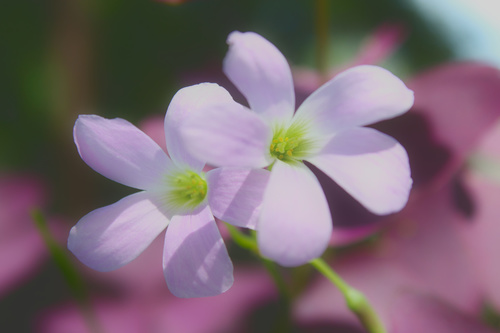

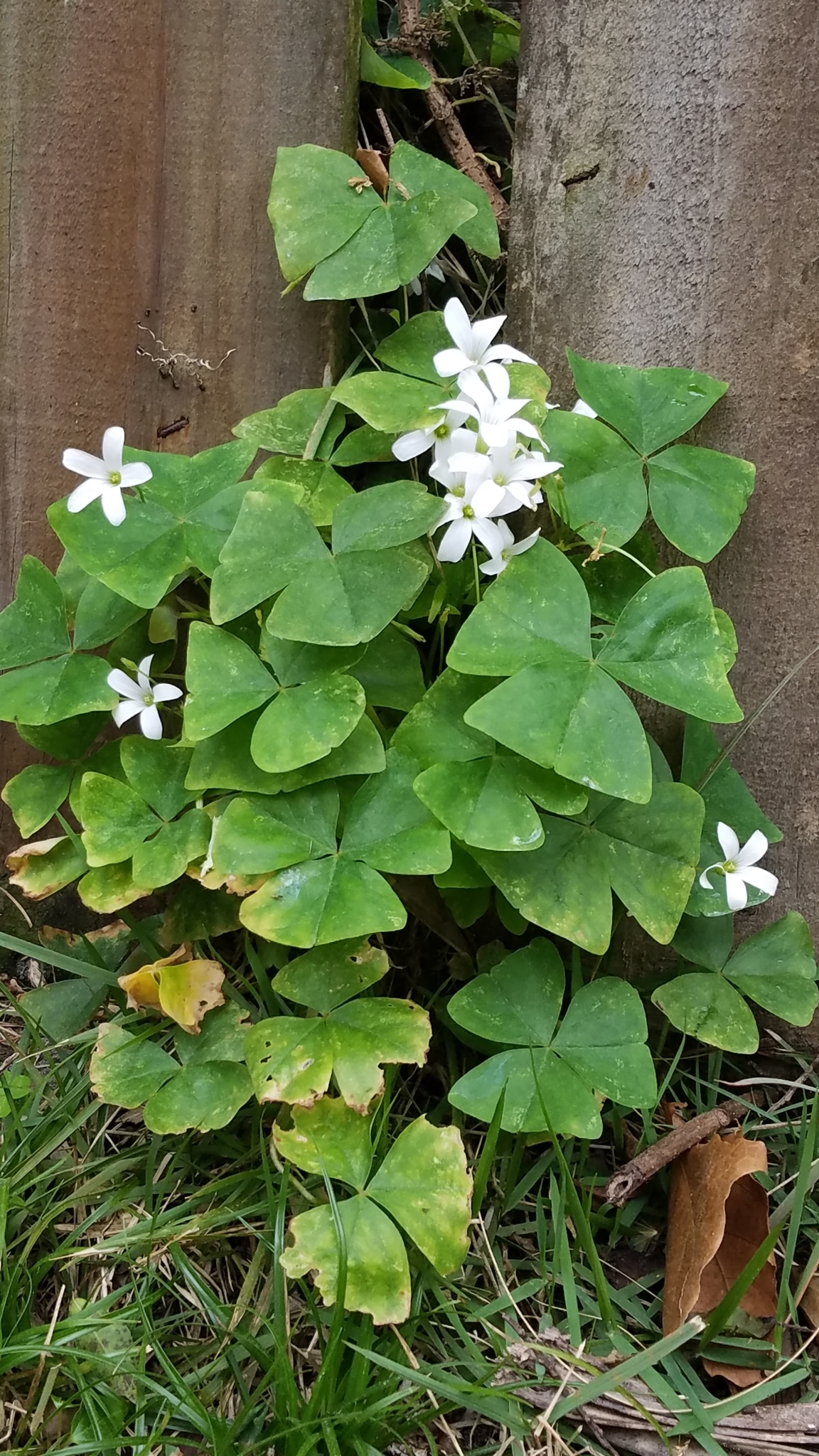
Purple shamrock (Oxalis triangularis) bears leaves with three triangular leaflets that fold at night. This South American perennial in the Oxalidaceae family grows from scaly rhizomes; its foliage may be green or purple, depending on the cultivated form.
Read morePurple shamrock, False shamrock, Purple wood sorrel and Love plant
Acetosella triangularis (A.St.-Hil.) Kuntze, Acetosella oxyptera (Progel) Kuntze, Acetosella papilionacea (Hoffmanns. ex Zucc.) Kuntze, Acetosella regnellii (Miq.) Kuntze, Acetosella yapacaniensis (K.Schum.) Kuntze, Oxalis catharinensis N.E.Br., Oxalis corumbaensis Hoehne, Oxalis delta Vell., Oxalis glaberrima Norlind, Oxalis oxyptera Progel, Oxalis palustris A.St.-Hil., Oxalis palustris var. major A.St.-Hil., Oxalis papilionacea Hoffmanns. ex Zucc., Oxalis regnellii Miq., Oxalis regnellii var. catharinensis (N.E.Br.) Norlind, Oxalis tenuiscaposa R.Knuth, Oxalis triangularis f. glabrifolia Chodat, Oxalis triangularis var. lepida Progel, Oxalis triangularis subsp. papilionacea (Hoffmanns. ex Zucc.) Lourteig, Oxalis truncata Willd. ex Zucc., Oxalis venturiana R.Knuth, Oxalis vernalis Fredr. ex Norlind and Oxalis yapacaniensis K.Schum.
Give plenty of ambient light without direct sun on the leaves.
Sheltered partial shade outdoors; bright light under cover.


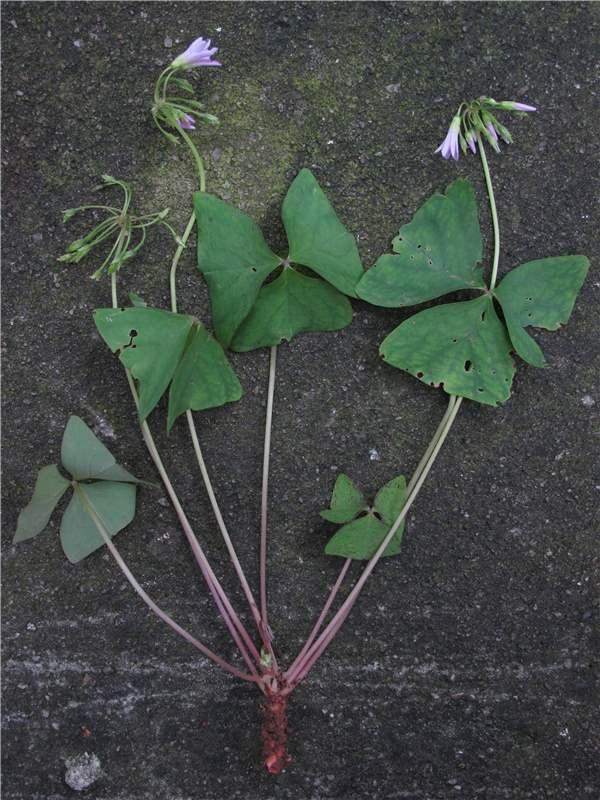
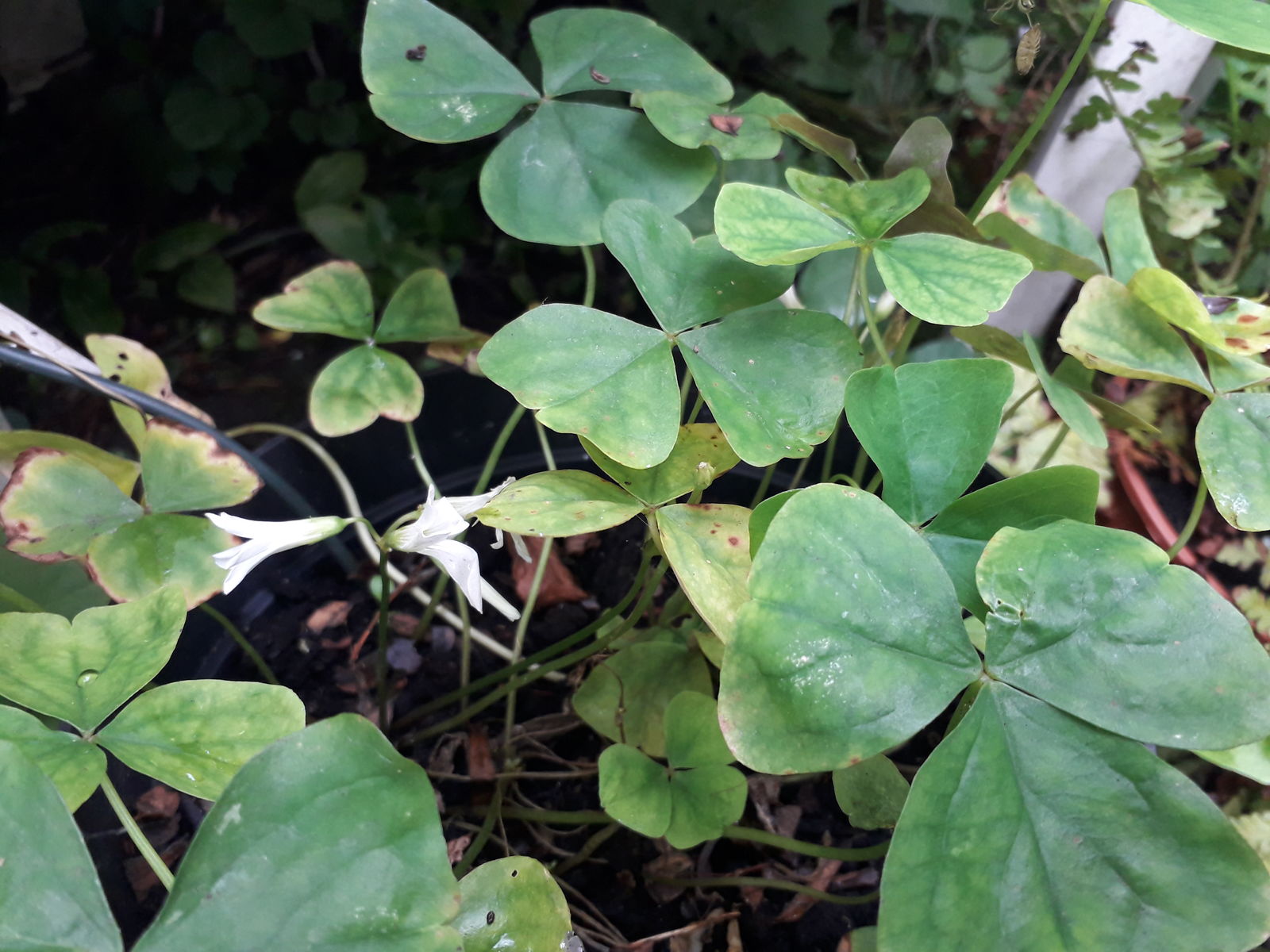
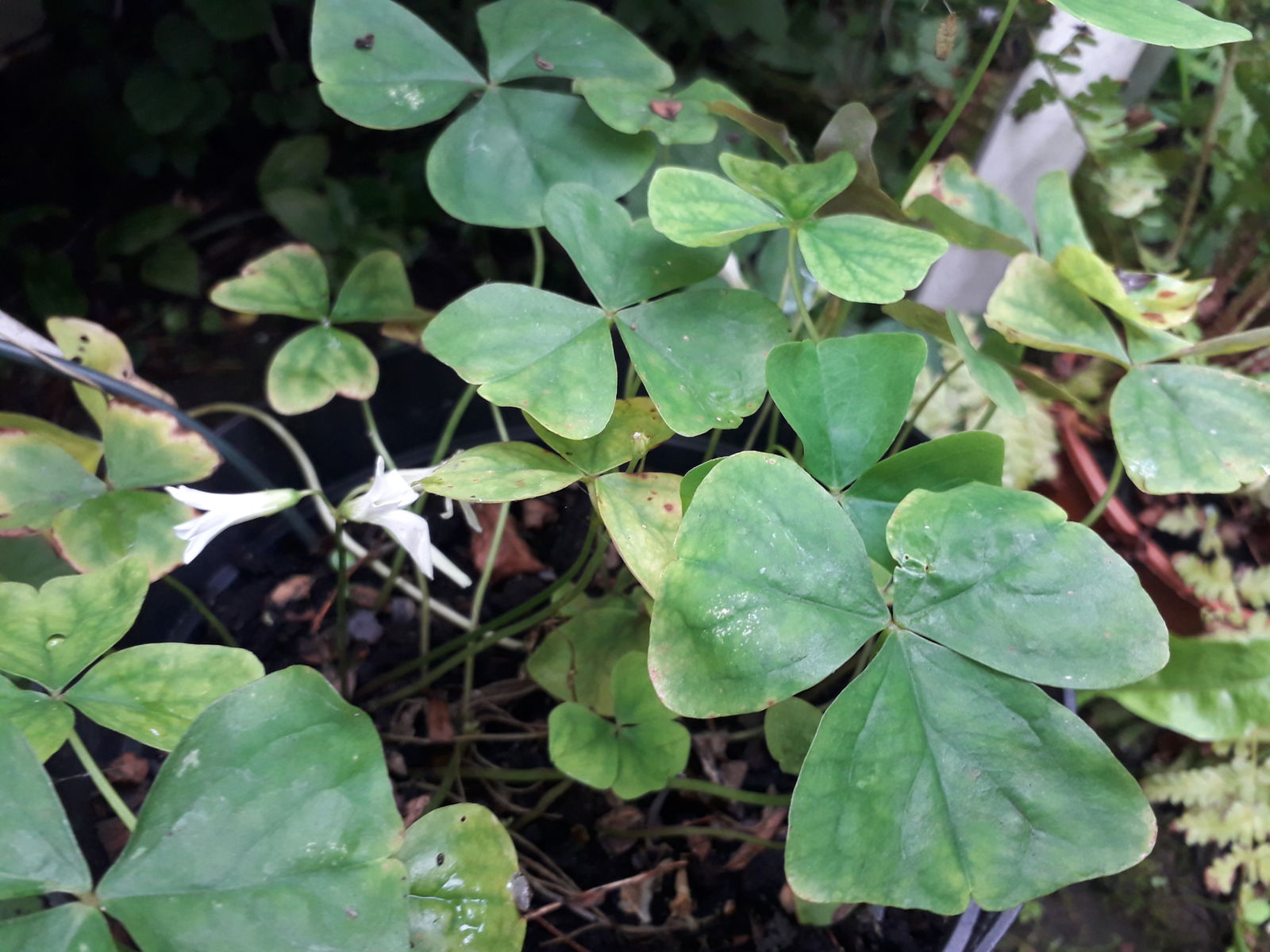
© photo
(c) Bryan Agosto, some rights reserved (CC BY-NC), uploaded by Bryan Agosto · cc-by-nc
Lauren Gillett · cc0
Robert Guralnick · cc-by
Taken Sep 8, 2022 by Gabby Hernandez (cc-by-sa)
Taken Nov 27, 2021 by ribeiro vinicius de godoi (cc-by-sa)
Taken Jul 12, 2020 by Reuben Pereira (cc-by-sa)
Taken Oct 21, 2022 by Ernita (cc-by-sa)
Taken Aug 7, 2022 by Jem Casey (cc-by-sa)
© copyright of the Board of Trustees of the Royal Botanic Gardens, Kew.




Global distribution
Native from Peru to Brazil and northern Argentina, including Bolivia and Paraguay; introduced in several southern US states.
- Native5
- Introduced3
- Peru
- Bolivia
- Brazil
- Paraguay
- Northern Argentina
- Arkansas
- Florida
- Louisiana
Hexagons: regions where the plant occurs. Green dots: native range.1
Identity
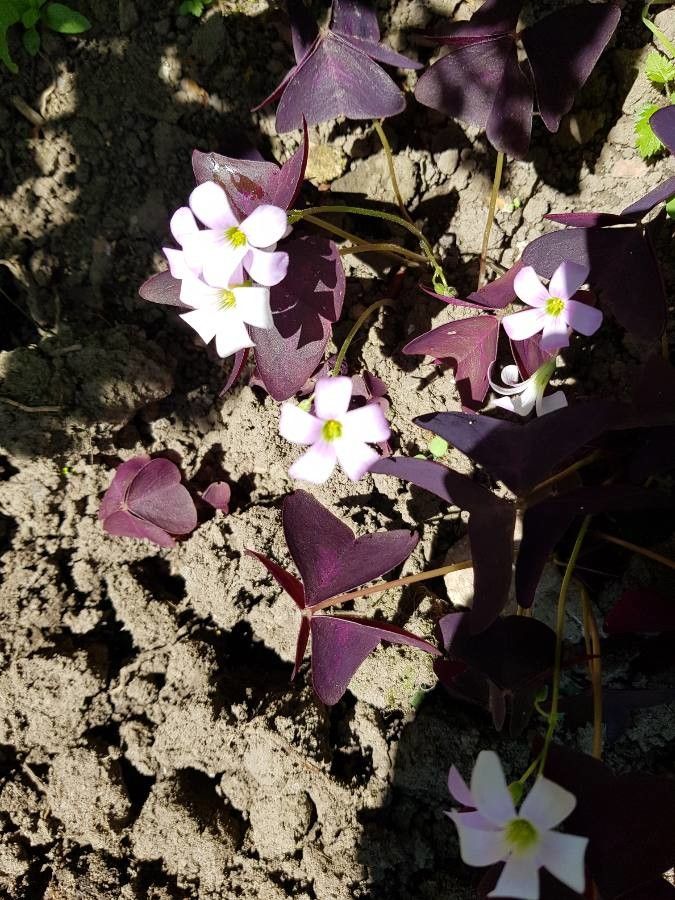
Purple shamrock (Oxalis triangularis A.St.-Hil., 1825) has leaves with three triangular leaflets that fold at night. The foliage may be green or purple, so color alone cannot identify the species. This herbaceous perennial belongs to the Oxalidaceae family in the order Oxalidales. The shape and movement of the leaflets remain useful identifying features across its cultivated color forms. 2 1
The French name "Oxalis triangulaire" is documented in a botanical inventory from Franche-Comté, France. The scientific name was published in 1825, in Flora Brasiliae Meridionalis. The epithet triangularis refers to the shape of the leaflets, a feature visible in both green and purple plants. 7 1 2
Recognition
Scaly rhizomes produce the leaves and flower stalks of purple shamrock. The rhizomes store water and nutrients, and resemble elongated bulbs. British horticultural descriptions give a flowering height of 15–30 cm (about 6–12 in), with green or dark purple leaflets. The stated height concerns plants in cultivation with their flowers, rather than the size of the underground rhizomes. 2 3
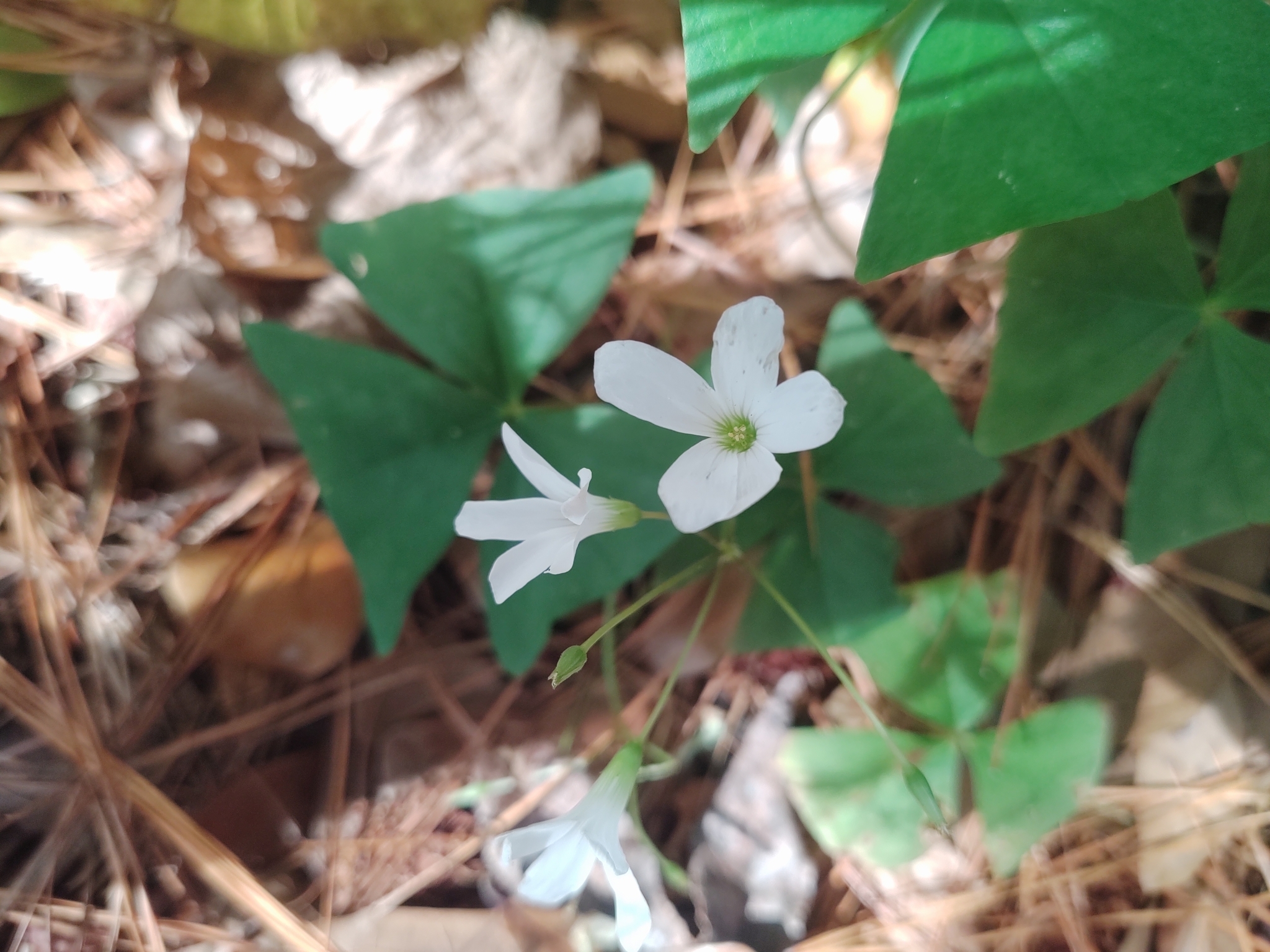
Small white or pale pink flowers have five petals and rise above the foliage. Groups of funnel-shaped flowers sit on the flower stalks. Like the leaves, the flowers close at night, so the same pot can look different in the evening and during the day. The British horticultural account describes summer flowering; that seasonal description refers to its growing context. 2 3
Useful taxonomy
Names once applied to separate taxa now appear in the synonymy of purple shamrock. The current classification of Oxalis triangularis includes Oxalis regnellii Miq. and Oxalis papilionacea Hoffmanns. ex Zucc. as species synonyms. Either older name on a label can therefore identify purple shamrock. 1
Oxalis triangularis subsp. papilionacea (Hoffmanns. ex Zucc.) Lourteig also appears among those synonyms. Horticultural descriptions still use infraspecific ranks, including the nominate subspecies triangularis. A subspecies name and a cultivar name identify different categories: ‘Atropurpurea’ denotes a horticultural selection, while papilionacea belongs to the history of botanical classification. The names should not be counted as equivalent kinds of cultivated form. 1 4 2
Habitat and range
Native populations of purple shamrock occur in South America, from Peru to Brazil and northern Argentina, including Bolivia and Paraguay. The species is a tuberous geophyte, meaning that its storage organs lie underground. Its principal habitat falls within seasonally dry tropical biomes. Underground reserves form part of purple shamrock's growth habit in that seasonal environment. 1
Arkansas, Florida and Louisiana are listed among the places where purple shamrock has been introduced. These US records are separate from its native South American range. In France, a Franche-Comté inventory records the species among regional exotic plants. That floristic record establishes neither a national regulatory status in France nor a legal status for readers elsewhere. 1 7
Life cycle and reproduction
Loss of foliage can mark dormancy in purple shamrock. Garden accounts describe winter rest followed by spring regrowth, but heat or drought can also interrupt growth, and fall dormancy is possible. Leaf loss alone therefore does not prove that the rhizomes have died. Reduce watering and wait for regrowth rather than continuing to water a dormant pot as though it were actively growing. 2
The calendar gives relative editorial water and growth indices on a scale from zero to ten for cultivation under cover in mainland France, in the Northern Hemisphere. The scores represent spring regrowth and summer activity followed by winter rest. Calendar indices are neither measurements nor universal recommendations. Repotting windows assume that growth has actually resumed; when dormancy occurs at another time, follow the foliage and the drying of the potting mix rather than transferring the French months unchanged to local practice. 2 4 5
Purple shamrock can be propagated by dividing its rhizomes; the rhizome scales can also produce new plants. Seed propagation is documented as well. During growth, let the surface of the mix dry between waterings and provide good drainage. Monthly application of a balanced liquid fertilizer is recommended for the nominate subspecies during growth; general indoor oxalis guidance likewise reserves feeding for active growth. The feeding recommendations for purple shamrock establish no precise dose. 2 4 5
Uses and risks
In pots or garden beds, purple shamrock is grown as an ornamental plant. A sheltered position in partial shade and well-drained soil suit the British horticultural context; growing under cover allows frost-free overwintering. US hardiness-zone guidance describes climate suitability within that system, but cannot guarantee that a pot will survive outdoors in every location. Outdoor decisions need to reflect local frost conditions. 3 4 2
All parts of purple shamrock have toxic potential when eaten; serious effects are mainly associated with large amounts. Soluble calcium oxalates account for the ingestion risk. Dogs, cats and horses are affected. Genus-level Oxalis guidance describes drooling or tremors and possible kidney damage, which is rare in dogs and cats. Contact a veterinarian if an animal may have eaten the plant. Children's specific sensitivity and the risk to other animals remain unestablished. 2 6
Varieties, look-alikes and related plants
‘Atropurpurea’ has dark purple leaves and pale pink flowers, while ‘Fanny’ has olive-green foliage with a central silver pattern. Other documented horticultural names include ‘Ebony’ and ‘Francis’, as well as ‘Mijke’. Inclusion in a cultivar list gives no measure of commercial rarity. Charmed Wine is the trade name for ‘Jroxburwi’: the two names denote the same selection and should not be counted separately. 2 8
Oxalis plants sold as "shamrocks" resemble clovers in their foliage but belong to a different botanical group. Several Oxalis species are marketed under that common name. When comparing two pots, the binomial and cultivar name identify the plant more precisely than a "shamrock" label alone. A shared common name does not establish that the plants are the same species. 5
Main sources
Botanical synonymy separates older names for purple shamrock from cultivar names; the veterinary reference covers the genus Oxalis.
- Plants of the World Online / Kew, Oxalis triangularis A.St.-Hil.
- NC State Extension, Oxalis triangularis
- Royal Horticultural Society, Oxalis triangularis
- Royal Horticultural Society, Oxalis triangularis subsp. triangularis
- University of Wisconsin Extension, Shamrocks, Oxalis spp.
- ASPCA Poison Control, Shamrock Plant, Oxalis spp.
- CBN de Franche-Comté, exotic vascular plants, invasive and non-invasive, 2019
- Proven Winners, Charmed Wine, Oxalis triangularis ‘Jroxburwi’
Frequently asked questions
Why do purple shamrock leaves close at night?
Nighttime folding of the leaflets is normal for purple shamrock. The flowers also close at night.
Is my purple shamrock dead if it has lost all its leaves?
Leaf loss can indicate seasonal dormancy or a response to heat and drought. Reduce watering and wait for new growth; the absence of leaves alone does not prove that the rhizomes are dead.
Is purple shamrock toxic to cats?
The risk is documented for cats, dogs and horses. Soluble calcium oxalates can cause illness; contact a veterinarian if ingestion is suspected.
Are Charmed Wine and Jroxburwi different cultivars?
Charmed Wine is the trade name for the cultivar Jroxburwi. Both names identify the same selection.
If you are unsure about a plant’s toxicity, ask a botanist or veterinarian for advice.