
Bearded tongue (Penstemon, )

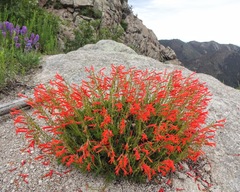
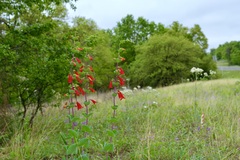
Bearded tongue (Penstemon) is a North American genus of perennials and subshrubs in the Plantaginaceae family. Often suited to dry conditions, its tubular flowers attract pollinators. Red-flowered species such as Penstemon eatonii illustrate one part of a genus that also includes pink, blue, and purple garden plants.
Read moreBearded tongue and Beardtongue


© photo
Daniel · cc0
Andrew Tree · cc-by
Michelle W. (鍾偉瑋) · cc-by
© copyright of the Board of Trustees of the Royal Botanic Gardens, Kew.


Identity
Bearded tongue (Penstemon Schmidel) is a genus in the Plantaginaceae family. Red-flowered members include Penstemon eatonii, but the genus encompasses a much broader range of plants. 1 8
POWO, WFO, and IPNI recognize the name Penstemon. The genus includes garden species, hybrids, and cultivars with red, pink, blue, or purple flowers, so its name does not identify one particular species. 1 2 3
North America is the main home of these plants. Their tubular flowers attract pollinators: some lineages draw more bees, while others attract hummingbirds within their native range. 4 6
For red planting schemes, bearded tongue brings a more upright, dry-garden character than a pelargonium. It suits gravel, bright slopes, sunny gardens, and planting with a slightly wild flowering style. 8 5
Recognition
Opposite leaves and tubular, often two-lipped flowers characterize penstemons. The English name beardtongue refers to the staminode, sometimes hairy, visible in the flower's throat. 4
Flower color varies widely across the genus. Red forms are only part of a palette that also includes violet, blue, pink, white, and purple; a single color cannot represent the whole group. 8 5
An upright outline is typical, with basal leaves below taller flowering stems. Dryland species often have a more restrained appearance than the densely flowering garden hybrids. 4 7
Look closely at the flower tube when identifying a garden plant. Elongated red flowers in clusters on straight stems in a dry border fit the appearance of red-flowered species such as Penstemon eatonii. 8 6
Useful taxonomy
Botanical references accept Penstemon Schmidel as a genus in Plantaginaceae. Older classifications placed it near the Scrophulariaceae. 1 4
The red tubular flowers of Penstemon eatonii make it a useful example of the group. That species remains distinct from the broader genus Penstemon, which includes many other flower colors and forms. 8 6
Garden cultivars add another layer of identification. Many plants sold as penstemons are selections or hybrids that cannot be reduced to a single species; the genus name can describe this broader horticultural group. 5 7
A red-flowered bearded tongue therefore belongs to Penstemon, with the tubular flowers and dry-border uses associated with the genus. Color alone does not establish its species. 1 8
Cultivation
Give bearded tongue full sun and well-drained soil. Heavy soil that stays cold and wet in winter can kill plants that appeared vigorous during the growing season. 5 7
Poor or gravelly soil suits these plants better than overly rich ground. Excess nitrogen produces soft stems and a less durable base; leaner conditions help keep plants compact and floriferous. 5
Pruning timing depends on the climate. Avoid cutting plants too low before winter: some retained growth protects the base, which can be tidied when growth resumes in spring. 5 7
Use cuttings to maintain garden cultivars. Seed is better suited to species and naturalistic planting, with results that vary according to the seed's origin. 7 5
On heavy ground, plant slightly above the surrounding soil. A low mound, surface gravel, and limited competition around the crown improve aeration; this preparation matters more than frequent watering once plants are established. 5 7
In humid climates, highly developed garden forms may be less durable. Treat them as short-lived perennials: take cuttings regularly, replace tired plants, and reserve the more drought-adapted species for dry parts of the garden. 5
Uses
Upright accents in dry borders are a strong use for bearded tongue: gravel gardens, warm edges, naturalistic schemes, and large rock gardens, alongside catmints, sages, yarrows, and grasses. 8 5
Red forms bring a different effect from annual red sages. Their lighter, more botanical appearance fits a dry garden more readily than a heavily watered window box. 8
Tubular flowers give pollinators a clear reason to visit. Red species such as Penstemon eatonii are often associated with long-billed visitors in their native range, reflecting their narrow flower shape. 6 4
In a small garden, several spaced plants create more rhythm than a single isolated specimen. Good drainage and airflow also reduce problems around the base. 5
Set red flowers against quieter companions. Gray foliage, fine grasses, and blue-violet flowers soften the effect; a border already crowded with intense reds can make bearded tongue harder to distinguish. 8
Cautions
Bearded tongue is treated as a plant with low toxicity, but it remains an ornamental. With no common food use established, ingestion should be avoided, especially by children and animals. 1
Growing conditions are the more immediate concern. A plant in compact, wet soil may die abruptly, whereas one in freely draining ground lasts better and is easily propagated from cuttings. 5 7
Watch for slugs on young shoots and for older plants becoming bare at the base. Cuttings or modest divisions can preserve a valued selection. 5
Poor flowering does not necessarily mean a plant needs feeding. Too little sun or nearby competition is often responsible; clearing the base and improving drainage can help more than fertilizer. 5 7
Red-flowered plants illustrate only part of the genus Penstemon. The genus name covers that garden effect without implying that every red bearded tongue is Penstemon eatonii. 8 1
Main sources
- Plants of the World Online / Kew, Penstemon
- World Flora Online, Penstemon
- International Plant Names Index, Penstemon
- Wikipedia EN, Penstemon
- Royal Horticultural Society, Penstemon search results
- Lady Bird Johnson Wildflower Center, Penstemon eatonii
- American Penstemon Society
- Floralens, red flower selection
If you are unsure about a plant’s toxicity, ask a botanist or veterinarian for advice.