
Peperomia erythrostachya


Peperomia erythrostachya is an epiphytic peperomia endemic to Peru, described by William Trelease in 1936. A member of Piperaceae, it grows on tree trunks in humid tropical forests. Its epithet refers to a reddish flower spike. Peperomia as a genus is generally considered non-toxic to cats and dogs.
Read more

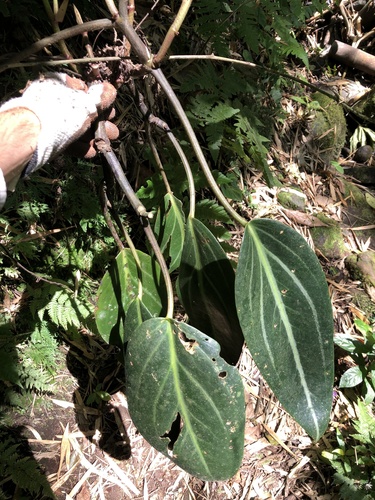
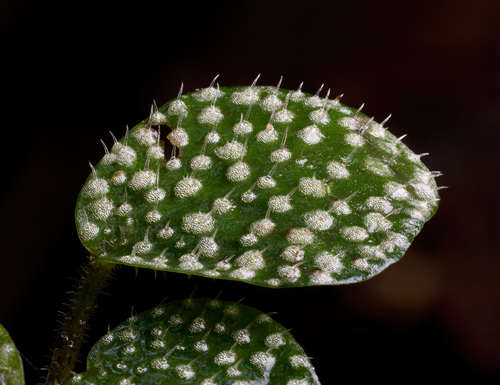
© photo
Wikimedia Commons · CC BY-SA or Public Domain
(c) Skjold Søndergaard, some rights reserved (CC BY) · cc-by
(c) Alan Rockefeller, some rights reserved (CC BY) · cc-by
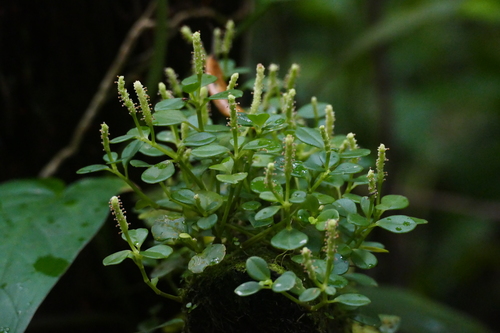
Global distribution
Peperomia erythrostachya is endemic to Peru, growing as an epiphyte in humid tropical forests. Its natural range is restricted and its conservation is a concern. Unlike peperomias widely sold as houseplants, this species remains rare in cultivation and is seldom seen outside its native range.
Identity
Peperomia erythrostachya (Peperomia erythrostachya Trel.) is an epiphytic peperomia in the large Piperaceae family. American botanist William Trelease described it in 1936. The epithet erythrostachya, from the Greek for red spike, refers to the plant's characteristic reddish inflorescence. 1 2
Unlike its widely grown houseplant relatives, this species remains rare in cultivation. It is endemic to Peru and mainly known to botanists and collectors. It nevertheless shares fleshy, semi-succulent leaves and the genus's general reputation for safety around pets. 3 8
Recognition
A small, compact epiphyte, Peperomia erythrostachya grows on trunks and branches. Like most peperomias, it has smooth, clear green, fleshy semi-succulent leaves. Their water-storing tissue reflects life perched above the reserves of a deep soil. 8 6
Its most distinctive feature is the flower spike: a slender, upright, reddish axis that gave the species its name. This dense, petal-free spike is typical of Piperaceae and recalls its relationship to the pepper plant. Growth remains low, rarely exceeding 30 cm (12 in) on its support. 1 8
Thick, fleshy stems are another peperomia characteristic. The low, bushy habit and red spike distinguish this plant from other small understory epiphytes, although several related Andean peperomias may require detailed examination to separate them. 3 6
Useful taxonomy
Trelease described the species as Peperomia erythrostachya Trel. in 1936. IPNI 188702-2 provides a stable identifier, and Plants of the World Online treats it as an accepted name in Peperomia, Piperaceae. Hundreds of species share this broad generic and family framework.
- Accepted name: Peperomia erythrostachya Trel.
- Genus: Peperomia Ruiz & Pav.
- Family: Piperaceae (order Piperales)
- IPNI / POWO identifier: 188702-2
Use the accepted scientific name Peperomia erythrostachya as the stable reference. This species has no widely established vernacular name, so its Latin binomial provides the reliable basis for identification. 1 2
Habitat and range
Peru is the only native country of Peperomia erythrostachya: it is an endemic species, occurring naturally nowhere else. It inhabits humid tropical forests, where warmth and consistently moist air support its epiphytic life. 1 3
Like many tropical Andean peperomias, it grows as an epiphyte on trunks and branches, rooting in humus- and moss-filled crevices without parasitizing its support. This explains its small root system and need for a very airy substrate that drains quickly while retaining some moisture. 6 7
A restricted natural range makes the species sensitive to pressures on Peruvian forests, and its conservation is a concern. Its rarity contrasts with familiar garden-center peperomias: erythrostachya remains a mainly botanical species, seldom encountered outside its native habitat. 1 8
Life cycle and reproduction
When flowering, it carries one or more slender, upright, reddish spikes above the foliage. These dense Piperaceae inflorescences consist of tiny flowers without petals; although discreet, they show its membership in the pepper family. 8 1
Cultivation is unusual for this species, but propagation follows the familiar methods of Peperomia, a genus known for easy rooting. A stem cut just below a node roots in moist, airy mix, and leaf cuttings often succeed: a healthy leaf with its petiole can form a new plant. 6 7
For either cutting method, warmth and bright indirect light favor the first roots in three to six weeks. The epiphyte's small root system then allows young plants to remain in modest containers, provided the substrate never becomes waterlogged. 5 7
Uses and risks
Botanical interest is the principal value of Peperomia erythrostachya. As a rare endemic, it illustrates the diversity of Peperomia in Peru's upland forests more than it serves as an ornamental. Unlike Peperomia obtusifolia and decorative-leaved peperomias, it is not widely sold as a houseplant. 3 4
At genus level, the safety picture is reassuring: the ASPCA lists peperomias as non-toxic to cats and dogs. No particular toxicity is documented for this species, which follows that genus-level status; even so, animals should be discouraged from routinely chewing its leaves. 9 6
Varieties, look-alikes and related plants
No established horticultural cultivars are known for Peperomia erythrostachya. It is a wild species with little selection, unlike houseplant peperomias available in variegated forms. Its botanical name, rather than a cultivar label, is therefore the useful reference.
Other South American epiphytic peperomias are the likeliest sources of confusion, especially:
- Peperomia obtusifolia, much more common, with rounded leaves and a bushier habit;
- Peperomia rotundifolia, a small creeping epiphyte with round leaves;
- other Andean Peperomia with colored spikes, distinguishable only through detailed examination.
The combination of a reddish spike, compact epiphytic growth, and Peruvian origin gives the most useful clues when checking whether a plant matches Peperomia erythrostachya. 1 3
Main sources
- Plants of the World Online / Kew, Peperomia erythrostachya Trel.
- International Plant Names Index, Peperomia erythrostachya Trel.
- Tropicos / Missouri Botanical Garden, Peperomia erythrostachya Trel.
- Missouri Botanical Garden, Plant Finder (Peperomia genus)
- Royal Horticultural Society, Peperomia (genus)
- North Carolina State Extension, Peperomia (genus)
- Plants For A Future, Peperomia
- Encyclopaedia Britannica, Peperomia
- ASPCA, Peperomia non-toxic entry
Frequently asked questions
Is Peperomia erythrostachya toxic to cats and dogs?
The ASPCA classifies Peperomia as non-toxic to cats and dogs. No particular toxicity is documented for this species, which shares the general safety reputation of other members of the genus.
Where does Peperomia erythrostachya come from?
It is endemic to Peru, where it grows as an epiphyte in humid tropical forests. Its range is restricted and its conservation is a concern.
What does erythrostachya mean?
The epithet comes from the Greek erythros, red, and stachys, spike, referring to this peperomia's characteristic reddish flower spike.
Can Peperomia erythrostachya grow indoors?
Unlike other peperomias, it is not a common houseplant. Rare in cultivation, it would need the warm, humid conditions of a conservatory or tropical greenhouse.
How can I recognize Peperomia erythrostachya?
Look for a compact epiphytic habit, fleshy leaves typical of Peperomia, and the upright reddish flower spike that gave the species its name.
What humidity does Peperomia erythrostachya need?
As a plant of humid tropical forest, it appreciates high air humidity, around 50–70%, higher than many houseplants require.
Similar plants

If you are unsure about a plant’s toxicity, ask a botanist or veterinarian for advice.