
Common reed (Phragmites australis, )
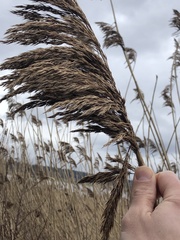
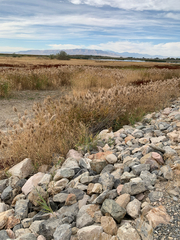
Common reed is a tall perennial grass of marshes and banks. Rhizomes produce dense colonies, and its long stems carry large silky panicles in late summer.
Read moreCommon reed
Arundo australis
Allow a few hours of direct sun per day, preferably morning or evening.
Open habitats; shade tolerance varies.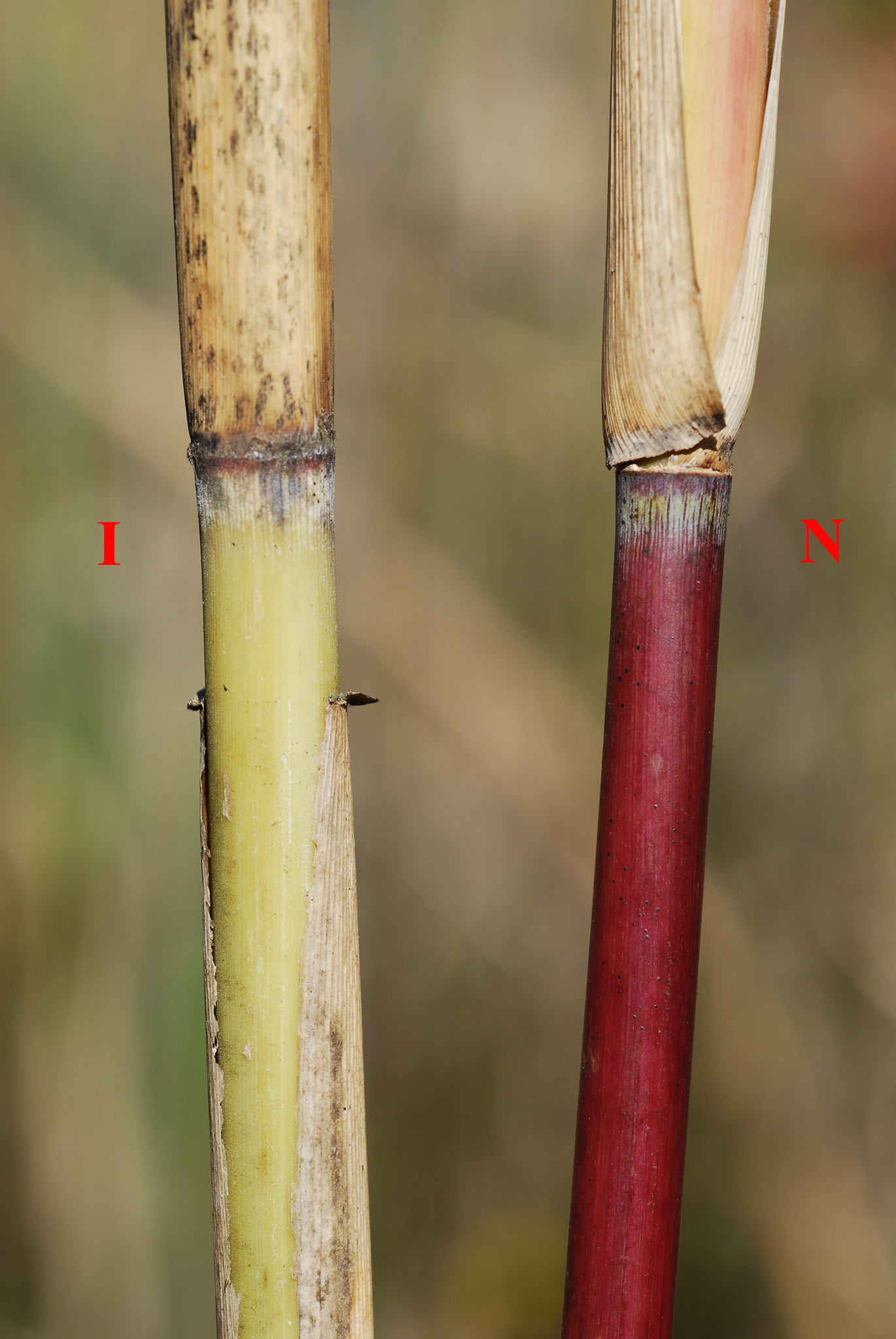
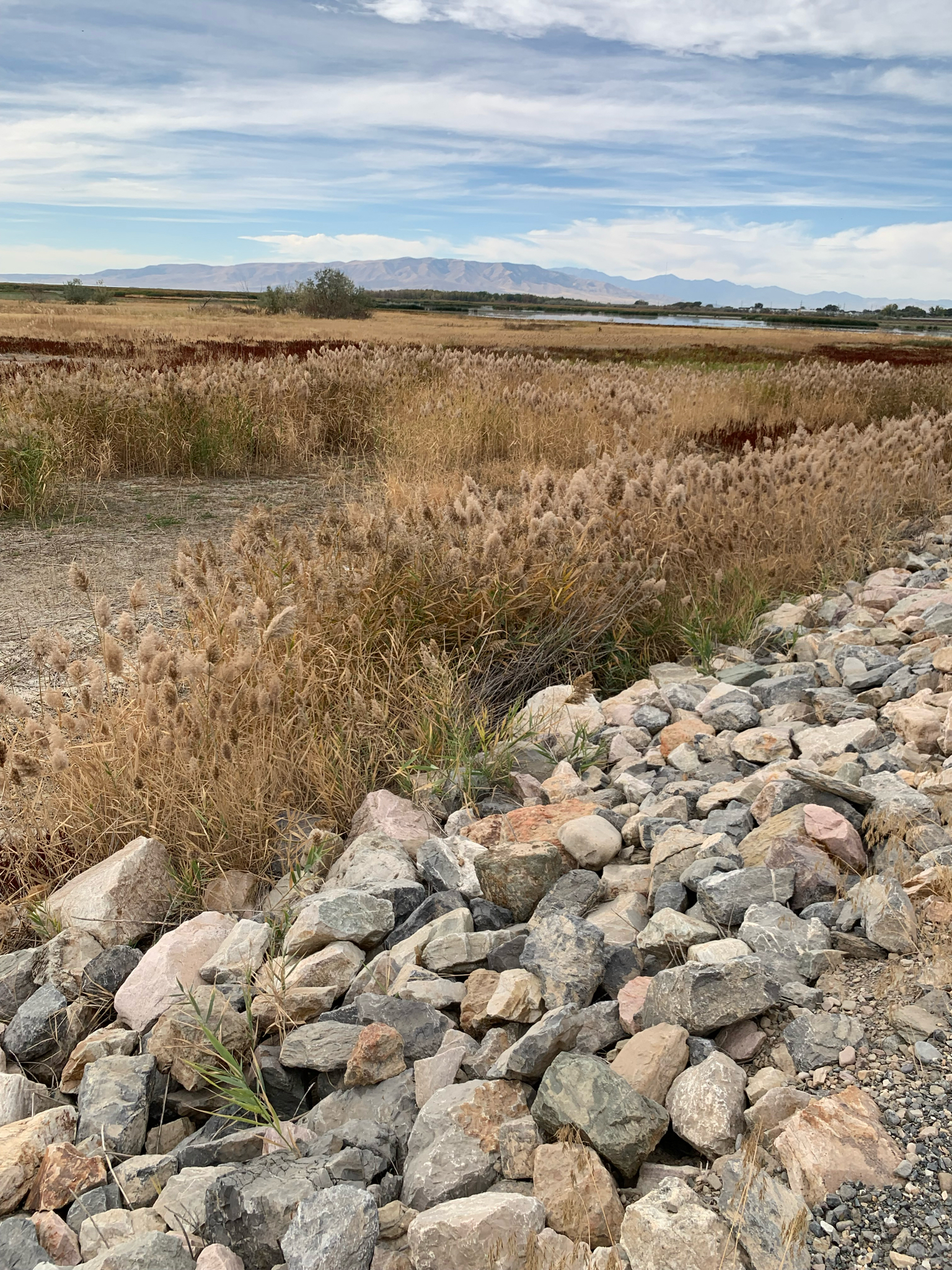
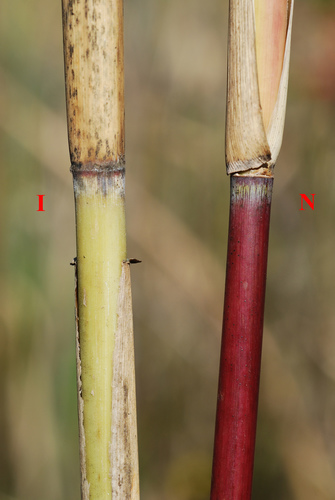
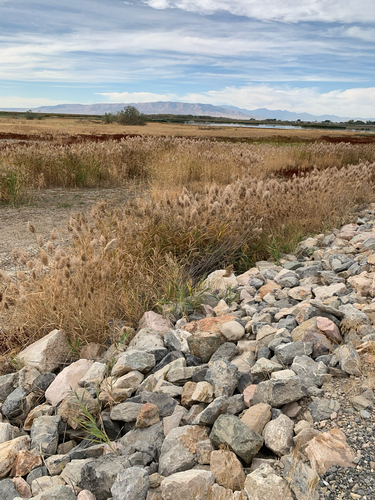
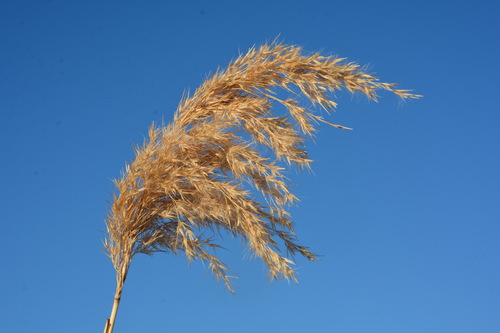
© photo
Douglas Goldman · cc-by-nc
Tom Erler · cc0
Zach Earl · cc-by
(c) Douglas Goldman, some rights reserved (CC BY-SA) · cc-by-sa
(c) Zach Earl, some rights reserved (CC BY) · cc-by
Global distribution
Almost cosmopolitan; native or introduced status varies by territory and lineage.
- Native1
- Introduced1
- France
- New Zealand
Hexagons: regions where the plant occurs. Green dots: native range.1
Identity
Common reed (Phragmites australis (Cav.) Trin. ex Steud., 1841) is a perennial grass forming large colonies called reed beds. French names including phragmite austral, phragmite commun and roseau à balais refer to this species. “Reed” alone is less precise and can also designate other tall wetland plants. 8 3
Upright stems 1–4 m (3.3–13 ft) tall carry long, narrow leaves. The vegetation can appear permanent, but aboveground parts dry during the unfavorable season. Old brown stems standing above water therefore do not demonstrate evergreen foliage. Underground organs provide the following season’s new shoots. 4 5
Recognition
A row of short hairs in place of a membranous ligule helps identify common reed. It lies at the junction of blade and sheath on a leaf accessible from the bank. Leaves commonly measure 30–50 cm (12–20 in) long and 1–3 cm (0.4–1.2 in) wide. Their bases surround the stem, unlike the cylindrical leaves of rushes. 4 7
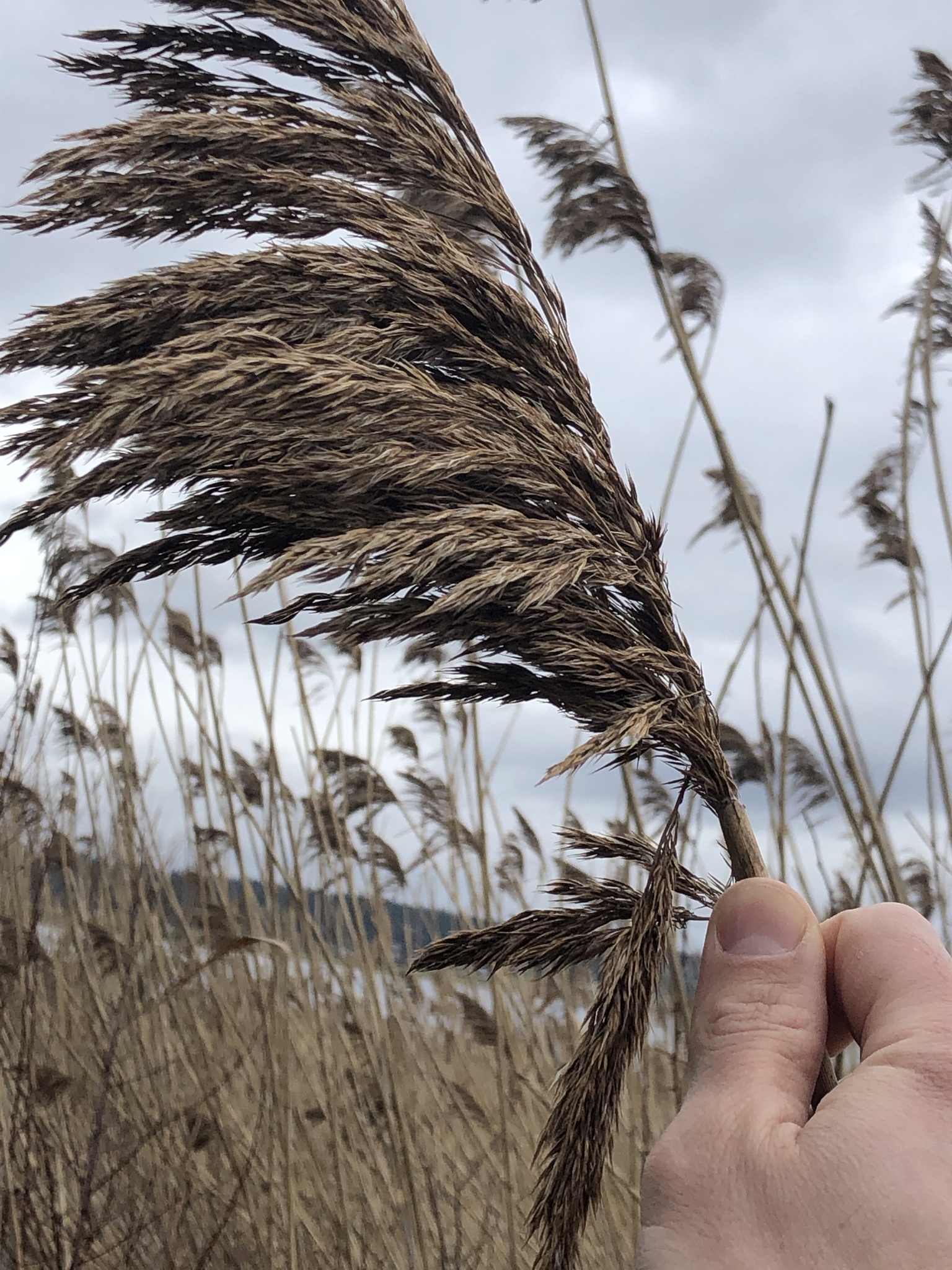
A large terminal panicle 20–50 cm (8–20 in) long appears in late summer. Initially often purplish brown, it becomes paler and silky. Long silky hairs on spikelet axes give the mature inflorescence its feathery appearance. Combine panicle, leaves and jointed stems; a winter photograph may lack several of these characters. 4 7 5
Useful taxonomy
Common reed was described as Arundo australis Cav. in 1799. This old name does not justify confusing it with every plant now placed in Arundo. Placement in Phragmites is the botanical combination used for the present species. 1
Publication history explains slightly different authorities encountered for this name. A combination was already validly published in 1840; attribution to Trinius appears in the 1841 treatment. The commonly retained “Trin. ex Steud.” is nomenclatural information, not evidence for two distinct species. 2
Habitat and distribution
Marshes, shores and wet ditches support common reed. It grows in saturated soil and extends into shallow open water, with its base submerged for much of the year. A reed bed describes vegetation, not a guarantee of clean water or constant depth. Water level and its seasonal changes matter as much as water present on the observation day. 4 7 1
In France it is native in marshes and along water throughout the country, including Corsica, and nationally Least Concern. French reed beds belong to local flora and must not be confused with the invasive lineage described in North America. 7 8 1
Its range is almost cosmopolitan, particularly in temperate and subtropical regions. Status varies territorially: Western Australia classifies it as alien although the global native range includes Australia, and its true origin there is considered uncertain. A precise regional context is therefore needed to interpret status. 1 6
Cycle and reproduction
Rhizomes produce new stems at a distance. A reed bed need not represent many individuals each raised from seed: one plant can occupy a large area vegetatively. Dead aerial stems remain visible, but next year’s growth comes from living organs retained in the soil. 5
In France, flowering is chiefly in August and September; across the range, flowering and fruiting span July to November. Lower spikelet florets are male or sterile, upper ones female or bisexual. Western Australian flowering runs from December or January to August. Copying those months to a French site would create a seasonal mismatch; always retain the observation’s territory. 7 4 5 6
Uses and risks
Stems provide thatch and material for woven objects. Reed beds also create wildlife habitats, whose functioning depends on water, stem density and open patches. Conserving a reed bed does not mean covering every bank uniformly with the same vegetation. 5
No specific toxicological status is established for people or domestic animals; livestock grazing young shoots does not establish safety. Traditional use does not establish the safety of a current harvest. Plants often grow in ditches and nutrient-laden water and store substantial nitrogen and phosphorus in stems and leaves. These abilities do not make harvested parts safe food. Identification alone supports no food or medicinal recommendation. 5 6
In gardens, account for vigorous rhizomes reaching 20 m (66 ft) before planting. A small wet area can be colonized well beyond its intended limits. Natural reed-bed maintenance serves habitat management, rather than justifying routine fertilizer to accelerate growth. 5
Varieties, lookalikes, and related plants
Reed lineages have different geographic histories. In North America, eleven native lineages coexist with an introduced European-origin lineage. The latter, earlier-growing and more productive, expanded strongly in many marshes. Calling every population an invasive alien erases this distinction. 5
Giant reed (Arundo donax) can resemble it, so examine ligules and spikelets. Common reed has a row of short, equal hairs replacing the ligule; often violet-tinged spikelets 10–15 mm (0.4–0.6 in) long contain three to eight florets. A wetland plant’s general outline cannot replace examination of its inflorescence. 4 7
Main sources
Common reed is native in French marshes and watersides. Elsewhere, status needs territorial interpretation: North America has native lineages alongside an introduced European lineage that has expanded substantially. Interpreting reed-bed expansion requires distinguishing these populations. 1 7 5
- Plants of the World Online, Phragmites australis
- International Plant Names Index, Phragmites australis
- EPPO Global Database, PHRCO
- InfoFlora, common reed
- USDA Forest Service, FEIS: Phragmites australis (July 13, 2025 archive)
- Western Australian Herbarium, Florabase
- Tela Botanica, common reed, Coste description
- INPN, TAXREF: Phragmites australis
Frequently asked questions
Is common reed a grass?
Yes. It belongs to Poaceae, with jointed stems and a panicle composed of spikelets.
Why does a reed bed spread?
Underground rhizomes and vegetative shoots produce new stems; reproduction does not depend solely on seeds.
Is common reed always an invasive alien?
No. It is native in France. In North America, native lineages must be distinguished from the invasive introduced lineage of European origin.
If you are unsure about a plant’s toxicity, ask a botanist or veterinarian for advice.