
Panamiga (Pilea involucrata, )
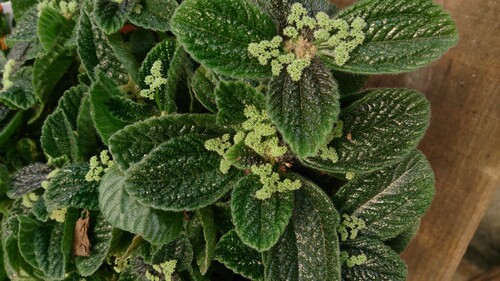

Panamiga (Pilea involucrata) has oval, toothed, deeply quilted leaves, often dark green with bronze tones. This evergreen tropical perennial in the Urticaceae family grows in indirect light and appreciates the humidity of a terrarium, but cannot tolerate waterlogged potting mix.
Read morePanamiga and Friendship plant
Pilea pubescens var. involucrata, Urtica involucrata, Urtica simsii, Adicea chrysosplenioides, Pilea chrysosplenioides and Pilea litoralis
Give plenty of ambient light without direct sun on the leaves.
Bright indirect light or partial shade, sheltered from drafts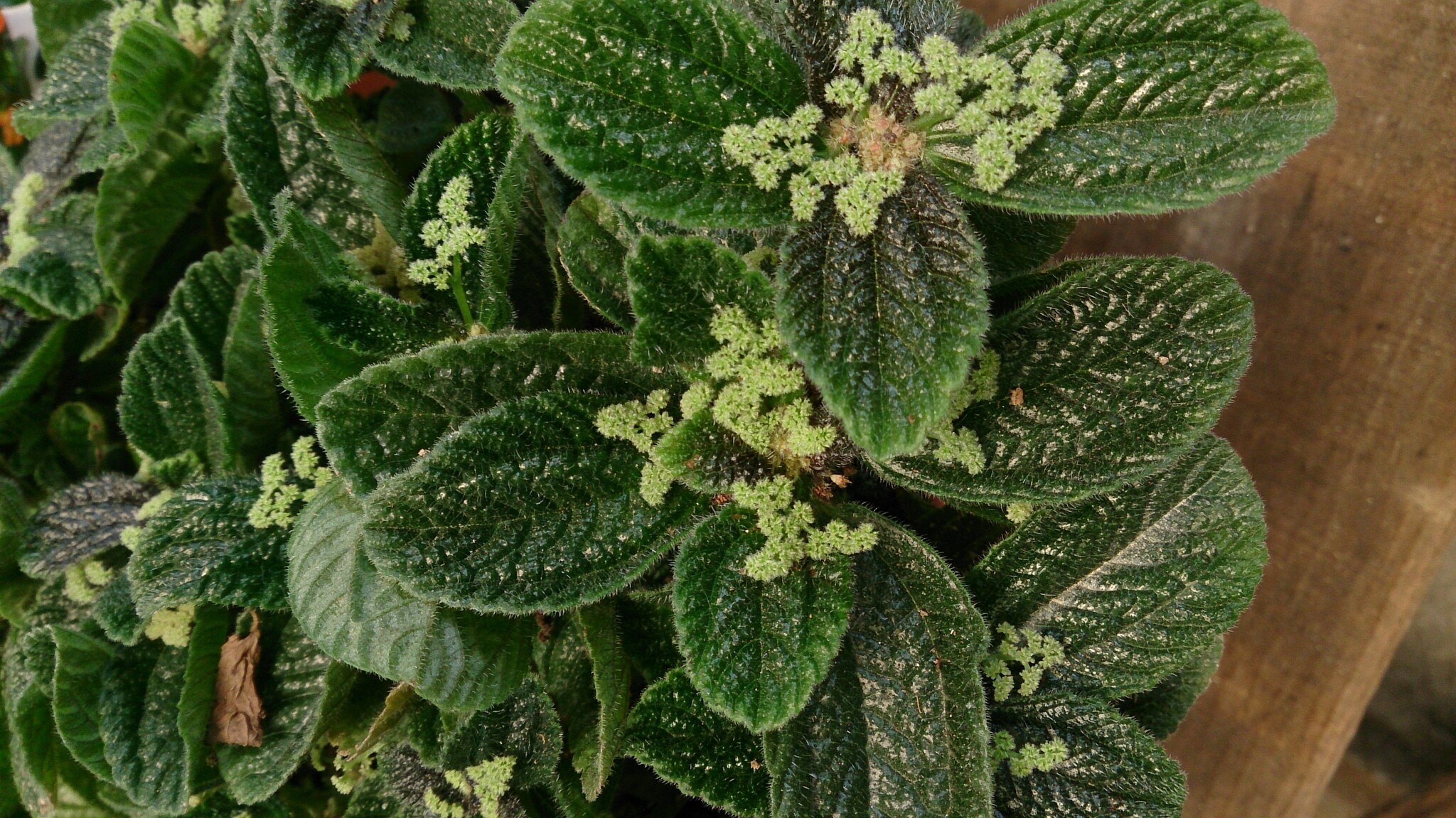


© photo
(c) Mokkie, some rights reserved (CC BY-SA) · cc-by-sa
Wikimedia Commons · CC BY-SA or Public Domain
Wikipedia · CC BY-SA
© copyright of the Board of Trustees of the Royal Botanic Gardens, Kew.




Global distribution
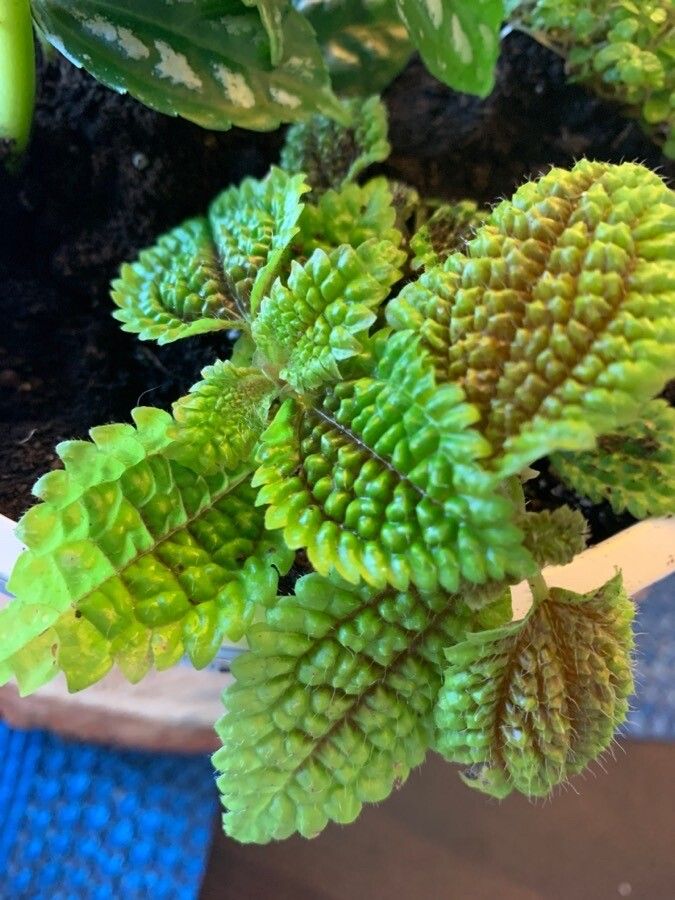
Native from Central America to Peru and the Windward Islands, including several West Indian territories.
- Native3
- Central America
- Tropical South America
- West Indies
Hexagons: regions where the plant occurs. Green dots: native range.1
Identity
Panamiga (Pilea involucrata (Sims) C.H.Wright & Dewar, 1894) has deeply quilted, oval, toothed leaves on stems that can trail. The pronounced texture of the foliage is an initial clue to recognizing this small tropical perennial. The species belongs to the Urticaceae family, in the order Rosales. 4 1
Vernacular names for this species vary between languages, with French names recorded by Pl@ntNet. In English horticulture, friendship plant refers to the ease with which its stem cuttings can be shared. Common names do not replace the scientific name when distinguishing between pileas sold for their foliage. 2 3
Recognition
Panamiga leaves are dark green with bronze tones, sometimes edged in lighter green; the undersides can be dark red. Their surface looks velvety and puckered. A horticultural description gives a height of 25 cm (10 in), while plants grown as mounds in tropical conditions are described as reaching 30 cm (12 in). These measurements describe cultivated plants, rather than an established maximum height in the wild. 3 4 6
The evergreen foliage is the plant's main attraction. Tiny pinkish or greenish flowers form branched cymes. Flowering occurs in summer but is rare indoors, so the absence of flowers in a pot does not prevent identification from the leaves. 3
Useful taxonomy
The accepted name Pilea involucrata was published in 1894. The earlier name Urtica involucrata Sims, published in 1824, appears in the synonymy as a rejected name. Pilea pubescens var. involucrata (Sims) Wedd. is also a synonym; it does not refer to a separate cultivar. 1
The epithet involucrata refers to the involucre, a group of bracts surrounding the flowers. The genus name comes from the Latin pileus, meaning "cap," in reference to the shape of the female flowers. These explanations concern floral structure, even though the plant is grown mainly for its leaves. 3
Habitat and range
Panamiga is native from Central America to Peru and the Windward Islands. Its range includes Costa Rica and Panama, several countries in northwestern South America, and Trinidad and Tobago and the Venezuelan Antilles. It grows on the ground, mainly in the wet tropics. This humid tropical origin explains the warm, humid conditions sought in cultivation. 1 6
Indoors, provide bright indirect light and shelter from drafts. Atmospheric humidity suits this species, but the roots need a moist, well-drained growing medium. A terrarium meets the need for humid air, while a pot standing in water exposes the roots to rot. Moisture in the air cannot be treated as interchangeable with water held around the roots. 4 5
Life cycle and reproduction
For indoor cultivation under mainland French seasonal conditions, the calendar translates the advice into more water during growth and less from fall to late winter. Its indices show relative trends and should be adjusted to how quickly the potting mix dries. For pileas, check the roots in spring and repot only if they are cramped; an oversized pot stays wet for too long. 3 5
Apply a balanced liquid fertilizer each month during growth. The recommended feeding period for pileas runs from April to September, using the dilution stated on the product. Water less often in winter. Leaving water in a saucer increases the risk of rot, even for a plant that appreciates humid air. 4 5
Take soft stem-tip cuttings in spring and summer. Place them in a well-drained mix, then maintain high humidity until roots develop. Pinching out the growing tips of the parent plant encourages branching and keeps its shape bushier. 5 4
Uses and risks
Panamiga suits pots and terrariums. In tropical climates, it is also used as a ground cover in shade; this outdoor use does not establish resistance to cold winters such as those in mainland France. Indoors, its spreading or trailing stems can extend over the edge of a container or a well-lit shelf. 6 5
The species is explicitly classified as non-toxic to cats, dogs and horses. This veterinary classification does not establish the status of humans, including children, or of other animals. No specific toxic substance or syndrome is detailed in it. The classification applies only to the groups assessed and does not support a claim of universal safety. 7
Varieties, look-alikes and related plants
Pilea peperomioides has disc-shaped leaves on long petioles. Pilea cadierei has pointed leaves marked with silver. Panamiga's deeply quilted leaf surface distinguishes it from these outlines, but foliage color varies between selections. 'Norfolk,' for example, is described as having reddish-pink young leaves that turn silvery, with gray-green veins. 5 3
The horticultural name 'Moon Valley' requires a check of the species to which it is assigned. It appears under Pilea involucrata in catalogs, but is also listed under Pilea mollis. The features of this selection therefore do not define the whole botanical species. A cultivar label and a species identification answer different questions. 5 8
Main sources
- Plants of the World Online, Pilea involucrata
- Pl@ntNet, Pilea involucrata: French names
- NC State Extension, Pilea involucrata
- Royal Horticultural Society, Pilea involucrata
- Royal Horticultural Society, How to grow pilea
- NParks Flora & Fauna Web, Pilea involucrata
- ASPCA, Friendship Plant : Pilea involucrata
- NParks Flora & Fauna Web, Pilea mollis ‘Moon Valley’
Frequently asked questions
How can I recognize Panamiga?
Pilea involucrata has oval, toothed leaves with a deeply quilted surface, often dark green and bronze. Its stems can spread or trail. Color alone does not distinguish the horticultural selections.
Is Pilea involucrata suitable for a terrarium?
Yes. Its need for atmospheric humidity and its small size suit a terrarium. The potting mix must still drain well; high air humidity does not justify leaving water standing around the roots.
Is Pilea involucrata toxic to cats?
The species is classified as non-toxic to cats, dogs and horses. This classification does not establish safety for humans or for all other animal species.
How can I propagate Pilea involucrata?
Take soft stem-tip cuttings in spring or summer. Place them in a well-drained mix and maintain high humidity until they root.
If you are unsure about a plant’s toxicity, ask a botanist or veterinarian for advice.