
Blue torch cactus (Pilosocereus pachycladus, )
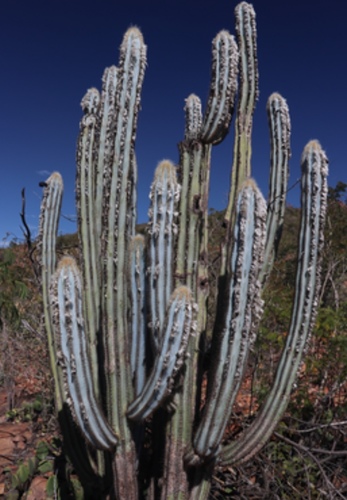
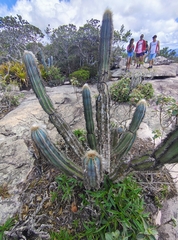
Blue torch cactus combines blue-green columns with golden spines and fine white bristles. Native to dry regions of Brazil, this tropical cactus needs sun, free drainage and protection from cold.
Read moreBlue torch cactus
Pseudopilocereus pachycladus and Pilosocereus azureus



© photo
(c) PierreBraun, some rights reserved (CC BY-SA) · cc-by-sa
Renato Bandeira · cc-by
stephen · http://creativecommons.org/licenses/by/4.0/
Taken Aug 21, 2021 by Dieter Albrecht (cc-by-sa)
Taken Aug 7, 2022 by Birgitta Tittel (cc-by-sa)
Taken Nov 14, 2019 by cronopio azul (cc-by-sa)




Global distribution
Native from northeastern Brazil to northern Minas Gerais; introduced in the Canary Islands.
- Native1
- Introduced1
- Brazil
- Canary Islands
Hexagons: regions where the plant occurs. Green dots: native range.2
Identity
Blue torch cactus (Pilosocereus pachycladus F.Ritter, 1979) combines blue-green columns with pale spines and fine white bristles. Its French horticultural name is cactus bleu du Brésil. This accepted member of Cactaceae is native to Brazil; stem colour and the branching outline provide initial clues to its identity. 1 2 3
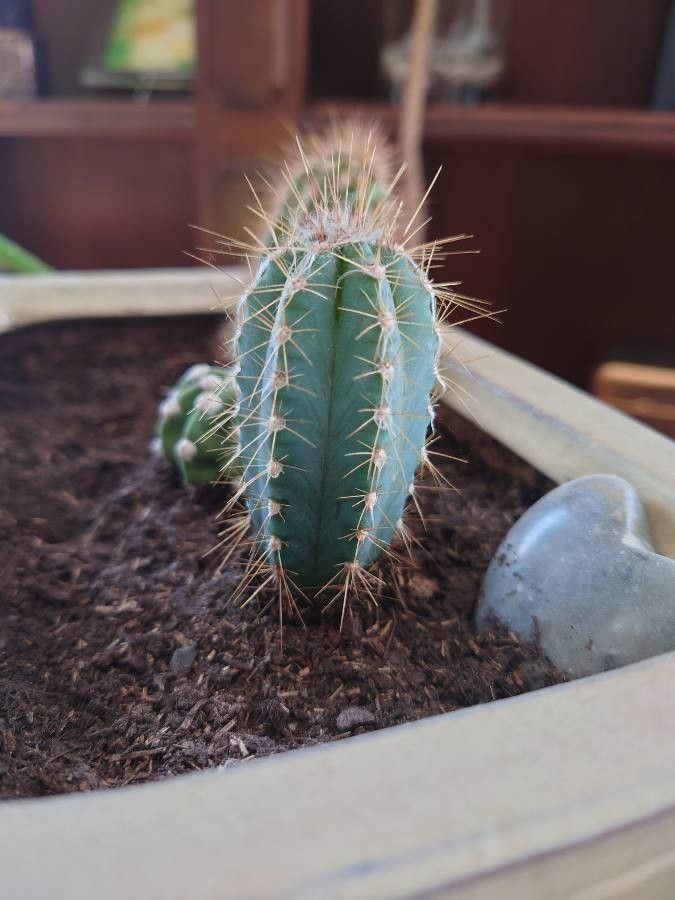
Blue torch cactus is a perennial succulent with a shrubby or tree-like habit. A small container specimen represents an early stage, before the plant develops a branched framework. Its appearance in a pot therefore gives only a partial view of its mature form. 4 2
Recognition
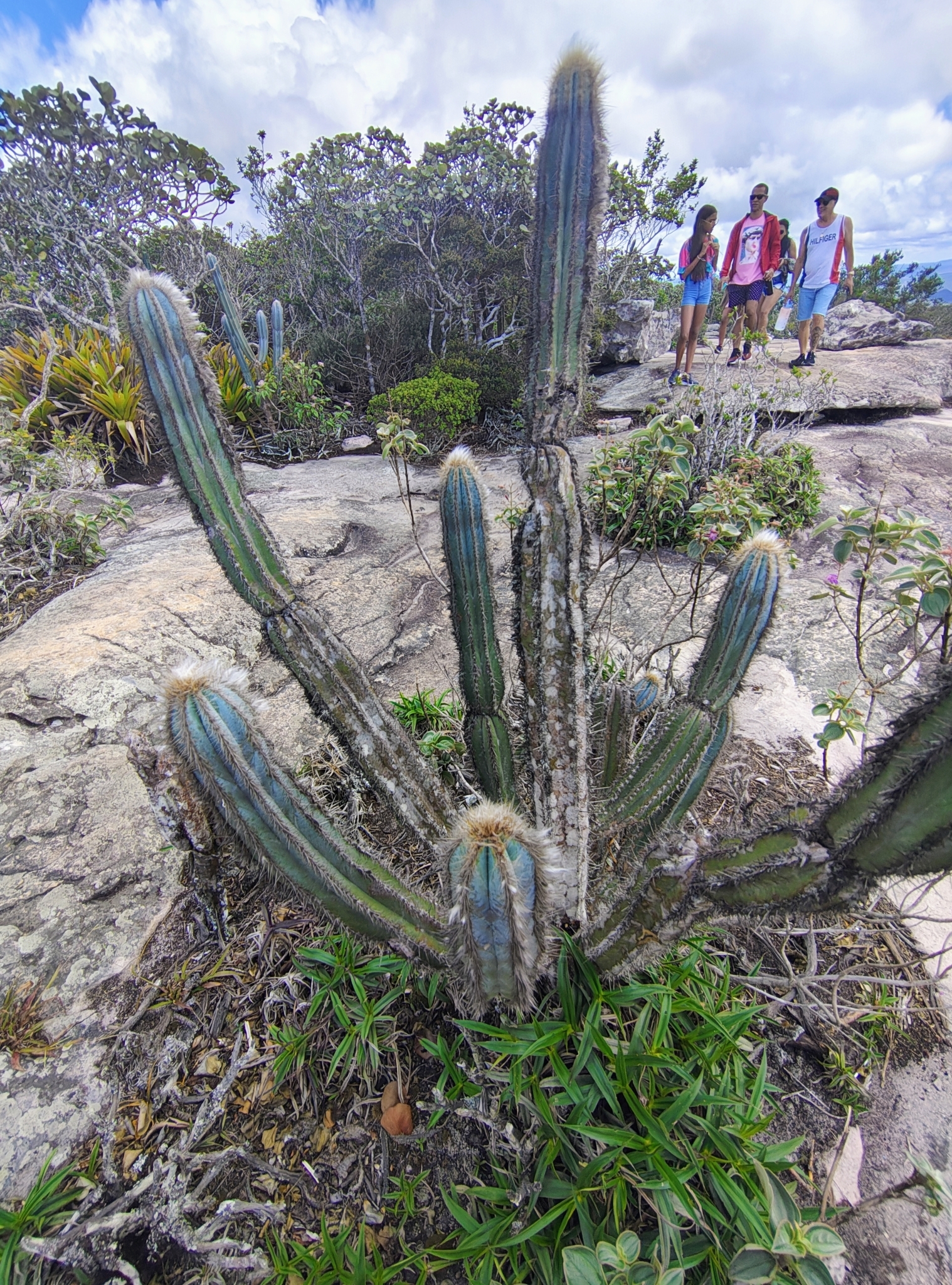
The upright, ribbed stems carry golden to light brown spines, with fine white hairs around the areoles. Older plants can develop a woody base. Descriptions range from blue-grey to blue-green or blue, so colour alone cannot identify the species. The ribs, spines and hairs need to be considered together. 3 4
In its native habitat, blue torch cactus can reach 10 m (33 ft), although it remains smaller in cultivation. A Caatinga field guide describes local shrubs of about 2 m (6.6 ft). That observation concerns plants at those sites; it does not set the species' maximum height. 3 7
The flowers are white and funnel-shaped, and can have red outer parts. Fleshy fruits ripen red to purple. NParks describes the fruits as usually lacking scales and spines, a useful distinction from the conspicuously spined stems. 4
Useful taxonomy
Pilosocereus pachycladus belongs to the cactus family, Cactaceae, in the order Caryophyllales. Friedrich Ritter published the name in Kakteen Südamerika in 1979. The cited taxonomic references recognise it as an accepted species. 2 5
The name Pseudopilocereus pachycladus (F.Ritter) P.V.Heath places the same species in a different genus. Pilosocereus azureus F.Ritter is more specifically associated with the typical subspecies, Pilosocereus pachycladus subsp. pachycladus. An “azureus” label therefore does not automatically identify a distinct horticultural variety. 2 8
Habitat and distribution
The native range of Pilosocereus pachycladus extends from northeastern Brazil to northern Minas Gerais. The species grows in the seasonally dry tropical biome. The Federal University of Sergipe's floristic guide records it in the Caatinga, describing stems with numerous long, thin spines. 2 7
The Canary Islands are among the territories where the species has been introduced. This occurrence outside Brazil is separate from its native range. In Singapore, NParks records it as a non-native horticultural plant: an entry in a collection or garden does not establish a local origin. 2 4
Life cycle and reproduction
Blue torch cactus produces night-opening flowers in summer, according to its British horticultural description. Flowers appear towards the tops of the stems, followed by fleshy fruits. The Sergipe guide links pink fruits with animal dispersal, without specifying a dispersing animal here. 3 4 7
Spring sowing at 19 to 24 °C (66 to 75 °F) is a documented propagation method for Pilosocereus pachycladus. The calendar describes cultivation in mainland France: its water and growth scores are relative editorial guides. Increased watering in late spring and summer reflects the seasonal watering advice for this species. 3
Spring repotting comes from guidance for the genus. The Botanical Garden of the University of Valencia's monograph also recommends an annual application of fertiliser for the genus. Placing the feeding marker at the start of the warmer growing season expresses that frequency without prescribing a dose. 1 6
Uses and risks
Blue torch cactus is grown as an ornamental in containers or under bright cover. Pilosocereus pachycladus needs a very free-draining cactus mix and a minimum temperature of 12 °C (54 °F) throughout the year. A sheltered summer position outdoors remains compatible with that requirement; it does not establish frost tolerance. 3
Excess water causes rot in Pilosocereus pachycladus, making drainage as important as watering frequency. Water more generously in late spring and summer, then keep the mix barely moist at other times. These seasonal differences should guide watering alongside the drainage of the growing medium. 3
The stem spines present a documented mechanical hazard. Keeping the cactus away from walkways helps prevent accidental contact. Toxicity after ingestion remains unknown for people and domestic animals; that uncertainty does not establish that the plant is harmless. 4
Varieties, similar plants and identification pitfalls
Pilosocereus pachycladus includes the recognised subspecies pachycladus, pernambucoensis and viridis. These are botanical divisions within the species. For a plant purchased as “azureus”, the relevant taxonomic reference is the typical subspecies, rather than a trade name interpreted as an additional species. 2 8
The British horticultural description calls growth slow, while the Singapore description calls it fast. These assessments of Pilosocereus pachycladus differ between sources. Neither adjective supplies a universal annual growth rate, and modest growth in a container should not by itself rule out an identification. 3 4
Main sources
Kew establishes the accepted name, synonyms and distribution of Pilosocereus pachycladus. The horticultural descriptions add stem characters and growing conditions to those taxonomic references. 2 3 4
- Promesse de Fleurs, Pilosocereus: planting, growing and care
- Kew, Plants of the World Online, Pilosocereus pachycladus
- Royal Horticultural Society, Pilosocereus pachycladus
- National Parks Board, Flora & Fauna Web, Pilosocereus pachycladus
- GBIF, taxonomic record for Pilosocereus pachycladus
- Botanical Garden of the University of Valencia, cactus monograph, Pilosocereus
- Universidade Federal de Sergipe, floristic guide, Pilosocereus pachycladus
- Kew, Plants of the World Online, Pilosocereus azureus
Frequently asked questions
Can blue torch cactus stay outdoors in winter?
Pilosocereus pachycladus needs at least 12 °C (54 °F) throughout the year. A sheltered outdoor position in summer therefore does not establish suitability for overwintering outdoors in mainland France.
Is Pilosocereus azureus a different species?
Pilosocereus azureus is associated with Pilosocereus pachycladus subsp. pachycladus. The name can therefore refer to the typical subspecies without identifying a cultivar.
When does blue torch cactus flower?
Blue torch cactus flowers at night in summer, producing white, funnel-shaped flowers sometimes tinged red at the tips.
How is Pilosocereus pachycladus propagated?
Propagation from seed is documented. Sow Pilosocereus pachycladus in spring at 19 to 24 °C (66 to 75 °F).
If you are unsure about a plant’s toxicity, ask a botanist or veterinarian for advice.