
Ribwort plantain (Plantago lanceolata, )
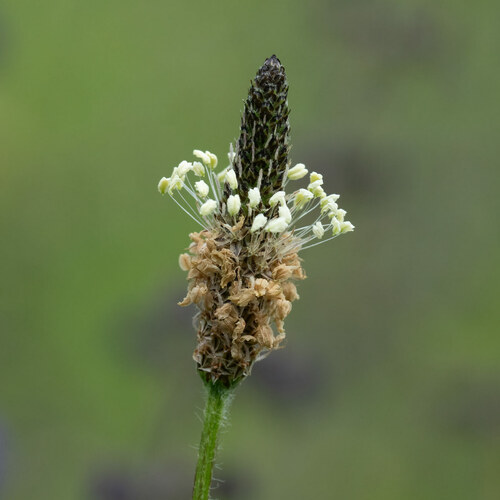
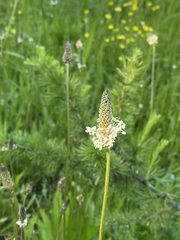
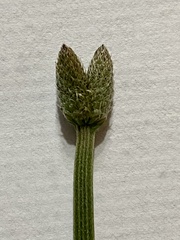
Ribwort plantain is a perennial of meadows and paths, recognized by narrow, ribbed leaves and short spikes encircled by white stamens.
Read moreRibwort plantain and Narrowleaf plantain
Arnoglossum lanceolatum and Lagopus lanceolatus
Allow a few hours of direct sun per day, preferably morning or evening.
Full sun, open position.



© photo
(c) Miroslav Marić, some rights reserved (CC BY-NC), uploaded by Miroslav Marić · cc-by-nc
Светлана Царахова · cc0
Michelle Lopez · cc0
Taken Jul 18, 2021 by Wouter (cc-by-sa)
Taken Mar 15, 2021 by Torres Pedro (cc-by-sa)
Taken Jun 11, 2019 by Enno Huttenga (cc-by-sa)
Taken Dec 18, 2020 by Nele Lena (cc-by-sa)
Taken Jan 14, 2022 by Tristan Jaton-Maria (cc-by-sa)
© copyright of the Board of Trustees of the Royal Botanic Gardens, Kew.




Global distribution
Native to Macaronesia, North Africa south to Mauritania and temperate Eurasia; widely introduced elsewhere.
- Native1
- Introduced2
- France
- Japan
- New Zealand
Hexagons: regions where the plant occurs. Green dots: native range.1
Identity
Ribwort plantain (Plantago lanceolata L., 1753) is first recognized by narrow leaves with strong longitudinal ribs. This herbaceous perennial belongs to Plantaginaceae in Lamiales. French names plantain étroit and herbe-à-cinq-côtes directly describe its foliage. It is frequent in French meadows and pasture, including Corsica. 2 1 8
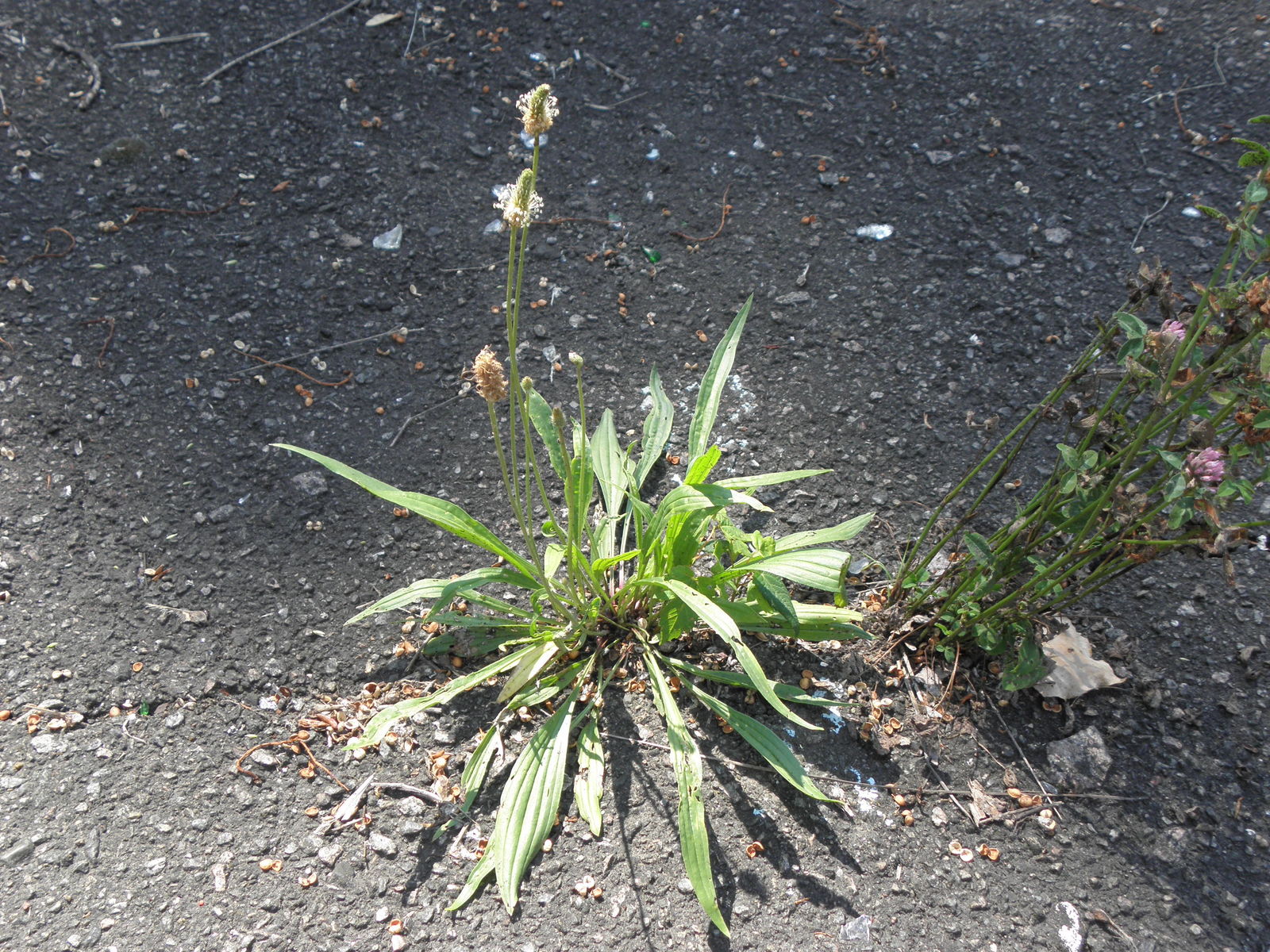
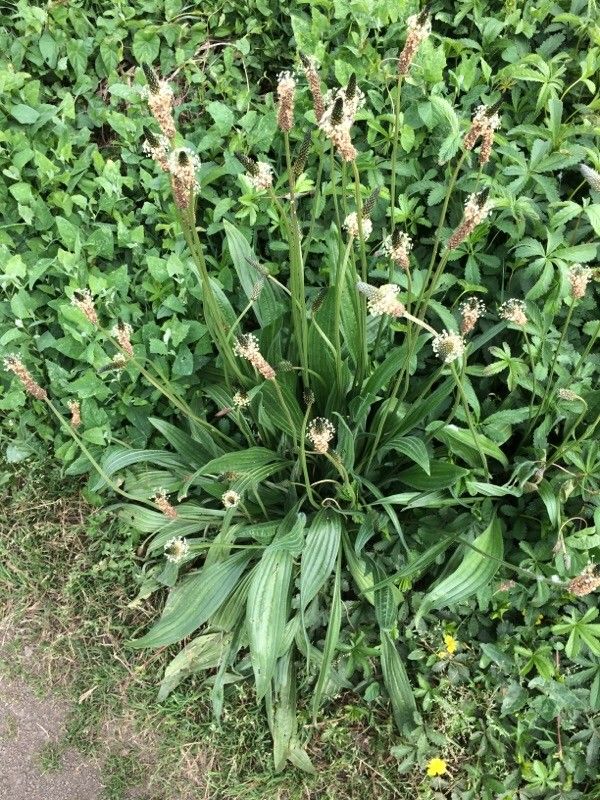
Leaves remain near the ground while flowers stand well above them. Its flowering stalks carry no leaves and extend well above the basal rosette. This separation between the leaves near the soil and the flowers higher up helps locate an individual plant among the surrounding grasses. A flowering specimen usually measures 10–60 cm (4–24 in), although not every rosette reaches that height. 2
Recognition
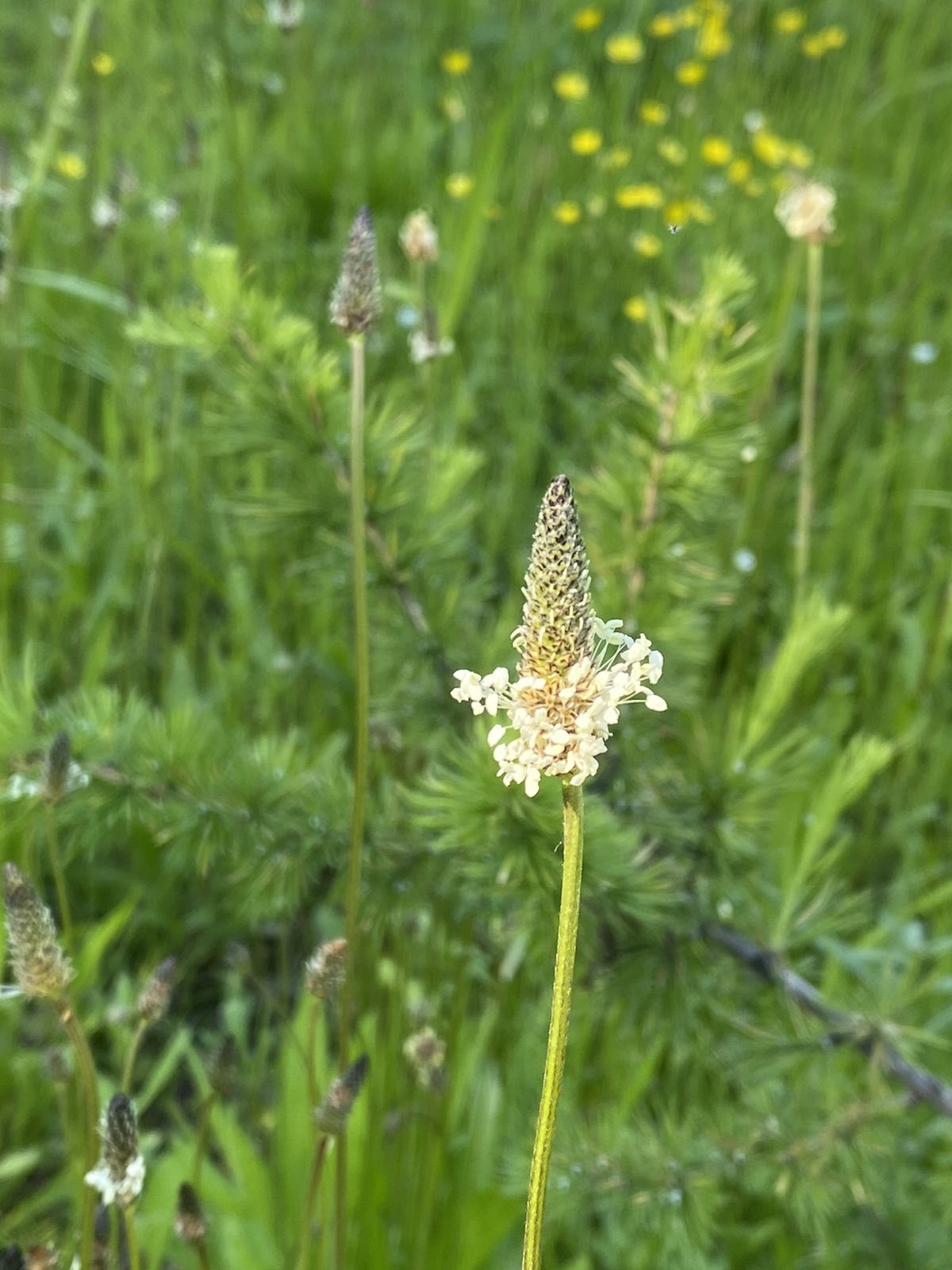
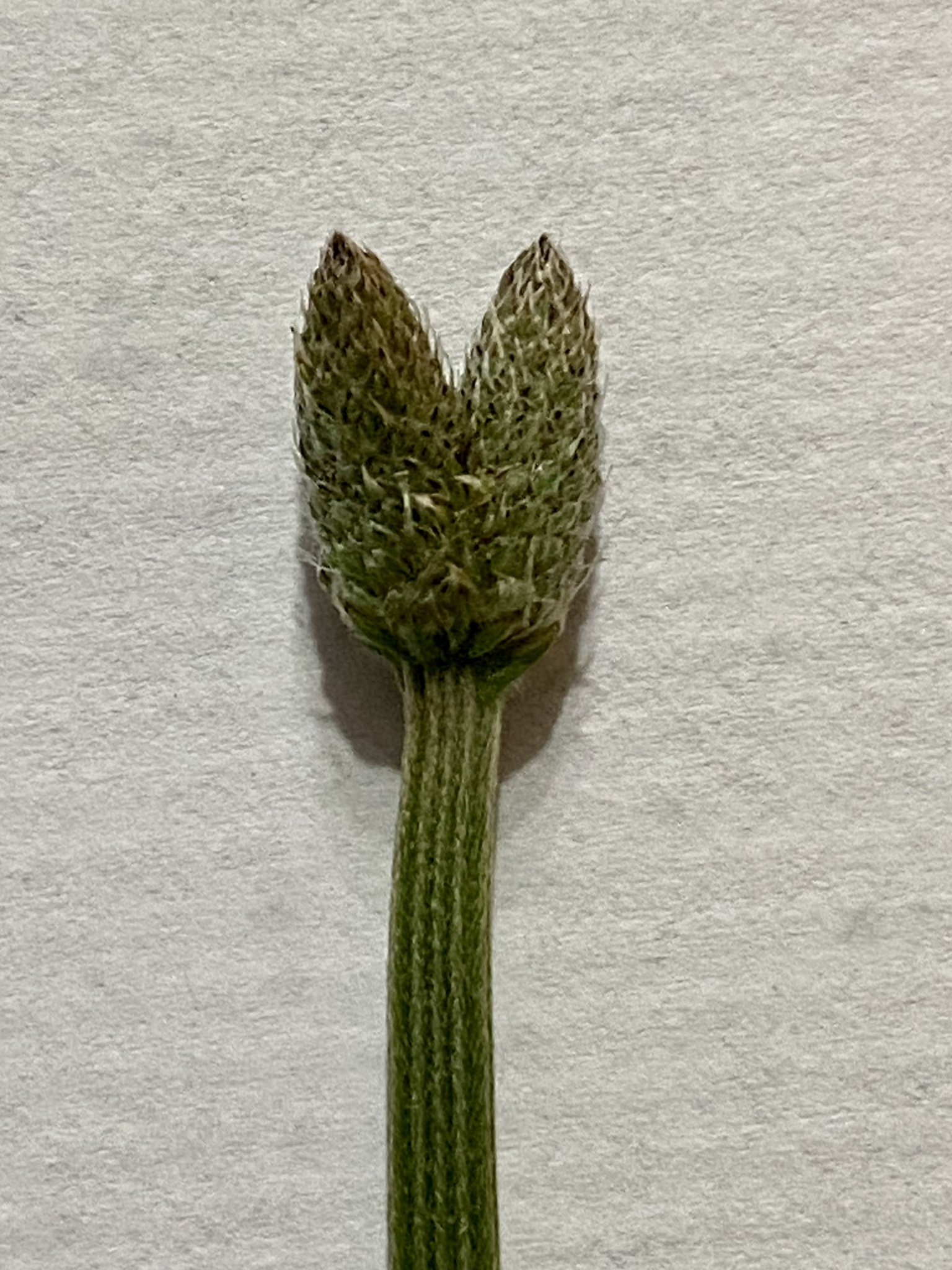
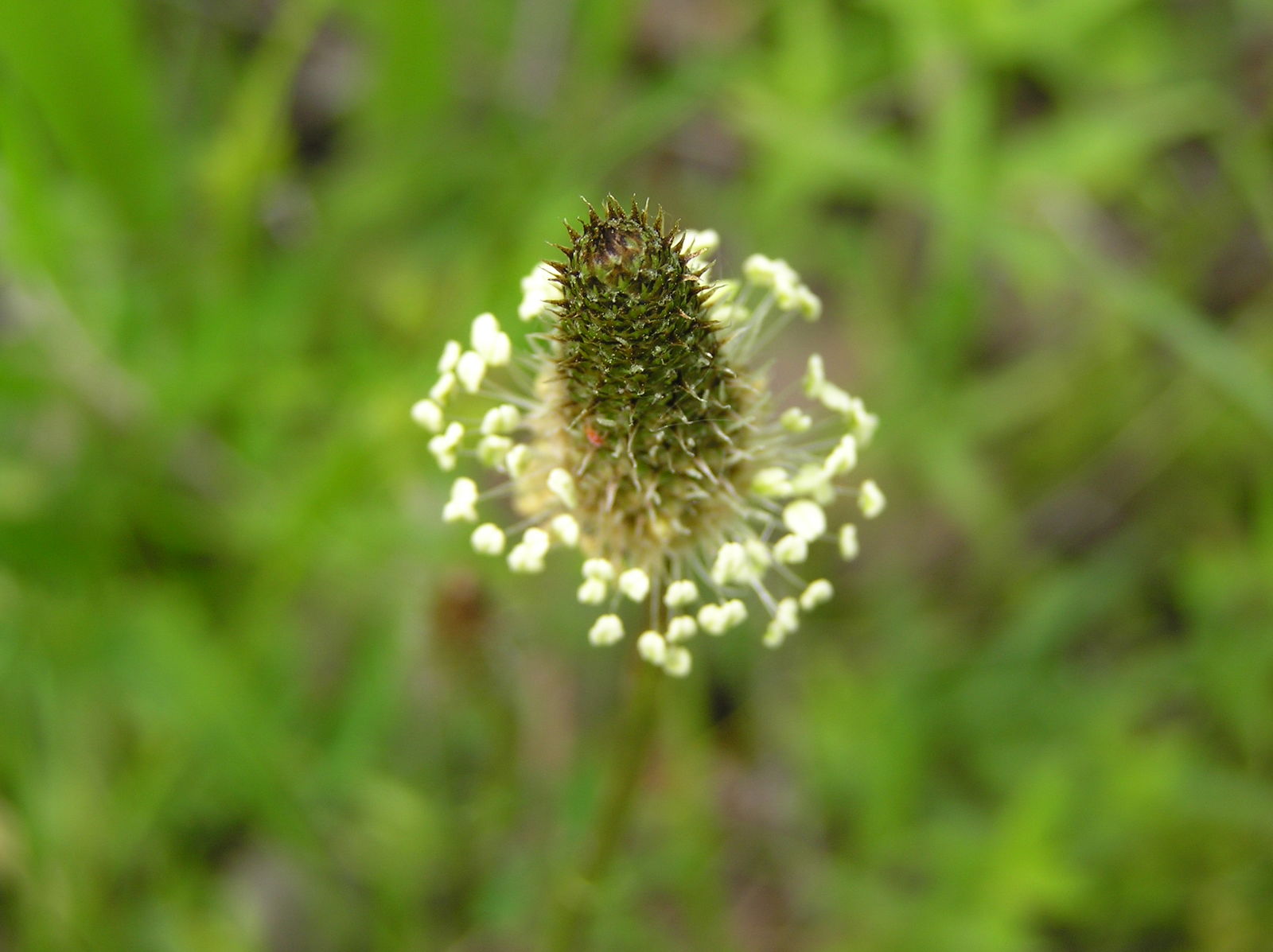
Leaves taper toward both tip and base and have three to seven strong raised veins. Flower stalks are angled and furrowed, with hairiness varying between individuals. The terminal spike remains egg-shaped or oblong, with crowded flowers much less conspicuous than the white stamens as they emerge. 2 5
For a useful record, photograph a complete rosette, one leaf and a spike in profile. Small flowers crowd the stalk’s top rather than forming a branched raceme. After flowering, each capsule normally releases two seeds. Dark seeds have a hollowed face, visible with a hand lens. 4
Useful taxonomy
Linnaeus published the accepted name in Species Plantarum, page 113, in 1753. It remains placed in the plantain genus and Plantaginaceae. “L.” identifies the botanical author; it denotes neither a variety nor a horticultural provenance. 1
Arnoglossum lanceolatum (L.) Gray may appear in old floras, and Lagopus lanceolatus (L.) Fourr. is also a synonym. Both refer to the same species without requiring a new identification. References may recognize different internal divisions, so verify varietal names against the treatment being used. 1
Habitat and distribution
Its native range extends beyond Europe to Macaronesia, North Africa south to Mauritania and temperate Eurasia, including France. Current presence in Japan, New Zealand and many American regions results from introduction. Worldwide abundance does not make a plant native everywhere it is observed. 1
In France look in meadows and pasture, also lawns and open roadsides. In Switzerland it ranges from the hill belt to subalpine elevations, sometimes reaching the alpine belt. Each field record needs to remain associated with the precise place where the plant was observed. This makes it possible to distinguish an actual local occurrence from a general description of the species’ worldwide distribution. 2 5 6
The species is present in mainland France and classified as Least Concern on the national vascular-plant Red List. 8
Cycle and reproduction
Reproduction is by seed. Pollination depends notably on wind; flies and beetles also visit flowers. Inconspicuous flowers therefore do not mean an inflorescence lacks visitors. A capsule is the dry fruit succeeding one flower; the spike instead groups many flowers on one axis. 4
French flowering runs from April to October. A photograph made during summer shows the plant at one particular stage of its development; it cannot by itself show the whole duration of the flowering and fruiting cycle. To check fruiting, examine a spike older than those still ringed by white anthers. Spike, capsule and seed are three distinct levels that should not be confused in identification. 2
Uses and risks
Ribwort plantain has documented food and medicinal uses. The existence of these uses does not provide a guarantee of safety for every preparation made from plantain, nor does it remove the need to know what has actually been gathered. A food harvest requires certain identification and a known source. Traditional use alone establishes neither a therapeutic dose nor a justification for a home treatment. 4 6
Plantain pollen can cause allergies in sensitive people. In Central Europe flowering is chiefly May to September, the exposure period for its allergenic pollen. A food plant can therefore pose an inhalation risk. Safety for cats, dogs and horses is unestablished; human uses cannot establish that it is harmless for those animals. 7
Cultivation, variation and related plants
Sun and drained soil are preferred. Foliage is semi-evergreen and cold hardiness rated H7. For meadow projects, follow local rainfall rather than a fixed watering schedule. To limit spread, act before flowering; retaining spikes instead leaves seeds for birds. 3
Leaf form varies with habitat: rosettes lie flatter in short lawns and stand more upright in meadows. Broadleaf plantain (Plantago major) has much wider, spoon-shaped leaves. Compare several adult leaf outlines rather than stalk height alone. Leaf shape separates the species even when their flower stalks are similar in height. 3 7
Main sources
Floras document identification characters; horticultural references specify cultivation conditions. Pollen information concerns allergic sensitivity.
- Kew, Plants of the World Online
- Tela Botanica, eFlore and Coste description
- Royal Horticultural Society, ribwort plantain
- NC State Extension, Plantago lanceolata
- InfoFlora, Plantago lanceolata
- Plants For A Future, ribwort plantain
- Austrian Pollen Information Service, plantains
- INPN, TAXREF, Plantago lanceolata
Frequently asked questions
How can ribwort plantain be identified?
Combine narrow leaves with strong ribs, a basal rosette and short spikes on leafless stalks.
Does ribwort plantain tolerate frost?
It is rated H7, suited to very cold continental European winters.
How can self-sowing be limited?
Remove plants before flowering to prevent spread.
If you are unsure about a plant’s toxicity, ask a botanist or veterinarian for advice.