
Prostrate knotweed (Polygonum aviculare, )
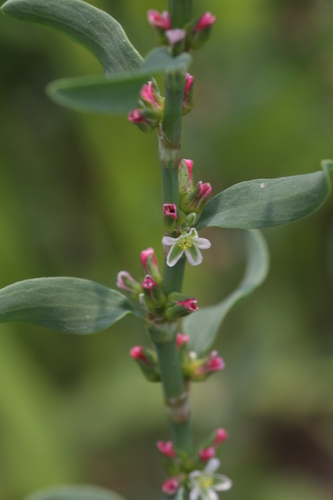

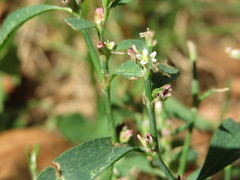
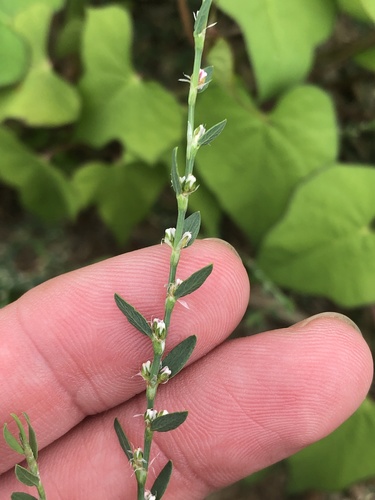
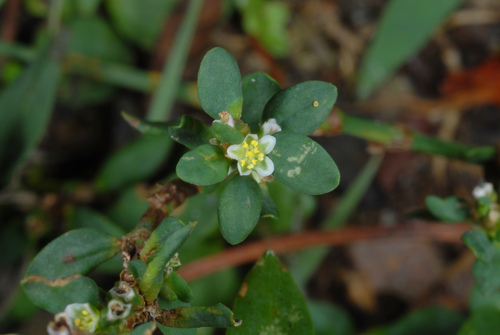
Prostrate knotweed (Polygonum aviculare) is a Polygonaceae herb spreading fine stems along tracks, fields and pavement cracks. Small flowers sit in leaf axils beside papery sheaths around the nodes.
Read moreProstrate knotweed, Common knotgrass and Bird knotweed
Avicularia vulgaris, Centinodia avicularis and Centinodium aviculare
Allow a few hours of direct sun per day, preferably morning or evening.
Full sun; partial shade tolerated.
© photo
(c) Dalgial, some rights reserved (CC BY-SA) · cc-by-sa
Darius Regnier · cc0
Andreas Rockstein · cc0
(c) Sam Kieschnick, some rights reserved (CC BY) · cc-by
(c) Douglas Goldman, some rights reserved (CC BY-SA) · cc-by-sa
Global distribution
Native from Macaronesia to Eritrea and temperate Eurasia; widely introduced in the Americas and several southern regions.
- Native3
- Introduced2
- France
- Morocco
- Eritrea
- Chile
- Canada
Hexagons: regions where the plant occurs. Green dots: native range.1
Identity
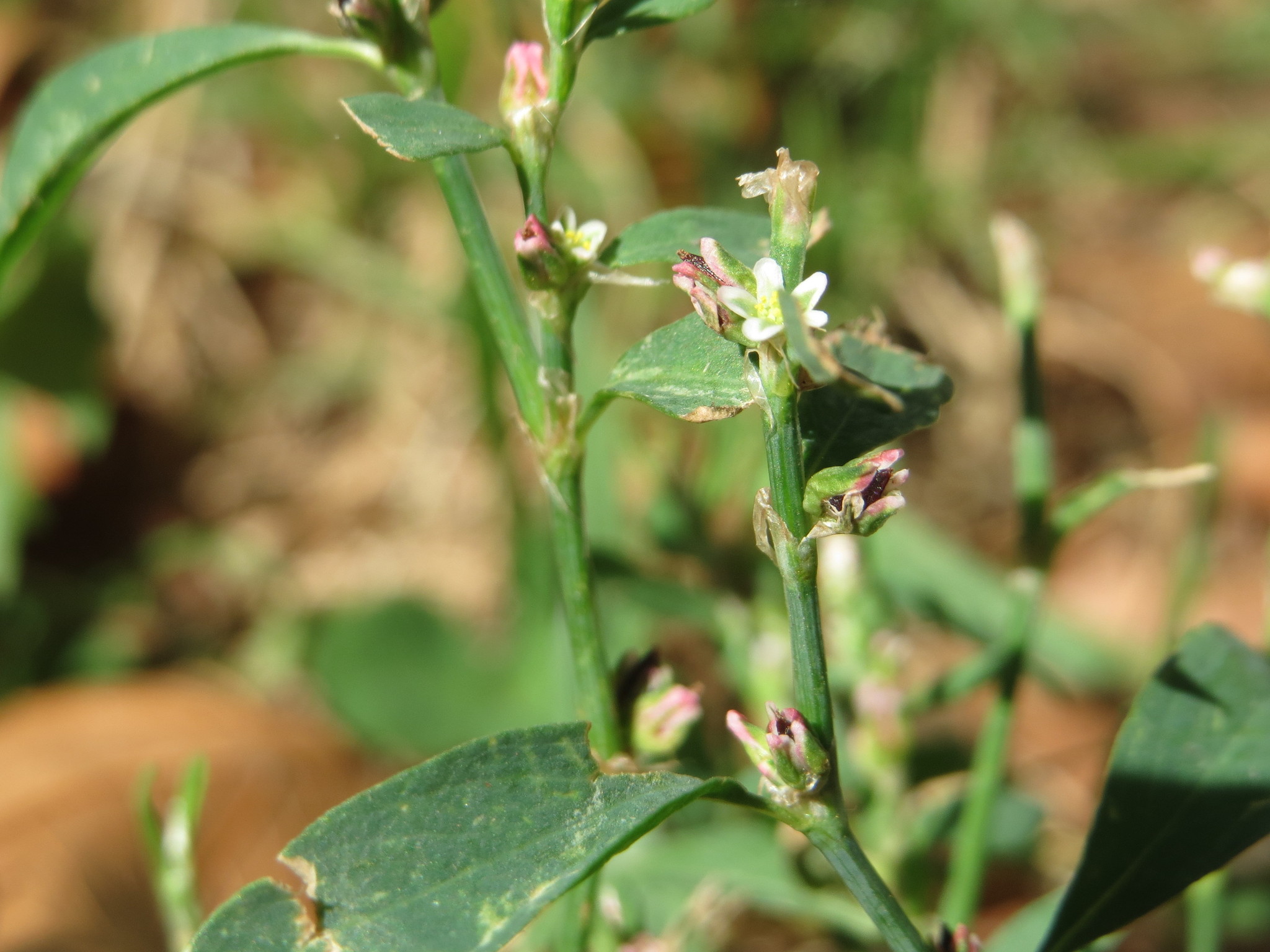
Prostrate knotweed (Polygonum aviculare L., 1753) often spreads stems close to paths. Look for a papery sheath around each node, called an ochrea. Small whitish or pinkish flowers occur beside it in leaf axils. This Polygonaceae plant varies greatly in habit: an upright example should not be excluded from silhouette alone. 3
French names such as centinode and traînasse also describe this familiar plant of human-frequented ground. A stem can remain low while extending a considerable distance along the soil. Distinguish vertical height from branch length when comparing dimensions in different floras. 394
Recognition
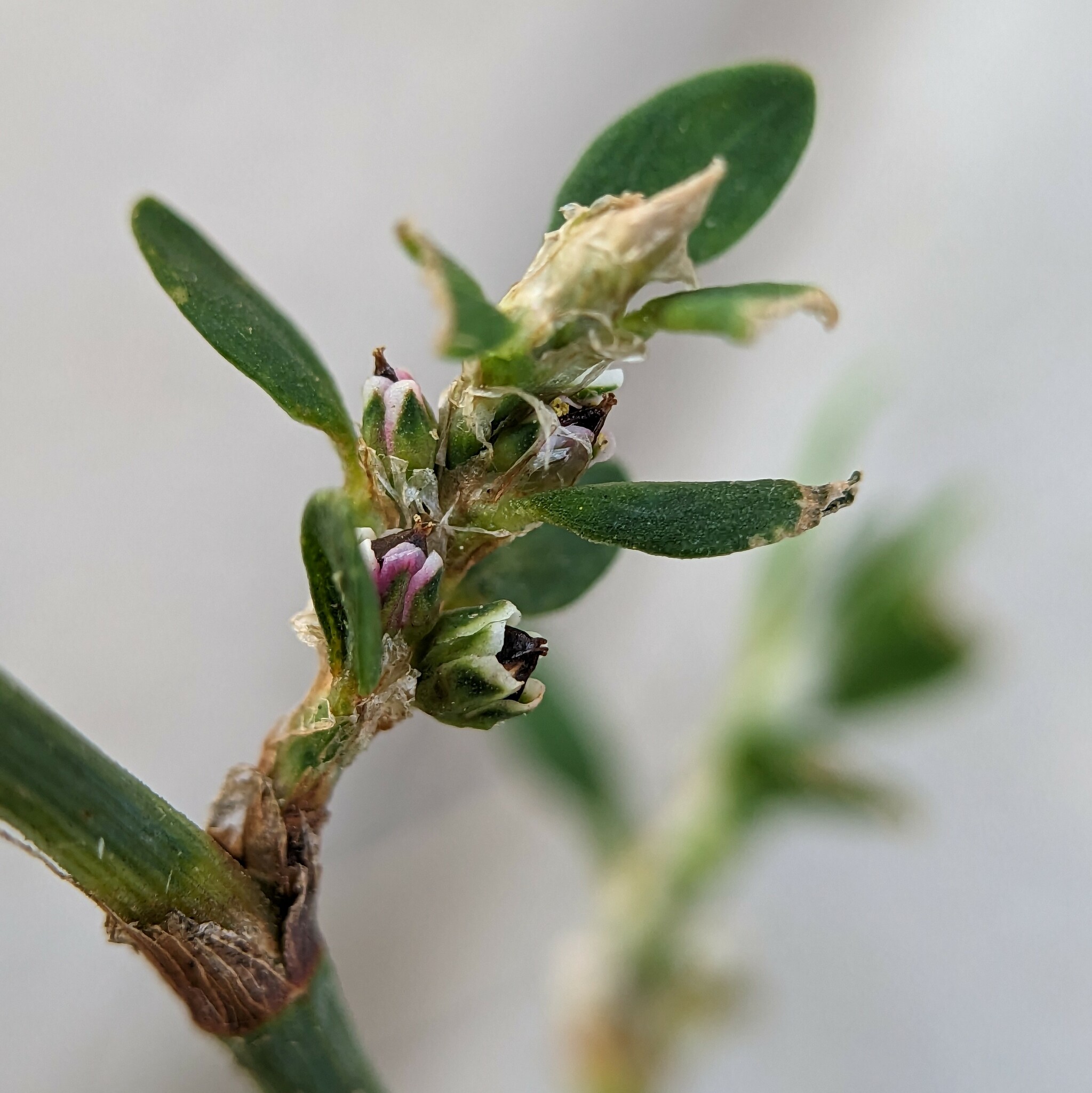
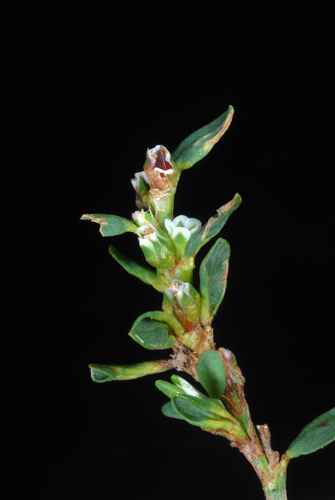
Simple, alternate, entire leaves range from oval to narrow and lance-shaped. Size varies between main stems and branches. The papery sheaths have about six veins and torn tips, becoming less distinct with age. Examine several fresh nodes rather than looking only at a worn section of stem. 354
Small flower groups remain close to the leaves. Fruits are brown, three-angled achenes surrounded by the persistent floral envelope, about 2–2.5 mm (0.08–0.1 in) long. A hand lens helps distinguish ripe fruit from a flower bud: a dark mark at a node alone is insufficient. Main stems and side branches can show different stages during one visit. Recording several nodes preserves that context, rather than reducing the observation to an isolated fruit or one worn sheath. 34
Useful taxonomy
Polygonum aviculare L. dates to 1 May 1753, in Species Plantarum, page 362. The binomial remains accepted. Names including Centinodia avicularis (L.) Fourr. are synonyms found in older works. Author names help track combinations without assuming each represents another species. 21
The plant belongs to a variable taxonomic complex, sometimes treated as an aggregate of small species. Boundaries change among floras. Some older chromosome counts under this name probably concern other members of the group. Precise determination therefore requires fruit and an appropriate key, beyond a general photograph. 56
Habitat and range
Trampled soils and disturbed ground are characteristic. Fields, roadsides and cracks in hard surfaces support it. Low stems occupy spaces that taller plants use poorly under repeated foot traffic. Pavement occurrence nevertheless does not imply every plant lives without water: occupied soils range from dry to moist. 45
Native range includes Macaronesia, Africa east to Eritrea and temperate Eurasia. It has been introduced across much of the Americas and several southern regions. Near-worldwide occurrence does not mean worldwide native status. Arctic records also require distinguishing established populations from occasional arrivals. 16
In France it occupies cultivated and uncultivated ground throughout the country, including Corsica. It is native and Least Concern on the national Red List. 39
Life cycle and reproduction
An annual cycle predominates in France, with persistence beyond one season rare. Flowering can extend from May to November. That long period allows seeds to develop while other branches still carry flowers. Examine several nodes to follow a plant's development rather than only one shoot tip. 3
Many seeds can be produced and remain viable for years. A mat can thus return from seedlings even after last year's plants have disappeared. Mowing affects prostrate branches poorly because they pass beneath the blade. Seed-limiting management must account for this habit rather than simply increasing mowing frequency. 4
Uses and risks
Food use of seeds is reported, but does not validate every organ or preparation. Traditional medicinal uses are also recorded without proof of clinical efficacy. Common occurrence in urban places does not automatically make the plant suitable for gathering. Botanical identification is separate from deciding to consume it. 47
Within Polygonum, some species can cause photosensitization and many contain oxalic acid. Neither effect is documented specifically for prostrate knotweed. People prone to gout, rheumatism or kidney stones should exercise caution before consumption. Veterinary data do not establish safety for cats, dogs or horses. General toxic-plant lists are incomplete, so a missing entry does not demonstrate harmlessness. 78
Varieties, look-alikes and related plants
Upright and prostrate forms are not cultivars. Leaves, fruit and branch proportions vary considerably within the group. Silhouette alone cannot justify a horticultural name. A scientific record labeled Polygonum aviculare group may be more honest than imposing a precise taxon without the necessary characters. 56
For a small spreading path plant, check alternate leaves, sheaths and axillary flowers before deciding. An ochrea is not simply a bare stem joint. In gardens, monitor seedlings in open areas to understand successive returns. Fertilizer is not a response to its presence; the practical issue concerns where seedlings compete with crops and other cultivated plants. 34
Main sources
Polygonum aviculare L. is a highly variable annual of trampled ground. These references cover names, identification, range, French status and food precautions.
- Plants of the World Online, Polygonum aviculare
- IPNI, Polygonum aviculare
- Tela Botanica, prostrate knotweed
- NC State Extension, Polygonum aviculare
- Native Plant Trust, Go Botany: Polygonum aviculare
- Panarctic Flora, Polygonum aviculare
- Plants For A Future, Polygonum aviculare
- ASPCA, limits of the toxic-plant list
- INPN, TAXREF, Polygonum aviculare
Frequently asked questions
How can prostrate knotweed be recognized in pavement?
Look for branched stems, simple alternate leaves and a small papery sheath around each node; flowers are small and axillary.
Will mowing eliminate it?
Many prostrate stems pass below mower blades, so mowing alone gives poor control.
Is it always annual?
Usually: it rarely persists beyond one season. The group is highly variable.
If you are unsure about a plant’s toxicity, ask a botanist or veterinarian for advice.