
Ming aralia (Polyscias fruticosa, )
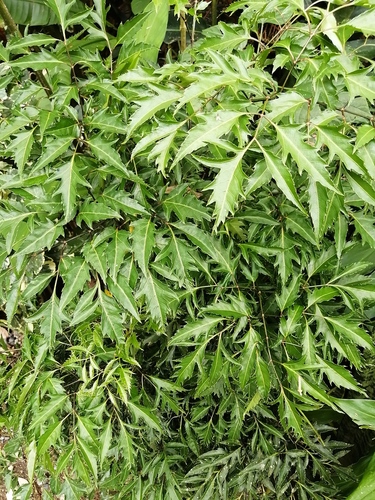

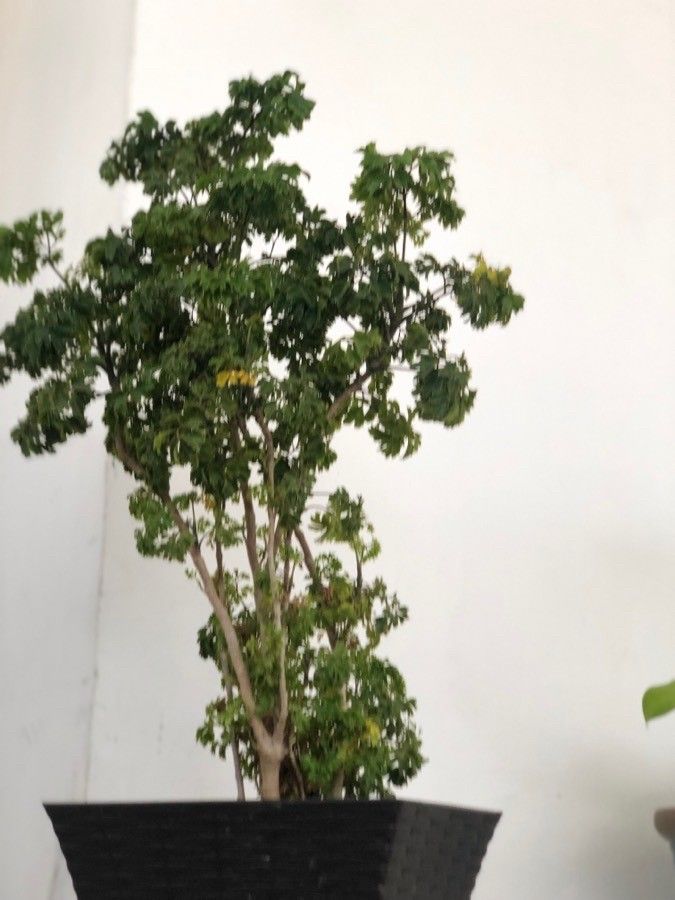
Ming aralia is an evergreen shrub whose deeply divided compound leaves resemble a fern. Its woody trunk and upright branches form a slow-growing small indoor tree.
Read moreMing aralia
Panax fruticosus, Aralia fruticosa and Nothopanax fruticosus
Give plenty of ambient light without direct sun on the leaves.
Bright, indirect light indoors


© photo
(c) veroalpizar, some rights reserved (CC BY-NC) · cc-by-nc
Wikimedia Commons · CC BY-SA or Public Domain
Wikipedia · CC BY-SA
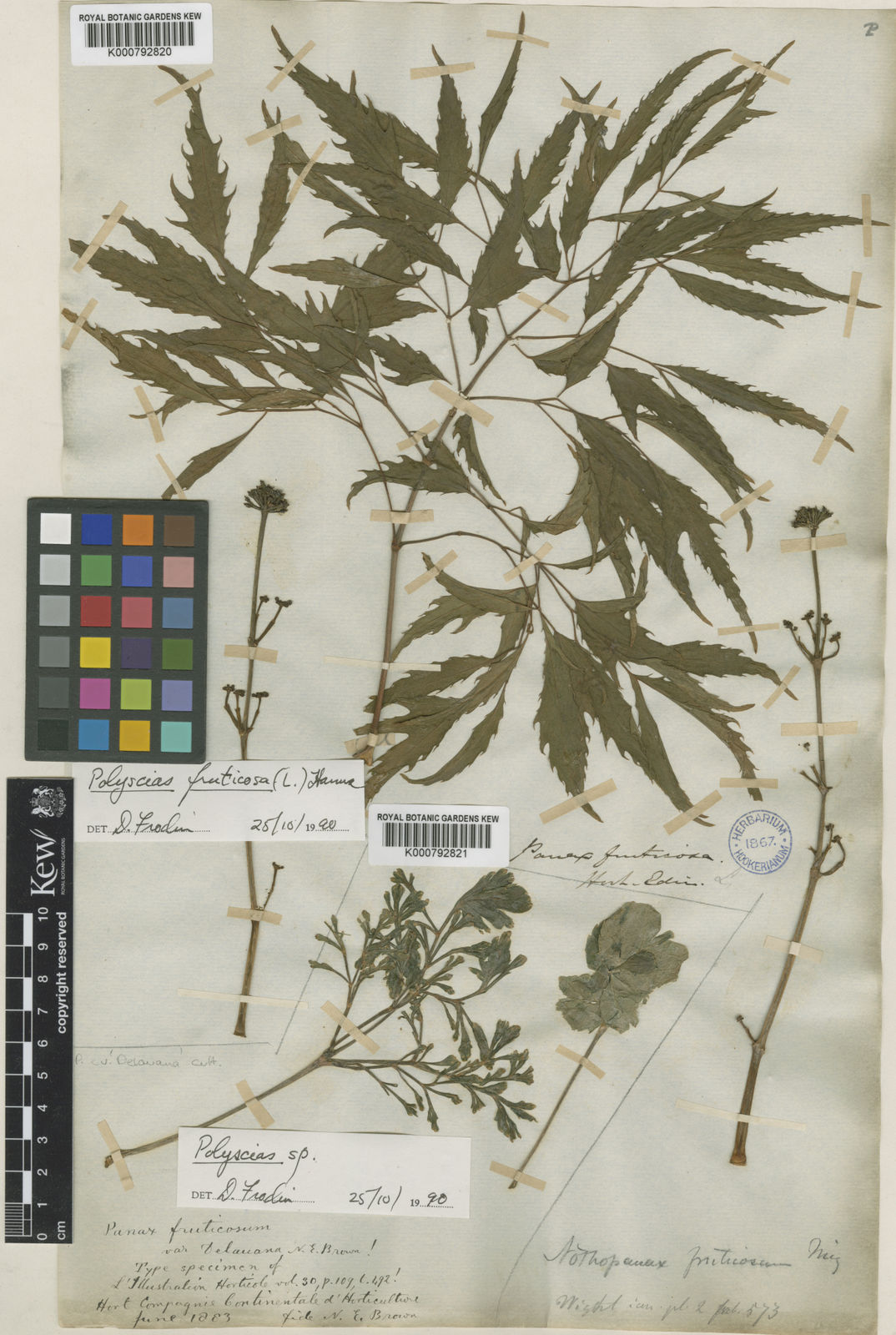
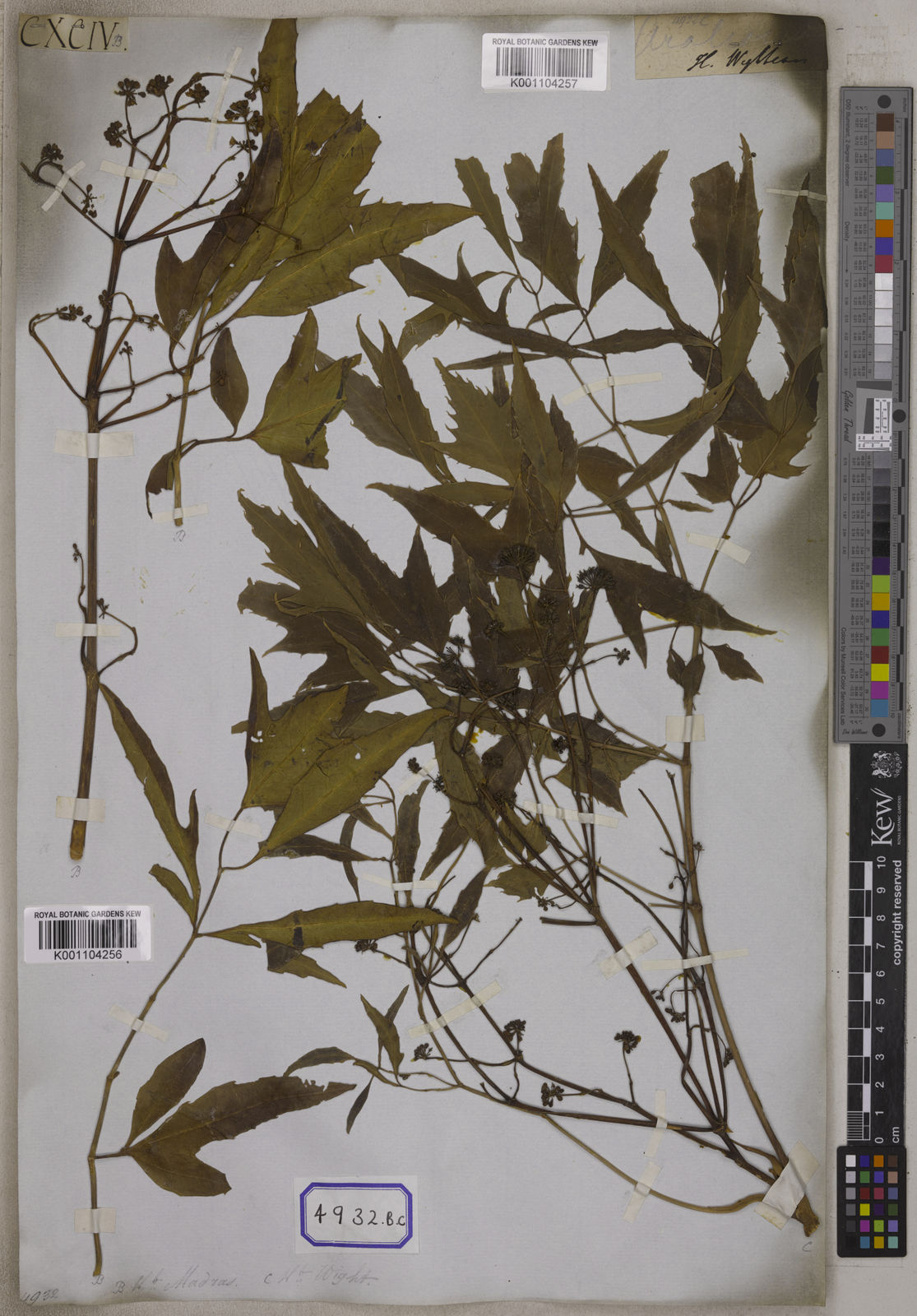
© copyright of the Board of Trustees of the Royal Botanic Gardens, Kew.




Global distribution
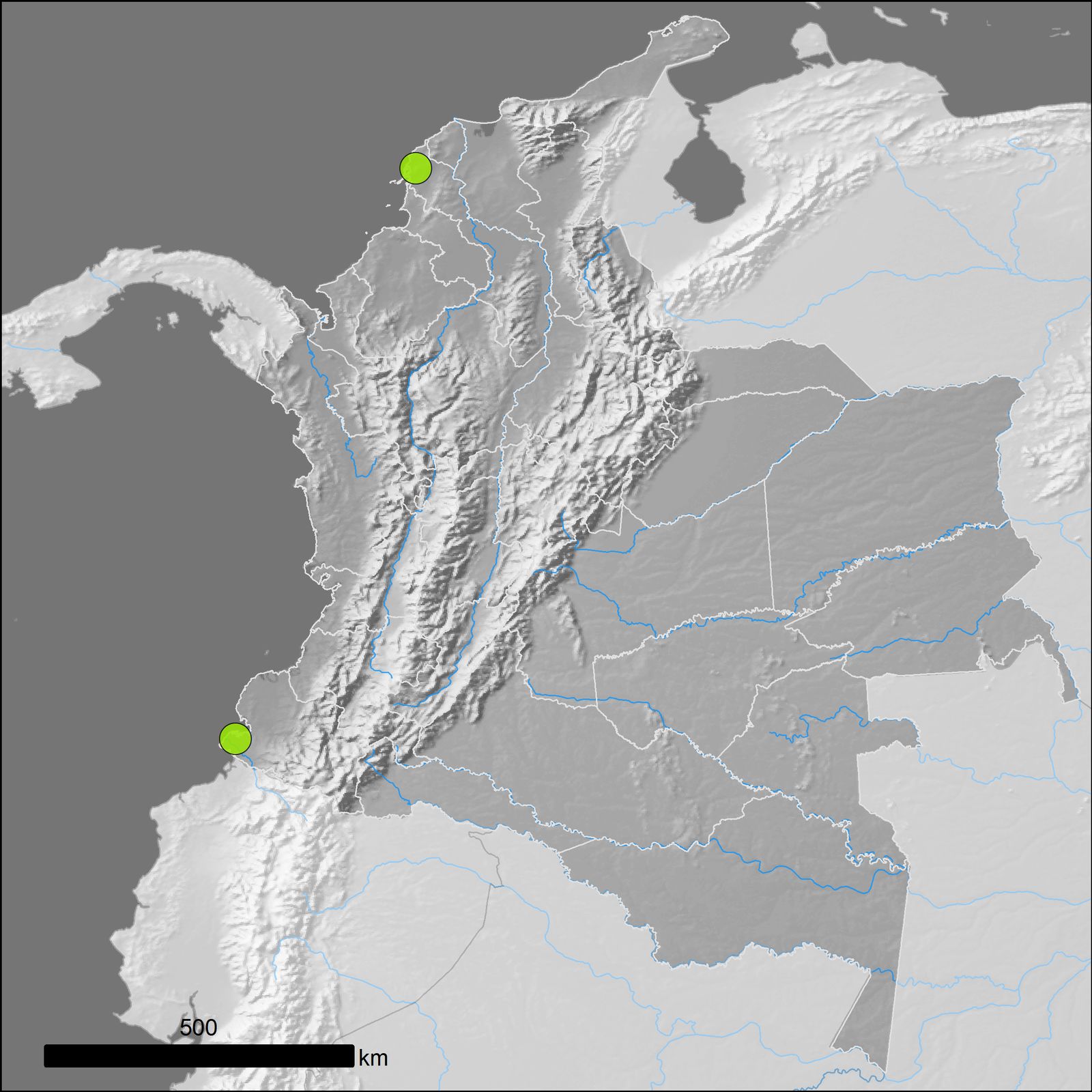
Native range recorded in Malesia and the southwestern Pacific; cultivated in many tropical regions.
- Native4
- Moluccas
- New Guinea
- New Caledonia
- Queensland
Hexagons: regions where the plant occurs. Green dots: native range.↗
Identity
Ming aralia (Polyscias fruticosa (L.) Harms, 1894) carries deeply divided compound leaves at the ends of upright, woody branches. Its foliage resembles a fern or parsley, but the plant forms an evergreen shrub. The French names aralia Ming and aralia de Chine are recorded in French horticultural literature. 6 5
The word “aralia” in its common name does not place this species in the genus Aralia. Its botanical name belongs to Polyscias, in Araliaceae, the family that also includes ivy. This distinction helps prevent advice for a different aralia from being applied to this tropical shrub. 4 6
Recognition
Ming aralia's most useful character is its repeatedly pinnate foliage: each leaf divides into parts that divide again. The leaflets are narrow, often lance-shaped, with toothed edges. This produces a light, feathery outline on a woody framework that retains the structure of a small tree. 2 1
Glossy, dark green leaves cluster towards the branch tips. The stems are smooth, flexible and reddish brown. Finely divided foliage distinguishes Ming aralia from species of Polyscias with simple or much less divided leaves. Height alone varies too much with growing conditions to provide a reliable identification. 1 7
The Canadian horticultural reference gives indoor dimensions of 1.3 to 2.0 m (4.3 to 6.6 ft) tall and 0.6 to 1.0 m (2.0 to 3.3 ft) wide. Singapore descriptions of outdoor plants in tropical conditions give 3 to 5 m (9.8 to 16.4 ft). These contexts should not be combined into a single height range for an apartment plant. 3 2
Useful taxonomy
The combination Polyscias fruticosa dates from 1894. The earlier name Panax fruticosus L., published in 1763, is its basionym. The parentheses around L. indicate that the species has changed genus since its first name was published. 5
The old name Nothopanax fruticosus (L.) Miq. also appears in indexes. Recognising these names helps when reading old labels, without treating every combination as a different species. The epithet fruticosa refers to the shrubby habit, which remains apparent even in a specimen kept short by pruning. 4 2
Habitat and distribution
Ming aralia has a native range in Malesia and the southwestern Pacific. References include the Moluccas, New Guinea, New Caledonia and Queensland. Introductions are recorded in other Asian and tropical regions. The French name aralia de Chine therefore does not, by itself, establish a Chinese origin. 4 2
In Singapore, the species is described as non-native and cultivated. Indoor cultivation supplies warmth and filtered light in temperate regions. Recommendations for full sun or partial shade in a tropical garden do not transfer directly to a plant that has grown behind glass. 2 1
Life cycle and reproduction
Ming aralia is a slow-growing perennial. Its small, pale flowers form umbels grouped in a terminal panicle. A plant can bear both male and bisexual flowers. Flowers and fruits are rarely seen on specimens grown as houseplants. 1 2
The fruits are rounded drupes, flattened at the sides. Horticultural propagation mainly uses stem cuttings. French guidance describes rooting in a warm, enclosed, humid atmosphere with a slightly moist growing medium. Keeping that medium waterlogged does not improve rooting and exposes the tissues to rot. 2 6
Repotting is recommended in spring. Fertiliser can be applied from May through September, especially in a year when the potting mix has not been renewed. Watering is more frequent in summer than winter because drying changes with the season. The calendar follows this French seasonal pattern without prescribing a universal water volume. 6
Uses and risks
Ming aralia is grown as a small indoor tree, sometimes trained as bonsai, or as a hedge shrub in tropical climates. Bright, indirect light suits it indoors. Keep the growing medium moist without leaving it standing in water: emptying the saucer prevents prolonged wetness around the roots, which encourages rot. 2 6 1
The available toxicity warning concerns the genus Polyscias. It mentions saponins and toxicity after ingestion in people and domestic animals. Reported effects include mouth irritation and digestive upset; the sap can irritate skin. This general precaution is distinct from a clinical study specifically of Ming aralia. 7
Food uses involving cooked young shoots are reported for this species, but they do not establish that all parts, or an ornamental plant purchased in a pot, are safe to eat. The horticultural references and the genus warning address different contexts. Keep the plant out of reach of children, cats and dogs. 1 7
Varieties, similar plants and identification pitfalls
‘Elegans’ is recorded as a dwarf selection with parsley-like foliage. “Dwarf” describes that selection, not the maximum size of every Ming aralia. Other trade descriptions of curled or variegated foliage need a precise horticultural name before stable characters can be assigned to them. 1 6
The genus Polyscias includes simple and compound leaves, some much less divided. For Ming aralia, look for repeated divisions and toothed leaflets. A sales label saying only “aralia” leaves the identity too uncertain to choose the same care or safety precautions. 7 2
Main sources
Frequently asked questions
Is Ming aralia a fern?
No. Its finely divided foliage resembles a fern, but Polyscias fruticosa is a woody shrub in the family Araliaceae.
When should Ming aralia be repotted?
Spring is the recommended season. Repotting also depends on the condition of the potting mix and the space available for roots.
Why should water be emptied from the saucer?
Roots that remain waterlogged can rot. Keep the mix moist while allowing excess water to drain away.
If you are unsure about a plant’s toxicity, ask a botanist or veterinarian for advice.