
Moss-rose purslane (Portulaca grandiflora, )

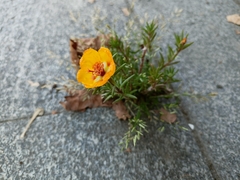
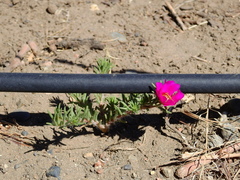
Moss-rose purslane (Portulaca grandiflora) forms a carpet of fleshy stems with narrow leaves. This South American annual flowers in sunshine and suits well-drained rock gardens and hanging containers. Its flowers close at night and in cloudy weather.
Read moreMoss-rose purslane and Moss rose
Place in full sun, with intense direct light all day long.
Full sun; flowers close at night and in cloudy weather.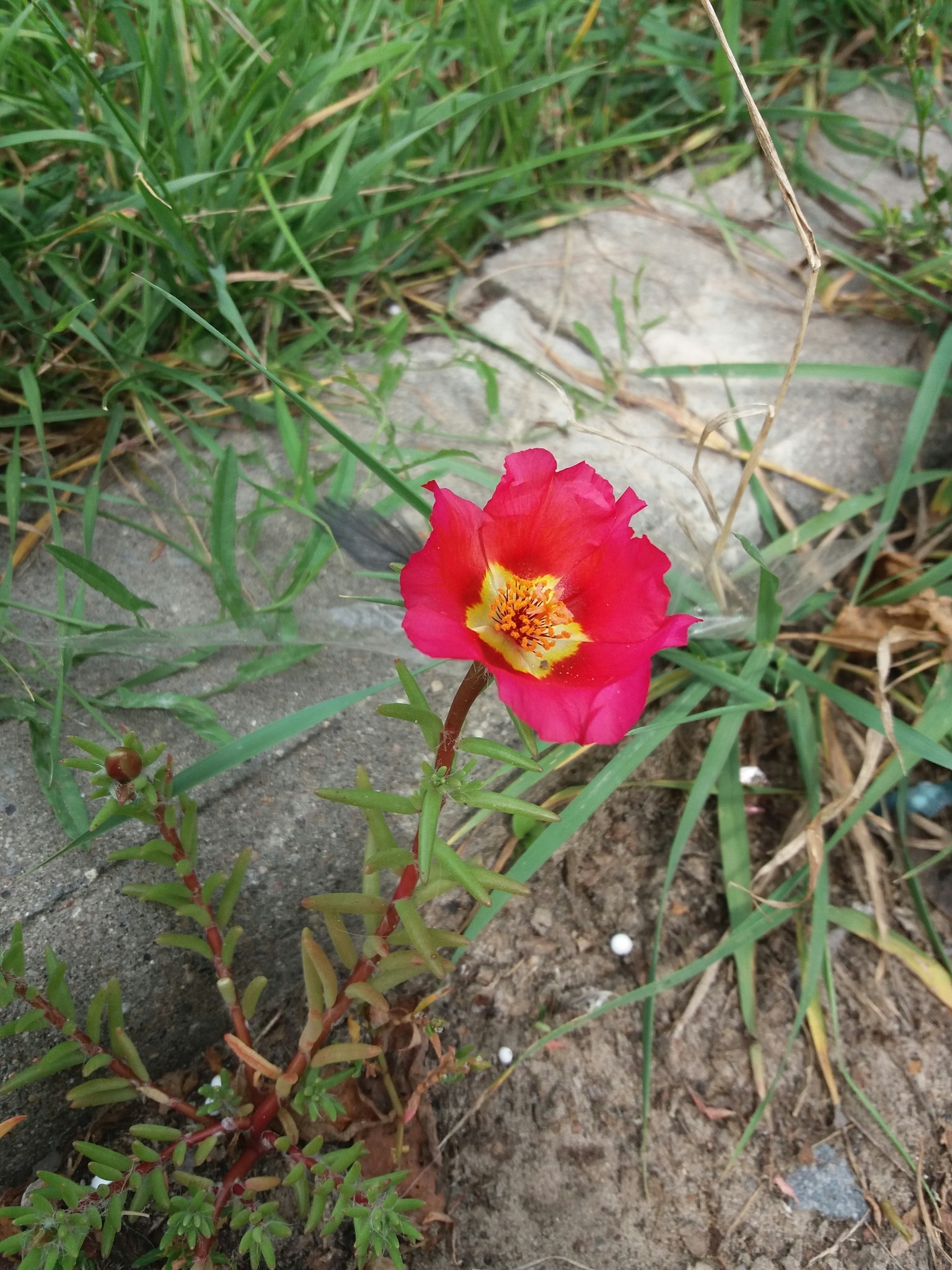



© photo
Евгения Якунина · CC BY-NC
Evgenij Samarin · cc-by
Guillermo Debandi · cc-by
Taken Nov 11, 2020 by Gomez Zuni (cc-by-sa)
Taken Jul 29, 2019 by Eddie Stegeman (cc-by-sa)
Taken Sep 14, 2021 by Manū (cc-by-sa)
Taken Sep 15, 2022 by Martin Verweij (cc-by-sa)
Taken Aug 25, 2019 by Gregory Decanter (cc-by-sa)
© copyright of the Board of Trustees of the Royal Botanic Gardens, Kew.




Global distribution
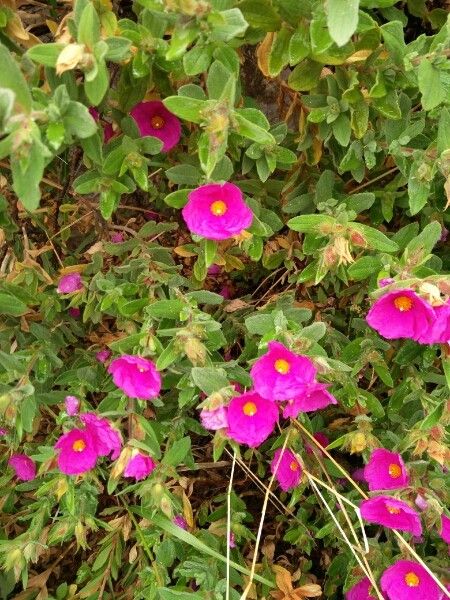
South American species, recorded particularly in Brazil, Argentina and Uruguay; widely cultivated and introduced outside that range.
- Native3
- Introduced1
- Brazil
- Argentina
- Uruguay
- Ontario
Hexagons: regions where the plant occurs. Green dots: native range.↗
Identity
Moss-rose purslane (Portulaca grandiflora Hook., 1829) forms a low annual carpet with narrow, fleshy leaves that distinguish it from flat-leaved purslanes. Its flowers open in sunshine and close at night or in cloudy weather. A bed with closed flowers under gray skies can therefore open again when the sun returns. 1 3 7
Moss-rose purslane belongs to Portulacaceae, in the order Caryophyllales. EPPO also records the French name pourpier fleuri. The accepted scientific name is Portulaca grandiflora. The English name “moss rose” does not identify a rose bush: the flowers resemble roses in shape, but the plants belong to different botanical families. 1 2 3
Recognition
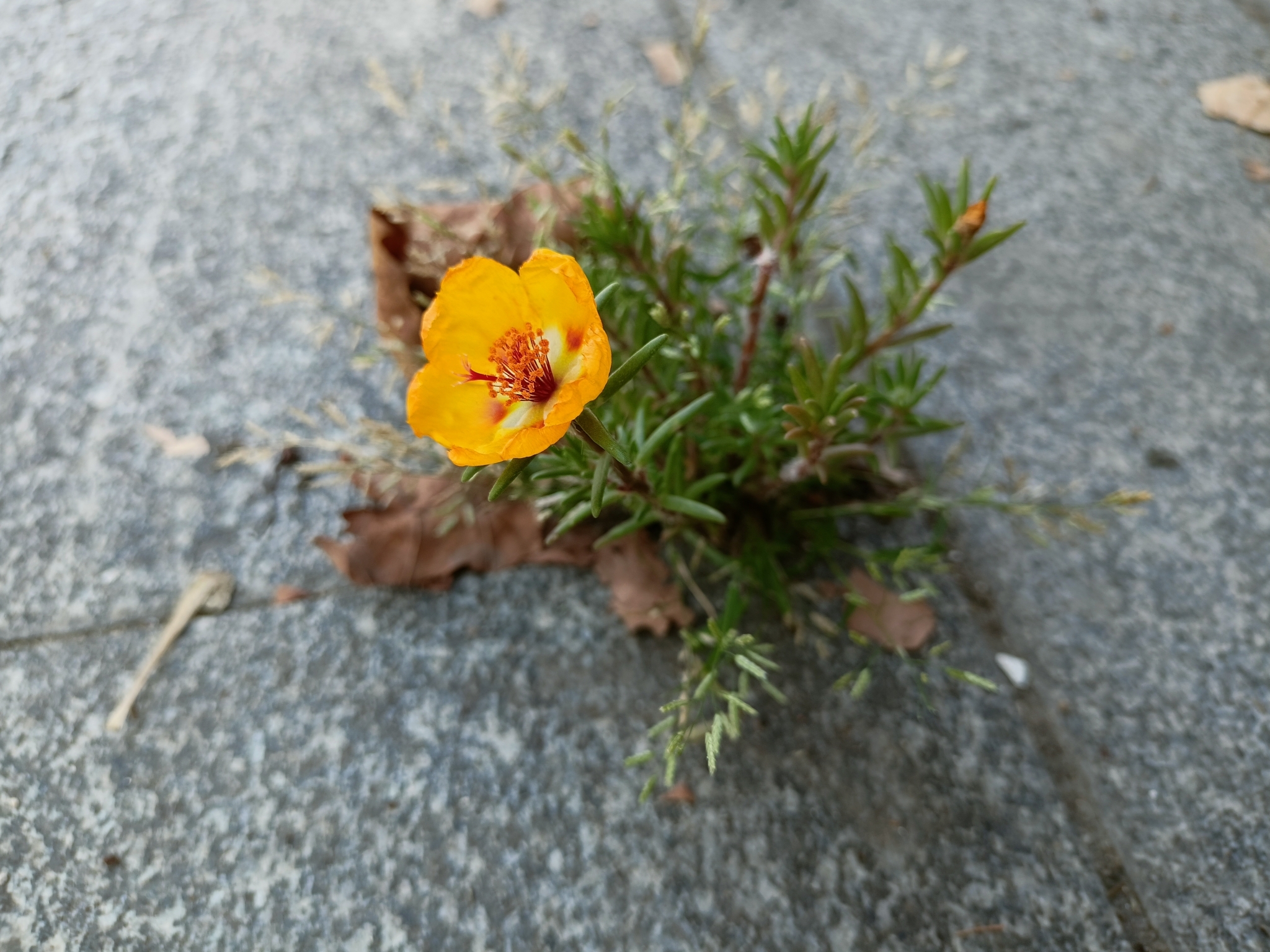
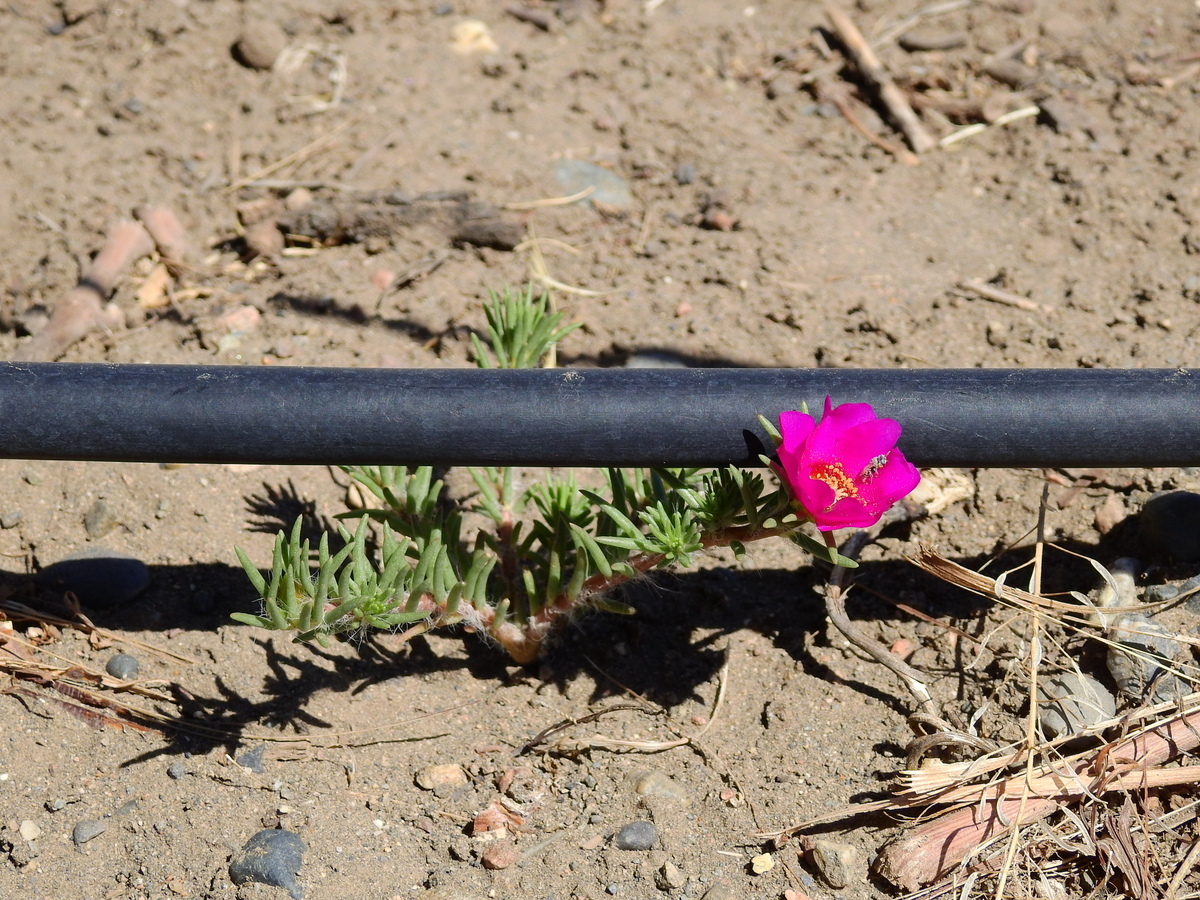
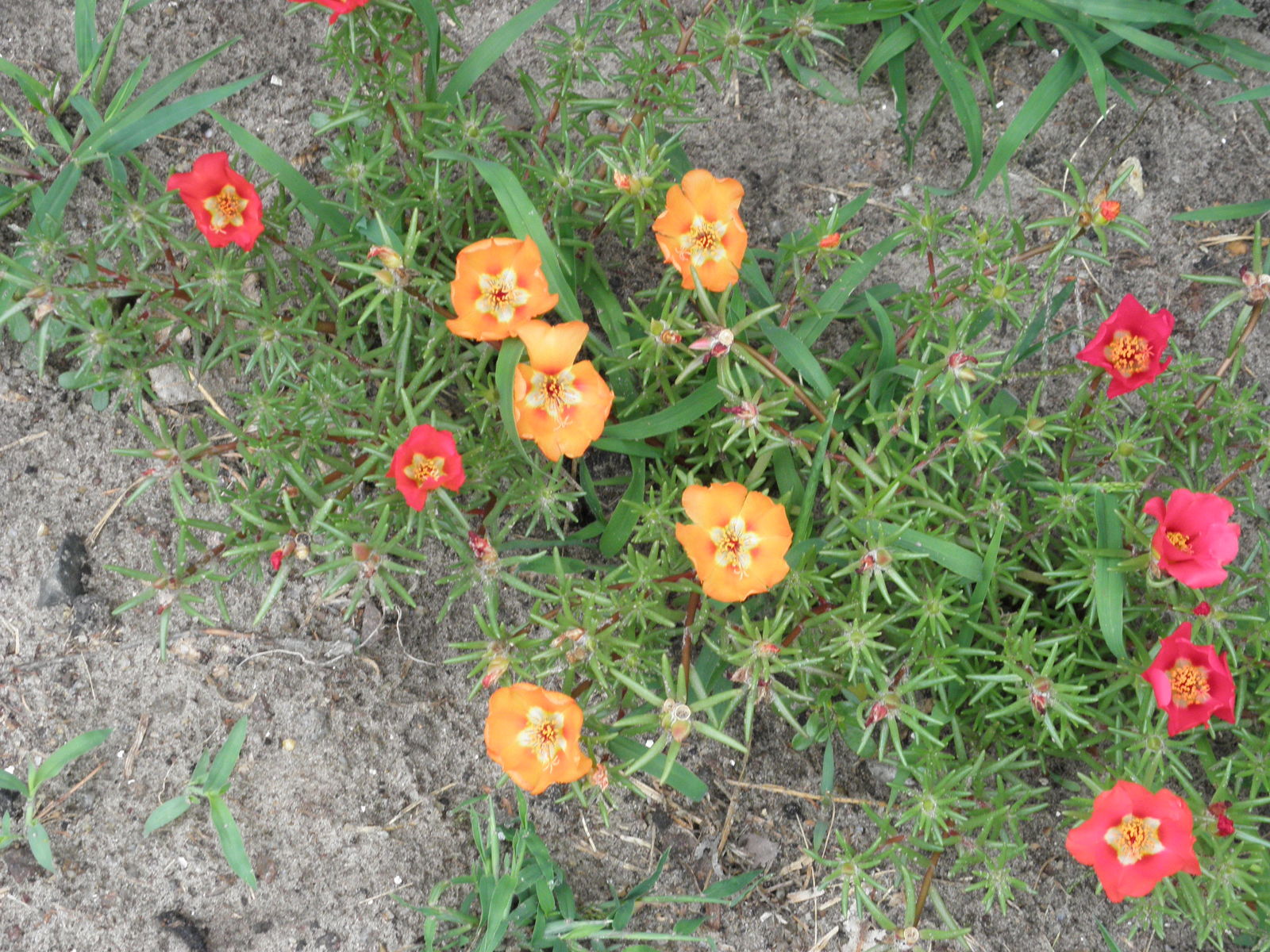
Moss-rose purslane has reddish, much-branched stems that lie along the ground or rise slightly. Its pointed, cylindrical green leaves alternate along the stems or form small clusters. Their succulent texture differs from the thin foliage of many annuals. The leaf edges can turn red in full sun. 3
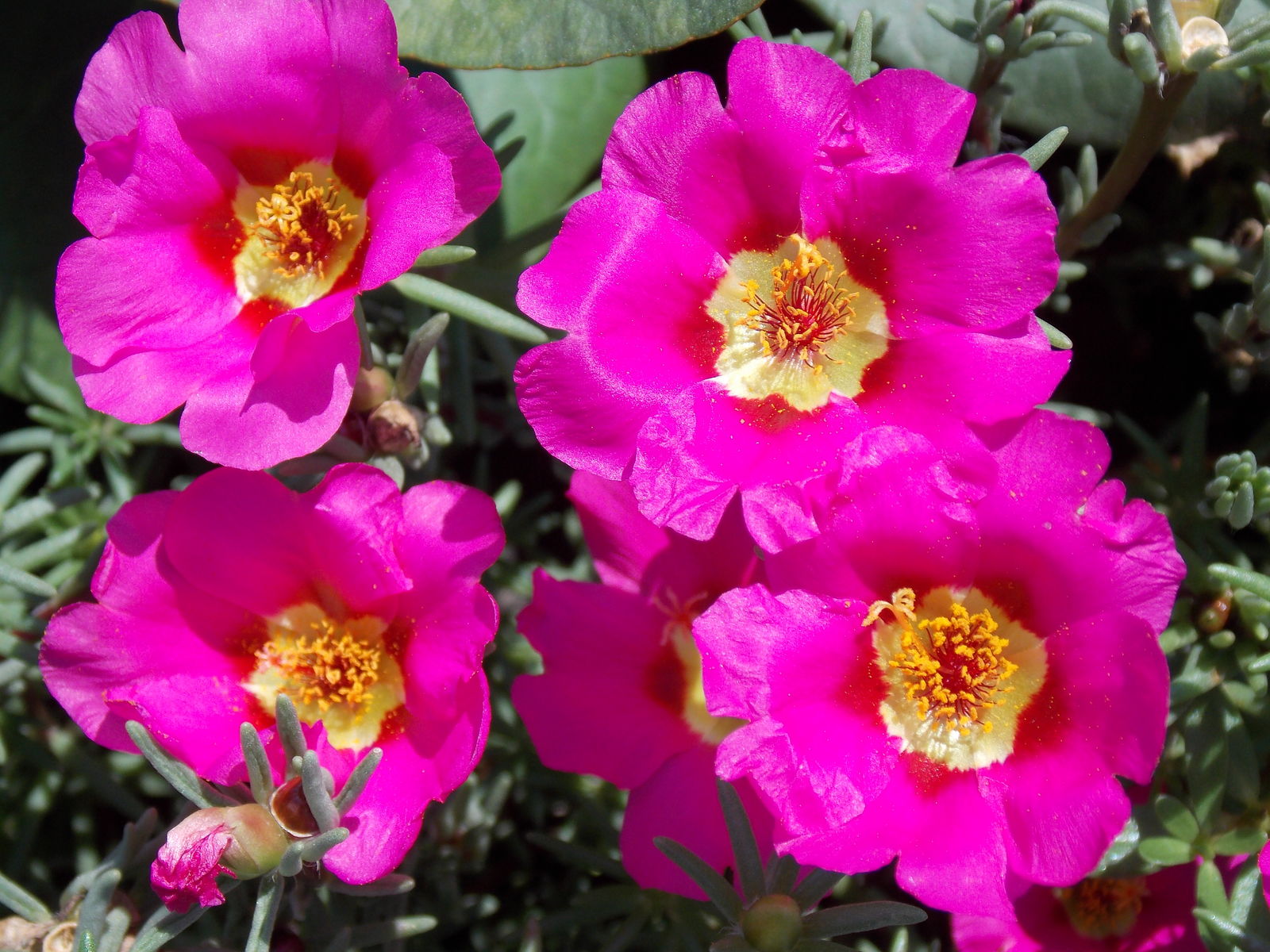
The flowers sit at the stem tips above the foliage. Single forms usually have five petals, while semi-double and double selections have more. Horticultural colors include red, orange, yellow, white, pink and purple. After flowering, the capsules of moss-rose purslane open and release small seeds onto the ground. 3
Habitat and distribution
Moss-rose purslane comes from South America; horticultural descriptions specifically mention Argentina, southern Brazil and Uruguay. Its tolerance of heat and drought accompanies its origin in dry regions. Sunny garden sites with well-drained sandy or rocky soil match the species' growing requirements. 5 3
EPPO reports a wider range than that horticultural core, extending from Bolivia and eastern Brazil to the Southern Cone. The database separately records introductions in several parts of the world, including Ontario. For moss-rose purslane, “introduced” means present outside the native range; the status alone does not establish that the species is invasive in every country. 2
Life cycle and reproduction
Moss-rose purslane is a warm-season annual grown for summer flowers. Spring sowing prepares plants for summer flowering; Texas Tech describes flowering from summer into fall. The calendar translates this cycle into relative scores for seasonal cultivation in the Northern Hemisphere. Months without activity mark the end of the annual crop, rather than winter dormancy in a plant kept from year to year. 5 4
Seeds and stem cuttings provide methods of propagation. Ripe capsules release seeds that can produce self-sown seedlings. Texas Tech cautions that offspring do not necessarily retain the parent plant's characteristics. Removing spent flowers reduces self-seeding, while leaving capsules in place allows the seeds to disperse. 4 3
Growing in sun and well-drained soil
Full sun and drainage determine where to plant moss-rose purslane. Suitable positions include the front of a border, crevices in a rock garden and hanging containers. The spreading stems can trail over a wall. Low water needs make the species an option for hot sites, provided water can drain away from the roots. 3 4
Poorly drained soil encourages root or crown rot in moss-rose purslane. Adding water to a plant in waterlogged ground therefore does not correct its growing problem. Young plants tolerate transplanting poorly and need careful handling. Aphids and slugs can occasionally cause problems; their presence should be distinguished from decline caused by wet soil. 3 4
Uses and risks
Moss-rose purslane is an ornamental groundcover for beds and containers. References disagree about edibility: NC State lists the flowers and seeds as edible, while UF/IFAS describes this species as inedible. The shared name “purslane” therefore does not justify gathering moss-rose purslane as though it were common edible purslane. 3 5
UF/IFAS reports toxicity to cats, dogs and horses. The precaution adopted here is to keep plants away from animals that chew them. The reference does not specify a toxic substance or symptoms particular to Portulaca grandiflora. Human risk remains insufficiently established here; the lack of a detailed description does not guarantee safety. 5
Varieties, similar plants and identification pitfalls
Common purslane (Portulaca oleracea) belongs to the same genus, but identifying it does not establish the identity of moss-rose purslane. The latter's cylindrical leaves provide an initial distinction. Trade names need further caution: a characteristic assigned to a selection does not necessarily describe every plant of the species. 3 5 7
Among horticultural forms of moss-rose purslane, “Sundial” is a series with double flowers that can open in cool, cloudy weather. “Sundance” has semi-double flowers that remain open for much of the day. NParks has a separate entry for many-petaled forms with corollas about 3.5 cm (1.4 in) across. The corolla measurement applies to those horticultural forms, not to the species as a whole. 3 6
Main sources
EPPO documents the French names and distribution of moss-rose purslane; GBIF establishes its taxonomic identity. The university references describe cultivation and visible characters. The NParks entry specifically concerns many-petaled horticultural forms. 2 1 3 6
- GBIF, Portulaca grandiflora Hook.
- EPPO Global Database, Portulaca grandiflora
- NC State Extension, Portulaca grandiflora
- Texas Tech University, Moss Rose, Common Portulaca
- University of Florida IFAS Extension, Moss rose, the other portulaca
- NParks, Portulaca grandiflora, many-petaled forms
- University of Wisconsin Extension, Moss Rose, Portulaca grandiflora
Frequently asked questions
Why do the flowers of moss-rose purslane stay closed?
Portulaca grandiflora flowers open in sunshine and close at night or in cloudy weather. Some horticultural selections stay open longer.
Does moss-rose purslane tolerate drought?
This annual tolerates drought and heat. It needs full sun and well-drained soil; waterlogged soil encourages rot.
Can moss-rose purslane be eaten?
References disagree: NC State lists edible flowers and seeds, while UF/IFAS advises against eating this species and reports toxicity to cats, dogs and horses. Do not treat it as common edible purslane.
If you are unsure about a plant’s toxicity, ask a botanist or veterinarian for advice.