
Bracken fern (Pteridium aquilinum, )
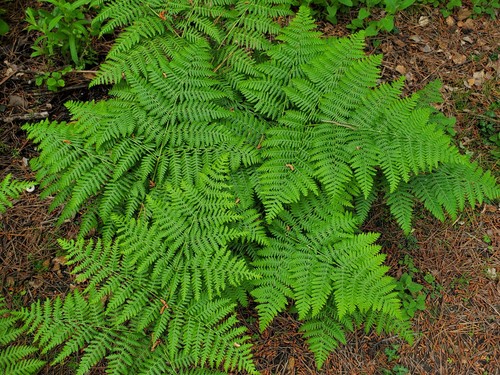
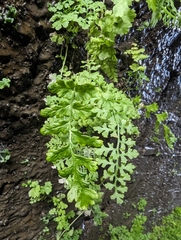
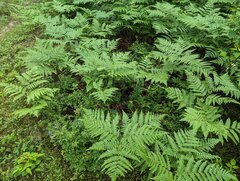
Bracken fern (Pteridium aquilinum) is a wild, colony-forming fern in the Dennstaedtiaceae family, found on heaths and woodland edges. Its fronds have served as traditional mulch, but spores and compounds such as ptaquiloside require very cautious handling, away from vegetable gardens and animals.
Read moreBracken fern, Bracken, Common bracken and Eagle fern


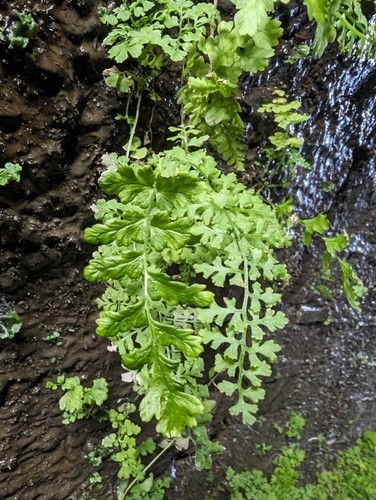
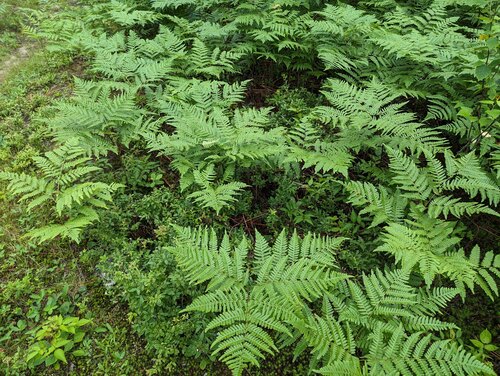
© photo
(c) c michael hogan, some rights reserved (CC BY-NC-SA), uploaded by c michael hogan · cc-by-nc-sa
Piermario Maculan · cc0
Nick Kleinschmidt · cc-by
no rights reserved · cc0
(c) Nick Kleinschmidt, some rights reserved (CC BY) · cc-by
Identity
Bracken fern (Pteridium aquilinum (L.) Kuhn) is a wild fern whose fronds have traditionally served as mulch. Its relevance to gardening is practical rather than decorative: it requires careful consideration before any fronds are collected or used. 1 8
POWO, WFO and IPNI confirm the accepted scientific name. Bracken belongs to the fern family Dennstaedtiaceae, rather than the flowering plants. It produces neither a corolla nor fruit, but fronds and spores. 2 3 4
Historical mulching uses are recorded in Brittany and Limousin, France. Such use is restricted here to ornamental areas away from vegetable gardens. That restriction is essential to avoid treating the material as harmless. 8
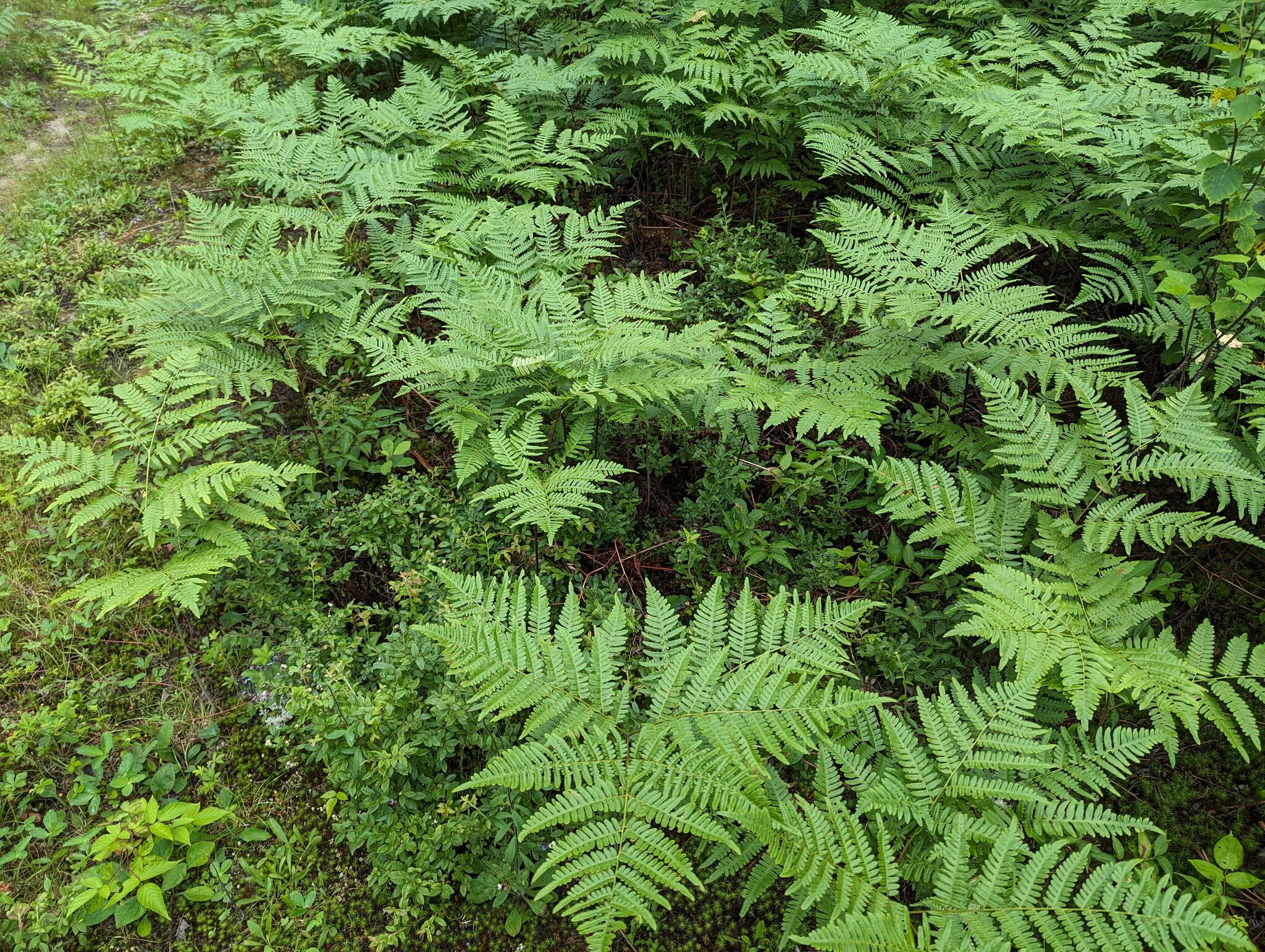
Large colonies are another defining feature of bracken. Its rhizomes can form dense networks on heaths, woodland edges and disturbed ground, with a strong ability to dominate the herbaceous layer. 6 7
Recognition
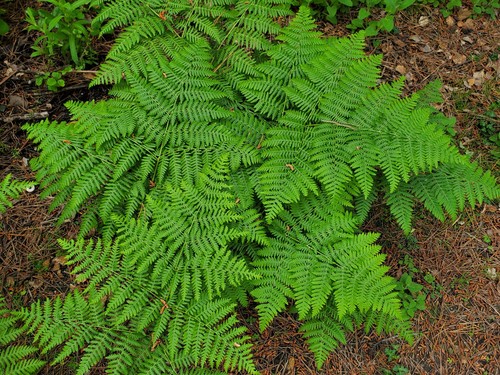
Broad triangular fronds, deeply divided and often borne separately on long stalks, identify this fern. In summer, it can form extensive stands 50 cm to over 2 m (20 in to over 6.6 ft) tall, depending on the site. 6
Toward the end of the season, fronds turn brown and dry out. This dry material explains their former use as bedding or mulch, but handling carries risks, especially when dust and spores are released. 8
Unlike a restrained ornamental woodland fern, bracken does not stay in a tidy clump. Rhizomes extend outward and can occupy an entire plot when conditions suit it. 7
Habitat helps confirm an identification: acidic ground, heath, banks, clearings or recently felled woodland are typical settings. An isolated frond is not enough to judge a possible use; the whole colony and whether the material is fresh or dry matter too. 6 8
Useful taxonomy
The accepted botanical name for bracken fern is Pteridium aquilinum (L.) Kuhn. Identifying the species matters when considering mulch: a generic label such as “fern” does not convey the same information. 2 8
Grouping bracken indiscriminately with safe plant mulches would obscure its risks. Precise identification links the cautions to the right plant and distinguishes bracken from ornamental ferns and ordinary pruning debris. 8 5
Species complexes and subspecies are often discussed within Pteridium. Here the relevant species is P. aquilinum, the identity needed to understand its recorded mulching uses in France. 3 6
A useful distinction follows for gardeners: an ornamental fern can be attractive in a bed, whereas dry bracken used as mulch requires a mask, a site away from food crops and very careful handling. 8
Cultivation
Bracken is generally not grown as an ordinary garden plant. It occurs on acidic ground in open or partly shaded situations and spreads by deep rhizomes. 7 6
Where bracken is already established, management focuses mainly on containing its spread. Repeated cutting, avoiding dispersal of risky fronds and keeping potentially contaminating material out of vegetable gardens are cautious choices. 8
Poor, acidic soil suits this fern well. Improving a site, closing the canopy or encouraging competing vegetation may reduce its vigor, but eradication often takes several seasons. 7
Any ornamental use of dry fronds requires strict separation from vegetable gardens and food-growing areas, together with protective handling. This is chiefly a matter of managing the material rather than cultivating the plant. 8
Uses
Traditional uses include frond mulch and animal bedding, but these require strong restrictions. Spores and ptaquiloside affect how the material should be treated; it is not suitable as an all-purpose mulch. 8
An ecological garden may retain existing bracken where it belongs to the landscape. Avoid carrying its fronds to vegetables, culinary herbs or areas used by animals. 8 5
In natural woodland, the broad, sculptural texture of the fronds can be visually appealing. That appeal does not justify deliberately introducing bracken to a small garden, where it can quickly become invasive. 7
For routine mulching, alternatives include straw, flax, hemp and pine bark, chosen according to their intended use. Bracken remains an exceptional material requiring caution rather than a general recommendation. 8
Precautions
Carcinogenic spores and ptaquiloside are the central concerns for handling and use. Wear a mask when handling dry fronds, exclude them from vegetable gardens and restrict any use to ornamental areas away from food crops. 8
Horses are vulnerable to bracken poisoning; effects on dogs and cats remain undocumented. As a precaution, avoid bracken bedding, accessible heaps and frond mulch in areas frequented by animals. 5 8
Human handling precautions mainly concern dust and dry material. Wear gloves and a mask when moving fronds, wash hands afterward and avoid indirect use around food. 8
Whenever doubt remains, choose another mulching material. Straw, flax, hemp, healthy leaves or suitable chipped wood cover ordinary needs without adding concerns about spores, ptaquiloside and contact with food-growing areas. 8
Existing bracken calls for risk management: keep it out of vegetable gardens, avoid storing it in dusty enclosed sheds, do not use it as animal bedding and avoid handling it on windy days. 8 5
These cautions do not exclude every fern from the garden. They reflect the fact that Pteridium aquilinum is not ordinary green waste: its botanical identity changes the mulching decision, especially near vegetables, children and animals. 2 8
For practical purposes, regard Pteridium aquilinum as a plant requiring a careful risk assessment. Its traditional use does not make it a safe general mulch; strong restrictions remain necessary. 8 2
Main sources
- Wikidata, Pteridium aquilinum
- Plants of the World Online / Kew, Pteridium aquilinum
- World Flora Online Plant List, Pteridium aquilinum (L.) Kuhn (accepted species, June 2026 snapshot)
- International Plant Names Index, Pteridium aquilinum
- USDA Forest Service, Fire Effects Information System, Pteridium aquilinum — species review, M. F. Crane (1990)
- Wikipedia EN, Pteridium aquilinum
- Royal Horticultural Society, Pteridium aquilinum search results
- Floralens, garden mulching
If you are unsure about a plant’s toxicity, ask a botanist or veterinarian for advice.