
Mediterranean buckthorn (Rhamnus alaternus, )
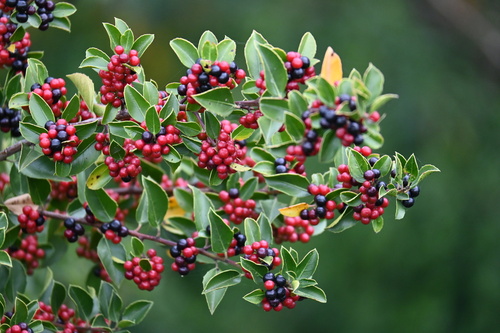
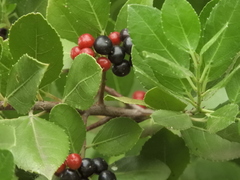
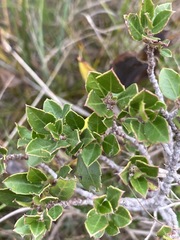
Mediterranean buckthorn (Rhamnus alaternus) is an evergreen Mediterranean shrub in the Rhamnaceae family. Its shiny leaves are often finely toothed, and its small fruits turn from red to black. They are not for consumption.
Read moreMediterranean buckthorn and Italian buckthorn
Rhamnus clusii and Rhamnus collina
Allow a few hours of direct sun per day, preferably morning or evening.
Sun or partial shade; shelter from exposed cold conditions.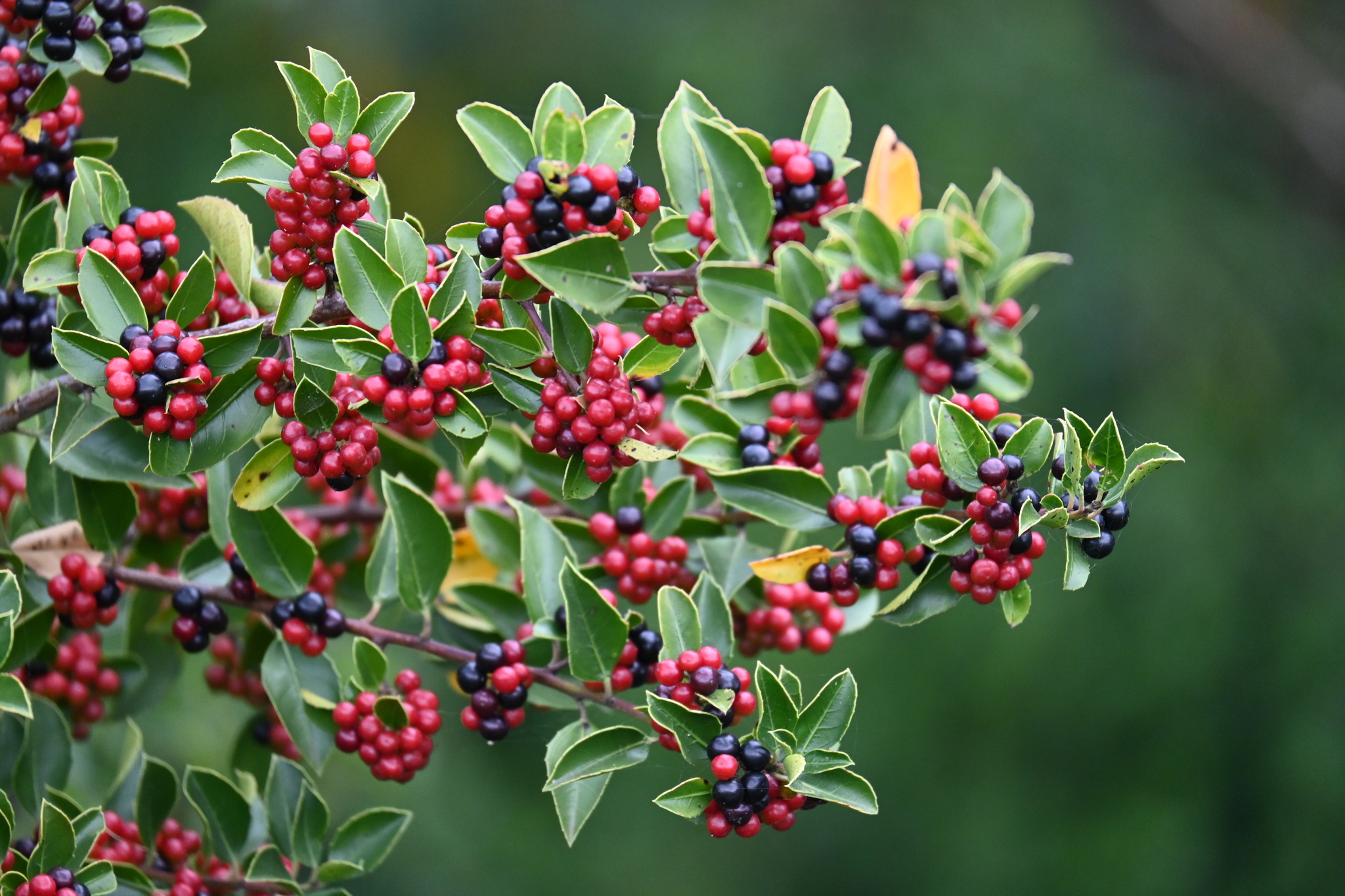



© photo
(c) jraus, some rights reserved (CC BY-SA) · cc-by-sa
Mary K. Hanson · cc-by
Thomas Dreux · cc-by
Taken Jun 7, 2021 by Alain Bigou (cc-by-sa)
Taken Jul 29, 2019 by Michèle marty (cc-by-sa)
Taken Mar 13, 2014 by Tela Botanica − Mathias CHOUET (cc-by-sa)
Taken Apr 8, 2015 by Tela Botanica − Marcel Bonfils (cc-by-sa)
© copyright of the Board of Trustees of the Royal Botanic Gardens, Kew.




Global distribution
Native to the Mediterranean basin; introduced and locally invasive in Australia.
- Native3
- Invasive1
- France
- Corsica
- North Africa
- Australia
Hexagons: regions where the plant occurs. Green dots: native range.1
Identity
Mediterranean buckthorn (Rhamnus alaternus L., 1753), also called Italian buckthorn, is an evergreen Mediterranean shrub. It may remain bushy or develop into a small tree. Its glossy, leathery and often toothed leaves provide an initial clue, but several maquis shrubs share this appearance. Examine a whole shoot before reaching an identification. 15
It belongs to the Rhamnaceae, the buckthorn family. Small yellowish flowers are inconspicuous beside the leaves. Fruits turn from red to black and make the shrub more noticeable at another time of year. The English names Mediterranean buckthorn and Italian buckthorn refer to the same botanical species. 1687
Recognition
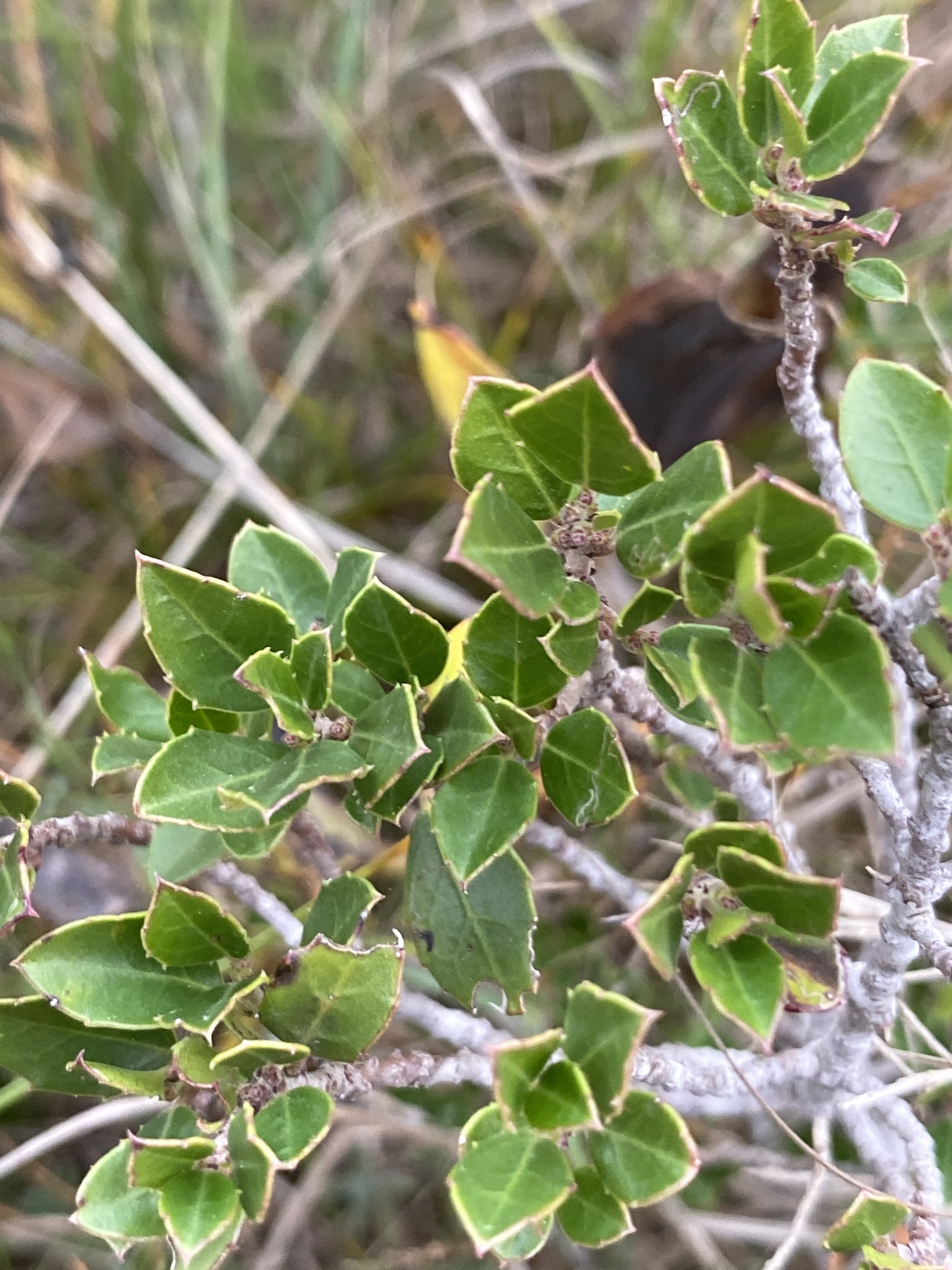
Leaves are alternate and shortly stalked. They vary from oval to lance-shaped, with a loosely toothed edge bordered by a narrow cartilaginous margin. Their firm texture and shiny upper surface help recognise an evergreen shrub without separating it from all similar species. Inspect several leaves to avoid treating variation on one shoot as a constant character. 67
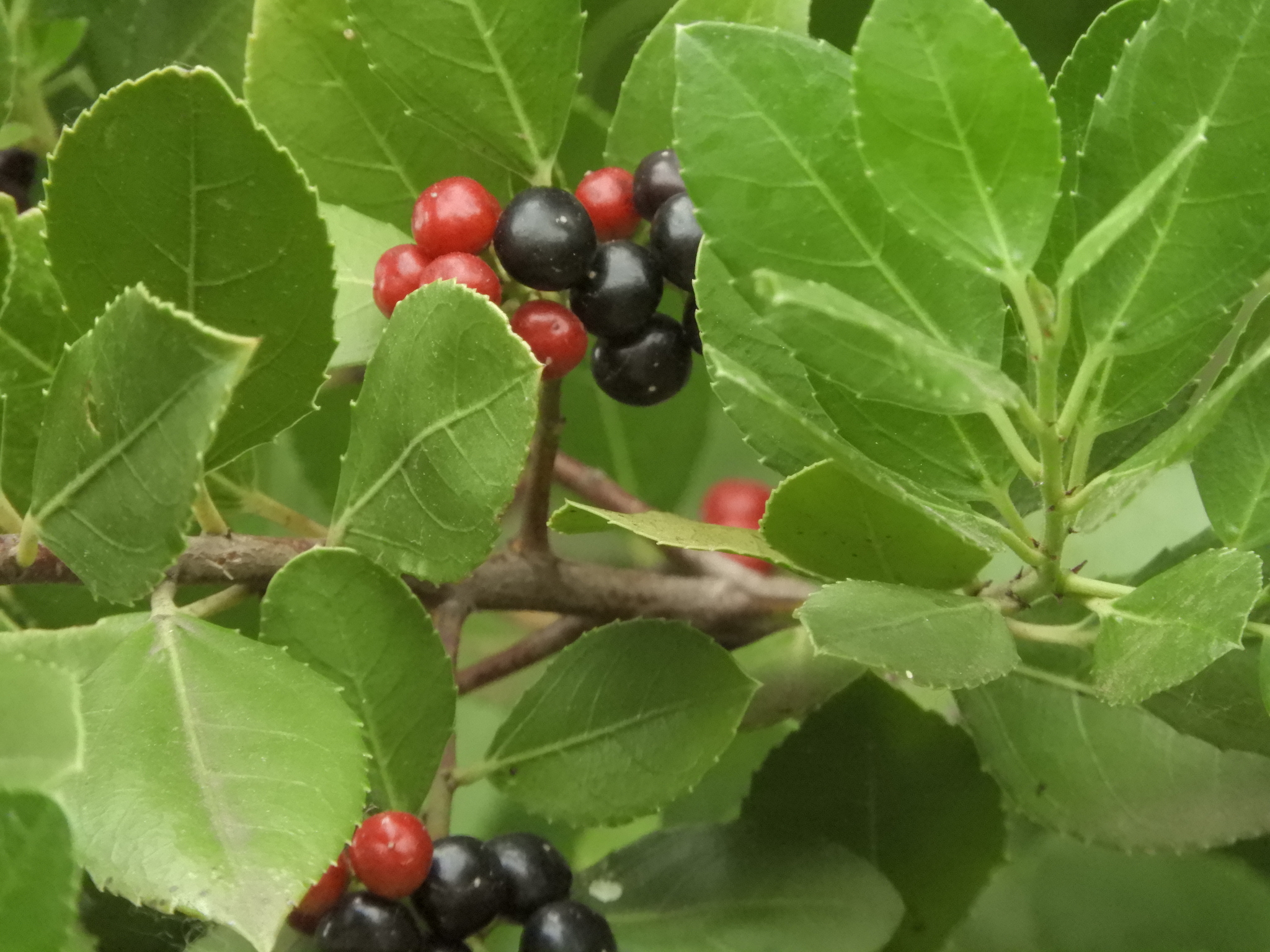
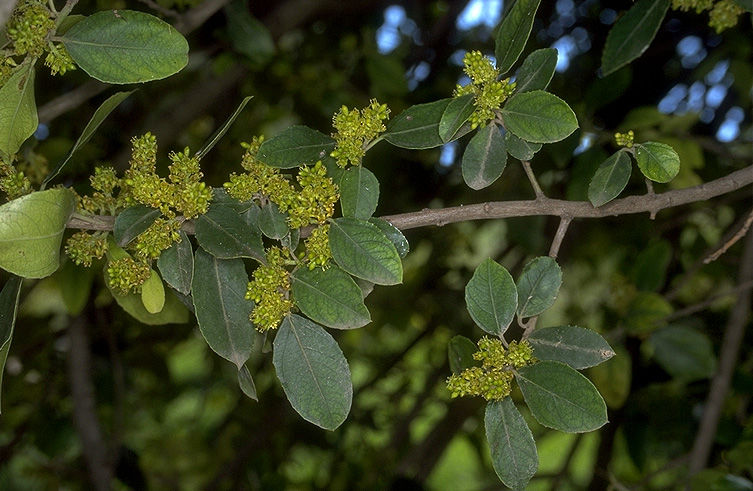
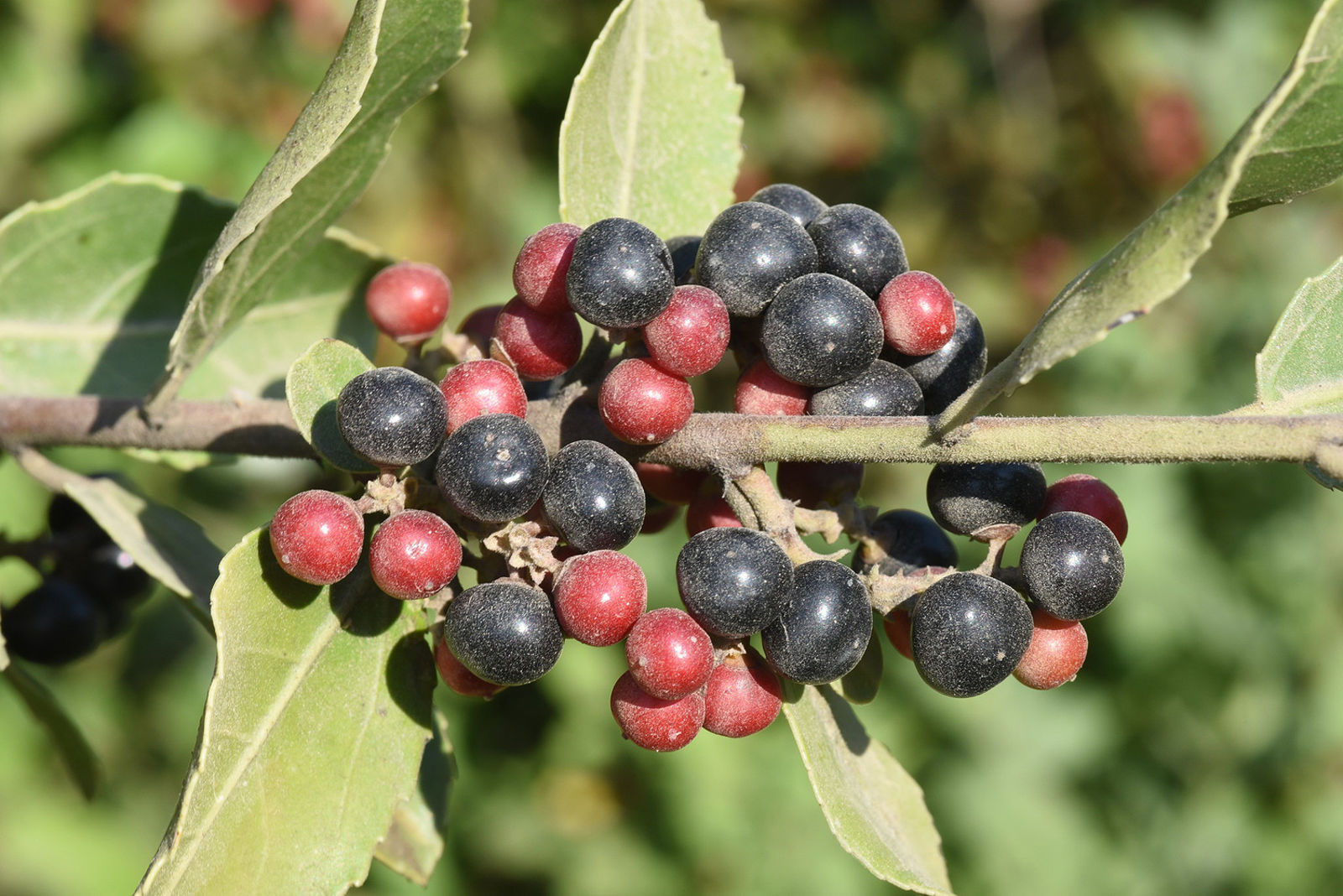
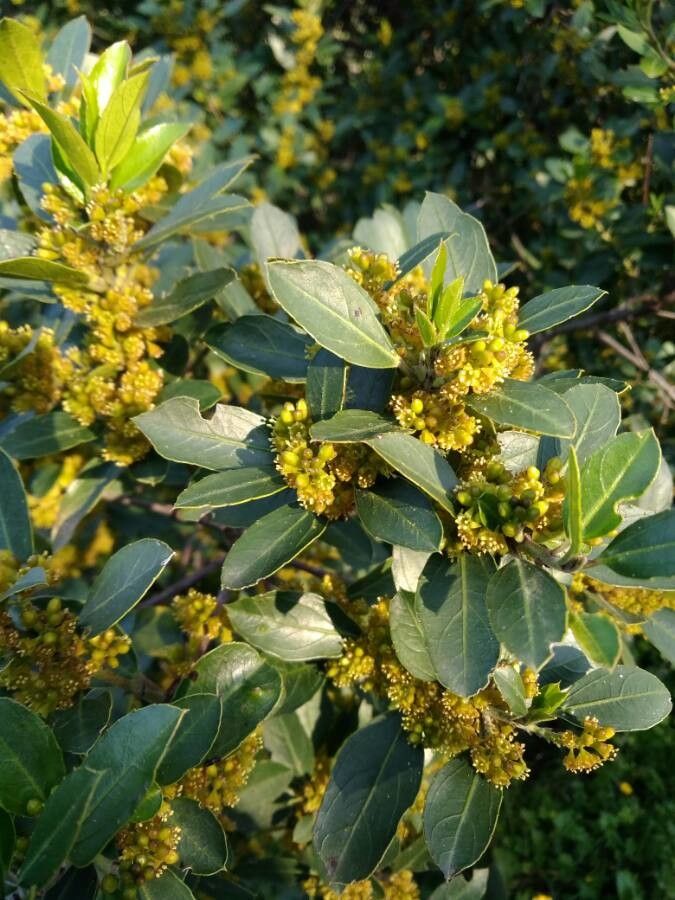
A thin translucent margin, visible against the light, is a practical clue. Tiny yellow-green flowers form short clusters in the leaf axils. The fruits are drupes 3–7 mm (0.12–0.28 in) across, green at first, then red and finally black. An identification photograph should show the leaf attachments, margins and fruit positions. A close-up of an isolated black fruit is insufficient for reliable identification. 567
Useful taxonomy
Linnaeus published Rhamnus alaternus in 1753, in the first volume of Species Plantarum, page 193. The name remains accepted. “L.” identifies the author of the botanical name. Rhamnus clusii Willd. and Rhamnus collina Salisb. refer to the same species. 218
Three subspecies are accepted: alaternus, munozgarmendiae and pendula. Older lists do not always use the same subdivisions. Rhamnus myrtifolia, formerly included as a subspecies, is now a separate species from Spain and North Africa. Distinguishing subspecies rank from cultivar names prevents false equivalences when comparing a local flora with a horticultural label. The variegated ‘Argenteovariegata’ is a garden selection rather than a fourth geographical subspecies. 193
Habitat and distribution
Mediterranean buckthorn is native to the Mediterranean basin, including France and Corsica, North Africa and the Middle East. It therefore belongs to these regions' natural flora; a plant in a hedge does not necessarily have a recent horticultural origin. In France it grows on rocks and limestone slopes in the south and west, extending to Isère, Ardèche, Aveyron, Lot, Vienne and Maine-et-Loire, and also occurs in Corsica. Its national Red List category is Least Concern. Observations still need local context, especially far from Mediterranean habitats. 178
Maquis, scrub and Mediterranean woods provide habitat. The plant can grow on dry, often calcareous ground and tolerates maritime exposure. Garden soil should drain freely. A newly planted shrub needs establishment watering even though the species later tolerates drier soil. The drought tolerance of an established shrub does not describe a root ball that has yet to root into its surroundings. 54
Life cycle and reproduction
Flowering occurs in early spring, from March to April in France, with fruits ripening mainly in summer and autumn. Small clusters appear in the leaf axils. Fruits change colour as they mature: red and black fruits on one shrub therefore need not represent two species. Observing it over several weeks reveals this change without picking branches. 5764
Birds help disperse seeds, allowing plants to appear away from gardens. Where the species has been introduced, this can facilitate naturalisation. Seed and cuttings are used in horticulture. To maintain the pale leaf margin of a variegated cultivar, semi-ripe cuttings in summer preserve the characteristics of the selected plant. 643
Uses and risks
Mediterranean buckthorn can form an evergreen hedge or screen in a suitable climate. 4 Shelter is preferable in cold, exposed areas, although it suits some coastal gardens. The variegated cultivar can reach 2.5–4 m (8–13 ft) in both height and spread. Allowing this space avoids repeatedly cutting back a shrub placed too close to a path. 3
It is reported as harmful if ingested, notably for humans and dogs, without a species-specific constituent being identified; some buckthorns are considered mildly toxic. Keep fruits away from children; they are not offered as food. Birds eating them does not establish safety for another audience. There is insufficient evidence to assign a reassuring status to cats, horses or other animals. No home medicinal use is recommended. 34
Varieties and similar plants
‘Argenteovariegata’ has small green leaves edged in creamy white. The horticultural name ‘Variegata’ is also associated with it. Variegation affects the foliage; flowers remain inconspicuous and fruits still turn from red to black. A young variegated plant is not necessarily dwarf: it may continue growing for many years. 3
Mock privets (Phillyrea) and young holm oaks can resemble it through their leathery foliage. Its translucent leaf margin, viewed against the light, helps resolve uncertainty. Outside the native range, monitor spontaneous seedlings as well: in Australia the species locally forms thickets that compete with native vegetation. This documented behaviour abroad does not automatically give it invasive status in France. 56
Main sources
The accepted name is Rhamnus alaternus L., published in 1753; Rhamnus clusii and Rhamnus collina refer to this species. 218
- POWO, Rhamnus alaternus
- IPNI, Rhamnus alaternus
- RHS, Rhamnus alaternus Argenteovariegata
- Plants For A Future, Rhamnus alaternus
- University of the Balearic Islands herbarium, Rhamnus alaternus
- Weeds of Australia, Rhamnus alaternus
- Tela Botanica, eFlore, Rhamnus alaternus
- INPN, TAXREF, Rhamnus alaternus
- POWO, Rhamnus myrtifolia
Frequently asked questions
How can I distinguish Mediterranean buckthorn from Phillyrea?
Examine the leaf arrangement and narrow translucent margin against the light; glossy foliage alone is not enough.
Are Mediterranean buckthorn fruits edible?
No. The plant is reported as harmful if ingested, particularly for humans and dogs.
Does Mediterranean buckthorn keep its leaves in winter?
Yes. Mediterranean buckthorn is an evergreen shrub.
If you are unsure about a plant’s toxicity, ask a botanist or veterinarian for advice.