
Wild madder (Rubia peregrina, )
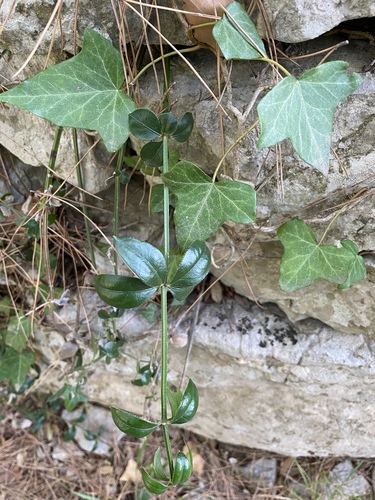
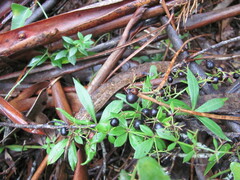
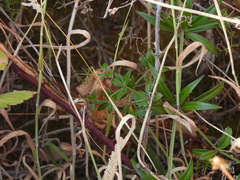
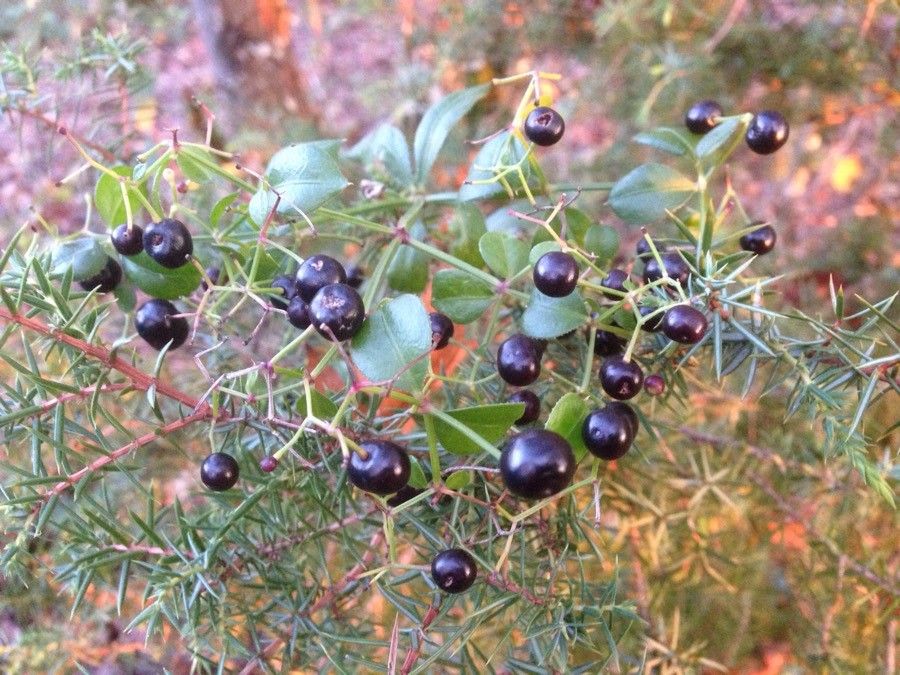
Wild madder is an evergreen climbing perennial that attaches to nearby plants with small backward-curving prickles. Leathery leaves surround its angled stems.
Read moreWild madder
Galium peregrinum
Give plenty of ambient light without direct sun on the leaves.
Partial shade; avoid scorching exposure for cultivated plants.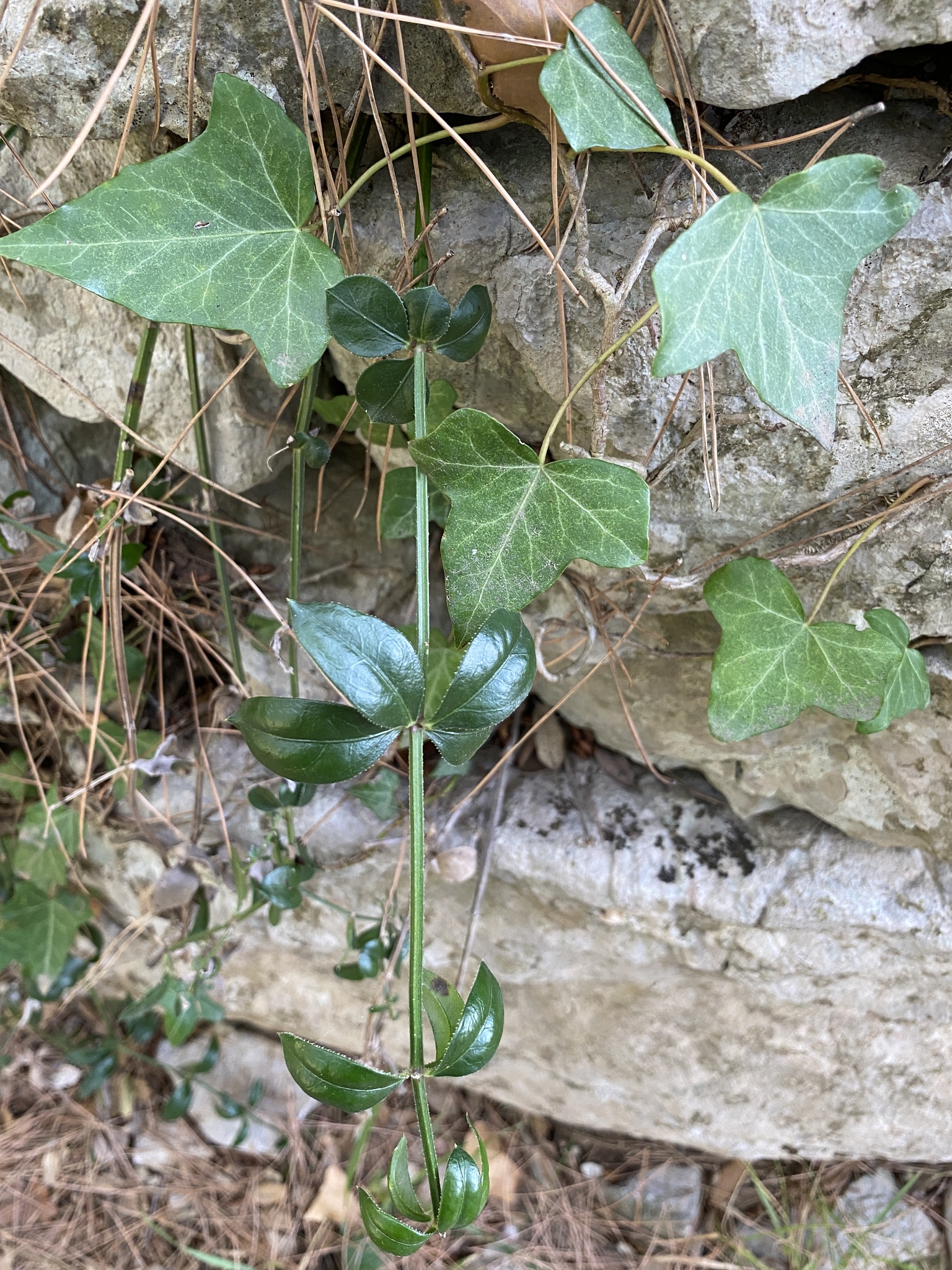
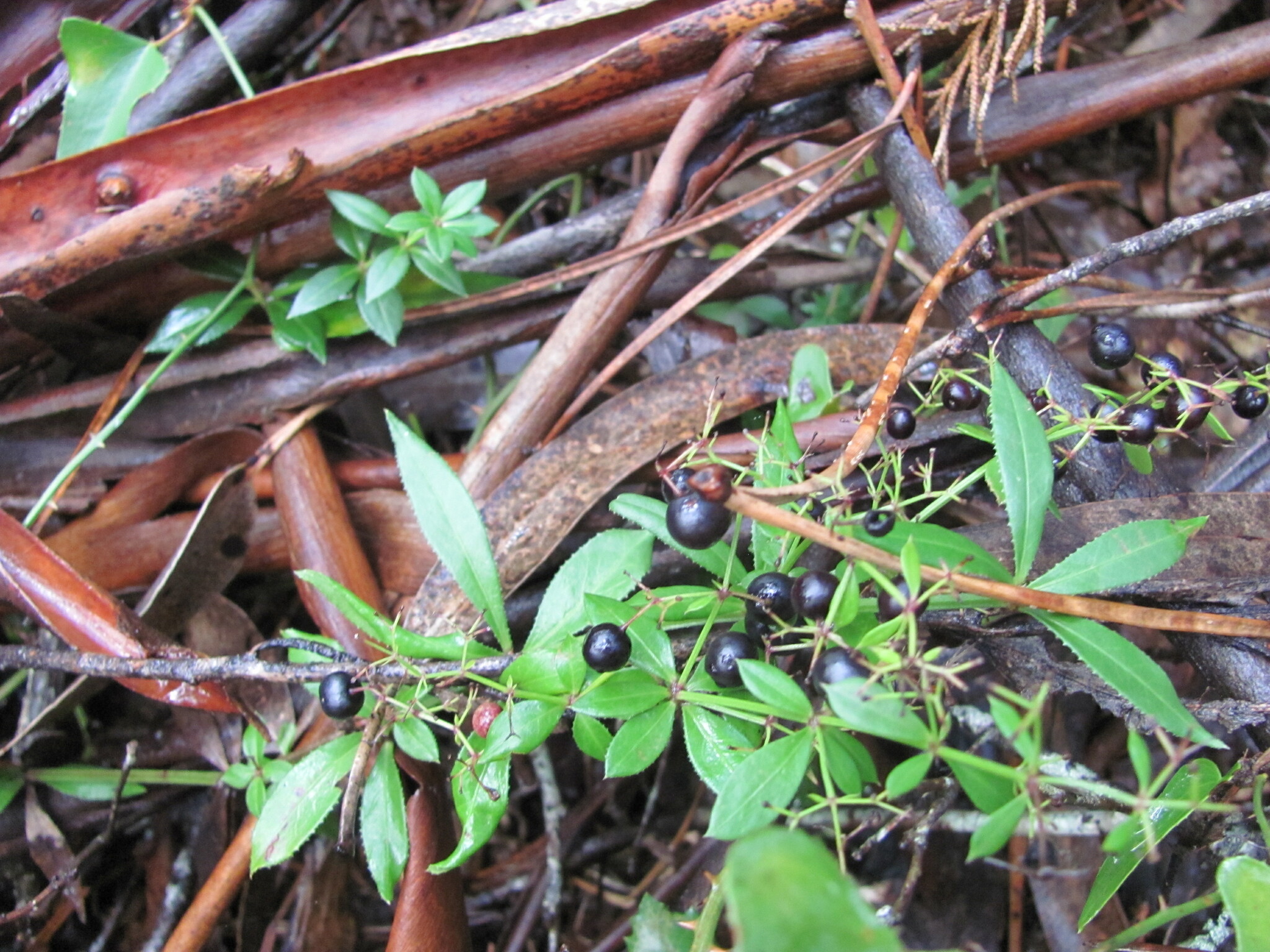
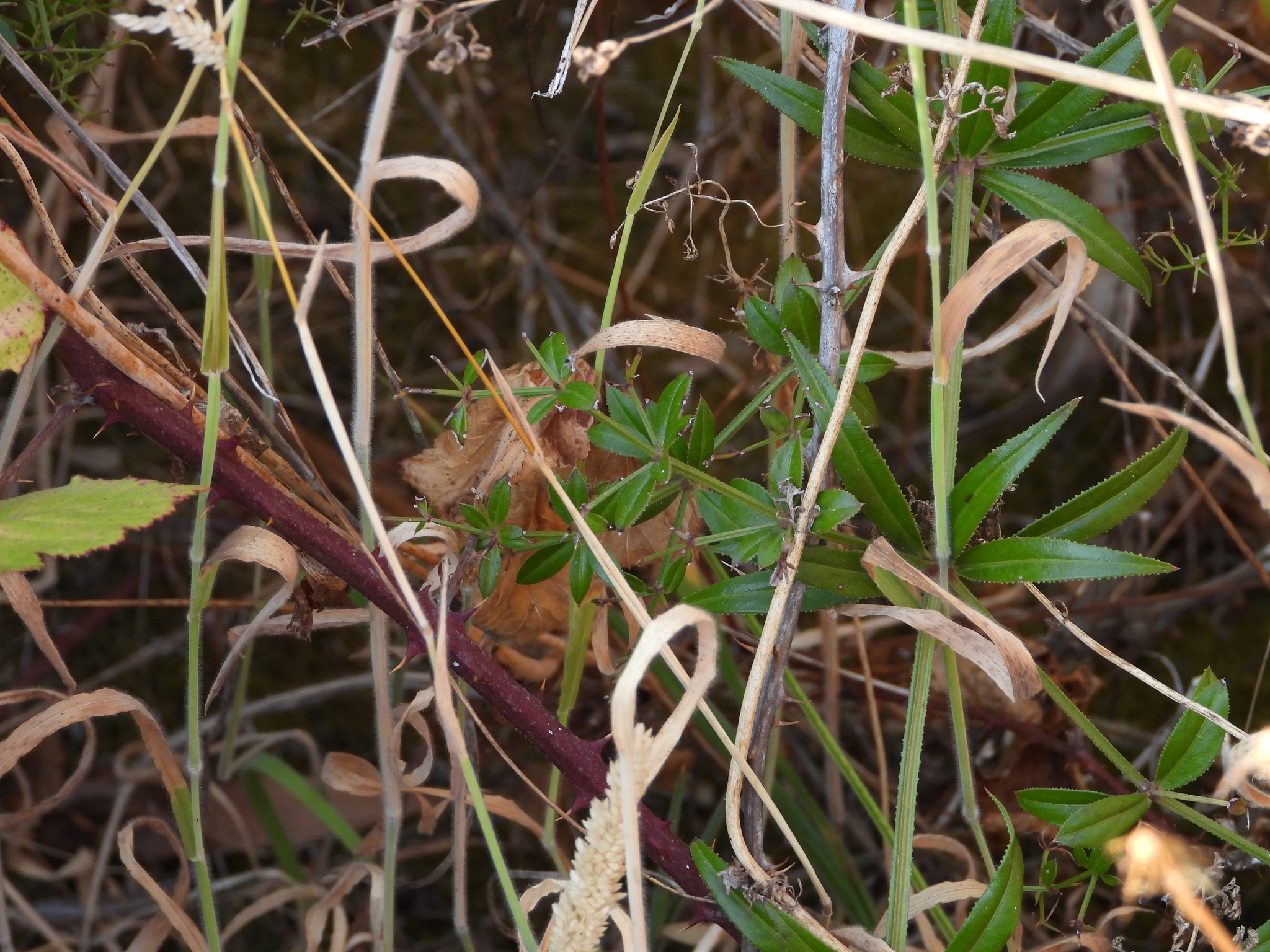


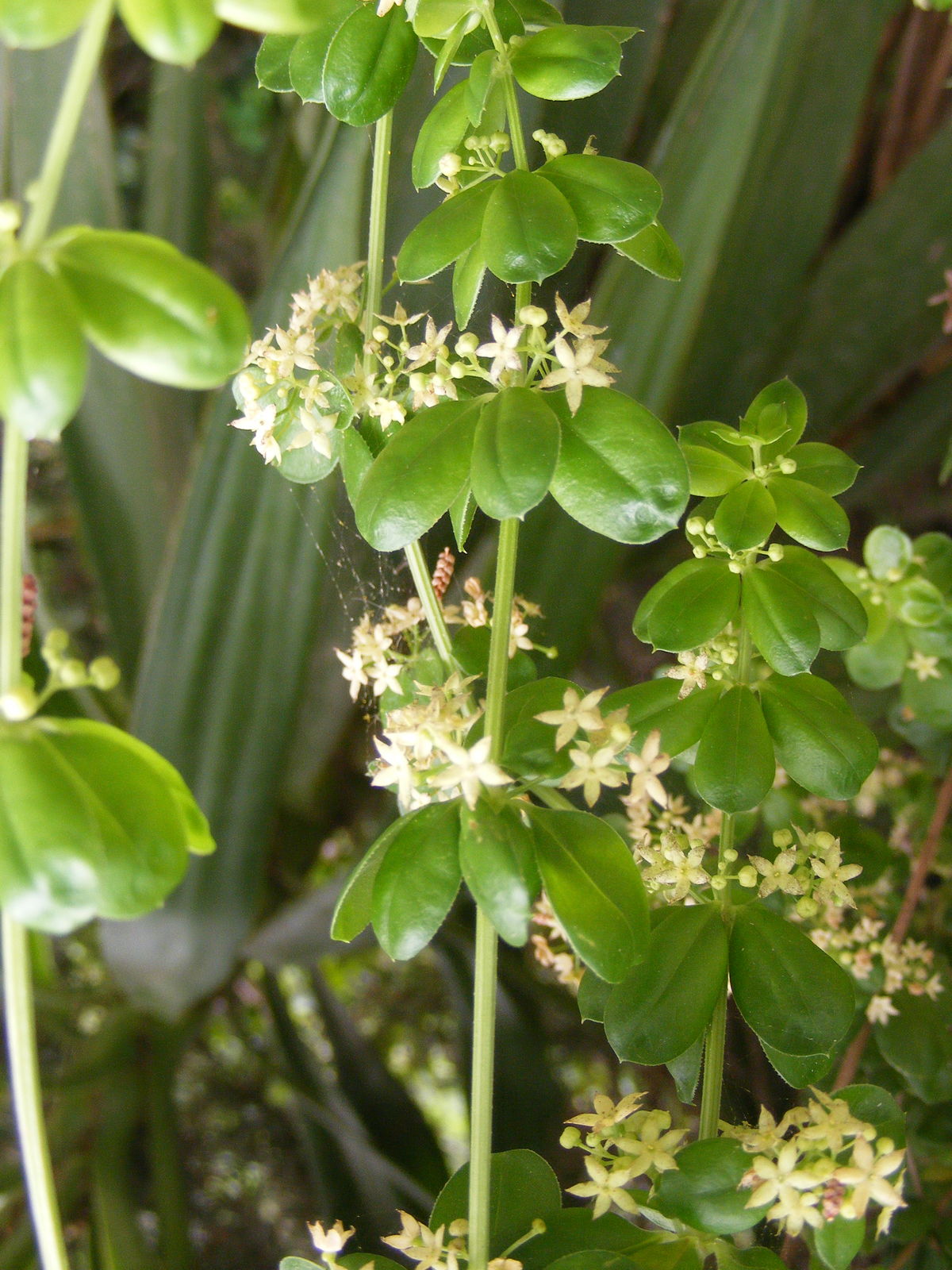
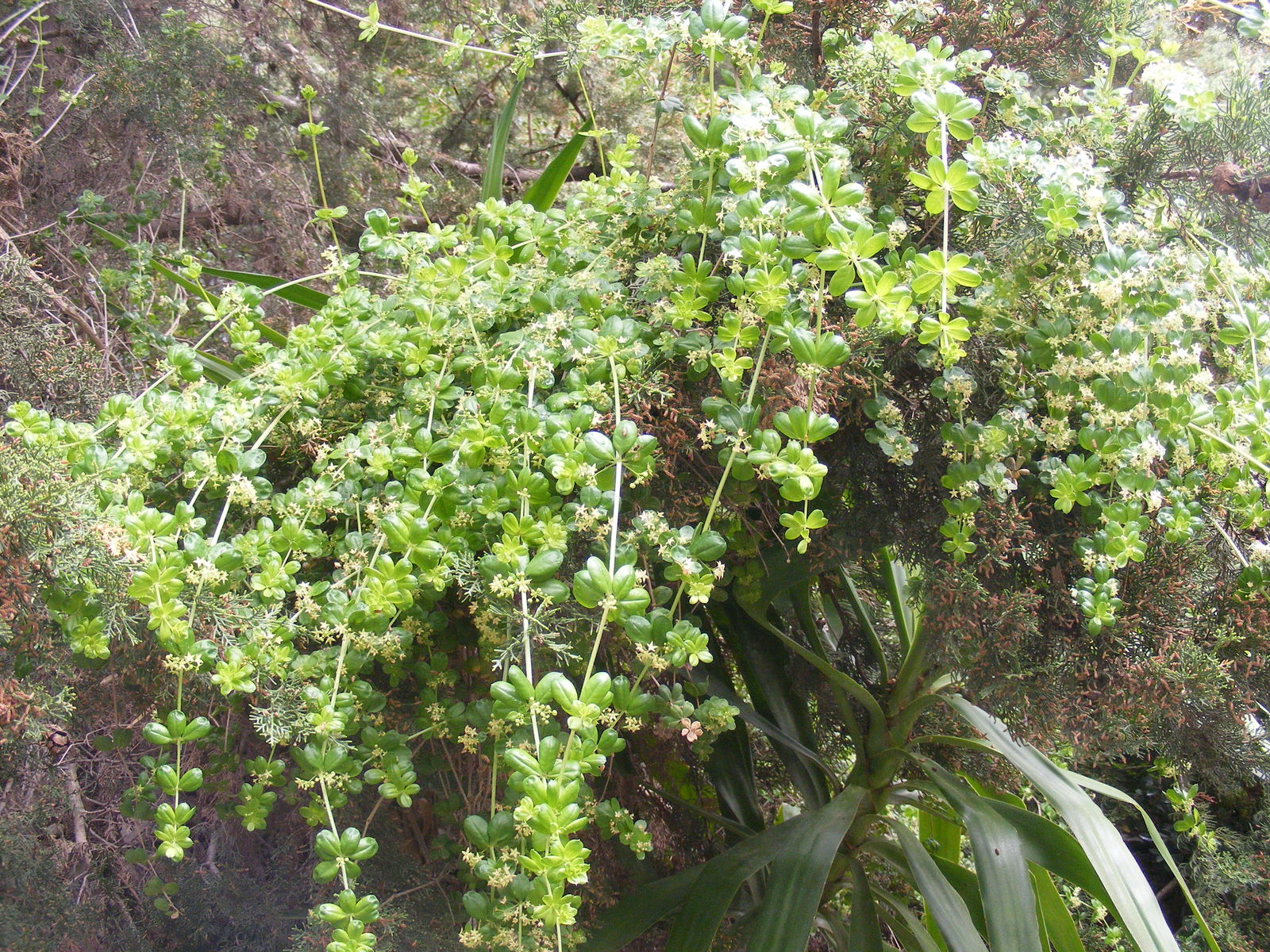
© photo
Thomas Dreux · cc-by
zebedeugalinha · cc-by
Duarte Frade · cc-by
Taken Nov 2, 2022 by randovu (cc-by-sa)
Taken Feb 18, 2021 by Nathalie Potel (cc-by-sa)
Taken Oct 27, 2009 by Tela Botanica − Yoan MARTIN (cc-by-sa)
Taken Jul 15, 2019 by Fernández Luis Alfonso (cc-by-sa)
Taken Jun 26, 2019 by Renaud Brochiero (cc-by-sa)
© copyright of the Board of Trustees of the Royal Botanic Gardens, Kew.




Global distribution
Native from northwestern Europe to the Mediterranean and in the eastern Canary Islands.
- Native3
- Introduced1
- France
- Corsica
- North Africa
- Germany
Hexagons: regions where the plant occurs. Green dots: native range.1
Identity
Wild madder (Rubia peregrina L., 1753) is a climbing perennial in Rubiaceae, also known in French as petite garance. Branches lean on surrounding vegetation rather than forming a freestanding trunk. Evergreen leaves cluster around the nodes, giving stems a regularly tiered outline. Climbing stems often reach or exceed 1 m (3.3 ft). 1 3 7 9
The most immediate character is the catching texture of stems and leaf edges. Small backward-curving prickles hold branches against their supports. Examine stem angles with a hand lens rather than running fingers against the hooks. Hooks combined with evergreen leaves provide a first clue even outside the flowering season. 3
Recognition
Stems are four-angled, prostrate or climbing. Stalkless, oval to lance-shaped leaves are evergreen and leathery. Groups of four to six leaflike organs resemble whorls; some are actually large stipules resembling leaves. Leaves measure about 3–6 cm (1.2–2.4 in) long. 3 7
Small greenish-yellow flowers form loose cymes. Corollas generally have five pointed lobes. Fleshy fruits turn black and measure 4–6 mm (0.16–0.24 in). For useful photographs, frame a complete node, a stem section and flowers or fruits. A photograph limited to one detached leaf shows very little of the arrangement around the nodes. Keeping a complete node and a portion of stem in the frame makes the observation more useful and less susceptible to confusion with another plant. 3 7
Useful taxonomy
Linnaeus published Rubia peregrina in 1753, in Species Plantarum, page 109. “L.” identifies the author. The binomial remains accepted, so do not replace it with a similar old-flora name without checking the rank and corresponding reference. 2 1
Galium peregrinum (L.) Franch. is a homotypic synonym, based on the same nomenclatural type. Placement in Galium represents another combination, not discovery of a second plant. Three subspecies are accepted: peregrina, longifolia and requienii. These are botanical units, not nursery-selected cultivars. 1
Habitat and distribution
Wild madder is native from northwestern Europe to the Mediterranean, also in the eastern Canary Islands. Its range includes France, Corsica, the British Isles and several North African countries. Germany instead represents an introduction. Its French epithet voyageuse cannot by itself establish that it is foreign to French flora. 1
Hedges, scrub and stony places are characteristic habitats. In the Balearic Islands the typical subspecies occurs in oak woodland, pinewoods and Mediterranean shrub communities. Low woody vegetation provides supports for its branches. A stand need not represent a garden escape: these communities belong to its natural habitat. 4 5
In France it occupies hedges and woods, chiefly in the south and west, absent from the north and northeast and also present in Corsica. It is nationally Least Concern and protected in Lower Normandy and Haute-Vienne, where picking and uprooting wild plants are prohibited. 7 9
Cycle and reproduction
Leaves persist through winter, while flowers are much less conspicuous. French flowering runs from May to August, varying regionally. Bisexual flowers contain male and female organs; inconspicuous flowers still produce fleshy fruits. Black berries provide an easier seasonal clue than each tiny corolla. 3 7
Propagation is by seed or division. Fresh seeds can be sown in a cold frame; stored seeds sometimes germinate slowly. Divisions need water while establishing. A small division must rebuild its roots before facing dry soil: a fragment that has only just been separated cannot be treated as though it already had the same independence and established root system as a mature clump. 5
Uses and risks
Roots can yield a red dye. No established food use supports consumption. Historical medicinal uses, including as an abortifacient or emmenagogue, establish neither a dose nor safety. Black berries and dye-producing roots do not justify improvising a drinkable preparation. 5
Specific toxicity data remain insufficient to classify the plant as safe for people, cats, dogs or horses. General toxic plant lists do not include every species. In dogs and cats, plant ingestion can cause digestive upset even without recognized systemic toxicity. Keep fruit out of reach to prevent accidental ingestion. 6
Varieties, lookalikes, and related plants
Do not confuse it with dyer’s madder (Rubia tinctorum), formerly cultivated for its dye root. That species has thin, deciduous leaves with a strongly raised secondary vein network beneath, and brighter yellow flowers. Wild madder has leathery evergreen leaves without that secondary vein network and pale yellow flowers. Shared madder names cannot transfer every use between species. 8 7 3
The typical subspecies has relatively broad leaves, paler than those of longifolia in the Balearics. Interpret the difference with geography and several branches; one unusual leaf does not prove another subspecies. In cultivation, light shade reduces the risk of foliage scorching in full sun. 4 5
Main sources
Taxonomic references establish the name and native range; floras detail recognition. Propagation advice remains distinct from toxicological evidence.
- POWO, Rubia peregrina
- IPNI, Rubia peregrina
- Naturalis, Flora of the Burren, Rubia peregrina
- University of the Balearic Islands herbarium, Rubia peregrina subsp. peregrina
- Plants For A Future, Rubia peregrina
- ASPCA, scope of the toxic plant list
- Tela Botanica, eFlore and Coste description, Rubia peregrina
- Tela Botanica, Coste description, Rubia tinctorum
- INPN, TAXREF, Rubia peregrina
Frequently asked questions
Why does wild madder catch on clothing?
Stems and leaf margins bear small backward-pointing hooked prickles.
Are the black fruits edible?
No food use is known; black color does not establish safety.
Does wild madder lose its leaves in winter?
It is a perennial with evergreen, leathery leaves.
If you are unsure about a plant’s toxicity, ask a botanist or veterinarian for advice.