
Mealy blue sage (Salvia farinacea, )
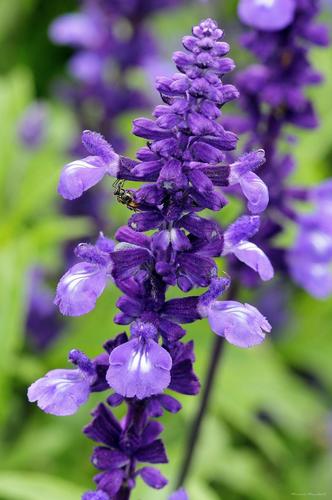

Mealy blue sage (Salvia farinacea) is a sun-loving herbaceous plant in the Lamiaceae family, often grown as an annual in cool climates. Its lasting blue flower spikes, good heat tolerance and upright form make it useful in summer containers and small sunny beds.
Read moreMealy blue sage, Mealycup sage, Mealy sage and Blue sage



© photo
(c) Mauricio Mercadante, some rights reserved (CC BY-NC-SA) · cc-by-nc-sa
iNaturalist User · cc-by
Wikimedia Commons · CC BY-SA or Public Domain
Taken Sep 15, 2011 by Photoflora - Jean-Luc TASSET (©)
Taken Sep 29, 2022 by Henk Vondeling (cc-by-sa)
Taken Sep 13, 2019 by Maria F (cc-by-sa)
Taken Dec 20, 2019 by C S (cc-by-sa)
Taken Oct 24, 2020 by jurus (cc-by-sa)
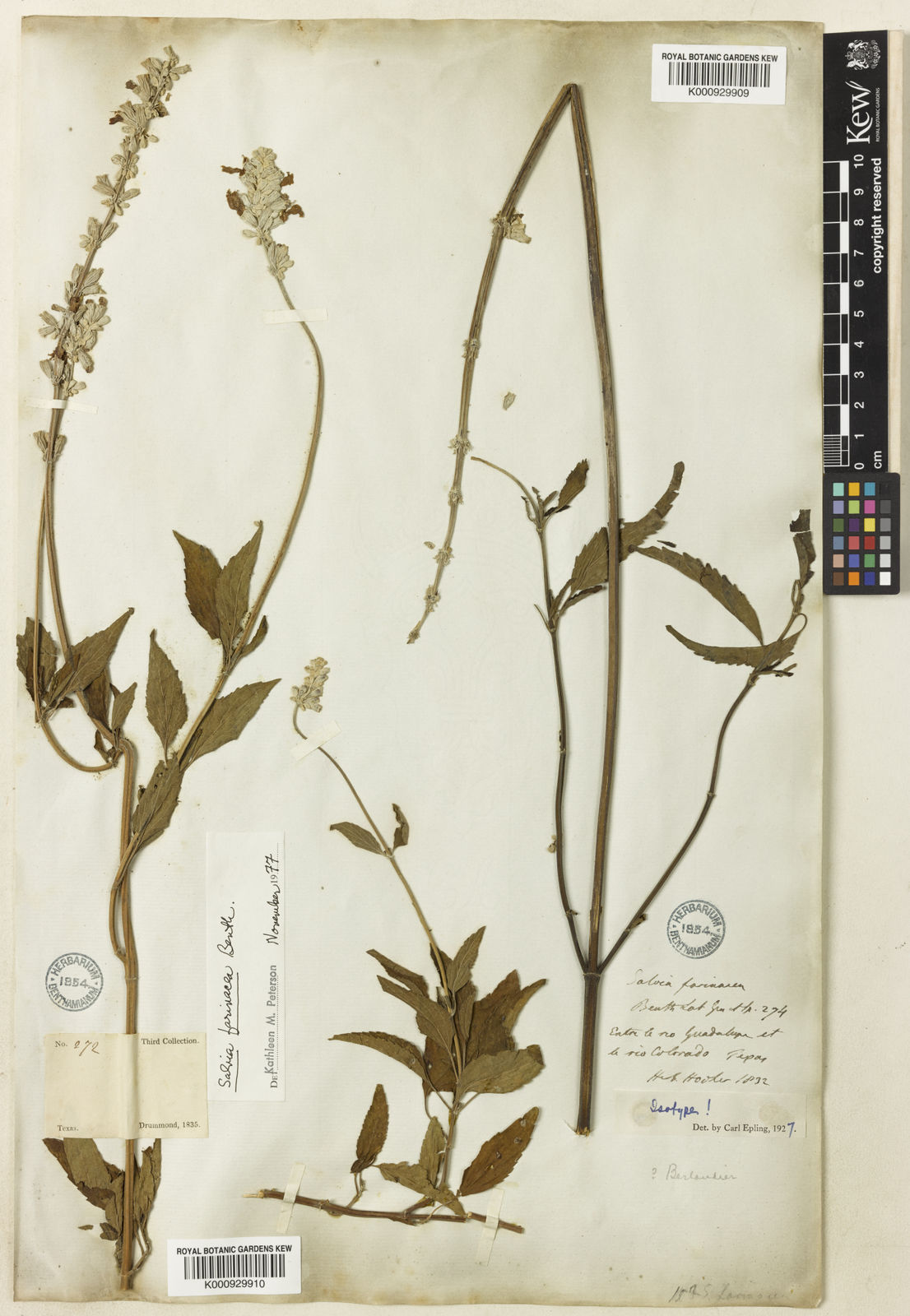
© copyright of the Board of Trustees of the Royal Botanic Gardens, Kew.




Identity
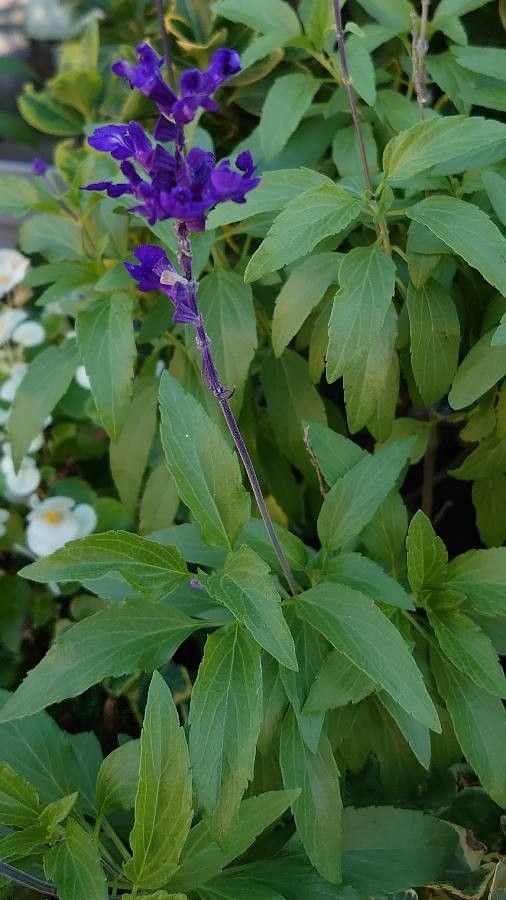
Mealy blue sage (Salvia farinacea Benth.) produces lasting blue flower spikes that stay neat in summer containers and small sunny beds. It is the mealycup sage often chosen for planting schemes built around blue flowers. 1 8
POWO, WFO and IPNI confirm the accepted binomial. Like other sages, this member of the Lamiaceae family has two-lipped flowers, often upright stems and considerable value for pollinators visiting a summer planting. 2 3 4
Reliability gives it a useful place in a blue planting palette. Many blue-flowered plants need cool conditions or specific growing arrangements. Mealy blue sage copes better with summer heat while retaining a clear, recognizable outline among its neighbors. 8 5
The name Salvia farinacea identifies a particular species with its own garden role. Distinguishing it from purple-flowered woodland sages and aromatic garden sage helps match the plant to a sunny summer bed and avoids treating all sages as interchangeable. 1 8
Recognition
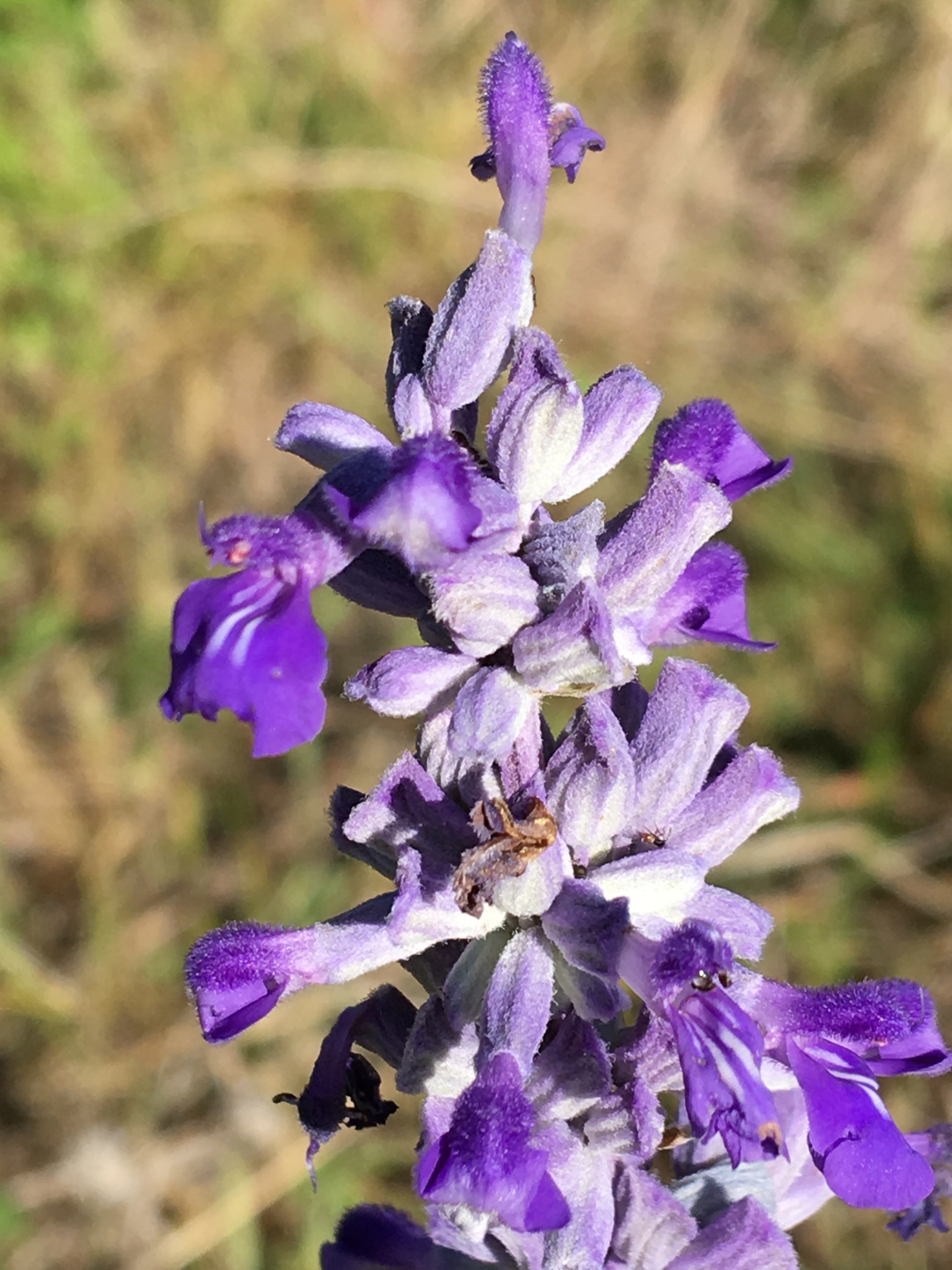
Upright stems carry blue to violet spikes. The epithet “farinacea” refers to the mealy coating on certain parts of the plant, especially its calyces and flowering stems, rather than to the green foliage as a whole. 7 5
Its outline is tidier than that of phacelia, with a more cultivated appearance than a meadow annual. The flower spikes remain visible for a long time, explaining their effectiveness in both borders and pots, where a sustained shape is useful. 8
Green, simple leaves are relatively understated; the main visual feature is the line of the flower spikes. Too much shade softens the plant's growth and reduces the upright structure that makes it so useful in a summer display. 5
Compared with Salvia nemorosa, it is more often grown as an annual in cool climates. Container cultivars and blue spikes that hold their effect in hot summer plantings also help distinguish its horticultural role from that of woodland sage. 6 8
Useful taxonomy
The accepted botanical name, Salvia farinacea Benth., provides the clearest identification. Keeping the complete species name matters because a general label such as “sage” includes many plants with different appearances, growth patterns and uses in gardens. 2 8
Salvia is a very large genus. A red-flowered annual sage, a medicinal garden sage and a perennial woodland sage play different roles, even though all share recognizable features of the mint family. A family resemblance does not make their uses identical. 3 7
Cultivars such as Victoria Blue and Evolution vary in height, shade and compactness. They nevertheless retain the species' general appeal: blue spikes, tolerance of heat, suitability for containers and an extended flowering effect in summer planting schemes. 6
Precise identification prevents the qualities of another sage from being attributed to this one. Its role is that of a blue summer bedding plant, distinct from a gray-leaved culinary herb or a perennial intended primarily for a dry meadow. 8
Cultivation
Warmth, full sun and freely draining soil underpin successful cultivation. In cold climates, mealy blue sage is often treated as an annual, planted after frost has passed and replaced the following year rather than expected to survive winter outdoors. 5 6
Once established it tolerates drought better than a petunia, but a plant in a pot still depends on watering. Drainage must prevent the roots from remaining in airless, saturated conditions, especially where a container holds water around the root ball. 8 5
Removing spent flower spikes keeps the display tidy. A light trim can encourage shorter new stems and prolong the blue effect into fall, maintaining a useful balance between fresh growth and the older flowering stems left on the plant. 6
Excess fertilizer encourages long, less firm stems. Ordinary soil, sunlight and moderate moisture produce more even growth. The aim is a steady, upright plant whose flower spikes remain distinct, rather than rapid growth that loses its characteristic shape. 5
Uses
Long-lasting blue in summer heat is its principal ornamental contribution. It works in containers, small beds and annual borders, pairing with late-summer yellows or silvery foliage. Its upright flowers provide a distinct line within these combinations. 8
Rudbeckias, ageratums, petunias, gauras and fine grasses make suitable companions. The vertical spike brings order to combinations that might otherwise become visually blurred, offering a clear shape among plants with looser flowers or spreading growth. 8 6
Flower spikes can add a blue line to bouquets. The plant's main appeal, however, is outdoors, where pollinators visit the flowers and the color remains visible for a long period within the garden or container arrangement. 5
In a strongly naturalistic garden, mealy blue sage looks more cultivated than phacelia. It works especially well where the design uses a clear, repeated border, with blocks of color arranged deliberately but without an overly rigid appearance. 8
Precautions
Dogs and cats are classed as safe around this non-toxic ornamental; horse toxicity is undocumented. Its garden role does not make it a culinary or medicinal sage, and those uses should not be assumed from its family or common name. 2
Confusion over names is the main reason for caution. “Sage” does not automatically mean edible. Garden sage (Salvia officinalis) and mealy blue sage (S. farinacea) serve different purposes, despite sharing the same genus and a similar common name. 8 7
Horticultural problems are generally modest: cold, waterlogged soil, aphids and drought in pots. A suitable position addresses most difficulties. Provide sun, moving air, drainage and regular container watering so that the upright flowering growth remains in good condition. 5
Repeating plants makes a stronger blue border than using a single isolated specimen. Three to five plants create a steady line, whereas one may disappear among broader annuals. Repetition emphasizes the vertical blue that suits small summer beds. 8 6
In a container, the sage often acts as a central feature or an upright rhythm toward the back. Lower petunias, soft-looking ageratums and silvery foliage provide contrast. Its spikes stay upright while neighboring plants spread around their base. 8
Late-season maintenance works best as gradual tidying. Remove the most tired spikes while keeping stems that still carry color, instead of cutting back the entire clump at once. This preserves a long flowering display without leaving a container dominated by dry stems. 6
In warm regions, the plant may behave more like a short-lived perennial. Elsewhere, its main value is as an annual. In either case, it remains a dependable blue sage for summer, planted once the risk of cold weather has passed. 5 8
A path or terrace gives the blue flowers a useful setting. Seen close up, the mealy calyces and flowering stems add texture; from farther away, the planting reads as a neat mass of blue rather than a collection of small details. 7
This combination of close-up texture and distant color helps explain its place among easy blue-flowered garden plants. The same plant can provide detail beside a walkway and a clear shape within the wider summer border. 8
A sunny summer display is therefore the natural setting for Salvia farinacea. Its lasting blue spikes, upright form and clear identity distinguish it from other sages, giving it a specific role in containers and small beds rather than a generic place among aromatic herbs. 8 2
Main sources
- Wikidata, Salvia farinacea
- Plants of the World Online / Kew, Salvia farinacea
- World Flora Online, Salvia farinacea
- International Plant Names Index, Salvia farinacea
- NC State Extension, Salvia farinacea
- Royal Horticultural Society, Salvia farinacea search results
- Wikipedia EN, Salvia farinacea
- Floralens, selection of blue flowers
If you are unsure about a plant’s toxicity, ask a botanist or veterinarian for advice.