
Purple wood sage (Salvia nemorosa, )
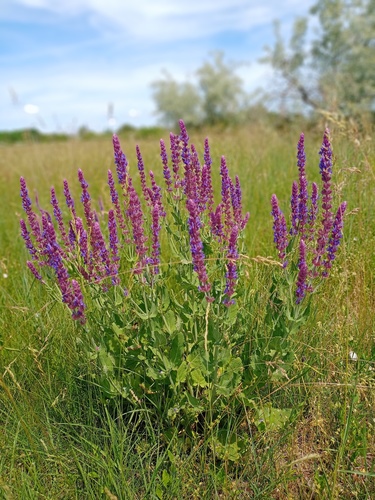
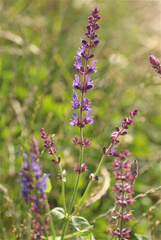
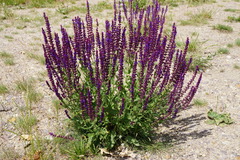
Purple wood sage (Salvia nemorosa) is a hardy perennial in the Lamiaceae family, valued for sunny garden beds. Its violet or blue flower spikes attract pollinators, and cutting back after flowering encourages a second flush.
Read morePurple wood sage, Woodland sage and Blue sage



© photo
(c) mnauky, some rights reserved (CC BY), uploaded by mnauky · cc-by
iNaturalist User · cc-by
Patrick Hacker · cc-by
Taken Jun 9, 2022 by Robert Stevens (cc-by-sa)
Taken May 21, 2022 by Maťko Martin (cc-by-sa)
Taken Jul 22, 2016 by Thomas Melan (cc-by-sa)
Taken Aug 27, 2021 by Meghdad855 M7 (cc-by-sa)
Taken Aug 15, 2012 by Photoflora - Benoit BOCK (©)
© copyright of the Board of Trustees of the Royal Botanic Gardens, Kew.




Identity
Purple wood sage (Salvia nemorosa L.) brings clear flower spikes, a steady summer presence and a useful rhythm to garden beds. This perennial is especially effective in purple planting schemes. 1 8
POWO, WFO and IPNI confirm the accepted binomial. Like other sages, the plant belongs to the Lamiaceae family. It is a perennial grown primarily for ornament. 2 3 4
Compared with catmint, purple wood sage has a more upright outline. Where catmint softens a border, this sage punctuates the planting with dense spikes. 8
Cutting back neatly after flowering encourages another flush. This ability to bloom again makes it valuable in a well-tended garden bed. 8 6
Recognition
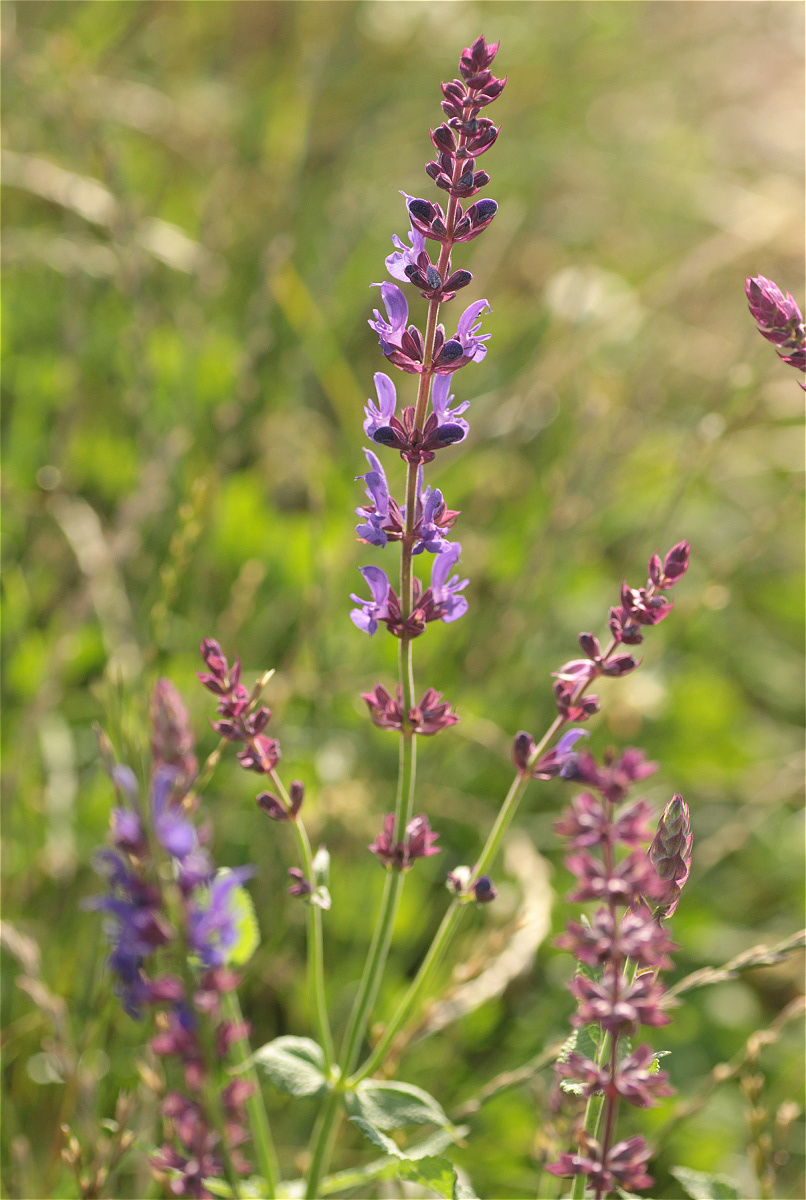
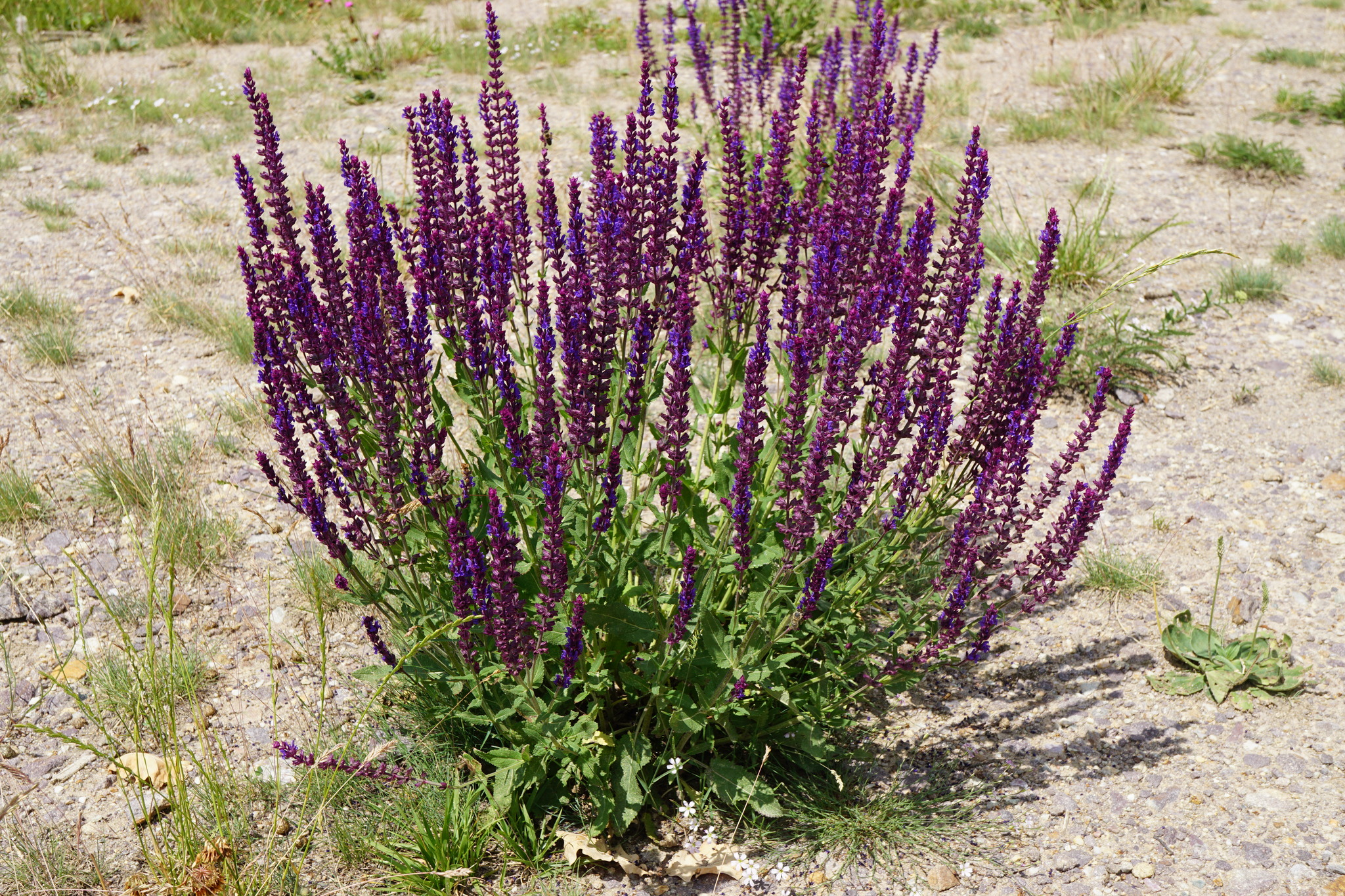
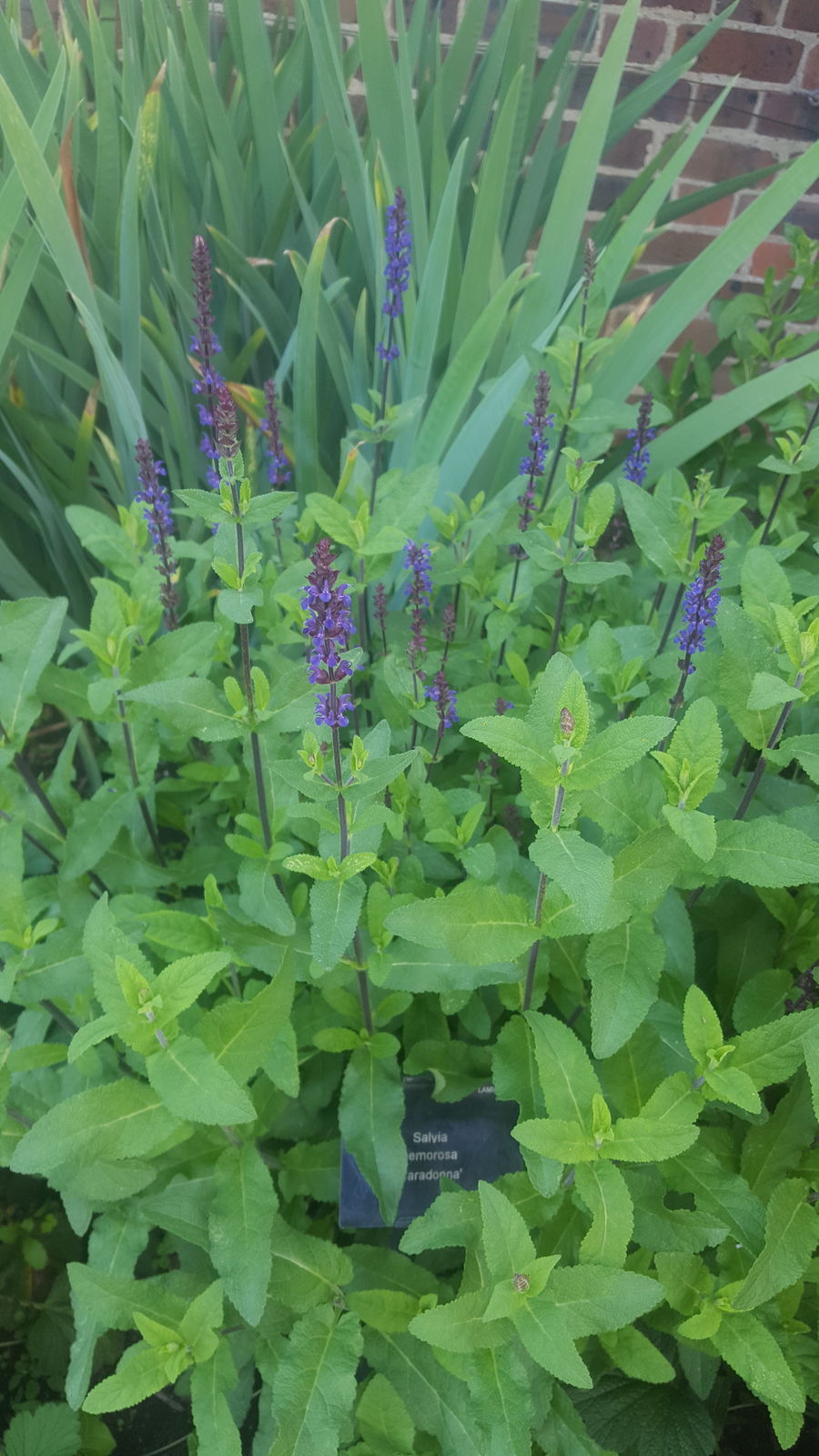
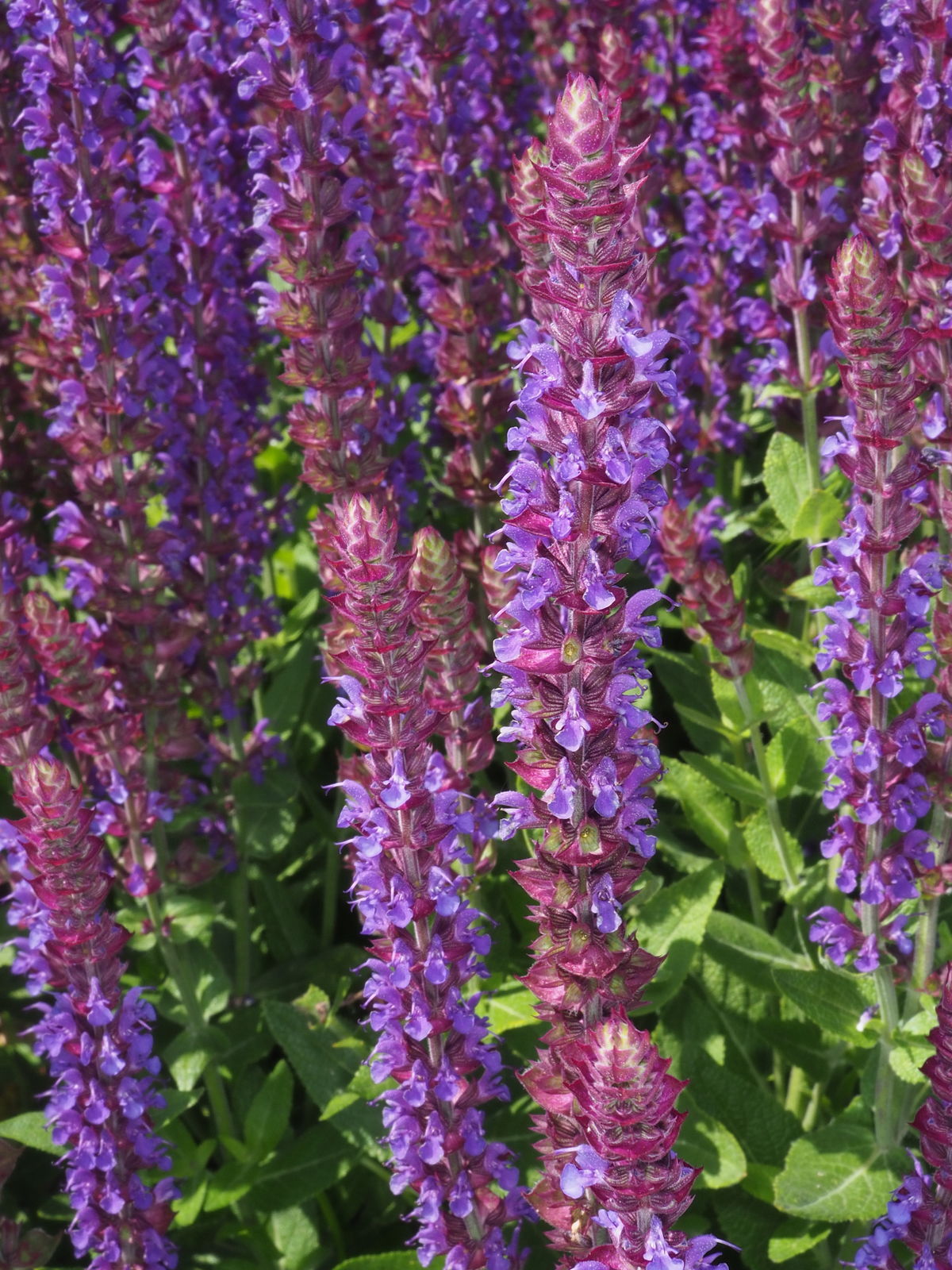
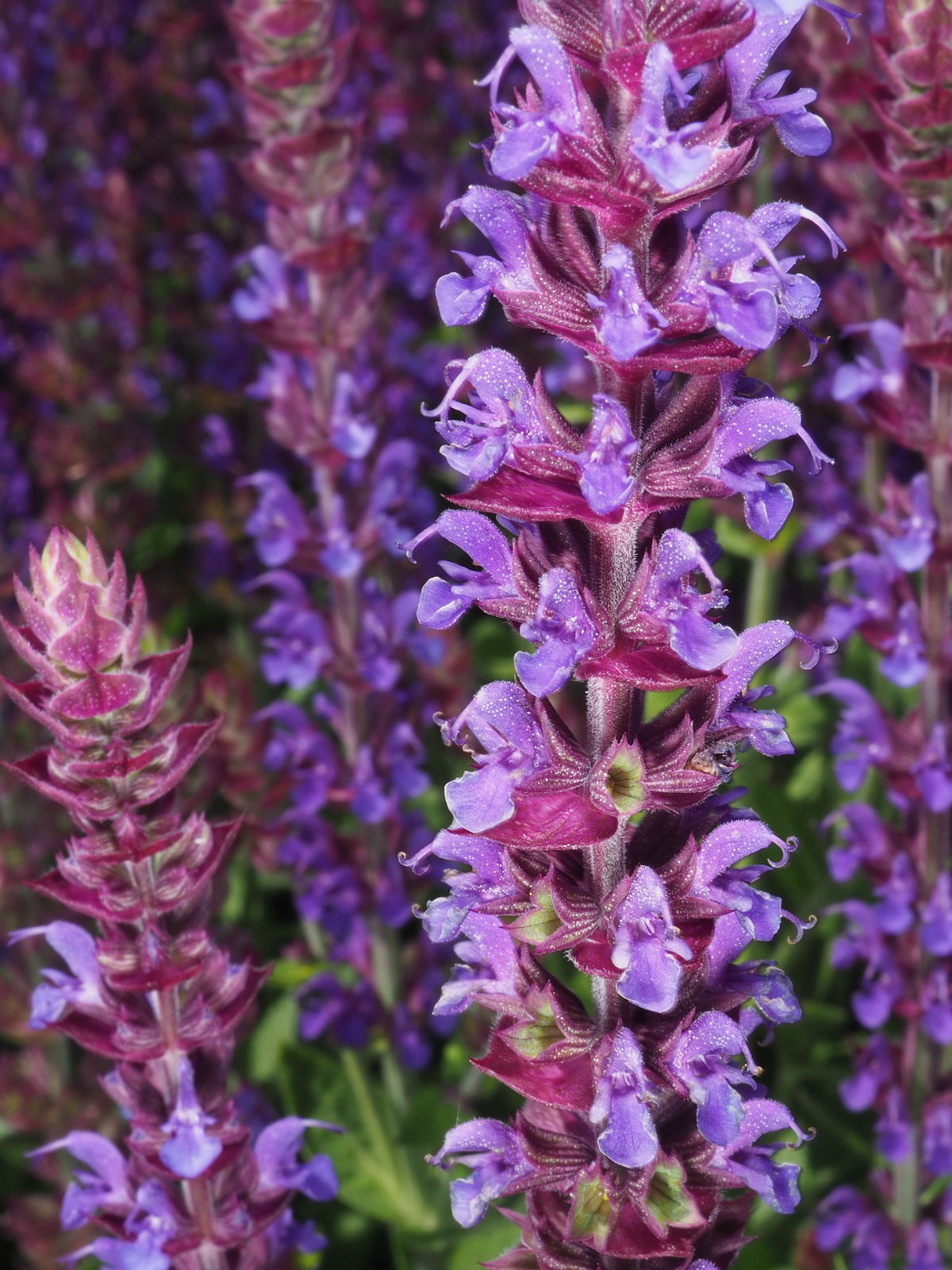
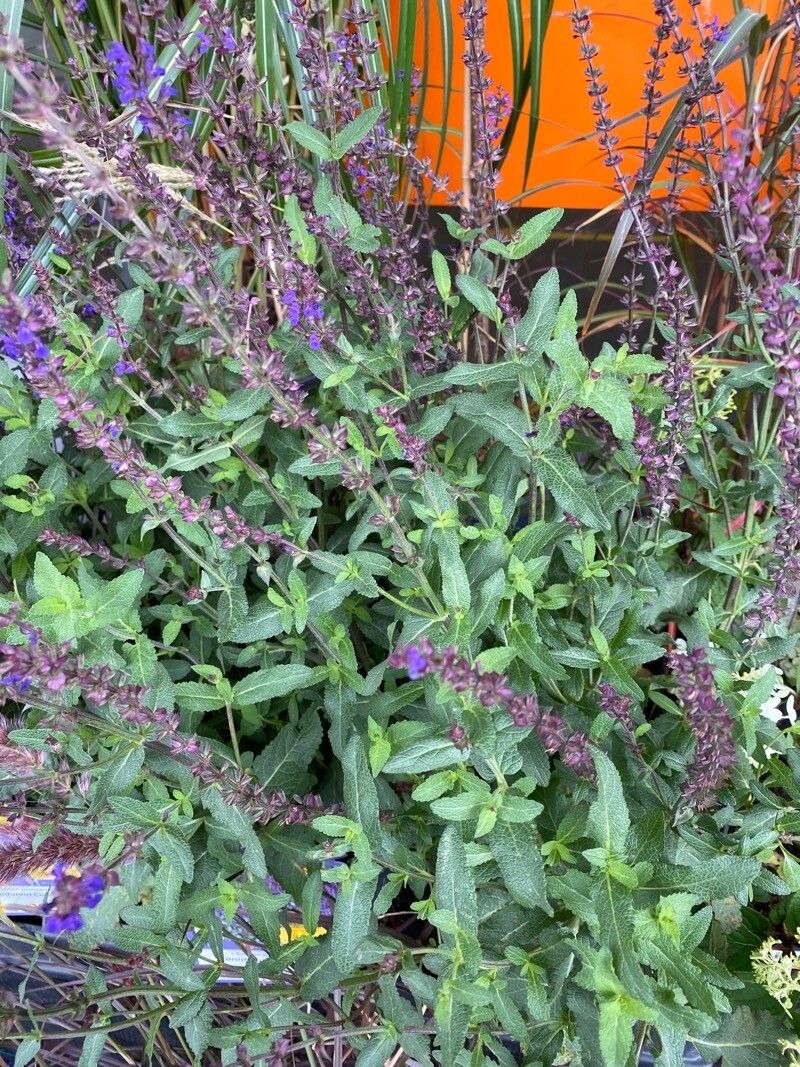
A low clump of foliage gives rise to upright stems with blue-violet, mauve, pink or white flower spikes, depending on the cultivar. The leaves are aromatic but less commonly used than those of garden sage. 5 6
Dense, upright, repeated spikes are its clearest identifying feature and stand out well in a border. Colored calyces sometimes maintain interest even after the flowers have fallen. 7
Bees and other pollinators visit the flowers. Its orderly outline keeps a lively planting structured, especially alongside grasses or plants with late-summer yellow flowers. 5 8
Confusion is possible with Salvia farinacea, often grown as a blue-flowering annual for warm conditions, or with the aromatic and medicinal Salvia officinalis. These are distinct species. 2
Useful taxonomy
The accepted name is Salvia nemorosa L. The full binomial identifies a particular species rather than the genus Salvia as a whole. 2 8
Names such as Woodland sage may suggest a shade plant. In gardens, however, cultivars of S. nemorosa perform best in sun or strong light with well-drained soil. 6
Numerous cultivars include Caradonna, Mainacht, Ostfriesland and Schneehügel. Their colors and heights differ, but they share the same pattern of flower spikes and cutting back after flowering. 6
Species identification matters for care: sages differ in how they should be pruned, whether they are edible and how they should be overwintered. 8
Cultivation
Grow it in full sun, well-drained soil and with moderate competition from neighboring plants. Heavy soil in winter weakens the clump; leaner soil keeps growth more compact. 6 5
Once the first flush ends, cut back the faded spikes. This gives the plant a tidier appearance and can encourage repeat flowering. 8 6
Dividing older clumps rejuvenates them. Avoid waiting until the center is completely bare; a modest division helps maintain an even border. 6
A large, well-drained container can work, but the plant creates a stronger rhythm in the ground, repeated in groups of three or five. 8
Uses
Its strongest role is in rhythmic planting: purple borders, orderly dry meadows and combinations with rudbeckias, catmint, yarrow, gauras and grasses. 8
Purple links warm and cool colors. It softens yellows, strengthens whites and creates a depth that very pale blues do not always provide. 8
Repeated spikes offer pollinators an easy-to-find resource. For gardeners, that same repetition gives a planting structure without demanding much water. 5
Compact cultivars suit formal designs. More naturalistic plantings can accommodate a little self-seeding and a less rigid outline after flowering. 6
Cautions
Purple wood sage is described as non-toxic to dogs and cats, while its effects on horses are undocumented. It remains an ornamental plant and should not replace garden sage in cooking. 2
The main caution concerns mistaken identity. “Sage” covers very different species; S. nemorosa is a border perennial rather than the sage used as a medicinal herb. 8
Winter wet, insufficient sun, lack of pruning and aging clumps are the main growing problems. Cutting back and good drainage are often enough to keep the plant dependable. 6
In a purple planting, it acts as punctuation. Repeat small groups at regular intervals to guide the eye through the bed. This vertical rhythm makes it a useful purple-flowering perennial. 8
Expect a quieter few weeks after cutting back. The plant rebuilds short, tidy shoots that produce a less showy but more restrained second flush. This pause helps maintain a neat border through the season. 6
Dry gardens sometimes use it in place of thirstier plants. It does not provide a permanent mass of foliage, but offers repeated accents that need little water and attract many insects. 5 8
Short drifts work better than a rigid line. Two or three groups can create a rhythm, especially when the spikes recur in different parts of the bed. 8 6
Roses also make good partners: sage fills the space at their base without dominating. Its purple flowers soften warm pink tones and provide a transition to gray foliage or grasses. 6
When a clump becomes too wide, spring division restores its shape. Replant the most vigorous pieces and discard the woody or tired center. 6
This quiet renewal keeps a border even while preserving the naturalistic character of the planting. 8
The resulting outline can remain clear for several years. 6
Salvia nemorosa offers a distinct way to structure a purple border. Its perennial habit and upright spikes set it apart from other sages. 8 2
Main sources
- Wikidata, Salvia nemorosa
- Plants of the World Online / Kew, Salvia nemorosa
- World Flora Online, Salvia nemorosa
- International Plant Names Index, Salvia nemorosa
- NC State Extension, Salvia nemorosa
- Royal Horticultural Society, Salvia nemorosa search results
- Wikipedia EN, Salvia nemorosa
- Floralens, selection of purple flowers
If you are unsure about a plant’s toxicity, ask a botanist or veterinarian for advice.