
Purple Pitcher Plant (Sarracenia purpurea, )
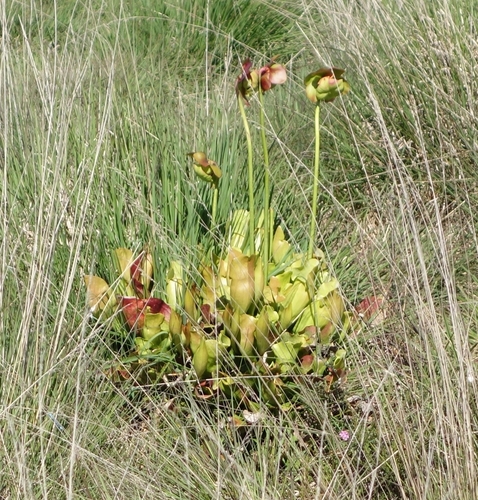
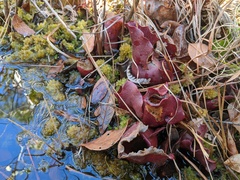

Purple Pitcher Plant (Sarracenia purpurea), a North American perennial in the Sarraceniaceae, forms a rosette of squat pitchers open to the rain. It needs low-nutrient, acidic substrate, light and consistent moisture.
Read morePurple Pitcher Plant and Northern Pitcher Plant
Place in full sun, with intense direct light all day long.
Full sun outdoors; under glass, protect from scorching sun.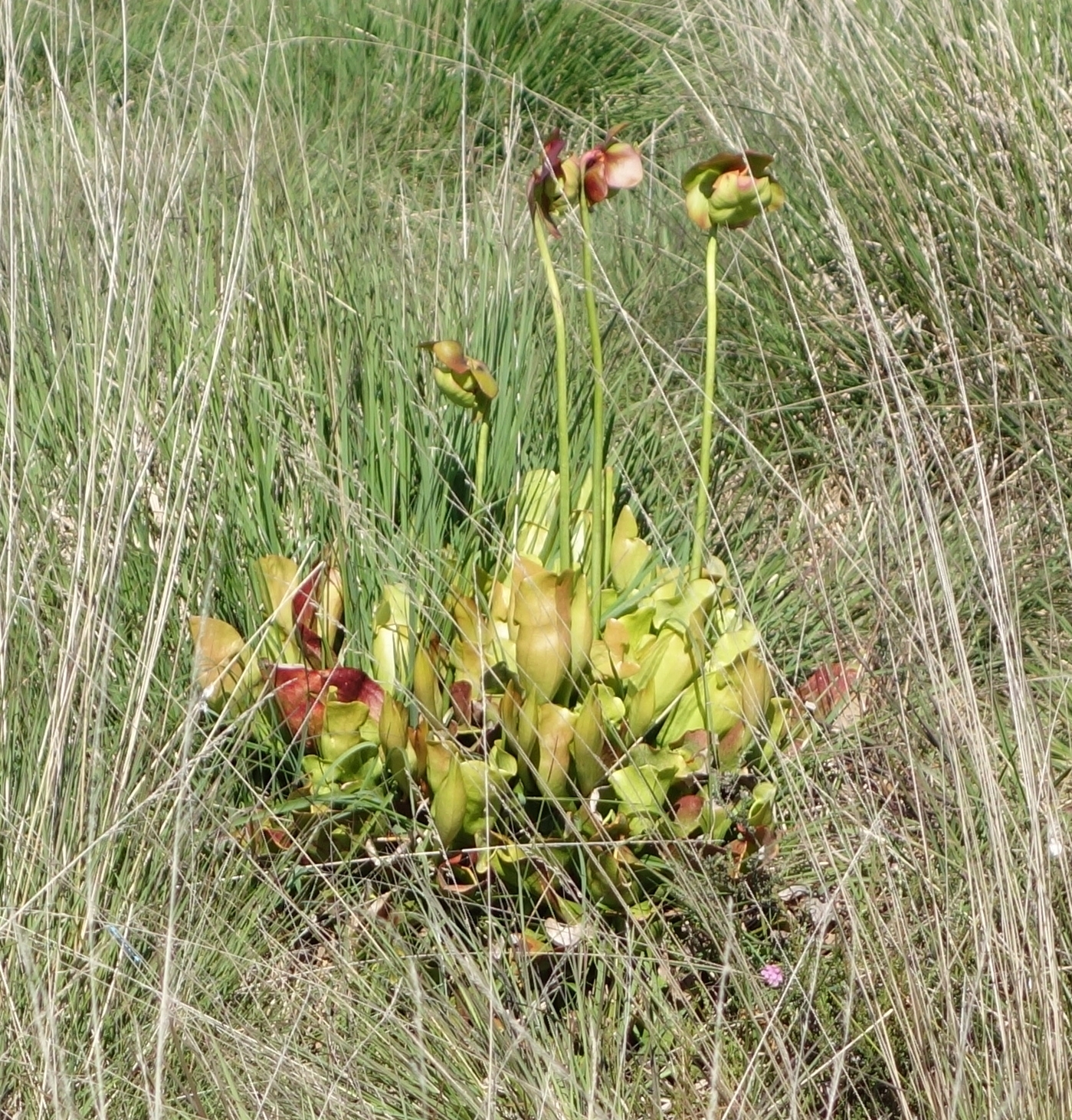


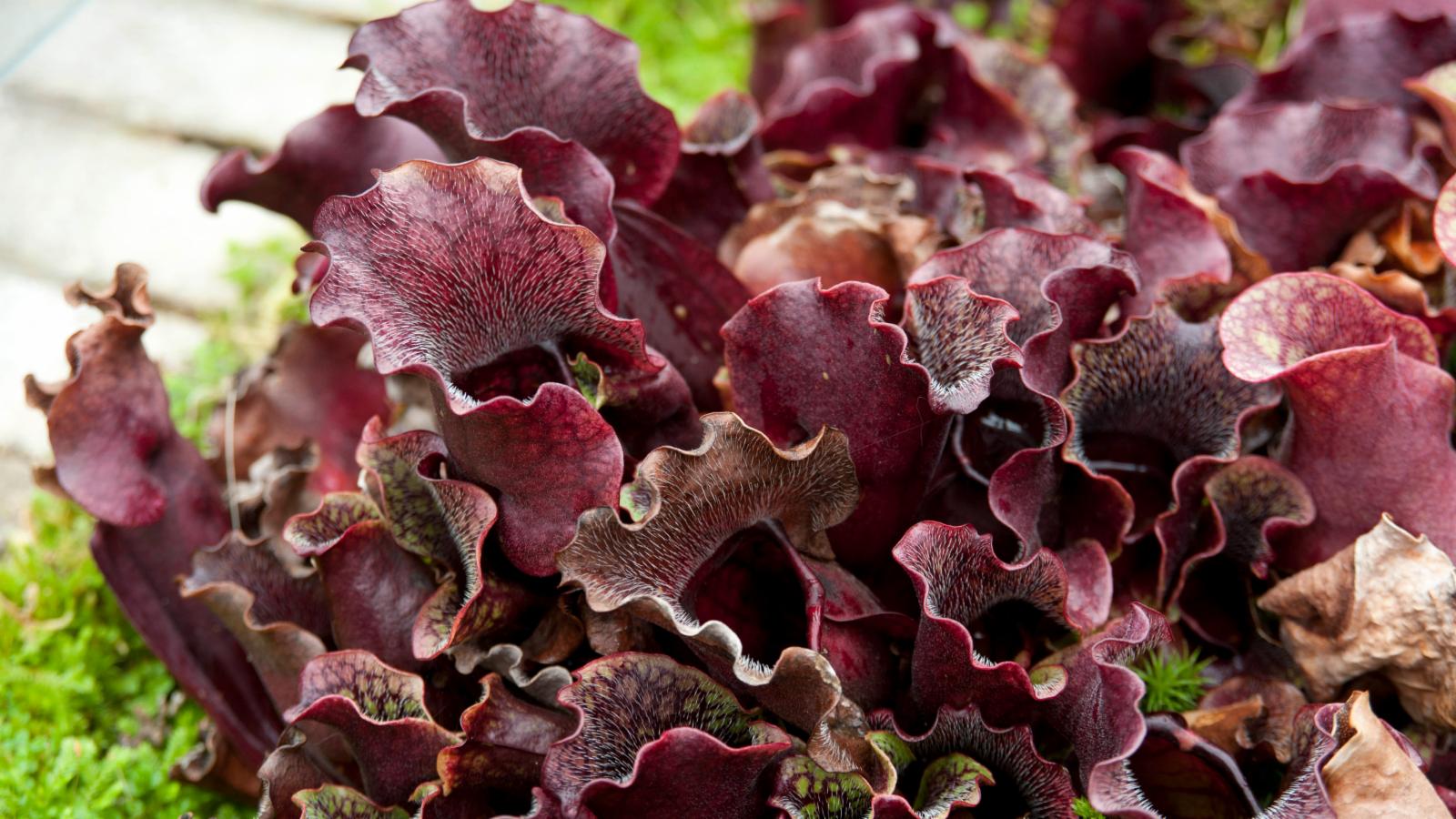

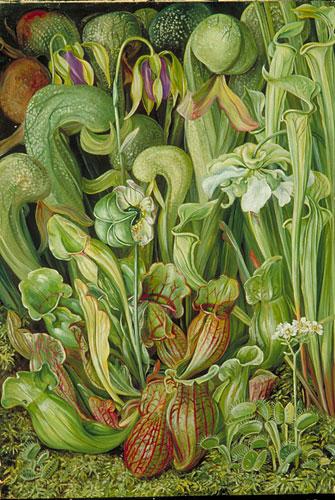
© photo
iNaturalist User · cc0
Austin Pursley · cc0
(c) Rick Nirschl, some rights reserved (CC BY-NC), uploaded by Rick Nirschl · cc-by-nc
Taken Aug 15, 2006 by Photoflora - Bernard TILLY (©)
Taken Jul 22, 2021 by Lorenzo X (cc-by-sa)
Taken Apr 4, 2021 by Lilou Frisch (cc-by-sa)
Taken Aug 1, 2020 by ven c (cc-by-sa)
© copyright of the Board of Trustees of the Royal Botanic Gardens, Kew.


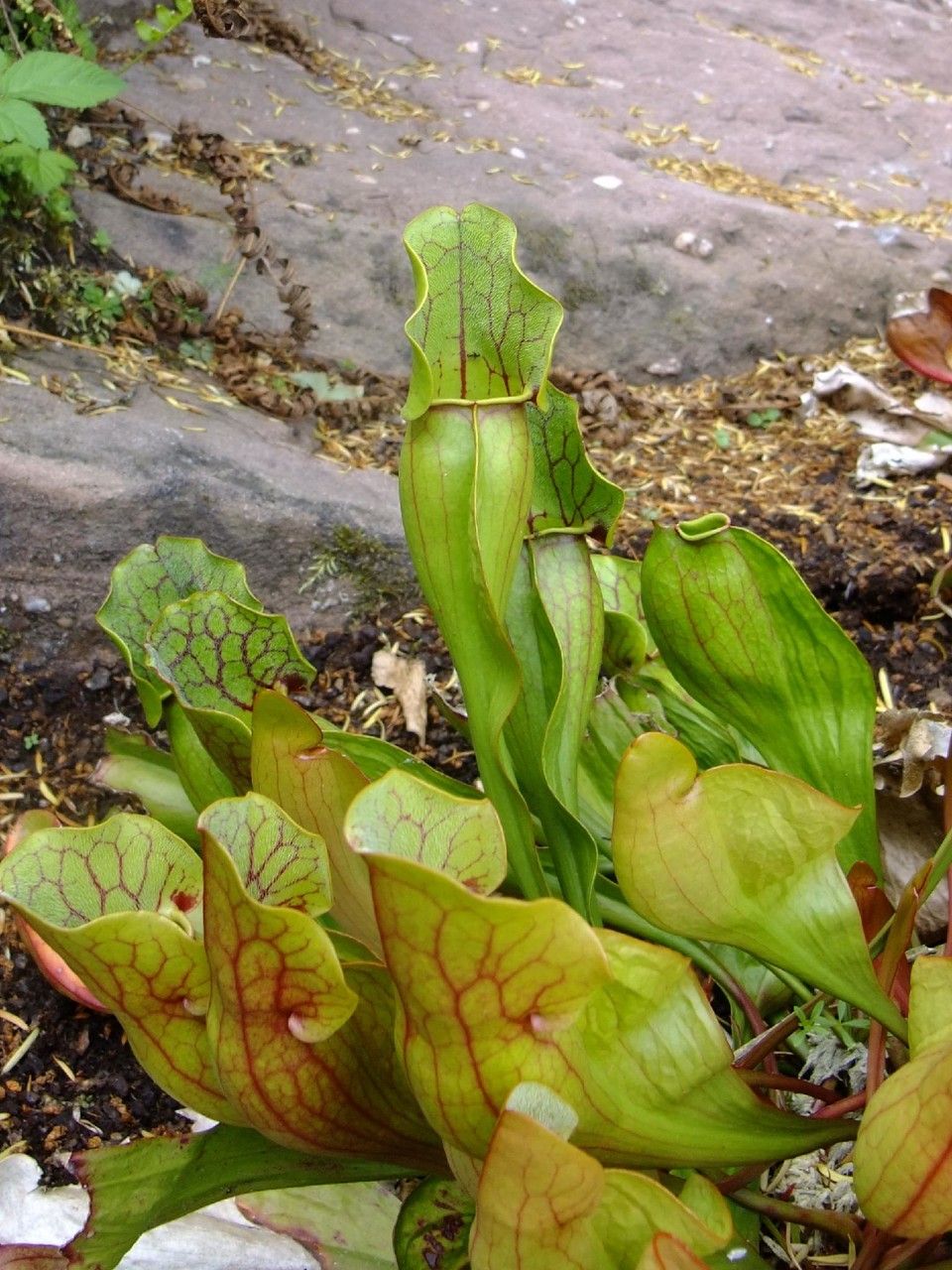


Global distribution
Native to North America, from subarctic regions to the north-central and eastern United States; introduced in several European countries, including France.
- Native2
- Introduced3
- Canada
- United States
- France
- Great Britain
- Switzerland
Hexagons: regions where the plant occurs. Green dots: native range.1
Identity
Purple Pitcher Plant (Sarracenia purpurea L., 1753) is a carnivorous perennial in the Sarraceniaceae. Its traps are hollow leaves arranged in a rosette close to the ground. The pitchers' openings face the sky and collect rain, a useful feature for identifying the species. EPPO records the French name "sarracénie pourpre" in its database. 361
The genus honors Michel Sarrazin, a physician in New France who sent specimens to Europe. The epithet refers to the purple coloring, but leaves can remain largely green, so color alone is not enough for identification. 23
Identification
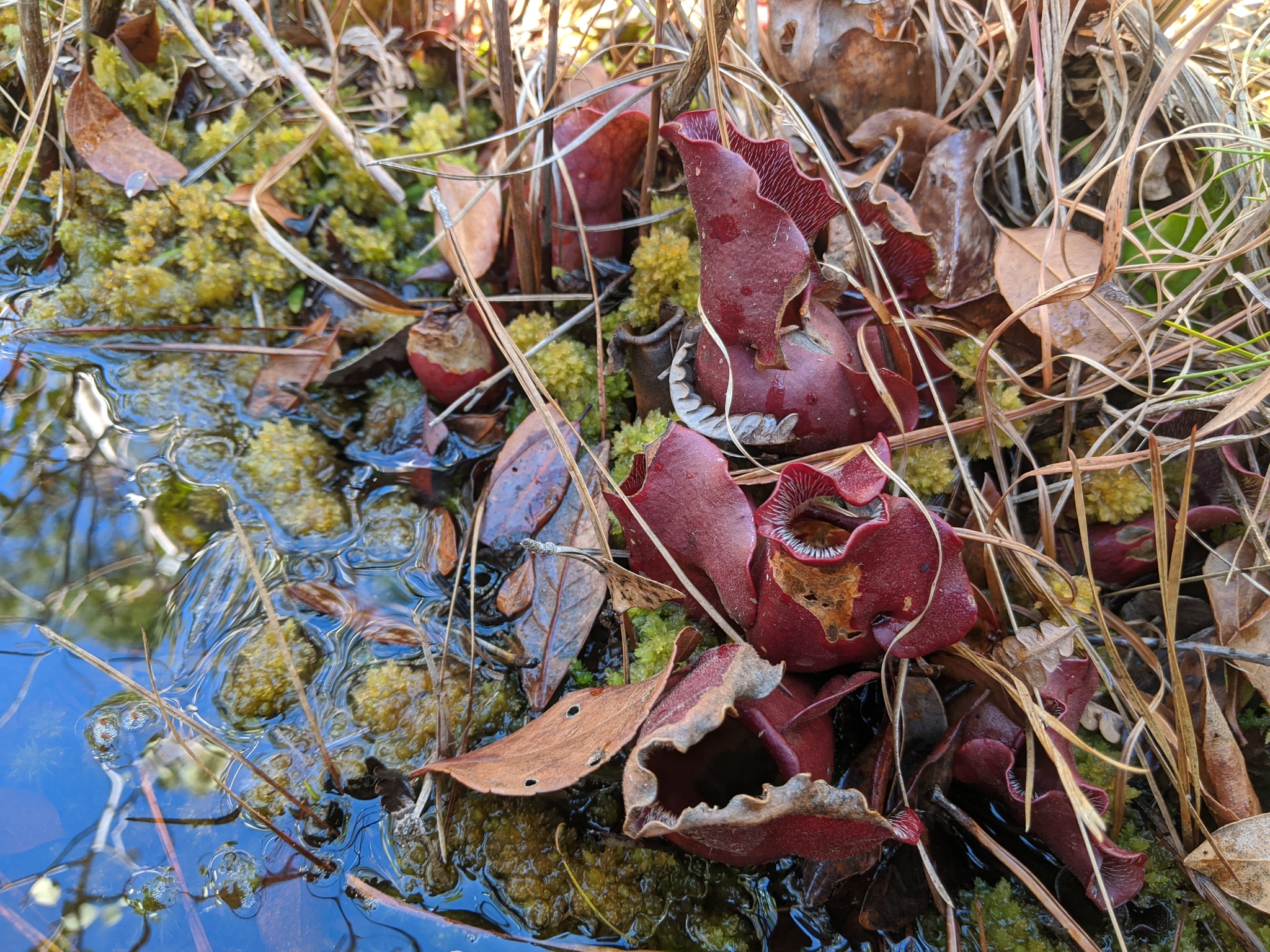
The squat, swollen pitchers distinguish Purple Pitcher Plant from sarracenias with tall, trumpet-shaped leaves. The RHS horticultural description gives pitchers about 15 cm (5.9 in) long, green with purple-red veins or tinges. Their rim forms a thick lip, and the upper part has an upright, wavy hood that is open at the front. 45
The flower stalks rise well above the pitchers: EPPO gives 22–79 cm (8.7–31.1 in) for these stalks, a measurement distinct from foliage height. Each stalk carries a nodding flower. Purple-red petals surround a broad, umbrella-shaped style; the sepals persist after the petals fall. This flower structure can help identify a plant whose traps are still poorly developed. A flat wing also runs along the inner face of the pitcher, where the leaf margins meet. 73
Useful taxonomy
Kew accepts the species and two subspecies, Sarracenia purpurea subsp. purpurea and Sarracenia purpurea subsp. venosa. Subspecies are botanical subdivisions rather than cultivars. Kew's descriptive profile places the first in the northern part of the range and the second farther south. 12
The scope of each description matters. Go Botany covers the northern subspecies in New England, and the entirely pale green forms it records do not describe all populations. In that region, these pale plants also have pale yellow petals and stigma tips instead of the usual red to purple shades. Keeping the full label of a purchased plant helps track its botanical origin. 8
Habitat and distribution
Purple Pitcher Plant is native to North America, from subarctic regions to the north-central and eastern United States. Kew's current distribution includes Alaska and much of Canada. Its older narrative profile extends the range to Florida, which is absent from the current list; these two range definitions are kept separate here. 12
Nitrogen-poor wetlands, especially bogs, are its characteristic habitat. Capturing prey supplements its nutrient supply in these poor soils. Introduced populations occur in Europe, including France, Great Britain and Switzerland; their presence there does not make Europe part of the native range. 81
Traps and reproduction
Downward-pointing hairs make it difficult for insects to escape from the pitchers. Prey fall into the liquid held by the leaves. For New England populations, Go Botany describes how a community of organisms, including larvae, contributes to digestion. The trap therefore houses living residents as well as prey. 8
Flowering depends on climate. EPPO gives June and July in western Europe, followed by seed production in August and September; NC State places flowering in late spring to early summer. The fruits are capsules containing many seeds, which need a cold period to germinate. EPPO describes capsules 1–2 cm (0.4–0.8 in) in diameter. The rhizomes also produce offshoots. 73
Seasonal cultivation
Purple Pitcher Plant needs low-mineral water, either rainwater or distilled water, and an acidic substrate kept moist. Household water may introduce minerals to which the plant is sensitive. During growth, choose a sunny position outdoors; under glass, the RHS recommends protection from scorching sun. 34
A low-nutrient, acidic substrate suits Purple Pitcher Plant. For this species, the RHS recommends a peat-free mix with sustainably sourced moss. No fertilizer is needed; do not fill the traps with food or insects either. 43
Allow a cool winter rest and keep the plant well ventilated. Reduce watering without letting the root ball dry out completely; losing some leaves is a normal part of dormancy. Repot according to root crowding rather than on a fixed monthly schedule. Division also allows a clump to be propagated. Remove dead leaves and watch for aphids and mealybugs. 45
Uses and risks
Purple Pitcher Plant is grown for its pitchers and flowers. Historical medicinal uses reported by Kew are not recommendations for use. A chemical study detected coniine in material of subspecies venosa, in both the hood and pitcher. Detecting coniine in venosa does not measure the ingestion risk of every plant sold. Risk remains unknown for children, adults, cats, dogs, horses and other animals in the evidence assembled here. Kew's general statement that no hazards are known does not provide an assessment for each group. An absence of known hazards does not justify a "safe" classification. 29
In Europe, dense populations can compete with bog vegetation, including mosses. Keep cultivated plants in a controlled setting and do not introduce the plant into a natural bog: a habitat that supports its growth may also be vulnerable to its establishment. 7
Main sources
- Kew, Plants of the World Online: Sarracenia purpurea
- Kew Species Profiles: description and history
- NC State Extension: Sarracenia purpurea
- Royal Horticultural Society: Sarracenia purpurea
- Royal Horticultural Society: growing carnivorous plants
- EPPO, Global Database: identity and names
- EPPO: Sarracenia purpurea datasheet, 2024
- Native Plant Trust, Go Botany: Sarracenia purpurea
- Hotti et al., PLOS ONE: metabolite profiling of pitcher plants, 2017
If you are unsure about a plant’s toxicity, ask a botanist or veterinarian for advice.