
Thick-leaved stonecrop (Sedum dasyphyllum, )
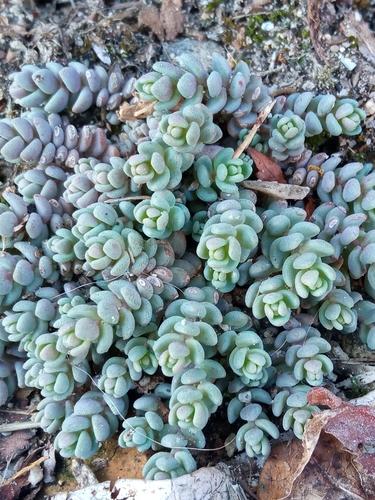
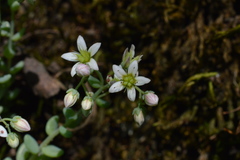
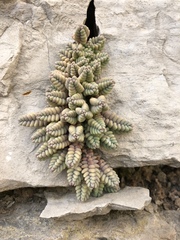
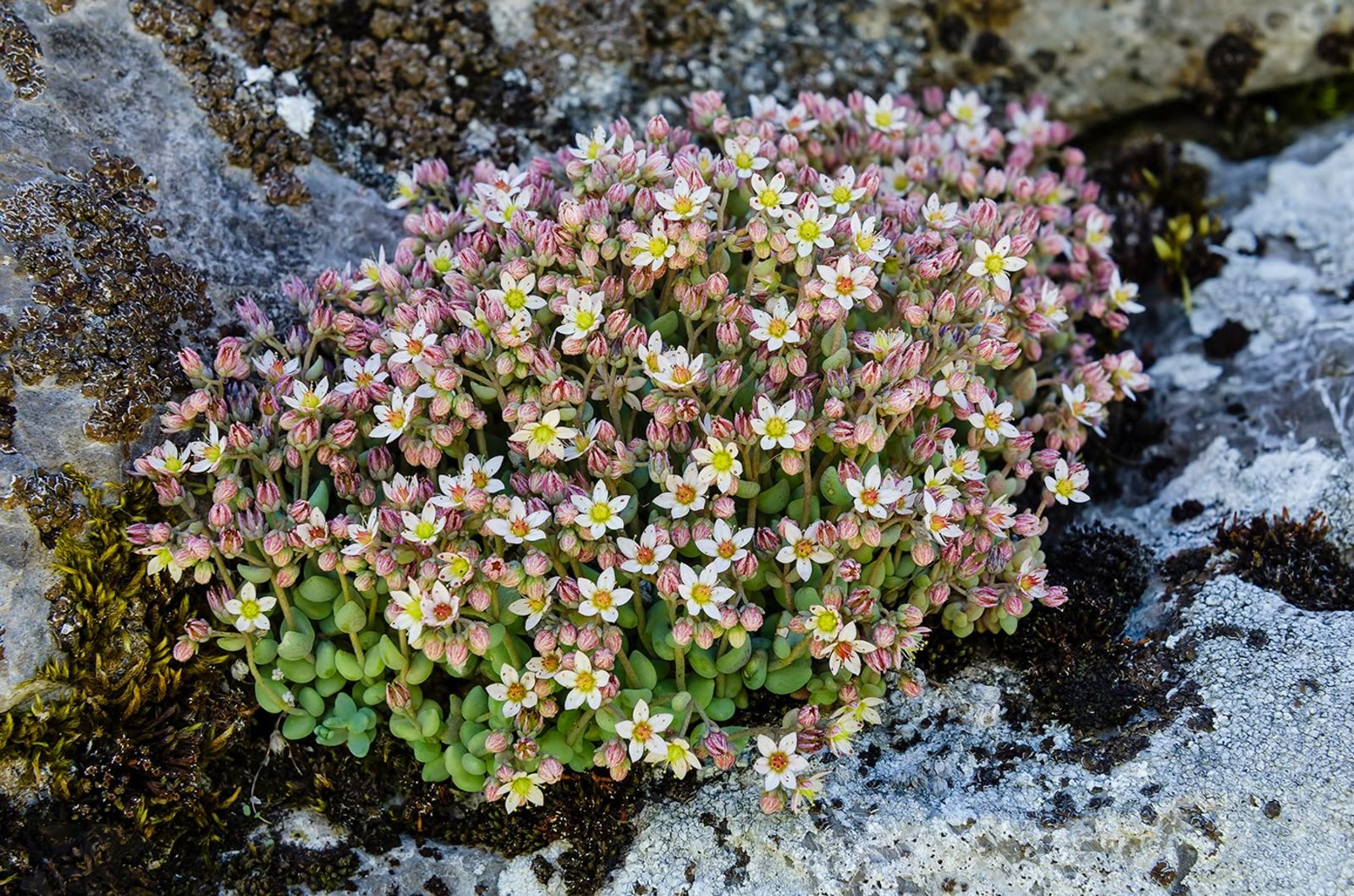
Thick-leaved stonecrop (Sedum dasyphyllum) is a succulent perennial with small, egg-shaped leaves, usually arranged in opposite pairs. Its blue-gray mats bear white flowers in summer.
Read moreThick-leaved stonecrop


© photo
Alexis_lsu · cc0
Irene Saltini · cc0
iNaturalist User · cc0
Taken Oct 31, 2016 by Yoan MARTIN (cc-by-sa)
Taken May 16, 2020 by Genoud Deborah (cc-by-sa)
Taken Jul 10, 2014 by Tela Botanica − Liliane Roubaudi (cc-by-sa)
Taken Jul 9, 2016 by huy HO (cc-by-sa)
© copyright of the Board of Trustees of the Royal Botanic Gardens, Kew.




Global distribution
A species of Europe and North Africa, with western European and Mediterranean affinities.
Identity
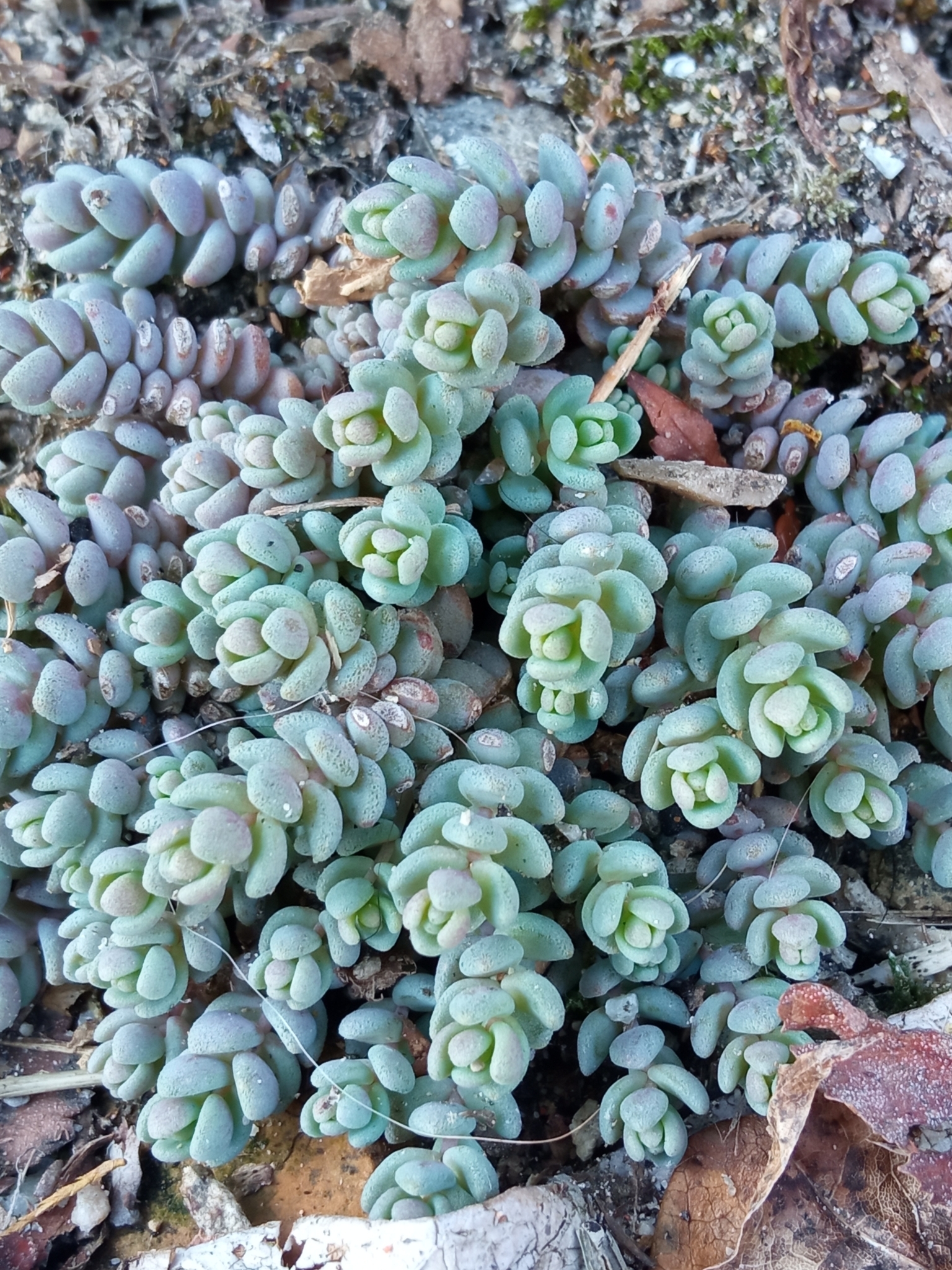
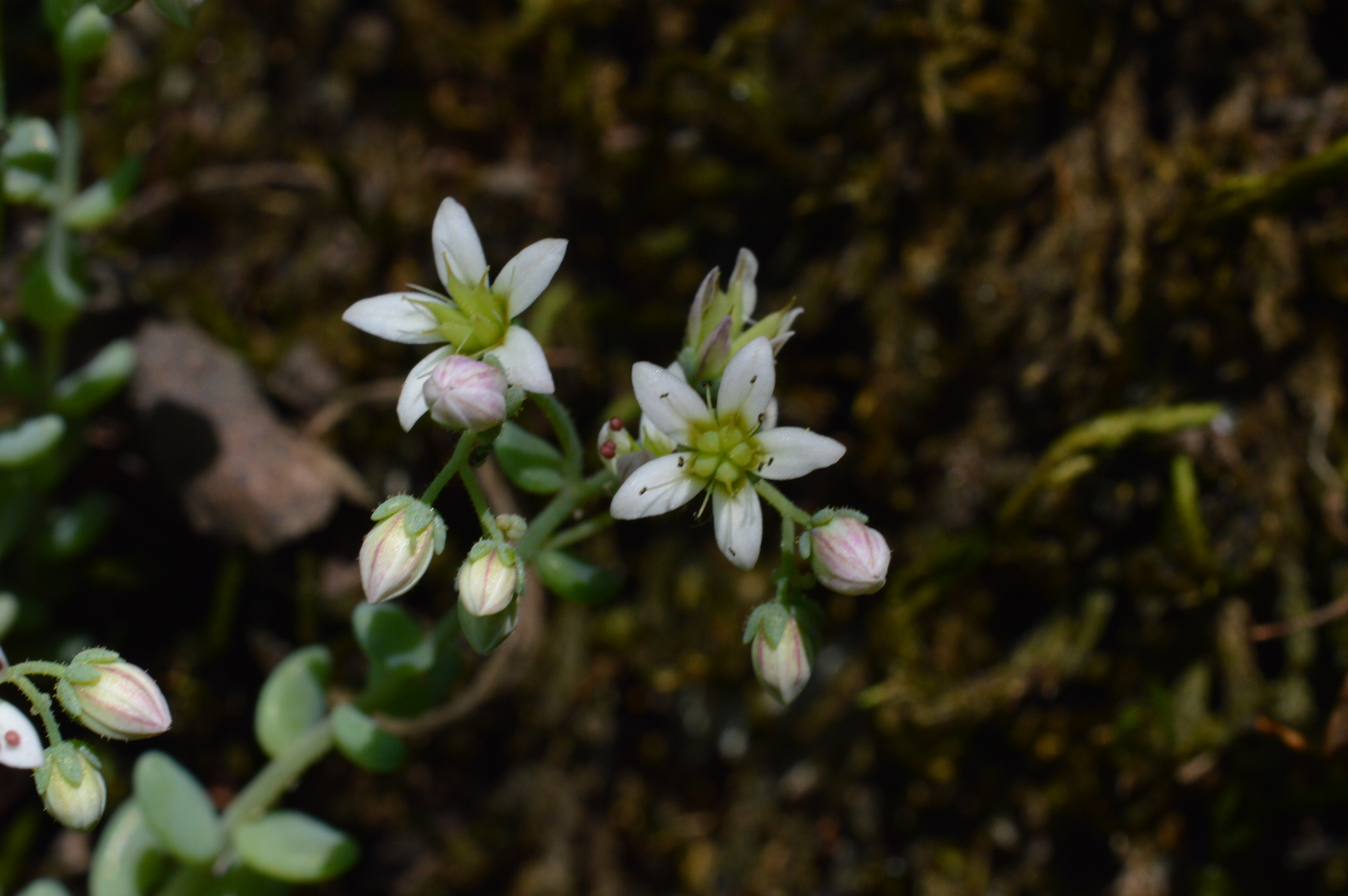
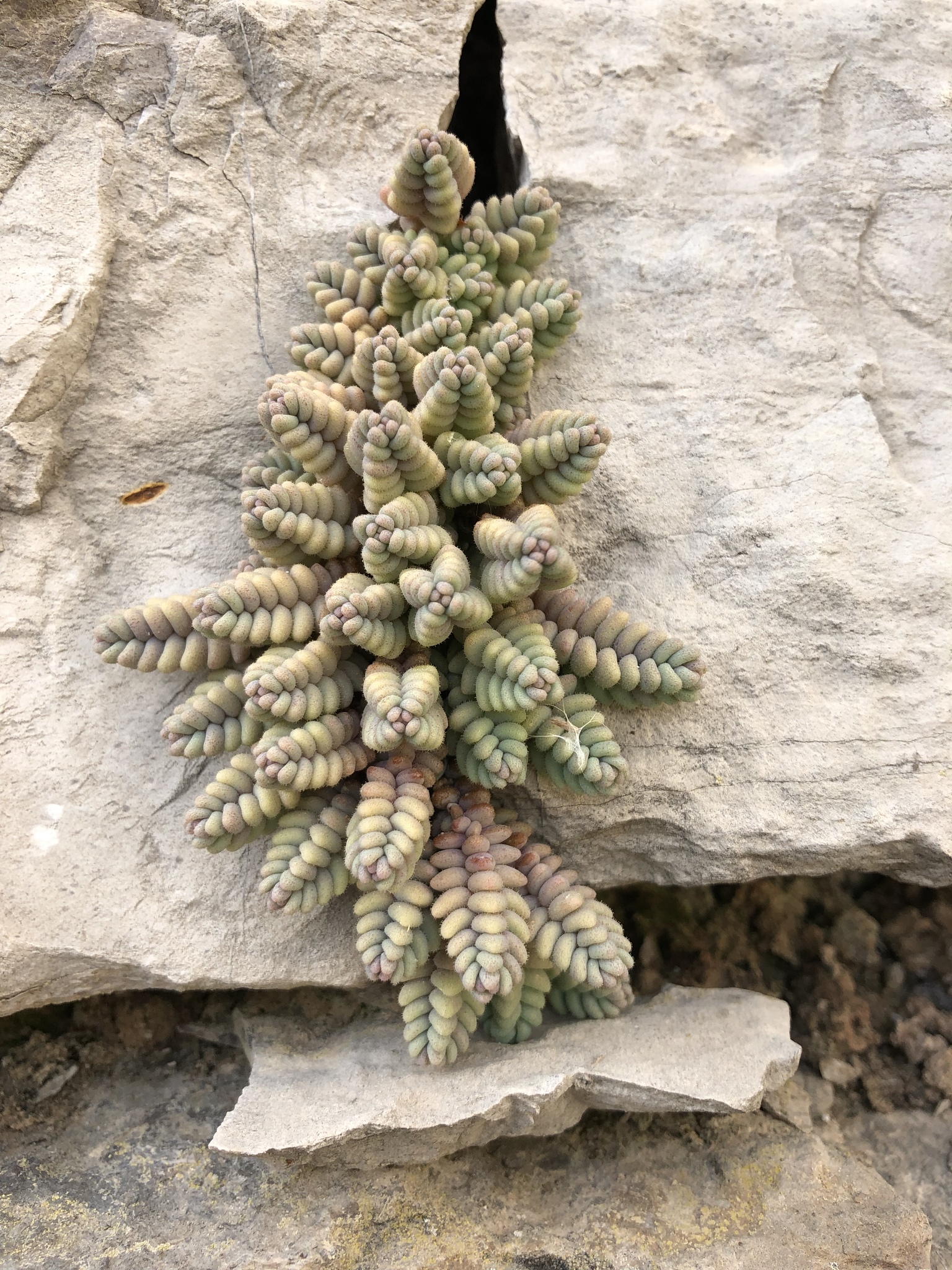
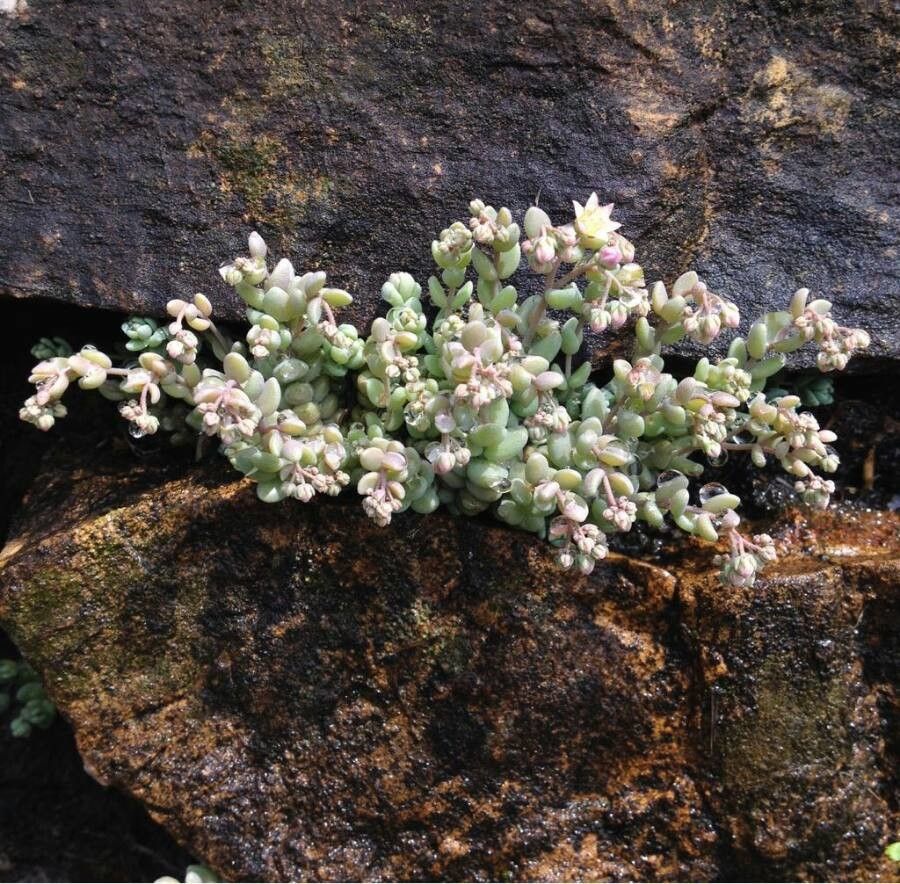
Thick-leaved stonecrop (Sedum dasyphyllum L., 1753) is a succulent perennial whose small, usually opposite, egg-shaped leaves give the shoots a dense appearance. Glaucous foliage and glandular hairs on the upper parts of flowering stems help identify this stonecrop among white-flowered species. 21
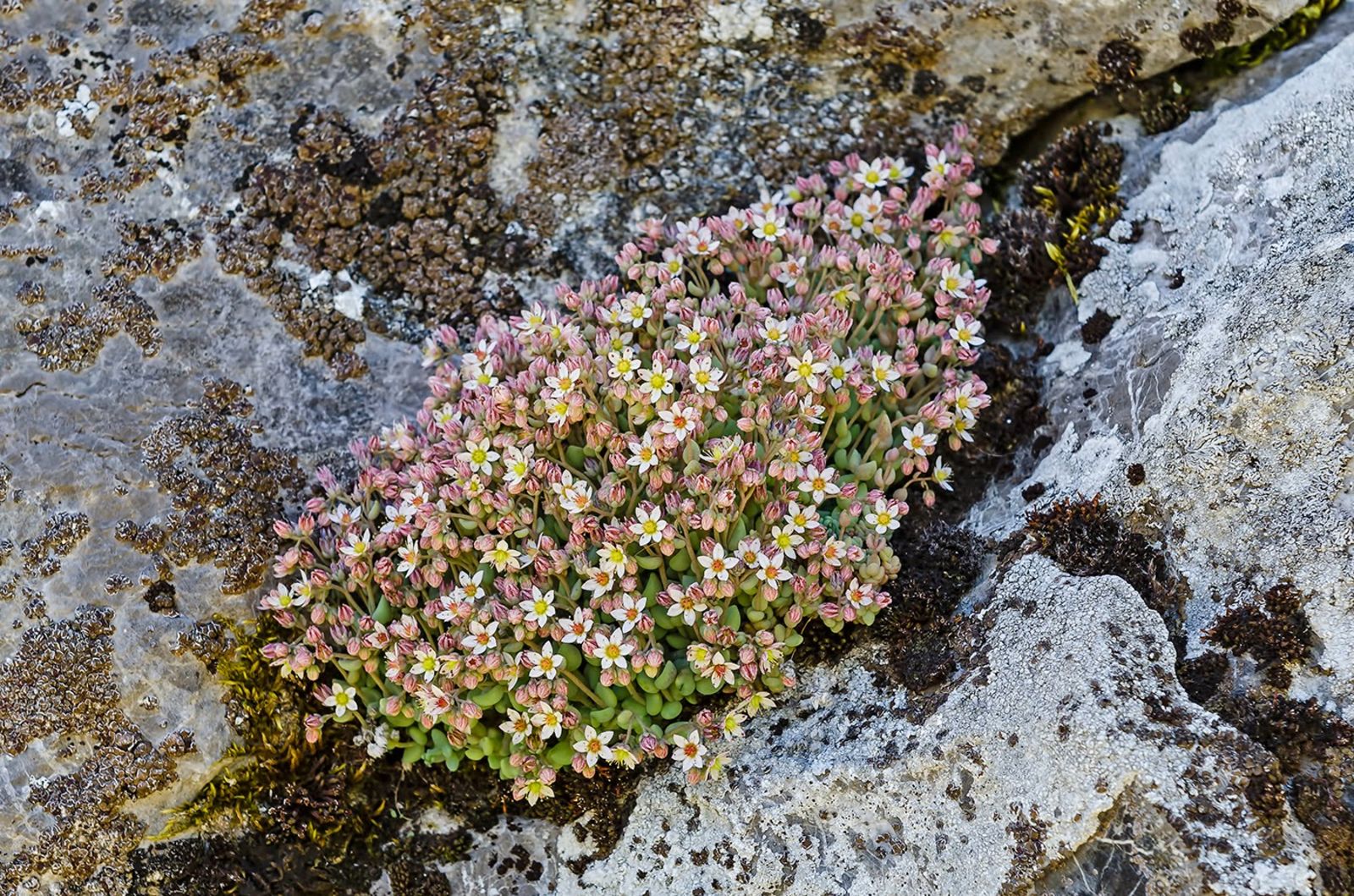
The plant forms a creeping evergreen mat. In cultivation, its leafy shoots stay low, around 5 cm (2.0 in), while flower stalks rise above the cushion. The silvery-gray foliage can turn pink or purple in response to cold or drought. This coloring alone therefore does not identify a horticultural variety. 5
Recognition
In the Swiss floristic description, thick-leaved stonecrop measures 5 to 15 cm (2.0 to 5.9 in). Its fleshy leaves reach 5 to 7 mm (0.20 to 0.28 in); they are closely spaced on non-flowering shoots and farther apart on flowering stems. Examining their arrangement across several internodes is more useful than relying solely on the mat's color. 2
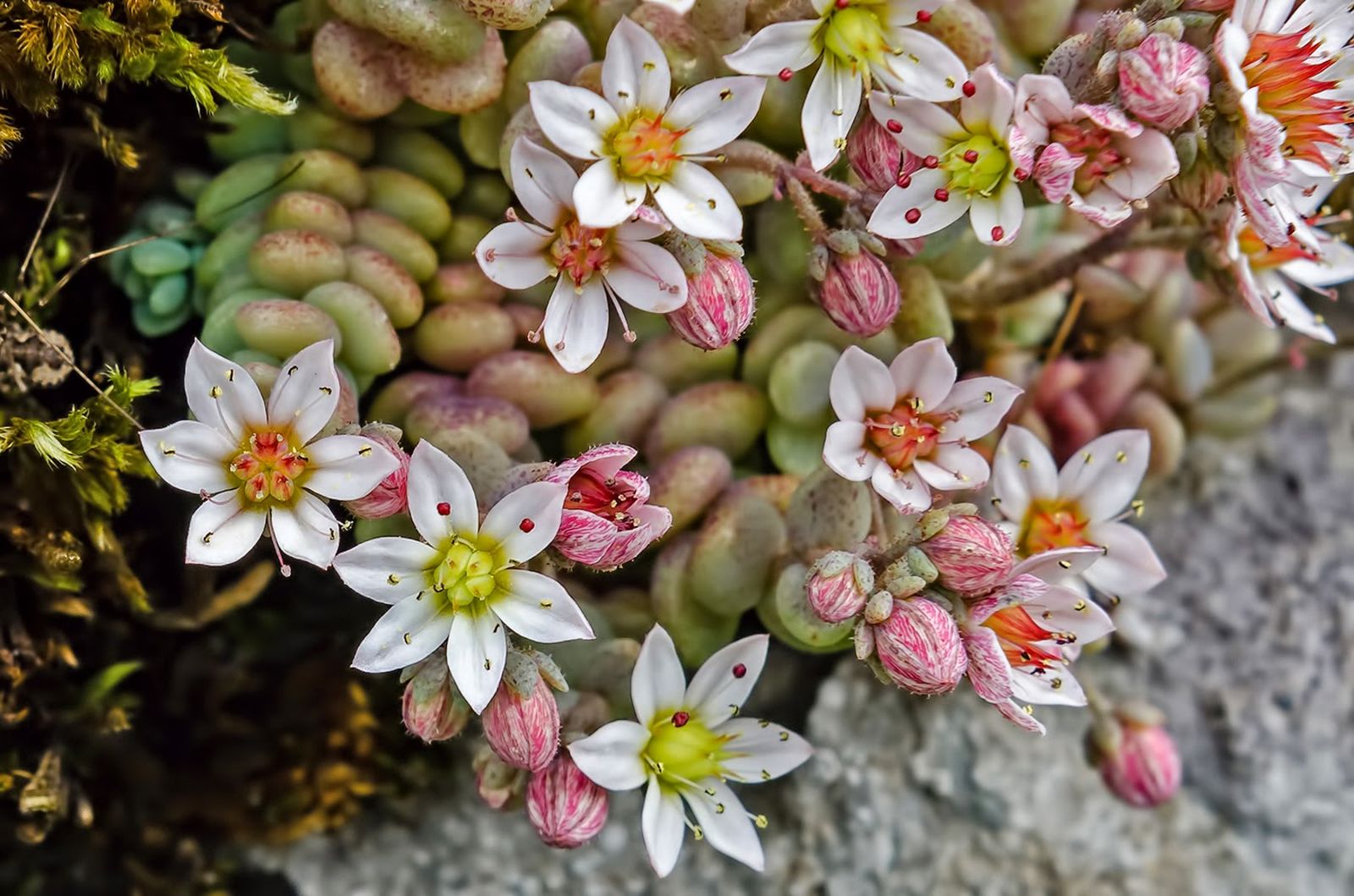
The flowers are white, sometimes pinkish, with a purplish line on the backs of the petals. Petal number requires care: some descriptions give five, others generally six. This feature alone can therefore lead to misidentification. The combination of opposite, egg-shaped leaves and glandular hairs is more informative. 24
Useful taxonomy
Thick-leaved stonecrop belongs to the Crassulaceae, in the order Saxifragales. Its accepted scientific name is Sedum dasyphyllum L.; publication dates from 1753. The author abbreviation accompanies the botanical name and does not denote a cultivar. 1
Here, “succulent” describes fleshy leaves and stems; it does not mean that the plant is a cactus. The stonecrop genus includes annuals and perennials with small, star-shaped flowers. General recommendations for succulents can help with container cultivation, but must remain compatible with the requirements of this sun-loving species. 5
Habitat and distribution
Thick-leaved stonecrop is native to Europe and North Africa. Its range has western European and Mediterranean affinities; the species is documented in the Hautes-Alpes and considered native in Switzerland. Its presence on an old wall therefore does not invariably indicate a garden escape. 524
The species grows on rocks, dry screes and walls, from hills to subalpine and sometimes alpine zones. Regional descriptions mention both limestone cliffs and dry, warm siliceous rocks. Drainage and exposure matter more when choosing a garden position than a universal requirement for limestone. 23
Life cycle, propagation and seasonal care
Thick-leaved stonecrop flowers in summer and is propagated by softwood shoot cuttings. No regular pruning is needed. A sunny rock garden or a free-draining pot in a sheltered position suits its mat-forming habit. 5
General advice for succulent cuttings is to let the cut end dry until a callus forms before placing it in growing medium. 7
For hardy succulents, outdoor planting is best done in late spring. An established plant in the ground generally needs little additional watering; the main winter risk is excessive moisture. A position beneath a roof overhang or ventilated protection can limit persistent rainfall. The planting and protection advice concerns hardy succulents as a group. 76
In pots, let the surface of the mix dry between waterings during growth, then reduce watering in winter. Do not leave water in the saucer: roots can rot in constantly wet growing medium. Plan to repot in spring if roots fill the container, without choosing a disproportionately large pot. 7
The proposed calendar corresponds to container cultivation in a temperate Northern Hemisphere climate. It translates general advice for succulents: resume care in spring, reduce watering in winter and, during growth, apply fertilizer monthly from April to September. This calendar does not prescribe the same feeding for a plant established in a rock garden. 7
Uses and risks
Thick-leaved stonecrop is used as a small rock garden, edging or container plant. Its ornamental interest lies in the evergreen mat and flowers rising above the foliage. Well-drained soil and full sun are part of the species' own growing requirements. 5
Toxicological status remains undetermined for adults and children, as well as cats, dogs, horses and other animals. It is not classified here as edible or safe. The properties of another stonecrop do not establish safety for this species.
Slugs and snails can attack the plant; vine weevil larvae are also among the reported pests. Crown and root rots call for particular care when the growing medium remains wet. 5
Varieties, similar plants and relatives
White stonecrop (Sedum album L.) has alternate, cylindrical, hairless leaves. This combination distinguishes it from thick-leaved stonecrop, whose egg-shaped leaves are usually opposite and whose upper parts are glandular. A photograph of white flowers alone does little to distinguish these species. 82
The horticultural name “Major” appears associated with Sedum dasyphyllum subsp. dasyphyllum var. macrophyllum, whose taxonomic status is listed as unresolved. This label therefore deserves to be kept with its caveat, without treating it as a synonym for the whole species or an established hybrid. No particular feature of this selection is generalized to thick-leaved stonecrop. 9
Main sources
The floristic references describe the species in the wild; the horticultural guides clarify growing conditions and care for the wider group.
- GBIF Backbone Taxonomy, Sedum dasyphyllum L.
- Info Flora, Sedum dasyphyllum
- Naturhistorisches Museum Wien, Sedum dasyphyllum
- FloreAlpes, thick-leaved stonecrop
- Royal Horticultural Society, Sedum dasyphyllum
- Royal Horticultural Society, Growing hardy cacti and succulents
- Royal Horticultural Society, Growing cacti and other succulents
- Info Flora, Sedum album
- Royal Horticultural Society, Sedum dasyphyllum var. macrophyllum and the name Major
Frequently asked questions
How can I recognize thick-leaved stonecrop?
Its small fleshy leaves are egg-shaped, glaucous and usually opposite; glandular hairs cover the upper parts of the flowering stems.
Is thick-leaved stonecrop suitable for a pot?
Yes, in full sun in a free-draining container. Let the surface of the growing medium dry between waterings and avoid standing water.
How can I distinguish it from white stonecrop?
White stonecrop has alternate, cylindrical, hairless leaves, unlike the usually opposite, egg-shaped leaves of thick-leaved stonecrop.
If you are unsure about a plant’s toxicity, ask a botanist or veterinarian for advice.